
Foreign
Hotan jade: a time-honored bridge among civilizations

By Aerdake, People’s Daily
Located in the southernmost part of Xinjiang Uygur autonomous region, Hotan is renowned for its rich jade resources, historically serving as a pivotal hub in the ancient jade trade.
Inside the Hotan Jade Museum, an antiquated, hand-drawn map entitled Ancient Jade Trade Routes traces the long history of jade commerce. While the Silk Road dates back more than 2,000 years, the Jade Road extends over 6,000 years into antiquity. Radiating from Hotan, this network stretched east through Gansu, Ningxia, Shanxi and Henan, while forging westward pathways across Central Asia to the Mediterranean coast. This ancient corridor not only enabled thriving East-West trade but also served as a primary bridge for cross-cultural exchange.
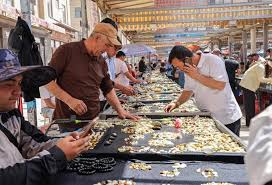
Today, four regulated jade markets line the Yulong Kashgar River Avenue. “Ten years ago, this area was primarily characterized by roadside stalls. Today, these markets have significantly expanded and professionalized,” said Shi Peihong, head of the Hotan jade protection and development center.
Inside the bustling markets, rows of jade vendors engage in discerning discussions with customers about jade texture and grain patterns. International collectors frequent these markets, seeking deeper understanding of Hotan jade’s historical significance.
Academic sources from Uzbekistan indicate references to Hotan jade dating back to 2000 B.C., while archaeological evidence reveals the presence of Hotan jade from the Stone Age unearthed in ancient Babylon, Syria, and regions across Central Asia.
The robust jade trade along the Yulong Kashgar River continues to thrive. “The presence of international buyers in Hotan’s markets is commonplace. We often host visitors from Pakistan and Kyrgyzstan. Despite diverse cultural backgrounds, their expressions convey a profound appreciation and sophisticated understanding of jade,” said Chen Huanhui, general manager of a jewelry company.
Esteemed jade carver Nie Mingli recounted a personal testament to jade’s transnational reach during a motorcycle journey last year. Departing from Xinjiang’s Horgos Port, he traversed Pakistan, Kyrgyzstan, and Kazakhstan. To his surprise, he often came across Hotan jade artworks along the route – tangible evidence of jade’s role as a cultural bridge transcending geographic boundaries.
At a restaurant in Kyrgyzstan, a prominently displayed jade vessel caught his eye. Upon recognizing Nie as Chinese, the restaurant owner enthusiastically gave a thumbs-up to express his admiration for Chinese jade artistry.
“There’s no doubt that Hotan jade is one of the most iconic symbols of Chinese culture,” Nie said.
Further enriching Hotan’s cultural narrative, the Kunlun Stories Museum showcases the evolution of jade culture from the Neolithic era to the present. Founded by jade enthusiast Zhang Wei, the museum has welcomed tens of thousands of Chinese domestic and international visitors and scholars.
Zhang observed that visitors from Pakistan and Uzbekistan exhibit particular fascination with jade artifacts originating from the northern slopes of the Kunlun Mountains and the Tarim River Basin. “These interactions significantly reinforce our recognition of jade culture’s unique role as a bridge for cross-cultural exchanges,” Zhang said.
Following the rise of the Silk Road, the western route from Hotan extensively overlapped with the ancient Jade Road. But Hotan’s historical significance in cultural exchanges extends beyond jade. Over a millennium ago, Hotan residents had already achieved mastery in sericulture and silk weaving. Locally produced silk became a prized commodity along the Silk Road, with the famed Etles silk enjoying particular renown.
Historical records indicate that while the silk production techniques of Etles silk originated in China’s Central Plains, its distinctive dyeing and weaving methods emerged through a fusion of Central Asian craftsmanship and local expertise in Hotan and Kashgar.
Jiya township in Hotan is acclaimed as the “Hometown of Etles Silk,” where the community still meticulously preserves ancient tie-dye techniques and employs traditional wooden looms.
A manager of a local Etles silk workshop said that she regularly receives visitors and traders from Kazakhstan, Kyrgyzstan, and Uzbekistan. “They’re always eager to photograph and record the weaving process, hoping to adapt these techniques for artisans within their respective countries,” she said.
Mulat, a 28-year-old native of Jiya township, immersed in Etles traditions since childhood, established a trade company after university. This month, he presented a collection of modern Etles silk products at the 2025 Central Asia (Khorgos) Commodity and Trade Expo. “There’s strong demand in Central Asia for Etles silk that combines modern design with affordable prices. We see great potential for future cooperation,” he said.
From the ancient Jade Road to the Silk Road, from the enduring legacy of Hotan jade to the intricate artistry of Etles silk, Hotan’s profound historical tapestry is intrinsically interwoven with deep-rooted traditions of cross-cultural engagement. Within this storied region, the enduring narrative of mutual learning and shared prosperity between civilizations continues to unfold anew.

By: Fabian Apechihin
U.S. President Donald J. Trump has directed lawmakers to launch an immediate investigation into reports of widespread killings of Christians in Nigeria, describing the situation as a “Christian genocide.”
In a statement released Friday evening via his Truth Social platform, Trump expressed grave concern over the violence, blaming radical Islamist groups for what he called a “mass slaughter.”
“Christianity is facing an existential threat in Nigeria. Thousands of Christians are being killed. Radical Islamists are responsible for this mass slaughter,” he wrote.
The U.S. President announced that he is designating Nigeria a “Country of Particular Concern,” citing alarming figures of killings within the country compared to global totals.
“When Christians, or any such group, are slaughtered like is happening in Nigeria — something must be done! I am asking Congressman Riley Moore, together with Chairman Tom Cole and the House Appropriations Committee, to immediately look into this matter and report back to me,” Trump stated.
He added that the United States “cannot stand by while such atrocities are happening,” pledging that his administration remains ready “to protect Christian populations around the world.”

By: Fabian Apechihin
Polish Member of the European Parliament (MEP), Dominik Tarczyński, has once again drawn global attention to what he described as the ongoing persecution and killings of Christians in Nigeria.
In a post on his verified 𝕏 account on Monday, Tarczyński shared an image of a blood-stained Nigerian flag alongside a viral video showing a pastor conducting a burial ceremony for victims of violence.
In the video, the pastor lamented the frequent killings, saying:
“We are tired of performing burial every day, and they expect us to remain silent. It has become an order, and the Nigerian government came out to deny the massacre, saying there is no genocide of Christians in Nigeria. United Nations, you’re watching me. The American Parliament is aware of what we are doing now. My special request is to President Trump to save our lives in Nigeria. They are killing more Christians. If they say they kill Muslims, the Muslims are killed by who? Muslims are killed by Muslims.”
Tarczyński’s post quickly went viral, sparking widespread reactions and renewed calls for the Nigerian government to intensify efforts to combat banditry and terrorism.
However, the Federal Government has repeatedly rejected claims of a religiously targeted genocide. In a recent statement, the Minister of Information and National Orientation, Mohammed Idris, described such allegations as “false, baseless, despicable, and divisive.”
Idris maintained that Nigeria’s security challenges are complex and not driven by religious motives, warning that framing the fight against terrorism as an anti-Christian campaign could deepen existing social and religious divides.
He reiterated the government’s commitment to protecting all Nigerians, regardless of faith or ethnicity, and called on international partners and media outlets to “refrain from narratives that distort the country’s security realities.”
By: Fabian Apechihin
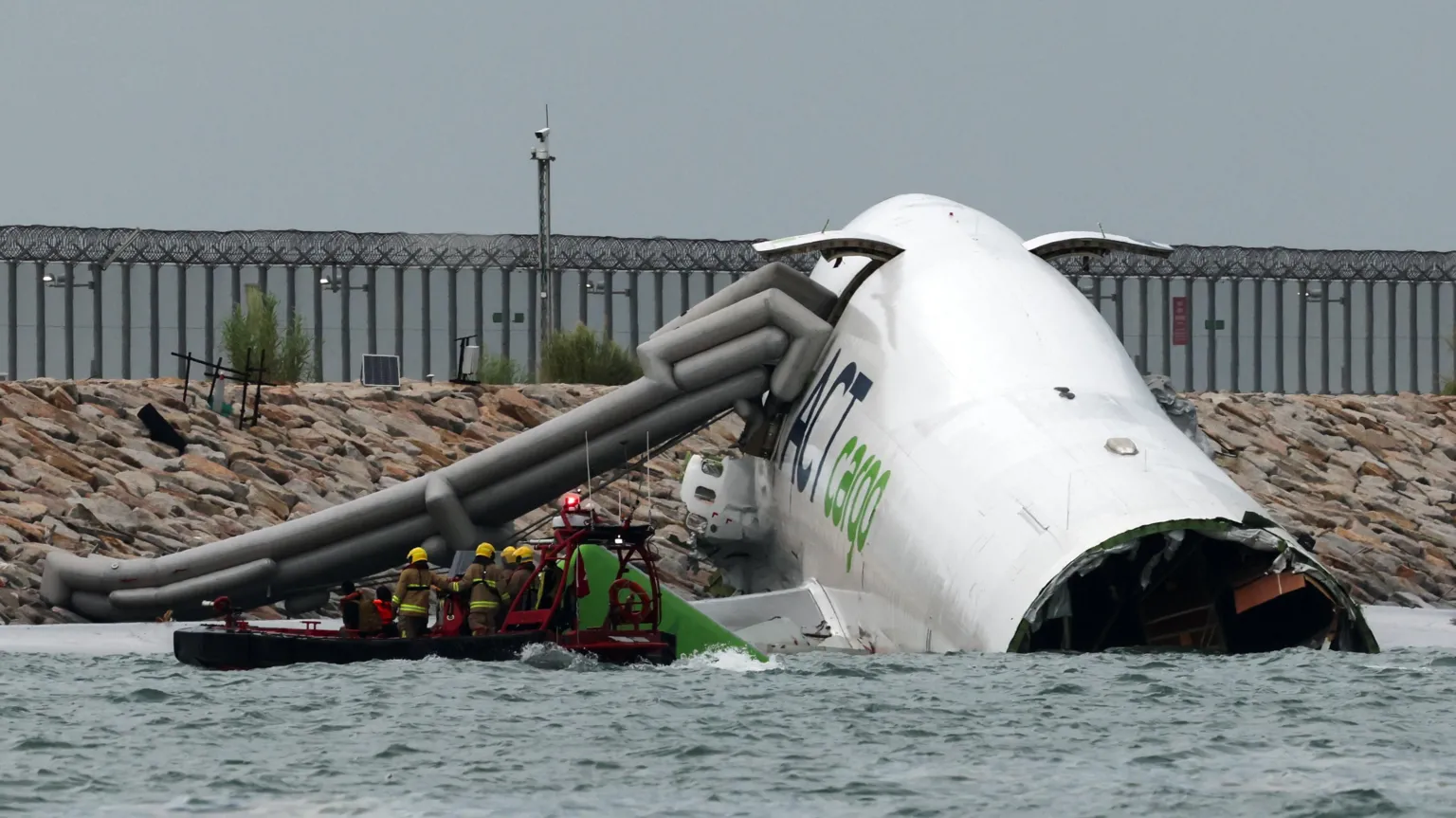
Two airport security officers were killed early Monday after a cargo plane skidded off the runway at Hong Kong International Airport, struck their patrol vehicle, and plunged into the sea.
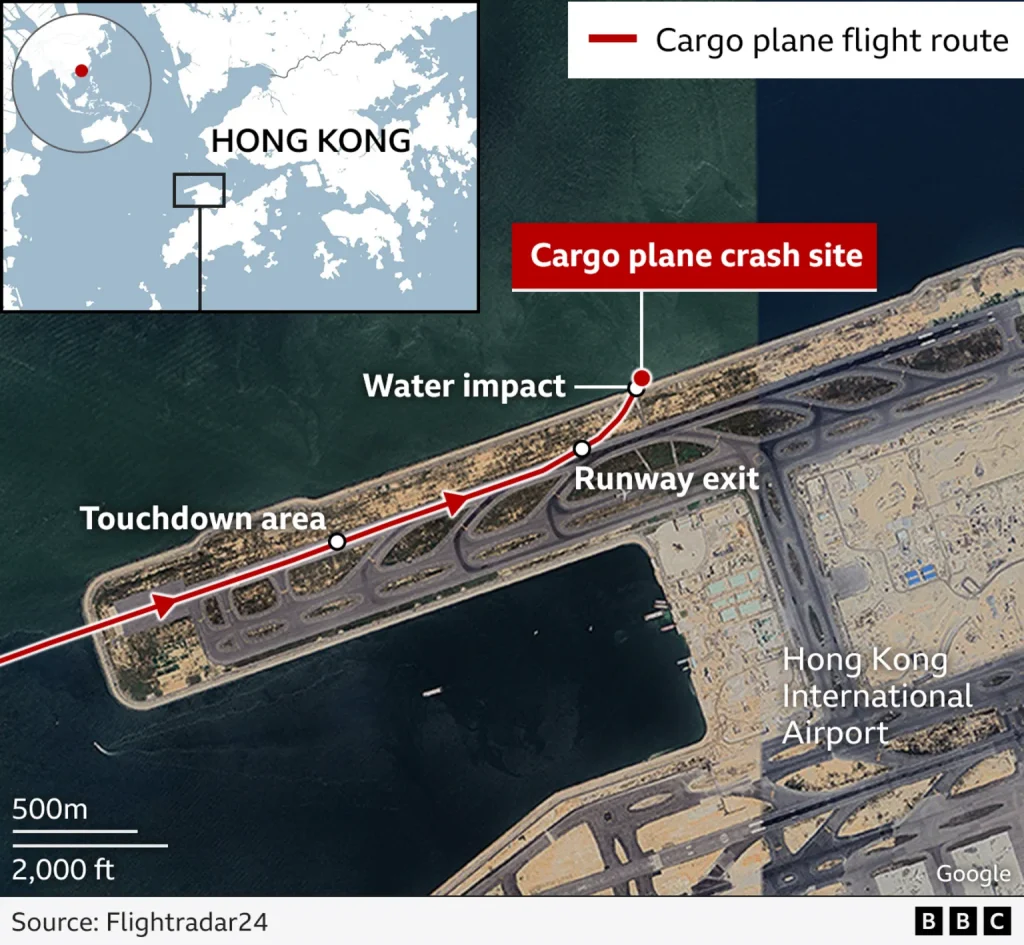
The incident involved Emirates flight EK9788, a Boeing 747 arriving from Dubai around 03:50 local time (19:50 GMT Sunday). The aircraft veered off the north runway, crashed through perimeter fencing, and collided with the patrol vehicle, pushing it into the water. Both occupants of the vehicle died, while the plane’s four crew members survived.
According to officials, the plane ended up partially submerged, making it one of Hong Kong Airport’s deadliest aviation accidents in years. Two other runways remain operational as investigations continue.
Airport operations executive director Steven Yiu said the patrol vehicle had been travelling on a service road outside the runway’s perimeter at a “safe distance” when the plane suddenly turned off course.
“Normally, the plane is not supposed to turn towards the sea,” Yiu said during a press briefing. He emphasized that the patrol car “definitely did not enter the runway” and that the aircraft had not sent a distress signal before landing.
Divers later recovered the bodies of the victims—two men aged 30 and 41—about five meters from the shore and seven meters underwater. One was confirmed dead at the scene, and the other died in hospital.
Hong Kong’s transport bureau expressed condolences to the victims’ families, describing the event as “deeply saddening.”
Emirates confirmed the accident, saying the cargo plane “sustained damage on landing in Hong Kong.” The airline noted there was no cargo onboard and that the aircraft had been wet-leased—meaning operated with crew and insurance—from Turkish carrier ACT Airlines.
Firefighters reached the scene within two minutes, rescuing all four crew members who had escaped via the aircraft’s emergency slides. Photos from the crash site show the plane broken in half, with part of its fuselage submerged in water.
Authorities are now searching for the plane’s flight data and cockpit voice recorders (“black boxes”). A police spokesperson said criminal investigations have not been ruled out.
The affected runway will remain closed pending the outcome of the investigation. At least 11 incoming cargo flights were cancelled on Monday, according to airport authorities.
This is only the second fatal aviation accident at Hong Kong International Airport since it relocated to Chek Lap Kok in 1998. The previous one occurred in 1999, when a China Airlines jet crash-landed during a typhoon, killing three people.


The Most Shocking A/Court ‘Judgment’ in Nigerian History: An unfortunate precedent that should not be allowed to stand

TAU reaffirms commitment to globally competitive learning

photo

-
 Uncategorized5 years ago
FG, states urged to harness flooding for ranching, others with technology – Agbaje
-
 Headlines10 years ago
Breaking: EFCC seals Borno House of Assembly, as Hon members take to their heels
-
 News11 years ago
Nigeria Security Operatives Stage Manhunt For Homosexual Perpetrator
-
 News9 years ago
How 21-year-old Girl fled community over accusation of lesbianism
-
 News10 years ago
Yobe Gov Moves Against Deputy
-
 Opinion7 years ago
7 signs she has friend zoned you
-
Technology4 years ago
Online job placement company headhunts women
-
 Headlines10 years ago
Borno Dep Gov Abducts Another Church Leader