
News
INTERVIEW: How We Plan to Upstage APC in Borno- Capt. Mshelia

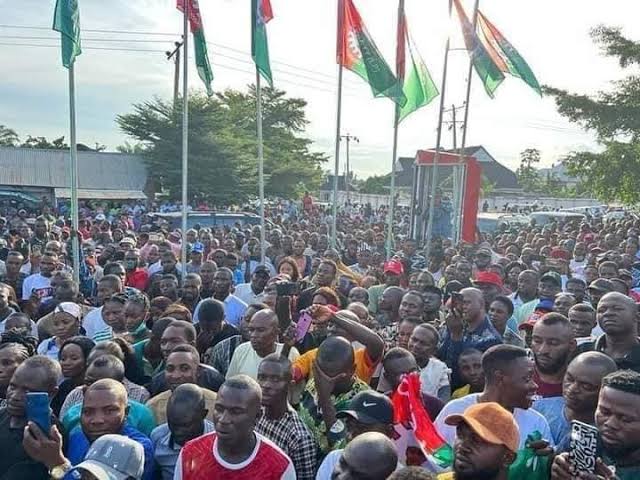
The Southern part of Borno State have been agitating for power to rotate between the three Senatorial Districts, so that one of them could have the opportunity to lead. It is against this background that Captain Kadafur Mshelia seeks to replace the incumbent Governor, Professor Babagana Umara Zulum as the next governor in the 2023 elections. Speaking at national TRAIL newspaper podium, the aircraft pilot tells Nigerians Youths will mobilize against rigging and why Governor Zulum needs to give way in Birno.Excerpts:
Background on who Captain Kadafur Mshelia is
Captain Ibrahim Kadafir Mshelia is a native of Subwang residing in Shaffa. He was born in Garkida General Hospital on 21st May 1963 to Mallam Ibrahim Yabrim Mshelia, A world war II veteran and Ex colonial Police officer and Mrs Maraymu Ibrahim Mshelia.
Ibrahim is a Nigerian from Hawul Local Government Area of Borno State. He is a practising muslim, happily and delightfully married to Mrs Ann Nkem Mshelia, nee Tolefe, a practicing catholic Woman from Asaba, Delta State. They are blessed with 4 grown up wonderful Children who are all graduates and independent.
Capt Ibrahim is a seasoned professional pilot whose experience spans 40 years and counting. He is Certified as an Airline Transport Pilot, Flight instructor pilot and designated pilot examiner (Ghana CAA and Nigeria CAA). He has equally traversed the world flying VVIP operations, passenger, Cargo/mail delivery operations, scheduled and charter operations. Captain Ibrahim co-opted his wife Nkem as his business partner. Together, they founded an Airline in Nigeria: West Link Airlines Limited , based in Abuja undertaking Jet charters and Mish Aviation Services Limited, the parent company of Mish Aviation Flying school Ghana, the First Privately own Pilot Training Institution in the sub saharan Africa.
Capt Ibrahim’s career started at the Nigerian Civil Aviation Training Centre (NCATC), now renamed the Nigerian College of Aviation Technology, (NCAT), Zaria. He set a target to acquire all the professional advanced licenses within 5 years after school graduation. He achieved that in four years.
Ibrahim wanted to pay back the Government for sponsoring his pilot training.
Upon return from USA after successful completion of all his advance courses, he volunteered himself to work for the National Air Border Patrol Unit as Dornier 228 Airborne surveillance captain. He was posted to the Kaduna Immigration Command and further to the Kaduna Air wing which was then just newly created.
As a Captain at the airwing, he was also a Superintendent of Immigration (SoI) as well as Staff Officer in charge of Housing and General Personnel Welfare. A position which deputized for the commander in his absence.
His first stint in commercial aviation was with Express Airways, Kaduna where his dedication to duty and professionalism earned him recognition by the British Training Captain, who recommended him for early command (Captaincy). Ibrahim was checked out as Airline Captain November 5, 1987, at the age of 24 years.
Ibrahim’s work experience included flying and management. He started managing as Chief Pilot for Express Airways in 1989 and later, Operations Manager for M & W Pump Corporation in Miami, Florida, Al-Koul Ltd, Houston Texas. Furthermore, Muk Air Ghana as Chief Pilot. One of Ghana’s first domestic private operators.
Ibrahim and Nkem decided it was time for independence and returned to Nigeria in 1999 with a vision to create an airline that will succeed them and several of their generations to come. Ibrahim registered West Link Airlines Ltd 31st December 1999. Mshelia at the same time was also consulting for a prospective airline then, Albarka Air Services Ltd. Which he setup and manage successfully as the founding Director of Operations till July 2001 when he voluntarily resigned to pursue his dreams.
In 2006, There was serious damage to crops by quilea Birds that at the northern Nigerian frontline States. Federal Government and farmers were very worried on how to save their crops from damage. Ibrahim, privately sponsored himself to Ag – Flight, Bainbridge, Georgia USA where he got certified as Ag – Pilot (Agriculture Pilot) with a Diploma in Agricultural flying and aerial operations. As a Certified Flight Instructor, Ibrahim could also teach same to others. Ibrahim served the Nigerian Government and some State Governments effectively and increased crop production throughout the years he participated.
While Ibrahim and Ann nursed their young companies to grow, in recognition of his uprightness and professionalism, He was also appointed by late President Yaradua as a member of the Federal Government’s presidential committee set up to investigate the failure of search and rescue efforts at locating the 2008 missing Wings Aviation 1900D aircraft. Additionally, post Dana Air crash in Lagos, Ibrahim being well sort after for truth is needed, was also appointed a member/secretary of the Technical and Administrative Review of Domestic Airlines. Air accidents were more common then. The report has helped to reorganize the aviation industry for the better and Nigeria won and maintains USA CAT-1.
Captain Ibrahim is founder of The Ibrahim Kadafir Foundation, setup in 2018 to continue on a larger scale to support widows and orphans. The foundation is under construction but the service has been ongoing by Ibrahim and Ann for over 20 years. Foundations currently caters for several widows and orphans. Ibrahim is known for his consistency in philanthropy, uprightness and high moral discipline. Despite administrative business, Captain Ibrahim Mshelia has flown over 12,000 and counting because he is still active flying from time to time to stay current till compulsory retirement at age 65 years God willing..
Unfolding events towards the 2023 elections portend some dangerous dimensions, do you think Nigeria can build a political culture devoid of religion and ethnic considerations,?
Answer:
Personally, I do not see any danger in the coming elections at all. I see a political revolution if you like. Nigerians have all been through the thick and thin of nationhood. Things starting with high hopes in 1999 with the ushering in of democracy. But gradually, things started taking turns for the worse rather than the best. All due to either ineptitude, bad governance and or corruption. Nigerian youth who are over 65% of the population are worse hit by these successive failures of governance. If you have been monitoring nationwide what the youth are doing now, majority of them have smelt the coffee and have certainly woken up. I am monitoring them closely and this time around, their resolve is glaring for anyone who has eyes, ears, and feelings to see, hear and touch the vibe.. the rhythm has changed. The dance steps are also going to change.
My concern is simple but very very serious. This is where I worry. Should the political class dare deny the victory or attempt to write results and rig the election and or act in a manner that casts doubts on the credibility of the results, I am seeing that this time around the youth and Nigerians generally are now tired and will defend their mandate. You know they have no guns or arms, antecedents of our governments and security agencies in dealing with such civil protests have been bloody instead of global norm. Should the security agencies mismanage them and show any sign of uncivility. This is where I will have some fears. Because Nigerians are tired and would not want the 2022 electoral law be tampered with. It has been tested in Ekiti and Osun, produced credible elections and is now trusted to give credible elections. I can therefore only appeal to desperate politicians too to smell the other coffee pot too and exercise real caution desisting from their usual business. .
3. You were with the Muhammadu Buhari administration for long, at what point did it start to get things wrong, leading to your exit?
Answer:
Well, let me make some clarifications here, I have not always been a Politician. But yes, you are correct that I have been supporting General Buhari for long whichever party he run under. Since he came out to contest 2003, I began my support for his candidacy, but he did not know me in 2003. I got to know him personally 2006. As with all humans, we get to hear about someone, meet or serve etc with a person and you take likeness. I have always liked General Buhari as a person and developed more likeness and respect for him when I had the opportunities to fly him severally and interacted with him. My admiration for him started on the coming of the Military government which he headed between 1983 and 1985. I loved that Government for the return of public discipline then to the society. Nigerians then had lost their senses of self-respect and would not even que up in public space. Thanks to the War Against Indiscipline,WAI, mantra if that era.
Right from my early childhood, my father had often sat me down and explained life to me. In which he usually concluded, that there are two options generally in life; option one is to be a good citizen of Nigeria because God makes no mistakes. Being born Nigerian was God’s choice and not mine. So, I had a duty to her and myself. The other is to be a bad or passive citizen. He said bad and passive are the same. To be good citizen, my father said was difficult because you must always uphold the truth, be seen to be equitable always, be just, insist and fight for Justice and be accountable for all your actions. These he said would guarantee me peace, progress and abundance of Gods blessings and that my destiny shall to come through intact. To decide to be bad however, my father told me this option was very easy. Because I need not uphold truth, tell all the lies as I wish, deceive people including myself, live a life without principles etc. But he said, this second option, as easy as it, will lead me into temporary happiness but doom and destruction awaits me.
So as General Muhammadu Buhari came out to contest again in 2007, being that I have now gotten familiar with him, it was a natural thing for me to support him with all I had. I did same in 2011 and 2015 where he eventually won the elections.
Now, because I was not into politics perse, I would say prior to my joining politics in 2018, I decided to study the issues which Buhari went through that I was aware of and also what my people of Borno were going through in the hands of our leaders.
When the election was won, I was so happy and even shut down my flying school in Ghana and begun moving back home,I even applied for Space at Minna Airport to start the flight training in Nigeria. All my efforts to get space at Minna Airport to build my classrooms etc however failed. By 2018, I got tired and gave up. Went back to reopen in Ghana. The frustration that I went through as a good citizen and an ardent Supporter of even an incumbent Government made me to join politics and chose the Labour Party then in 2018. I went into politics to see what it is that which makes people change when they attain power. I still can’t recover from my experiences and that of others I also know.
My choice of labour party too then, was because I now understand the game and I needed the ticket without the usual money transactions that make our politics look like trading places.
It would be wrong to say therefore that I left Buhari as a person. He is still my father figure and I respect him l. I got to know him as a father. He is still a father figure to me, and I will always and forever respect him. But as for the administration which he heads, if I am to score them between pass and fail, I am not able to pass them because personally to me, the administration has not met their promises to me and I hear and see same all over people are complaining of same. So, I am in the race to replace a failed leadership and fulfill those things they promised, and I know they are capable, but failed to perform.
Now, coming to parting ways with his party the APC and contesting against it in 2019. I am also a human being and blood, water and flesh abide within me too like all of them in APC. Politics is about interest also, everyone is free to pursue his interest legally. That is what I did in 2019 and continuing. 2023, so help me God.
4. what are the issues that will define your campaigns for Peter Obi, and other Labour Party candidates away from the personality attacks and other frivolous propaganda that have dominated the debates?
Answer:
My principals: Peter Obi and Yusuf Datti, have explained the situation we are in today and the position we of labour party have taken to save Nigeria. Therefore, we contestants, members or supporters of labour party (Obedient Movement) are focussed on fixing the damage caused to Nigeria and Nigeria by successive Governments including the APC. So, as demonstrated by our principal Peter Obi, we are not in this contest as desperados to grab power, but we are indeed desperados to fix Nigeria by bring her people out of poverty, provide basic livelihood for them to strive in life. In short, our concerns are Nigeria and Nigerians, we have blocked our ears and have been advised by our leader Peter Obi to disregard all forms of attacks as it is political mediocrity. We shall stay focussed on the issues and do politics without Bitterness. Nigeria is like a child that fell in a swimming pool and can’t swim. If you are the owner or person responsible for the child, would your attention notice anyone fabricating lies, calling you all sorts of names while you’re focussed on saving the child? No!! so let them do whatever they want to do, while we stay focussed on the issues.
5. Is it right to say Peter Obi was overrated in the two previous opinion polls where he led the duo of Atiku Abubakar and Bola Ahmed Tinubu?
Answer:
Absolutely NOT!! The mistakes people who cannot read handwritings on the wall or people who are just set in their ways do is to take things for granted. Are you watching the social media and the youth activities called Obedient?? Or Yusufull?. Nigerian youth constitute over 65% of the electorates and they have gone through hell and are still going through hell. They are tired and now saying enough is enough. A wise man will listen to them. This time I can see they mean it. That’s why they have decided to prove to the die-hard sceptics telling them elections are not won on social media. Did you see the follow-up rallies with them now displaying their PVC an chanting : Them say we no get structure, dem no dey vote for socialmedia abi? okay we are the structure and these are our pvc…? The candidates have presented themselves and youth have chosen their candidate. So the polls will continue to favour Peter Obi, because the youths and most Nigerian are convinced is only Peter Obi that can deliver. Let those who feel Peter and the youth are fooling themselves hold their own, abi// why are they jittery? Elections are coming, if they are confident that labour and the Obedient movement is a social media rubbish, why are they afraid??
6. What would you say about Bola Ahmed Tinubu and Atiku Abubakar, who Nigerians feel have the upper hand ahead of Peter Obi?
Answer;
I personally do not think they have upper hand over Peter Obi. Therefore I have nothing to say about them. I am a well cultured person and respect elders. These two are both father figures to me and are entitled to contest as Nigerians. I am running for lower office and my campaign is not against them. I would rather leave them with my principal. However. Recall I told you my father told me of only two options, and I chose to be patriotic. In being so, equity and justice is also my way of life. There is injustice in the polity, and I choose to be on the side of justice.
Here is my reason why I am supporting particularly Obi presidency over Atiku and Tinubu.: Since coming of sweet democracy 1999. We have had 6 zones. President and Vice are my reference for this argument.
1999-2007 ; Obasanjo/Atiku= South West/ NorthEast
2007-2009 : Yar’adua/Goodluck = North West/ South South
2009-2011: Goodluck/ Namadi= SouthSouth/ NorthWestl.
2011-2015- Goodluck/Namadi – SouthSouth/ Northwest
2015-2019- Buhari/Osinbajo = NorthWest/SouthWest.
If you look at above, conspicuously absent is SouthEast. They have not had a chance to enjoy the number ONE OR TWO positions since 1999 after consolidating democracy. As a good citizen by choice. Where there is no justice, equity, and accountability, my parents teachings and religious doctrine inform me not to be a part, support or allow where I can stop it. I want to enthrone equity and justice. My party in producing the Obi/Datti ticket is doing justice to the Nigerian democracy and federal character as enshrined in the current constitution as amended. Am proud to be a part of the Obedient movement, I will be proud to be part of an Obi Presidency. Because I know he is the MOST competent for now to do the rescue..
7. What principally motivated you into the race for the Governorship race in Borno state?.
Answer;
I am a beneficiary of good governance in Borno growing up. Over the years I observed that people are getting poorer and poorer, I can no longer drive home within a short time and come because there are no more roads, the schools and health facilities have been neglected. While my people, in some and many parts of state of Borno, today October 2022, still drink water from the same river as their animal’s drink, health facilities are dysfunctional some part have to travel to neighbouring States to attend to most healthcare concerns, dilapidated and inhuman conditions for learning in some parts etc. The most concerning that brought me into the race, is that the rest of Nigeria and the world are being fed with lies that we are all good and things are so wonderful. I can tell Nigerians and the world too that this is not all true. Let them publish the coordinates of the over 520 projects they are telling People they did, publish the costs. In addition to the false and misleading claims, they said they have contained Boko Haram. This is the last 8 months of the 8 years of this Government who claim to love the people, why are people still in camps. If you love someone, even when he visits you, you make a comfortable accommodation and feeding for them. Go and look at the camps and the condition these people they love stay, terrible to say the least. I can go on and on. They have also failed the people woefully. The people are also very happy that I have accepted to run again. Particularly that the electoral law 2022 now will make elections transparent and credible. Inec has also demonstrated in the last two tests of the new act that they are up to task and determine this time around..Kudos and three Gbosas for Professor Mahmoud Yakubu and his team..
Final on this question, I am a concerned citizen of Borno and I know too that all the wonderful projects that they claimed to do are not all true, I took time to fact check and I found out that development in Borno is in the social media only and not all reported that is truth and on ground to see. The only way to make change or impact in a democracy is to join politics. This is why I joined, because I want to give the people their basic needs so they can strive and develop their God given talents to their benefits, the state benefits and the country at large
8. What do you consider as the major failings of the APC administration in Borno, that you could use to upstage the incumbent Governor?
The ban on campaign for the Governorship is lifting on 12th. I want to keep the loopholes to my chest to use for my campaign. If I mention now, they will start blocking the loopholes and weaken my argument….laughter..
9. We understand the Southern part of Borno has never produced a Governor in Borno. How do you hope to break that jinx?
It has not because the people who have had the opportunity to lead first are flagrant abusers of the law and do not respect the federal character. Rotation, equity and justice is not a choice in our constitution, it is a law. Hence depriving other senatorial districts the opportunity is flagrant abuse of the law. The same youth abide in Borno and they have also said enough is enough. Interestingly youth from all three senatorial districts are united and am sure they will vote right and they also know what the Obedient movement will bring, production instead of consumption and they will be employed. They also know my integrity is second to none and are working assiduously to cause this desirable change. This government and previous made them fake promises and can be proven by the statistics of unemployment over the years. They know us individually and next elections is about personal integrity and not party. They also know now that the handouts they are given instead of employment is a deliberate ploy to keep them poor for political purposes every 4 years. All have wised up now. So am confident that my impeccable integrity will score me the winning votes, landslide for that matter because Borno state will experience real election for the first time under the new 2022 electoral law . Don’t ask me to explain what I mean here. It’s a full interview on its own. I will oblige you answers in the future.
10. Nigeria is facing multi dimensional crises, what is your take on the prospects of a stable democracy in Nigeria,?
Answer; It’s a dangerous trend but since the majority are youth and the youth before now were deprived of jobs so they would be used as pawns on the political chessboard. Not anymore, they have wised up. They will not be used since they have Obedient movement which they believe in and are using the money they hardly have in funding it. They are therefore determined to reclaim their country and their lives. I don’t see any threat to democracy. I am confident that the country and the youth will win clearly come 2023 and their candidates will fix Nigeria for better, and peace shall return and so also businesses and prosperity…Amen!!!

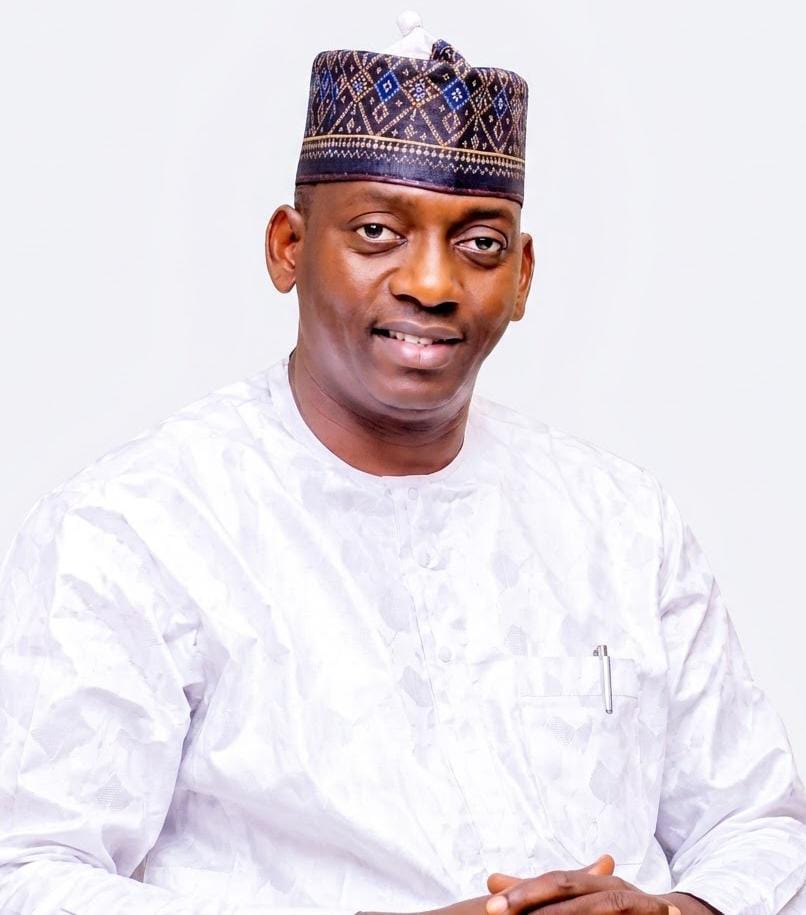
Chairman of the House of Representatives Committee on China-Nigeria Parliamentary Relations, Hon. Jaafaru Yakubu, has applauded the Chinese Government’s expanded zero-tariff policy for African countries, describing it as a catalyst for Nigeria’s economic transformation and a major opportunity for export growth, industrialisation and job creation.
In a statement, Yakubu said China’s decision to extend its zero-tariff policy to 53 African countries, including Nigeria, demonstrates Beijing’s commitment to supporting Africa’s economic development and strengthening South-South cooperation.
He noted that the policy offers Nigerian businesses unprecedented access to one of the world’s largest consumer markets and provides a platform for expanding exports, attracting investment and enhancing economic competitiveness.
“China’s zero-tariff initiative represents a strategic opportunity for Nigeria to accelerate economic growth, strengthen domestic industries and deepen our economic cooperation with one of the world’s most important trading partners,” Yakubu said.
According to the lawmaker, early indicators suggest that the policy is already producing positive outcomes. He disclosed that Chinese imports from Nigeria rose significantly during the first half of 2026, while total trade volume between both countries reached approximately $18 billion, reflecting growing economic engagement.
Yakubu said the encouraging figures demonstrate the enormous potential of the Nigeria-China partnership and highlight the importance of improved market access in driving economic prosperity.
He stressed that Nigeria must seize the opportunity by expanding production capacity, improving product quality and strengthening export-oriented industries capable of competing in the international marketplace.
The committee chairman noted that Nigerian products such as liquefied propane, sesame seeds, nuts, hides and skins are already benefiting from improved access to the Chinese market. However, he emphasized that the country’s long-term objective should be to move beyond the export of raw materials and focus on value-added products.
“We must leverage this opportunity to promote domestic manufacturing, industrialisation and job creation. Increased market access should translate into stronger local industries and greater economic opportunities for Nigerians,” he stated.
Yakubu urged Nigerian manufacturers and exporters to take advantage of the tariff-free regime by improving standards, certification processes, packaging and supply chain efficiency in order to meet the demands of Chinese consumers.
He also called on relevant government agencies to strengthen the infrastructure and institutional support necessary to help local businesses compete effectively in international markets.
The lawmaker further encouraged Chinese investors to expand their presence in Nigeria through investments in manufacturing, agro-processing, technology development and logistics infrastructure.
According to him, increased Chinese investment would support industrial growth, facilitate technology transfer and create much-needed employment opportunities for Nigeria’s growing youth population.
While welcoming the growth in trade relations, Yakubu acknowledged the need to address the trade imbalance between Nigeria and China, stressing that efforts must be made to increase the country’s export capacity and diversify its export basket.
“Our goal should not merely be to trade more, but to trade better. Nigeria must become a producer and exporter of more finished and semi-finished goods if we are to fully benefit from our relationship with China,” he said.
Yakubu also expressed appreciation to the Government of the People’s Republic of China for its RMB200 million grant to support Nigeria’s development projects, describing the gesture as further evidence of the strong friendship and cooperation between both nations.
He said the grant would contribute to efforts aimed at improving infrastructure, strengthening public services and advancing national development priorities.
The chairman commended China’s longstanding support for Nigeria through infrastructure cooperation, technical assistance, capacity building and other development initiatives, noting that such partnerships have contributed significantly to the country’s growth.
Looking ahead, Yakubu called for greater collaboration in key sectors including manufacturing, agriculture, technology, logistics and industrial development.
He reaffirmed his commitment to strengthening parliamentary engagement and promoting policies that will advance the mutual economic interests of Nigeria and China.
“As Nigeria and China continue to deepen their partnership, our focus must remain on translating opportunities into tangible economic benefits for our people. Together, we can build a relationship that is mutually beneficial, economically productive and supportive of sustainable development,” he added.
Yakubu concluded by expressing gratitude to the Chinese Government and the Chinese Ambassador to Nigeria, His Excellency Yu Dunhai, for their continued friendship, support and commitment to Nigeria’s development aspirations.
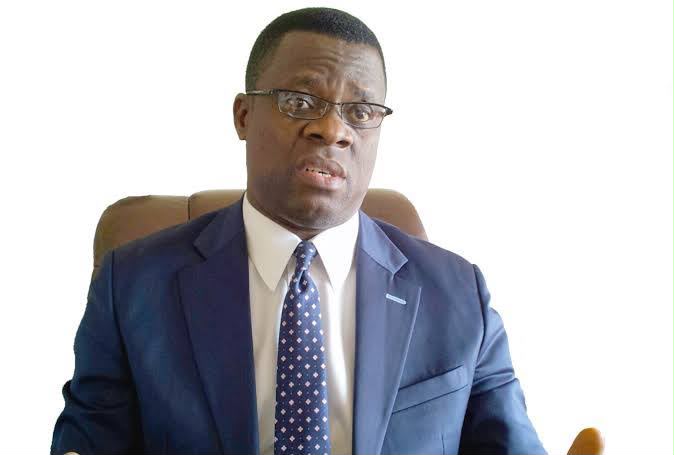
THE FALLACIES OF MIKE IGINI
“It is mean and cowardly and an evidence of weakness and utter demerit, for any group of people to attempt to commend themselves to the public by the negative process of belittling and condemning others.”_
- Chief Obafemi Awolowo, 28th April, 1951.
The attention of the Progressives Alliance for Justice, Unity and Democracy (PAJUD) has been drawn to the barrage of insults heaped by Mike Igini, former Resident Electoral Commissioner of the Independent National Electoral Commission (INEC), against every perceived and imaginary obstacle to his personal agenda.
We posit that since the return of democracy in 1999, the Nigerian political and electoral firmament has been overdosed with different genres of characters – the good, the bad and the ugly.
We state categorically and without fear of contradiction that President Bola Ahmed Tinubu is NOT responsible for the non-appointment of Mike Igini as either Chairman of INEC or National Commissioner since he left office in disgrace and engulfed in controversies in the South-South.
Igini must understand that such appointments are not done willy-nilly. They are based on several criteria. He has served two full terms as Resident Electoral Commissioner. For him to be nominated as National Commissioner, a vacancy must exist for his state. This is apart from the principle of rotation of the position among states in the geo-political zone.
Those who know President Bola Ahmed Tinubu closely know he is a leader who does not deliberately shut the door against competence and capacity. Anyone holding him in contempt on this matter is either being mischievous or acting out the script of the opposition, just like the present issue at stake.
It is unfortunate that Igini has allowed himself to be taken advantage of, dancing to the rhythm of anti-Tinubu and anti-Amupitan rogue agents.
We find it compelling to state unequivocally that Igini is blatantly scheming to discredit the present government and the Amupitan-led leadership of INEC in anticipation of reward by opposition elements and spent forces, if they ever win in the post-2027 general elections.
Over the years, we have watched the transformation of Igini from lawyer, to public affairs commentator, to agitator, until the PDP government appointed him Resident Electoral Commissioner.
We are amused at Igini’s feeble attempts at returning to public reckoning, using barefaced criticism, outright lies, mischief and fallacies against the Renewed Hope and reformative agenda as a springboard to relevance and prominence.
For an egocentric, self-seeking bigot and Mr. Know-All like Igini, he wants to remain relevant as a bride for any juicy INEC Election Management Committee headship or membership, which we know will never happen in this dispensation as a result of his antecedents while in office – an era marred by allegations of partisanship, disloyalty and endless controversies.
Your tenure as REC in Cross River State was characterised by mudslinging between you and a political party over unethical conduct unbecoming of an electoral officer. Similarly, your flexing of muscles and one-sided narratives during your tenure as REC of Akwa Ibom State is still very fresh in our memory. Till date, you are still spewing negative narratives against one of the politicians you fought in that state to high heavens.
Nigerians from all strata continue to wonder where the monies for the live telecast of Igini’s exit as Resident Electoral Commissioner of Akwa Ibom State originated from. In the history of INEC – from Dr. Ephraim Akpata, Alhaji Shehu Musa, Dr. Abel Guobadia, the much-vilified Prof. Maurice Iwu, Prof. Attahiru Jega reputed to be Igini’s benefactor, to Prof. Mahmood Yakubu – none of them had the temerity for such lavish display and grandeur during their exit. What was witnessed in the last days of Igini as REC in Akwa Ibom evokes serious questions about collective decency, decorum, moral rectitude and values.
Any argument in support of such an extravagant exit lacks integrity, for the simple reason that the pay slip of INEC Resident Electoral Commissioners and even National Commissioners is not a hidden document. It is known to the Nigerian public.
We believe that if we are sincere in this country, Igini should focus on more important non-partisan issues than chasing shadows. Igini should also address his own record, including the troubling episode of a Kenyan national engaged by INEC as a consultant some years ago, where the voter register fingerprints of Nigerians were allegedly compromised and handed to foreign interests. That despicable act is still fresh in our memory.
As overwhelming majority of Nigerians with voting rights are aware, there is an uncanny lust for power by desperate opposition politicians lurking on the horizon. They are deploying everything on earth just to grab power in 2027, and for no just cause but simply for selfish personal aggrandizement. They have recruited former staff, Directors, Resident Electoral Commissioners and National Commissioners to help execute their warped agenda and barefaced propaganda to deceive gullible Nigerians who will swallow every hook, line and sinker narrative framed by them.
We unreservedly agree with many who have suggested that as a believer in God, Igini should not allow his mind to be poisoned by the notion that any power outside the influence of God could have been responsible for the failure of his emergence as either National Commissioner or Chairman of the Commission.
Whatever it is, there seems to be more to it than meets the eye. The process of creating anarchy starts with incitement against the government, the electoral empire and security agencies. It often appears so smooth as to be imperceptible, hence those who engineer it enjoy the process at the initial stage, only to be consumed at the end of the day.
Elements in the class of Igini, who are acting out the script of falsehood purveyors and peddlers, will be put to shame at the end of the day. There is no doubt that Nigerians are going to have a well-deserved, credible, transparent, free and fair election in the 2027 general elections.
Above all, nobody can dispute the fact that President Bola Ahmed Tinubu nominated people with impeccable ability, capacity, loyalty, patriotism and honesty as members of the election management structure that will drive our democracy forward, in a manner that both Nigerians and the international community will be proud of like never before in our annals.
The focus of the Tinubu administration remains its much stronger determination to protect and respect the sanctity and fidelity of the ballot during the forthcoming elections.
We implore Mike Igini to stop the rabble-rousing, negative framing, mischief, mudslinging and casting of aspersions against the electoral umpire and Mr. President, and find something reasonable to do to earn a living just like other Nigerians, instead of going from one radio station to television stations across the country. His antics are already known to Nigerians who are far more sophisticated and politically savvy than before.
A word is enough for the wise… “WHEN YOU CONDEMN PEOPLE, YOU BRING JUDGEMENT ON YOURSELF.”
Signed:Comrade Yakubu Dan Abba
Country Representative, PAJUD.
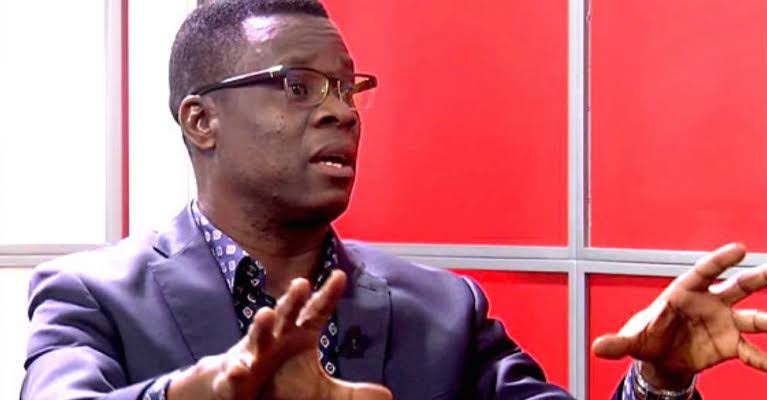
The Progressives Alliance for Justice, Unity and Democracy (PAJUD) has accused former Independent National Electoral Commission (INEC) Resident Electoral Commissioner, Mike Igini, of attempting to discredit President Bola Tinubu’s administration and the leadership of the electoral body, describing his criticisms as politically motivated.
The group, in a statement signed by its Country Representative, Comrade Yakubu Dan Abba, alleged that Igini was seeking to regain public relevance through persistent criticism of the government and the leadership of INEC under its current chairman, Prof. Joash Amupitan.
PAJUD, however, did not provide independent evidence to substantiate its allegations about Igini’s motives.
The group maintained that Tinubu was not responsible for Igini’s non-appointment as INEC chairman or national commissioner after completing his tenure as a Resident Electoral Commissioner, arguing that such appointments were subject to established criteria, vacancies and rotation arrangements among states within geopolitical zones.
“Those who know President Bola Ahmed Tinubu closely know he is a leader who does not deliberately shut the door against competence and capacity,” the statement said.
The group further alleged that Igini’s criticisms were intended to undermine the current administration and INEC’s leadership in anticipation of political rewards from opposition elements following the 2027 general elections.
PAJUD also questioned Igini’s record during his service as Resident Electoral Commissioner in Cross River and Akwa Ibom states, citing past disagreements with political actors and what it described as controversies surrounding his conduct in office.
It also raised questions about the cost and circumstances of the live television broadcast of Igini’s exit from office in Akwa Ibom State, comparing the event with the departures of previous INEC chairmen and other senior electoral officials.
The group did not provide documentary evidence to establish wrongdoing in connection with the broadcast.
In another allegation, PAJUD called on Igini to address what it described as concerns surrounding the engagement of a Kenyan national as an INEC consultant and the alleged compromise of Nigerian voters’ fingerprint data. The statement, however, did not present evidence establishing that Igini was personally responsible for any compromise of the data.
The alliance accused opposition politicians of attempting to discredit the electoral system ahead of the 2027 elections, alleging that some former electoral officials were being used to advance political interests. It did not identify the individuals allegedly involved or provide evidence supporting the claim.
PAJUD, meanwhile, expressed confidence in the ability of the current INEC leadership to conduct credible, transparent, free and fair elections in 2027.
It said the Tinubu administration remained committed to protecting the integrity of the ballot, adding that the president had nominated individuals it described as capable, patriotic and committed to the country’s democratic development.
The group urged Igini to refrain from what it characterised as inflammatory criticism of the president and the electoral commission, insisting that public discourse on electoral reform should be guided by responsibility and respect for democratic institutions.
Quoting former Premier of the Western Region, Chief Obafemi Awolowo, the alliance recalled his statement of April 28, 1951, that it was “mean and cowardly” for any group to seek public approval by belittling and condemning others.
PAJUD concluded by urging Nigerians to remain confident in the electoral process ahead of the 2027 general elections, while reiterating its support for the Tinubu administration and the current leadership of INEC.


Yakubu Hails China’s Zero-Tariff Initiative as Catalyst for Economic Transformation
THE BOLD SHIFT:BETWEEN REFORMS ANDTHE REALITY OF THE BROKEN EGGS:
WHO: Nigeria Records Zero Ebola Cases After Evacuation of Swiss Couple

-
 Uncategorized6 years ago
FG, states urged to harness flooding for ranching, others with technology – Agbaje
-
 Headlines11 years ago
Breaking: EFCC seals Borno House of Assembly, as Hon members take to their heels
-
 News12 years ago
Nigeria Security Operatives Stage Manhunt For Homosexual Perpetrator
-
 News10 years ago
How 21-year-old Girl fled community over accusation of lesbianism
-
 News11 years ago
Yobe Gov Moves Against Deputy
-
 Opinion7 years ago
7 signs she has friend zoned you
-
Technology5 years ago
Online job placement company headhunts women
-
 Headlines10 years ago
Borno Dep Gov Abducts Another Church Leader