
Opinion
Judicial Recklessness Threatens Outcome Of Suit Seeking Custody Of Children In Abuja

The Judiciary has in recent time come under serious criticism by some Nigerians in the way and manner justice is dispensed following some high profile cases that made headlines in most national dailies. However, the development does not mean all is well with cases that attracted little or no reportage following erroneous and reckless handling of low profile cases.
In this piece, an independent investigator divulges to AljazirahNigeria’s judiciary correspondent what could be best described as judicial recklessness dissipated by the Upper Area Court sitting at Gwagwalada, Abuja, under the watchful eyes of Shariah court of Appeal Gudu, Abuja. An act of misconduct in respect of case No.: CV/90/2019 between Amina Usman vs Abubakar Rahmat Salihu.
Narrating the outcome of his investigation on a case seeking to keep custody of children of Abubakar Rahmat Salihu and his estranged wife, Amina Usman, he had these revelations to make;
“Abubakar Rahmat Salihu is the defendant in the abovementioned suit which was heard before His Worship the judge of the upper area court sitting in Gwagwalada.
“The suit was initially before the Area Court in Kubwa before it was transferred by the head of the Sharia court from Kubwa Area Court to the Gwagwalagda Area Court.
According to the investigator, “The suit borders on the custody of the defendant’s children whose mother was granted temporary custody of the children by the former judge sitting in Kubwa.
“The order was appealed by the respondent to the Sharia court of appeal during which an outcome of the appeal was being awaited. The defendant appealed the awaited decision of the Sharia Court of Appeal and duly informed the judge through a motion and a letter of the need to wait for the decision of the court of appeal A motion was filed for the restraining order against the judge and others to stop the warrant of arrest he has issued against the defendant on the civil matter.
“ Our findings revealed that the Gwagwalagda Upper Area Court Judge issued the said arrest warrant without jurisdiction and was trying to make use of the vacation to overreach the appeal by enforcing the judgement appealed against.
“Furthermore, the investigation revealed that the head of the upper area court in gwagwalada was heard making utterances against the Defendant that he must jail him since he had written a petition against his masters at the sharia court to NJC for misconduct. To us this seems like the ruling of the gwagwalada upper area court on this, is a vendetta against the defendant.
“ Our further trail on the petitions written by the defendant shows that the above reasons and many other attitude exhibited by the judge in gwagwalada led to the petition by the defendant.
“According to a source in the court, the judge in gwagwalada gave an order that no submission be received at the court from the defendant. It is despicable that a judge of his caliber will always descend that way during and after court proceedings.
It is also on good authority that
“On August 1, 2019 he signed a subpoena that the defendant should produce the children in court when the defendant is fully aware that subpoenas are only issued to witnesses. According to a staff of the court, the defendant’s counsel informed the court that they have since filed a notice of appeal challenging the order at the Sharia court of appeal but yet he turned a deaf ear since he already has a mission to accomplish.
Our findings further showed that the defendant approached the High court to remove the case from the Gwagwalagda court, and to call the said judge to order.
In our effort to know the details and merits of the defendant’s petition submitted to various offices, we found out that the above submission was reported by the defendant through a petition to the Executive Secretary, National Judicial Council, Supreme court, of Nigeria complex, the secretary FCT Judicial Service committee, Gudu High court and the Director of Area Court, Sharia Court of Appeal. The investigation also traced to know if there has been responses from the offices where the petition were reported, but found out that yet no feedback from the authorities, which suggest that the petitions has merits.
Accordingly, the investigation further revealed that “On the 6th of September 2019, a Certiorari court order with motion No FCT/HC/M/8287/19 quashing the entire proceedings, subpoena ad testificandum et du cess tecum, ruling of 1st August 2019 and warrant of arrest of 7th, August, 2019 was obtained by the defendant from the High court of the Federal Capital Territory, Nyanya, Abuja. The said orders were duly served to the respondent’s counsel and the sole judge upper area court sitting at Gwagwalagda.
At this juncture attempt by the investigators to interact with Abubakar Rahmat Salihu (defendant) and Amina Usman (respondent) was abortive, as defendant’s contact phone was not reachable and the respondent’s number was reached but refused to interact with the investigators.
Additionally and based on findings around the court environment, revealed that the Sharia Court of Appeal under the leadership of its Head attempted serving the defendant another warrant of arrest on 12th of September, 2019 at his office, despite the existing Court of Appeal of Nigeria restraining order with appeal number CA/A/688/S/2019 from the court of Appeal and Certiorari court order with Motion No FCT/HC/M/19 staying all action or steps towards the proceedings of the respondent.
In synopsis, the investigator frowned at the observations portraying the judiciary which serves as the hope of the common man as a tool for what could be regarded as judicial recklessness on the part of the Area Court Judge in Gwagwalagda under the watch of the shariah court of appeal. According to our sources, the respondent counsel is still seen around the Sharia court of appeal attempting to influence the court to carry out further action where they have no jurisdiction. This urgently begs for concern an sincere interpretation from all stakeholders, on whether it is right for an upper area court to overrule a restraining order of the court of appeal and if also the shariah court has the power to attend to a matter before the court of appeal. i
The above submission from the investigators begs for an answer to avoid any ambiguity in the standards of the nation’s judicial system.
By Kassim Omomia
We have watched Ben Okezie Kalu the deputy speaker of the House with all admiration. He exudes humour, humility and hardwork.
Kalu did not catch our glimpse from the wrong side but from a prism of competence, dedication and above all patriotism in his legislative duties. Even though we may not have a full grasp of Okezie’s elementary political life up till his ascension to the exalted office of Deputy speaker, House of Representatives, Federal Republic of Nigeria, but it is on record that he served extremely well and meritoriously when as a first time member of the House of Representatives he was chairman Media and Publicity committee, doubling as spokesperson and image maker.
Okezie stirred the House public outlook to the approval of Nigerians and the outside world,comparing that unit of the Nigerian bicameral legislature he managed its image to world parliaments, like the US Congress and the British House of Common,among others. At home, the House of Representatives earned “the Peoples Parliament” accolade “.
Recalling Okezie’s past,the nostalgia breeds excitement and a continuous commitment to legislative and representatives’ service to his people and the country.
Albeit these well delivered services, his underscoring accomplishments were reinforced by his promotion and advancement to the post of Deputy Speaker House of Representatives, a divine elevation to yet, many exalted offices to come.Kalu qualifies to be governor, and Vice President, even the President of this great country ,if young men are roundly supported for such enviable positions.
Notwithstanding, his Bills , motions are not watery but of immense value to democratic governance, systemic reforms and overall growth and welfare of Nigerians. Call it democratic dividends, the Bende constituents have never had it so good, until now. Similarly his quest for a people’s constitution brings to fore his worthy contributions in the current alteration of the1999 Constitution exercise which he midwife’s for the House of Representatives. He speaks continually about a people’s inclusiveness in people’s document. He speaks about equity, justice and fairness for all. He’s concerned about security, a community policing strategy where states look critically into domestic security and policing. Okezie speaks for all: about good life for Nigerians, not only the Abia people he represents.
Curiously, I have also come in good terms and stead with his leadership style, especially his legislative prowess in presiding, either as Speaker in Chair or Chairman at the Committee of Whole”,a serious and critical aspect of legislative business, where reports become laws made by the parliament. At this critical level of legislative engagement, Ben Okezie Kalu has performed extremely well ,surpassing past deputies. This scoring is without prejudice or gainsaying but with all modesty.
I have written about parliamentary activities,from plenary to investigative hearings, to deliberations and considerations of reports , either in Committee of Supply for money issues -budgets etc, since 2000. I have also been privileged to sit for longer periods listening from the gallery, deliberations at the “Committee of Whole’, a tedious and significant session of legislative processes and never seeing a deputy speaker as pragmatic and intelligent like Kalu. it takes a Chair that is not lazy but with dexterity, humility, patience and resilience to succeed in any report consideration at the “Committee of Whole”.And one former deputy speaker who comes close to Kalu in assesment was Hon Lasun.But with this current Deputy Speaker, the magic wand to navigate these trying moments where every member appears uninterested in their legislative function, is unprecedented.
Two manoeuvres that beat my imagination and exhibit Kalu’s superb style is his smooth management of deliberations and final consideration of the 2025 Electoral.Amendment Bill and the passage of the 2026-2028 MTEF and FSP, on Thursday December 18 2025, few moments to the 2026 Budget presentation by President Ahmed Tinubu to the joint session of the National Assembly.
His mental alertness, understanding of the subject matter, his assessment of the mood and psyche of the members and his strategic demeanour coupled with the patience and resilient approachas well as his humility, diplomacy in getting an unwilling session sit for hours, unknowingly to the members that they had sat for so long and passed a record two critical national assignments, still leaves even the members amiss how it began but ended well.
For over two weeks now, there have been several adjournments to consider the Electoral amendment Bill. The constraints at times point to the inconsequential number of members in session , or when there’s a seeming quorum, inertia and unwillingness sets in.
According to checks, members’ lacklustre attitude in these ending times, come from failed promises from the executive branch such that it was gathered that the lawmakers were adjourning for the yuletide break without cash -backings.This development not only worries the legislators who are at a loss over how to satify their insatiable constituents during the Christmas festivities, but has resulted to the lethargy displayed by them in carrying out their statutory duties of law making . Fears are that, the members may not chorus “on your mandate we stand”, going forward, especially on 19 Friday December 2025, when the President presents his 2026 budget to the joint session of the National Assembly
While the outcome of that session is awaited, the success gained in the House of Representatives for completing and finally passing the MTEF/FSP in record time and upon which premise President Tinubu submits the 2026 Appropriation Bill, after the Senate hurriedly put out their own since Tuesday evening,underscores the goodwill the deputy speaker enjoys from his colleagues,expectedy due to his humility and resilience,such that in over six- unstoppable hours, he successfully managed a tensed session to effectively pass the MTEF and Electoral.amenment Bill. This is all kudos to a young PAN- Nigerian legislator in our hearts
That Ben Okezie Kalu displays an uncommon leadership acumen, which promotes unity and which with he won the hearts of all who sat in plenary on that faithful Thursday 18 2025,is an understatement . This is so because all the lawmaker at that Thursday session,wether Hausa, Fulani, Yoruba,Edo, TIV ,Idoma,Gbagy and of course Ibo were in sync with, aligning with his master stroke with which he chaired that earlier unpredictable session that later became a huge success. I have a dream that Ben Okezie Kalu shall accomplish more in his political career, given his character, competence and leadership capacity.
He will excel beyond this time, tide and position. Ben Okezie Kalu is the lawmaker in our hearts and qualifies for our award as ‘ A Legislature- Exemplar’ even as we watch him deliver again during the final voting of the alteration to the 1999 constitution ( As Ammended) in the days to come.
Kassim Omomia of the Bigeyeonline writes from Abuja


By James Itodo
The Nigerian oil and gas sector, since its discovery, exploration, and exploitation at the turn of the century, has become the goose that lays the golden egg, likened only to the much-sought-after bride.
This is because oil, and later gas, remained the main economic sustainer, accounting for virtually all the revenue utilised for the economic sustainability and stability of the country—a nation driven by a monolithic economy.
Various attempts at sustaining its viability failed because those reforms lacked the necessary ingredients and the political will of their drivers to succeed. Moreover, the temptation of the enormous amounts generated, and the ease of generating this revenue, became stronger than the moral responsibility and patriotic devotion of the country’s leaders, causing various rulers to rely completely on oil while abandoning or ignoring agriculture and every other means of generating revenue, including all forms of diversification and integration.
The present Nigerian Upstream Petroleum Regulatory Commission (NUPRC) was born out of necessity: first, to inherit the abnormalities of the past; and second, to set in motion reforms aimed at effectively repositioning the sector. Key among these is strong political will and the appropriate sensitisation of the country’s political leaders to look beyond oil and gas revenue and think towards diversification.
To carry this out effectively, there is a need to build trust and confidence on the fulcrum of accountability and transparency.
So far, the verdict has been positive. The basic recipe for repositioning and bringing about a volte-face in the sector is now present: accountability and transparency.
A new era, based on a better concept of transparency and accountability, is enhancing the effective repositioning of the Nigerian oil and gas sector, which will work for the overall benefit of all citizens and indeed residents.
Today, Nigerians are now seeing the oil and gas sector as a blessing, with transparency and accountability becoming the fulcrum of operations at the NUPRC.
There is no doubt that, for decades, Nigeria’s oil and gas sector was a cesspit of abhorrent and odious corruption, coupled with mismanagement—a centre of graft, earning the moniker “resource curse.”
Instead of bringing blessings to the country, it became an avenue for self-aggrandisement and self-enrichment at the detriment of national interest, economic growth, prosperity, and development.
As a whole, the sector’s opacity and lack of accountability led to widespread corruption, where the few who had access to this national wealth enriched themselves and their families—buying choice houses at highly exorbitant prices in prime cities of the world and sending their children to schools abroad on ear-splitting school fees, all with our common patrimony—at the expense of the country. This resulted in environmental degradation and human rights abuses, leaving citizens with little to show for the country’s vast oil resources, world oil production status, and its derived and associated wealth.
However, a new dawn has emerged with the Nigerian Upstream Petroleum Regulatory Commission (NUPRC) leading a rescue mission to reposition the sector with renewed vigour, intentionality, and patriotic commitment under the leadership of Engr. Gbenga Komolafe, who has turned the NUPRC into a beacon of hope for Nigerians.
Unambiguously, the NUPRC’s commitment to transparency is demonstrated through its proactive disclosure of key industry data—which had previously been shrouded in obscurity—including production figures, revenue streams, and contract awards.
The demystification and openness of this key information have greatly enhanced the fostering of trust and confidence among stakeholders, including local communities, civil society organisations, and international partners.
Another signature reform is the strengthening and implementation of the Nigeria Extractive Industries Transparency Initiative (NEITI), which ensures that oil and gas revenues are transparently tracked and accounted for, thereby reducing corruption and ensuring that revenues are channelled for the overall benefit of all citizens.
Projecting the ideals of the Renewed Hope Agenda of the Tinubu-led administration, the NUPRC has also prioritised increased utilisation of local content development, bringing on board many more Nigerian companies to participate in the oil and gas value chain, thereby creating more jobs, stimulating economic growth, and empowering local communities.
The sector’s transformation is an unequivocal demonstration of the power of transparency and accountability.
Daily, Nigerians are beginning to see oil and gas resources as a direct blessing rather than a curse, with a sector and operators poised to drive economic growth, create jobs, and improve living standards.
However, this is just the beginning; the journey is far from over, and the best is yet to come—for all of us.
While Nigerians holistically embrace these reforms, they must also continue to demand transparency and accountability from their leaders, while the NUPRC’s efforts must be supported and sustained to ensure that the sector remains a catalyst for national development.
There is no doubt that the oil and gas sector can be a powerful catalytic tool for poverty reduction, wealth creation, and economic transformation. This can be imminently and necessarily achieved when the NUPRC continues in its commitment to transparency and accountability, predicated on the resilience of Nigerians, who will look forward to a brighter future where their natural resources work for them, not against them.
It must be a collaborative and conscientious responsibility of all Nigerians not only to support the NUPRC’s efforts and reforms targeted at transforming the oil and gas sector but also to demand consistent transparency and accountability from our leaders, as this will ensure that our natural resources benefit all Nigerians, securing a brighter future for Nigeria and Nigerians.
Itodo writes from Abuja
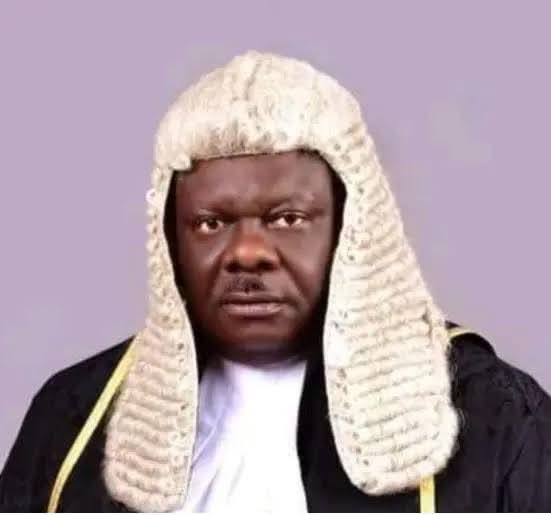
The Tiv Supreme Council has announced that former Attorney General of the Federation and Minister of Justice, Chief Kaase Michael Aondoakaa, SAN, will be conferred with the Ivaaniyange chieftaincy title.
The title, according to the Council, recognizes individuals considered to have made notable contributions to the advancement and welfare of the Tiv people.
Chief Aondoakaa, a Senior Advocate of Nigeria, currently serves in various public and private sector roles, including Chairman, Endowment Fund Raising Committee at Joseph Sarwuan Tarka University, Makurdi. He also provides advisory support on foreign investment, entrepreneurship, and agricultural development. He is associated with the West African Rice Processors Association (WARIA) and the Rice Processors Association of Nigeria (RIPAN).
He is a member of the Nigerian Bar Association and the International Bar Association.
Associates describe him as a supporter of youth development and educational advancement. According to persons familiar with his philanthropic activities, he has supported scholarship initiatives and facilitated opportunities for several indigent beneficiaries over the years.
The Tiv Supreme Council stated that the new honour acknowledges what it views as his years of service in legal, governance, and agricultural sectors. The Council expressed confidence that he will continue to contribute to community development following the conferment.
Chief Aondoakaa previously received a traditional chieftaincy title, Tsar-U-Tiv Mba Sha Nasarawa, from the Mutual Union of Tiv People in Nasarawa State in 2008.
He has participated in various international engagements across Europe, Asia, the Middle East, the Americas, and Africa, representing Nigeria in official and professional capacities. He has also been recognised with awards by different organisations for what they described as service and excellence.
Chief Aondoakaa is a practicing Catholic and is married with children.
The formal conferment of the Ivaaniyange title is expected to hold in Makurdi on a date to be officially issued by the Council.


Audi: Trajectory of Success and Changing the Narrative

We’ve Known Each Other Since the 90s; I’m Qualified to Call Him a Scumbag – El-Rufai

Electronic Transmission: This Is Just a Warning Protest, We’ll Wait Till Tomorrow – Isaac Fayose

-
 Uncategorized5 years ago
FG, states urged to harness flooding for ranching, others with technology – Agbaje
-
 Headlines10 years ago
Breaking: EFCC seals Borno House of Assembly, as Hon members take to their heels
-
 News12 years ago
Nigeria Security Operatives Stage Manhunt For Homosexual Perpetrator
-
 News9 years ago
How 21-year-old Girl fled community over accusation of lesbianism
-
 News10 years ago
Yobe Gov Moves Against Deputy
-
 Opinion7 years ago
7 signs she has friend zoned you
-
Technology4 years ago
Online job placement company headhunts women
-
 Headlines10 years ago
Borno Dep Gov Abducts Another Church Leader