
News
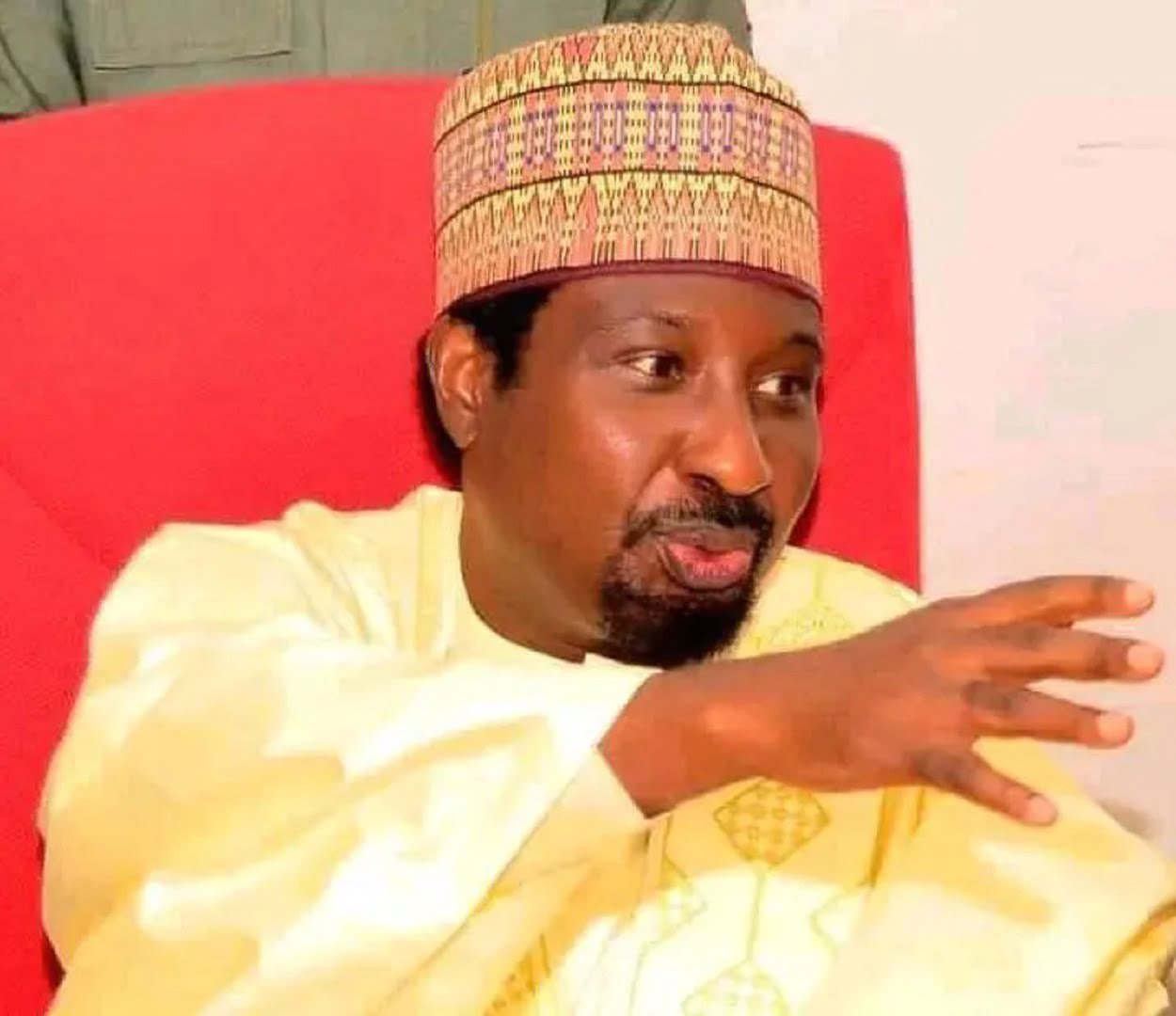
Kano APC leaders to Sen. Barau: Your performance is exceptional, impressive * I won’t let you down – Deputy Senate President

By Lateef Taiwo
Stakeholders of the All Progressives Congress (APC) in Kano North Senatorial District have hailed the Deputy President of the Senate, Senator Barau I. Jibrin, describing him as an exceptional lawmaker and leader.
The party leaders led by their chairman, Hon. Sani Mukaddas paid the Deputy Senate President a courtesy call on Monday at the Senate, Abuja. Senator Barau represents Kano North Senatorial District.
Mukaddas told the lawmaker that his performance as a senator representing Kano North from 2015 to date has been outstanding and impressive.
” The projects you have provided across the 13 local government areas of our senatorial district, Kano North are evidence of your outstanding performance. We are grateful,” the party leader said.
He said the party leadership was not surprised when Senator Barau emerged as the Deputy President of the Senate on June 13, this year, unopposed.
” We are not surprised when you emerged as the Deputy President of the Senate unopposed. This shows you have the support of your colleagues. We are also with you 100 percent and we are proud of you. You have impacted positively on every household in our senatorial district,” he said.
The party leader also hailed the emergence of the former governor of Kano State, Dr Abdullahi Umar Ganduje, as the National Chairman of the APC. Ganduje is also from Kano North.
Responding, the Deputy President of the Senate thanked the party leaders for their support, assuring them that, ‘’ I will not let you down’’
He said the excellent leadership provided by the party led to the success of the APC in the senatorial district during the election.

A coalition of civil society organisations has urged President Bola Ahmed Tinubu to disregard what it described as divisive comments attributed to the National Scribe of the All Progressives Congress (APC), Senator Bashiru Ajibola, over the political relevance of the Minister of the Federal Capital Territory (FCT), Barrister Nyesom Wike.
The coalition, operating under the banner of the Coalition of Civil Society Groups for Peace, Security, Good Governance, Equity and Justice, said the remarks were ill-timed and capable of weakening internal cohesion within the ruling party as political alignments ahead of the 2027 general elections begin to take shape.
The position was contained in a statement jointly signed by Comrade James Okoronkwo, Dr Chinemerem Iwuanyanwu, Comrade Aisha Mohammed, Barrister Samuel Eze, and Mr. Ibrahim Abdullahi, on behalf of member organisations of the coalition.
According to the statement, Wike’s tenure as FCT Minister has been marked by visible and measurable infrastructural development across the Federal Capital Territory, including extensive road construction and rehabilitation, renewed attention to public housing, urban renewal initiatives, and the restoration of administrative order in key districts of Abuja.
The coalition noted that the pace and scale of project delivery under Wike’s leadership have significantly transformed the outlook of the nation’s capital, enhancing public confidence in governance and service delivery.
Beyond infrastructure, the CSOs said Wike’s deep grassroots network in Rivers State and his growing political influence within the FCT remain strategic assets in President Tinubu’s re-election considerations.
The group also drew attention to governance developments in Rivers State, arguing that the current administration has struggled to replicate the level of cohesion, momentum, and visible impact associated with Wike’s leadership.
While cautioning against internal party disagreements, the coalition urged President Tinubu to prioritise performance, competence, and national interest over internal dissent.
“The President should remain focused on proven performers who have demonstrated capacity, loyalty, and broad-based public appeal,” the statement said, adding that internal party distractions should not derail governance or electoral strategy.
The coalition concluded by stressing that as Nigeria moves closer to the 2027 elections, unity, results-driven leadership, and strategic political alliances will be crucial to sustaining the administration’s Renewed Hope agenda.

Controversy has erupted following remarks by the Governor of Benue State, Reverend Father Hyacinth Alia, who revealed that some individuals who have confessed to him as an ordained Catholic priest for over 36 years are now his political rivals.
The Catholic Sacrament of Confession, also known as Reconciliation or Penance, is a sacred practice in which a person confesses sins to a priest and receives absolution. The inviolable nature of this sacrament is a cornerstone of Catholic faith, and priests are strictly prohibited from disclosing confessions.
However, some Catholic leaders have accused Governor Alia of violating this sacred principle, warning that his disclosure undermines the sanctity of the sacrament. There are claims that prominent figures, including Secretary to the Government of the Federation, Senator George Akume, had previously sought confession from Father Alia.
The governor’s statement has raised serious concerns within the Benue Catholic Diocese. Sources indicate that his comments may have eroded trust in the sacrament, as many faithful now fear that their confessions could be exposed or politicized.
“This is a grievous offense to the Church,” said one source. “The seal of confession is absolute. Priests are forbidden from speaking about confessions for any reason, including political commentary.”
Governor Alia’s interview, which highlighted his long history of hearing confessions from individuals who are now political opponents, has sparked alarm among both clergy and laypersons. The incident underscores the tension between the governor’s dual roles as a political leader and an ordained priest, and it has ignited debate on the boundaries of religious and political responsibilities.
Catholic faithful and church authorities have called for strict adherence to sacramental secrecy to protect the integrity of the faith and preserve the trust between confessor and priest.
News
Due Process Is Not Optional: Why the National Assembly’s Authentication of the Tax Reform Acts Upholds Law, Order, and Democratic Integrity

By Philip Agbese
In every constitutional democracy, the legitimacy of law does not rest on sentiment or speed, but on process. Laws derive their authority not merely from political will or popular approval, but from scrupulous adherence to the procedures laid down by the Constitution and statute. It is against this background that recent public commentary surrounding the authentication, assent, and gazetting of key tax reform legislation must be understood, and properly situated within Nigeria’s constitutional order.
The National Assembly, as the custodian of legislative authority, has responded not with defensiveness or evasion, but with institutional sobriety. The leadership of both Chambers has activated the very safeguards that give law its moral and legal force: verification, certification, and transparency. This is not an act of weakness. It is the essence of legislative strength.
The press release issued by the Management of the National Assembly makes this point unambiguously. Faced with questions relating to the harmonisation, assent, and gazetting of the Nigeria Tax Act, 2025; the Nigeria Tax Administration Act, 2025; the Joint Revenue Board of Nigeria (Establishment) Act, 2025; and the Nigeria Revenue Service (Establishment) Act, 2025, the legislature chose the path of constitutional due diligence rather than public polemics . That choice deserves commendation.
At the heart of the matter is the Acts Authentication Act, Cap. A4, Laws of the Federation of Nigeria 2004. This statute exists for a simple but profound reason: to ensure that what is passed by the legislature, assented to by the President, and published for public reliance is the same text. Authentication is not an optional bureaucratic ritual; it is the bridge between legislative intent and legal certainty. Without it, the integrity of the statute book itself would be compromised.
The steps undertaken by the National Assembly, as illustrated in the published authentication process, reflect long-established parliamentary practice. From the preparation of the certified true copy of the Bill after enactment, through compilation and certification of the schedule of Bills for assent, to gazetting and official publication, each stage serves a distinct constitutional purpose. Collectively, they form a chain of custody for the law. Break that chain, and legal chaos follows.
Crucially, the leadership has been careful to clarify that the ongoing internal review does not concede any defect in legislative authority, nor does it encroach upon the functions of the Executive or Judiciary. It is an internal, administrative exercise aimed at clarity, accuracy, and the sanctity of the legislative record . In constitutional terms, this is precisely how a mature legislature should behave: correcting its own processes where necessary, without grandstanding or blame-shifting.
There is also a moral dimension that should not be overlooked. Tax legislation affects every citizen, every business, and the fiscal stability of the state. Such laws must command confidence. When the legislature demonstrates that it is willing to pause, verify, and certify before insisting on finality, it reinforces public trust. Due process is not the enemy of reform; it is the condition that makes reform legitimate and durable.
The legal effect of this approach is equally important. Official gazetting and the issuance of certified true copies provide courts, regulators, investors, and citizens with an authoritative text upon which rights and obligations can safely be based. In an era where disputes often turn on the precise wording of statutes, the insistence on authentication is not pedantry. It is prudence.
Those urging haste over process should reflect on comparative experience. In established democracies, legislatures routinely delay commencement, correct clerical inconsistencies, and re-certify statutes to protect the integrity of the legal order. Nigeria is not being exceptional; it is being orthodox.
Ultimately, the National Assembly’s actions reaffirm a deeper constitutional principle: that law is greater than politics, and procedure is the guardian of substance. By acting within the Constitution, the Acts Authentication Act, Standing Orders, and established parliamentary conventions, the leadership has shown fidelity not just to power, but to responsibility.
In defending due diligence, the National Assembly is defending the rule of law itself. That is not merely legal correctness. It is a democratic virtue.
Agbese LLB[UK], LLM [UK], MBA[UK] is the Deputy Spokesperson of the House of Representatives.


CSOs Urge Tinubu to Ignore APC Scribe, Hail Wike’s Performance Ahead of 2027

Trump Warns House Republicans: Losing Midterms Could Lead to Impeachment

NYSC Announces Date for 2026 Batch ‘A’ Stream I Orientation Course

-
 Uncategorized5 years ago
FG, states urged to harness flooding for ranching, others with technology – Agbaje
-
 Headlines10 years ago
Breaking: EFCC seals Borno House of Assembly, as Hon members take to their heels
-
 News11 years ago
Nigeria Security Operatives Stage Manhunt For Homosexual Perpetrator
-
 News9 years ago
How 21-year-old Girl fled community over accusation of lesbianism
-
 News10 years ago
Yobe Gov Moves Against Deputy
-
 Opinion7 years ago
7 signs she has friend zoned you
-
Technology4 years ago
Online job placement company headhunts women
-
 Headlines10 years ago
Borno Dep Gov Abducts Another Church Leader