
Politics
“President Accused of Intimidating Governor Fubara to Sign Peace Pact in Rivers Crisis”

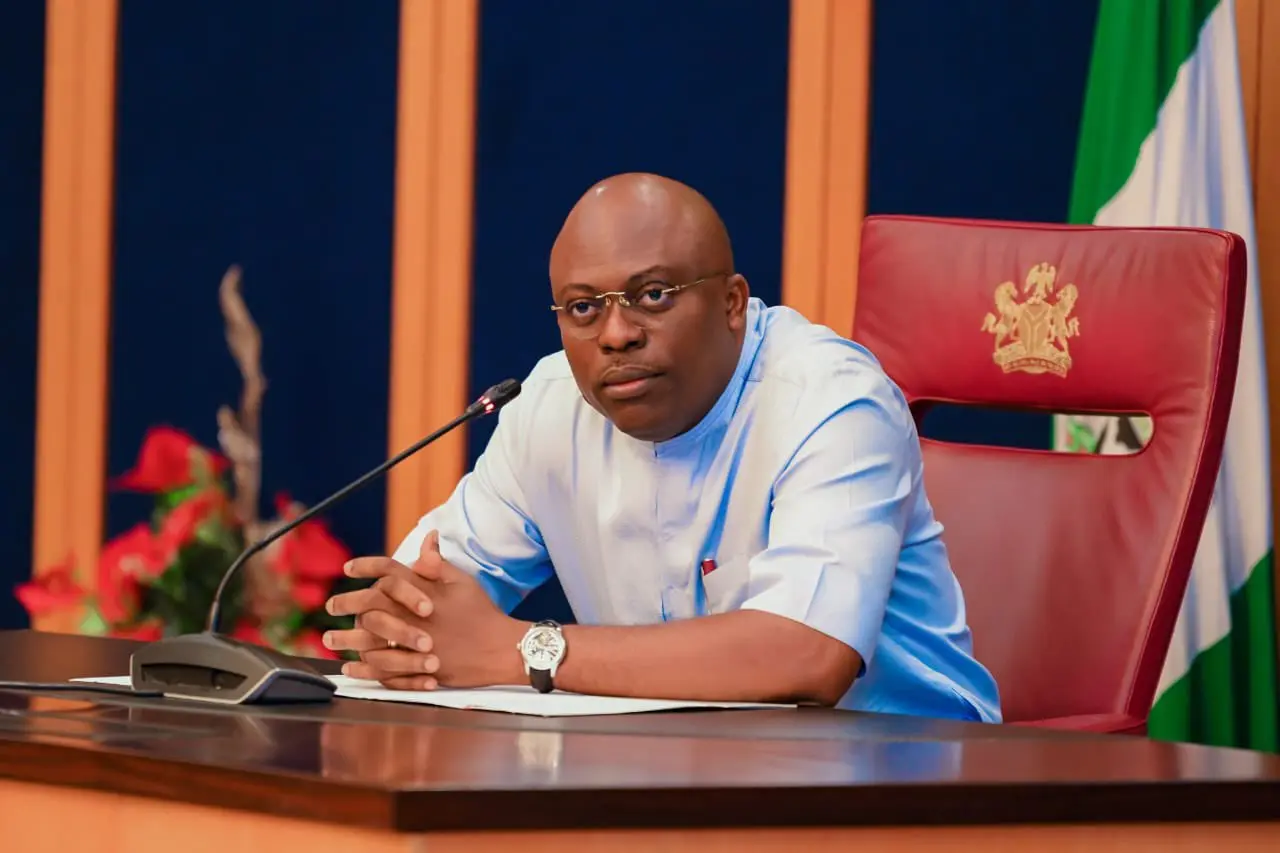
Fresh details have emerged regarding the recent peace agreement brokered between Governor Siminalayi Fubara and FCT Minister, Chief Nyesom Wike, by President Bola Tinubu to resolve the political crisis in Rivers State. Former Commissioner for Water Resources in Rivers State, Chief David Briggs, alleged that President Tinubu intimidated Governor Fubara into signing the eight-point peace resolution under duress.
Briggs claimed that the President issued indirect threats, creating a tense atmosphere during the meeting at the Presidential Villa in Abuja. Despite the signing of the resolution, many of the agreed-upon measures have yet to be implemented.
The political divide between the G27 and G4 factions of the Rivers House of Assembly persists, with joint sittings yet to commence. Governor Fubara has not resubmitted his 2024 N800.3 billion budget to the House. The G27, comprising 27 defected Peoples Democratic Party (PDP) legislators who joined the All Progressives Congress (APC), withdrew their impeachment notice against Governor Fubara, but legal proceedings continue.
Briggs, present at the meeting with other Rivers elders, claimed that President Tinubu’s threat centered around the consequences Governor Fubara would face if he did not comply with the presidential proclamation. The revelations shed light on the tense atmosphere during the negotiations.
The President’s directive included dropping all impeachment proceedings against the governor and withdrawing court cases related to the crisis, favoring Wike’s camp. Governor Fubara, however, reassured the public that he would implement the peace agreement.
In response to the unfolding situation, the National Working Committee (NWC) of the PDP warned party leaders against making unguarded statements that could tarnish the party’s reputation. The NWC expressed displeasure over remarks made by certain leaders, citing former Governor of Jigawa State, Sule Lamido’s public statement criticizing the handling of the Rivers crisis. The party stressed the need for unity and cautioned against actions that could undermine the PDP’s cohesion.

The two People’s Democratic Party ( PDP) Governorship candidate in Nasarawa State, Hon David Emmanuel Umbugadu says he would contest for the Governorship position of the state under the All Progressives Congress ( APC) in 2027.
Ombugadu stated this in a meeting with Eggon people from Nasarawa North Senatorial District in Akwanga LGA
Ombugadu, who recently joined APC said that he decided to joined the party in order to add value and due to the developmental strides of President Bola Ahmed Tinubu and Gov. Abdullahi Sule in the state.
Ombugadu, a former House of Representatives member representing Akwanga/ Nassarawa Eggon/ Wamba Federal constituency dismissed rumours that he has joined APC for deputy governor slot in 2027.
” I want to use this opportunity to tell you that I will contest the Senatorial seat by-election of Nasarawa North to replace our late Distinguished Sen Godiya Akwashiki at the National Assembly.
” By God’s grace, I will go to the Senate to contest for governor of the State in 2027. Ombugadu will go to the Senate to contest for Governor in 2027.
” I want to tell you today that anybody that say I have joined APC for deputy governor slot, it is a lie,” he said.
Ombugadu said he had the experience and will bring speedy development to the zone, if voted as senator of the zone during the by-election.
” I will bring projects such as water, scholarship, agriculture empowerment, electricity among others, if given the senatorial mandate during the bye-election,” he said.
The former lawmaker also assured that he will join hands and work together with Gov. Abdullahi Sule and other APC stakeholders in order to deliver 100 per cent votes for President Tinubu re-election and APC in 2027.
” For the sake of the progress and development of Nasarawa State and Nigeria at large, let’s give our maximum support to His Excellency, President Bola Ahmed Tinubu and Gov Abdullahi Sule for APC victory beyond 2027,” he added.
According to him, I have every reason to support His Excellency, President Bola Ahmed Tinubu on the platform of APC due to his developmental strides across the country.
Ombugadu commended Gov. Abdullahi Sule for his developmental strides in the state in the area of flyovers and under pass in Lafia, Akwanga and Keffi among others infrastructures across the state
Besides, he urged the people to embrace APC-e-registration via registering with the party in order to become bonafide member of the party to contribute positively to the development of the party and the country at large.
Ombugadu further urged people, who are yet to register and get their PVCs to do so to enable them vote APC in 2027.
In their separate speeches, Hon Jacob Ali, former PDP Nasarawa North Zonal Chairman, Hon Istifanus Abaku, former Administrator, Akun Development Area, Hon Lami Bako, former Speaker, Akun Legislative Council, Leaders of Eggon Political Forum among others assured Ombugadu of their prayers and support to succeed.
They said Ombugadu has grassroots and people’s support and would bring speedy development to the zone, if elected as Senator in the bye- election.
An independent investigation by Nigerian Concord Newspaper has found no evidence linking a former Minister of Justice and Attorney General of the Federation, Chief Michael Kaase Aondoakaa, SAN, to the Utan Bran compensation case or other alleged scandals at the Federal Ministry of Justice.
The investigation, conducted at the Federal Ministry of Justice, followed reports in sections of the media alleging misconduct by the former chief law officer of the federation.
Documents obtained through the Freedom of Information Act indicate that Chief Aondoakaa was not involved in the legal firms that handled the Utan Bran compensation matter. Findings further show that the judgement debt related to the case was reportedly paid in 2006 under the tenure of a former Attorney General of the Federation, Chief Bayo Ojo, SAN, during the administration of former President Olusegun Obasanjo.
Multiple officials at the Federal Ministry of Justice, who spoke on condition of anonymity, described Chief Aondoakaa’s tenure as one marked by adherence to the rule of law. The sources said court orders were generally complied with during his time in office.
They also questioned claims portraying the former Attorney General as emblematic of alleged institutional failings within the legal system, stating that no specific instance had been cited in which he abused public office or undermined court judgements.
Regarding reports suggesting that Chief Aondoakaa interfered with court processes during the post-election period of the 2007 National Assembly elections, sources within the ministry said available records do not support claims that he acted to obstruct court orders or delay the swearing-in of elected officials.
On questions surrounding eligibility to hold public office, legal practitioners pointed to established Supreme Court jurisprudence, which holds that concurrent judgements carry equal legal weight with lead judgements. A concurring opinion by Justice Mary Odili, JSC, was cited as stating that the issue of disqualification from public office did not arise in the matter concerning Aondoakaa.
The case is reportedly the subject of further judicial proceedings, following claims that earlier judgements were obtained through misrepresentation. The matter remains pending before the courts.
Sources also said documents generated during the administration of former President Muhammadu Buhari, and signed by senior officials of the Ministry of Justice, support the position that Chief Aondoakaa was not implicated in the Utan Bran case. Nigerian Concord Newspaper said it would publish the documents after concluding its investigation.
Further findings indicate that the former Attorney General was not linked to major cases such as the Halliburton scandal, the OPL 245 (Malabu) oil deal, or the recovery of Abacha-era assets.
Supporters of Aondoakaa also note that he was cleared by his party to participate in the 2023 governorship primary election, arguing that this further demonstrates that no court order barred him from holding public office.
Legal experts reaffirm that qualifications and disqualifications for elective office are constitutionally defined, citing the Supreme Court’s decision in Attorney-General of Abia State v. Attorney-General of the Federation, which established that constitutional provisions on eligibility cannot be expanded or restricted by implication.
An independent investigation by Nigerian Concord Newspaper has found no evidence linking a former Minister of Justice and Attorney General of the Federation, Chief Michael Kaase Aondoakaa, SAN, to the Utan Bran compensation case or other alleged scandals at the Federal Ministry of Justice.
The investigation, conducted at the Federal Ministry of Justice, followed reports in sections of the media alleging misconduct by the former chief law officer of the federation.
Documents obtained through the Freedom of Information Act indicate that Chief Aondoakaa was not involved in the legal firms that handled the Utan Bran compensation matter. Findings further show that the judgement debt related to the case was reportedly paid in 2006 under the tenure of a former Attorney General of the Federation, Chief Bayo Ojo, SAN, during the administration of former President Olusegun Obasanjo.
Multiple officials at the Federal Ministry of Justice, who spoke on condition of anonymity, described Chief Aondoakaa’s tenure as one marked by adherence to the rule of law. The sources said court orders were generally complied with during his time in office.
They also questioned claims portraying the former Attorney General as emblematic of alleged institutional failings within the legal system, stating that no specific instance had been cited in which he abused public office or undermined court judgements.
Regarding reports suggesting that Chief Aondoakaa interfered with court processes during the post-election period of the 2007 National Assembly elections, sources within the ministry said available records do not support claims that he acted to obstruct court orders or delay the swearing-in of elected officials.
On questions surrounding eligibility to hold public office, legal practitioners pointed to established Supreme Court jurisprudence, which holds that concurrent judgements carry equal legal weight with lead judgements. A concurring opinion by Justice Mary Odili, JSC, was cited as stating that the issue of disqualification from public office did not arise in the matter concerning Aondoakaa.
The case is reportedly the subject of further judicial proceedings, following claims that earlier judgements were obtained through misrepresentation. The matter remains pending before the courts.
Sources also said documents generated during the administration of former President Muhammadu Buhari, and signed by senior officials of the Ministry of Justice, support the position that Chief Aondoakaa was not implicated in the Utan Bran case. Nigerian Concord Newspaper said it would publish the documents after concluding its investigation.
Further findings indicate that the former Attorney General was not linked to major cases such as the Halliburton scandal, the OPL 245 (Malabu) oil deal, or the recovery of Abacha-era assets.
Supporters of Aondoakaa also note that he was cleared by his party to participate in the 2023 governorship primary election, arguing that this further demonstrates that no court order barred him from holding public office.
Legal experts reaffirm that qualifications and disqualifications for elective office are constitutionally defined, citing the Supreme Court’s decision in Attorney-General of Abia State v. Attorney-General of the Federation, which established that constitutional provisions on eligibility cannot be expanded or restricted by implication.


Dogara Celebrates Baba Jang at 82, Hails Him as a Visionary Statesman

I’ ll contest for Nasarawa Governor in 2027, says Ombugadu

Oborevwori Hails Traditional Rulers as Pillars of Peace, Development

-
 Uncategorized5 years ago
FG, states urged to harness flooding for ranching, others with technology – Agbaje
-
 Headlines10 years ago
Breaking: EFCC seals Borno House of Assembly, as Hon members take to their heels
-
 News12 years ago
Nigeria Security Operatives Stage Manhunt For Homosexual Perpetrator
-
 News9 years ago
How 21-year-old Girl fled community over accusation of lesbianism
-
 News10 years ago
Yobe Gov Moves Against Deputy
-
 Opinion7 years ago
7 signs she has friend zoned you
-
Technology4 years ago
Online job placement company headhunts women
-
 Headlines10 years ago
Borno Dep Gov Abducts Another Church Leader