
Opinion
THE DECEPTIVE TACTICS OF IPOB


By Emeka Jerome
All warfare is based on deception. Hence, when able to attack, we must seem unable; when using our forces, we must seem inactive; when we are near, we must make the enemy believe we are far away; when far away, we must make him believe we are near –Sun Tzu
In the words of the revered war strategist Sun Tzu, deception is a critical component of war execution. Echoing Sun Tzu’s teachings, the proscribed Indigenous People of Biafra (IPOB) has refined the craft of deception, using a tapestry of falsehoods to advance and achieve their objectives. This treatise will highlight how the group has continually employed deception as a weapon of war to deceive gullible members, keep the public attracted to them and deepen its presence in the south east. No doubt, IPOB’s ascent to prominence was founded upon a bedrock of deception right from its inception. Spearheaded by Nnamdi Kanu, the emergence of IPOB was an outgrowth of the supposedly reformed Movement for the Actualization of the Sovereign State of Biafra (MASSOB), a pro-secessionist group that had already seen its power wane and was known for its cunning activities and propensity for violence. Although IPOB came into being in 2012, Kanu had already garnered a significant following due to his inflammatory broadcasts on Radio Biafra, a responsibility he had taken on as a member of MASSOB. Recognising that the decline of MASSOB could spell the end of his influence, Kanu, aiming to secure both relevance and financial gain, intensified his facade of advocating for Biafra’s freedom. He accomplished this by spreading propaganda against the Nigerian Government and fostering optimism among the susceptible members of the public. By rebranding and emerging as a new entity, IPOB projected an image of a fresh movement seeking self-determination while carefully avoiding associations with MASSOB’s past activities. His strategy worked because in no time, Kanu assumed command over the sphere of IPOB’s operations, rapidly ascending to its helm.
When IPOB started its brand of agitation, it was cheered on. Nnamdi Kanu became an overnight messiah. The poor vulnerable uneducated market apprentices became his ardent followers. He exploited them. Kanu adequately deployed his expertise of Radio Biafra to deceive. By broadcasting incendiary messages and misinformation, he manipulated emotions and perceptions of the public to IPOB’s advantage. The false narratives he propagated about the Nigerian Government’s actions and intentions fuelled anger and frustration among his followers. The use of hate speech and derogatory language against Government, portraying them as oppressors and enemies of the people painted a one-sided narrative of victimhood which generated sympathy for their cause, making it difficult for their followers to critically assess the situation. By leveraging international media attention, IPOB amplified their narrative on a global scale. Sensationalized headlines and stories about their activities played into their strategy, allowing them to maintain the façade of a legitimate movement fighting for self-determination while downplaying or omitting their more radical actions. The group while orchestrating actions that provoked responses from the Nigerian Government, created martyrs and gained international sympathy. Most of their tactics aimed to paint IPOB as a peaceful movement unjustly oppressed by a hostile government, thus diverting attention from their own aggressive activities. Ironical!
Unsurprisingly, Igbo diaspora across Europe and America began to join IPOB. Politicians back home were consulting its leader, Kanu. His house became a Mecca of sorts. Kanu got emboldened and then, combative. He became proud and dictatorial. His words were feared. He aspired by every means to be like Ojukwu, famed for his lionic roars. Kanu had disciples. Within this newfound position, Kanu artfully manipulated the collective sentiment, leveraging deception to foment hostility towards the government under the guise of championing the elusive cause of Biafran freedom. His financial resources began to significantly swell in different hard currencies. He skillfully garnered financial support from both the rich and the poor under the ploy of rallying donations to fuel the secessionist agenda. Simultaneously, as his personal coffers grew richer, he persistently peddled false hope to his followers, deceitfully and heartlessly portraying himself as their champion in the struggle. Kanu became bolder and went ahead to establish a military Wing, the Eastern Security Network (ESN). Operating ostensibly to counter Fulani herdsmen in the South East or so we were told, the ESN initiated a series of assaults designed to stoke the flames of ethnic conflict and destabilise the nation. Paradoxically, the reported activities of Fulani herdsmen have notably diminished, however IPOB’s actions in the region has remained persistent.
In what initially appeared to be a child’s play in the beginning, soon transformed the South East into a breeding ground for violence, marked by a surge in assassinations, bloodshed, intimidation and various forms of mayhem. Security agencies sent to the zone to restore order became targets for annihilation. The group’s orchestrations have, indeed, in the spirit of Sun Tzu’s teachings, harnessed deception’s formidable power to its advantage. Recognising that Kanu, a Nigerian based in London and his group held the potential to plunge the country into anarchy if left unchecked, the Nigerian government took proactive steps. It proscribed the group and went a step further by extraditing Kanu back to Nigeria. This was to ensure he faced charges for the chaos and destabilization he allegedly caused in the Southeastern region. In response, the group members protested and began issuing out senseless sit-at-home orders every Monday. Doom awaited whoever dared to come out on days meant for the so called sit-at home. Even school children were not spared. The young and old met same fate. For each day sit at home order was enforced, millions of naira was lost. Trading, economic, educational activities were halted. The sick does not dare to go to the hospital. Regardless of the protests voiced by the local inhabitants, IPOB ruthlessly dealt with anyone who dared to defy their directives, ironically targeting the very individuals they professed to champion and liberate. Deception at the highest core! For the people, the snake they nurtured in their bosom has now turned around to bite them.
With Kanu now in custody and facing legal proceedings, his disciple Simon Ekpa, in faraway Finland, capitalized on his mentor’s influence to achieve his own rise to prominence. Recognising the opportune moment for him to also cash out, Ekpa launched a deadlier faction called the Autopilot and afterwards the Biafra Government in Exile. He continues to give false sense of hope to liberate Biafrans while using them to swim in millions. Same as his mentor, it has now become unmistakably clear that IPOB’s motivations are primarily driven by financial gain. Under the pretext of calling for the release of Kanu, he dishes out orders to for sit-at-home, organises fundraising frequently with the false and deceptive narrative of using the money to fund ESN. How laughable. Ekpa became more vicious. The South East is currently in a mess. Sit-at-home orders stretches for weeks with zero considerations of how it negatively affects the poor residents. Meanwhile the person issuing out the directive is doing so from the comfort of his home abroad.
IPOB’s skillful use of deception as a strategic weapon of war becomes even more apparent when considering recent developments. They are now attempting to distance themselves from the autopilot faction of IPOB led by Simon Ekpa. IPOB is doing double speak. At one instance, it wants to distance itself from Sit-at home. At the other, it states that though it started it, Simon Ekpa is not implementing it its own way. But at least, it was Kanu and IPOB that started it. They are in agreement. While they vehemently deny that the Eastern Security Network (ESN) engages in combative and violent activities, this assertion contradicts the evidence provided by the numerous arrests made and the ongoing campaigns carried out by the military and other security agencies. As the number of arrests increases, IPOB intensifies its efforts to disassociate itself from these individuals, seemingly attempting to detach their image from these actions. Yet, in ironic twist, they continue to advocate for the release of these very individuals they claim not to be affiliated with. The contradictory stance of denying membership while concurrently issuing press releases about the detention of their members raises questions about the veracity of their claims. It is as if they are performing a delicate balancing act, trying to maintain an image of innocence while supporting those apprehended.
Furthermore, Simon Ekpa’s frequent calls for a sit-at-home protest have created a conundrum for the group. In light of the public’s skepticism and widespread condemnation, they appear to be shifting blame onto Ekpa’s faction, using this as an opportunity to once again deceive the public into believing that they are the virtuous side. But it is evident as daylight that in a larger context, IPOB’s insistence on non-violence stands in stark contrast to past actions. During the EndSARS protests, Nnamdi Kanu’s directive to his followers to burn down Lagos demonstrated their potential for incitement. The ensuing chaos and destruction following this directive were widely observed. Their claims of nonviolence also clash with their association with the Ambazonian secessionist group in Cameroon, an entity known for its aggressive tactics. The inconsistency is further highlighted by their clashes with the Army and Police in the South East. These confrontations raise questions about their true intentions and undermine their assertions of nonviolence. In the face of these complex and often contradictory actions, IPOB’s manipulation of information and narratives emerges as a deliberate and sophisticated strategy to shape public perception, rally support and maintain a facade of innocence even as evidence points to a different reality.
Another strategy being deployed by IPOB is the sustained misleading narrative that all rival factions other than its own are sponsored by the Federal Government or its agencies. This claim is distorted and contradicts the evident struggle for supremacy between Kanu and Ekpa. It is important to note that Kanu broke away from MASSOB. Ekpa is only traversing a similar path. Why then is Kanu angry and propagating falsehood for the purpose of deception? At the moment, the times are not good for the IPOB. It is in dire straits and fight of its life. It is in a big struggle as its days are numbered. Sooner than later, like its predecessor Biafra-Republic-agitation-associations, will become extinct and go into oblivion. This is not a false prophesy. It is a matter of time. Again, like the South East elite and governments, IPOB has got a wild cat for a pet and it turned to feed on it. All is not well with Kanu and IPOB. They have both crumbled and crawling. There is fire on the mountain and IPOB is in disarray. It is struggling. Kanu is in detention. His IPOB is in shatters. Disorganised. Only vultures have surrounded him. Everything is wrong. There is leadership tussle. IPOB has broken into factions. There is Simon Ekpa autopilot. There is Chika Edozien Directorate of State (DOS). IPOB is in a big fight over its finances. Kanu’ s younger brothers want to control it. In Germany, Italy, London, France among others IPOB huge funds is at the heart of a fight. Some accounts have been blocked. Others are objects of litigation. Kanu is worried. He is losing control. There is a bigger fight among Kanu’s legal team. No cohesion. Some feel entitled. There’s contest over who is the lead counsel. Some lawyers who never had addresses or any profitable ventures have found rest in IPOB. Some who couldn’t have won the simplest civil cases in a customary court are cashing out on IPOB and fleecing Kanu. Poor him.
While IPOB burns, Southeast also burns. Eastern Security Network, unknown gunmen, kidnappers, hostage takers, warlords, combatants, killers, marauders, blood suckers, violent vigilantes have taken over the region. Only a reign of terror is visible. IPOB is helpless. Simon Ekpa, from far away Finland is fueling the crisis. Violently forced sit-at-home order is enforced by those IPOB struggles to deny are not its members. In the absence of Kanu, Ekpa has tried to mimic him in voice, attitude and carriage. The kill-them-order, has accentuated. Ekpa tries to outdo Kanu. Ironically, Kanu is in denial. He and IPOB are desperately denying that Ekpa isn’t their member or working for them.
A time was when Kanu publicly called for attacks on Nigerian Soldiers and other law enforcement agents including the police. Kanu called for violent attack of fulani herdsmen. He called many Igbo politicians names. He called them Efulefu. What has Ekpa done differently? IPOB is just intelligent by half. Now, the organisation and Kanu want Monday sit-at-home cancelled but used for Economic Empowerment Day (EED) and call/march for his unconditional release. Any difference? Whether as sit-at-home or EED or call for Kanu’s release, is it not the same? Double speak! The new plan is even more dangerous. It will bring Kanu’s faction of IPOB into confrontation with Ekpa’s. Then blood will flow. A bird that leaves the ground and perches on the anthill is still on the ground. This is an Igbo adage. Kanu claims IPOB is not responsible for the dastardly acts in the South East. But he has not denied tasking ESN to be bloody. Even now, he tries to deploy the ESN for certain accomplishments. Initially, we were told ESN was fighting Fulani herdsmen. But is that still true? We were told it was about Buhari. Is he still there?
There is another angle we are ignoring. Kanu has never denied not to have committed most of the things he is accused of. His very dull infantile defence is that he did that in the UK, a jurisdiction not covered by Nigeria. Fact is that Kanu and his cohorts have injured the South East, Ndigbo and humanity. History will not judge him right. He may pontificate and grandstand. He may look for scapegoats and point accusing fingers to “innocent” persons and places. He has destroyed his homeland. He has destroyed Igbo culture, value and ethical discipline. Igboland is in ruins, the type never suffered during the civil war. While IPOB thinks or believes that its tactics are superb and impregnable, they are rather self-destructive. The tactics have not only impeded peace in the South East but inhibited the resolution of the crisis and perhaps, encouraged the continued incarceration of Kanu.
At the end, Ndigbo will understand the essence of the current agitation. They will understand that it is a complete ruse. It is a manipulative deception; a heist organised by some negatively ambitious young men who, in their desire to be rich, started a variant of 419/Yahoo Yahoo. It worked for them. They got the money and attention of the vulnerable. They used intimidation, harassment and fear mongering to actualise their aim. The bone of contention among IPOB leaders is about how to keep and share the booty. The one behind the bars wants to maintain a control from detention. The money is so huge to be left in the hands of others. Kanu is voracious for money. IPOB is rich and the funds cannot just be left like that. The agitation is no longer about Biafra or Ndigbo. It is about Money, Women and Power. It is an ego fight among select narcissists. The IPOB leaders do not want the Igbo followers to know this. It will not be good for their narrative and end goal. It will deflate the deceptive tactics. Keeping the propaganda and fake news alive is the best they can do. The deceptions work, at least, for now. But the lies will definitely die someday. There is a short span of life for lies and deceit. Sooner than later, light and knowledge will come upon Ndigbo. May that day come. And quickly too.
Emeka Jerome, writes in from Umuahia, Abia State.

By Kassim Omomia
We have watched Ben Okezie Kalu the deputy speaker of the House with all admiration. He exudes humour, humility and hardwork.
Kalu did not catch our glimpse from the wrong side but from a prism of competence, dedication and above all patriotism in his legislative duties. Even though we may not have a full grasp of Okezie’s elementary political life up till his ascension to the exalted office of Deputy speaker, House of Representatives, Federal Republic of Nigeria, but it is on record that he served extremely well and meritoriously when as a first time member of the House of Representatives he was chairman Media and Publicity committee, doubling as spokesperson and image maker.
Okezie stirred the House public outlook to the approval of Nigerians and the outside world,comparing that unit of the Nigerian bicameral legislature he managed its image to world parliaments, like the US Congress and the British House of Common,among others. At home, the House of Representatives earned “the Peoples Parliament” accolade “.
Recalling Okezie’s past,the nostalgia breeds excitement and a continuous commitment to legislative and representatives’ service to his people and the country.
Albeit these well delivered services, his underscoring accomplishments were reinforced by his promotion and advancement to the post of Deputy Speaker House of Representatives, a divine elevation to yet, many exalted offices to come.Kalu qualifies to be governor, and Vice President, even the President of this great country ,if young men are roundly supported for such enviable positions.
Notwithstanding, his Bills , motions are not watery but of immense value to democratic governance, systemic reforms and overall growth and welfare of Nigerians. Call it democratic dividends, the Bende constituents have never had it so good, until now. Similarly his quest for a people’s constitution brings to fore his worthy contributions in the current alteration of the1999 Constitution exercise which he midwife’s for the House of Representatives. He speaks continually about a people’s inclusiveness in people’s document. He speaks about equity, justice and fairness for all. He’s concerned about security, a community policing strategy where states look critically into domestic security and policing. Okezie speaks for all: about good life for Nigerians, not only the Abia people he represents.
Curiously, I have also come in good terms and stead with his leadership style, especially his legislative prowess in presiding, either as Speaker in Chair or Chairman at the Committee of Whole”,a serious and critical aspect of legislative business, where reports become laws made by the parliament. At this critical level of legislative engagement, Ben Okezie Kalu has performed extremely well ,surpassing past deputies. This scoring is without prejudice or gainsaying but with all modesty.
I have written about parliamentary activities,from plenary to investigative hearings, to deliberations and considerations of reports , either in Committee of Supply for money issues -budgets etc, since 2000. I have also been privileged to sit for longer periods listening from the gallery, deliberations at the “Committee of Whole’, a tedious and significant session of legislative processes and never seeing a deputy speaker as pragmatic and intelligent like Kalu. it takes a Chair that is not lazy but with dexterity, humility, patience and resilience to succeed in any report consideration at the “Committee of Whole”.And one former deputy speaker who comes close to Kalu in assesment was Hon Lasun.But with this current Deputy Speaker, the magic wand to navigate these trying moments where every member appears uninterested in their legislative function, is unprecedented.
Two manoeuvres that beat my imagination and exhibit Kalu’s superb style is his smooth management of deliberations and final consideration of the 2025 Electoral.Amendment Bill and the passage of the 2026-2028 MTEF and FSP, on Thursday December 18 2025, few moments to the 2026 Budget presentation by President Ahmed Tinubu to the joint session of the National Assembly.
His mental alertness, understanding of the subject matter, his assessment of the mood and psyche of the members and his strategic demeanour coupled with the patience and resilient approachas well as his humility, diplomacy in getting an unwilling session sit for hours, unknowingly to the members that they had sat for so long and passed a record two critical national assignments, still leaves even the members amiss how it began but ended well.
For over two weeks now, there have been several adjournments to consider the Electoral amendment Bill. The constraints at times point to the inconsequential number of members in session , or when there’s a seeming quorum, inertia and unwillingness sets in.
According to checks, members’ lacklustre attitude in these ending times, come from failed promises from the executive branch such that it was gathered that the lawmakers were adjourning for the yuletide break without cash -backings.This development not only worries the legislators who are at a loss over how to satify their insatiable constituents during the Christmas festivities, but has resulted to the lethargy displayed by them in carrying out their statutory duties of law making . Fears are that, the members may not chorus “on your mandate we stand”, going forward, especially on 19 Friday December 2025, when the President presents his 2026 budget to the joint session of the National Assembly
While the outcome of that session is awaited, the success gained in the House of Representatives for completing and finally passing the MTEF/FSP in record time and upon which premise President Tinubu submits the 2026 Appropriation Bill, after the Senate hurriedly put out their own since Tuesday evening,underscores the goodwill the deputy speaker enjoys from his colleagues,expectedy due to his humility and resilience,such that in over six- unstoppable hours, he successfully managed a tensed session to effectively pass the MTEF and Electoral.amenment Bill. This is all kudos to a young PAN- Nigerian legislator in our hearts
That Ben Okezie Kalu displays an uncommon leadership acumen, which promotes unity and which with he won the hearts of all who sat in plenary on that faithful Thursday 18 2025,is an understatement . This is so because all the lawmaker at that Thursday session,wether Hausa, Fulani, Yoruba,Edo, TIV ,Idoma,Gbagy and of course Ibo were in sync with, aligning with his master stroke with which he chaired that earlier unpredictable session that later became a huge success. I have a dream that Ben Okezie Kalu shall accomplish more in his political career, given his character, competence and leadership capacity.
He will excel beyond this time, tide and position. Ben Okezie Kalu is the lawmaker in our hearts and qualifies for our award as ‘ A Legislature- Exemplar’ even as we watch him deliver again during the final voting of the alteration to the 1999 constitution ( As Ammended) in the days to come.
Kassim Omomia of the Bigeyeonline writes from Abuja


By James Itodo
The Nigerian oil and gas sector, since its discovery, exploration, and exploitation at the turn of the century, has become the goose that lays the golden egg, likened only to the much-sought-after bride.
This is because oil, and later gas, remained the main economic sustainer, accounting for virtually all the revenue utilised for the economic sustainability and stability of the country—a nation driven by a monolithic economy.
Various attempts at sustaining its viability failed because those reforms lacked the necessary ingredients and the political will of their drivers to succeed. Moreover, the temptation of the enormous amounts generated, and the ease of generating this revenue, became stronger than the moral responsibility and patriotic devotion of the country’s leaders, causing various rulers to rely completely on oil while abandoning or ignoring agriculture and every other means of generating revenue, including all forms of diversification and integration.
The present Nigerian Upstream Petroleum Regulatory Commission (NUPRC) was born out of necessity: first, to inherit the abnormalities of the past; and second, to set in motion reforms aimed at effectively repositioning the sector. Key among these is strong political will and the appropriate sensitisation of the country’s political leaders to look beyond oil and gas revenue and think towards diversification.
To carry this out effectively, there is a need to build trust and confidence on the fulcrum of accountability and transparency.
So far, the verdict has been positive. The basic recipe for repositioning and bringing about a volte-face in the sector is now present: accountability and transparency.
A new era, based on a better concept of transparency and accountability, is enhancing the effective repositioning of the Nigerian oil and gas sector, which will work for the overall benefit of all citizens and indeed residents.
Today, Nigerians are now seeing the oil and gas sector as a blessing, with transparency and accountability becoming the fulcrum of operations at the NUPRC.
There is no doubt that, for decades, Nigeria’s oil and gas sector was a cesspit of abhorrent and odious corruption, coupled with mismanagement—a centre of graft, earning the moniker “resource curse.”
Instead of bringing blessings to the country, it became an avenue for self-aggrandisement and self-enrichment at the detriment of national interest, economic growth, prosperity, and development.
As a whole, the sector’s opacity and lack of accountability led to widespread corruption, where the few who had access to this national wealth enriched themselves and their families—buying choice houses at highly exorbitant prices in prime cities of the world and sending their children to schools abroad on ear-splitting school fees, all with our common patrimony—at the expense of the country. This resulted in environmental degradation and human rights abuses, leaving citizens with little to show for the country’s vast oil resources, world oil production status, and its derived and associated wealth.
However, a new dawn has emerged with the Nigerian Upstream Petroleum Regulatory Commission (NUPRC) leading a rescue mission to reposition the sector with renewed vigour, intentionality, and patriotic commitment under the leadership of Engr. Gbenga Komolafe, who has turned the NUPRC into a beacon of hope for Nigerians.
Unambiguously, the NUPRC’s commitment to transparency is demonstrated through its proactive disclosure of key industry data—which had previously been shrouded in obscurity—including production figures, revenue streams, and contract awards.
The demystification and openness of this key information have greatly enhanced the fostering of trust and confidence among stakeholders, including local communities, civil society organisations, and international partners.
Another signature reform is the strengthening and implementation of the Nigeria Extractive Industries Transparency Initiative (NEITI), which ensures that oil and gas revenues are transparently tracked and accounted for, thereby reducing corruption and ensuring that revenues are channelled for the overall benefit of all citizens.
Projecting the ideals of the Renewed Hope Agenda of the Tinubu-led administration, the NUPRC has also prioritised increased utilisation of local content development, bringing on board many more Nigerian companies to participate in the oil and gas value chain, thereby creating more jobs, stimulating economic growth, and empowering local communities.
The sector’s transformation is an unequivocal demonstration of the power of transparency and accountability.
Daily, Nigerians are beginning to see oil and gas resources as a direct blessing rather than a curse, with a sector and operators poised to drive economic growth, create jobs, and improve living standards.
However, this is just the beginning; the journey is far from over, and the best is yet to come—for all of us.
While Nigerians holistically embrace these reforms, they must also continue to demand transparency and accountability from their leaders, while the NUPRC’s efforts must be supported and sustained to ensure that the sector remains a catalyst for national development.
There is no doubt that the oil and gas sector can be a powerful catalytic tool for poverty reduction, wealth creation, and economic transformation. This can be imminently and necessarily achieved when the NUPRC continues in its commitment to transparency and accountability, predicated on the resilience of Nigerians, who will look forward to a brighter future where their natural resources work for them, not against them.
It must be a collaborative and conscientious responsibility of all Nigerians not only to support the NUPRC’s efforts and reforms targeted at transforming the oil and gas sector but also to demand consistent transparency and accountability from our leaders, as this will ensure that our natural resources benefit all Nigerians, securing a brighter future for Nigeria and Nigerians.
Itodo writes from Abuja
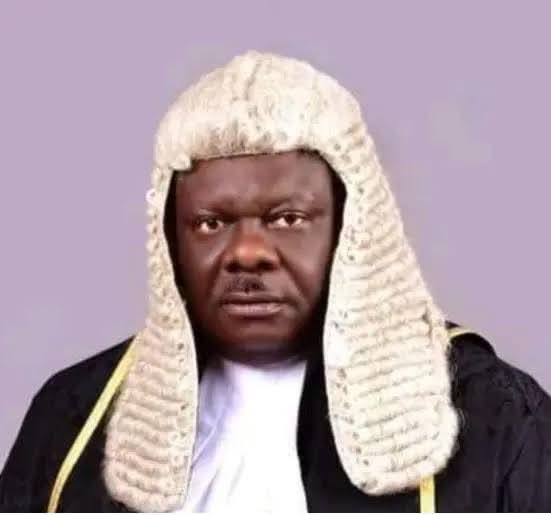
The Tiv Supreme Council has announced that former Attorney General of the Federation and Minister of Justice, Chief Kaase Michael Aondoakaa, SAN, will be conferred with the Ivaaniyange chieftaincy title.
The title, according to the Council, recognizes individuals considered to have made notable contributions to the advancement and welfare of the Tiv people.
Chief Aondoakaa, a Senior Advocate of Nigeria, currently serves in various public and private sector roles, including Chairman, Endowment Fund Raising Committee at Joseph Sarwuan Tarka University, Makurdi. He also provides advisory support on foreign investment, entrepreneurship, and agricultural development. He is associated with the West African Rice Processors Association (WARIA) and the Rice Processors Association of Nigeria (RIPAN).
He is a member of the Nigerian Bar Association and the International Bar Association.
Associates describe him as a supporter of youth development and educational advancement. According to persons familiar with his philanthropic activities, he has supported scholarship initiatives and facilitated opportunities for several indigent beneficiaries over the years.
The Tiv Supreme Council stated that the new honour acknowledges what it views as his years of service in legal, governance, and agricultural sectors. The Council expressed confidence that he will continue to contribute to community development following the conferment.
Chief Aondoakaa previously received a traditional chieftaincy title, Tsar-U-Tiv Mba Sha Nasarawa, from the Mutual Union of Tiv People in Nasarawa State in 2008.
He has participated in various international engagements across Europe, Asia, the Middle East, the Americas, and Africa, representing Nigeria in official and professional capacities. He has also been recognised with awards by different organisations for what they described as service and excellence.
Chief Aondoakaa is a practicing Catholic and is married with children.
The formal conferment of the Ivaaniyange title is expected to hold in Makurdi on a date to be officially issued by the Council.


Dogara Celebrates Baba Jang at 82, Hails Him as a Visionary Statesman

I’ ll contest for Nasarawa Governor in 2027, says Ombugadu

Oborevwori Hails Traditional Rulers as Pillars of Peace, Development

-
 Uncategorized5 years ago
FG, states urged to harness flooding for ranching, others with technology – Agbaje
-
 Headlines10 years ago
Breaking: EFCC seals Borno House of Assembly, as Hon members take to their heels
-
 News12 years ago
Nigeria Security Operatives Stage Manhunt For Homosexual Perpetrator
-
 News9 years ago
How 21-year-old Girl fled community over accusation of lesbianism
-
 News10 years ago
Yobe Gov Moves Against Deputy
-
 Opinion7 years ago
7 signs she has friend zoned you
-
Technology4 years ago
Online job placement company headhunts women
-
 Headlines10 years ago
Borno Dep Gov Abducts Another Church Leader