
Foreign
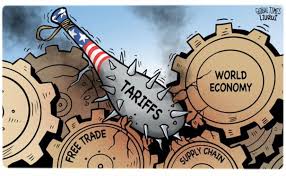
U.S. ‘tariff blackmail’ seriously disrupts stability of global industrial, supply chains

By Zhong Sheng, People’s Daily
“How much more will we pay when tariffs hit?”
This is the question ricocheting across U.S.newsrooms and households alike, as American consumers brace for price hikes and product shortages. With inflation fears mounting, somehave even begun stockpiling daily essentials. These concerns come from America’s growing appetite for economic extremism.
The U.S. side’s reliance on punitive tariffs and economic coercion not only runs counter to economic laws, but also threatens to dismantle the intricate global industrial and supply chains painstakingly built over decades. Such moves hamper economic development worldwide and, more importantly, jeopardize the wellbeing of people in all countries, including those in the U.S.
The modern global industrial and supply chains were not imposed by fiat. It evolved organically, shaped by comparative advantages of different nations and the natural flow of capital, labor, and innovation across global markets. China and the U.S., with different development stages, distinct industrial structures and complementary strengths, have grown increasingly intertwined. This economic relationship is forged over decades of market competition, proving to be the most efficient system in the global economy.
China’s recently released white paper, “China’s Position on Some Issues Concerning China-U.S. Economic and Trade Relations,”presents a compelling case for the positive impact of this cooperation. It demonstrates how this partnership has facilitated the upgrading of American industries and brought tangible benefits to American consumers.
The U.S. has imported from China a large quantity of consumer goods, intermediate goods, and capital goods, which has supported the development of the supply and industrial chains of the U.S. manufacturing industry, provided U.S. consumers with more choices, lowered their cost of living, and increased the real purchasing power of the American people – especially the low and middle-income groups.
Through cooperation with China, U.S. multinational corporations have boosted their international competitiveness by integrating the strengths of resources from both countries. China has taken on certain production processes for American enterprises, which enabled the U.S. to allocate resources such as capital to innovation and management, and focus on the development of high-end manufacturing and modern services. It has driven U.S. industry towards higher value-added and more technologically advanced sectors, reducing U.S. domestic pressure for energy consumption and environmental protection.
China-U.S. cooperation on industrial and supply chains is far from a zero-sum game, but rather a mutually beneficial and reciprocal arrangement. In 2024, the total trade volume between China and the U.S. reached $688.28 billion, a year-on-year increase of 3.7 percent. According tothe American Chamber of Commerce in China, 53 percent of U.S.companies are expected to invest more in the country through 2025.
At the 2024 China International Import Expo, U.S. companies claimed the largest exhibition area, and at the China International Supply Chain Expo, the U.S.firms were at the forefront of foreign participants in terms of exhibitor numbers. Out of Apple’s 200 major suppliers worldwide, over 80 percent have set up factories in China. Amazon’s third-party sellers count on Chinese supply chains to remain price-competitive.
These examples reflect the underlying logic of efficiency driving China-U.S.industrial and supply chain cooperation – creating broad opportunities for stakeholders across the globe. This collaboration facilitates raw material exports, intermediate goods production, and service sector growth in other countries, enhancing the efficiency and effectiveness of the global value chain.
However, the U.S.”tariff blackmail”is wreaking havoc on global industrial and supply chains, distortingthe allocation of resources in the global market, which hurts others as well as itself. While the goal behind these tariffs is to reshore manufacturing, the reality is far from simple. Tariffs cascadethrough industrial and supply chains, heightening the risk of fragmentation andacceleratingthe hollowing-out of the U.S. industry. Rather than revitalizing American manufacturing, this approach undermines its very foundation.
The Mechanical Engineering Industry Association based in Germany has warned that sweeping U.S. tariffs will cause serious damage on both sides of the Atlantic. These measures will never resolve bilateral trade issues but are more likely to escalate into a damaging tit-for-tat standoff that harms European exports and impedes U.S. industrial transformation.
Martin Wolf, chief economics commentator at the Financial Times, has pointed out that America is trying to undo the very system of open trade that it created. The resulting collapse in trust of the countries that used to share its values will end up very costly for the U.S., too.
Both history and reality have shown that the rules-based multilateral trading system meets the common interests of all countries, while unilateralism and protectionism undermine global industrial, supply, and value chains, and threaten the stability and development of the global economy.
In the face of shared global challenges such as sluggish global economic growth, China and the U.S., as the world’s two largest economies, must see each other’s development as opportunities rather than threats, and engage as partners, not rivals.
Both countries bear responsibility for stabilizing global industrial and supply chains. They must work together to make these systems more resilient, efficient and dynamic, so as to provide certainty and momentum to global economic development.
(Zhong Sheng is a pen name often used by People’s Daily to express its views on foreign policy and international affairs.)

By Zhong Sheng, People’s Daily
Japanese Prime Minister Sanae Takaichi recently made public remarks suggesting the possibility of military intervention in the Taiwan Strait, grossly interfering in China’s internal affairs. Despite repeated representations from China, she has refused to repent for her blatant and provocative rhetoric, which represents a blatant violation of the one-China principle and the guiding principles set forth in the four China-Japan political documents. Her actions have gravely undermined the political foundation of China-Japan relations and severely offended the sentiments of the Chinese people.
Assertions by a handful of Japanese politicians that China is “overreacting” to Takaichi’s erroneous comments are a misrepresentation of facts and a deliberate attempt to discredit China’s legitimate and reasonable position. The Taiwan question bears directly on the political foundation of mutual trust between China and Japan.
In 1972, the two countries signed the Sino-Japanese Joint Statement and officially established diplomatic relations, which states that the Government of Japan fully understands and respects this stand of the Government of the People’s Republic of China, and it firmly maintains its stand under Article 8 of the Potsdam Proclamation. In 1978, the two countries signed the Treaty of Peace and Friendship Between China and Japan, which affirmed the principles and contents of the joint statement in legal terms and set out the legal parameters for China-Japan relations.
In 1998, the two sides released the China-Japan Joint Declaration on Building a Partnership of Friendship and Cooperation for Peace and Development, in which Japan undertook to “continue to maintain its stand on the Taiwan question which was set forth in the Sino-Japanese Joint Statement” and “reiterated its understanding that there is one China.”
In 2008, the China-Japan Joint Statement on All-round Promotion of Strategic Relationship of Mutual Benefit stipulated clearly in Article 5 that “The Japanese side reiterated that it will continue to abide by its position on the Taiwan question stated in the Sino-Japanese Joint Statement.”
The above is what is laid out in the four political documents between China and Japan regarding the Taiwan question. It constitutes the solemn commitment made by the Japanese government and has a legal effect under international law. There is no room whatsoever for ambiguity or misinterpretation. Whichever political party or person is in power in Japan, they must always abide by the commitment of the Japanese government on the Taiwan question.
Takaichi’s statements fundamentally contravene the guiding principles set forth in these political documents and strike at the foundation of the China-Japan bilateral relationship. As the leader of a country, she should have exercised basic political responsibility and worked with China to promote the sound development of bilateral relations. Instead, shortly after expressing a commitment to the position outlined in the 1972 Sino-Japanese Joint Statement, she irresponsibly claimed that a “Taiwan contingency” could be a “survival-threatening situation” for Japan and implied that Japan may invoke the so-called right to collective self-defense to interfere militarily in the Taiwan Strait.
Such rhetoric is deeply corrosive to the political foundation of China-Japan relations. It reflects provocative strategic intentions and poses a serious threat to peace and stability across the Taiwan Strait and in the region. No sovereign nation can tolerate such flagrant interference in its internal affairs or accept threats of military action from foreign leaders.
Takaichi must take direct responsibility for the political damage her remarks have caused. The only responsible course for the Japanese side is to confront its historical and bilateral obligations with sincerity, cease inflammatory behavior, retract the erroneous statements, and take concrete steps to honor its commitments to China.
A sound and stable China-Japan relationship serves the interests of the Japanese people. Undermining bilateral ties not only runs counter to the prevailing regional and global trends but also lacks public and political support.
In recent days, the extreme and provocative moves of the Takaichi administration have triggered widespread criticism from insightful voices within Japan. Takakage Fujita, secretary-general of the Association for Inheriting and Propagating the Murayama Statement, stated that Takaichi’s remarks violate international law and inflict serious harm on bilateral relations. An editorial in The Tokyo Shimbun criticized her comments as “reckless and careless,” emphasizing that such statements are unacceptable from a sitting prime minister.
Numerous Japanese netizens have bluntly questioned Takaichi’s diplomatic competence, urging her to retract her misguided remarks. Some Japanese people have even organized demonstrations to protest her irresponsible and provocative behavior. Japanese politicians should take these rational voices seriously and refrain from further escalating tensions along a dangerous trajectory.
On matters of fundamental principle, the Chinese people remain unwavering. The Taiwan question lies at the very heart of China’s core interests. Any attempt to challenge this red line will be firmly opposed by the more than 1.4 billion Chinese people and the entire Chinese nation.
This year marks the 80th anniversary of the victory in the Chinese People’s War of Resistance Against Japanese Aggression and the World Anti-Fascist War, as well as the 80th anniversary of Taiwan’s restoration to China.
As a former aggressor that inflicted innumerable atrocities in Taiwan, Japan bears a historical responsibility to reflect deeply on its past and exercise heightened caution in its approach to the Taiwan question. Aligning with forces that seek to divide China runs counter to the prevailing trend of peace and development. Should Japan persist in this course, it will inevitably bear the consequences of its actions.
(Zhong Sheng is a pen name often used by People’s Daily to express its views on foreign policy and international affairs.)

By Han Lei, People’s Daily
In Chizhou, east China’s Anhui province, bamboo is emerging as a sustainable alternative in daily life. Products traditionally made from plastic, such as straws, ice cream sticks, disposable chopsticks, and cutlery, are increasingly being replaced by bamboo-based alternatives.
At a manufacturing facility in the Chizhou High-Tech Industrial Development Zone, automated production lines produce five million bamboo straws daily. Each year, two billion bamboo straws are exported to more than 40 countries and regions, displacing approximately 6,000 tons of plastic and reducing carbon emissions by 36,000 tons.
“Bamboo straws do not soften in water or break easily, and they are fully renewable and biodegradable,” said Yin Mingliang, the company’s general manager. However, he noted that producing even a simple item like a straw posed significant technical challenges, including issues with mold resistance, heat tolerance, and high production costs.
Initial attempts to resolve these problems through partnerships with three PhD research teams were unsuccessful. A breakthrough came in 2017 when a fourth team, after three years of development, enhanced machinery efficiency to produce 2,000 straws per hour and reduced the unit cost to 0.04 yuan ($0.0056), roughly on par with plastic straws.
The company has also developed an integrated pyrolysis system that converts bamboo wastes into high-value products such as activated carbon and hard-carbon anode materials for sodium-ion batteries. The process captures and reuses steam, enhancing energy efficiency.
Chizhou, home to more than 600,000 mu (40,000 hectares) of bamboo forest, has historically underutilized this natural resource. Recently, the city launched a three-year action plan to promote bamboo as a plastic substitute, extend the industrial value chain, and raise incomes for local farmers.
“Who would have thought that bamboo, once overlooked, could now fetch a good price?” said Shu Rengui, a villager from Languan in Hengdu township of Shitai county, Chizhou, as he harvested bamboo in the morning mist. Shu supplies bamboo to a nearby processing facility and earns around 40,000 yuan annually from the business.
At a bamboo-processing base in Meijie township, Guichi district of Chizhou, two processing plants have been built, capable of handling 35,000 tons of bamboo annually. According to Zhang Yu, the site manager, more than 40 villagers are employed at the base, contributing to local income growth.
Chizhou has developed an integrated industry model linking leading enterprises, circular industrial parks, bamboo-splitting plants, and village cooperatives, establishing a full production chain that spans primary, advanced, and deep processing.
According to an official with the local forestry bureau, Chizhou now has 89 bamboo-processing enterprises with an annual capacity of 900,000 tons. In 2024, the city’s bamboo industry reached an output value of approximately 3 billion yuan, a year-on-year increase of 26 percent, and provided employment for nearly 40,000 rural households, boosting average household incomes by over 20,000 yuan.
The city is also expanding its global footprint. Through platforms such as the Canton Fair, or the China Import and Export Fair, bamboo products from Chizhou, including skewers, chopsticks, and straws, have entered markets in the EU, India, Japan, South Korea, and other countries and regions.
In December 2023, a Chizhou-based company was invited to speak at a side event organized by the International Bamboo and Rattan Organization during the 28th meeting of the Conference of the Parties (COP) to the United Nations Framework Convention on Climate Change, or COP28, sharing China’s experience in plastics substitution.
Bamboo industry development in Chizhou is accelerating. At the first high-quality bamboo industry development conference for Anhui province in 2024, Chizhou High-Tech Industrial Development Zone signed a framework agreement with CRRC, China’s leading train maker, to establish a national bamboo circular-industry park headquarters in Chizhou. Plans are also underway to develop more than 50 such parks in bamboo-rich regions across the country.
By Han Xin, People’s Daily
China is accelerating the integration of artificial intelligence (AI) into its transportation sector, aiming to establish an intelligent, integrated, and multi-dimensional national transport network by 2030. A recently issued government guideline outlines 16 targeted tasks across four strategic areas, including technological innovation and scenario-based application, in a bid to enhance mobility, improve safety, and reduce environmental impact.
The guideline emphasizes self-reliance in core technologies and sets out a roadmap to ensure China’s transport infrastructure ranks among the world’s most advanced by the end of the decade. The strategy centers on breakthroughs in applied AI technologies, innovation in intelligent transport products, and the development of large AI models tailored to comprehensive transport systems.
“Strengthening the supply of key technologies is essential to build a full innovation chain from research and development to practical application,” said Wang Yunpeng, an academician of the Chinese Academy of Engineering and president of Beihang University. Wang added that developing large-scale AI models would enable the creation of a “transport brain,” equipped with high-quality datasets, algorithm libraries, and digital toolchains to support intelligent transformation across the sector.
Progress in large transport models is already well underway. The Transport Foundation Model Innovation and Industrial Alliance — launched under the guidance of China’s Ministry of Transport — has brought together more than 50 leading enterprises, AI companies, and universities and research institutes, identifying 860 typical AI application scenarios.
At the enterprise level, China Logistics Group introduced a large model serving over 40 specific scenarios including multimodal transport and warehouse scheduling. A “smart hub” built upon a transport large model developed by Chinese tech firm Baidu has been deployed in over 10 cities, serving over 1 million vehicles equipped with L2 driver-assistance driving systems.
“Demonstration regions across the country are applying large-model-based solutions in areas such as road network monitoring and early warning, active management of high-traffic corridors, and integrated mobility services,” said an official from China’s Ministry of Transport. By enhancing capacity along major transport routes and implementing multi-tiered, refined traffic management models, these demonstration corridors have achieved approximately a 20 percent increase in traffic efficiency and a 30 percent improvement in emergency response efficiency during unforeseen events.
Enabled by big data analytics and high-precision modeling, AI is establishing a robust digital foundation for China’s transport infrastructure. Statistics show that the 20 designated demonstration regions for digital transformation of highway and waterway infrastructure now encompass more than 60,000 kilometers of upgraded corridors, comprising approximately 54,000 kilometers of highways and 7,500 kilometers of waterways. These improved sections form a critical backbone of the national integrated, multi-dimensional transport network.
Diverse application scenarios are essential for driving the deep integration of AI into the transportation sector. The newly issued guideline identifies intelligent application scenarios across seven major areas, including assisted driving, smart railways, and smart shipping, designed to accelerate innovation through real-world implementation. “These scenarios span almost all segments of the transport system, offering broader opportunities for testing and deploying new technologies and products,” Wang said.
On the waterways front, China now has 52 automated terminals. Domestically developed intelligent operating systems for fully automated container terminals have been implemented at more than a dozen terminals both domestically and internationally. Electronic navigation charts for waterways have been successfully deployed along the Yangtze River’s main and branch routes. The accelerated adoption of intelligent technologies across ports, waterways, and vessels is significantly enhancing the efficiency of waterborne transport.
Parallel advancements are also transforming China’s road networks. The Beijing-Xiong’an expressway, powered by Baidu AI Cloud, leverages the collaboration between vision and language-based large models to deliver second-level alerts for major traffic anomalies. Didi Autonomous Driving, in collaboration with Chinese automaker GAC Aion, has developed a new generation of factory-installed autonomous-driving vehicles. As autonomous driving converges with vehicle-road collaboration, a growing number of “smart vehicles” are taking to “smart roads,” accelerating the evolution of intelligent mobility.
Deep integration of AI and transportation also depends on next-generation infrastructure. The guideline outlines targeted measures in terms of computing power, data, and networks to strengthen the supply of essential elements.
For computing power, the guideline calls for better coordination of computing resources within the transport sector and strengthening computing capacity based on major transport infrastructure and local conditions.
In terms of data, China will accelerate the development of comprehensive transport big-data centers, promote data sharing, and build high-quality dataset construction to fully leverage data as a production factor.
In terms of network infrastructure, the guideline calls for the integrated application of multiple network technologies, the construction of intelligent sensing systems and the development of high-speed data transmission channels to enable low-latency, high-reliability, and wide-coverage connectivity for vehicle-road collaboration, remote operations, and real-time monitoring.


The Most Shocking A/Court ‘Judgment’ in Nigerian History: An unfortunate precedent that should not be allowed to stand

TAU reaffirms commitment to globally competitive learning

photo

-
 Uncategorized5 years ago
FG, states urged to harness flooding for ranching, others with technology – Agbaje
-
 Headlines10 years ago
Breaking: EFCC seals Borno House of Assembly, as Hon members take to their heels
-
 News11 years ago
Nigeria Security Operatives Stage Manhunt For Homosexual Perpetrator
-
 News9 years ago
How 21-year-old Girl fled community over accusation of lesbianism
-
 News10 years ago
Yobe Gov Moves Against Deputy
-
 Opinion7 years ago
7 signs she has friend zoned you
-
Technology4 years ago
Online job placement company headhunts women
-
 Headlines10 years ago
Borno Dep Gov Abducts Another Church Leader