
Uncategorized
WHO urges calm as China virus death toll nears 1,900


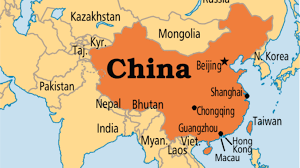
The death toll from the new coronavirus outbreak rose again on Tuesday but Chinese and international health officials sought to calm global nerves, citing a study showing most cases are mild and warning against excessive measures to contain the epidemic.
ALSO READ:EFCC secures 1,266 convictions in 14 months – Magu
Nearly 1,900 people have now died and more than 72,000 others infected by the virus in China, with hundreds more cases in some 25 countries.
The situation remains dire at the epicentre, with the director of a hospital in the central city of Wuhan becoming the seventh medical worker to succumb to the COVID-19 illness.
But Chinese officials released a study showing most patients have mild cases of the illness, and World Health Organization officials said the mortality rate was relatively low.
The epidemic has triggered panic-buying in Singapore and Hong Kong, concerns about cruise-ship travel and the postponement of trade fairs, sports competitions and cultural events in China and abroad.
The outbreak is threatening to put a dent in the global economy, with China paralysed by vast quarantine measures and major firms such as iPhone maker Apple and mining giant BHP warning it could damage bottom lines.
Several countries have banned travellers from China and major airlines have suspended flights.
Authorities have placed about 56 million people in hard-hit central Hubei and its capital Wuhan under an unprecedented lockdown.
ther cities far from the epicentre have restricted the movements of residents, with a 14-day self-quarantine for people returning to Beijing.
President Xi Jinping, in a phone call with British Prime Minister Boris Johnson, said China’s measures were achieving “visible progress”, according to state media.
– ‘Less deadly’ than SARS –
The official death toll in China hit 1,868 Tuesday after another 98 people died — most in Hubei and Wuhan, where the virus emerged in December.
Liu Zhiming, the director of Wuchang Hospital in Wuhan, became its latest victim, sparking an outpouring of grief online.
Earlier this month, the death of Wuhan doctor Li Wenliang — who had been punished by authorities for sounding the alarm about the virus in late December — triggered anger and calls for political reforms on social media.
Officials figures, meanwhile, showed there were nearly 1,900 new COVID-19 cases. New infections have been falling in the rest of the country for the past two weeks.
WHO chief Tedros Adhanom Ghebreyesus cautioned that it was too early to tell if the decline would continue.
A study among 72,000 confirmed, suspected and clinically diagnosed cases showed that 81 percent of patients had only mild infections.
Those most at risk were the elderly, and people with underlying medical conditions.
The study released by China’s Centre for Disease Control and Prevention also showed the death rate stood at 2.3 percent, falling below one percent for people in their 30s and 40s.
Zhong Nanshan, a prominent expert with China’s National Health Commission, told reporters that 85 percent of patients can improve “if they have good life support, treatment conditions, and nutrients”.
The research was cited by WHO officials, who said the COVID-19 illness was “less deadly” than its cousins, such as Severe Acute Respiratory Syndrome (SARS) or Middle East Respiratory Syndrome (MERS).
But it is higher than the mortality rate for the seasonal flu, at around 0.1 percent in the United States.
Michael Ryan, head of WHO’s health emergencies programme, said the outbreak was “very serious” and could grow, but stressed that outside Hubei the epidemic was “affecting a very, very tiny, tiny proportion of people”.
There have been some 900 cases around the world, with five deaths in France, Japan, the Philippines, Taiwan and Hong Kong.
– Cruise concerns –
Another 88 people tested positive for the virus on the quarantined Diamond Prince cruise ship off Yokohama in Japan, raising the number of infections to 542,
The US repatriated more than 300 American passengers on Monday and Britain became the latest country to offer its citizens a way off the boat after similar plans by Canada, Australia, Hong Kong and South Korea.
Attention was also turning to the Westerdam, a cruise ship in Cambodia, where many of the 2,200 people aboard passengers were allowed to disembark after all initially received a clean bill of health.
An 83-year-old American woman was later diagnosed with the virus in Malaysia, raising concerns that other passengers might have been infected before flying to other countries.
The WHO rejected the suggestion that all cruises should be halted after hundreds of passengers were infected on one vessel off Japan.
“Measures should be taken proportional to the situation. Blanket measures may not help,” the WHO’s Tedros said.


In what has been described as the most successful Military onslaught on Boko Haram and ISWAP elements, the death toll of terrorists neutralised during a failed infiltration attempt on troops’ position in Malam Fatori, Abadam Local Government Area of Borno has risen.
Reports indicate that a total of 75 terrorists fell to Military fire, in what security analysts describe as one of the most decisive recent blows against the Islamic State West Africa Province.
Our correspondent reports that the Initial reports which put the number of insurgents killed at 61, following a coordinated response by troops of Operation Hadin Kai, supported by the Nigerian Air Force has risen to 75.
Updated battlefield assessments and mop-up operations indicate that at least 75 fighters were neutralised, with several others believed to have escaped with severe injuries.
The attack, which occurred in the early hours of Wednesday, saw ISWAP fighters advancing on foot toward the 68 Battalion location, reportedly deploying armed drones in an attempt to breach defensive lines. The infiltration, launched from the Duguri axis toward the Bravo Company frontage, was swiftly detected and repelled.
Military sources said the success of the operation was anchored on superior coordination between air and ground forces, illustrating the growing effectiveness of joint-force synergy in counter-insurgency operations in the North-East.
Four precision air interdiction strikes were conducted on identified terrorist withdrawal routes effectively degrading their combat capability and disrupting their manoeuvre.
The integration of air power ensured that the insurgents were fixed in position and subjected to sustained bombardment, forcing a chaotic withdrawal toward the Arege axis.
Further compounding the losses of the terrorists group was the intervention of allied air assets from the Niger Republic, which carried out additional strike passes on fleeing terrorists.Although a full battle damage assessment of those strikes is still ongoing, security sources believe the combined firepower significantly increased the casualty figures.
In addition to the high number of fatalities, troops reportedly recovered a large cache of arms and ammunition from the battlefield, further weakening the operational capacity of the group in the Lake Chad region.
On the side of government forces, four soldiers sustained minor injuries and have since been stabilised.

Stephen Olufemi Oni, Ilorin
A Senior Advocate of Nigeria (SAN), Professor Yusuf Olaolu Ali, has stressed the need for a converted effort in addressing the social vices plaguing the society.
Ali, who is the first Kuliya Ngeri of Ilorin Emirate, said this in Ilorin, the Kwara State capital, at the sixth annual Ramadan Lecture organised by the ‘Knowledge Is Light Islamic Foundation’ (KILIF).
He urged forward-looking organisations, including the KILIF, to beam their searchlights on issues that would take the youths off the streets and evil ways.
The legal luminary applauded members of KILIF for setting up the organisation, saying that the rationale behind it shows that the founders are conscious of the hereafter.
“I want to commend this group for coming up this way. This is very great for us in Islam. But I want to say that during and after Ramadan, we must sustain the momentum of a gathering like this.
“We must treat contemporary topics of getting our youths off street and off evil ways. We must look at those things that are taking away respect from our space. Those things should be addressed.
“Do not let this group just be any other group. You should try to treat topics that would focus more on tackling issues in the society. Let us look at programmes that would attract elderly and that can proffer solutions to the challenges plaguing our society,” Olaolu said.
In his lecture titled “Eid-el-Fitr”, a retired Grand Kadi of Kwara State Shariah Court of Appeal, Justice Salihu Olohuntoyin Muhammad, urged Muslim faithful to avoid chanting political slogans during the Eid, but rather they should endeavour to engage in the praising of Allah right from home to Eid prayer ground.
He also encouraged Muslims to perform ritual birth on the day of Eid-el-Fitr and eat before heading for the sacred ground so as to secure bounty reward from the Almighty Allah.
In his remarks, the President of KILIF, Alhaji Oba Amosa, thanked members of the organisation and various donors for their support to the Islamic group.
Uncategorized
OPINION: Deaths And Destructions At Home, Emotional Investment Abroad: Are We So Cursed?By: A G Abubakar


Nigerians, including intellectuals and technocrats, often spend hours passionately debating developments in the United States and other distant corners of the world. Granted, Nigeria is part of the global community and cannot be insulated from international affairs. However, the intensity, emotionalism, and sometimes blind partisanship that characterize such engagements are both puzzling and troubling.
Even more baffling is that this fixation is often displayed by individuals presumed to possess high levels of learning, exposure, and analytical sophistication—people who, by virtue of their training, should ordinarily lead rigorous conversations about the urgent problems confronting their own society. It is a troubling paradox: a people who struggle to confront their immediate and existential challenges yet remain deeply preoccupied with events unfolding thousands of kilometres away. The imbalance is striking.
In a society grappling with security crises, decaying infrastructure, economic hardship, and uncertain futures for millions, one would expect sustained attention to domestic realities. Instead, the national attention span on matters affecting personal safety, community stability, and development is astonishingly short. Worse still, such attention often lacks depth, creativity, and analytical rigour. Critical thinking appears scarce, while ethno-religious emotions, masked under pseudo-intellectualism, increasingly dominate social discourse, public debate, and even governance.
This raises uncomfortable questions. Could this phenomenon be linked to the harsh material conditions in which many Nigerians live? According to recent multidimensional poverty indices, over 60 percent of the population—about 139 million people—experience poverty not merely as lack of income but as deprivation in education, healthcare, and living standards. When daily survival becomes the central struggle, long-term reflection and strategic thinking may become luxuries.
Or perhaps the explanation lies partly in how both the old and young have been educated. The system has largely failed to consistently produce critical thinkers and problem-solvers; instead, it has unleashed onto society a cognitively underprepared cohort of “educated illiterates.” The science of learning suggests that successive generations typically surpass their predecessors in cognitive development, but this trend appears to have stalled—if not reversed—in the current one. Countries like Nigeria are particularly affected. Where literacy levels hover around or fall below fifty percent in some regions, sustained critical engagement with complex national issues is, understandably, constrained.
Education is not merely the ability to read and write; it is the foundation of analytical reasoning, civic consciousness, and the discipline to distinguish between what is urgent and what is merely interesting. Yet, Nigeria’s foundational education system falls woefully short of this ideal. Evidence of this failure is stark. A report on primary-level learning proficiency across 47 African countries indicates that only 9.5 percent of Nigerian pupils attain minimum competency in reading and mathematics by the end of primary school. The implication is sobering: a vast majority are being advanced through the system without the basic tools required for meaningful learning, critical engagement, or informed citizenship.
Others may point to the powerful influence of religion. Nigeria is one of the most intensely religious societies in the world. Faith traditions provide meaning, comfort, and moral guidance to millions. Yet when religious identity becomes the dominant lens through which people interpret political and global events, emotional attachments to distant conflicts can overshadow engagement with local realities.
Perhaps, as some might cynically suggest, the Creator simply made it so for reasons beyond human comprehension. Whatever the explanation, one cannot escape the conclusion that Nigerians appear to suffer from a peculiar condition—a persistent tendency toward misplaced priorities.
Nothing illustrates this more vividly than the fascination with distant geopolitical conflicts. In recent times, public discourse across Nigeria—especially on social media—has been saturated with passionate debates about tensions involving the USA, Israel, and Iran. Opinions are fiercely expressed, allegiances declared, and timelines flooded with emotional arguments, and often oblivious of the fact that more than fifty percent of the information is either manipulated, AI-generated or outright fake.
Yet at the same time, terror continues to unfold within Nigeria’s own borders. Communities in the North-East live under constant threat from Boko Haram and ISWAP attacks. Villages in Benue and Plateau endure cycles of ethno-religious violence and armed herdsmen attacks. Rural communities across several states are repeatedly assaulted by bandits and kidnappers. Oil theft in the Niger Delta drains hundreds of thousands of barrels of crude daily, depriving the nation of vital revenue. In parts of the South-East, weekly “sit-at-home” orders have paralysed economic life and normalized a strange form of protest that punishes ordinary citizens.
These crises have had profound social and economic consequences. Tens of thousands have been killed, and over 3.9 million people have been pushed into IDP camps across the country, according to the United Nations. Economic activities such as agriculture and commerce have been severely disrupted, with some communities experiencing up to a 50 percent drop in output. Oil theft alone is estimated to cost the nation an average of $10 billion annually. Also an estimated, 2,000 settlements have been sacked, destroyed or brought under the control of terrorists, and insurgents across parts of the country – basically ghost villages.
Yet despite their devastating impact, these crises rarely command sustained national outrage or deep intellectual engagement. Deaths in places such as Woru, Nuku, and other rural communities quickly fade from public conversation. The massacre of over 160 innocent people and the kidnapping of more than 300 others—events that should provoke national soul-searching—are increasingly treated as routine occurrences. Tragedy has become normalized.
Instead of confronting these challenges directly, many Nigerians appear to prefer the soothing path of distraction or evasion. Idle hours—created in part by unemployment and underemployment—are often spent debating the problems of distant societies, as if an elixir. Social media platforms have become the primary arena for this phenomenon.
Here, the young and old, the educated and the uninformed, the politically active and the indifferent converge in endless debates about foreign affairs. A substantial proportion of online discussions among Nigerians revolve around international controversies rather than domestic issues. These debates are often driven by emotion rather than evidence. Individuals who show little interest in local governance or civic responsibility suddenly become fervent analysts of Middle Eastern geopolitics, American elections, or European conflicts.
Meanwhile, real crises unfold at home. Indeed, this collective distraction creates conditions in which grave security failures occur with insufficient public scrutiny. While public attention was fixated on tensions involving Iran, the US, and Israel, insurgent groups reportedly attacked and dislodged several military formations across parts of the North-East.
These incidents occurred in parts of Borno and Plateau States. In Borno, more than six military bases across several communities were overrun. Among the casualties were Lt. Col. U. Farouq, Lt. Col. S.I. Iliyasu, and Major U.I. Mairiga, alongside dozens of civilians. The tragedy occurred only a few months after Brig.-Gen. M. Uba paid the supreme price in Damboa. In Kanam LGA of Plateau State, terrorists ambushed and killed several military personnel including two commanders; Lt. H. Hassan and Capt. AU Hajji. Many civilians also lost their lives. The bloody week ended with a coordinated attack on Maiduguri, the Borno State capital, during which several neighbourhoods were bombed, causing dozens of fatalities, injuries, and wanton destructions.
Yet national attention remained largely fixed on distant conflicts. Only months earlier, it was the Russia–Ukraine war dominating conversations. Before that, other global controversies occupied the same mental space. The pattern is unmistakable: Nigerians repeatedly immerse themselves in the politics of other nations while their own house burns.
History offers a fitting metaphor. When the Roman Emperor Nero allegedly played music while Rome burned, it symbolized the dangerous folly of leaders and societies distracted during moments of crisis. Nigeria risks becoming a modern version of that ancient tragedy—a nation absorbed in peripheral matters while existential threats grow at home.
This is not merely a cultural curiosity; it is a national problem. Societies develop according to the priorities they set. Nations that progress are those whose citizens focus their intellectual energy on solving local problems, strengthening institutions, and demanding accountability from their leaders, instead of getting hooked on social media apps/platforms. A full-time chat culture of “sharing,” “forwarding,” and “posting” on YouTube, Facebook, Instagram, ChatGPT, DeepSeek, etc, often without even reading them. It’s a new opium.
For Nigeria to move forward, a fundamental shift in public consciousness is required. Citizens must refocus their attention on the urgent realities confronting their communities. Personal responsibility must replace passive spectatorship. Communities must demand security, accountability, and effective governance. Intellectual discourse must prioritize solutions to domestic challenges rather than emotional engagement with distant conflicts.
Authorities must also rise to the occasion. Governments at all levels have a duty to address insecurity, strengthen institutions, expand education, and foster civic awareness. Leadership must guide the national conversation toward constructive engagement with Nigeria’s real problems.
Nigeria’s tragedy is not merely that it faces many problems; every nation does. The deeper tragedy is that its people have gradually become conditioned to live with those problems while investing their emotional energy in the crises of others. A society that treats its own disasters as routine but becomes animated by distant conflicts has clearly lost its sense of priority.
No nation has ever risen by obsessing over the problems of others while neglecting its own. Progress is built by citizens who confront their realities, demand accountability from their leaders, and devote their intellectual energy to solving challenges within their borders. Until Nigerians begin to do this consistently, insecurity will persist, institutions will remain weak, and development will continue to lag behind promise—descending into global ridicule and disdain, a reality many Nigerians who travel abroad can attest to.
The choice before the country is stark. Nigerians can either continue down the path of distraction—arguing passionately about foreign wars while their own communities bleed—or awaken to the urgency of their national condition. A people who refuse to focus on their own house should not be surprised when it collapses around them.
History is unforgiving to societies that ignore warning signs. If Nigerians fail to reorder their priorities, the verdict of the future will be harsh: that a nation blessed with immense human and natural resources allowed itself to drift—not because it lacked solutions, but because it lacked the collective seriousness to confront its own problems.
The time to refocus is now. Otherwise, the question “Why are Nigerians like this?” may one day be replaced by a far more painful one: “How did we allow it all to slip away?” – our nationhood, our global respect as a Black race, and even our personal integrity.
A.G. Abubakar
agbarewa@gmail.com

Odua People’s Assembly defends NSA Ribadu, criticizes Ishola Williams’ call for removal

75 ISWAP Fighters Killed in Borno Town.

SAN urges collective efforts to tackle societal vices

-
 Uncategorized5 years ago
FG, states urged to harness flooding for ranching, others with technology – Agbaje
-
 Headlines10 years ago
Breaking: EFCC seals Borno House of Assembly, as Hon members take to their heels
-
 News12 years ago
Nigeria Security Operatives Stage Manhunt For Homosexual Perpetrator
-
 News9 years ago
How 21-year-old Girl fled community over accusation of lesbianism
-
 News10 years ago
Yobe Gov Moves Against Deputy
-
 Opinion7 years ago
7 signs she has friend zoned you
-
Technology4 years ago
Online job placement company headhunts women
-
 Headlines10 years ago
Borno Dep Gov Abducts Another Church Leader