Connect with us

Politics

Oba Abdulraheem: New colossus bestriding Kwara governorship race

Published

on

Oba Abdulraheem: New colossus bestriding Kwara governorship race

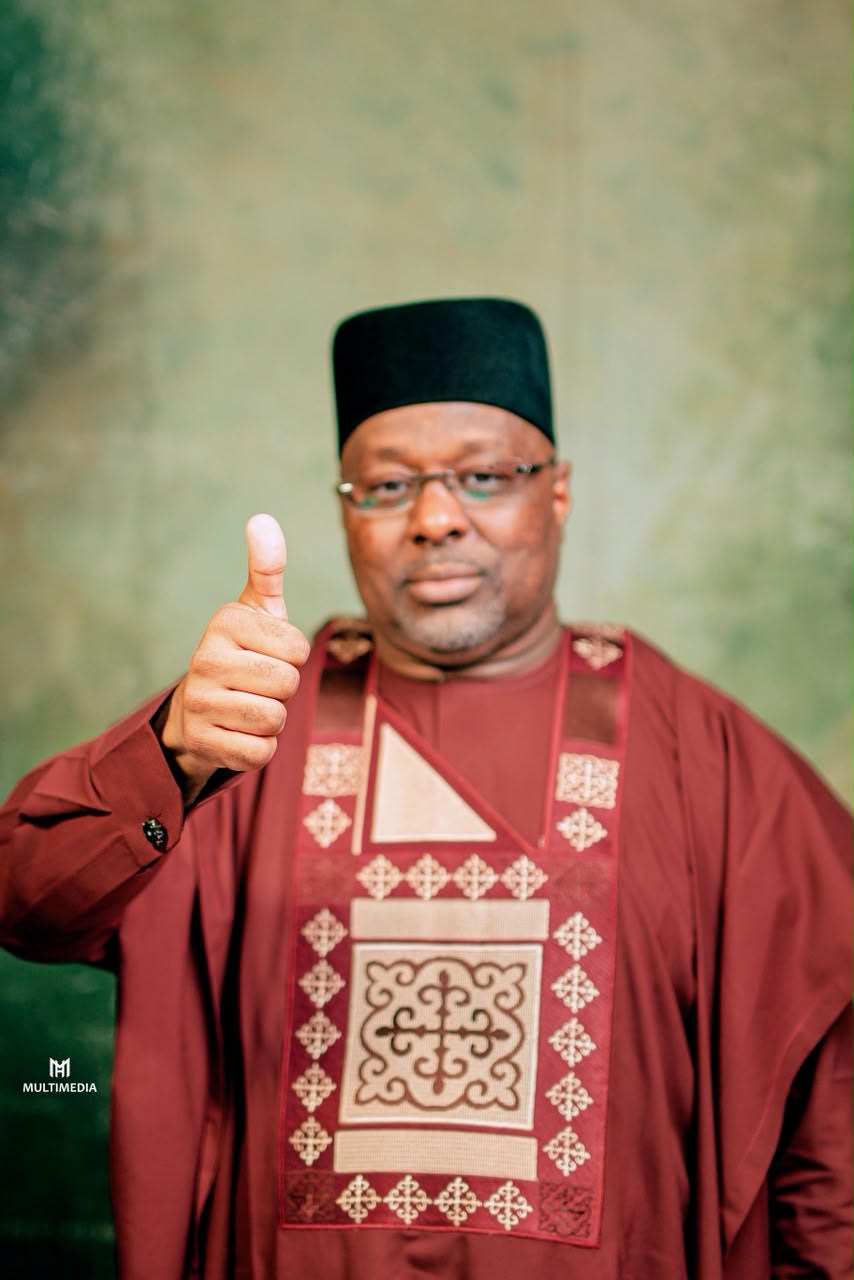
Prof. Abdulraheem, Kwara NNPP governorship candidate

His foray into Kwara politics is not fortuitous; the foundation seems to have been laid as an administrator and Vice-Chancellor at the University of Ilorin, which till now has one of the highest, if not the highest, rate of subscription by Nigerian students and applicants through the Unified Tertiary Matriculation Examination (UTME).


Emeritus Prof. Shuaib Oba Abdulraheem, also the holder of the chieftaincy title, Talba of Ilorin, has brought excitement and vibrancy to the Kwara State governorship race since Tuesday, June 28, 2022, when he became the governorship candidate on the platform of New Nigeria People’s Party (NNPP).


Oba is seen as a very formidable candidate whose entry is putting candidates of other political parties on their toes, thus waking them from their deep sleep due to his superior yet intimidating credentials and strategic leadership prowess.


He is popularly referred to in the state as Ọ̀rẹ́ Mẹ̀kúnù or Abokin Talakawa (A friend of the poor masses) due to his close affinity to the people at the grassroots level.


The NNPP governorship candidate was also a former Sole Administrator of the Kwara State College of Education Oro, Chairman of Governing Council of the Kwara State College of Education, Ilorin and the third Executive Chairman of the Federal Character Commission.


He was also the Chairman Governing Council, Kwara State Polytechnic, Ilorin.


Oba was the Initiator and Coordinator of the Ilorin Aviation College Committee, Chairman Political Transition Committee 2003, Chairman Implementation Committee, Muhammad Kamaldeen University, Ilorin and Member, JAMB Governing Board.


These experiences mostly in the public service are evidence that Oba is a versatile manager of human and capital resources.


As a chieftaincy title holder, the Talba is also a grassroot leader who is always at home with

rural dwellers and the youth population in Kwara State.


His campaign train has been moving steadily from one part of the state to another, communicating the credentials, capabilities and inspiring vision of the illustrious son of the soil to the people that matter most, Nigerians at the grassroots level.


Undoubtedly, Oba has garnered a lot of experience in service to humanity, an attribute a Governor of any Nigerian state should possess.


The Kwara NNPP governorship candidate has been visiting traditional rulers and their subjects at the grassroots level to carry them along and appeal for their support.


Among the rulers so far visited include the Chairman of Kwara State Traditional Rulers Council, the Emir of Ilorin, Alhaji Ibrahim Sulu Gambari and the Oloffa of Offa, Oba Mufutau Gbadamosi.


Others are, Olukotun of Ikotun, Oba AbdulRasaq Abioye, Olojoku of Ojoku, Oba AbdulRasaq Afolabi, Onira of Ira, Oba Abdulwahab Oyetoro, Elerin of Erin Ile, Oba Abdulganiyu Ajibola and Olota of Ilota, Alhaji Mohammed Olarewaju.


Owa Lobo of Obbo-Ile, Oba Adebayo Rufus Olusegun and Olosi of Osi, Oba Salihu Abdulkareem Adasofegbe, also hosted the NNPP governorship candidate in their palaces.


Other traditional rulers he visited included, Alofa of Ilofa, Oba Samuel Dada. Olusin of Isanlu Isin, Oba Solomon Oloyede, Emir of Ilesha Baruba, Prof. Halidu Abubakar and Olola of Olla, Prof. Billy Olajide.


His love for the people at the grassroots must have informed his flagging off his gubernatorial campaign at Okuta in Baruten Local government area, very far from Ilorin, the state capital.


As expected, he paid a courtesy call on the traditional ruler, the Emir of Okuta, Alhaji Idris Abubakar.


At the Emir’s palace, Oba reiterated that one of the first things he will do in office is to re-establish local government authority by conducting the local government election immediately, not later than six months after the general elections.


The governorship candidate also promised to provide functional and quality education and invest in agriculture if elected as the governor.


“There is no doubt that Kwara State is in dire need of a change of effective leadership and good governance; my experience in the public service will bring about the needed transformation,” he said.


Oba alleged that the present APC-led administration in the state has performed below the people’s expectations, and he expressed the urgent need to replace it with an NNPP government.


He asserted that an NNPP government would bring the desired change to the people of Kwara, who are still yearning for fresh air regarding socio-economic development, especially at the grassroots level.


In his response, the Emir lauded the NNPP for flagging off its campaign in his local government area.


He wished the gubernatorial candidate and his team well at the elections.


Talking of qualities of a good leader, the NNPP governorship candidate says such a person must separate falsehood from the truth while following the latter.


Oba added that a good leader must always have his ears to the ground to gauge the pulse of the people he governs so that his programmes and policies will always include their inputs.


When asked about his chance of success in his quest to become the next governor of Kwara despite the strong presence of PDP and the ruling APC candidates, the NNPP candidate expressed maximum optimism about winning the election.


Oba also disagreed with the misconception that the NNPP is a new party that may not go far in the country’s political terrain.


“NNPP is not as new as you may want to think. It’s been registered almost the same time as PDP was registered.


“Throughout the years, it’s been contesting elections through various candidates all over Nigeria. In some states, they won; in some, they lost.


“Most importantly, it’s been contesting elections in Nigeria. In Kwara, NNPP may be coming to the scene late, but it doesn’t diminish its potential as a party that will win the governorship in 2023,” he said.


According to Oba, the character and social standing of those contesting elections are factors that matter, not the time a party is formed.


“They, the credible candidates, are the ones to bring recognition to the party as desired,” he said.


While speaking at a debate for governorship candidates in Kwara recently, Oba promised to make the education of Kwara people his priority.


Coming from a background of solid educational achievements, this should not be a surprise to any keen observer.


Oba, who completed his doctorate studies at the University of Kent, UK, has been a teacher and lecturer with many years of experience.


As an accomplished scholar and administrator, he has enjoyed a glorious career in the teaching profession, from the elementary classroom teacher to the professorial chair at the university.


He also holds bachelor’s and master’s degrees of Ahmadu Bello University and the University of Sheffield, respectively.


“An uneducated population is a doomed population. So the first people I am going to partner with are the teachers,” he told the audience at the debate organised by the Kwara State council of Nigeria Labour Congress.


“I will leverage technology as I did at the University of Ilorin to make Kwara State the knowledge hub for the world and, in the process, provide employment for the teeming youths,” Oba said.


The NNPP governorship candidate also assured the organised labour unions that he would work with them with honesty and sincerity.


At a town hall meeting with the people of Oyun local government, in Erin Ile, the Talba promised to bring the government down to the grassroots through local government autonomy.


He also urged youths in the area to participate fully in politics, leveraging their energy, passion and technology competence to achieve inclusive, sustainable development through the ballot box.


Oba was given a warm reception at the palace of Elerin of Erin Ile by the chiefs though the traditional ruler himself was not around.


The chiefs prayed for Talba’s victory while giving testimonies of his achievements in their community, Kwara State and Nigeria at large.


On his campaign visit to Offa, another prominent town, the emeritus professor assured the people of Offa Local Government of his support if voted as the next Kwara Governor.


He said that based on his consultation with different groups in the community, if elected, his administration would address many of the challenges facing the ancient town.


The former Vice Chancellor urged his supporters to get their permanent voters’ cards while thanking them for the show of love accorded him.


The State Chairman of NNPP, AbdulRasaq Abdulsalam, described Prof. Oba as an honest man who would deliver on all his promises.


Oba did not just believe in hard work; he is a prayer warrior and religious person who believes in the power of Almighty God.


Towards this end, he led NNPP candidates in Kwara in December 2022 in a prayer session with notable Islamic clerics praying for the candidate’s success in the 2023 general elections.


They also prayed for the success of the party’s presidential candidate, Alhaji Musa Kwankwaso.


Oba expressed confidence in the party’s victory in the elections, saying the party is ready to take over power in Kwara and Nigeria in general.


“Insha Allah, we are doing everything possible to achieve success. This is because we have confidence in Allah, and when you have confidence in Allah, you will achieve success,” he said.


While assessing the level of preparedness of the Independent National Electoral Commission (INEC) for the elections, the NNPP governorship candidate hailed the commission for “their impartiality” and the introduction of the Bimodal Voters Accreditation System (BVAS) in the electoral process.


Oba however, condemned the relentless attacks on INEC facilities across the country.


Speaking on vote buying, he urged Nigerian electorates to resist the vice, saying that it must be stopped as it was not giving credibility and authenticity to the country’s elections.


“Vote buying is another disease we must cure,” the governorship candidate emphasised.


Keen observers of the Kwara political landscape are unanimous that with the emergence of Oba in the race for Government House, a new sheriff is indeed in town to take over affairs in the “State of Harmony”.


With his campaign slogan of “Ìrọ̀rùn dé” (Comfort is here), Oba is seen by many as the genuine bringer of the social, economic and political reliefs the people of Kwara have long been yearning for.

Continue Reading
Click to comment

Leave a Reply

Your email address will not be published. Required fields are marked *

Politics

Threat:Osun AG drags Senator Fadahunsi to court over ‘Kill Accord’ members

Published

on

The Osun State Government, on Thursday, approached the court for an order of mandamus to compel the investigation of Senator Francis Fadahunsi over alleged threats against supporters of the Accord Party ahead of Saturday’s governorship election.

The application marked HOS/M.157/26, which was filed by the Attorney General of Osun State, has the Inspector-General of Police and the Commissioner of Police, Osun State Command, as Respondents.

The Applicant told the court that the legal action followed a video circulating on social media in which the lawmaker representing Osun East Senatorial District, Fadahunsi, was allegedly captured while addressing a political gathering in front of the Owa Obokun’s Palace in Ilesha on August 11.

The lawmaker was alleged to have made statements interpreted as calls for violence against members of the Accord Party and supporters of the incumbent governor, Ademola Adeleke.

The court was told that a transcript and translation of the speech showed Fadahunsi allegedly directing supporters to attack Accord members wherever they encountered them and also made threats against their families.

The lawmaker was alleged to have instructed his supporters to chase Accord members out of hotels where they were found and made derogatory comments about the party’s yellow caps.

The Attorney-General is among other things, asking the court to compel the police to investigate the video and determine whether the alleged statements constitute criminal offences under applicable laws.

He is also seeking an order directing the police to preserve, authenticate and conduct a forensic examination of the complete video to establish whether it has been altered or edited.

Other reliefs sought include compelling the police to take preventive measures to protect Accord candidates, members and voters from intimidation or harassment before, during and after the election.

“An order directing the Respondents, jointly and severally, to ensure that no person or group acting upon the alleged statements/publication is permitted to intimidate, threaten, attack, harass, chase from hotels, er unlawfully prevent Accord Party members, supporters, or any registered voter from freely exercising their constitutional and statutory richts before, during, and after the forthcomino Osun State Governorship Election scheduled for 15 August 2026.”

As well as, “An order directing the Respondents, jointly and severally, to submit a comprehensive report of all steps taken in compliance with the orders of this Honourable Court within forty-eight (48) hours of the grant of these orders or within such other time as this Honourable Court may deem fit to prescribe, having regard to the extreme urgency and public safety implications of the matter.”

In the supporting affidavit, Nurudeen Kareem, Special Adviser to Governor Ademola Adeleke on Legal Matters, said Accord members had expressed “reasonable and legitimate concerns regarding their safety and security before, during, and after the forthcoming election.”

The government argued that the police have a statutory responsibility under the Police Act 2020 and the 1999 Constitution to prevent crime and maintain public order.

It maintained that waiting until violence occurs before investigating an alleged public threat would undermine the preventive role of law enforcement.

“The Applicant believes that waiting until actual violence, deaths, or injuries occur before investigating an alleged public instruction to kill political opponents would amount to a dereliction of duty,” the government said.

The Attorney-General also clarified that the suit was not asking the court to determine Fadahunsi’s criminal guilt, stressing that such a determination would require a proper criminal trial.

Rather, the government said it was seeking to compel the police to carry out their statutory responsibilities and take appropriate preventive action.

With the election scheduled for Saturday, the government said “time is of the absolute essence”, warning that failure to act on the alleged threats could expose residents to “irreparable harm, loss of life, and widespread civil unrest.”

Continue Reading

Politics

Resignation Without Consequence: How Nigeria’s Civil Servants Exploit Electoral Rules

Published

on

Every election season in Nigeria brings with it familiar controversies: vote-buying, godfatherism, and the endless battles over electoral credibility. Yet beneath these headline-grabbing issues lies a quieter scandal that rarely receives the same attention but is no less corrosive to Nigeria’s democratic fabric. It is the curious case of civil servants who resign to contest elections, only to return to their government jobs after losing.This practice, subtle yet pervasive, undermines the neutrality of the civil service and turns resignation into a bureaucratic charade. It is a loophole that allows ambition to be tested without risk, creating a revolving door between politics and public service that ordinary Nigerians cannot access.The cycle is predictable. A civil servant employed in a ministry, agency, or legislative office catches the political bug. A seat in the Senate, the House of Representatives, or a state assembly beckons. By law, they must resign before contesting. Dutifully, they submit a resignation letter, step away from their desk, and launch into campaigning. Posters go up, rallies are held, promises are made. But when the ballots are counted and defeat arrives, many simply retrace their steps to their former offices. They request that their resignation be withdrawn or treated as if it never took effect. In many cases, the request is granted. Salaries resume, desks are reoccupied, and the civil service absorbs them back as though nothing happened.This revolving-door arrangement turns the civil service into a cushion for political risk. Ordinary Nigerians who gamble on politics without government jobs face real consequences: financial strain, career disruption, and uncertainty. Civil servants, by contrast, enjoy the comfort of knowing that their jobs await them if politics fails.Consider the case of Gospel Daniel Musa, a staff member of Nigeria’s National Assembly. In 2019, Musa resigned to contest for a Senate seat. He complied with the law, stepped away from his position, and entered the race. When the results came in and he was not declared winner, Musa did not remain outside the civil service to pursue other opportunities. Instead, he returned to the National Assembly and resumed his duties, continuing his career as though the political interlude had been a brief sabbatical. Musa’s case is emblematic of a broader culture in which resignation letters are treated as temporary paperwork rather than final acts.Nigeria’s legal framework is unambiguous. The Constitution and the Electoral Act require civil servants to resign, withdraw, or retire from public service before contesting elections. The requirement is not symbolic. It exists to preserve neutrality and prevent officers from using government resources to advance personal campaigns. Section 88(1) of the Electoral Act 2026 restates this principle, echoing earlier provisions such as Section 84(12) of the 2022 Act. State governments, including Kano, have issued circulars reminding civil servants of this obligation ahead of the 2027 elections. Courts have also clarified the distinction between civil servants and political appointees. Ministers and advisers, appointed at the pleasure of the president or governors, are not bound by the same resignation requirement. But career civil servants—those recruited, promoted, and pensionable within the system—must resign before contesting. A National Assembly staff member, like Musa, falls squarely into this category.The problem lies not in the clarity of the law but in its enforcement. In practice, resignation letters are often treated as reversible. If not fully processed, or if informal understandings exist with superiors, defeated aspirants can slip back into their roles. This undermines the spirit of the law. A resignation intended to be temporary is not a resignation at all—it is a calculated maneuver to safeguard one’s job while testing political waters. The civil service rules, in many documented cases, do not treat resignation to contest elections as irrevocable. Where a resignation has not been formally accepted and processed to finality, officers can return. This creates a culture of “resignation charades,” where compliance is performed but not enforced.The consequences are serious. The resignation requirement becomes a hollow ritual, undermining trust in the neutrality of the civil service. Civil servants enjoy the comfort of a guaranteed job if politics fails, while ordinary Nigerians face real consequences. Officers can leverage official networks and resources during campaigns, blurring the line between public duty and personal ambition. This revolving-door arrangement creates a two-tier system: one for career civil servants with safety nets, and another for ordinary citizens who risk everything to contest elections.Nigeria is not alone in grappling with this issue. In many democracies, civil servants are required to resign permanently before contesting elections. In the United States, the Hatch Act restricts federal employees from engaging in partisan political activity while employed. In India, civil servants must resign or retire before entering politics, with no option of reinstatement. In Ghana, similar rules exist to ensure neutrality, and resignation is treated as final. Nigeria’s practice of reversible resignation stands out as a loophole that undermines democratic safeguards.Several factors explain why this practice endures. Administrative bodies often fail to treat resignations as final. Officers and superiors sometimes collude to keep the door open for reinstatement. The public and political class often treat the practice as a harmless quirk rather than a serious breach. Reform requires political will, which is often lacking.Reforming this practice requires more than restating the law. It demands administrative and cultural change. Resignations submitted for political contests must be treated as irrevocable. Bodies like the Head of Service and the National Assembly Service Commission must close loopholes that allow reinstatement. The public and political class must stop treating reversible resignation as harmless and recognize it as a subversion of democratic safeguards. Clear records of resignations and reinstatements should be maintained and made public.Nigeria’s civil service is meant to be a neutral institution, serving whichever government the people elect. But when officers resign to contest elections and return after losing, neutrality is compromised. The practice erodes credibility, creates unfair advantages, and undermines democratic safeguards. Reform is possible. By treating resignations as final, enforcing administrative rules, and shifting cultural attitudes, Nigeria can strengthen the integrity of its civil service. The revolving door must be closed if the civil service is to remain a true guardian of neutrality in Nigeria’s democracy.

Continue Reading

Politics

Osun 2026: Yiaga Africa Raises Alarm Over Pre-Election Violence, Calls for Stronger Security

Published

on

Yiaga Africa has expressed concern over the rising incidents of pre-election violence ahead of the August 15 governorship election in Osun State.

The Executive Director of the organisation, Samson Itodo, raised the concern during an interview on Arise Television on Friday, describing the situation as a serious threat to the credibility and peaceful conduct of the election.

Itodo called for stronger security measures to protect voters, political parties, electoral officials and other stakeholders before, during and after the election.

He stressed the need for security agencies to remain professional, impartial and proactive in preventing violence and maintaining law and order across the state.

The concerns come amid heightened political activities as the major parties intensify their campaigns ahead of the August 15 governorship poll.

Yiaga Africa urged relevant authorities to take decisive steps to address emerging security threats and create a safe environment for residents to exercise their constitutional right to vote.

Continue Reading

Trending

Copyright © 2017 Zox News Theme. Theme by MVP Themes, powered by WordPress.