
Uncategorized
FG, states urged to harness flooding for ranching, others with technology – Agbaje


The Federal and States Governments have been urged to utilise satellite technology and other available technologies to harness disasters such as flooding to positive and economic uses.
The Executive Director, Centre for Space Science and Technology Education (CSSTE) Dr Ganiyu Agbaje, made this known in an interview with our correspondent in Abuja on Wednesday.
Agbaje made the call on the sidelines of the ongoing three-day Online Regional Training on Flood Monitoring and Forecasting Modelling organised specifically for Disaster Management Organisations.
”The use of new technologies will make it easy to predict flood and harness the water for many economic activities including ranching which he noted had become topical in Nigeria,” he said.
He explained that with technology such as satellite technology which the CSSTE will partner with disaster management agencies on, patterns, timing and volume of flood can be predicted early and preparation made to utilise the water.
“We need to support our rural communities on how best to use flood when it occurs because at times if it coming far away from this country, you can harness the water overflowing for many other things in agriculture.
“When you know that the flood will last for three months or five months for instance, you can use the water to plant rice, or you can gather it into a reservoir that can be used during the dry season.
“There are so many things that can be done with this, and if you know that certain places are lacking water, you can channel it to those farms that need those water.
“Like all these ranches that we have been talking about, that river is coming from the north, if you have a ranch there, when the water is coming, you will channel it and store it .
“You can purify the water and it becomes drinking water, so why are we not using the flood water to make life easier?” he queried.
Speaking on the training which held simultaneously in four other West African Countries, Agbaje, said the training is aimed at equipping participants with skills and requisite tools to enable them identify flood-hotpot areas.
He said the tool would further equip them to make quick flood damage assessment, identify flood monitoring and forecast model as well as hydrological and hydraulic modelling.
He, therefore, advised governments again to embrace technology for creative solutions and consider stronger laws to control the indiscriminate dumping of refuse which he said was a major cause of flooding in Africa.
“Human beings are somehow meant to be unruly. So, the society needs to be guided by law, else I can go to your house and just mess it up. If there are no laws to say ‘you cannot dump refuse here’ then everywhere will be messy. We need to abide by the regulations and rules.
“Also, it has been said that the whole of Netherlands is on a flood plain but they use engineering and other means to ensure that they stay afloat most of the time.
“We lose millions of dollars every year to flooding in Africa, forcing ECOWAS to make a policy on disaster risk reduction but more has to be done to ensure that the impact is lower in Nigeria and other countries,” he said.
According to him, the training is not to teach the over 300 participants who have benefitted on how to predict but to show them how to use additional satellite data make better predictions and support other methods.
He said the technology had been on for a while around the world, adding that African leaders in collaboration with the EU initiated the training to help Africa better monitor the environment and mitigate disasters.
Agbaje said that with the data, rainfall, rivers and the environment would be better monitored, adding that in the case of Nigeria, more information on the activities of River Niger would be known using the technology.
The three-day training was backed by the African Union (AU) and the European Union (EU) under its Global Monitoring for Environment and Security and Africa (GMES & Africa) initiative.
It was conducted by the Centre for Space Science and Technology Education (CSSTE).
On his part, the GMES & Africa Programme Coordinator at the African Union Commission, Dr Tidiane Ouattara, who joined via video conferencing, expressed joy that the activities of the CSSTE consortium was able to continue despite the COVID-19 pandemic.
Emphasising on the need for constant training of young people and experts on the African continent, he described the training as a major achievement that would help Africa to build infrastructure and reduce the economic damage of flooding.
Participants at the workshop were drawn from the Nigeria Hydrological Services Agency (NIHSA), Nigerian Meteorological Agency (NIMET), Nigerian Emergency Management Authority (NEMA) and the Federal Ministry of Environment.
The opening session also featured goodwill messages from NIHSA, NIMET and NEMA.

- Says Nigerians should not allow themselves to be hoodwinked
Stephen Olufemi Oni, Ilorin
The National President of the Oodua Progressive Care Initiative (OPCI),
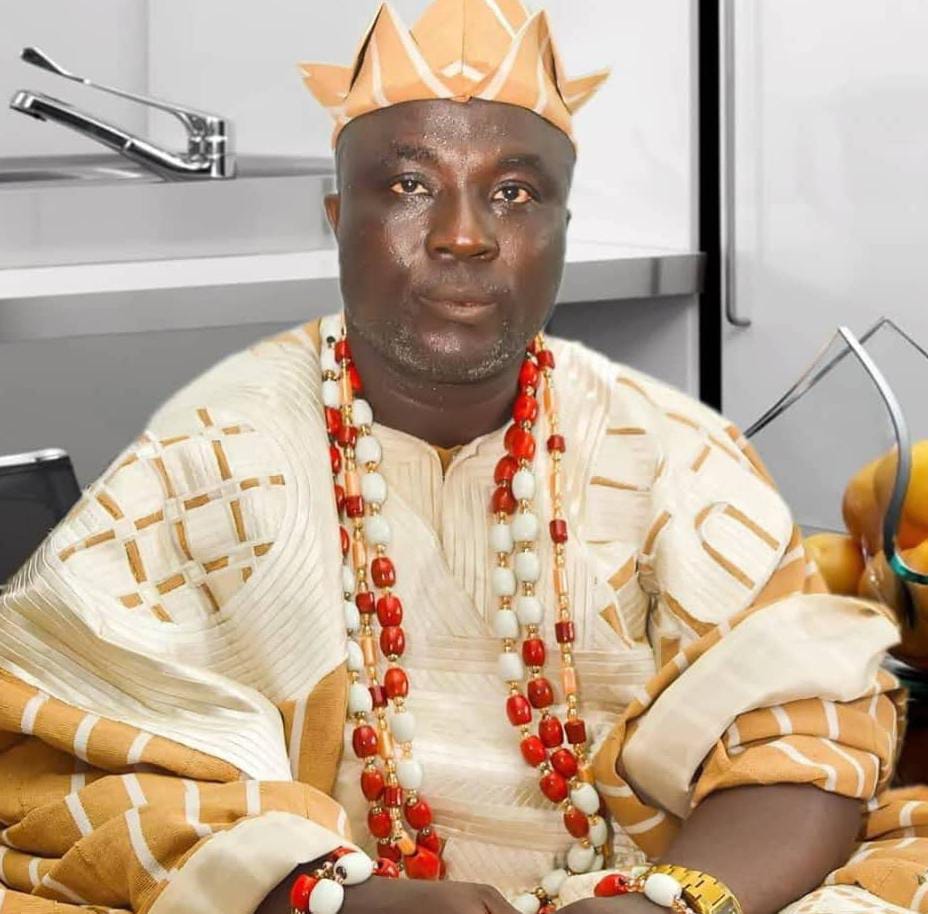
Alhaji Chief Dr Maruff Olarewaju, has decried recurring engagements of some acclaimed Nigerian men of God in what he described as fake, baseless and politically-motivated prophecies ahead of the 2027 general elections, thereby demeaning and questioning their sacred callings.
In a statement issued on Monday in Ilorin, the Kwara State capital, the OPCI President wondered where these acclaimed men of God are getting their revelations from, going by the fake prophesies of majority of them ahead of the 2023 general elections that Asiwaju Bola Ahmed Tinubu would not win the presidential election, which he eventually won massively.
He said: “One cannot help but wonder where these self-acclaimed prophets get their revelations from. During the build-up to the 2023 General Election, over 90% of them came out at different times claiming that God told them that Asiwaju Bola Ahmed Tinubu would never win the presidential election. Some of them even went as far as saying that if Asiwaju won, then there is no God. Today, history has spoken — Asiwaju Bola Ahmed Tinubu is the President of the Federal Republic of Nigeria.
“This raises critical questions begging for answers: Why are we in Nigeria mixing religion with politics?
Why have these individuals refused to learn from the past? Are they truly hearing from God at all?
“Now, as we approach another election cycle, they are out again, saying what God did not say and claiming messages God never sent them.”
In view of these ugly experiences, Olarewaju urged the Federal Government to consider placing a ban on election-related prophecies, as it’s done in some other countries, in order to prevent the dragging of religion into the mud and to stop the confusion of innocent citizens in the name of religion, saying freedom of speech, though guaranteed, has its own limitations and must be exercised with responsibility.
He added: “Only God Almighty knows what will happen tomorrow. The confidence of many Nigerians in these fake prophets has been completely eroded. They should look for something more meaningful to do.
“Today, Nigeria is facing serious security challenges. None of these prophets saw it coming. Many churches and mosques have been deserted, many worshippers have been kidnapped or killed — they never prophesied it, their God never revealed it to them. But when it comes to elections, their God suddenly becomes very active.
“Nigerians must be wise and not be deceived again.”
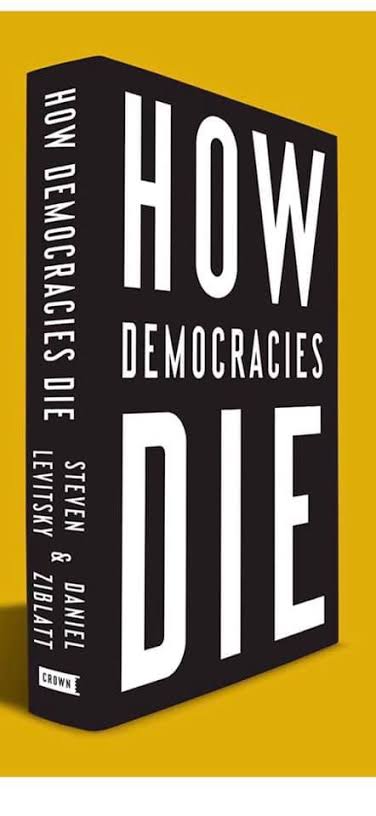
Democracy has been hailed as the best system of governance devised by mankind to date. It is a process driven by periodic elections, as has been the case in Nigeria since the beginning of the Fourth Republic in 1999. Similar electoral exercises took place during the First Republic (1960–1966) and the Second Republic (1979–1983). It should, however, be emphasised that elections by themselves do not necessarily imply democratic practice.
Democracy and elections are closely related, but they are not synonymous. An election is a mechanism through which citizens exercise their political sovereignty and choose those who govern them. Democracy, however, is the broader system of government founded on popular sovereignty, political equality, participation, accountability, the rule of law, respect for human rights, and the protection of fundamental freedoms.
Without these accompanying elements, a country can hold elections without necessarily being genuinely democratic. Free, fair, credible, and competitive elections are essential to democracy, but they are only one component of it. Democracy must also exist between elections—in the institutions, laws, rights, freedoms, and accountability mechanisms that govern the exercise of political power. Thus, elections are the mechanism through which citizens choose their representatives, but democracy extends far beyond the periodic casting of ballots. Without political freedom, genuine competition, the rule of law, institutional accountability, civil liberties, and respect for the will of the electorate, elections can become little more than a ritual for legitimising authoritarian rule. In short, an election is an instrument of democracy; it is not democracy itself.
There is a strong correlation between a country’s population size, demographic structure, and electoral participation (voter turnout). Under normal circumstances, the larger the population, the larger the number of potential registered voters and, potentially, the higher the absolute turnout. The relationship among these variables—population size, registered voters, and voter turnout—can serve as a barometer of the health of democracy in a given environment. Nigerian electoral trends and history seem to defy this thesis. For some obvious reasons, voter participation in Nigerian elections has been on a dangerous decline since 1999, signifying a steady growth in citizens’ apathy. This development poses serious consequences for democratic growth and governance.
The declining appeal of democracy in Nigeria becomes more apparent when viewed against the falling voter participation rate from one electoral cycle to another. This is even more disturbing in light of the nation’s estimated population of 230 million, which could ordinarily provide a strong foundation for robust political participation and activities.
Unfortunately, this has not been the case. Records of Nigeria’s general elections from 1999 to 2023, in terms of registered voters, voter turnout, and approximate turnout percentages, are as follows:
1999: 57.9 million registered; 52% voted.
2003: 60.8 million registered; 69% voted.
2007: 61.6 million registered; 58% voted.
2011: 73.5 million registered; 54% voted.
2015: 68.8 million registered; 44% voted.
2019: 84.0 million registered; only 35% voted.
2023: 93.5 million registered; only 27% voted.
For the forthcoming 2027 elections, INEC has registered about 103 million eligible voters. It is hoped that the decline in voter turnout from 69% in 2003 to just 27% in 2023 will be stemmed—a task that may not be easy if the gubernatorial elections in states such as Ekiti, Osun, and Kogi are factored in.
During the last gubernatorial election in Ekiti, only 36% of the one million registered voters in the state turned out.
In Osun, about 43% of the 2.3 million registered voters turned out.
In Kogi, only 33% of the 1.6 million registered voters cast their ballots. The three states are among the eight that hold off-cycle elections, during which they enjoyed greater security and logistical support. In addition, the contestants live among the electorate.
Most strikingly, in Lagos, with a staggering seven million registered voters, fewer than 20% turned out to vote in the 2023 general elections. This was despite the fact that a son of the soil, Tinubu, was on the ballot. The dismal participation underscores the depth of voter apathy in Nigeria compared with other democracies in both developed and developing countries, as indicated below:
India: 2024 Lok Sabha election — 65.79%.
Brazil: 2026 general election — 78.92%.
United States: 2024 presidential election — 63.9%.
Kenya: 2022 general election — 64.77%.
The question is: What is wrong with the Nigerian system? Could it be that the population figures are inaccurate? Could it be INEC’s ineptitude? Or is it that Nigerians are no longer in love with democratic governance? The answers could lie in all or a combination of these factors.
There is every likelihood that the 2006 population census, from which the nation’s estimated population of 230 million is projected, remains suspect. This is because Nigerians tend to view population censuses and figures more as instruments of competition for political power and resources than as tools for national planning. Consequently, electoral data derived from such figures may distort the political process.
Violence has also been a major feature of Nigerian politics. According to the General Abdulsalami Abubakar-led National Peace Committee, between 2015 and 2025, about 870 people are believed to have been killed during various electoral episodes. Many more have been wounded or incapacitated in the course of an exercise intended to improve their well-being and guarantee the security of their lives and property.
Compounding the violence is a primitive level of political intolerance. In many states, ruling parties monopolise and abuse the political space, shamelessly denying their opponents the freedom to campaign, put up posters, and access state-owned facilities and media outlets. Such conduct reinforces the belief that society is incapable of practising democracy. What a shameful mentality and display of political backwardness!
Another serious challenge is the perceived electoral manipulation by two major democratic institutions—INEC and the judiciary—which has allowed successive ruling parties and power brokers to frustrate political opponents and parties with impunity. Classic cases include the confusing registration and deregistration of political associations; the factionalisation of some; the upholding and overturning of decisions involving political parties; and the numerous cheap and self-serving exercises (substitutions, sackings, awards, etc.) in the name of judicial prerogative. These developments have contributed to the emergence of the current off-cycle gubernatorial elections in states including Anambra, Bayelsa, Edo, Ekiti, Kogi, Ondo, Osun, and Imo.
The circumstances and judicial verdicts surrounding these developments are varied. While some of the political actors are culpable, some of the decisions lack consistency. At best, they are self-serving. The dizzying judicial abracadabra unfolded as follows:
i) In Imo State, there was the “Fourth to First” verdict. Following the March 2019 election, INEC declared Emeka Ihedioha (PDP) the winner. Hope Uzodinma (APC), who officially finished fourth in the initial tally, challenged the result. On January 14, 2020, the Supreme Court ruled that votes from 388 polling units had been unlawfully excluded from Uzodinma’s score. Once those votes were factored in, Uzodinma’s tally surpassed Ihedioha’s. The Court awarded the seat to Uzodinma.
ii) In Zamfara State, the APC won the 2019 gubernatorial election, and Muktar Idris was set to become governor. However, an internal party faction led by Senator Kabiru Marafa challenged the legality of the party’s primary elections. On May 24, 2019, just days before the inauguration, the Supreme Court ruled that the APC had failed to conduct valid primary elections in Zamfara. Consequently, the court declared all votes cast for the APC invalid and “wasted”. It awarded the seat to Bello Matawalle of the PDP.
iii) Earlier, in 2007, in Rivers State, Rotimi Amaechi won the PDP governorship primary, but the party substituted his name with Celestine Omehia. Omehia went on to win the general election. In October 2007, the Supreme Court ruled that Amaechi’s substitution was illegal. Crucially, the court established the legal principle that votes belong to the political party, not the candidate. Since the PDP won the election, Amaechi was declared the rightful governor despite not appearing on the ballot.
Still in Rivers State, in 2019, due to intractable internal leadership disputes and legal battles, the Supreme Court upheld a lower court ruling that barred the Rivers APC from fielding any candidates in the 2019 general elections. This cleared the path for Nyesom Wike (PDP) to secure an easy victory without major opposition.
iv) In the run-up to the 2015 governorship election in Kogi State, the APC candidate, Abubakar Audu, was leading comfortably in the polls but died suddenly before the results were fully collated and declared. Audu’s running mate, James Faleke, argued that he should automatically inherit the ticket and votes. The APC bypassed Faleke and substituted Audu with Yahaya Bello, who had finished second in the primaries. The case went to the Supreme Court, which upheld Bello’s election. Reaffirming the Rivers precedent, the court held that votes are cast for the political party, not the individual candidate, thereby authorising the APC to nominate Bello to conclude the election.
v) The 2019 Bayelsa gubernatorial election produced David Lyon of the APC as the winner. However, the PDP filed a lawsuit alleging that Lyon’s deputy governorship running mate, Biobarakuma Degi-Eremienyo, had submitted forged certificates and false information regarding his names and credentials to INEC.
On account of this, on February 13, 2020—less than 24 hours before Lyon was scheduled to be sworn in—the Supreme Court nullified the APC ticket. Because a governorship ticket is legally a “joint ticket”, the disqualification of the deputy automatically disqualified the governor-elect. The court awarded victory to the candidate with the next-highest number of valid votes. Consequently, Douye Diri of the PDP was sworn in as governor.
vi) In Osun State, Oyinlola (PDP) was declared the winner and assumed office as governor in 2007. Rauf Aregbesola of the Action Congress (AC) challenged the results, alleging widespread rigging, violence, and non-compliance with the Electoral Act in several local government areas. The court subsequently sacked Oyinlola and awarded the seat to Aregbesola, ordering his immediate swearing-in.
vii) A similar development took place in Ondo State, where Olusegun Agagu (PDP) was declared the winner of the 2007 gubernatorial election. Olusegun Mimiko, contesting under the Labour Party (LP), filed a petition maintaining that he was the rightful winner based on the lawful votes cast. On February 23, 2009, the court agreed with Mimiko and removed Agagu. Mimiko was subsequently sworn in.
viii) Anambra provides a different variation of judicial intervention, focusing on the theft of mandates and the constitutional definition of tenure. Chris Ngige (PDP) was declared the winner in 2003. Peter Obi of APGA challenged the result. After nearly three years of litigation, the Court of Appeal, in March 2006, ruled that Ngige had not won the election and awarded the governorship to Obi.
In 2007, INEC conducted a fresh governorship election while Obi was still serving his term, and Andy Uba (PDP) was declared the winner and sworn in. Obi went to court, and Uba was sacked after just 17 days in office. The court ordered Obi to return and complete his constitutionally mandated term.
The active participants in this electoral mayhem are usually the contestants, INEC functionaries (including ad hoc staff and university dons serving as returning officers), security agents, and, later, the judiciary. Unfortunately, some university dons have actually been convicted of election-related corruption. The ordinary voter should be excused because voters are often used as pawns whose mindsets are shaped by their material conditions—an observation consistent with Karl Marx’s perspective.
The monetisation of politics has also remained a major challenge. It has made entry into politics prohibitive for ordinary people and has also fertilised the growth of the phenomenon of godfatherism. The godfathers usually fund campaign expenses, buy the loyalty of security agents, influence judicial officers, fund thugs, and facilitate the outright purchase of votes at polling stations. Their protégés, in return, are expected to pledge unalloyed loyalty and grant them unfettered access to public resources.
Unfortunately, the strategy often backfires. A few classic godfather-godson crises include Wike/Fubara, El-Rufai/Uba, Kwankwaso/Ganduje, Kwankwaso/Abba, Goje/Dankwambo, Goje/Yahaya, Bafarawa/Wamakko, Aliero/Nasamu, Tinubu/Aregbesola, etc. The phenomenon of godfatherism has not helped the parties involved. If anything, it has only succeeded in weakening democracy in the country.
Perhaps the most disturbing feature of Nigerian democracy is the growing disconnect between elected representatives and the people who elect them. The lifestyles, privileges, and access to public resources enjoyed by many politicians stand in stark contrast to the lives of socioeconomic deprivation experienced by their constituents. Ironically, some of the dramatis personae in the alleged democratic misfortunes of the nation since 1999 are the ones calling the shots today.
The overall effect of electoral rigmarole, violence, corruption, and godfatherism is the development of apathy among the electorate towards the very system intended to serve them. This erosion of interest may not be unconnected with the following feelings and perceptions:
Elections without meaningful choice.
Institutions without genuine independence.
Citizens without confidence or participation.
Political power without sufficient accountability.
Nigeria’s problem is no longer merely flawed elections; it is the slow erosion of democracy itself. Falling voter turnout is a warning that citizens are losing faith in a system where votes are bought, institutions are compromised, mandates are manipulated, and leaders often serve political patrons rather than the people. A democracy that cannot command the confidence of its citizens is already in serious danger.
Democracy rarely dies in a single dramatic event. It dies slowly—when elections become rituals, institutions become instruments of power, citizens become spectators, and accountability becomes an illusion. Nigeria may still hold elections, but the real question is whether it is preserving democracy or merely preserving the appearance of it.
The path forward should begin with education. More appropriate education. Then justice and a genuine war against systemic corruption. Democracy must be rescued
A. G. Abubakar
agbarewa@gmail.com
Stephen Olufemi Oni, Ilorin
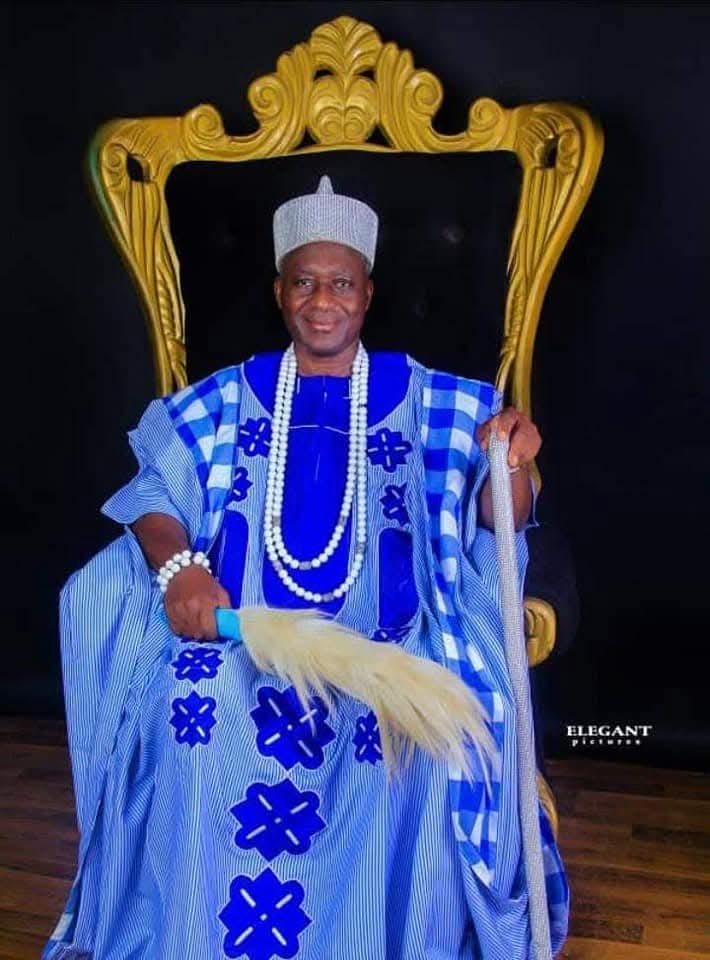
The people of Oro-Ago Kingdom in the Ifelodun local government area of Kwara State have applauded Governor AbdulRahman AbdulRazaq for the elevation of their monarch, the Oloro of Oro-Ago Kingdom, His Royal Majesty Oba Johnson Olarewaju Dada Adekilutoro 1, to the First Class status.
While also commending the Deputy Governor, Mr Kayode Alabi, who is an indigene of Oro-Ago, the people described the elevation and unparalleled recognition as a major historical milestone for them, adding that both the Governor and his deputy have etched their names in the sand of history.
In a statement issued and jointly signed by the National President and National Secretary of the Oro-Ago Development Union (ODU), Geol. Joseph Ayoku Foluso Olawole, and the National Secretary, Dr. Alfred Olatayo Awoyemi, respectively, the Union was full of praises to Governor AbdulRahman AbdulRazaq for this huge honour accorded the people of Oro-Ago Kingdom through this elevation of their highly revered Monarch.
According to the Union, the elevation is a historic milestone in the history of Oro-Ago Kingdom, noting that the recognition represents an important moment of pride, honour and renewed hope for the traditional institution and the entire Oro-Ago community.
It added: “The elevation is a significant development that will further strengthen the traditional institution, promote cultural heritage and encourage unity, peace and sustainable development across Oro-Ago Kingdom and its neighbouring communities.
“In fact, this elevation and unparalleled recognition of our Monarch, His Royal Majesty, the Oloro of Oro-Ago Kingdom, Oba Evangelist Johnson Olarewaju Dada Adekilutoro 1, reflects the importance of traditional institutions in preserving cultural identity, promoting peaceful coexistence and supporting grassroots development.
“The Union expresses confidence that the elevation would further inspire collective efforts towards the social, economic and infrastructural advancement of Oro-Ago Kingdom.”
The Union specifically lauded their illustrious son, the Deputy Governor of Kwara State, Mr Kayode Alabi, for his commitment to the progress and development of Oro-Ago Kingdom, while acknowledging his goodwill towards the community, especially his support and contributions to matters concerning the dignity, recognition and advancement of Oro-Ago Kingdom.
Describing Alabi’s good relationship with the people as a source of encouragement, the Union reiterated that the development of any community requires constructive engagement, mutual understanding and the support of well-meaning leaders.
The ODU further called on all sons and daughters of Oro-Ago Kingdom, both at home and in the diaspora, to regard the elevation as a collective achievement and an opportunity to strengthen unity, deepen cooperation and pursue a common vision for the development of the kingdom, emphasising that the new status of the traditional ruler should serve as a catalyst for greater community participation, investment, youth empowerment, improved security and the provision of essential social amenities.
ODU also acknowledged the contributions of traditional chiefs, community leaders, religious leaders, elders, youths, women and other stakeholders whose prayers, efforts and commitment have continued to support the growth and development of Oro-Ago Kingdom.
The Union urged all stakeholders to sustain the spirit of cooperation that has accompanied the Monarch’s recognition and work together towards building a peaceful, prosperous and progressive community for present and future generations.
Reaffirming its commitment to the development of Oro-Ago, the Union said the elevation is a historic moment for Oro-Ago Kingdom and congratulated His Royal Majesty, Oba Johnson Olarewaju Dada Adekilutoro I, on his elevation to First-Class status and prayed for divine wisdom, sound health and a successful reign for him.
ODU also prayed for continued peace, progress and prosperity in Kwara State under the leadership of Governor AbdulRahman AbdulRazaq, urging the people to continue to support the administration to ensure more dividends of democracy for the citizenry.
The Union expressing optimism that the elevation would open up new opportunities for Oro-Ago Kingdom, strengthen its traditional institution and inspire renewed commitment to community development.


2027: OPCI President Cautions Against Fake Prophesies

THE SLOW DEATH OF DEMOCRACY

ODU Hails Gov AbdulRazaq For Their Monarch’s Elevation To First Class Status

-
 Headlines11 years ago
Breaking: EFCC seals Borno House of Assembly, as Hon members take to their heels
-
 News12 years ago
Nigeria Security Operatives Stage Manhunt For Homosexual Perpetrator
-
 News10 years ago
How 21-year-old Girl fled community over accusation of lesbianism
-
 News11 years ago
Yobe Gov Moves Against Deputy
-
 Opinion7 years ago
7 signs she has friend zoned you
-
Technology5 years ago
Online job placement company headhunts women
-
 Headlines10 years ago
Borno Dep Gov Abducts Another Church Leader
-
 Featured6 years ago
Northern Youths Hint of Impending Defeat of Boko Haram