
Uncategorized
Art enriches cultural life in China’s rural regions

By Cui Yan, People’s Daily
What kind of vitality can art bring to the countryside?
Shuangcheng village in Pingchang county, southwest China’s Sichuan province is where the famous oil painting Father was created.
The village, leveraging the influence of this masterpiece produced by the painter Luo Zhongli, has built itself into a hub of rural tourism with its sound ecology and rich heritage. It is recognized as a provincial-level demonstration village for the revitalization of rural culture.
The story of Shuangcheng village is exactly a great example of how art can boost rural revitalization.
Art is an expression of beauty that lights up a better life. Injecting art elements into the construction of “beautiful villages” not only brings a new look to the rural area, but also paves the way for people to live a more aspiring life.
Dongziguan village in Fuyang district, Hangzhou of east China’s Zhejiang province, turned old houses in disrepair into folk houses with local features. Together, the renovated residences look like a Chinese ink painting that well depicts the unique charm. The used-to-be “hollow village” that once suffered a big loss of young workforce is finally getting back the hustle and bustle.
Shangwei village in Longhua district of Shenzhen, south China’s Guangdong province was once bothered by trash dumps and sewage flowing into the river. Today, timeworn walls have turned into “drawing papers” covered in graffiti, and the whole village is immersed in an artistic and tranquil atmosphere.
Zhongxin village in Youyang Tujia and Miao autonomous county, southwest China’s Chongqing municipality, advanced a “toilet revolution” with aesthetic elements, which made renovated public restrooms both pragmatic and good-looking.
Rural revitalization calls for both physical and cultural development. Art can nurture the mind of people and shape the values of villages.
In Xingyi village of Lijiang, southwest China’s Yunnan province, mural artist Liu Zhicheng is presenting aesthetics to villagers via delicate wall paintings. These wall paintings have raised the villagers’ pursuit and aspiration for beauty and inspired many children to learn drawing.
Today, rural art festivals are presenting the charm of aesthetics to residents, and art workshops offer a place for children to receive aesthetic education through fun activities. Besides, some villages have also hosted rural galas and singing competitions, which reactivated cultural resources and enhanced villagers’ sense of belonging.
Leading rural cultural construction with art will better vitalize cultural development in the countryside and enrich the life of villagers.
Art is also a “golden key” that can stimulate potential growth drivers, thus expanding the space for rural economic development. It is bringing more possibilities to rural areas.
As a well-preserved ancient village, Zecheng village in Zuoquan county, north China’s Shanxi province has experienced rapid development thanks to its scenic resources and cultural legacy.
Zuoquan county has built a base for outdoor sketching that features artistic elements, attracting many students and artists. The county has also hosted art exhibitions and developed study tour programs.
These new business forms boosted local tourism and cultural consumption and created jobs for villagers, which proves the concept of “lucid waters and lush mountains are invaluable assets,” expands villagers’ income and promotes rural revitalization.
Artistic creation betters the living environment in rural areas, art activities enrich the cultural life of rural residents, and art-related business forms create development opportunities. The countryside in the new era has become more beautiful with the decoration of art.
As various types of art practices are carried out in rural areas, art will constantly pave the path to cultural revitalization. It is believed that art will edify more rural residents and better their lives in the countryside.
By Fabian Apechihin
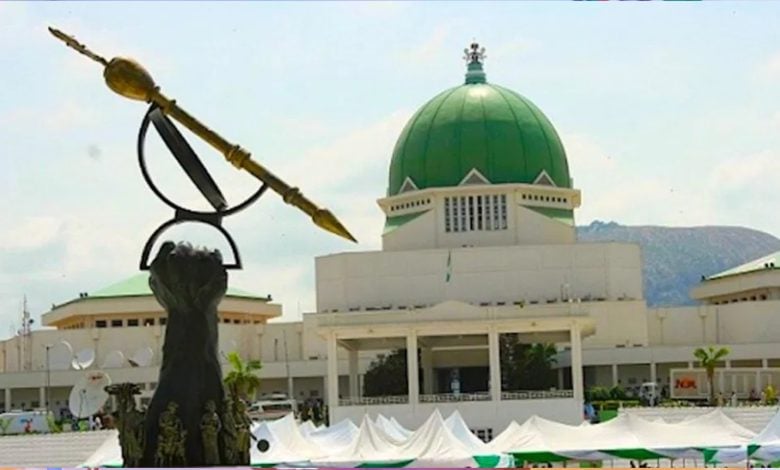
The 2026 Constitution Amendment Bill has moved to the state level following its consideration by the National Assembly, paving the way for state legislatures to consider the proposed amendments.
The development comes amid renewed attention on constitutional reform and ongoing discussions over proposed changes to Nigeria’s governing framework.
Meanwhile, the House of Representatives has defended FCT Minister Nyesom Wike over allegations surrounding borrowing by the Federal Capital Territory Administration.
House spokesperson Akin Rotimi Agbese, speaking in an interview with Channels Television, rejected claims that Wike had undertaken borrowing without the knowledge or approval of the National Assembly.
Agbese said the FCT minister could not independently create a sovereign borrowing obligation, stressing that public borrowing is subject to constitutional, statutory and administrative procedures.
“Wike has committed no infraction in borrowings. There is no basis for the allegation that he has been borrowing money behind the back of the National Assembly,” Agbese said.
He explained that borrowing to finance infrastructure was not unlawful where the required approvals and procedures had been followed.
“Borrowing for infrastructure development is not unlawful in itself, provided the prescribed approvals and procedures are followed,” he added.
The House spokesperson further argued that an increase in the FCT’s debt profile should not automatically be interpreted as evidence of illegal borrowing, citing the scale of infrastructure projects being undertaken in Abuja under Wike.
According to Agbese, the key issue is whether the appropriate approvals were obtained for specific borrowing transactions, rather than simply whether the FCT’s overall debt profile has increased.
The comments come as scrutiny continues over public borrowing, infrastructure financing and the legal procedures governing government debt at both the federal and sub-national levels.
By Fabian Apechihin
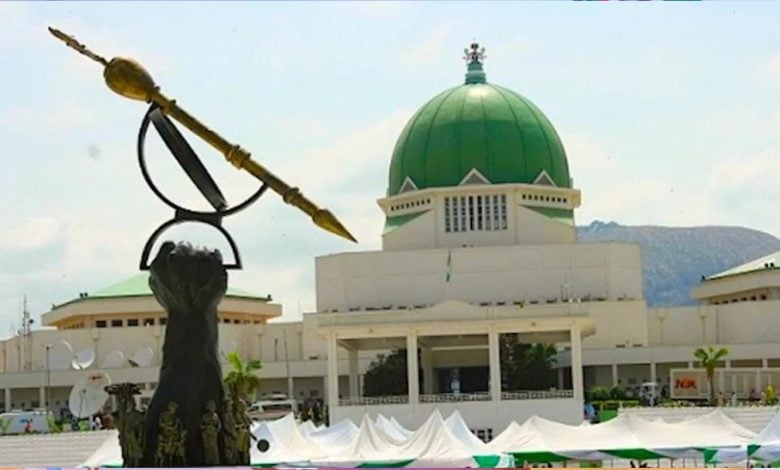
The 2026 Constitution Amendment Bill has moved to the state level following its consideration by the National Assembly, paving the way for state legislatures to consider the proposed amendments.
The development comes amid renewed attention on constitutional reform and ongoing discussions over proposed changes to Nigeria’s governing framework.
Meanwhile, the House of Representatives has defended FCT Minister Nyesom Wike over allegations surrounding borrowing by the Federal Capital Territory Administration.
House spokesperson Akin Rotimi Agbese, speaking in an interview with Channels Television, rejected claims that Wike had undertaken borrowing without the knowledge or approval of the National Assembly.
Agbese said the FCT minister could not independently create a sovereign borrowing obligation, stressing that public borrowing is subject to constitutional, statutory and administrative procedures.
“Wike has committed no infraction in borrowings. There is no basis for the allegation that he has been borrowing money behind the back of the National Assembly,” Agbese said.
He explained that borrowing to finance infrastructure was not unlawful where the required approvals and procedures had been followed.
“Borrowing for infrastructure development is not unlawful in itself, provided the prescribed approvals and procedures are followed,” he added.
The House spokesperson further argued that an increase in the FCT’s debt profile should not automatically be interpreted as evidence of illegal borrowing, citing the scale of infrastructure projects being undertaken in Abuja under Wike.
According to Agbese, the key issue is whether the appropriate approvals were obtained for specific borrowing transactions, rather than simply whether the FCT’s overall debt profile has increased.
The comments come as scrutiny continues over public borrowing, infrastructure financing and the legal procedures governing government debt at both the federal and sub-national levels.
By Fabian Apechihin
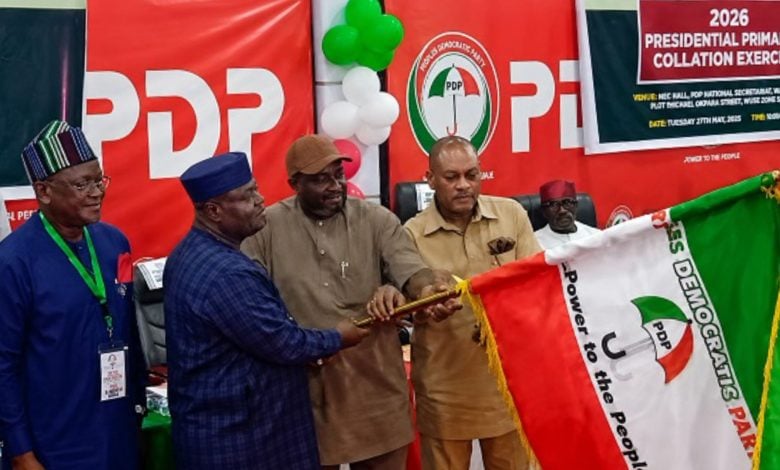
The Peoples Democratic Party (PDP) has reaffirmed its intention to contest the 2027 presidential election despite the decision of Federal Capital Territory Minister, Nyesom Wike, to support President Bola Ahmed Tinubu’s re-election bid.
The party said Wike’s decision was personal and did not alter its position to participate in the presidential election with its candidate, Senator Sandy Onor. PDP National Publicity Secretary, Jungudo Haruna Mohammed, made the clarification on Wednesday.
According to the party, a recent conversation between Wike and Onor should not be interpreted as a political negotiation between the minister and the PDP.
“He told Nigerians that Sandy is his friend. And they only had a friendly discussion within the umbrella of friendship. So, that is just a personal discussion between him and his friend,” Mohammed said.
He added that Wike’s support for Tinubu did not prevent the PDP from fielding candidates for the presidential, governorship and legislative elections.
Wike had earlier clarified that his support in 2027 was specifically for Tinubu’s presidential re-election and did not amount to an agreement that the PDP would withdraw from other electoral contests. He also said he never promised that the PDP would abandon its candidates for governorship, National Assembly and State House of Assembly elections.
“I said I will support the President from day one. I never told Mr President I will join APC,” Wike said.
The minister also maintained that his proposed Rainbow Coalition was not an arrangement with the All Progressives Congress (APC), but rather a platform through which politicians from different parties could mobilise support for Tinubu’s re-election.
The issue has generated disagreement with some APC governors, who have expressed concern about a political arrangement that could affect the party’s candidates at other levels.
APC Progressive Governors’ Forum Chairman, Hope Uzodinma, said the governors would not support any alliance or arrangement that could weaken the APC or adversely affect its candidates.
Meanwhile, APC presidential campaign council spokesperson Ima Niboro has urged Wike and APC governors to end their public exchanges and concentrate on political mobilisation.
“When I said tone down the rhetoric, I do not mean stop working. Stop talking, go and work,” Niboro said.
He urged political leaders to strengthen their grassroots structures and engage directly with voters rather than continue exchanging statements in the media.
“All this shouting is not taking anybody anywhere. Go and work. Go and establish your authority on your political base,” he said.


2026 Constitution Amendment Bill Moves to States

2026 Constitution Amendment Bill Moves to States

2027: PDP Insists on Presidential Contest Despite Wike’s Support for Tinubu

-
 Uncategorized6 years ago
FG, states urged to harness flooding for ranching, others with technology – Agbaje
-
 Headlines11 years ago
Breaking: EFCC seals Borno House of Assembly, as Hon members take to their heels
-
 News12 years ago
Nigeria Security Operatives Stage Manhunt For Homosexual Perpetrator
-
 News10 years ago
How 21-year-old Girl fled community over accusation of lesbianism
-
 News11 years ago
Yobe Gov Moves Against Deputy
-
 Opinion7 years ago
7 signs she has friend zoned you
-
Technology5 years ago
Online job placement company headhunts women
-
 Headlines10 years ago
Borno Dep Gov Abducts Another Church Leader