
News
THE DSS OPERATES WITHIN ITS MANDATE

By Peter Afunanya
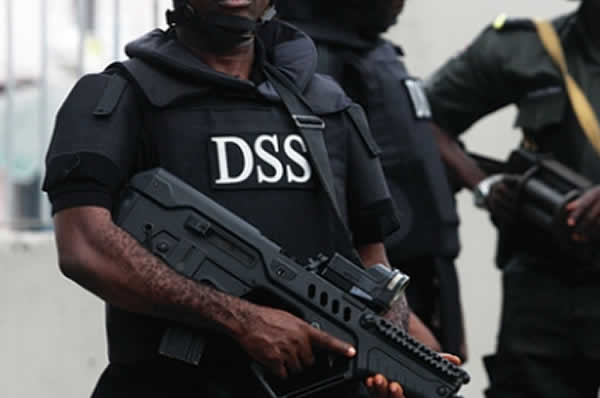
Recently, about five major newspapers called out the DSS for bashing of sorts. The papers, which used their platforms to express varied views about the modus operandi of the Service include Vanguard, Daily Trust, The Sun, Tribune and Punch. While Vanguard’s piece on 2nd June 2023 was Dousing the DSS/EFCC Feud, Daily Trust, on 6th June 2023, published an editorial titled The DSS Must Conduct Its Duties as a Secret Service. The Sun, on 7th June, published The Needless DSS/EFCC Fracas while Tribune on 8th June 2023 wrote on The EFCC/DSS Confrontation. Similarly, on 14th June 2023, Punch featured DSS, Others Need Radical Reforms. It did not seem that the editorials which sought the reforms of the DSS or to criticise it for its public statements or actions on various subject matters of national security concern were, by any means, an accident a coincidence. It looked every inch planted or organised. It is a hatchet job or so it seemed. The judgement that the Service is excessively public or ubiquitous missed the point. The papers manifested predictable bias and patterns.
Relatedly, some respected legal personalities namely, Olisa Agbakoba SAN, Mike Ozekhome SAN and Femi Falana SAN opined that the Service operates outside its mandate especially with regards to the investigation of Godwin Emefiele. The fact that this matter has become sub-judice constrains the Service from making further statements about it. The celebration of the news of a court order to allow his Lawyers and family access to him is quite unnecessary. He was never denied access. Ever since he was taken into custody, his family has continually accessed him. Same with medical officials. The impression that the Service is going to act on the prompting of the Court is not correct. This is by the way.
Back to the subject under discourse. While it may be fair to admit that the news media and aforementioned personalities are entitled to their opinions, measured ignorance predominantly played out in their arguments. First, they failed to recognise that security threats are evolving and so do the approaches to managing them. Instructively, the security landscape in Nigeria, like many other countries, has become increasingly complex and dynamic. The periodic issuance of press statements to educate or carry citizens and residents along has undoubtedly become part of strategies to manage national security challenges. Extensive research would have revealed to the critics that the Central Intelligence Agency (CIA), Federal Bureau of Investigation (FBI) and other world intelligence Services deploy similar tactics including occasional statements and advisories. The CIA includes demographic information on its website to provide the public with valuable insights and data about various populations so to enhance understanding of different regions and communities. Does it mean CIA is operating outside its mandate? Or will that be accepted because it’s CIA, a foreign body?
The need for the agencies to be responsive, transparent and apprise taxpayers has become the global norm in national security and intelligence management. It is called security/intelligence accountability. The tenets of security and intelligence governance expect that agencies remain transparent, accountable and compliant to democracy. World over, Intelligence Services operate in ways and means not too discernable to the uninitiate. But the institutionalisation of democracy as preferred political culture has nonetheless forced such agencies to communicate often with the Public. You can see why the public statements can never be out of place. Without public consciousness and support, countering threats may remain a herculean task for security agencies. Democratic subordination and legislative oversight are basic principles which make it an obligation for these agencies to operate openly even when some of their activities are secret. Ask the USA, UK, France, Canada and other advanced democracies. This level of openness does not vitiate the expected secrecy or in any way compromise their operations.
Regarding the matter concerning the DSS and EFCC, both agencies have refuted claims of a rivalry. It is important to note that comparing the 30th May, 2023 incident at 15 Awolowo Road, Lagos to the barricade of National Assembly in 2018 is inaccurate and unjust due to the substantial differences in the nature and context of the two events. While it is essential to emphasize inter-agency relations and cooperation, it would be unfair to generalise and imply that the Service is in rivalry and power struggle with the Commission. Each agency operates within its distinct mandate and context.
Meanwhile, the editorials accurately alluded to the constitutionality of the DSS as an intelligence organisation in detecting, preventing and neutralising threats against Nigeria. They commended the Service for its commitment to the security of the country as well as the many feats it had accomplished in the course of discharging its duties. Thank you indeed. It has to be understood that the Service is not only an intelligence organisation. It is also a law enforcement agency. It is a security and policy advisory organ. Its establishment law expects it to prevent. To prevent unarguably means to enforce. Should the Service seek media endorsement or permission before deploying operatives and equipment to conduct its job? Should it rather play to the gallery? Characteristic of intelligence operating systems, DSS’ activities may never be completely explained or understood particularly to those who do not need to know.
Even though some of its high officials and operations are known and their veils of secrecy uncovered, there are thousand undercover personnel and actions that have no business going public. It is expected to remain so. With its broad mandate and legal authority to investigate crimes of national security significance, the DSS is well within its rights to initiate an inquiry into any relevant matter. The DSS is primarily charged to detect and prevent crimes and threats against the internal security of Nigeria. More profoundly, it is to undertake such other responsibility as maybe assigned to it by the President and Commander-in-Chief. Appreciating this role of the DSS is instructive for some sections of the media, lawyers and other interested parties. The Service operates on the basis of rule of law. Its operations are rule governed. As required, it obtains arrest and detention warrants when and if needed. For the fact that such instruments are not advertised does not suggest otherwise. Critics should get conversant with the law and rules of engagement and desist from misinforming, misleading or inciting the public. Those seeking to weaken the Service through premeditated reforms may be on a wild goose chase. Consistent attack on it based on ignorance, unrealised interests and emotional assessments and judgements does the country no good. The DSS has stood so firmly for Nigeria. It will continue to.
Considering the warped mentality that has triggered these writeups, it will, no doubt, be unsurprising to witness an upsurge in malicious articles, criticisms and baseless attacks in the public space following the investigations of Messrs Godwin Emefiele and Abdulrasheed Bawa among other flimsy matters. Certain groups and people are bound to come up with frivolous allegations against the Service and its leadership. These entities may also exploit unpatriotic members of the Service to spread falsehoods, propaganda and hate in order to project the Organisation in a bad light. Given their reach and war chest to mobilise forces against Government and its key officials, the adversaries may intend to cause distractions to the on-going investigations as directed by the C-in-C. However, the Service will not depose its professionalism for cheap backlash nor discharge its duty with prejudice or fear.
For those who canvass the opinion that the DSS has no business in investigating the matters referred to it are obviously not taking seriously the omnibus powers of the President, as enshrined in the enabling Acts of the SSS and the NSA. As argued by a onetime Director of the DSS, Fubara Duke, “When a law confers on the President power to delegate ANY assignments he deems fit for a particular Agency to perform, I wonder how it falls outside the purview of (ANY) the stipulations of the President’s powers and by extension why the DSS is being faulted for carrying out the President’s directive”. Continuing, he added: “I have heard arguments of cases being thrown out by the courts over questionable prosecutorial powers of the DSS regarding some categories of cases including criminal cases. Without prejudice to the wisdom of the court on such judgements, they should not override the lawful investigative authority of the DSS. Should there be need for prosecution in due course, these determinations would be appropriately evaluated and where/if necessary, appropriate prosecutorial agencies which may include the Attorney General’s Office or other sister agencies may be deployed to prosecute. It is not the first time this has happened”.
Let it be clear, however, that the DSS will remain unshaken and professional in carrying out its duties. It recommits to diligently operate, as always, within the confines of the law and to uphold the fundamental rights of all Nigerians. The media must, as the fifth estate of the realm, remain balanced, accurate, impartial and accountable. To sustain a deliberate misguidance of the public with any form of misconceptions is detrimental to nationhood. Therefore, to deepen the expected contributions, seeking veracity is not only ethical but obligatory. That should not be asking for too much.
By Dr. Peter Afunanya, fsi
Public Relations Officer
Department of State Services

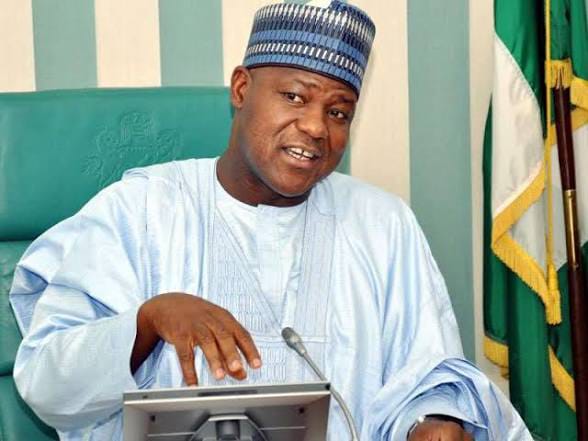
Former Speaker of the House of Representatives and Chairman of the Board of the National Credit Guarantee Company Limited (NCGC), Rt. Hon. Yakubu Dogara, CFR has expressed deep sorrow over the Nigerian Air Force aircraft crash that claimed the lives of 32 persons near Igbokoda, Ondo State. Dogara described the tragedy as a heartbreaking loss to the nation, noting that the deaths of the victims have left a painful void in the country’s defence and security community.
In a statement, the former Speaker extended his condolences to President Bola Ahmed Tinubu, Commander-in-Chief of the Armed Forces, the Nigerian Air Force, and the families of those who perished in the unfortunate incident.
He said the nation shares in the grief of the bereaved families and the Armed Forces at this time of immense sorrow, adding that the sacrifices of those who lost their lives in service to the country will not be forgotten. “The nation mourns with the families of the deceased and stands in solidarity with the Armed Forces during this difficult period,” Dogara stated.
He also commiserated with the Chief of Air Staff, officers and men of the Nigerian Air Force, praying that God grants them the fortitude to bear the painful loss.
According to him, moments such as this call for national unity, reflection and collective support for the families and institutions affected by the tragedy.
Dogara paid tribute to the victims, describing them as patriotic Nigerians whose commitment and service contributed to the security and stability of the nation. He further applauded the efforts of emergency responders, rescue teams and all personnel involved in the aftermath of the crash, commending their courage and professionalism under difficult circumstances.
The former Speaker prayed God to comfort their families, friends and colleagues.
He also offered prayers for the safety and protection of members of the Armed Forces and for continued peace, unity and progress in Nigeria.
The Nigerian Air Force aircraft crashed near Igbokoda, Ondo State, resulting in the death of 32 persons and plunging the nation into mourning. Authorities are yet to make public the cause of the accident as investigations continue.
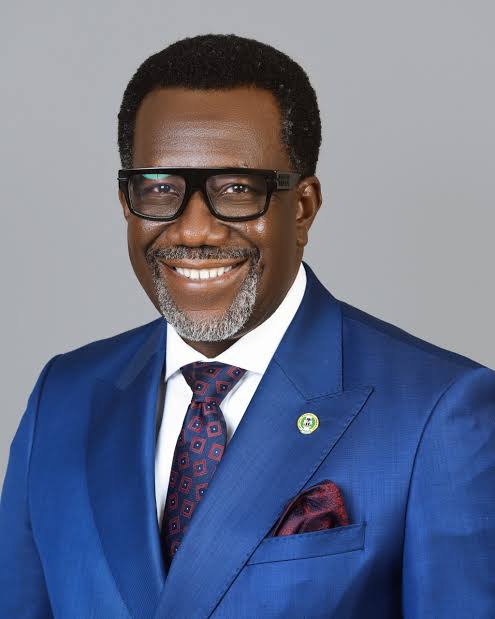
The Centre for Credible Reforms and Institutional Accountability (CCRIA) has commended the Commissioner for Insurance and Chief Executive Officer of the National Insurance Commission (NAICOM), Mr Olusegun Ayo Omosehin, for promoting transparency and accountability in the ongoing reforms of Nigeria’s insurance industry.
The centre said the implementation of the Nigerian Insurance Industry Reform Act (NIIRA) 2025 had ushered in a new phase of development for the sector, with stronger regulatory standards, improved capitalisation and greater emphasis on protecting policyholders.
Dr Aminu Abubakar Aminu, president of the centre, said this in a statement at the weekend.
Aminu commended President Bola Tinubu and the National Assembly for the enactment of NIIRA, describing the legislation as a major step towards addressing longstanding challenges in the insurance industry.
“The enactment of the Nigerian Insurance Industry Reform Act is a significant milestone in the development of Nigeria’s insurance sector. We commend Mr President and the National Assembly for recognising the need to modernise the legal and regulatory framework governing the industry. NIIRA provides the foundation for an insurance sector that is better capitalised, more accountable, more responsive to policyholders and better equipped to contribute meaningfully to the Nigerian economy,” he said.
The centre also praised Omosehin for his leadership of NAICOM, saying his extensive experience as an insurance professional had positioned him to effectively implement the new regulatory framework.
“We consider the appointment of Mr Olusegun Ayo Omosehin as Commissioner for Insurance and Chief Executive Officer of NAICOM a timely and appropriate decision. He is a seasoned insurance professional with many years of experience in the industry, and his understanding of the sector gives him the practical knowledge required to lead an important reform process of this nature. We commend him for the direction he has provided since assuming office and for his commitment to strengthening the industry,” Aminu said.
According to the centre, the ongoing recapitalisation exercise was among the important steps taken to strengthen the financial capacity of insurance companies and improve their ability to meet obligations to policyholders.
Aminu said the reforms were already producing early gains and should be sustained through consistent implementation.
“The early developments under NIIRA demonstrate that the reform is not merely a legislative exercise but a process capable of producing measurable improvements in the industry. Stronger capital requirements, improved supervision and greater attention to policyholder protection will ultimately create an insurance market that Nigerians can trust. We encourage NAICOM to remain focused on the implementation of the Act and to continue providing clear guidance to operators and other stakeholders,” he said.
The centre noted that the reforms would also help deepen insurance penetration and strengthen the industry’s contribution to national economic development.
It urged insurance companies, brokers, reinsurers, professional bodies and other stakeholders to embrace the new framework and work with NAICOM to achieve the objectives of the legislation.
“The success of NIIRA will require the cooperation of every stakeholder in the insurance ecosystem. Operators must see the reforms as an opportunity to strengthen their institutions, improve their services and regain the confidence of Nigerians. A well-regulated insurance industry can mobilise long-term capital, protect businesses and households against risks and support investment and economic growth. These are benefits that go beyond the insurance industry itself,” Aminu said.
Aminu emphasized that the centre was particularly encouraged by the emphasis on policyholder protection under the new framework, noting that public confidence remained critical to the growth of insurance in Nigeria.
He said Nigerians should be able to purchase insurance products with confidence that operators had the financial capacity and institutional structures required to honour legitimate claims.
The president further urged NAICOM to sustain its engagement with stakeholders while ensuring that the provisions of NIIRA were implemented transparently and consistently.
“What is required at this stage is continuity, professionalism and commitment to the objectives of the law. The reforms must be sustained beyond the initial implementation period so that the gains can become permanent features of the industry. We believe NAICOM, under the leadership of Mr Ayo Omosehin, has an important responsibility to ensure that the momentum is maintained, and we encourage all stakeholders to support the commission in delivering on this mandate,” he said.
The centre said the successful implementation of NIIRA would strengthen confidence in the insurance sector, improve the protection available to policyholders and position the industry to play a greater role in Nigeria’s economic transformation.
It also called for continued collaboration between NAICOM, insurance operators and other stakeholders to ensure that the objectives of the new law were fully achieved.
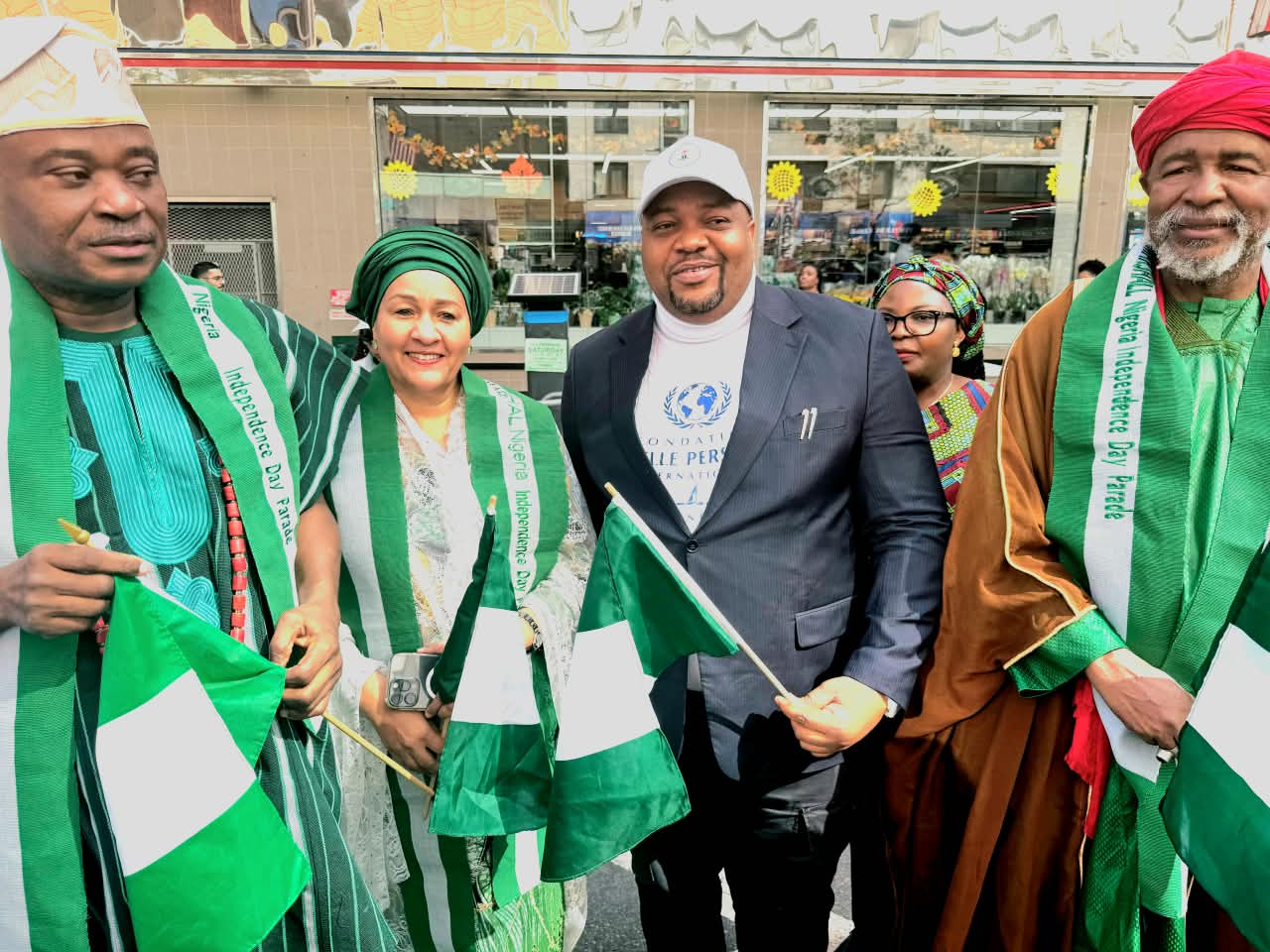
As Nigerians from across the United States gathered in Manhattan to celebrate Nigeria’s Independence Day in grand style, Hon. Amb. Jim Okolo used the occasion to share an inspiring message about Nigeria’s immense possibilities, rich cultural heritage, and promising future.
Speaking with members of the media during the colourful celebration, Hon. Amb. Okolo described Nigeria as one of the most blessed nations in the world, endowed with abundant natural resources, a dynamic population, and a cultural heritage that continues to earn global recognition.
According to him, Nigeria possesses enormous deposits of valuable minerals and other natural resources that, if fully harnessed, can accelerate economic growth and create prosperity for millions of citizens. He noted that the country is strategically positioned to become a leading destination for investment in mining, agriculture, technology, manufacturing, and infrastructure development.
Beyond its natural wealth, Hon. Amb. Okolo emphasized that Nigeria’s greatest strength remains its people. He praised the creativity, resilience, intelligence, and entrepreneurial spirit of Nigerians, pointing out that Nigerian professionals, innovators, academics, and business leaders continue to excel in various sectors across the world.
The respected diplomat also spoke passionately about Nigeria’s unique cultural identity. From the colourful festivals of its diverse ethnic groups to its globally celebrated music, fashion, literature, cuisine, and film industry, he described Nigeria as a nation whose cultural influence extends far beyond its borders.
He noted that Nigeria’s diversity is one of its greatest treasures, bringing together hundreds of ethnic nationalities with distinct traditions and languages that collectively form a vibrant and unified national identity.
While addressing questions on security, Hon. Amb. Okolo maintained that although Nigeria faces certain security challenges, the situation is not always as severe as often portrayed by social media discussions and sections of the international media. He stressed that millions of Nigerians continue to live, work, study, invest, and contribute meaningfully to society every day.
He called on the international community, investors, and members of the diaspora to focus on Nigeria’s strengths, opportunities, and achievements rather than allowing negative narratives to define the country’s image.
“Nigeria remains a land of opportunity, innovation, and hope. It is a nation blessed with extraordinary human capital, abundant resources, a rich cultural heritage, and a people whose determination and resilience continue to inspire the world,” he said.
The celebration was attended by several distinguished personalities, including the United Nations Secretary-General, Hajia Amina Mohammed, the Nigerian Ambassador to the United Nations, diplomats, business leaders, community stakeholders, and prominent members of the Nigerian diaspora.
The event transformed parts of Manhattan into a vibrant showcase of Nigerian pride, featuring cultural exhibitions, traditional performances, business networking sessions, authentic Nigerian cuisine, and displays highlighting the country’s achievements and diversity.
Adding excitement to the festivities were thrilling performances by internationally acclaimed Nigerian music stars Patoranking, Runtown, and BNXN (formerly known as Buju), who entertained thousands of attendees and demonstrated the growing global appeal of Nigerian music.
As the celebration came to a close, the message from Hon. Amb. Jim Okolo resonated strongly among participants: that Nigeria is far more than the challenges often highlighted in headlines. It is a nation blessed with extraordinary talent, vast opportunities, cultural richness, and the potential to achieve even greater success on the global stage.


Dogara Mourns Victims of Air Force Plane Crash, Condole President Tinubu, Military

The changing face of Nasarawa at 30

COALITION OF RENEWED HOPE REACTS TO NATIONAL FRONT BURNER ISSUES: TINUBU IS FIXING NIGERIA, OPPOSITION SHOULD STOP PLAYING POLITICS WITH PAIN.

-
 Uncategorized6 years ago
FG, states urged to harness flooding for ranching, others with technology – Agbaje
-
 Headlines11 years ago
Breaking: EFCC seals Borno House of Assembly, as Hon members take to their heels
-
 News12 years ago
Nigeria Security Operatives Stage Manhunt For Homosexual Perpetrator
-
 News10 years ago
How 21-year-old Girl fled community over accusation of lesbianism
-
 News11 years ago
Yobe Gov Moves Against Deputy
-
 Opinion7 years ago
7 signs she has friend zoned you
-
Technology5 years ago
Online job placement company headhunts women
-
 Headlines10 years ago
Borno Dep Gov Abducts Another Church Leader