
Uncategorized
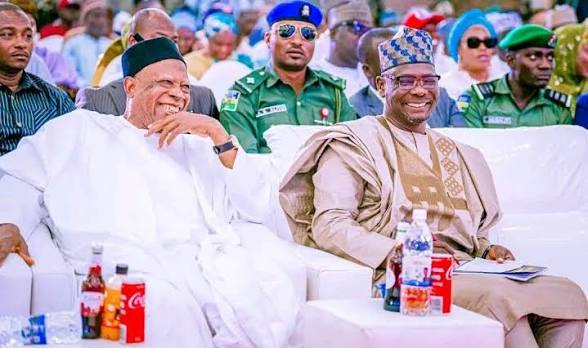
The changing face of Nasarawa at 30

BY VICTORIA NGOZI IKEANO
victoriangozii@gmail.com 08033077519
Some 26 years after Nigeria’s Independence, a state named Nasarawa in the old northern region now in north central zone of Nigeria was established by then Head of state, General Sani Abacha. Nasarawa thus, shares same birth day as Nigeria, October 1. While Nigeria at 66 is a full, grown-up adult that is heading towards being an elder, Nasarawa state is now a young adult, well past adolescent age. The state itself is maturing gradually. Recall that time was when Lafia its state capital used to be referred to as a ‘one street capital’, defined by the very long stretch of Jos/Makurdi road. Before the state came into being, Lafia, was a sleepy city renowned more as a transit stop for long distance travelers and as a food market (melon, rice, yam, etc.) for big-time traders from especially the eastern part of our country. Then on October 1, 1996 it suddenly found itself bestowed with the status of a state capital; the responsibility seemingly heavy for it’s apparently naïve shoulders then. Findings showed that Akwanga which was considered more cosmopolitan at the time, was to be named the state capital but that General Sani Abacha brought his primordial links to bear in selecting Lafia for the prized crown. Whatever it is, I think the choice of Lafia is not misplaced because there is more value-added when a virgin or semi virgin land is developed than one that is already on the development highway.
Nasarawa state shares boundary with the Federal capital territory (FCT), Plateau, Benue, Kogi and Taraba states. It was carved out of Plateau state. Before then it was part of Benue-Plateau state. It was one of the six states established by late General San Abacha from Nigeria’s six zones on that fateful day of October 1 ,1996 while delivering his 36th Independence Anniversary speech. Others are, Ekiti (South West), Ebonyi (South East), Bayelsa (South South), Gombe (North East) and Zamfara (North West). Wing Commander Abdullahi Ibrahim superintended over the new state in its early years. On May29, 1999 Nasarawa got its first democratically elected governor in person of Alhaji Abdullahi Adamu, Turakin Keffi. The sole administrator’s main task was setting up administrative machinery for the new state. Notable is his construction of the Government House on Shendam road. This was later completed by then Governor Adamu enabling him to depart the two bedrooms flat at the presidential lodge that had served as his office. Over the years Nasarawa’s Government House which serves as both residence and office of the governor has undergone some touches and additions by the various administrations on its expansive land. It now accommodates a 1000-capacity banquet hall named after its second civilian governor, late Aliyu Akwe Doma. There is also now a Press Centre mainly for correspondents covering Government House activities, guest rooms, etc.
Each of the succeeding governments after the military administrator did the best as they could, adding their own unique building blocks to the now 30 year-old edifice called Nasarawa. Abdullahi Adamu laid the foundation stone. His efforts are most noticeable in construction of rural roads and education sector. Some 30 years ago, Nasarawa state had no institution of higher learning save the College of Education, Akwanga, inherited from old Plateau state. Alhaji Adamu (later Senator) established the Nasarawa state Polytechnic (now Mustapha Agwai Polytechnic) College of Health Technology, School of Nursing and of course, Nasarawa state University. There have been additional tertiary schools since then. Among them, the Federal Polytechnic (to be converted to Federal Institute of Mining Technology), Federal University, Lafia (FULAFIA). Federal University Teaching Hospital. Unlike all other governors that completed two terms, late Alhaji Aliyu Akwe Doma who took over from Adamu spent only one term. Nevertheless, he made a mark with especially his Badakoshi programme in which Nasarawa state was exporting yams to foreign lands, notably United Kingdom, thereby boosting the state’s agricultural sector.
Enter Governor Tanko Al-makura (later Senator) after Doma’s time. Alhaji Al-makura opened up the state’s capital with infrastructure, especially roads, giving Lafia a semblance of a capital city. The modernization of Lafia started with him. Current governor, Engineer Abdullahi Sule, a former managing director of Dangote Sugar company is taking Nasarawa state to the next level which is industrialization. In this connection he has attracted some industries to Nasarawa state, particularly in areas where the state has comparative advantage, namely agriculture. As a state that is endowed also with solid minerals (from where it derives the name, ‘Home of Solid Minerals’) Governor Sule is now turning attention to this sector. His legacy project here is the lithium factory built by investor. It is said to be the biggest in Africa and is yielding the government humongous amount of money in revenue. Indeed solid minerals a.k.a. rare minerals, is the future ‘black gold’ that would replace oil which is now gradually losing its importance as nations seek for cleaner energy. Lithium is used for the new technology of the 21st century as for example, chips of smart phones that are constantly evolving. Thus, states that are rich in various mineral deposits shall rank amongst the richest in future. Quite a number of states in northern Nigeria are so blessed. But the challenge is getting capable investors that would exploit these rare minerals for commercialization. And Governor Sule has set a precedent in this direction with establishment of the first and biggest lithium factory in Africa. Nasarawa’s landscape is changing from a mainly civil service state to one that is becoming an industrial hub with accompanying hustle and bustle of a thriving state.
By Hassan Agboola
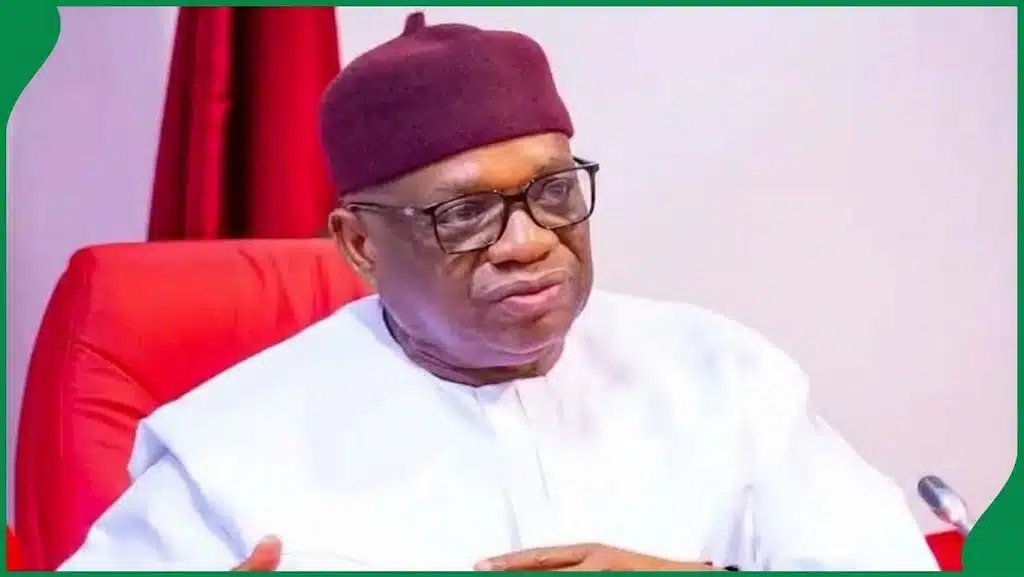
Former Abia State Governor, Senator Orji Uzor Kalu, has attributed the success of Enyimba International Football Club during his tenure as governor to discipline, proper management and commitment to excellence.
Kalu said he made two major promises to the people of Abia State when he sought election as governor in 1998: to build a standard stadium in Aba and to make Enyimba champions of the African Club Championship.
He said he fulfilled both promises, noting that Enyimba subsequently dominated Nigerian football, winning the league title for about five or six seasons and also lifting the FA Cup.
Speaking on the current state of the club, Kalu recalled the level of personal commitment and discipline he demonstrated in ensuring its success.
“When I was going to be governor in 1998, there were two promises I made to Aba and the Nigerian people. I told my people in Aba that I would build a proper stadium, which I did. I also told the people of Aba that we were going to become champions of the African Cup of Champions. I asked them to vote for me, promising that they would get it. And I fulfilled that promise” he said.
He added that discipline was central to the club’s achievements, recalling how he regularly travelled from Umuahia to Aba early in the morning to train with the players before resuming his official duties.
“Discipline is everything. I used to leave Umuahia at quarter to five every morning and arrive in Aba at 5:30am. I would train with the Enyimba players at 7:30am and return by 8am to take my bath and resume work in the office,” he said.
The former governor, however, lamented what he described as a poor working system in the country, saying Nigeria needed a comprehensive reorientation and a fundamental overhaul of its institutions.
“The working system is very bad, not only in football but in every aspect of our national life. We need reorientation and surgical operations in our system, from beginning to end,” he said.
Kalu also expressed appreciation to the Rangers International Football Club for their recent performances on the continent, expressing hope that the Enugu-based club would sustain its progress.
He said he wanted to see another Nigerian club win the continental title, adding that several Nigerian clubs had attempted to achieve the feat.
The senator also recalled Enyimba’s difficult continental encounters, including a controversial match against Al Ahly of Egypt, during which, according to him, his team’s two goals were disallowed.
He said the experience demonstrated the challenges Nigerian clubs faced in continental competitions and the importance of remaining committed to excellence.
Kalu further urged Nigerians, particularly professionals, to take their responsibilities seriously and discharge their duties with dedication.
“Whatever you want to do, do it well. Nigerians should stand up for their responsibilities. If you want to be a journalist, be a journalist properly. People should stand up for their duties. Some people do not give time or commitment to what they are supposed to do. I urge everybody not to do that but to take their jobs seriously” Kalu said.
Stephen Olufemi Oni, Ilorin
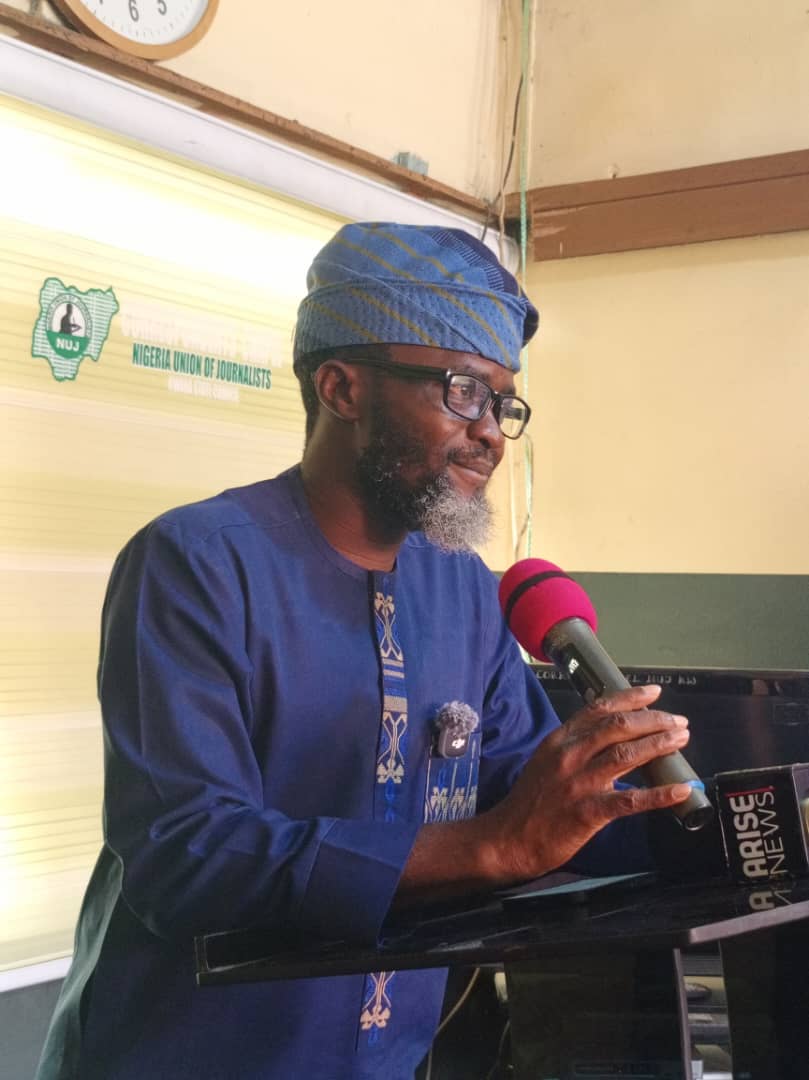
The candidate of the All Progressives Congress (APC) for the Offa/Oyun/Ifelodun Federal Constituency in Kwara State, Dr Rafiu Ajakaye, has pledged to prioritise security, education, youth empowerment and inclusive governance through people-oriented legislation if elected in the 2027 general elections.
Ajakaye, a former Chief Press Secretary to Governor AbdulRahman AbdulRazaq, said effective legislative representation must go beyond attracting constituency projects to include advocacy, accountability, problem-solving and ensuring that the voices of constituents are heard in national decision-making.
He stated this on Tuesday while featuring on the News Keg programme organised by the Correspondents’ Chapel of the Nigeria Union of Journalists (NUJ), Kwara Council, at the chapel’s secretariat in Ilorin.
The APC candidate said his decision to contest was informed by his experience in public service and conviction that political leadership should be driven by the desire to improve people’s lives rather than personal ambition.
“My aspiration is driven not by personal ambition, but by a conviction that public service offers an opportunity to create meaningful impact in society,” he said.
Reflecting on his experience in the AbdulRazaq administration, Ajakaye cited the recruitment of more than 4,700 teachers in 2021 as an example of how transparent governance could expand opportunities and strengthen public confidence in government.
He said the exercise was conducted through an open and competitive process involving online applications, examinations and interviews, insisting that employment opportunities should be based on merit rather than political connections.
“We ensured that people were employed based on their competence and qualifications, not because they knew anybody in government or had political connections,” he said.
On security, Ajakaye described insecurity as a major threat to national development, particularly in communities affected by kidnapping, banditry and other criminal activities.
He advocated stronger legislative oversight of security agencies, improved welfare and equipment for security personnel, increased recruitment and better collaboration between federal and state governments.
He also called for security policies that take into consideration the geographical realities of different communities, including forests, difficult terrain and poorly monitored rural settlements exploited by criminal elements.
“Security remains the foundation upon which every society develops,” he said, stressing that the National Assembly must ensure that security agencies receive adequate resources and are held accountable for their responsibilities.
On education, the former governor’s spokesman called for increased investment in science, technology, technical and vocational education, as well as digital learning to prepare young Nigerians for emerging opportunities in the labour market.
He argued that the education system must evolve with changing economic and technological realities, noting that many traditional occupations had been displaced by technological advancement.
“Our schools should produce innovators, entrepreneurs, professionals, artisans, researchers and responsible citizens capable of competing in an increasingly dynamic world,” he said.
Ajakaye also identified youth empowerment as a major component of his proposed legislative agenda, advocating policies that would expand access to finance, digital entrepreneurship, professional training and agricultural opportunities.
He urged young Nigerians to embrace agriculture as a viable business, rather than regarding it as an occupation of last resort.
On women’s participation in governance, he maintained that inclusive decision-making was essential to developing policies that adequately addressed the needs of different segments of society.
Citing the debate surrounding the proposed six-month maternity leave policy in Kwara State, he recalled how a female participant at a policy discussion advised that the arrangement should be optional rather than compulsory to accommodate the different circumstances of working mothers.
According to him, the experience reinforced the importance of involving women in decisions affecting their welfare.
“That is the advantage of having women at the table where decisions affecting their lives are being made, rather than men sitting down and assuming that what they consider good for women must automatically become policy,” he said.
He further argued that responsible leadership required distinguishing between what people wanted and what they genuinely needed, noting that some decisions might be difficult but necessary for the long-term interest of society.
Ajakaye promised that his approach to legislative representation would be guided by humility, fairness, accessibility, empathy and intellectual rigour, irrespective of the social status, gender, religion or political affiliation of constituents.
“My approach to legislative service will be guided by humility, fairness, intellectual rigour, accessibility and empathy,” he said.
Earlier, Chairman of the News Keg Committee, Ibrahim Alege, commended Ajakaye for his contributions to media development and support for the Correspondents’ Chapel during his tenure as the governor’s spokesman.
Alege described the APC candidate as an experienced media professional whose years in government had equipped him with valuable knowledge of political communication, media relations and public service.
He particularly acknowledged Ajakaye’s support for the chapel’s annual Press Week, acquisition of its bus, end-of-year gifts and financial assistance on different occasions.
“Indeed, there is a popular saying that once a CPS, always a CPS. We believe that experience and those professional instincts remain part of him, even outside the corridors of government,” Alege said.
He, however, stressed that the engagement was not merely an opportunity to celebrate the former CPS but a platform to examine his political ambition, legislative priorities and proposed programmes for the constituency.
Alege urged journalists to ask critical questions and demand clarity to enable the electorate make informed decisions ahead of the 2027 elections.
In his remarks, Chairman of the Correspondents’ Chapel, Alhaji Biola Azeez, appreciated Ajakaye for his support and goodwill towards the chapel, expressing the union’s commitment to sustaining its cordial relationship with him.
Azeez also wished the former CPS success in his political ambition.
By Hassan Agboola
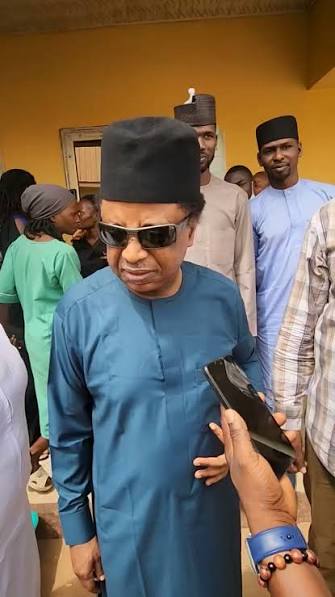
Former Senator representing Kaduna Central Senatorial District, Senator Shehu Sani, has provided and installed a solar power system at Rigasa General Hospital in Kaduna State as part of efforts to improve electricity supply and strengthen healthcare delivery at the facility.
The intervention is expected to enhance the hospital’s capacity to provide essential medical services, particularly during power outages, when uninterrupted electricity is critical for patient care, medical procedures and the operation of vital healthcare equipment.
The initiative is another demonstration of the former lawmaker’s commitment to community development and support for public healthcare institutions.
In October 2026, Shehu Sani also provided a solar power system to Sabo-Tasha General Hospital in Kaduna to support critical medical services, particularly at the special-needs babies unit and part of the maternity ward.
The former senator, a human rights activist and All Progressives Congress (APC) senatorial candidate for the 2027 general election, is said to believe that politicians should not wait until they occupy public office before responding to the needs of their communities, especially in areas where timely intervention could help save lives.
Speaking with journalists shortly after the handing-over ceremony, the Sarki Rigasa, Malam Aliyu Yahaya, expressed appreciation to Senator Shehu Sani for what he described as a laudable intervention that came at the right time.
Yahaya said the gesture demonstrated genuine concern for the welfare of residents and the importance of supporting public healthcare institutions, particularly those serving densely populated communities.
He commended the former lawmaker for responding to a critical need in the community, noting that reliable electricity remains essential for effective healthcare delivery.
The traditional ruler expressed hope that the solar installation would provide lasting benefits to the hospital, improve the working environment for healthcare personnel and enhance the quality of services available to patients.
Reliable electricity is indispensable to modern healthcare delivery, supporting essential services such as laboratory operations, lighting, the preservation of medical supplies and the functioning of critical medical equipment.
The intervention is therefore expected to provide relief to healthcare workers and residents of Rigasa and neighbouring communities who depend on the hospital for medical services.
The development also highlights the importance of collaboration between political leaders, traditional institutions and public healthcare facilities in addressing infrastructure challenges and improving access to essential services.


NDIC Takes Deposit Protection, Financial Literacy Campaign to Oyo Corps Members

Orji Kalu: Discipline, Proper Management Made Enyimba Great.

Kwara 2027: I’ll Prioritise Security If Elected – APC Rep Candidate, Ajakaye

-
 Uncategorized6 years ago
FG, states urged to harness flooding for ranching, others with technology – Agbaje
-
 Headlines11 years ago
Breaking: EFCC seals Borno House of Assembly, as Hon members take to their heels
-
 News12 years ago
Nigeria Security Operatives Stage Manhunt For Homosexual Perpetrator
-
 News10 years ago
How 21-year-old Girl fled community over accusation of lesbianism
-
 News11 years ago
Yobe Gov Moves Against Deputy
-
 Opinion8 years ago
7 signs she has friend zoned you
-
Technology5 years ago
Online job placement company headhunts women
-
 Headlines11 years ago
Borno Dep Gov Abducts Another Church Leader