
Economy
Naira Free Fall: Expert counsels FG to jettison US Dollar for international trade transactions

Stephen Olufemi Oni, Ilorin
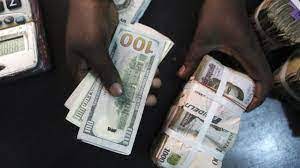
An Economic Expert, Professor AbdulGafar Ijaiya, has admonished the Federal Government of Nigeria to bypass the US dollar in its international trade transactions to save the economy from its over-reliance on the US dollar.
The erudite Professor, who lectures in the Department of Economics, University if Ilorin, gave the admonition in Ilorin while fielding questions from journalists on the current economic situation in the country, especially the free fall of the naira against the US dollar, opined that with that approach, the citizens would be brought out of their current economic quagmire.
The Expert, while noting that Nigerian leaders can no longer blame the hardship of the country on the exchange rate due to its over reliance on the US dollar, suggested that the country should bypass the US dollar since the majority of its international trade transactions are done with China and other Asian countries.
He said: “You cannot continue to blame the exchange rate, no, Nigeria has been turned into a US dollar economy, so, we’re at the mercy of the US Dollar and the question is, why continue to rely on the US dollar while more than 90% of what we import into this country come from the Asian countries?
“Since more than 70% of our imports come from China, why not bypass the US dollar, do we have to go through the dollar market before we change our money to Chinese Yuan before buying things from China?
“Now, some Muslims are preparing to go to Makkah, the National Pilgrims Board has said Muslims should begin to pay part of the money as a down payment and a deadline has been given to pay almost Five million Naira. Can’t we bypass the US dollar and go straight to Saudi Riyal?”
Ijaiya, while blaming the lack of political will and commitment of the leaders, maintained that Nigeria can take cue from other countries who are already doing it.
“Bypassing the US dollar is possible, other countries are doing it. During the Buhari administration, there was an arrangement for a currency swap with China but the political will and commitment to implement it was not there, probably because America stood against it.
“The leadership of the country needs to have that strong political and independent mind to make decisions just like other countries have done in recent times.
“Just a month or two ago, Saudi Arabia and China had a bilateral currency swap agreement worth about $ 6 billion to bypass the US dollar. The United States could not do anything about it.
“When we are removing subsidies from petrol, Kenya did the same thing, there were demonstrations in Kenya and before you know it, the Kenyan President approached the Saudi Arabian Government to accept their Kenyan shillings for payment for petrol. That solves the problem of a hike in petroleum prices in Kenya.
“The newly formed international body called BRICS, -Brazil, Russia, India, China and South Africa – are now trading amongst themselves bypassing the US dollar; Egypt has joined as well as other African countries. Nigeria is yet to join BRICS. The last time members of this organization met in South Africa, Nigeria, represented by our Vice President went there as an observer. And you call us the giant of Africa.
“If we are giants, we should be in the front seat of such an important body. Do you know too, that Nigeria is yet to join the African Continental Free Trade Area (AfCFTA)? A body that would be of great benefit to Nigeria and let her rely less on the US dollar for international trade transactions, at least within Africa,” he admonished.
The Professor of Economics reiterated that the only way to get Nigeria out of its current economic mess is to bypass the US dollar, at least if we are trading with countries other than the United States, but doubt if the ruling elite, top civil servants, big business executives and top bank executives will not stand in the way of the policy due to having stored the US dollars in their banks and their homes because of greed.
The Economist recalled the use of counter trade (not different from barter trade) as a means of international trade transactions by the military administration of General Muhammadu Buhari and General Tunde Idiagbon, which bypassed the US dollar and set Nigeria on a path to prosperity. Unfortunately, he lamented, the policy was abandoned by the succeeding administration of General Babangida, who went on to introduce the Structural Adjustment Programme (SAP). An IMF and World Bank programme with devaluation, privatization of government enterprises and removal of oil subsidy as some of its conditions. That, he said, began the sojourn of our nation’s economic challenges, which to date we found difficult to get out of.
The Offa-born Economist also stated that the country would continue to struggle to revive its economy until it revives its real sector that include agriculture, mining and manufacturing.
He stressed that the moribund state of the majority of the manufacturing industries, which is calling for intervention, is contributing immensely to the economic hardship in the country.
Ijaiya also expressed his dissatisfaction with the inability of the State and local government to oversee the mining sector, noting that the sector has been hijacked under the exclusive list of the Federal Government.
He added that every state in the country could cater for its needs with the natural resources they have if it had the power to control the resources in its States and create more industries.
“The mining industry, for instance, unfortunately, states, and local governments can’t access it, but why? In the 1960s, I was born and bred in a tin mining company in Jos, the regions then took charge of the mining sector but under the Exclusive list of the Federal Government, mining was hijacked.
“There is no state that doesn’t have enough mineral resources to curtail itself; for instance, the material used for making batteries (Lithium) has been in Kwara for ages but who is in charge? The Federal Government gives licenses to individuals to mine the minerals, but unfortunately, there is no industry to process the minerals, or even to turn the mineral resources into final goods. We have to take them outside the country for processing,” he said.
The Professor of Economics blamed the current scourge of insecurity as one of the problems facing the agricultural sector, especially, banditry that has made it difficult for people to go to farm again.


By: Fabian Apechihin
The Federal Government has suspended the planned implementation of a 15 percent import duty on petrol and diesel.
This was disclosed on Thursday by George Ene-Ita, Director of Public Affairs at the Nigerian Midstream and Downstream Petroleum Regulatory Authority (NMDPRA), who urged Nigerians to avoid panic buying.
President Bola Tinubu had earlier, on October 29, approved the imposition of the tariff following a proposal by the Executive Chairman of the Federal Inland Revenue Service (FIRS), Zacch Adedeji. The approval, conveyed in a letter signed by the President’s Private Secretary, Damilotun Aderemi, was intended to take effect from November 21, 2025.
The proposed policy sought to impose a 15 percent duty on the cost, insurance, and freight (CIF) value of imported petrol and diesel. It was aimed at supporting domestic refineries — such as the Dangote Refinery and modular plants — by making imported fuel less competitive. However, experts cautioned that the move could lead to an increase of up to ₦150 per litre in pump prices and further fuel inflation and transportation costs.
In its latest update, the NMDPRA confirmed that the import duty is no longer under consideration.
“It should also be noted that the implementation of the 15% ad-valorem import duty on imported Premium Motor Spirit (PMS) and Automotive Gas Oil (Diesel) is no longer in view,” the Authority stated.
The agency further assured the public of adequate fuel availability across the country, noting that national stock levels remain within the required sufficiency threshold.
“There is a robust domestic supply of petroleum products — including PMS, AGO, and LPG — from both local refineries and imports, ensuring timely replenishment of depots and retail stations,” the statement added.
NMDPRA cautioned marketers against hoarding, panic buying, or arbitrary price increases, emphasizing that it will continue to monitor the market to prevent any disruption in supply.
“While appreciating the efforts of stakeholders in maintaining smooth and uninterrupted supply, the public is assured of NMDPRA’s commitment to safeguarding national energy security,” the statement concluded.
From Hassan Taiye
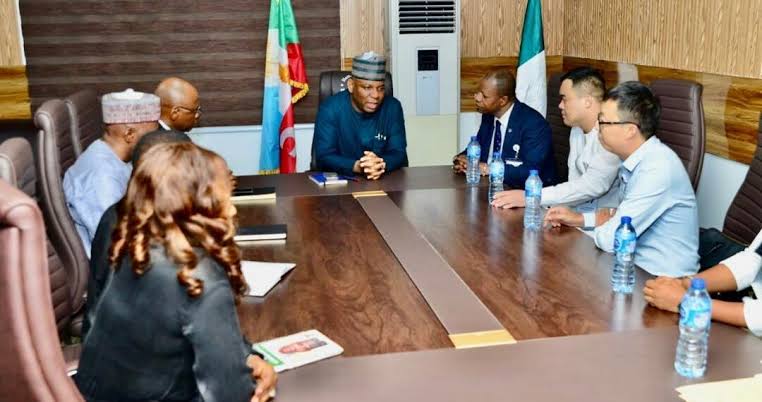
The Federal Government of Nigeria, FGN, through the Ministry of Steel Development, has signed a Joint Strategic Cooperation Declaration with Stellar Steel Company Limited.
Stellar Steel Company Limited is a steel-manufacturing enterprise established to operate in Nigeria, with major investment backing from Chinese parent groups: Galaxy Group and RSIN Group based in Fuzhou, Fujian Province, China.
The company has committed approximately US$450 million for a steel plant project in Ogun State, Nigeria, scheduled to begin operations by mid-2026.
This landmark partnership is aimed at revitalising Nigeria’s steel industry and reducing the nation’s dependence on imported steel products, according to a statement signed by the the Principal Information Officer, PIO, Ijomah Opia, for the director, Information and Public Relations in the ministry.
The agreement, signed in Abuja, on Tuesday 28th October, 2025 will see Stellar Steel invest $400 million in the construction of a modern Steel Plant in Ewekoro, Ogun State. The project will be developed in three phases, with the first phase expected to begin production by 2026.
The Minister of Steel Development Prince Shuaibu Abubakar Audu signed the agreement when he hosted Mr Li, President of Inner Galaxy Group and other members of the Stellar Steel Company Limited in the Ministry’s Headquarters in Abuja.
According to Prince Audu, the collaboration aligns with the federal government’s goal of achieving 10 million tonnes of crude steel production per annum by 2030, a major step toward industrial self-reliance and economic diversification.
The minister further stated that the Federal Ministry of Steel Development would facilitate policy and infrastructure support, including inclusion of Stellar Steel’s logistics projects in the National Infrastructure Plan and access to available fiscal incentives.
Highlights of the cooperation includes the followings:
1.Development of a localised iron ore supply chain to reduce import dependence and save over $1 billion in foreign exchange annually.
- Creation of more than 2,000 direct and 20,000 indirect jobs across the steel value chain.
- Promotion of green steel production using clean and energy-efficient technologies.
- Strengthening of Nigeria’s position as a regional steel manufacturing hub in West Africa.
Audi also said that in return, Stellar Steel would prioritise local recruitment and training, partnering with Nigerian universities to build technical and managerial expertise in steel production.
Prince Shuaibu emphasised that this strategic cooperation marks a new era for Nigeria’s steel industry and demonstrates the government’s commitment to sustainable industrial growth and economic transformation.
In his remarks the leader of the delegation, Mr Li assured the minister that Stellar Steel would respect all agreements reached and would ensure the completion of the project in record time and assured that all safety standards will be observed.
Mr Li was accompanied during the visit by Mr You Xiastian, Vice Chairman of RSIN Group, Mr Jackie Den, Vice President of Inner Galaxy Group and Mr Yin, Director of RSIN Group.
He recalled that the Minister of Steel Development, Prince Audu, performed the groundbreaking ceremony of the Steel Plant in Ogun State sometime in April, 2025.
Speaking at the signing, representatives of both parties emphasised that the partnership would strengthen Nigeria’s industrial base, create jobs, and foster technology transfer in the sector.
From Hassan Taiye
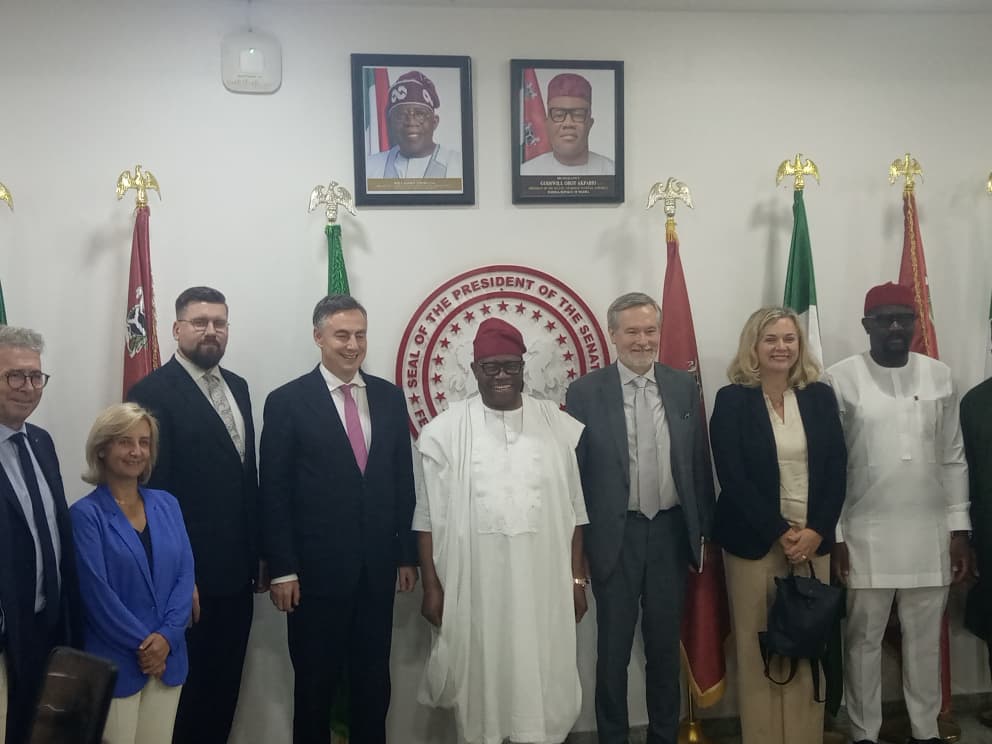
A high-level delegation from the European Union (EU) Parliament’s Foreign Affairs Committee, led by Mr. David McAllister, paid a courtesy visit to the Nigerian Senate today October 28, 2025.
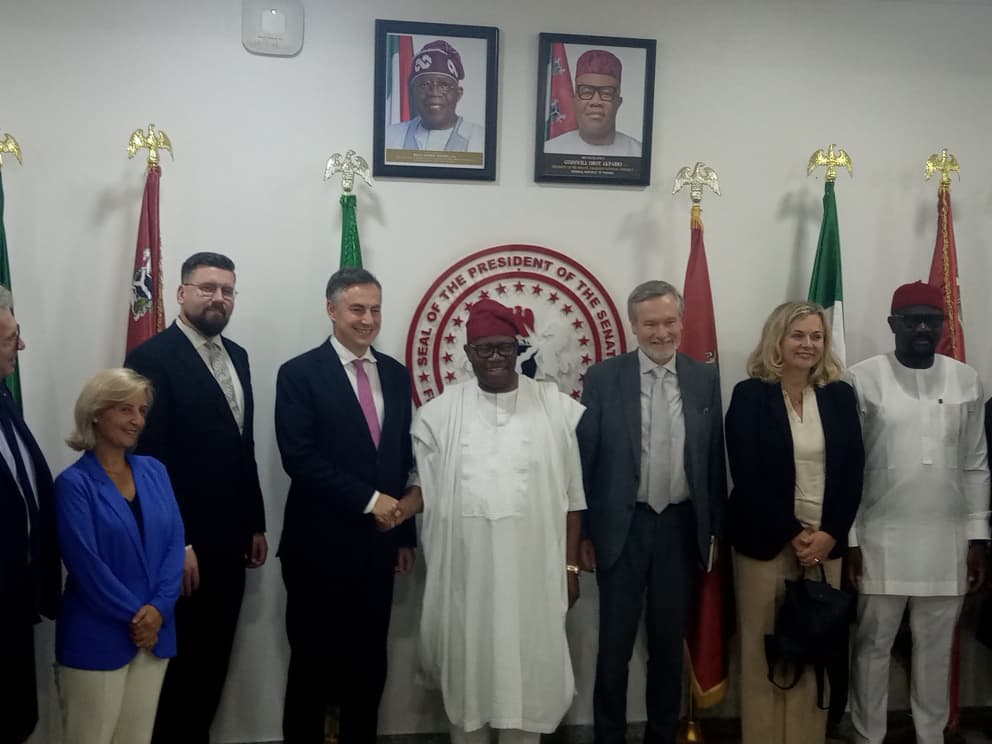
“We are here to deepen our understanding of the situation in West Africa and strengthen our partnership with Nigeria,” McAllister said.
Senate President Godswill Akpabio welcomed the delegation, emphasizing Nigeria’s strategic partnership with the EU. “Nigeria is committed to strengthening ties with the EU, highlighting areas of mutual interest, including security, trade, and governance,” Akpabio said.
The delegation, comprising Ambassador Greta Mylott, EU Ambassador to Nigeria and ECOWAS, Miss Zelaya Zorko, Miss Mata Tamido, Sebastian Tankman, General Christophe Gomart, and Sebastian Buharo, is undertaking a comprehensive tour of West Africa, with stops in Nigeria and Ghana.
During the visit, Akpabio shed light on the challenges facing female representation in Nigeria’s parliament. “Women often vote for male candidates, making it difficult for female candidates to win elections,” he noted.
“The Senate is exploring innovative solutions, including constitutional amendments, to boost female participation in the legislative process, with support from organizations like the Black Women’s Forum.”
The EU delegation’s visit aims to foster greater understanding and cooperation between the EU and Nigeria, addressing shared concerns, such as terrorism, climate change, and economic development.
“The EU is committed to supporting Nigeria’s development efforts,” McAllister assured the Senate, emphasizing the bloc’s interest in seeing a stable, prosperous, and democratic Nigeria.
Their visit also includes participation in the forthcoming International Islamic Conference on Security and Governance in West Africa and the Sahel, scheduled for November 4-6, 2025 at ECOWAS Commission.
Akpabio expressed optimism about the potential for enhanced cooperation, highlighting Nigeria’s readiness to work with the EU to address common challenges.


Changsha brings millennia-old heritage into modern life

Gov AbdulRazaq Lauded Over Conferment Of Sadauna Of Ilorin Title

FG Commissions KWASU ICT Centre To Enhance Graduates Employability

-
 Uncategorized6 years ago
FG, states urged to harness flooding for ranching, others with technology – Agbaje
-
 Headlines11 years ago
Breaking: EFCC seals Borno House of Assembly, as Hon members take to their heels
-
 News12 years ago
Nigeria Security Operatives Stage Manhunt For Homosexual Perpetrator
-
 News10 years ago
How 21-year-old Girl fled community over accusation of lesbianism
-
 News11 years ago
Yobe Gov Moves Against Deputy
-
 Opinion7 years ago
7 signs she has friend zoned you
-
Technology5 years ago
Online job placement company headhunts women
-
 Headlines10 years ago
Borno Dep Gov Abducts Another Church Leader