
Opinion
KOGI STATE, THE BIRTHPLACE OF NIGERIA AND ITS POLITICS: SOME SALIENT LESSONS

.
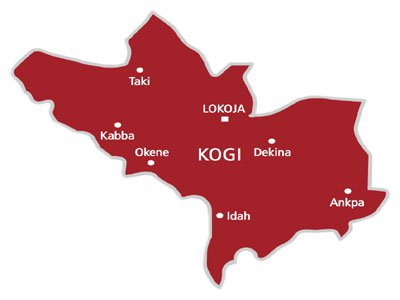
For those who may not be quite familiar with Kogi state, here is a refresher. The state was created in 1991, comprising twenty-one (21) local governments and Lokoja as its capital city.
The name Kogi means river in Hausa language after the two iconic rivers Niger and Benue that traversed the state and indeed Northern Nigeria. Kogi State is strategically sandwiched between the Southern and Northern parts of the country. It shares boundaries with about seven states namely; Ekiti, Kwara, Edo, Anambra, Enugu, Benue, Nasarawa and the FCT. Its mantra is the Confluence State which metaphorically allude to the meeting point of both geographical and cultural (Northern and Southern) divides. Kogi could thus be likened to a melting point or microcosm of Nigeria.
A tapestry of diversity in terms of culture, tradition and faith, giving it a quilt like outlook.
Lokoja, the state capital was where the history and evolution of modern Nigeria started. It was the site a British explorer named William Balfour Baikie established as an “expedition camp” in 1857 as he explored the river. Years later the Royal Niger Company (1879-1900), found it attractive in facilitating trading along the rivers.
It eventually became the administrative base/ capital of the British Northern Protectorate as proclaimed by Lord F. Lugard on 1st January, 1900. In 1914 the Southern and Northern Protectorates were amalgamated into one political entity called Nigeria. A name coined by Flora Shaw the wife of Lugard, in 1902 after the River Niger that incidentally connects the hitherto independent Regions that eventually made up today’s Nigeria.
Missionary activities soon followed in Lokoja area, with the first school in the North established in 1866 under Bishop A. Crowther. The Protectorate’s headquarter gave way to Zungeru (Niger State) and Kaduna (Kaduna State) as successive capitals. While Kaduna served as political capital the town of Wusasa-Zaria became the center of evangelical activities with the second missionary school in the North established in 1926.
Missionary activities in the Lokoja area exposed the then major inhabitants namely; the Igala, Egbira, Kakanda, Oworo-Okuns, Nupe and Hausa etc to early western education, which produced great scholars, technocrats, professionals, clerics, military officers and entrepreneurs.
“Mayoralty” (Mai Gari, Magajin Gari) as a leadership form/model, was also first introduced in Lokoja, when the Colonial Administration appointed a person of Hausa extraction as the mayor (Mai Gari) of Lokoja.
The Maigari position was not a hereditary one, as such individuals from diverse ethnic backgrounds such as the Hausa, Nupe, Kanuri etc have occupied it. One of the famous Mai Gari being Mal. Bukar from the Borno region.
On the not so positive side, Lokoja has the unenviable record of housing a pantheon of more than seven deposed Northern emirs/chiefs; royal fathers who lost the favours of the Colonial Administration. They include Alu Maisango (Kano), Aliyu Dan Sidi (Zazzau), Muhammadu Aliyu (Gwandu), and Abubakar Dan Abubakar (Gumel). The great Worrior Queen Amina of Zazzau has her resting place arguably at Ida still in the Kogi area after a failed military expedition.
The testament of Lokoja and, indeed, the Kogi confluence region’s rich history, was the production of top class and highly patriotic citizens who served both the defunct Northern Region and the nation meritoriously In no particular order, they include Chief Awoniyi, who was Sardauna’s Private Secretary. Abdulrahman Okene a Cabinet Minister, Isa Koto, Oheiri, Achimugu, Adukwu G, Aliyu Ogbaje, Ado Ibrahim, Sani Omolori, Sunday Danian, Ahmadu Ali, Stephen Achema, Abdullahi Ibrahim, Salihu Ibrahim, Jibrin Usman, Ibrahim Ogohi, Ben Ekele, A.T.Ahmed, Abubakar Audu, Idacheba, Okpanachi S. etc. The successor Wusasa added notable men like Gen.Gowon, R.B. Dikko, I.Audu and the Beikies and Millers in tow.
It is this curious pedigree that makes Kogi State and its politics of great interest to the average Northerner and indeed Nigerian. Unfortunately in contemporary terms Kogi punches below its weight. Outside the era of late Governor Abubakar Audu, (1992-1993) and (1999-2003), Kogi State’s developmental strides left much to be desired, especially given its huge human and natural resource endowments.
Late Abubakar pioneered or was among the pioneers that started the establishment of state-owned Universities in the North. He established the Kogi State University, Ayingba.He later established a State Polytechnic and built the 5-star Confluence Hotel. Other developments included 1,500 housing units, TV and FM stations, among others. These feats have become too challenging to replicate or built upon by successive governors like Idris (2008-2012), Ichala Wada (2012-206), and Yahaya Bello Adoza (2016-2025).
The trio of Audu, Idris, and Wada are of Igala extraction indicative of the ethnic group’s dominance in the state.
Democracy they say, is a game of numbers or rather a tyranny of numbers. In Kogi, like anywhere else in Africa, the numbers are embedded with ethnic and religious enclaves. The Igala commanding over 58% of Kogi population is dominant in 9 out of the 21 local councils followed by Igbira (Tao and Koto) 5 and Okun 4, the remaining three shared with other ethinities in varying proportion.
The two major faiths Islam and Christianity are almost split in the middle with the balance in favour of the Muslim group. The Igala inherently called the political shots in the state until Providence truncated the chain when Abubakar, the presumed winner of the 2016 elections, returned to his Creator. Political power thus shifted to the Igbira through Yahaya Bello Adoza. Divine hands, one would say.It however became a rough ride for him as the ghosts of competing ethno-religious interests and poor handling of same kept haunting the Administration throughout.
One would ordinarily expect that after a checkered two four-year tenure Yahaya would have taken a well-deserved rest and made peace with his aggrieved constituents. But no, he allegedly wangled the last election (the case in Court) to pave the way for his protege, a tribe’s man in the person of Ahmed Usman Ododo.
The Igala and Okun were livid as they knew the voting pattern and/or strength in the State, like many others, could not warrant the victory. Politics in Nigeria is an ethno-religious phenomenon as a matter of fact. So it was believed that there was no way the Igbira vote could have elected Ododo governor. It was felt that barefaced manipulation using incumbency power by Bello did it.
The consequent post-election dust is yet to settle, setting the stage for political instability and concomitant stagnation. Matters become even more curious if some of the new Governor’s alleged utterances are taken into account, such as the contemplated creation of the “Office of Immediate Past Governor” to be domiciled in the Governor’s Office as well as the open declaration that former Governor Bello shall have the final say in the governance of the state. This is disingenuous and smacks of power intoxication. Governor Ododo and former governor Yahaya should do well to realise that power is transient. And the people’s power which lies in numbers shall eventually prevail no matter what. So the brazen attempt to appropriate power through alleged “electoral ambush” and manipulation in Kogi needs to be re-assessed.
Bello and Ododo should tow the path of political collaboration over cutthroat competition to save the state from socioeconomic retardation. In environments where political weightings vary, only concensus building and enlightenment could facilitate sustainable shifts, particularly from majority to minority groups.
To perpetually keep power against the will of the majority is one of the hardest political endeavours. Contemporary history is clear on that.The minority white Boer regime in South Africa could not hold the Black majority at bay beyond a certain point, despite its enormous economic and state prowess. The French could not keep down Algeria by force. America had to flee Afghanistan after about two decades of military operation to beat the majority Afgans into the liberal political line. And many more examples around the globe abound. In politics numbers don’t respect sentiments especially under nascent and wobbly democratic dispensations as found in Nigeria and indeed most of the less developed countries (LDCs) of the world.
Bello shall be saluted for the love of his people but this love should not be to the detriment of the state. Yahaya Bello’s sentiments/posture could be less problematic if he were to belong to the majority ethnic Kanuri in Borno or Tiv group in Benue state. The two groups (Tiv and Kanuri) command two senatorial districts out of three in their states and as such can “comfortably” shut out the third zone from the executive political space. The Idoma and the Babur experiences in the two states attest to this. By extension even the Zuru in Kebbi, Egong in Nasarawa, Fulani in Taraba face similar challenges . Challenges of marginalisation born out of poor voter-education and enlightenment largely prevails. The ability to choose freely is still highly encumbered by ethinity and religion. The government should make massive political education a greater constitutional issue to save democracy.
Providence may have smiled at Yahaya Bello’s Igbira group but it would require tact to sustain it.The “grah-grah” strategy will only hurt the state more. He would do well to save Kogi the needless political suffocation and economic stagnation that come with a “garrison ” or “do or die” politics.
Be that as it may, it behoves the Igala, the Tiv, the Kanuri of Kogi, Benue and Borno respectively to cultivate the political habit of being their brothers keeper. As minorities too, in national context, they should engage with the smaller groups in their enclaves with a view to working out some form of political equity including access to the governorship seat.This shall create greater sense of belonging and also reduce unnecessary acrimony.
It’s a win- win move that strengthen patriotism and also engender rapid development of the polity.
A. G. Abubakar
agbarewa@gmail.com

For nearly three years, the political crisis within the Benue State chapter of the All Progressives Congress (APC) has largely been portrayed as a power struggle between Governor Hyacinth Alia and the Secretary to the Government of the Federation (SGF), Senator George Akume.
However, recent developments suggest that the dispute over control of the party could have wider legal and political implications as the 2027 general elections approach.
The crisis intensified earlier this year when rival camps conducted parallel state congresses and produced separate chairmen for the APC in Benue.
The Akume-aligned faction returned Austin Agada as state chairman, while the faction loyal to Governor Alia elected Benjamin Omale.
The emergence of two chairmen and competing claims to control of the party has further exposed the depth of the internal division.
The dispute has also raised questions about the legal consequences of competing party structures, particularly following a Court of Appeal judgment delivered in June 2026.
The appellate court affirmed the Austin Agada-led State Executive Committee and upheld an earlier decision nullifying the dissolution of that executive by the APC National Working Committee.
The court also sustained an order declaring the activities of the Benjamin Omale-led caretaker committee “null, void and of no effect whatsoever.”
The judgment has since become a major reference point in the continuing struggle for control of the APC structure in Benue.
Political observers note that the significance of party structures extends beyond the office of state chairman. Party executives play important roles in organising congresses, managing delegate processes, supervising primaries and implementing decisions relating to the nomination of candidates.
This has brought the dispute into sharper focus ahead of the 2027 elections, particularly over the possible legal implications for candidates whose nominations may be linked to disputed party structures.
A group of APC stakeholders is reportedly examining the possible legal consequences of the judgment and the continued existence of rival structures within the party.
The concern, according to those familiar with the matter, is whether political processes conducted through structures subsequently found to lack legal validity could become the subject of litigation.
Candidates loyal to Governor Alia whose nominations were subsequently overturned by the APC National Working Committee are already challenging the party’s decisions in court. Among them is former Benue Governor, Senator Gabriel Suswam.
At the centre of the emerging debate is whether the invalidation of a party structure could affect subsequent political processes conducted through that structure.
No court has, however, ruled that Governor Alia is ineligible to contest the 2027 governorship election, and there is currently no judgment declaring him barred from seeking re-election.
The potential issue, rather, concerns the relationship between the legitimacy of party structures and the validity of nomination processes conducted under those structures.
Nigeria’s electoral history contains several instances in which internal party disputes over congresses, delegate lists, executives and primary elections eventually resulted in prolonged litigation over candidates and nominations.
Against this background, the continued crisis within the Benue APC could assume greater significance as political parties begin preparations for the 2027 electoral cycle.
The conduct of parallel congresses following a Court of Appeal judgment affirming one faction’s leadership could potentially generate further legal questions over authority, compliance with party rules and the validity of subsequent decisions.
For Governor Alia, the immediate reality is that no court has declared him ineligible to contest the next election. However, continued uncertainty over the party’s structure could expose his political camp to further litigation and create complications during the nomination process.
The governor has also faced allegations from political opponents that more than N100 billion in public funds has been expended in efforts to secure control of APC structures over the past three years. The allegation remains disputed and would require evidence to establish.
What is increasingly clear is that the struggle for control of the APC in Benue has moved beyond a conventional political disagreement. It is now playing out simultaneously across political, legal and party-administrative fronts.
As the 2027 electoral cycle draws closer, the unresolved questions surrounding the APC’s leadership and nomination processes could become increasingly consequential for the party and its candidates.
For now, there is no judicial pronouncement preventing Governor Alia from appearing on the 2027 ballot. But if the stakeholders reportedly considering legal action proceed with a challenge over the circumstances of his nomination, the governor could face another significant legal battle as the election approaches.
NIGERIA BELONGS TO ALL OF US
I have written this open letter to His Eminence, Alhaji Muhammad Sa’ad Abubakar III, CFR, mni, Sultan of Sokoto and President-General of the Nigerian Supreme Council for Islamic Affairs, with profound respect for his office and for the historic institution he represents.
This is not an attack on Islam, neither an attack on Christianity.
Also, It is not an attempt to diminish the historical importance of the Sultanate, rather, it is a sincere contribution to a conversation I believe Nigeria must have with greater honesty, courage and intellectual maturity:
What does equal citizenship mean in Nigeria?
Our country has a complex history involving kingdoms, caliphates, indigenous political systems, colonialism, amalgamation, independence, religion, ethnicity and competing political traditions.
But after all that history, one question remains fundamental:
Who does Nigeria belong to? My answer is simple:
Nigeria belongs to all Nigerians.
I am publishing this letter openly because I believe conversations of this magnitude should not be confined to private rooms.
I hope it reaches His Eminence.
More importantly, I hope it reaches Nigerians—Muslims and Christians alike—who believe that our future must be built on equal citizenship, mutual respect, constitutional democracy and a shared sense of belonging.
I invite people to read this letter in that spirit.
Not as a provocation or as a religious argument. But as an invitation to think.
AN OPEN LETTER TO HIS EMINENCE, ALHAJI MUHAMMAD SA’AD ABUBAKAR III, CFR, mni
SULTAN OF SOKOTO AND PRESIDENT-GENERAL, NIGERIAN SUPREME COUNCIL FOR ISLAMIC AFFAIRS
Your Eminence,
OUR HISTORY MUST BE REMEMBERED HONESTLY—BUT IT MUST NOT BECOME A CLAIM ON THE FUTURE
Nigeria’s history contains great Muslim civilisations and political institutions.
Kanem-Bornu, the Hausa states and the Sokoto Caliphate represent important chapters in the history of the territories that eventually became Nigeria.
The Sokoto Caliphate, in particular, became one of the most influential Islamic political formations in West Africa.
That history deserves recognition and respect.
But history presents us with an important question:
Does historical political authority confer permanent political ownership?
I believe the answer must be no.
The British colonial conquest and occupation of the territories that now constitute Nigeria occurred over decades, with the conquest of the Sokoto Caliphate culminating in 1903. The Northern and Southern Protectorates were subsequently amalgamated in 1914, and Nigeria achieved independence in 1960.
Whatever political arrangements existed before colonial consolidation, the Nigeria that emerged as a modern sovereign state ultimately became a constitutional republic in which citizenship could not legitimately be based upon the political history of one religion, ethnic group, kingdom or region.
Nigeria became something larger than all of those histories.
It became a country.
And that country belongs equally to the Muslim, the Christian, the adherent of another faith, and the citizen who professes no religion.
Your Eminence, Nigeria’s Constitution does not establish either Islam or Christianity as the religion of the Nigerian state.
Section 10 provides that:
“The Government of the Federation or of a State shall not adopt any religion as State Religion.”
Section 38 protects freedom of thought, conscience and religion.
Section 42 further provides constitutional protection against discrimination on the basis of religion, among other grounds.
These provisions are not merely legal technicalities. They represent an important national compact.
They establish principles of religious neutrality, religious freedom and equal citizenship.
They tell every Nigerian that his or her fundamental rights cannot legitimately depend upon belonging to the “right” religion.
That principle protects Muslims from Christian majoritarianism just as it protects Christians from Muslim majoritarianism.
And therefore, defending constitutional religious neutrality is not an attack on Islam neither an attack on Christianity.
It is protection for both.
THE DIFFICULT QUESTION OF POLITICAL SYMBOLISM
Your Eminence, this is where I believe our national conversation requires greater intellectual honesty.
A political arrangement can have two realities simultaneously:
its strategic reality and its symbolic reality.
Strategically, politicians may see a particular political ticket as an effective coalition, an electoral calculation, a mechanism for consolidating support or a means of improving political cohesion.
But citizens may interpret exactly the same arrangement symbolically.
They may ask:
Who is represented?
Who is included?
Who is excluded?
What does this say about the distribution of power?
What does this mean for people like me?
This distinction became particularly visible in Nigeria’s debate over the Muslim-Muslim presidential ticket.
Some citizens saw strategy while others saw symbolism.
Some saw political competence, Others saw the possibility of religious exclusion.
Both reactions can exist simultaneously.
A mature democracy must therefore be capable of understanding not only what a political arrangement is, but also what people believe that arrangement means.
This is not an argument against Muslims occupying political office nor should it be an argument against Christians occupying political office.
It is an argument for understanding the enormous responsibility that comes with political symbolism in a deeply religious society.
Political leaders must therefore understand that electoral strategy does not exist in a vacuum. Every political decision is interpreted through the lived experiences, fears, hopes and historical memories of the citizens who encounter it.
That is why responsible leadership requires both strategic intelligence and sensitivity to political meaning.
The Muslim citizen must not feel like a tolerated Nigerian, neither should the Christian.
This is perhaps the most important principle I wish to communicate.
A Christian should never have to feel that his citizenship is conditional upon political accommodation by Muslims. A Muslim should never have to feel that his citizenship is conditional upon political accommodation by Christians.
Neither should have to prove that his loyalty to Nigeria is greater than his loyalty to his faith.
Both should be able to say:
“Nigeria is my country, and nobody needs to give me permission to belong here.”
That is the Nigeria we should be building.
Your Eminence, traditional and religious leaders occupy a unique position in Nigerian society.
Political leaders come and go.
Governments change.
Political parties rise and fall.
But institutions such as the Sultanate carry historical memory.
That gives your words a different weight.
When a politician speaks about religion, Nigerians may suspect political calculation but when a respected religious leader speaks about coexistence, citizenship and national unity, the message can carry a moral authority that politics often cannot achieve.
This is why I believe the Sultanate has an extraordinary opportunity.
Not merely to speak for Muslims, But to speak to Nigeria.
To say clearly that the greatness of Islam in Nigeria does not require the political diminishment of Christianity. And equally, that the flourishing of Christianity in Nigeria does not require the political diminishment of Islam.
The strength of one faith should not require the weakness of another.
The security of one community should not depend upon the insecurity of another.
And the political advancement of one Nigerian should never require the political humiliation of another Nigerian simply because of religion.
WE SHOULD MOVE BEYOND THE COMPETITION FOR RELIGIOUS OWNERSHIP OF NIGERIA
There is a dangerous psychological temptation in deeply divided societies.
Each community begins to measure its security by the amount of power the other community possesses.
Then politics becomes a permanent struggle for religious arithmetic.
Who has the President?
Who has the Vice President?
Who controls the security institutions?
Who appoints judges?
Who controls the legislature?
Who controls the governors?
Who controls the economy?
And eventually, citizens stop asking the most important question:
Does the country work for everyone?
That is where we must break the cycle.
Nigeria cannot become great by producing a permanent contest between Muslim political power and Christian political power.
It can become great when both communities begin demanding something larger:
competent political power exercised for the common good.
The ultimate measure of political leadership should not be the religion of the person holding office.
It should be the quality of governance, the protection of citizens, the fairness of institutions, the security of communities and the opportunity available to every Nigerian.
PERHAPS OUR GREATEST NATIONAL TEST IS NOT RELIGIOUS DOMINANCE—BUT MUTUAL TRUST
Your Eminence, I believe Nigeria’s deepest problem is not simply that Muslims distrust Christians or Christians distrust Muslims.
It is that decades of political competition, violence, injustice, insecurity, corruption and unequal experiences of citizenship have created an enormous deficit of trust.
Religious suspicion is often the language through which that distrust expresses itself.
Therefore, if we want to defeat religious tension, we must do more than preach tolerance.
We must build institutions that make tolerance unnecessary as a condition of citizenship.
A Nigerian should not need to be tolerated.
He should simply be equal.
A Christian should not need a Muslim’s permission to belong.
A Muslim should not need a Christian’s permission to belong.
Our common citizenship should be the foundation upon which our religious differences are accommodated—not the other way around.
Your Eminence, I respectfully propose that Nigeria’s most respected Muslim and Christian leaders begin a different kind of conversation.
Not another conference where speeches are made and photographs taken.
But a serious national dialogue around five questions:
- What does equal citizenship actually mean in Nigeria?
- How should religious diversity influence political representation without becoming a mechanism for religious entitlement?
- How do we distinguish legitimate political strategy from symbolism that creates unnecessary fear or exclusion?
- How can traditional and religious institutions help rebuild trust between communities?
- What constitutional, institutional and political reforms are necessary to ensure that no Nigerian believes the country belongs more to another citizen than to himself?
These are difficult questions. But perhaps Nigeria has spent too many decades avoiding difficult questions because they are uncomfortable. And perhaps the price of that avoidance is becoming too high.
Your Eminence, history gives leaders a choice.
Every generation inherits history. But every generation also decides what to do with it.
We can use history as a weapon or wisdom
We can teach our children that Nigeria is a battlefield between religious communities.
Or we can teach them that Muslims and Christians inherited a complicated country together and have the responsibility to make it work together.
We can continue competing over who has the greater historical claim.
Or we can build a country where historical claims do not determine the value of a citizen.
I respectfully believe the latter is worthy of the office you occupy.
The greatest legacy of a historical institution is not merely that it preserves the memory of what once was.
It is that it helps a nation decide what it can become.
My final appeal Your Eminence, I do not ask you to abandon Islam.
I ask you to help Nigerians understand that Islam does not need Nigeria to belong exclusively to Muslims for Muslims to belong completely to Nigeria.
And I would say the same to Christian leaders:
Christianity does not need Nigeria to belong exclusively to Christians for Christians to belong completely to Nigeria.
The future must therefore be bigger than both arguments.
Nigeria must belong to Nigerians.
Not to Muslims.
Not to Christians.
Not to Hausa, Yoruba, Igbo, Tiv, Fulani, Igala, Idoma, Nupe, or any other ethnic nationality.
Not to the North.
Not to the South.
Not to one historical institution.
To all of us.
That, in my humble view, is the foundation upon which a truly united Nigeria can eventually be built.
I respectfully submit this thought to Your Eminence—not as an accusation, but as an invitation to a deeper national conversation.
May our religious differences become a source of moral strength rather than political division.
May our history become a source of wisdom rather than entitlement.
May our political differences never become a justification for denying one another’s citizenship.
And may the Nigeria we leave our children be a country in which neither Muslim nor Christian ever has to ask:
“Does this country belong to me?”
Because the answer should always be:“Yes. It is your country too.”
With profound respect,
Dr. Mike Achadu
A Nigerian Citizen
Opinion
OF GOVERNANCE AND THE ZULUMFICATION OF GOVERNANCE IN BORNO: RANDOM MUSSINGS ON GOV. ZULUM’S 3RD YEAR 2ND STANZA.
By: Inuwa Bwala. inuwabwala3@gmail.com
By the time I put down my pen, the media space would have been awash with narratives about the achievements of Mr President and governors, as a mark of celeberation of their third year in office.
I will not bother chronicling what will be told of their achievements, rather I want to look into the curious magic wand that made my own governor to stand differently tall.
One will not find the definition of title coinage for this piece in any conventional English lexicon, but no Nigerian will claim ignorance of what it signifies in our present governance discourse.
Many words have today been personified after certain people, who popularize an idiosyncritic mannerism.
And so, in Borno’s 15-year war against insurgency, Governor Babagana Umara Zulum seem to have chosen an unconventional playbook: governance style, reminisceint of an emergency doctor, not a distant administrator, which led to above coinage.
Three idiosyncrasies define his second term in particular, and the gains are showing on the ground to the effect that, these idiosyncracies gave rise to the coinage: Zulumfication.
Zulum’s trademark has been his unannounced visits; 2am checks on General Hospitals, surprise trips to IDP camps in Monguno, Baga, Damboa and others. Sudden stops on bad roads in Gwoza and unsheduled night overs in dangerous localities, as his routine.
He inspects projects with torchlight and asks hard questions: sometimes sacking absentee staff on the spot.
And the gains have added speed and discipline to government Contracts and civil servants.
They promptly deliver, knowing Zulum could appear any day any time.
This obviously explains how, 238 projects got completed in year one of his second term and 1,195 projects in five years. That urgency earned Governor Babagana Umara Zulum the Nigeria Union of Journalist’s Good Governance Award on Education in 2023.
And while Borno spent about N100bn on security in 2025, Zulum kept prioritizing people, with N727m going to 28,801 tertiary students. N1.5bn covered nursing students’ fees, besides the cash support reacheming 343,293 women.
His logic, has been that, “Education is the real antidote for insurgency. The payoff is human recovery.
Records indicate that, over 1,000 teachers were recruited, 150+ schools rebuilt, and the 104 Mega School Initiative launched. And so, when President Tinubu commissioned three mega schools in Maiduguri in 2026, he called them “tangible evidence of effective governance.” Kids who once hawked on Maiduguri streets are back in class because opportunity replaced despair.
Again, Zulum is known to have zero tolerance for waste. He has queried commissioners live on TV, sacked ghost workers, and confronted contractors who abandoned sites. It nay be uncomfortable in politics, but it works. Borno scored 89.7/100 on the 2025 Governance Accountability & Transparency Index, up from 86.3 in 2024, ranking among Nigeria’s top 10. Ministries now expect scrutiny, and leakages have shrunk.
Zulum blends this with reconstruction plus reconciliation. While 20,000+ resettlement homes house over 1 million returned IDPs, his “Borno Model” has convinced 200,000+ fighters and families to surrender and got reintegrated. Markets in Bama, Dikwa and Gwoza are reopening. Roads are being rebuilt, though insecurity still stalls some projects in southern Borno.
He remains low-profiled but with very high-output, avoiding political noise and letting the work speak. The Muslim News Nigeria honored him with its 2025 Transformational Leadership Award for “courage, accountability, compassion.”
Perfection is not claimed. Pockets of violence persist, and security costs strain finances, but Zulum’s style proves a point
In a crisis situation, presence builds trust, empathy rebuilds people, and accountability restores institutions. Borno is moving from “state of emergency” to “state of reconstruction” — one unannounced visit produces uncommon results.
Thiese in my opinion are amingst the exceptional things governor Babagana Umara has done, which have given rise to his national acclaim as an outstanding performer.


Changsha brings millennia-old heritage into modern life

Gov AbdulRazaq Lauded Over Conferment Of Sadauna Of Ilorin Title

FG Commissions KWASU ICT Centre To Enhance Graduates Employability

-
 Uncategorized6 years ago
FG, states urged to harness flooding for ranching, others with technology – Agbaje
-
 Headlines11 years ago
Breaking: EFCC seals Borno House of Assembly, as Hon members take to their heels
-
 News12 years ago
Nigeria Security Operatives Stage Manhunt For Homosexual Perpetrator
-
 News10 years ago
How 21-year-old Girl fled community over accusation of lesbianism
-
 News11 years ago
Yobe Gov Moves Against Deputy
-
 Opinion7 years ago
7 signs she has friend zoned you
-
Technology5 years ago
Online job placement company headhunts women
-
 Headlines10 years ago
Borno Dep Gov Abducts Another Church Leader