
Uncategorized
Tinubu/Shettima Presidency : The Policies, The Bond, and Public Perception

.
By: Inuwa Bwala
It is a universal trend in governance that new policies: however pragmatic or ambitious, meet initial misconceptions or resistance.
Some criticise because they do not understand and others out of sheer mischief. But for whatever reasons, resistance to the introduction of new policies cause the teething problems to a new government to often linger.
It takes consistent explanations and citizen re-orientation for policies to be fully imbibed by the citizens, but challenges arising from mischief are often sustained.
In some climes, it takes longer, period and in others a quicker time to overcome such teething challenges, by Government. Nigeria presents such an environment where a sophisticated picture of mischievous antagonism to government policies is a vogue.
This is why antagonisms beyond election times seem to be the initial dilemma of the Tinubu/Shettima administration.
There is no doubt that they have introduced many new policies than previous regimes within the same time span, but they are experiencing more obstacles in translating the policies into reality: no thanks to the seeming politicisation of issues surrounding the policies.
Given the degree of rot it inherited, coupled with the seeming forfeiture of public confidence by the last administration, one may say, one year is not enough to evaluate the performance of the government, given the difficult circumstances created by their own government.
Be that as it may, there is a lot of misinformation about government intentions, which tend to becloud explanations and distort public orientation.
The fundamental point people tend to miss is the fact that there is a gestation period for every new policy, which requires patience and tolerance for its benefits to manifest.
Depending upon the volume of explanations available to the citizens and the position from which they interpreted, the risks of criticism are higher, where political alignments differ.
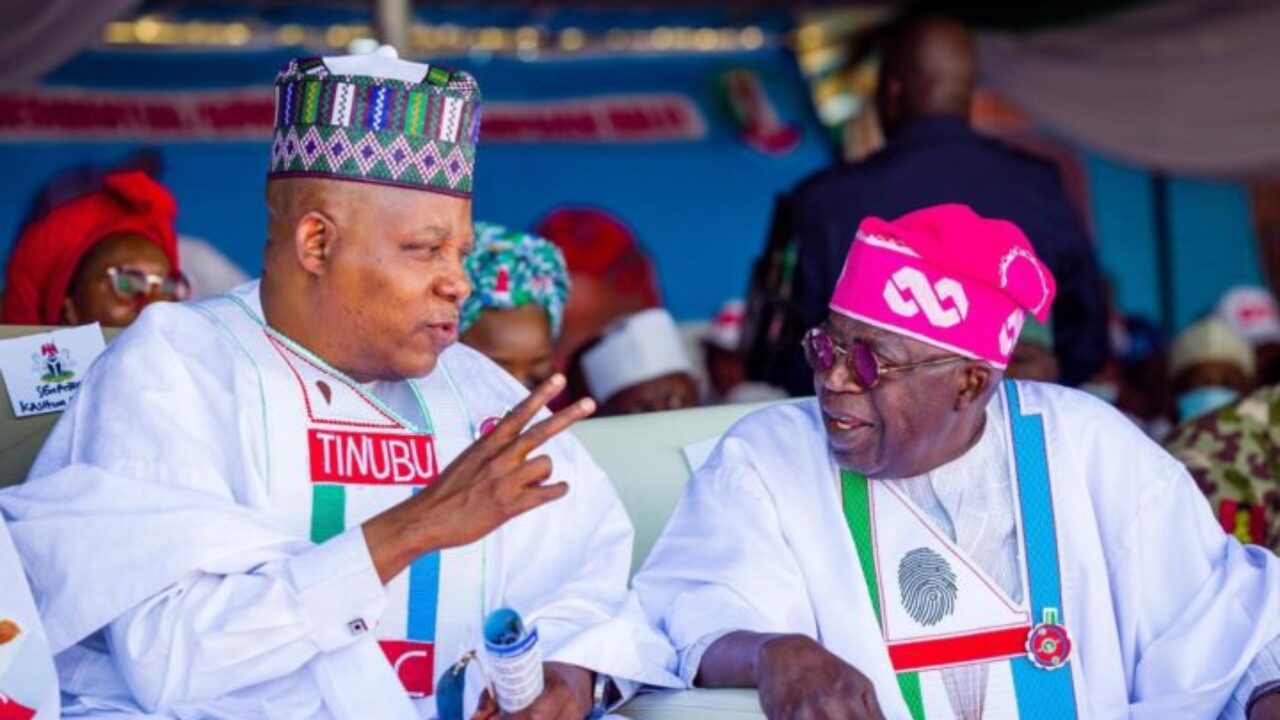
It is perhaps in realizing the need for synergy in overcoming challenges to policies and in order to demystifiy old narratives, about the workability of new alliances, that Ahmed Tinubu and Kashim Shettima strengthened the bond, that saw them emerging as President and Vice President.
Keen observers of events could probably see through that bond, long before it became open,: tracing the very intimate relationship between the duo, in the challenging days of Governor Kashim Shettima in Borno, who was facing isolation as an opposition from the then Federal Government.
Observing the duo as they exchanged visits, seeking each other’s inputs, and developing political reachout programmes, it was clear at that point that the future held something deeper.
Some of Kashim Shettimas feats in Borno, were the trabspositions of Tinubu’s legacies in Lagos. It makes it safe for one to surmise that Kashim Shettima is Bola Ahmed Tinubu’s alter ego, given what he did in Borno by empowering allies and formulating drastic policies, and leaving behind enduring legacies
It is therefore easy finding Shettima, explain President Tinubus’ direction and the potential benefits, off hand, under this Presidency.
It may be apparent, that, the Vice President may be finding things difficult, in the face of emergent cabals, that have been trying to drive a wedge between him and his principal, or overshadow his growing popularity.
It is an open secret that fifth columnists and seeking psrtnershios outside, others may be working to create regional rivalry and yet others are plotting to strengthen the etnic renegade formula in power sharing, but the Vice president has proved to be indomitable.
Kashim Shettima has been endowed with exceptional oratory capabilities, such that, he often does not require prepared scripts to make public speeches or any form of rehearsal to make appearances.
Kashim Shettima is the perfect delegate of Mr. President and has given very impressive account of himself at public meets. He is a delight to watch and listen to. Such characters are very difficult to suppress.
It is oerhaps a matter of time, before President Bola Ahmed Tinubu understands the intrigues playing out against Shettima, and make adjustments as they enter the second stanza.
The clouds may be gathering, and the early warning signals noticeable. Alliances and re-alliance are being worked out, all in the bid to severe that bond, that binds Bola Ahmed Tinubu, and Kashim Shettima, and it will require the tenacity of their common purpose to defeat their foes.
Just speaking my mind.
By Fabian Apechihin
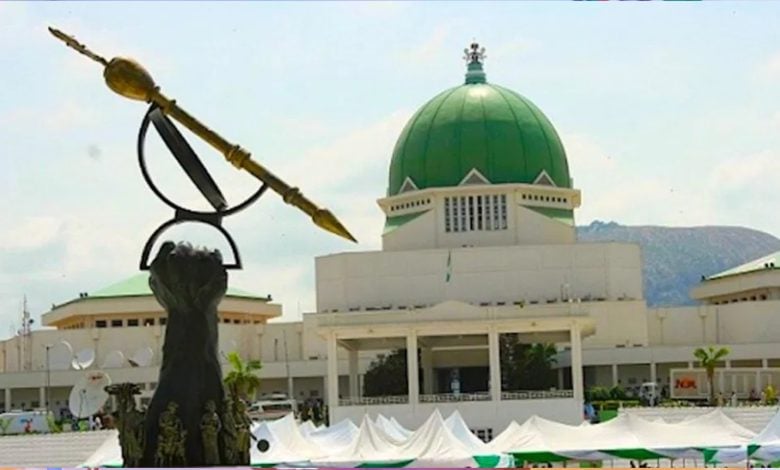
The 2026 Constitution Amendment Bill has moved to the state level following its consideration by the National Assembly, paving the way for state legislatures to consider the proposed amendments.
The development comes amid renewed attention on constitutional reform and ongoing discussions over proposed changes to Nigeria’s governing framework.
Meanwhile, the House of Representatives has defended FCT Minister Nyesom Wike over allegations surrounding borrowing by the Federal Capital Territory Administration.
House spokesperson Akin Rotimi Agbese, speaking in an interview with Channels Television, rejected claims that Wike had undertaken borrowing without the knowledge or approval of the National Assembly.
Agbese said the FCT minister could not independently create a sovereign borrowing obligation, stressing that public borrowing is subject to constitutional, statutory and administrative procedures.
“Wike has committed no infraction in borrowings. There is no basis for the allegation that he has been borrowing money behind the back of the National Assembly,” Agbese said.
He explained that borrowing to finance infrastructure was not unlawful where the required approvals and procedures had been followed.
“Borrowing for infrastructure development is not unlawful in itself, provided the prescribed approvals and procedures are followed,” he added.
The House spokesperson further argued that an increase in the FCT’s debt profile should not automatically be interpreted as evidence of illegal borrowing, citing the scale of infrastructure projects being undertaken in Abuja under Wike.
According to Agbese, the key issue is whether the appropriate approvals were obtained for specific borrowing transactions, rather than simply whether the FCT’s overall debt profile has increased.
The comments come as scrutiny continues over public borrowing, infrastructure financing and the legal procedures governing government debt at both the federal and sub-national levels.
By Fabian Apechihin
The 2026 Constitution Amendment Bill has moved to the state level following its consideration by the National Assembly, paving the way for state legislatures to consider the proposed amendments.
The development comes amid renewed attention on constitutional reform and ongoing discussions over proposed changes to Nigeria’s governing framework.
Meanwhile, the House of Representatives has defended FCT Minister Nyesom Wike over allegations surrounding borrowing by the Federal Capital Territory Administration.
House spokesperson Akin Rotimi Agbese, speaking in an interview with Channels Television, rejected claims that Wike had undertaken borrowing without the knowledge or approval of the National Assembly.
Agbese said the FCT minister could not independently create a sovereign borrowing obligation, stressing that public borrowing is subject to constitutional, statutory and administrative procedures.
“Wike has committed no infraction in borrowings. There is no basis for the allegation that he has been borrowing money behind the back of the National Assembly,” Agbese said.
He explained that borrowing to finance infrastructure was not unlawful where the required approvals and procedures had been followed.
“Borrowing for infrastructure development is not unlawful in itself, provided the prescribed approvals and procedures are followed,” he added.
The House spokesperson further argued that an increase in the FCT’s debt profile should not automatically be interpreted as evidence of illegal borrowing, citing the scale of infrastructure projects being undertaken in Abuja under Wike.
According to Agbese, the key issue is whether the appropriate approvals were obtained for specific borrowing transactions, rather than simply whether the FCT’s overall debt profile has increased.
The comments come as scrutiny continues over public borrowing, infrastructure financing and the legal procedures governing government debt at both the federal and sub-national levels.
By Fabian Apechihin
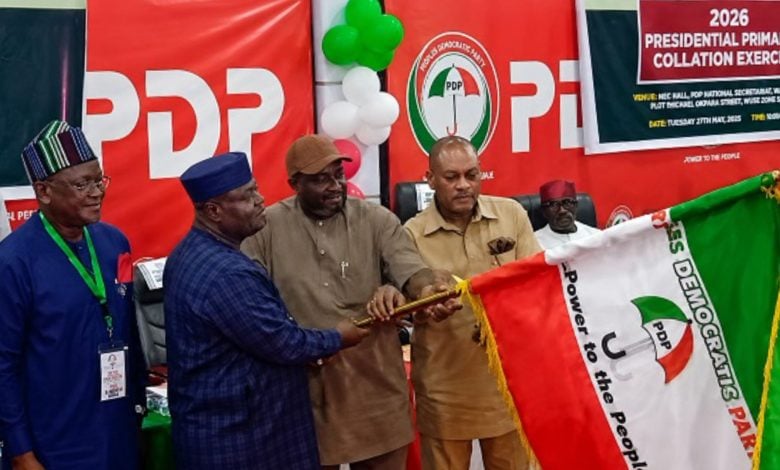
The Peoples Democratic Party (PDP) has reaffirmed its intention to contest the 2027 presidential election despite the decision of Federal Capital Territory Minister, Nyesom Wike, to support President Bola Ahmed Tinubu’s re-election bid.
The party said Wike’s decision was personal and did not alter its position to participate in the presidential election with its candidate, Senator Sandy Onor. PDP National Publicity Secretary, Jungudo Haruna Mohammed, made the clarification on Wednesday.
According to the party, a recent conversation between Wike and Onor should not be interpreted as a political negotiation between the minister and the PDP.
“He told Nigerians that Sandy is his friend. And they only had a friendly discussion within the umbrella of friendship. So, that is just a personal discussion between him and his friend,” Mohammed said.
He added that Wike’s support for Tinubu did not prevent the PDP from fielding candidates for the presidential, governorship and legislative elections.
Wike had earlier clarified that his support in 2027 was specifically for Tinubu’s presidential re-election and did not amount to an agreement that the PDP would withdraw from other electoral contests. He also said he never promised that the PDP would abandon its candidates for governorship, National Assembly and State House of Assembly elections.
“I said I will support the President from day one. I never told Mr President I will join APC,” Wike said.
The minister also maintained that his proposed Rainbow Coalition was not an arrangement with the All Progressives Congress (APC), but rather a platform through which politicians from different parties could mobilise support for Tinubu’s re-election.
The issue has generated disagreement with some APC governors, who have expressed concern about a political arrangement that could affect the party’s candidates at other levels.
APC Progressive Governors’ Forum Chairman, Hope Uzodinma, said the governors would not support any alliance or arrangement that could weaken the APC or adversely affect its candidates.
Meanwhile, APC presidential campaign council spokesperson Ima Niboro has urged Wike and APC governors to end their public exchanges and concentrate on political mobilisation.
“When I said tone down the rhetoric, I do not mean stop working. Stop talking, go and work,” Niboro said.
He urged political leaders to strengthen their grassroots structures and engage directly with voters rather than continue exchanging statements in the media.
“All this shouting is not taking anybody anywhere. Go and work. Go and establish your authority on your political base,” he said.


HONOURABLE JAFAARU YAKUBU COMMISERATES WITH QATAR OVER THE DEATH OF RULER

2026 Constitution Amendment Bill Moves to States

2026 Constitution Amendment Bill Moves to States

-
 Uncategorized6 years ago
FG, states urged to harness flooding for ranching, others with technology – Agbaje
-
 Headlines11 years ago
Breaking: EFCC seals Borno House of Assembly, as Hon members take to their heels
-
 News12 years ago
Nigeria Security Operatives Stage Manhunt For Homosexual Perpetrator
-
 News10 years ago
How 21-year-old Girl fled community over accusation of lesbianism
-
 News11 years ago
Yobe Gov Moves Against Deputy
-
 Opinion7 years ago
7 signs she has friend zoned you
-
Technology5 years ago
Online job placement company headhunts women
-
 Headlines10 years ago
Borno Dep Gov Abducts Another Church Leader