
Opinion
THE NATION NEWSPAPER PUBLICATION OF AUGUST 16,2024

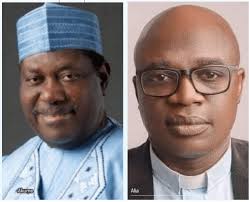
By Chief Livinus Ochejile
Friday, August 16, 2024, witnessed yet another internal contradiction of the Tiv, with the letter addressed to the President, His Excellency Bola Ahmed Tinubu, GCFR, captioned, GOVERNOR ALIA’S ATTEMPT TO PUT BENUE APC IN JEOPARDY – OUR RESISTANCE by the Concerned Benue APC Progressives Forum (CBAPF), as published in the Nation Newspaper. This is typical of the internal ‘Pull-Him-Down’ syndrome of the Tiv, through petition writing against each other as reminiscent of the famous ‘You Tarka me, I Dabo you’ of the seventies. This practice, to say the least, is most distractive, retrogressive, and a complete ridicule of the Tiv Nation. For such a document to have been initiated and signed by a section of the top echelon of the Tiv political stakeholders in this day and age speaks volumes about the quality of political leadership that has trailed and the consequential position of the Tiv in Nigeria’s political equation from 1999 to date.
It will be necessary to attempt to set the records straight and expose the misrepresentations, then follow up with a balanced analysis and conclude with the call for a unified front in line with the vision of His Royal Majesty, Prof. James Ortese Ayatse CFR, Tor Tiv V, in projecting the Tiv under an amicable and transformative political leadership.
Whereas the emergence of the AD in the political activities leading to the 1999 democracy was spearheaded by Gov. Moses Orshio Adasu of blessed memory, no political capital was achieved in Benue State beyond the Chf. Barnabas Gemade led PDP, and the late Wantaregh Paul Iorpuu Unongo led APP. Prof. Sen. David Iornem, on the eve of the 2011 general elections, reintroduced the AC/ACN in the Benue politics. The fallout of Sen. George Akume with his successor, Gov. Gabriel Torwua Suswam, led to Akume cross-carpeting from PDP to AC/ACN, where he won his second tenure in the Senate. The sweeping popularity of the ACN was anchored on the political dynasty of Wantaregh Paul Unongo, by introducing his nephew, Prof. Steve Ugbah, as the party’s gubernatorial candidate. ACN’s change mantra with the broom insignia, heralded by the local Slogan “Ugbah Nyor Shor Chenji” (meaning the entry of Ugbah has changed the electoral equation), swept through like a tsunami that delivered Sen. Akume’s senatorial bid against the indefatigable PDP in Benue State. Besides this senatorial seat, the PDP held power in Benue State, with few other seats captured by the ANPP. The 2023 formation of the APC in Benue State was almost marred by the internal revolt of the leadership style from the ACN, as the ANPP, CPC, and the splinter PDP collapsed into the new APC. The ACN-led leadership of the APC in the state stoutly blocked the entry of many political stakeholders, which would have enabled a smooth sail for the new party. Chf. Gemade later left the PDP to help clench the Zone A Senatorial seat for the APC. Chf. Samuel Ortom left after losing the PDP gubernatorial ticket to run as the APC flag bearer. It is on record that in Benue, the PDP still won most of the State Assembly seats in the 2015 general elections; however, some PDP members voted for the more popular former PDP member, Samuel Ortom, to win the Governorship ticket for the APC.
The second mismanagement of a governor sponsored by H.E. Sen. (Dr) George Akume led to Gov. Ortom abandoning the APC to return to PDP with the Magic wand that swept the short-lived APC out of power in Benue. The recruitment of the famous exorcist and healer Reverend Gentleman, Fr. Hyacinth Iormem Alia, into the APC was indeed the master stroke that stormed the Benue political landscape like the overwhelming Tsunami it was. He won the governorship with a never-imagined landslide and has maintained a record that stands apart from any before him. Many in the Benue APC that won elections in 2024 rode on the back of Fr. Alia’s popularity, as some cannot deliver their polling units to date. It is only fitting to acknowledge the critical contributions of others in bringing home trophies for any team. Politics is a team event and never an individual acclaim to victory.
The opening and concluding statements of the petition, “…that we the undersigned foundational stakeholders and leaders of the Party from 1999 beginning with AD, AC, ACN, and now APC, deem it necessary to publicly resist the attempt by the Executive Governor of Benue State to jeopardize and dwindle the electoral fortunes of the Party in future elections” and “We wish to draw the attention of the presidency and leaders of the party that the current structure of our party in Benue state has been intact right from the days of AD, AC, ACN, and now APC, has remained strong and loyal to President Bola Tinubu.” are a misrepresentation of facts. Many listed stakeholders were not even politicians who participated in the serialized political parties. Some, at best, joined only the APC and, at various times, or moved from the PDP, but not necessarily as foundation members. How could the leadership of the Benue AD under Gov. Adasu or AC under Sen. David Iornem be the same as Akume’s structure in the ACN? Akume’s insistence on installing the ACN leadership in the APC without due consideration of the ANPP and those from the PDP sparked the initial challenges of the Benue APC. His lonesome leadership style frustrated the participation of many strategic stakeholders. These sweeping and exaggerated claims aim to hoodwink Mr. President into the false security of long-standing followership by a few while edging out the trusted and emerging political juggernauts that threaten most of the empty political barrels.
The Benue political leadership problem started in the PDP in 2005/2006, followed through to the AC/ACN, and has trailed the APC with petitions at every stage of the party. It didn’t start today. In this life, some are gifted with divine providence, as evidenced in the political exploits of H.E. Sen. (DR) George Akume, Secretary to the Government of the Federation. To have been sponsored by Chf Barnabas Gemade to become the Governor of Benue state from a very humble background in 1999 to three-time Senator including Senate Minority Leader, then Minister of Special duties to President Buhari, and now Secretary of the Government of the Federation is not a small feat. Sen. Akume has also been responsible for the emergence of all three governors who came after him in Benue State. He has surpassed the political trophies of his late uncle, Chf. Sen. J.S. Tarka. Sen. Akume remains the political colossus of Benue State. To always resort to political conflicts with all three governors he sponsored spells his consistent wrong choices or poor managerial style, as all three have varying personalities. He has consistently been on the warpath with his benefactors, Chf. Sen. Gemade and Sen. Dr. Iorchia Ayu.
The Concerned Benue APC Progressives Forum claimed that “…we are making this publication, conscious that if Benue is united and becomes a better place today, our unborn children will inherit the legacies and benefit from our development agenda today. The present status quo where deep rooted animosity and distrust have taken center stage will continue to weaken the cord of our collective existence and visit excruciating harm on all of us.” From the foregoing, it is clear that Akume sowed the seeds of distrust by abandoning his benefactors. The culture of persistent conflicts with all the three Governors after him predicates the unity of the State only on the whims and caprices of the one and only leader, H.E. Sen. (Dr) George Akume. The differences between Ortom and Suswam, notwithstanding his vendetta against Suswam, were greatly fueled by the leader’s desire to get back at Suswam. What exactly will that development agenda under his leadership be as the expected legacies for the unborn children under such a cantankerous and divisive leadership style? The anxiety of the Concerned Benue APC Progressives Forum over the influence of the invincible Sen. Suswam of the PDP in the installation of the APC Speaker of the Benue state House of Assembly and Suswam’s continued influence on Gov Alia as captured in the published pictures of the two, speaks to an unending fear and continued witch hunting of the former Governor and Distinguished senator from Benue. How can trust ever be built among the Benue political leadership?
It is intriguing to know what defines Akume’s socio-economic and political agenda for his people, the Tiv, Benue State, and the Nigerian Minorities. Identifying the political philosophies of JS Tarka, Aper Aku, and Paul Unongo is straightforward. The Developmental gains and political ascendancy of Iorchia Ayu to the Senate Presidency under the short term of Adasu, Mr. Infrastructure, and the many elevated Benue indigenes of substance to the national level defined Suswam, and Samuel Ortom was known for the anti-open grazing and defensive stance against the genocidal attacks and forced land occupation of the Benue valley by the terrorist Herdsmen. Each has made their imprint in the defense of our people for posterity.
While Tinubu and Akume were colleague governors, Lagos State witnessed enormous wealth-creation initiatives, the empowerment of the ‘Area Boys’ off the streets, the aggregation of the first eleven in the South-Western Geopolitical Zone, which many were later hoisted to the federal level, including a Vice President, and the unification of the Zone like none in Nigeria. All Lagos State governors, after Tinubu, have continued with the culture of outshining their predecessors in the development of the State. In Benue, all the wealth-creation initiatives of the legendary Gov. Aper Aku were grounded or sold out, Local governments demobilized, and the quality of leadership was grossly compromised. Not one of the commissioners, advisers, heads of government agencies, or top civil servants was good enough to be elevated as he rose to stardom. Akume’s continued reign has been a hurricane that runs through Tiv Land and Benue State.
The CBPF claims, “As concerned leaders and stakeholders of the party in the State, we are deeply committed to sustaining the victory the party recorded in the last General Elections to establish a standard platform for winning future elections.” This is debatable, as past mistakes with Govs Suswam and Ortom are obviously being repeated. The anti-party activities that blocked the electoral fortunes of the party’s flag bearer, Steve Ugba, followed soon after Akume’s senatorial win under the ACN but were masked under the leader’s victory. Could this be a culture of self-preservation against Party fortunes? How strategic was Amb. Steve Ugba, with a category A posting to Russia, being replaced with Amb. Tarzoor to Namibia? Why were senior APC foundation members like Sen. Prof. Daniel Saror, late Amb. Mike Gbasha, the ACN deputy Governor Candidate, Young Alhaji Usman Abubakar, sidetracked to leave the Benue APC.
When all hope was lost because of the futility of petitions against Akume’s bungling of the Political Parties under his control, it is paradoxical to have one orchestrated to secure his stranglehold on the Benue APC, boomerang to erase his power in the twinkle of an eye! What stopped these APC super stakeholders from signing the petition if the concerns of this group were authentic and genuinely popular? These include the former deputy governor Chf. Steve Lawani, Former multiple National Party chairman, Chf. Sen. Barnabas Gemade, Former National Chairman, Minister, and Campaign DG of President Buhari, Chf. Audu Ogbeh, Former Senate President Ameh Ebute, Former AGF Michael Aondoakaa, Ambassador of Nigeria to Russia, Prof. Steve Ugba, Rep. Solomon Wombo, The Speaker of the Benue State House of Assembly, Rt. Hon. Hyacinth Aondona Dajoh, Rt Hon. Emmanuel Jime, Prof. Terhemba Shija, and all the other APC gubernatorial aspirants.
The CBAPF accused Gov. Alia, “Strangely, the Governor has persistently launched attacks on Federal appointees and members of the National Assembly from the state who are out to propagate the programs and policies of the President Tinubu-led Administration.” There is nothing to suggest any poor relationship between Gov. Alia and Mr. President, so why such an accusation that seeks to create bad blood between the two? Seeking to ruin this relationship will have the most unfortunate consequences on the political fortunes of Benue State. Yet this is coming from the same group that claims to aspire to the unity of Benue State to become a better place and for our unborn children to inherit the legacies and benefit from our development agenda today!!! The Governor is also lobbying Mr. President for National appointments for the Benue people. Why, then, would he be antagonistic against Mr. President’s appointees? If it is true that Gov. Alia “initiates destructive propaganda against them and calls them names such as “BOKOTI MBAIOROV” meaning people who are hollow as a bucket, “KEMPE MBAIOROV” meaning people as insignificant as panties,” there must be more to it than meets the eye. Could the Governor be echoing the general complaints about the quality of leadership recruitment and representation from Benue by the leader? Alternatively, could these appointees’ poor performances and refusal to effectively convey a positive federal presence in Benue state in helping the Governor promote the APC account for venting such frustration?
It is very instructive, however, to follow the reconciliatory path of H.R.M. Prof. James Ortese Ayatse CFR, Tor Tiv V, in his quest to bring his sons, the Governor, and the SGF together in a seamless working relationship. The position of the Governor of the State as the leader of the Party is not in doubt, as exemplified by the intelligent move of Mr. President, as a prudent and dynamic politician, in handing over the structure of the Benue APC to Gov. Alia. It behooves the Governor to be large-hearted, very inclusive, and accommodating in reaching out to his benefactor to break the vicious cycle of distrust and political anarchy that has trailed Benue since 1999. Reconciling the political leadership under his Priestly direction of equity, justice, and peace in an environment that celebrates excellence and creates wealth for all will deliver the transformation of the State and elongate his governorship in the most extraordinary ways. Gov. Alia can pull together all the other two former Governors and deputies as you consolidate a proper advisory council of elders to have a sense of belonging and ownership and guide their participation for a peaceful and prosperous Benue State, to the Glory of God Almighty.
Long live Gov. Alia, Benue State, Mr. President, and the Federal Republic of Nigeria.
Chief Ochejile, writes from Agatu in Benue state

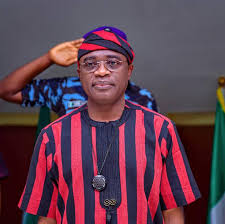
For nearly three years, the political crisis within the Benue State chapter of the All Progressives Congress (APC) has largely been portrayed as a power struggle between Governor Hyacinth Alia and the Secretary to the Government of the Federation (SGF), Senator George Akume.
However, recent developments suggest that the dispute over control of the party could have wider legal and political implications as the 2027 general elections approach.
The crisis intensified earlier this year when rival camps conducted parallel state congresses and produced separate chairmen for the APC in Benue.
The Akume-aligned faction returned Austin Agada as state chairman, while the faction loyal to Governor Alia elected Benjamin Omale.
The emergence of two chairmen and competing claims to control of the party has further exposed the depth of the internal division.
The dispute has also raised questions about the legal consequences of competing party structures, particularly following a Court of Appeal judgment delivered in June 2026.
The appellate court affirmed the Austin Agada-led State Executive Committee and upheld an earlier decision nullifying the dissolution of that executive by the APC National Working Committee.
The court also sustained an order declaring the activities of the Benjamin Omale-led caretaker committee “null, void and of no effect whatsoever.”
The judgment has since become a major reference point in the continuing struggle for control of the APC structure in Benue.
Political observers note that the significance of party structures extends beyond the office of state chairman. Party executives play important roles in organising congresses, managing delegate processes, supervising primaries and implementing decisions relating to the nomination of candidates.
This has brought the dispute into sharper focus ahead of the 2027 elections, particularly over the possible legal implications for candidates whose nominations may be linked to disputed party structures.
A group of APC stakeholders is reportedly examining the possible legal consequences of the judgment and the continued existence of rival structures within the party.
The concern, according to those familiar with the matter, is whether political processes conducted through structures subsequently found to lack legal validity could become the subject of litigation.
Candidates loyal to Governor Alia whose nominations were subsequently overturned by the APC National Working Committee are already challenging the party’s decisions in court. Among them is former Benue Governor, Senator Gabriel Suswam.
At the centre of the emerging debate is whether the invalidation of a party structure could affect subsequent political processes conducted through that structure.
No court has, however, ruled that Governor Alia is ineligible to contest the 2027 governorship election, and there is currently no judgment declaring him barred from seeking re-election.
The potential issue, rather, concerns the relationship between the legitimacy of party structures and the validity of nomination processes conducted under those structures.
Nigeria’s electoral history contains several instances in which internal party disputes over congresses, delegate lists, executives and primary elections eventually resulted in prolonged litigation over candidates and nominations.
Against this background, the continued crisis within the Benue APC could assume greater significance as political parties begin preparations for the 2027 electoral cycle.
The conduct of parallel congresses following a Court of Appeal judgment affirming one faction’s leadership could potentially generate further legal questions over authority, compliance with party rules and the validity of subsequent decisions.
For Governor Alia, the immediate reality is that no court has declared him ineligible to contest the next election. However, continued uncertainty over the party’s structure could expose his political camp to further litigation and create complications during the nomination process.
The governor has also faced allegations from political opponents that more than N100 billion in public funds has been expended in efforts to secure control of APC structures over the past three years. The allegation remains disputed and would require evidence to establish.
What is increasingly clear is that the struggle for control of the APC in Benue has moved beyond a conventional political disagreement. It is now playing out simultaneously across political, legal and party-administrative fronts.
As the 2027 electoral cycle draws closer, the unresolved questions surrounding the APC’s leadership and nomination processes could become increasingly consequential for the party and its candidates.
For now, there is no judicial pronouncement preventing Governor Alia from appearing on the 2027 ballot. But if the stakeholders reportedly considering legal action proceed with a challenge over the circumstances of his nomination, the governor could face another significant legal battle as the election approaches.
NIGERIA BELONGS TO ALL OF US
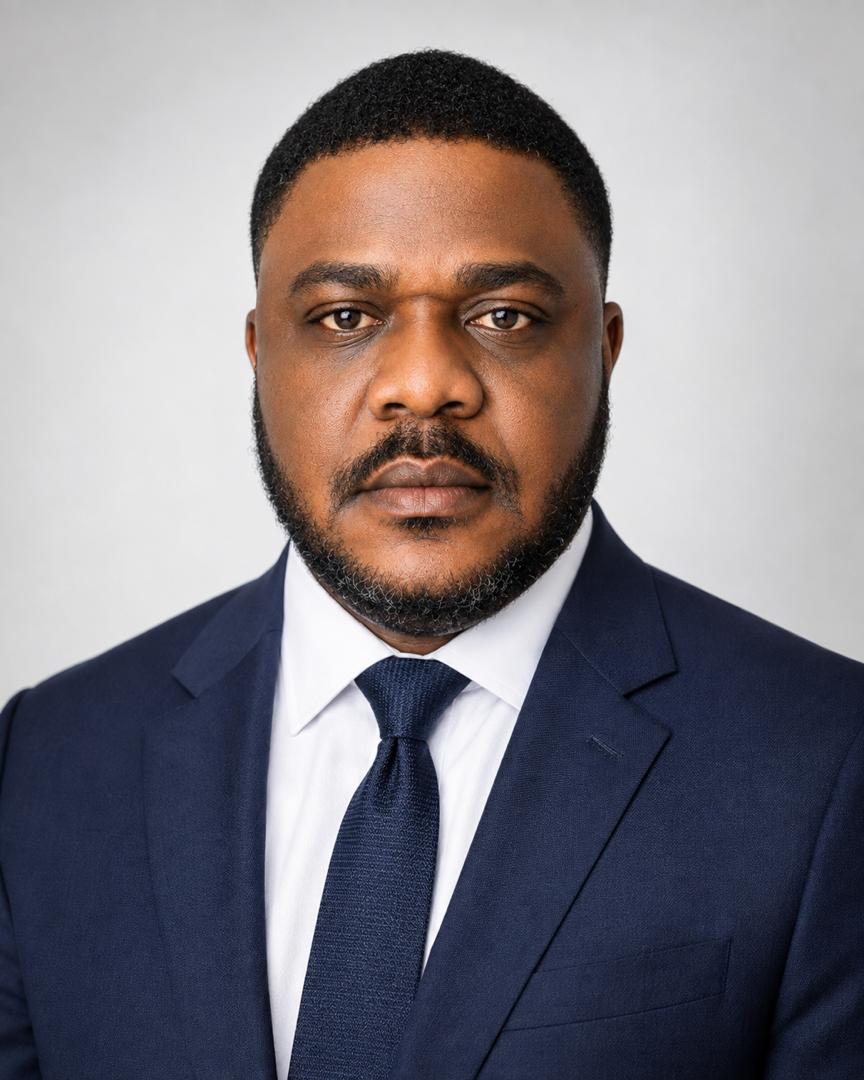
I have written this open letter to His Eminence, Alhaji Muhammad Sa’ad Abubakar III, CFR, mni, Sultan of Sokoto and President-General of the Nigerian Supreme Council for Islamic Affairs, with profound respect for his office and for the historic institution he represents.
This is not an attack on Islam, neither an attack on Christianity.
Also, It is not an attempt to diminish the historical importance of the Sultanate, rather, it is a sincere contribution to a conversation I believe Nigeria must have with greater honesty, courage and intellectual maturity:
What does equal citizenship mean in Nigeria?
Our country has a complex history involving kingdoms, caliphates, indigenous political systems, colonialism, amalgamation, independence, religion, ethnicity and competing political traditions.
But after all that history, one question remains fundamental:
Who does Nigeria belong to? My answer is simple:
Nigeria belongs to all Nigerians.
I am publishing this letter openly because I believe conversations of this magnitude should not be confined to private rooms.
I hope it reaches His Eminence.
More importantly, I hope it reaches Nigerians—Muslims and Christians alike—who believe that our future must be built on equal citizenship, mutual respect, constitutional democracy and a shared sense of belonging.
I invite people to read this letter in that spirit.
Not as a provocation or as a religious argument. But as an invitation to think.
AN OPEN LETTER TO HIS EMINENCE, ALHAJI MUHAMMAD SA’AD ABUBAKAR III, CFR, mni
SULTAN OF SOKOTO AND PRESIDENT-GENERAL, NIGERIAN SUPREME COUNCIL FOR ISLAMIC AFFAIRS
Your Eminence,
OUR HISTORY MUST BE REMEMBERED HONESTLY—BUT IT MUST NOT BECOME A CLAIM ON THE FUTURE
Nigeria’s history contains great Muslim civilisations and political institutions.
Kanem-Bornu, the Hausa states and the Sokoto Caliphate represent important chapters in the history of the territories that eventually became Nigeria.
The Sokoto Caliphate, in particular, became one of the most influential Islamic political formations in West Africa.
That history deserves recognition and respect.
But history presents us with an important question:
Does historical political authority confer permanent political ownership?
I believe the answer must be no.
The British colonial conquest and occupation of the territories that now constitute Nigeria occurred over decades, with the conquest of the Sokoto Caliphate culminating in 1903. The Northern and Southern Protectorates were subsequently amalgamated in 1914, and Nigeria achieved independence in 1960.
Whatever political arrangements existed before colonial consolidation, the Nigeria that emerged as a modern sovereign state ultimately became a constitutional republic in which citizenship could not legitimately be based upon the political history of one religion, ethnic group, kingdom or region.
Nigeria became something larger than all of those histories.
It became a country.
And that country belongs equally to the Muslim, the Christian, the adherent of another faith, and the citizen who professes no religion.
Your Eminence, Nigeria’s Constitution does not establish either Islam or Christianity as the religion of the Nigerian state.
Section 10 provides that:
“The Government of the Federation or of a State shall not adopt any religion as State Religion.”
Section 38 protects freedom of thought, conscience and religion.
Section 42 further provides constitutional protection against discrimination on the basis of religion, among other grounds.
These provisions are not merely legal technicalities. They represent an important national compact.
They establish principles of religious neutrality, religious freedom and equal citizenship.
They tell every Nigerian that his or her fundamental rights cannot legitimately depend upon belonging to the “right” religion.
That principle protects Muslims from Christian majoritarianism just as it protects Christians from Muslim majoritarianism.
And therefore, defending constitutional religious neutrality is not an attack on Islam neither an attack on Christianity.
It is protection for both.
THE DIFFICULT QUESTION OF POLITICAL SYMBOLISM
Your Eminence, this is where I believe our national conversation requires greater intellectual honesty.
A political arrangement can have two realities simultaneously:
its strategic reality and its symbolic reality.
Strategically, politicians may see a particular political ticket as an effective coalition, an electoral calculation, a mechanism for consolidating support or a means of improving political cohesion.
But citizens may interpret exactly the same arrangement symbolically.
They may ask:
Who is represented?
Who is included?
Who is excluded?
What does this say about the distribution of power?
What does this mean for people like me?
This distinction became particularly visible in Nigeria’s debate over the Muslim-Muslim presidential ticket.
Some citizens saw strategy while others saw symbolism.
Some saw political competence, Others saw the possibility of religious exclusion.
Both reactions can exist simultaneously.
A mature democracy must therefore be capable of understanding not only what a political arrangement is, but also what people believe that arrangement means.
This is not an argument against Muslims occupying political office nor should it be an argument against Christians occupying political office.
It is an argument for understanding the enormous responsibility that comes with political symbolism in a deeply religious society.
Political leaders must therefore understand that electoral strategy does not exist in a vacuum. Every political decision is interpreted through the lived experiences, fears, hopes and historical memories of the citizens who encounter it.
That is why responsible leadership requires both strategic intelligence and sensitivity to political meaning.
The Muslim citizen must not feel like a tolerated Nigerian, neither should the Christian.
This is perhaps the most important principle I wish to communicate.
A Christian should never have to feel that his citizenship is conditional upon political accommodation by Muslims. A Muslim should never have to feel that his citizenship is conditional upon political accommodation by Christians.
Neither should have to prove that his loyalty to Nigeria is greater than his loyalty to his faith.
Both should be able to say:
“Nigeria is my country, and nobody needs to give me permission to belong here.”
That is the Nigeria we should be building.
Your Eminence, traditional and religious leaders occupy a unique position in Nigerian society.
Political leaders come and go.
Governments change.
Political parties rise and fall.
But institutions such as the Sultanate carry historical memory.
That gives your words a different weight.
When a politician speaks about religion, Nigerians may suspect political calculation but when a respected religious leader speaks about coexistence, citizenship and national unity, the message can carry a moral authority that politics often cannot achieve.
This is why I believe the Sultanate has an extraordinary opportunity.
Not merely to speak for Muslims, But to speak to Nigeria.
To say clearly that the greatness of Islam in Nigeria does not require the political diminishment of Christianity. And equally, that the flourishing of Christianity in Nigeria does not require the political diminishment of Islam.
The strength of one faith should not require the weakness of another.
The security of one community should not depend upon the insecurity of another.
And the political advancement of one Nigerian should never require the political humiliation of another Nigerian simply because of religion.
WE SHOULD MOVE BEYOND THE COMPETITION FOR RELIGIOUS OWNERSHIP OF NIGERIA
There is a dangerous psychological temptation in deeply divided societies.
Each community begins to measure its security by the amount of power the other community possesses.
Then politics becomes a permanent struggle for religious arithmetic.
Who has the President?
Who has the Vice President?
Who controls the security institutions?
Who appoints judges?
Who controls the legislature?
Who controls the governors?
Who controls the economy?
And eventually, citizens stop asking the most important question:
Does the country work for everyone?
That is where we must break the cycle.
Nigeria cannot become great by producing a permanent contest between Muslim political power and Christian political power.
It can become great when both communities begin demanding something larger:
competent political power exercised for the common good.
The ultimate measure of political leadership should not be the religion of the person holding office.
It should be the quality of governance, the protection of citizens, the fairness of institutions, the security of communities and the opportunity available to every Nigerian.
PERHAPS OUR GREATEST NATIONAL TEST IS NOT RELIGIOUS DOMINANCE—BUT MUTUAL TRUST
Your Eminence, I believe Nigeria’s deepest problem is not simply that Muslims distrust Christians or Christians distrust Muslims.
It is that decades of political competition, violence, injustice, insecurity, corruption and unequal experiences of citizenship have created an enormous deficit of trust.
Religious suspicion is often the language through which that distrust expresses itself.
Therefore, if we want to defeat religious tension, we must do more than preach tolerance.
We must build institutions that make tolerance unnecessary as a condition of citizenship.
A Nigerian should not need to be tolerated.
He should simply be equal.
A Christian should not need a Muslim’s permission to belong.
A Muslim should not need a Christian’s permission to belong.
Our common citizenship should be the foundation upon which our religious differences are accommodated—not the other way around.
Your Eminence, I respectfully propose that Nigeria’s most respected Muslim and Christian leaders begin a different kind of conversation.
Not another conference where speeches are made and photographs taken.
But a serious national dialogue around five questions:
- What does equal citizenship actually mean in Nigeria?
- How should religious diversity influence political representation without becoming a mechanism for religious entitlement?
- How do we distinguish legitimate political strategy from symbolism that creates unnecessary fear or exclusion?
- How can traditional and religious institutions help rebuild trust between communities?
- What constitutional, institutional and political reforms are necessary to ensure that no Nigerian believes the country belongs more to another citizen than to himself?
These are difficult questions. But perhaps Nigeria has spent too many decades avoiding difficult questions because they are uncomfortable. And perhaps the price of that avoidance is becoming too high.
Your Eminence, history gives leaders a choice.
Every generation inherits history. But every generation also decides what to do with it.
We can use history as a weapon or wisdom
We can teach our children that Nigeria is a battlefield between religious communities.
Or we can teach them that Muslims and Christians inherited a complicated country together and have the responsibility to make it work together.
We can continue competing over who has the greater historical claim.
Or we can build a country where historical claims do not determine the value of a citizen.
I respectfully believe the latter is worthy of the office you occupy.
The greatest legacy of a historical institution is not merely that it preserves the memory of what once was.
It is that it helps a nation decide what it can become.
My final appeal Your Eminence, I do not ask you to abandon Islam.
I ask you to help Nigerians understand that Islam does not need Nigeria to belong exclusively to Muslims for Muslims to belong completely to Nigeria.
And I would say the same to Christian leaders:
Christianity does not need Nigeria to belong exclusively to Christians for Christians to belong completely to Nigeria.
The future must therefore be bigger than both arguments.
Nigeria must belong to Nigerians.
Not to Muslims.
Not to Christians.
Not to Hausa, Yoruba, Igbo, Tiv, Fulani, Igala, Idoma, Nupe, or any other ethnic nationality.
Not to the North.
Not to the South.
Not to one historical institution.
To all of us.
That, in my humble view, is the foundation upon which a truly united Nigeria can eventually be built.
I respectfully submit this thought to Your Eminence—not as an accusation, but as an invitation to a deeper national conversation.
May our religious differences become a source of moral strength rather than political division.
May our history become a source of wisdom rather than entitlement.
May our political differences never become a justification for denying one another’s citizenship.
And may the Nigeria we leave our children be a country in which neither Muslim nor Christian ever has to ask:
“Does this country belong to me?”
Because the answer should always be:“Yes. It is your country too.”
With profound respect,
Dr. Mike Achadu
A Nigerian Citizen
Opinion
OF GOVERNANCE AND THE ZULUMFICATION OF GOVERNANCE IN BORNO: RANDOM MUSSINGS ON GOV. ZULUM’S 3RD YEAR 2ND STANZA.
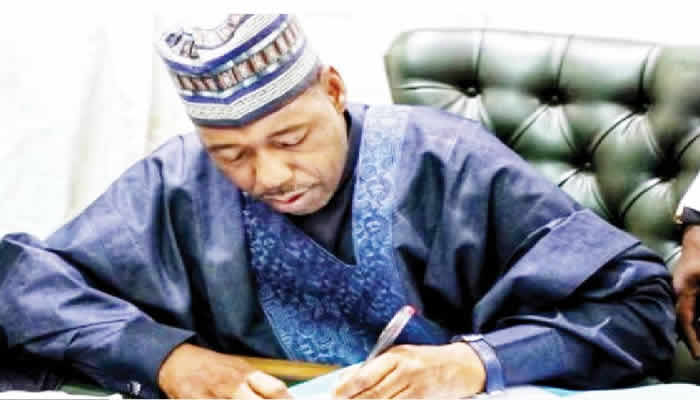
By: Inuwa Bwala. inuwabwala3@gmail.com
By the time I put down my pen, the media space would have been awash with narratives about the achievements of Mr President and governors, as a mark of celeberation of their third year in office.
I will not bother chronicling what will be told of their achievements, rather I want to look into the curious magic wand that made my own governor to stand differently tall.
One will not find the definition of title coinage for this piece in any conventional English lexicon, but no Nigerian will claim ignorance of what it signifies in our present governance discourse.
Many words have today been personified after certain people, who popularize an idiosyncritic mannerism.
And so, in Borno’s 15-year war against insurgency, Governor Babagana Umara Zulum seem to have chosen an unconventional playbook: governance style, reminisceint of an emergency doctor, not a distant administrator, which led to above coinage.
Three idiosyncrasies define his second term in particular, and the gains are showing on the ground to the effect that, these idiosyncracies gave rise to the coinage: Zulumfication.
Zulum’s trademark has been his unannounced visits; 2am checks on General Hospitals, surprise trips to IDP camps in Monguno, Baga, Damboa and others. Sudden stops on bad roads in Gwoza and unsheduled night overs in dangerous localities, as his routine.
He inspects projects with torchlight and asks hard questions: sometimes sacking absentee staff on the spot.
And the gains have added speed and discipline to government Contracts and civil servants.
They promptly deliver, knowing Zulum could appear any day any time.
This obviously explains how, 238 projects got completed in year one of his second term and 1,195 projects in five years. That urgency earned Governor Babagana Umara Zulum the Nigeria Union of Journalist’s Good Governance Award on Education in 2023.
And while Borno spent about N100bn on security in 2025, Zulum kept prioritizing people, with N727m going to 28,801 tertiary students. N1.5bn covered nursing students’ fees, besides the cash support reacheming 343,293 women.
His logic, has been that, “Education is the real antidote for insurgency. The payoff is human recovery.
Records indicate that, over 1,000 teachers were recruited, 150+ schools rebuilt, and the 104 Mega School Initiative launched. And so, when President Tinubu commissioned three mega schools in Maiduguri in 2026, he called them “tangible evidence of effective governance.” Kids who once hawked on Maiduguri streets are back in class because opportunity replaced despair.
Again, Zulum is known to have zero tolerance for waste. He has queried commissioners live on TV, sacked ghost workers, and confronted contractors who abandoned sites. It nay be uncomfortable in politics, but it works. Borno scored 89.7/100 on the 2025 Governance Accountability & Transparency Index, up from 86.3 in 2024, ranking among Nigeria’s top 10. Ministries now expect scrutiny, and leakages have shrunk.
Zulum blends this with reconstruction plus reconciliation. While 20,000+ resettlement homes house over 1 million returned IDPs, his “Borno Model” has convinced 200,000+ fighters and families to surrender and got reintegrated. Markets in Bama, Dikwa and Gwoza are reopening. Roads are being rebuilt, though insecurity still stalls some projects in southern Borno.
He remains low-profiled but with very high-output, avoiding political noise and letting the work speak. The Muslim News Nigeria honored him with its 2025 Transformational Leadership Award for “courage, accountability, compassion.”
Perfection is not claimed. Pockets of violence persist, and security costs strain finances, but Zulum’s style proves a point
In a crisis situation, presence builds trust, empathy rebuilds people, and accountability restores institutions. Borno is moving from “state of emergency” to “state of reconstruction” — one unannounced visit produces uncommon results.
Thiese in my opinion are amingst the exceptional things governor Babagana Umara has done, which have given rise to his national acclaim as an outstanding performer.


Changsha brings millennia-old heritage into modern life

Gov AbdulRazaq Lauded Over Conferment Of Sadauna Of Ilorin Title

FG Commissions KWASU ICT Centre To Enhance Graduates Employability

-
 Uncategorized6 years ago
FG, states urged to harness flooding for ranching, others with technology – Agbaje
-
 Headlines11 years ago
Breaking: EFCC seals Borno House of Assembly, as Hon members take to their heels
-
 News12 years ago
Nigeria Security Operatives Stage Manhunt For Homosexual Perpetrator
-
 News10 years ago
How 21-year-old Girl fled community over accusation of lesbianism
-
 News11 years ago
Yobe Gov Moves Against Deputy
-
 Opinion7 years ago
7 signs she has friend zoned you
-
Technology5 years ago
Online job placement company headhunts women
-
 Headlines10 years ago
Borno Dep Gov Abducts Another Church Leader