
Uncategorized
OPINION: THE MIDDLE BELT QUESTION: HISTORY, POWER, AND THE CURRENT REALITY.

By: Dr. Pogu Bitrus.
It has become imperative to respond decisively to a mischievous and intellectually dishonest article circulating under the headline “The Manufactured Middle Belt: The Untold History, Foreign Backing and the Agenda to Fracture Northern Nigeria,” authored under the pseudonym Safyan Umar Yahaya. Far from being a work of history and of social concern, the piece is an alarmist pamphlet, animated by fear and bigotry, not facts, all aimed at delegitimising the rising social and political consciousness of the Middle Belt.
The anxiety beneath the essay is unmistakable. For over a century, certain ruling blocs have exploited the Middle Belt economically, subordinated it politically, and tried to diminish it culturally. Today, as the people of the region reclaims its history, pride and asserts its unity, anger and blackmail are the responses of the losers.
The central claim, that the Middle Belt is a recent political fabrication without historical roots, is not merely false; it is a deliberate distortion built on colonial convenience and selective amnesia.
WHAT THE MIDDLE BELT ACTUALLY IS.
The Middle Belt refers to the vast geographical and cultural zone inhabited by indigenous ethnic nationalities of the former Northern Region, now spanning 19 Northern states and the Federal Capital Territory, who were never conquered or were never largely ruled by the Sokoto Caliphate or the Kanem-Borno Empire prior to British colonisation.
Put plainly, the Middle Belt consists of the autochthonous peoples of Northern Nigeria who are neither Hausa, Fulani, nor Kanuri, and who historically existed outside the authority of Islamic caliphates, notwithstanding some pockets of Emirate enclaves among it. This is not opinion; it is an established historical fact.
Long before colonial rule, the Middle Belt was home to sovereign empires, kingdoms, chiefdoms, and complex stateless societies whose political systems predated the 19th-century jihads by centuries. Among the most prominent was the Kwararafa Confederacy, centred in the Gongola – Benue Valley. Between the 18th and 19th centuries, Kwararafa repeatedly defeated and humiliated Hausa city-states such as Kano and Zaria and even challenged Kanem-Borno, long before Usman dan Fodio’s jihad of 1804.
Other well-documented polities include the Igala Kingdom, Jukun states, Nupe Kingdom, and countless Tiv, Idoma, Gbagyi, Birom, Angas, Lelna, Bwatye, Eggon, and Goemai societies among hundreds of others – each with distinct political traditions, land tenure systems, and military histories. They had a common solidarity hinged on wading off Islamisation and genocidal slave raids.
COLONIAL CONQUEST AND FORCED SUBORDINATION.
The author inadvertently exposes his argument’s weakness when he ignores a crucial colonial reality: the British conquered the Muslim emirates with relative ease, largely by co-opting existing centralized hierarchies. In contrast, Middle Belt societies resisted British conquest fiercely.
British colonial records, by administrators such as Frederick Lugard and C.L. Temple, document prolonged military campaigns, punitive expeditions, and scorched-earth tactics used against Middle Belt communities from the early 1900s to the 1920s. This resistance is precisely why the British imposed Indirect Rule by force, subordinating Middle Belt peoples to Fulani and Kanuri emirs they had never known, accepted, or recognized.
That imposition,nnot foreign conspiracy, is the historical root of Middle Belt political consciousness.
THE COLONIAL FALLACY OF “NON-EXISTENCE”.
The article’s reliance on colonial maps and constitutions to argue that the Middle Belt did not exist before the 1940s is intellectually indefensible. Colonial documents recognized what served imperial administration, not indigenous reality. By that logic, countless African nations and identities would vanish simply because Europeans failed, or refused, to acknowledge them.
Even then, the claim is factually weak. The term “Middle Belt” appears descriptively in colonial correspondence as early as the first decade of the 20th century, used by administrators and missionaries to describe the non-emirate central zone of Northern Nigeria. The British deliberately refused to create a Middle Belt Region, not because it lacked coherence, but because doing so would weaken the numerical and political dominance of the Hausa-Fulani-Kanuri oligarchy that sustained Indirect Rule.
The agitation for recognition therefore predates independence; it merely became organized in the 1950s.
THE UMBC AND THE MYTH OF FOREIGN MANIPULATION.
The United Middle Belt Congress (UMBC) under Joseph Sarwuan Tarka did not invent the Middle Belt identity. It articulated long-standing grievances: land dispossession, political exclusion, cultural suppression, force labour, and religious discrimination.
To dismiss the UMBC as a tool of missionaries or foreign interests is not only false but insulting. Middle Belt people and leaders were among the most educated and politically sophisticated Nigerians of their generation, many trained in Britain and elite Nigerian institutions well before independence. They required no NGO or missionary to understand injustice they lived daily.
The historical record, petitions against Native Authority abuses, resistance to emirate taxation, land struggles, and demands for self-rule, is open to anyone willing to read honestly.
THE CONTEMPORARY MOMENT.
Today’s Middle Belt movement is neither separatist nor violent. It is a demand for recognition, equity, and freedom from an imposed Arewa identity that neither reflects its history nor aligns with its values. The Middle Belt does not deny the existence of Northern Nigeria; it rejects the falsehood that Northern Nigeria is synonymous with the Middle Belt.
What has long been marketed as “Northern unity” has, in truth, been a forced political marriage, sustained by coercion rather than consent.
Increasingly, the Middle Belt is stating what history has always known: this union was never voluntary!
If language must be blunt, then so be it, this relationship has often resembled political rape, and the survivors have finally found their voice.
2027 AND THE PANIC OF DECLINING HEGEMONY.
The fear driving this revisionist essay is understandable. The once-boasted “monolithic Northern voting bloc” is fracturing. Demographics, political awareness, and historical truth are converging.
For the first time, Nigeria’s political establishment is confronting an uncomfortable reality: the Middle Belt is the decisive factor in national politics.
THE MIDDLE BELT, RELIGION, AND THE COLLAPSE OF OLD MYTHS.
A recurring propaganda tactic is to label the Middle Belt a “Bible Belt,” as though its political awakening is a sectarian religious project. This claim is demonstrably false. The Middle Belt has always been religiously plural, home to Christians, Muslims, and adherents of African traditional religions for centuries. Even institutionally, the Middle Belt Forum (MBF) disproves this caricature: its Board of Trustees and National Working Committee include Muslims, reflecting the region’s inclusive ethos. While it is true that the Middle Belt today is predominantly Christian, largely due to historical resistance to jihadist conquest and the voluntary embrace of Christianity, majority faith does not translate into religious extremism. The Middle Belt struggle is not about imposing religion; it is about ending political subjugation, cultural erasure, and systemic inequality. Reducing this legitimate quest to sectarianism is not analysis but propaganda.
Demise of the Hausa/Fulani Amalgam.
Equally misleading is the continued use of the term “Hausa-Fulani” as though it remains a coherent political or cultural bloc. Increasingly, Hausa intellectuals and opinion leaders reject this forced amalgam, insisting that there is Hausa land and there is the Middle Belt, but no natural or “Arewa” identity. The very terms “Northern Nigeria” and “Arewa” now irritate many enlightened Hausa voices who recognize them as tools historically used to sustain Fulani political dominance and economic exploitation. Recent events have further exposed this fracture: widespread violence by Fulani bandits against Hausa rural communities has shattered the illusion of a shared destiny. For decades, the Hausa masses were mobilized as demographic instruments against Middle Belt minorities; today, they are confronting the reality that they too have borne the costs of an unjust hierarchy. What is unfolding is not a Middle Belt conspiracy, but the collapse of an artificial political fiction. History, not agitation, has caught up with it.
Dr: Pogu Bitrus is the President of the Middle Belt Forum (MBF) and hails from Chibok, Southern Borno.
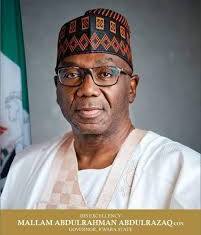
Stephen Olufemi Oni, Ilorin
Kwara State Governor AbdulRahman AbdulRazaq has been hailed for the conferment of the prestigious Sadauna of Ilorin Emirate title on him by His Royal Highness, the Emir of Ilorin, Alhaji (Dr.) Ibrahim Sulu-Gambari, CFR.
Giving the commendation on Tuesday in a statement in Ilorin, the state capital, Alhaji Yakubu Garba Gobir, who is the Sarkin Gobir and Madawaki of the Ilorin Emirate, described the recognition and honour on Governor AbdulRazaq as well deserved, timely and apt, giving his huge contributions to the growth and development of Ilorin Emirate and Kwara State as a whole.
Gobir specifically commended the Emir of Ilorin for conferring this distinguished title in recognition of the qualities and contributions of the new Sardauna, noting that it is a solemn call for greater responsibility, leadership, loyalty and devoted service to the Emirate and its people.
He added: “The title of Sardauna occupies a position of profound significance in the history, heritage and traditions of the Ilorin Emirate. I commend His Royal Highness, Alhaji (Dr.) Ibrahim Sulu-Gambari, CFR, the Emir of Ilorin, for conferring this distinguished title in recognition of the qualities and contributions of the new Sardauna.
“The title embodies courage, leadership, loyalty and devoted service to the Emirate and its people. Your elevation is therefore not merely a mark of honour; it is also a solemn call to greater responsibility and continued service.
“As a fellow title-holder in the Ilorin Emirate, I am particularly delighted to welcome you into this distinguished circle of traditional leadership. I am confident that you will bring to the office the same qualities of leadership, dignity and unwavering commitment to public service that have distinguished your tenure and career.
“At a time when our Emirate and our State require men and women of character, wisdom and courage to advance the interests of our people, I am certain that you will make a meaningful contribution to the enduring unity, progress and development of the Ilorin Emirate.”
Gobir offered prayers for a successful, impactful and enduring tenure for the new Sadauna, adding:
“May Almighty Allah grant you wisdom, sound health and strength, and may He make your tenure as Sardauna of Ilorin a source of lasting honour to you, your family and the entire Ilorin Emirate.”
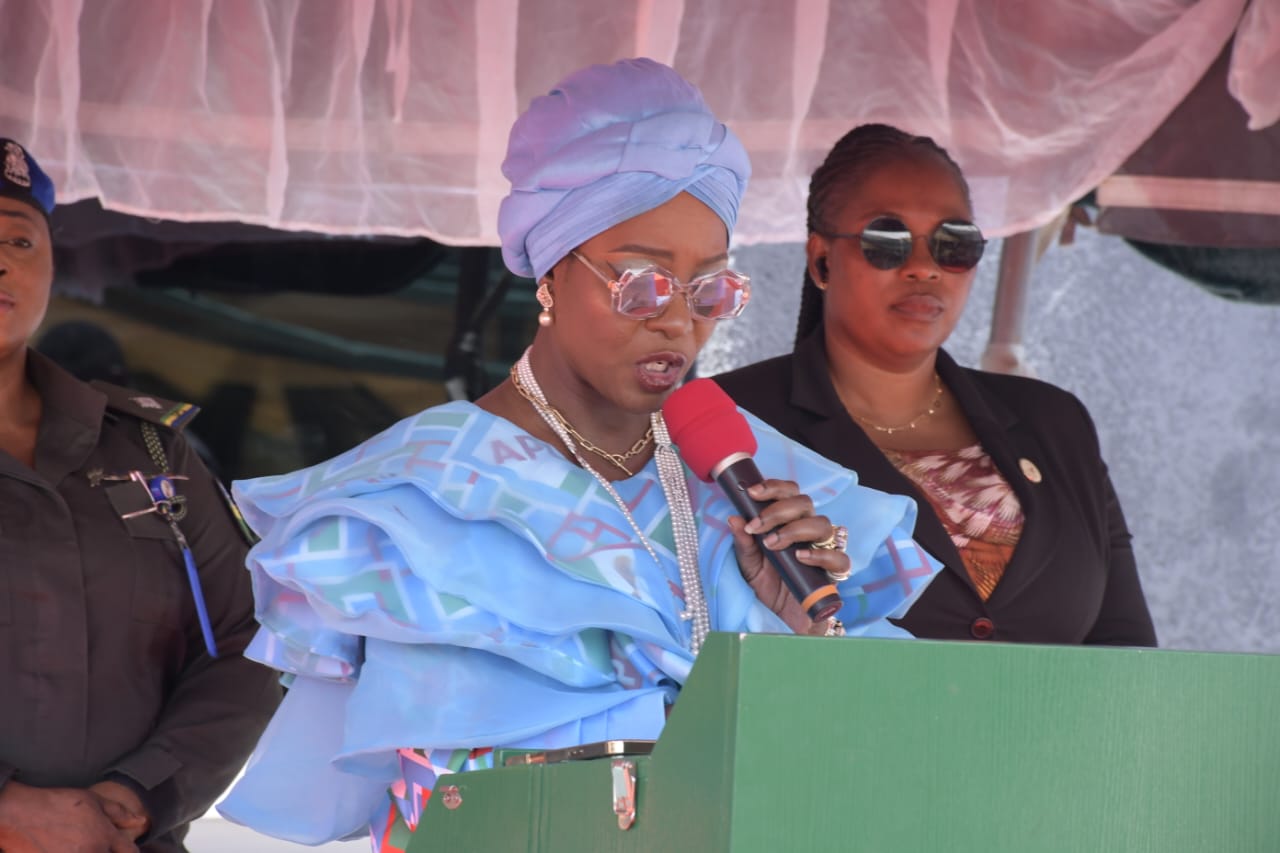
Stephen Olufemi Oni, Ilorin.
The wife of President Bola Ahmed Tinubu, Senator Oluremi Tinubu, has commissioned a TETFund/Renewed Hope Initiative-backed ICT Experience Centre at the Kwara State University (KWASU), Malete.
It would be recalled that KWASU is one of the six tertiary institutions selected for the pilot phase of this intervention, with one institution representing each of the Nigerian six geopolitical zones.
Represented at the commissioning on Tuesday by the wife of the Vice-President, Nana Shettima, Tinubu said the project is a testament to the federal government’s commitment to advancing education, digital inclusion and enhancing graduate employability.
“The TETFund/Renewed Hope Initiative ICT Experience Centre we are commissioning today represents opportunity, innovation, knowledge, and the future of young people in Kwara State and beyond.
She said: “This initiative aligns with the Renewed Hope Agenda of the administration of His Excellency, President Bola Ahmed Tinubu, GCFR, which places emphasis on youth empowerment, education, innovation, and economic transformation. Mr President is committed to creating opportunities that will equip Nigerian youths with knowledge and skills required to thrive in a modern and competitive world.”
Senator Tinubu said the facility was designed as a modern technology centre equipped with ICT laboratory, interactive digital display, conference facility, and exhibition spaces, adding that it would be an environment for learning, creativity, research, and technology advancement.
According to her, the ICT centres had been commissioned at the Ekiti State University on May 28, University of Cross Rivers State on September 4, Anambra State Polytechnic on September 10, adding that the Centres at Kaduna State University and Taraba State Universities would be commissioned soon.
“The next phase of this intervention will cover 15 institutions in Adamawa, Bayelsa, Borno, Delta, Edo, Enugu, Imo, Katsina, Nasarawa, Niger, Ondo, Osun, Rivers, Yobe, and Zamfara states which construction is currently ongoing. This expansion demonstrates the administration’s commitment to ensuring that more Nigerian youths, irrespective of their locations, have access to digital learning opportunities,” she said.
She encouraged the students to take ownership of the facility, maximise the opportunity it provides, and use technology positively to enhance their lives, community, and the nation.
In his speech, the Executive Secretary of Tetfund, Architect Sonny Echono, said the centres are being established across selected Universities, Polytechnics and Colleges of Education, with the Kwara State University, Malete proudly hosting the facility in the North-Central Zone.
“Through practical training and digital skills acquisition, TETFund seeks to enhance graduate employability, foster innovation and position Nigeria to participate more effectively in the global
technology-driven economy,” he added.
Echono also said that the ICT Experience Centre is designed to equip students and lecturers with critical digital skills in Artificial Intelligence, Cybersecurity, Robotics and Software Development.
He added: “The Centre being commissioned today is one of the foremost ICT Experience Centres being delivered across the country, and the third to be commissioned this year. The Centre is equipped with modern digital devices, Computer systems and relevant software to facilitate training, practical learning and skills development. The facility is appropriately furnished and
fully air-conditioned, with supporting power and municipal infrastructure.”
Also speaking, the Vice Chancellor of the University, Professor Shaykh- Luqman Jimoh, said the new facility represents vision, belief, and an investment in the Nigerian youth to better shape the future of our
nation.
The Vice Chancellor described the ICT Experience Centre as an investment in human capital, in innovation, in entrepreneurship, and, most importantly, it is an investment in the future of Nigeria.
“This Centre will provide opportunities for our students to develop practical digital skills and engage with contemporary technologies. Importantly, it is our hub for interdisciplinary engagement.
“This ICT Experience Centre is therefore a timely, critical, and strategic infrastructure that will definitely enhance research, teaching, learning, entrepreneurship, and community service. This intervention is at the core of what this university seeks from partners and donors: synergies that add value and impact on today and the future,” he started.
KWASU Vice Chancellor also assured that the ICT Experience Centre would be put to maximum use for the benefit of students, researchers, and the University
community, adding that the “KWASU community would engage with the facilities in this Centre, we will use it. We will explore, experiment, learn, and innovate in i
:
Uncategorized
2027: Violent ;Kaduna as ADC, APC Supporters Trade Accusations….APC Calls For Police Investigation into the Vandalisation, attacks on its Office
By Hassan Agboola
Tension is mounting in Kaduna State ahead of the 2027 general elections, following renewed exchanges between supporters of the African Democratic Congress (ADC) and groups backing the administration of Governor Uba Sani.
The latest development came on Tuesday when ADC governorship candidate, Isa Ashiru, addressed supporters in Kaduna and, according to an account of his remarks, declared that the party was prepared to respond to attacks against its members.
Ashiru was also quoted as saying that it was Governor Uba Sani, rather than President Bola Ahmed Tinubu, who was responsible for the continued detention of former Kaduna State Governor, Nasir El-Rufai.
However, available public records show that El-Rufai’s detention followed proceedings before the Independent Corrupt Practices and Other Related Offences Commission (ICPC), with the commission stating that his continued custody was based on a court-issued remand order.
The controversy over El-Rufai’s detention has nevertheless become a major political issue in Kaduna and beyond. The ADC has repeatedly criticised the handling of the former governor’s case and alleged political persecution, while other political actors have made different claims about the circumstances surrounding his detention.
Rising political temperature
Ashiru’s emergence as the ADC governorship candidate has added another dimension to the political contest in Kaduna. He defeated other aspirants at the party’s governorship primary in May 2026 and is now preparing for another governorship contest after previously representing the PDP in the 2019 and 2023 elections.
The political atmosphere has been further complicated by disagreements within the ADC and accusations from different groups over the party’s leadership and candidates.
A Southern Kaduna political group, for instance, recently questioned Ashiru’s candidacy and the choice of his running mate, allegations rejected by an ADC official.
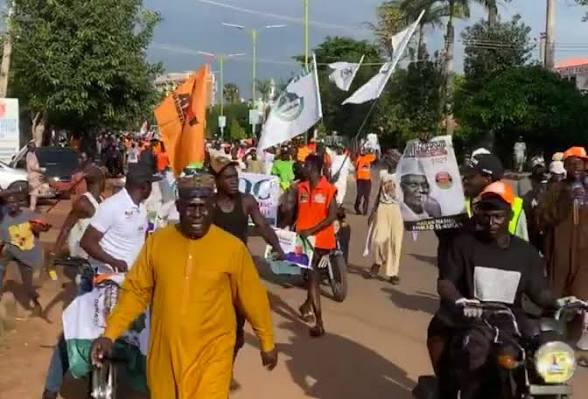
The situation has also produced incidents involving ADC supporters and security personnel. In one recent incident, police dispersed an ADC solidarity walk in Kaduna, while the party subsequently accused opponents of attacking its members and warned that political violence could escalate ahead of the 2027 elections.
The former governor remains an important factor in the emerging political contest. El-Rufai was taken into custody in February 2026 after responding to an invitation from the ICPC. His family subsequently demanded his release, while the anti-graft agency maintained that his detention was authorised by a court.
Since then, the issue has increasingly featured in political statements by the ADC and its supporters, with the party accusing the Federal Government of political persecution and calling for the former governor’s release.
The development has created a new political fault line involving the ADC, the APC-led Kaduna State Government and supporters of the former governor.
While allegations have been exchanged over who is responsible for political violence in Kaduna, the competing narratives should not be confused with established findings. The ADC itself has recently rejected the suggestion that it has a monopoly on political violence and accused unnamed opponents of introducing thuggery into the 2027 political process.
With the 2027 election campaign yet to fully commence, the increasingly combative language from ISA Ashiru and his supporters has raised concerns about the possibility of further confrontation.
The immediate challenge before the political parties, security agencies and community leaders is therefore to ensure that political disagreements do not degenerate into violence, particularly in a state with Kaduna’s history of politically and communally sensitive conflicts.
As at the time of filling tid report the All progressive congress, APC , Kaduna state in a statement has condemned the attacks on its office and called for police investigation
Certainly. I’ll retain the substance of the report while correcting grammar, tightening the structure, and presenting it as a clean newspaper hard-news story.
Writing
APC Condemns Violent Attacks on Members, Party Offices in Kaduna
The Kaduna State chapter of the All Progressives Congress (APC) has condemned alleged violent attacks on its members and the vandalisation of party offices and properties in the state.
The party also called on the police and other security agencies to investigate the incidents and ensure that those responsible are brought to justice.
In a statement, the Kaduna State APC Publicity Secretary, Sani Dan-Azare, alleged that some of the party’s members and supporters had been attacked, while some party and support-group offices were vandalised.
He also alleged that vehicles belonging to some party members were damaged during the incidents.
The APC described the attacks as unacceptable and urged security agencies to conduct a thorough and impartial investigation to establish the circumstances surrounding the incidents.
The party called on its members and supporters to remain calm and law-abiding, stressing that they should not resort to retaliation or take the law into their own hands.
The APC said it remained committed to peaceful political engagement and urged all political actors in Kaduna State to conduct their activities within the bounds of the law.
It further appealed to security agencies to strengthen security around party offices and other sensitive locations to prevent further incidents.


Changsha brings millennia-old heritage into modern life

Gov AbdulRazaq Lauded Over Conferment Of Sadauna Of Ilorin Title

FG Commissions KWASU ICT Centre To Enhance Graduates Employability

-
 Uncategorized6 years ago
FG, states urged to harness flooding for ranching, others with technology – Agbaje
-
 Headlines11 years ago
Breaking: EFCC seals Borno House of Assembly, as Hon members take to their heels
-
 News12 years ago
Nigeria Security Operatives Stage Manhunt For Homosexual Perpetrator
-
 News10 years ago
How 21-year-old Girl fled community over accusation of lesbianism
-
 News11 years ago
Yobe Gov Moves Against Deputy
-
 Opinion7 years ago
7 signs she has friend zoned you
-
Technology5 years ago
Online job placement company headhunts women
-
 Headlines10 years ago
Borno Dep Gov Abducts Another Church Leader