
News
BUDGET OFFICE OF THE FEDERATIONRESPONSE TO THE 2026 U.S. DEPARTMENT OF STATE FISCAL TRANSPARENCY REPORT ON NIGERIA


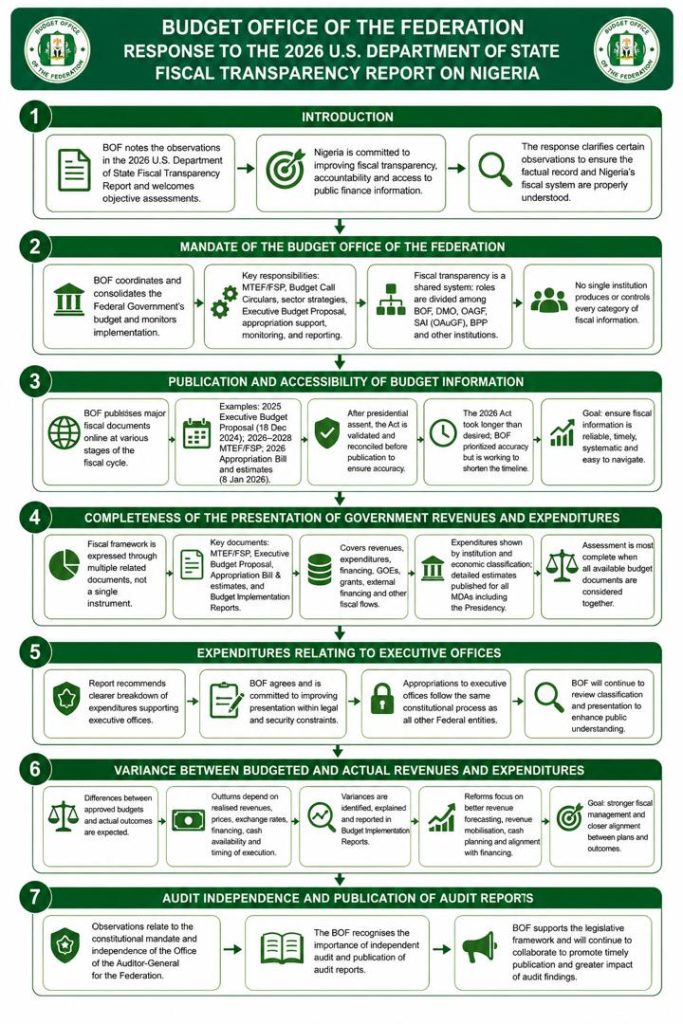
- Introduction
The Budget Office of the Federation (BOF) notes the observations on Nigeria contained in the 2026 Fiscal Transparency Report of the United States Department of State. The Federal Government welcomes objective assessments of its public financial management system and remains committed to the continuous improvement of fiscal transparency, accountability and access to public finance information.
The Report acknowledges important areas in which Nigeria meets fiscal transparency requirements, including the public availability of the enacted budget and end-of-year fiscal information; the disclosure of debt obligations, including major state-owned enterprise debt; the legal and disclosure framework governing the sovereign wealth fund; and the existence and application of statutory procedures governing natural-resource extraction contracts and licences.
Other observations in the Report require clarification when considered in the context of Nigeria’s institutional allocation of responsibilities and the range of budgetary and fiscal information already in the public domain. The purpose of this response is therefore not to dispute the value of external scrutiny, but to ensure that the factual record and the structure of Nigeria’s fiscal system are properly understood. - Mandate of the Budget Office of the Federation
The BOF is responsible for coordinating the preparation and consolidation of the Federal Government’s budget, and for monitoring and reporting on its implementation within the framework established by law and government fiscal policy.
Its responsibilities include coordinating the preparation of the Medium-Term Expenditure Framework and Fiscal Strategy Paper (MTEF/FSP); issuing Budget Call Circulars; coordinating the preparation of Medium-Term Sector Strategies; coordinating the preparation and consolidation of the Executive Budget Proposal; supporting the appropriation process; monitoring budget implementation; and producing periodic Budget Implementation Reports.
These responsibilities form part of a wider public financial management system in which different institutions perform duties assigned to them by the Constitution and by statute. Debt recording and management fall principally within the remit of the Debt Management Office; government accounting, treasury and cash-management functions reside principally in the Office of the Accountant-General of the Federation; external audit is constitutionally assigned to the Office of the Auditor-General for the Federation; while federal procurement operates within the statutory framework administered by the Bureau of Public Procurement and individual procuring entities.
The observations in the Report are therefore best considered in the context of this institutional division of responsibility. Fiscal transparency is the product of an interconnected system; no single institution produces or controls every category of information on which an assessment of the entire system must depend. - Publication and Accessibility of Budget Information
The Report recommends that Nigeria make its Executive Budget Proposal widely and easily accessible to the public, including online. The BOF respectfully notes that the online publication of the Executive Budget Proposal and other major budget documents has, for several years, formed part of the Federal Government’s established budget process.
The BOF routinely publishes major documents produced at successive stages of the fiscal cycle. These include the MTEF/FSP, the Executive Budget Proposal and detailed estimates, Appropriation Acts, implementation guidelines, and periodic Budget Implementation Reports.
For example, the 2025 Executive Budget Proposal was published on the BOF website on 18 December 2024 alongside the 2025 Appropriation Bill. The 2026-2028 MTEF/FSP was similarly published, while the 2026 Appropriation Bill and its detailed estimates were placed on the BOF website on 8 January 2026.
The purpose of continuing reform, therefore, is not to create a practice of publication where none exists, but to make an established practice more timely, systematic and easier for users to navigate. Fiscal information is useful not merely because it exists, but because it is published at the appropriate time, clearly identified and readily connected to the other documents needed to understand the fiscal picture.
Following presidential assent to an Appropriation Act, the signed instrument is subjected to validation and line-by-line reconciliation against the version passed by the National Assembly before the final budget details are reflected on the Government’s financial management platform and released for public use. This process is intended to ensure that the figures, codes and statutory references placed before the public correspond with the instrument that has become law.
For the 2026 Appropriation Act, this process took longer than would ordinarily be desirable. The Budget Office considered it preferable to complete the necessary validation before publication rather than place in the public domain figures that might later require correction. That choice protected the integrity of the published record, but the delay also demonstrates the need to shorten the interval between presidential assent and public availability.
The lesson is therefore twofold: published fiscal information must be reliable, but that reliability must increasingly be achieved without sacrificing timeliness. The BOF is reviewing its internal sequencing, validation and publication arrangements with that objective in mind. - Completeness of the Presentation of Government Revenues and Expenditures
The Report recommends that the budget provide a substantially complete picture of government revenues and expenditures. Nigeria’s fiscal framework is expressed through several related documents rather than through a single instrument. The MTEF/FSP establishes the macroeconomic and fiscal assumptions underlying the annual budget. The Executive Budget Proposal, Appropriation Bill and detailed estimates set out proposed expenditure allocations, revenue assumptions and the financing framework. Budget Implementation Reports subsequently show performance against approved benchmarks.
Taken together, these documents contain extensive information on projected revenues, expenditure proposals, financing and the operations of Government-Owned Enterprises. The budget documentation also provides information on grants, external financing and other material fiscal flows within the Federal Government’s reporting framework.
Expenditure is presented through institutional and economic classifications, including allocations to ministries, departments and agencies. The Government also publishes detailed estimates relating to the Presidency and other institutions of government, subject always to the legitimate requirements of law, national security and operational confidentiality.
The BOF therefore considers that an assessment of Nigeria’s fiscal transparency is most complete when it examines the available budget documents as a body, rather than treating any one document as though it were intended to contain the entire fiscal account.
This does not remove the need for improvement. Citizens, investors and other users of fiscal information should be able to understand the broad relationship among revenue, expenditure, financing and fiscal risks without having to reconstruct the fiscal picture from numerous documents. The Office will therefore continue to improve consolidation, cross-referencing and presentation so that information already disclosed across different fiscal documents can be more readily understood as a coherent whole. - Expenditures Relating to Executive Offices
The Report recommends a clearer breakdown of expenditures supporting executive offices. The BOF agrees with the transparency objective underlying this recommendation.
Appropriations to offices and institutions within the Executive are subject to the same constitutional appropriation process that applies to other Federal Government entities. Detailed estimates are already published within the budget documentation. Where expenditures are currently aggregated within broader administrative, personnel or service-wide classifications, there remains scope to improve their presentation without compromising legitimate security, statutory or operational considerations.
The BOF will accordingly continue to examine the classification and presentation of such expenditures with a view to improving public understanding within the applicable legal and security framework. - Variance Between Budgeted and Actual Revenues and Expenditures
The Report observes that actual revenues and expenditures did not reasonably correspond with the enacted budget. The BOF considers that this observation would benefit from greater precision regarding the standard against which such correspondence is being assessed.
An appropriation is an authority to spend; it is not, in every circumstance, a guarantee that the entire amount appropriated will become available in cash. Actual fiscal outcomes depend on realised revenues, oil production and prices, tax collections, exchange rates, financing conditions, cash availability and the timing of expenditure execution. A difference between an approved budget and the eventual outturn must therefore be interpreted rather than merely observed.
The central transparency question is whether material deviations are identified, explained and reported. This is one of the purposes of the Budget Implementation Reports produced by the BOF, which compare revenue and expenditure performance against approved benchmarks and explain significant departures from the fiscal plan.
At the same time, persistent or unusually large differences between appropriations and outturns can weaken the usefulness of the budget as an instrument of economic management. The Government’s continuing reforms therefore place greater emphasis on realistic revenue forecasting, improved revenue mobilisation, stronger commitment controls, better cash planning and closer alignment between appropriations and available financing. - Audit Independence and Publication of Audit Reports
The observations concerning the independence of the Supreme Audit Institution and the publication of audit reports relate principally to the constitutional and statutory mandate of the Office of the Auditor-General for the Federation and to the wider legislative framework governing public audit.
The BOF supports a strong and independent external audit function as an essential component of fiscal accountability. It will continue to provide the budgetary and implementation information required within its mandate and to cooperate with the Office of the Auditor-General for the Federation and other oversight institutions.
Institutional or legislative questions concerning the independence, powers and publication obligations of the Supreme Audit Institution are, however, appropriately addressed in conjunction with the Office of the Auditor-General for the Federation, the National Assembly and other authorities responsible for the applicable legal framework. - Public Procurement Information
Federal procurement is governed by the Public Procurement Act and the institutional framework administered by the Bureau of Public Procurement, while procurement transactions are undertaken by individual procuring entities. The recommendation concerning the publication of accessible information on procurement contracts should therefore be addressed principally through that framework.
The BOF nevertheless recognises the close relationship among appropriation, procurement, commitment and payment. Greater interoperability among budget, procurement and treasury information systems would materially improve the public’s ability to follow expenditure from appropriation through procurement to eventual payment and delivery. The Office supports the continued development of such integrated public financial management arrangements. - Timeliness, Institutional Capacity and the Fiscal Responsibility Framework
Fiscal transparency should be treated as a continuing institutional obligation, not as an exercise undertaken solely in response to an external assessment. The experience of producing statutory fiscal reports has, however, brought into sharper focus a question that warrants attention beyond administrative improvement alone.
Fiscal reports are assembled from numerous sources across government. Their reliability depends on the timely submission of information, reconciliation among institutions, resolution of discrepancies and verification before publication. Where these processes repeatedly require more time than the statutory reporting period permits, the response should not simply be to normalise lateness.
Government must first improve the processes that can be improved: clearer responsibility for source data, earlier submission, greater automation, greater interoperability among systems and stricter reporting discipline.
However, where experience over time demonstrates that a statutory deadline no longer reasonably accommodates the number of institutions, datasets and verification steps required to produce a reliable report, there is also a legitimate case for reviewing the law itself.
The purpose of the Fiscal Responsibility Act is to strengthen fiscal discipline, accountability and transparency. Its reporting provisions should therefore impose deadlines that are demanding enough to compel administrative discipline, but sufficiently realistic to permit the publication of information whose accuracy can be defended.
The Federal Government should accordingly consider, through the appropriate legislative process, whether aspects of the reporting timetable under the Fiscal Responsibility Act require amendment in the light of experience since its enactment. Such a review should not weaken reporting obligations. Its purpose should be the opposite: to establish timelines that are credible, enforceable and capable of producing reports that are both timely and reliable. - Institutional Engagement and Continuing Improvement
The Fiscal Transparency Report can also serve as a basis for constructive technical engagement. The BOF considers it useful to deepen dialogue with the United States Government and other development partners on the methodology used in fiscal transparency assessments, particularly the treatment of multiple publicly available fiscal documents, the measurement of budget credibility, and the standards applied to timeliness and accessibility.
Such engagement should be approached as an opportunity for clarification and institutional learning rather than as a dispute over the assessment. The Office may also explore appropriate technical assistance arrangements to strengthen its capacity in fiscal reporting, information management, digital publication, interoperability and public accessibility. Any such cooperation should complement Nigeria’s own reforms and operate within the Government’s legal, institutional and information-security framework. - Conclusion
Nigeria accepts the principle at the heart of fiscal transparency: citizens and other stakeholders should be able, without unnecessary difficulty, to know what the Government intends to raise and spend, what the legislature has authorised, what was eventually received and spent, and how public resources were accounted for and audited.
Nigeria has already built a substantial architecture for making this information public. The question before us is therefore not whether disclosure exists, but how to make the existing system faster, clearer, more complete and easier to understand.
There are areas in which Government must improve its own processes. There are areas in which fiscal information already exists but must be assembled and presented more coherently. There are responsibilities that belong to institutions other than the Budget Office. There may also now be statutory reporting timelines whose continued practicality deserves examination in the light of experience.
A mature system should be able to acknowledge all four points without defensiveness.
The Budget Office therefore welcomes external assessments that assist Nigeria in strengthening its institutions. It also considers it important that such assessments take account of the full range of fiscal documents made publicly available and of the constitutional and statutory division of responsibilities among institutions.
The Federal Government remains committed to a budget system in which fiscal decisions are not only lawful and disciplined, but are also increasingly transparent, accessible, intelligible and capable of independent public scrutiny.
Tanimu Yakubu
Director-General
Budget Office of the Federation
Abuja
18 August 2026
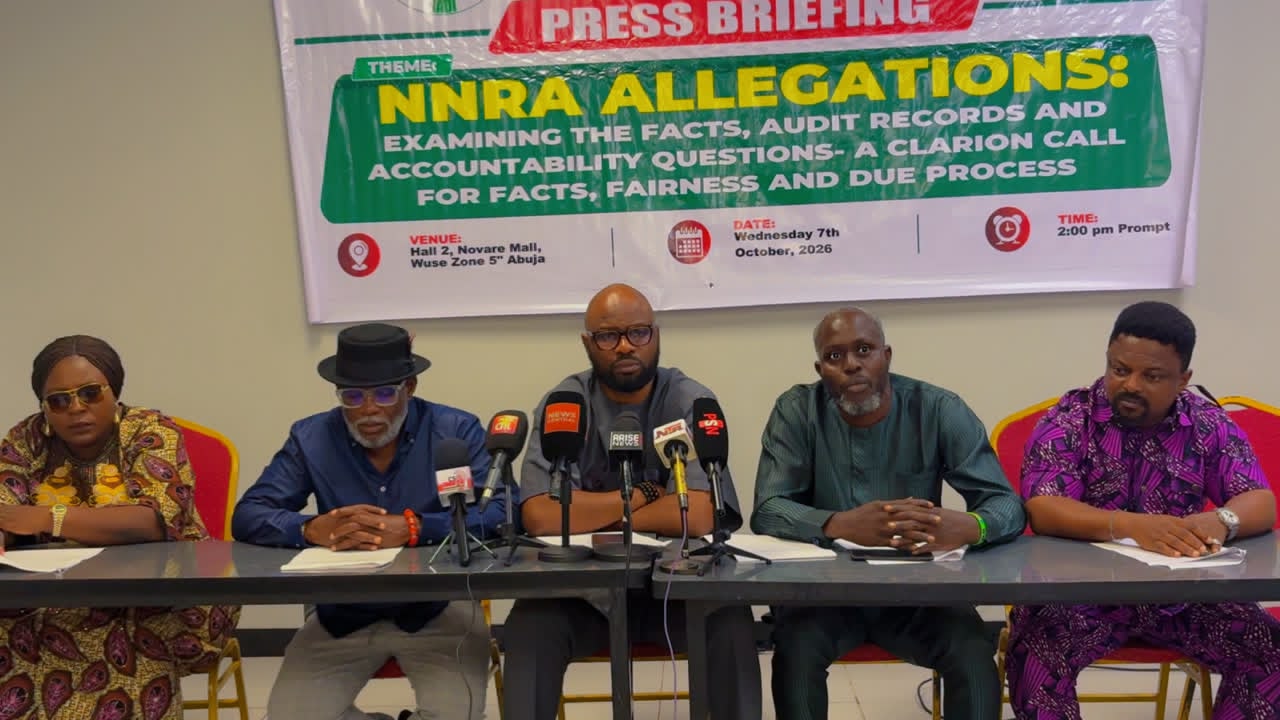
The Integrity Advocacy for Development Initiative (IADI) has called for a thorough, evidence-based examination of allegations of financial misconduct involving the Nigerian Nuclear Regulatory Authority (NNRA), warning against treating audit observations and media reports as established cases of fraud.
IADI Executive Director, Comrade Ofomhi Christopher, made the call on Wednesday at a press briefing in Abuja titled, “On the Allegations Concerning the Nigerian Nuclear Regulatory Authority (NNRA): Facts, Clarifications and the Need for Evidence-Based Accountability.”
The group was reacting to a publication by Secrets Reporters dated October 1, 2026, which alleged that about N6.69 billion was involved in contract fraud and misappropriation at the NNRA.
It also referred to a protest held on October 5 by Global Integrity Watch (GIW) at the NNRA headquarters, where the organisation demanded accountability, responses to audit observations and Freedom of Information requests, as well as changes in the leadership of the regulatory authority.
Christopher said while the allegations deserved scrutiny, they should not be treated as established facts without verification of the underlying records.
According to him, the public deserves to know the specific audit observations, periods and transactions involved, the nature of the contracts, the status of the projects or services, responses provided by the NNRA and whether the issues had been resolved or referred for further investigation.
“An audit observation is a serious matter requiring explanation and verification, but it is not, by itself, a judicial finding of fraud or personal misappropriation,” he said.
The IADI chief also referred to an explanation reportedly provided by the NNRA Director-General concerning the authority’s 2024 capital budget.
He said the explanation put the NNRA’s total 2024 capital budget at about N2.7 billion, comprising approximately N200 million belonging directly to the authority and about N2.5 billion for constituency projects, with an additional N200 million regional project bringing the figure referenced to about N2.9 billion.
Christopher, however, stressed that the explanation should not be regarded as conclusive, urging that it be tested against appropriation documents, budget releases, project records, procurement documents, payment records and audit reports.
“That is how responsible accountability should work: a claim is made, the response is heard, the records are examined, and the evidence determines the conclusion,” he said.
On allegations concerning unexecuted projects, the organisation called for physical verification of the specific projects, while allegations of inflated contract prices should be subjected to scrutiny of contracts, bills of quantities, procurement records and relevant price benchmarks.
It also urged that allegations concerning contractors be examined through relevant procurement and ownership records, while any claim of diversion or misappropriation should be established through the financial trail.
Christopher said where audit authorities had raised observations on expenditure, the public should be informed of the precise observations, the affected institution’s response and the current status of the issues.
The organisation also addressed the October 5 protest by GIW, acknowledging the constitutional right of civil society organisations to peaceful assembly and association under Section 40 of the Constitution.
It, however, urged CSOs to exercise such rights responsibly and within the law.
On Freedom of Information requests, IADI said there should be a distinction between the right to protest and the legal mechanism available where an FOI request is not answered.
The organisation noted that the Freedom of Information Act provides a judicial mechanism for applicants who have been denied access to information, adding that Section 20 allows an applicant to approach the court for a review.
IADI clarified that it was not suggesting that CSOs must obtain a court order before organising peaceful protests.
Rather, Christopher said, where non-compliance with an FOI request was the central grievance, the statutory and judicial mechanisms should be considered alongside legitimate civic action.
“An unanswered FOI request may justify further action to obtain the information. It does not, by itself, establish that fraud, misappropriation or any other wrongdoing has occurred,” he said.
The group also urged organisers of protests at government agencies to take public safety, access to government premises and the safety of protesters, workers and other citizens into consideration.
At the same time, it cautioned government institutions against using the possibility of confrontation as a justification for suppressing lawful civic expression.
“The answer to institutional disagreement should be law, evidence and due process, not intimidation or retaliation,” Christopher said.
He stressed that IADI was neither seeking to shield the NNRA from scrutiny nor dismiss legitimate questions concerning public expenditure at the authority.
He called on relevant audit and oversight bodies to state the status of the observations in question, the responses received from the NNRA and whether the matters had been resolved, sustained or referred for further investigation.
The organisation also encouraged CSOs pursuing accountability to make full use of available legal and institutional mechanisms while retaining their legitimate right to peaceful civic action.
“The public deserves accountability. But the public also deserves accuracy, fairness and evidence.
“A headline is not a verdict. An allegation is not evidence. An audit observation is not automatically a finding of personal guilt,” Christopher said.
He added that public institutions should not expect their expenditure to escape scrutiny merely because questions were raised through the media or civil society.
“Let the records be examined. Let the questions be answered. Let the evidence speak,” he said.
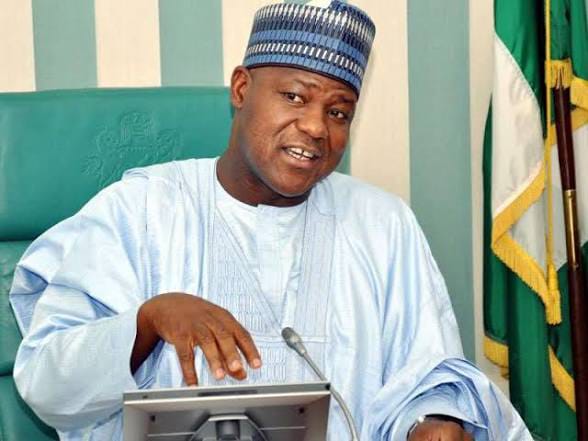
Former Speaker of the House of Representatives and Chairman of the Board of the National Credit Guarantee Company Limited (NCGC), Rt. Hon. Yakubu Dogara, CFR has expressed deep sorrow over the Nigerian Air Force aircraft crash that claimed the lives of 32 persons near Igbokoda, Ondo State. Dogara described the tragedy as a heartbreaking loss to the nation, noting that the deaths of the victims have left a painful void in the country’s defence and security community.
In a statement, the former Speaker extended his condolences to President Bola Ahmed Tinubu, Commander-in-Chief of the Armed Forces, the Nigerian Air Force, and the families of those who perished in the unfortunate incident.
He said the nation shares in the grief of the bereaved families and the Armed Forces at this time of immense sorrow, adding that the sacrifices of those who lost their lives in service to the country will not be forgotten. “The nation mourns with the families of the deceased and stands in solidarity with the Armed Forces during this difficult period,” Dogara stated.
He also commiserated with the Chief of Air Staff, officers and men of the Nigerian Air Force, praying that God grants them the fortitude to bear the painful loss.
According to him, moments such as this call for national unity, reflection and collective support for the families and institutions affected by the tragedy.
Dogara paid tribute to the victims, describing them as patriotic Nigerians whose commitment and service contributed to the security and stability of the nation. He further applauded the efforts of emergency responders, rescue teams and all personnel involved in the aftermath of the crash, commending their courage and professionalism under difficult circumstances.
The former Speaker prayed God to comfort their families, friends and colleagues.
He also offered prayers for the safety and protection of members of the Armed Forces and for continued peace, unity and progress in Nigeria.
The Nigerian Air Force aircraft crashed near Igbokoda, Ondo State, resulting in the death of 32 persons and plunging the nation into mourning. Authorities are yet to make public the cause of the accident as investigations continue.

The Centre for Credible Reforms and Institutional Accountability (CCRIA) has commended the Commissioner for Insurance and Chief Executive Officer of the National Insurance Commission (NAICOM), Mr Olusegun Ayo Omosehin, for promoting transparency and accountability in the ongoing reforms of Nigeria’s insurance industry.
The centre said the implementation of the Nigerian Insurance Industry Reform Act (NIIRA) 2025 had ushered in a new phase of development for the sector, with stronger regulatory standards, improved capitalisation and greater emphasis on protecting policyholders.
Dr Aminu Abubakar Aminu, president of the centre, said this in a statement at the weekend.
Aminu commended President Bola Tinubu and the National Assembly for the enactment of NIIRA, describing the legislation as a major step towards addressing longstanding challenges in the insurance industry.
“The enactment of the Nigerian Insurance Industry Reform Act is a significant milestone in the development of Nigeria’s insurance sector. We commend Mr President and the National Assembly for recognising the need to modernise the legal and regulatory framework governing the industry. NIIRA provides the foundation for an insurance sector that is better capitalised, more accountable, more responsive to policyholders and better equipped to contribute meaningfully to the Nigerian economy,” he said.
The centre also praised Omosehin for his leadership of NAICOM, saying his extensive experience as an insurance professional had positioned him to effectively implement the new regulatory framework.
“We consider the appointment of Mr Olusegun Ayo Omosehin as Commissioner for Insurance and Chief Executive Officer of NAICOM a timely and appropriate decision. He is a seasoned insurance professional with many years of experience in the industry, and his understanding of the sector gives him the practical knowledge required to lead an important reform process of this nature. We commend him for the direction he has provided since assuming office and for his commitment to strengthening the industry,” Aminu said.
According to the centre, the ongoing recapitalisation exercise was among the important steps taken to strengthen the financial capacity of insurance companies and improve their ability to meet obligations to policyholders.
Aminu said the reforms were already producing early gains and should be sustained through consistent implementation.
“The early developments under NIIRA demonstrate that the reform is not merely a legislative exercise but a process capable of producing measurable improvements in the industry. Stronger capital requirements, improved supervision and greater attention to policyholder protection will ultimately create an insurance market that Nigerians can trust. We encourage NAICOM to remain focused on the implementation of the Act and to continue providing clear guidance to operators and other stakeholders,” he said.
The centre noted that the reforms would also help deepen insurance penetration and strengthen the industry’s contribution to national economic development.
It urged insurance companies, brokers, reinsurers, professional bodies and other stakeholders to embrace the new framework and work with NAICOM to achieve the objectives of the legislation.
“The success of NIIRA will require the cooperation of every stakeholder in the insurance ecosystem. Operators must see the reforms as an opportunity to strengthen their institutions, improve their services and regain the confidence of Nigerians. A well-regulated insurance industry can mobilise long-term capital, protect businesses and households against risks and support investment and economic growth. These are benefits that go beyond the insurance industry itself,” Aminu said.
Aminu emphasized that the centre was particularly encouraged by the emphasis on policyholder protection under the new framework, noting that public confidence remained critical to the growth of insurance in Nigeria.
He said Nigerians should be able to purchase insurance products with confidence that operators had the financial capacity and institutional structures required to honour legitimate claims.
The president further urged NAICOM to sustain its engagement with stakeholders while ensuring that the provisions of NIIRA were implemented transparently and consistently.
“What is required at this stage is continuity, professionalism and commitment to the objectives of the law. The reforms must be sustained beyond the initial implementation period so that the gains can become permanent features of the industry. We believe NAICOM, under the leadership of Mr Ayo Omosehin, has an important responsibility to ensure that the momentum is maintained, and we encourage all stakeholders to support the commission in delivering on this mandate,” he said.
The centre said the successful implementation of NIIRA would strengthen confidence in the insurance sector, improve the protection available to policyholders and position the industry to play a greater role in Nigeria’s economic transformation.
It also called for continued collaboration between NAICOM, insurance operators and other stakeholders to ensure that the objectives of the new law were fully achieved.


Oke-Ode Community Lauds Kwara Gov On Elesa’s Elevation To First Class Status

2026 KWIRS Tax Quiz Competition: Six Schools Emerge As Finalists

NNRA Allegations: IADI Demands Evidence, Says Audit Queries Not Proof of Fraud

-
 Uncategorized6 years ago
FG, states urged to harness flooding for ranching, others with technology – Agbaje
-
 Headlines11 years ago
Breaking: EFCC seals Borno House of Assembly, as Hon members take to their heels
-
 News12 years ago
Nigeria Security Operatives Stage Manhunt For Homosexual Perpetrator
-
 News10 years ago
How 21-year-old Girl fled community over accusation of lesbianism
-
 News11 years ago
Yobe Gov Moves Against Deputy
-
 Opinion7 years ago
7 signs she has friend zoned you
-
Technology5 years ago
Online job placement company headhunts women
-
 Headlines10 years ago
Borno Dep Gov Abducts Another Church Leader