
Uncategorized
Beyond Lamentations, Excuses and the Blame Game: The North Must Salvage Itself Now

If there is anything particularly striking about Northern Nigeria over the last decade and a half, it is the level of resignation that has gradually enveloped the region. For years, millions of people have watched the systematic erosion of their security, livelihoods, and dignity to levels that should be unacceptable in any society. Yet, beyond periodic expressions of outrage and grief, many have remained trapped in a cycle of docility—waiting for governments, waiting for leaders, waiting for miracles, and waiting for solutions from God knows where.
Meanwhile, the crisis has continued to deepen. The human cost has been staggering. Although exact figures vary, estimates suggest that tens of thousands have been killed and millions displaced and still counting. Large portions of agricultural land have also become inaccessible, contributing significantly to food insecurity across affected communities. Thousands of schools, healthcare facilities, markets, and other public infrastructure have either been destroyed or vandalised. Yet, the people are seemingly tranquillised into doing nothing.
Societies develop when peace, stability, justice, and personal accountability prevail. Citizens have rights, but they also come with responsibilities, the first being self-preservation. They must contribute to the growth of their communities while demanding protection, fairness, and responsive governance from those entrusted with authority.
Unfortunately, this simple philosophy appears to have been lost in much of the North since the turn of the 21st century. Its place has been taken over by endless lamentation, blame games, mutual suspicion, and helplessness, with no “red line”. The sense of collective civic action has all but evaporated among Northerners.
This is despite the reality that most of the challenges confronting the region today are man-made. Insurgency, terrorism, banditry, kidnapping, poverty, institutional decay, and social fragmentation did not descend from the heavens. They emerged from identifiable human actions, policy failures, corruption, and neglect. Consequently, they require human solutions. No society has ever solved its problems by doing nothing.
The first openly declared insurgency in Nigeria erupted in 2009 under the leadership of Mohammed Yusuf, founder of Boko Haram. What began as a localised extremist movement was seventeen years later, evolved into a hydra-headed monster with multiple manifestations and affiliates. While Borno and neighbouring Yobe remain the epicentre of the insurgency, violent extremist groups operating under different banners—including ISWAP, Lakurawa, Ansaru, Mahmudawa, and others—have emerged across various parts of the country, often adapting their tactics to local conditions.
Beyond insurgency itself, the activities of these armed groups have inspired and facilitated other forms of criminality that have now matured into full-scale terrorism. Kidnapping for ransom has become a thriving industry. Armed groups terrorise rural communities, attack farmers, seize territories, and carry out mass abductions with alarming regularity. Entire communities live under the constant threat of violence. No thanks to a challenged national security architecture, systemic corruption, the alleged complicity of some communities and highly placed individuals, and widespread and divergent interpretations and views of the very crises on the ground.
The consequences extend far beyond physical destruction. The crisis has deepened poverty and deprivation while exacerbating social divisions. Communities that once lived together peacefully, now increasingly view one another with suspicion. As violence intensified, many became consumed by the search for imaginary enemies within their midst. Trust broke down. Social cohesion weakened. Fear became normal.
For millions of citizens, life itself became increasingly desperate. Nigeria today has an estimated population of about 230 million people. Various reports indicate that roughly 130 million Nigerians—about 63 per cent of the population—live in multidimensional poverty. Around 80 million of them fall within the most severe categories of deprivation. A significant proportion of these citizens are concentrated in Northern Nigeria, as are the majority of the estimated 19 million out-of-school children. These conditions naturally create fertile ground for criminal recruitment, radicalisation, social unrest, and further insecurity.
It has now become an environment where people live on edge, and life itself is increasingly disposable.
A region where prominent elites often cannot visit their ancestral communities without elaborate security arrangements.
A region where rural settlements are being emptied by violence.
A region where military officers and soldiers continue to pay the ultimate price in defence of the nation.
A region where parents send their children to school without certainty that they will return home safely.
A region where entire generations are growing up surrounded by instability and hopelessness.
Yet, despite this grim reality, many citizens remain uncertain about how to pursue meaningful change. For years, they have looked to successive governments for solutions. They have waited through administrations, policy pronouncements, military offensives, political campaigns, and endless promises. Still, the killings continue. The displacement continues. The impoverishment continues. All these make development uneven and challenging, even under the best of intentions.
The Northern developmental challenge, however, presents a paradox because it has everything not to be so encumbered. It has vast arable land for agriculture, a favourable climate, a huge livestock base, the iconic waterways of the Rivers Niger and Benue, enormous solid-mineral deposits, and a large, though largely disempowered, population and manpower base.
The North also held political power at the centre for more than two-thirds of Nigeria’s independent existence. For some reasons, these advantages have not translated into sustainable development. Not even when power swung to the South through Obasanjo and Jonathan. Instead the North, with its over 120 million of diverse population become more vulnerable and impacted. Indicators of such socioeconomic conditions as literacy, poverty, unemployment, healthcare, etc., have remained abysmally low and endemic over the years.
The feeling in some quarters is that the North must play catch-up because it is constituting a drag on others. It is this perception that has been central to the hushed but now open calls for restructuring. Though it may its own merit, many hold the view that it could be a euphemism for confederation: a loosely held autonomous entities that are bound only by national defence, foreign affairs and the like.
While President Tinubu and many others have turned this vision into a political agenda, some feared that it could be a prelude to disintegration. The conflicting positions, as expected, seem to have stalled the idea. However, instead of mounting greater enlightenment campaigns on the issue, the Tinubu administration seemed to have devised a “backdoor” approach of sorts to advance the vision.
The indirect “restructuring” logic is such that, instead of pushing for the formal establishment of self-governing, semi-autonomous federating units, the President opted to populate the critical organs of governance at the centre with persons drawn predominantly from one region—in this case, his own—to govern the rest of the country. Naturally, with this arrangement, the distribution of developmental activities would be skewed accordingly.
The danger with this approach is that the leadership that may come after his tenure could be tempted to do the same thing. Against the backdrop of Nigeria’s ethno-religious politics, the new leadership would simply replace the existing configuration of governance with people from its own region or ethnic group. Eventually, a new variant of regionalism, or a system of “regional governance,” would emerge: a de facto ethnically restructured system of governance without the physical delineation of Nigeria’s geopolitical zones.
The trouble with such an arrangement is that it is largely driven by presidential patronage, which renders it highly vulnerable to impunity, with far-reaching consequences for national stability and development.
It is, in fact, an aberration of democratic practice and a self-serving model that is hardly sustainable in a diverse environment. If Nigeria is to decentralise, it should do so deliberately, constitutionally and transparently—not through the changing ethnic and regional preferences of successive presidents. It is a dangerous approach to nation-building.
As for the North, however, there is an even greater sense of urgency in view of some of its security and socioeconomic circumstances. The reality is that whichever “model” emerges from the nation’s current confusion, its component parts would end up with greater responsibility for their respective development. This is regardless of whether the country eventually adopts orthodox regionalism, confederation, or any other model.
The people of Northern Nigeria must therefore begin to take greater ownership of their collective destiny. This does not mean loving Nigeria less. Rather, it means recognising that active citizenship is indispensable to societal transformation. For, as it were, if the current disposition of things in the North does not change, it will not be too long before the region becomes ungovernable. And maybe the nation, too.
The era of passive acceptance of hardships as ordained must give way to civic consciousness and action. Man-made crises should be solved by man. The culture of docility that has gradually transformed citizens into mere spectators of their own suffering must be challenged. Communities must organise. Traditional and religious leaders should work to shape the future of the region and the nation instead playing divisive roles.
History offers numerous examples of societies that transformed themselves through peaceful civic engagement. Public demonstrations, advocacy campaigns, community mobilisation, voter participation, and sustained demands for accountability have forced governments around the world to become more responsive to the needs of their citizens.
Communities have a legitimate right to pursue lawful measures for self-preservation and self-defence within the framework of the law. Just as they hold both leaders and themselves accountable.
No society develops when its people surrender their agency. Also, no region prospers when citizens become indifferent to their own fate. Again, no government, however powerful, can substitute for an engaged and vigilant population. The North stands today at a historic crossroads. One path leads to continued decline, deeper insecurity, and greater despair. The other leads to renewal through collective action, civic responsibility, and a determination to reclaim the future. It must choose the path of self-preservation.
Self-help (taimakekeniya, gaiya) and communal solidarity once defined Northern society. It is time to reclaim them—the time for the people to help themselves. The responsibilities or messages to the citizens of the North regarding the way forward are as follows:
(i) Encourage each other to take your children to school. It is not acceptable that the North accounts for over three-quarters of the 19 million (UN) out-of-school children. The region also has the poorest performance record in the 2026 JAMB examinations. For instance, only a combined total of 54 candidates from four Northern states—Kano, Sokoto, Kebbi and Zamfara—scored 300 marks and above, out of 12,414 candidates nationwide who achieved this score. The combined figure of 54 gives an average of 13.5 candidates per state. This is far below the national average of approximately 335 candidates per state, based on the 36 states and the FCT, in this category.
(ii) Hold your elected representatives to account. If hunger can make you subservient to them, it should make you angry with them.
(iii) Use ingenuity—native or modern—in tilling your vast arable land in areas less affected by banditry, terrorism, and insurgency.
(iv) Organise yourselves to protect your mineral and other natural resources as you protect your churches and mosques.
(v) Preach skills acquisition and entrepreneurship more in churches and mosques than tithes and sadaqat. People need to earn an income before they can give to charity.
(vi) Rein in clerics who preach tranquillising fatalism and extremism for selfish and pecuniary interests. Incidentally, the majority of them are in Northern Nigeria, not in Saudi Arabia, Turkey, Dubai (UAE), or Indonesia. The Creator has said in clear terms that He helps those who help themselves, and that He does not change the condition of a people unless they change what is within themselves. A society reaps what it sows, and also gets a leadership that reflects its character.
(vii) Ranch your cattle and other livestock. They become more productive and generate greater income for pastoralists, apart from the peace it engenders. It is all a matter of mentality and not rocket science.
(viii) The few entrepreneurs and investors should aim at adding value along the value chains of agriculture, livestock, and solid minerals, particularly in processing, preservation, and marketing. The North did this in the 1960s and 1970s. Let that spirit be revived.
(ix) Don’t wait for the government to clean your drainage, repair primary school and healthcare windows and doors, or replace a few sheets of roofing.
(x) Expose informants among you. Conduct house-to-house security cleansing to identify terrorists, insurgents, kidnappers, and drug dealers. Let the towns be disinfected, to start with. It was done in Maiduguri, Biu, Azare, and many other places in the past, and it worked. Acquire defensive “weapons.” Highly placed Northerners, like Gen.T.Y.Danjuma and some traditional rulers, have spoken on the need for such.
(xi) Peacefully demonstrate against governors who prioritise certain projects, such as flyovers/underpasses, airports, palaces, and government houses, over and above human capital development. These projects are important, but they have their time and place in the developmental process. The same applies to mass weddings, sponsorship of pilgrimages to Jerusalem and Mecca, and humongous retirement packages for political office holders. These issues should be reviewed.
(xii) It is too optimistic, and even easier said than done, to expect a society like the North, which has been tranquillised and thrown into disarray, to embrace these suggestions overnight. But steps can be taken towards some.
The North has complained enough. It has mourned enough. It has waited enough. No politician is coming to save it. No government can do for the people what they refuse to do for themselves. It is therefore incumbent upon the people to get up, organise, and struggle while demanding accountability from their leaders. As it were, if the North does not save itself, nobody else will.
A. G. Abubakar
agbarewa@gmail.com
By Hassan Agboola
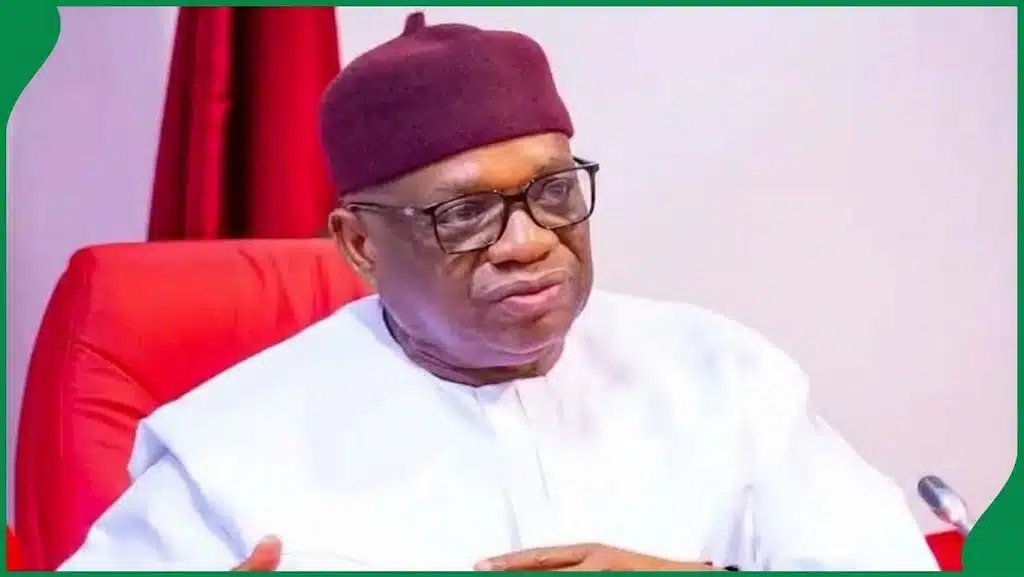
Former Abia State Governor, Senator Orji Uzor Kalu, has attributed the success of Enyimba International Football Club during his tenure as governor to discipline, proper management and commitment to excellence.
Kalu said he made two major promises to the people of Abia State when he sought election as governor in 1998: to build a standard stadium in Aba and to make Enyimba champions of the African Club Championship.
He said he fulfilled both promises, noting that Enyimba subsequently dominated Nigerian football, winning the league title for about five or six seasons and also lifting the FA Cup.
Speaking on the current state of the club, Kalu recalled the level of personal commitment and discipline he demonstrated in ensuring its success.
“When I was going to be governor in 1998, there were two promises I made to Aba and the Nigerian people. I told my people in Aba that I would build a proper stadium, which I did. I also told the people of Aba that we were going to become champions of the African Cup of Champions. I asked them to vote for me, promising that they would get it. And I fulfilled that promise” he said.
He added that discipline was central to the club’s achievements, recalling how he regularly travelled from Umuahia to Aba early in the morning to train with the players before resuming his official duties.
“Discipline is everything. I used to leave Umuahia at quarter to five every morning and arrive in Aba at 5:30am. I would train with the Enyimba players at 7:30am and return by 8am to take my bath and resume work in the office,” he said.
The former governor, however, lamented what he described as a poor working system in the country, saying Nigeria needed a comprehensive reorientation and a fundamental overhaul of its institutions.
“The working system is very bad, not only in football but in every aspect of our national life. We need reorientation and surgical operations in our system, from beginning to end,” he said.
Kalu also expressed appreciation to the Rangers International Football Club for their recent performances on the continent, expressing hope that the Enugu-based club would sustain its progress.
He said he wanted to see another Nigerian club win the continental title, adding that several Nigerian clubs had attempted to achieve the feat.
The senator also recalled Enyimba’s difficult continental encounters, including a controversial match against Al Ahly of Egypt, during which, according to him, his team’s two goals were disallowed.
He said the experience demonstrated the challenges Nigerian clubs faced in continental competitions and the importance of remaining committed to excellence.
Kalu further urged Nigerians, particularly professionals, to take their responsibilities seriously and discharge their duties with dedication.
“Whatever you want to do, do it well. Nigerians should stand up for their responsibilities. If you want to be a journalist, be a journalist properly. People should stand up for their duties. Some people do not give time or commitment to what they are supposed to do. I urge everybody not to do that but to take their jobs seriously” Kalu said.
Stephen Olufemi Oni, Ilorin
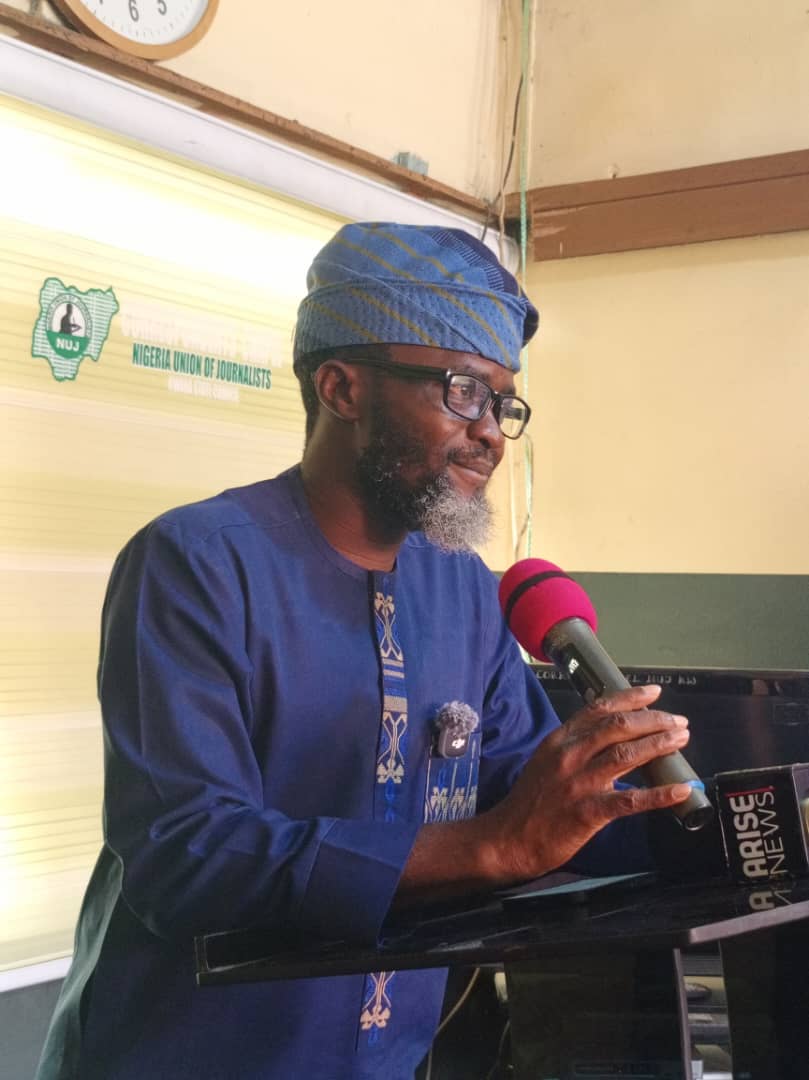
The candidate of the All Progressives Congress (APC) for the Offa/Oyun/Ifelodun Federal Constituency in Kwara State, Dr Rafiu Ajakaye, has pledged to prioritise security, education, youth empowerment and inclusive governance through people-oriented legislation if elected in the 2027 general elections.
Ajakaye, a former Chief Press Secretary to Governor AbdulRahman AbdulRazaq, said effective legislative representation must go beyond attracting constituency projects to include advocacy, accountability, problem-solving and ensuring that the voices of constituents are heard in national decision-making.
He stated this on Tuesday while featuring on the News Keg programme organised by the Correspondents’ Chapel of the Nigeria Union of Journalists (NUJ), Kwara Council, at the chapel’s secretariat in Ilorin.
The APC candidate said his decision to contest was informed by his experience in public service and conviction that political leadership should be driven by the desire to improve people’s lives rather than personal ambition.
“My aspiration is driven not by personal ambition, but by a conviction that public service offers an opportunity to create meaningful impact in society,” he said.
Reflecting on his experience in the AbdulRazaq administration, Ajakaye cited the recruitment of more than 4,700 teachers in 2021 as an example of how transparent governance could expand opportunities and strengthen public confidence in government.
He said the exercise was conducted through an open and competitive process involving online applications, examinations and interviews, insisting that employment opportunities should be based on merit rather than political connections.
“We ensured that people were employed based on their competence and qualifications, not because they knew anybody in government or had political connections,” he said.
On security, Ajakaye described insecurity as a major threat to national development, particularly in communities affected by kidnapping, banditry and other criminal activities.
He advocated stronger legislative oversight of security agencies, improved welfare and equipment for security personnel, increased recruitment and better collaboration between federal and state governments.
He also called for security policies that take into consideration the geographical realities of different communities, including forests, difficult terrain and poorly monitored rural settlements exploited by criminal elements.
“Security remains the foundation upon which every society develops,” he said, stressing that the National Assembly must ensure that security agencies receive adequate resources and are held accountable for their responsibilities.
On education, the former governor’s spokesman called for increased investment in science, technology, technical and vocational education, as well as digital learning to prepare young Nigerians for emerging opportunities in the labour market.
He argued that the education system must evolve with changing economic and technological realities, noting that many traditional occupations had been displaced by technological advancement.
“Our schools should produce innovators, entrepreneurs, professionals, artisans, researchers and responsible citizens capable of competing in an increasingly dynamic world,” he said.
Ajakaye also identified youth empowerment as a major component of his proposed legislative agenda, advocating policies that would expand access to finance, digital entrepreneurship, professional training and agricultural opportunities.
He urged young Nigerians to embrace agriculture as a viable business, rather than regarding it as an occupation of last resort.
On women’s participation in governance, he maintained that inclusive decision-making was essential to developing policies that adequately addressed the needs of different segments of society.
Citing the debate surrounding the proposed six-month maternity leave policy in Kwara State, he recalled how a female participant at a policy discussion advised that the arrangement should be optional rather than compulsory to accommodate the different circumstances of working mothers.
According to him, the experience reinforced the importance of involving women in decisions affecting their welfare.
“That is the advantage of having women at the table where decisions affecting their lives are being made, rather than men sitting down and assuming that what they consider good for women must automatically become policy,” he said.
He further argued that responsible leadership required distinguishing between what people wanted and what they genuinely needed, noting that some decisions might be difficult but necessary for the long-term interest of society.
Ajakaye promised that his approach to legislative representation would be guided by humility, fairness, accessibility, empathy and intellectual rigour, irrespective of the social status, gender, religion or political affiliation of constituents.
“My approach to legislative service will be guided by humility, fairness, intellectual rigour, accessibility and empathy,” he said.
Earlier, Chairman of the News Keg Committee, Ibrahim Alege, commended Ajakaye for his contributions to media development and support for the Correspondents’ Chapel during his tenure as the governor’s spokesman.
Alege described the APC candidate as an experienced media professional whose years in government had equipped him with valuable knowledge of political communication, media relations and public service.
He particularly acknowledged Ajakaye’s support for the chapel’s annual Press Week, acquisition of its bus, end-of-year gifts and financial assistance on different occasions.
“Indeed, there is a popular saying that once a CPS, always a CPS. We believe that experience and those professional instincts remain part of him, even outside the corridors of government,” Alege said.
He, however, stressed that the engagement was not merely an opportunity to celebrate the former CPS but a platform to examine his political ambition, legislative priorities and proposed programmes for the constituency.
Alege urged journalists to ask critical questions and demand clarity to enable the electorate make informed decisions ahead of the 2027 elections.
In his remarks, Chairman of the Correspondents’ Chapel, Alhaji Biola Azeez, appreciated Ajakaye for his support and goodwill towards the chapel, expressing the union’s commitment to sustaining its cordial relationship with him.
Azeez also wished the former CPS success in his political ambition.
By Hassan Agboola
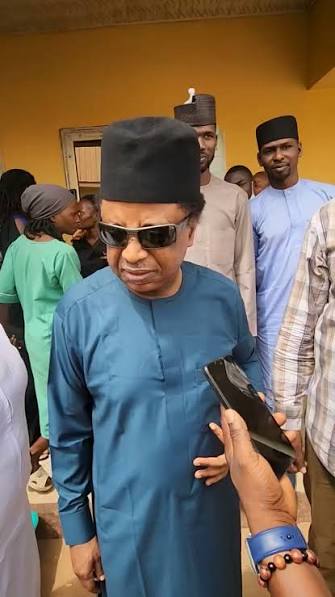
Former Senator representing Kaduna Central Senatorial District, Senator Shehu Sani, has provided and installed a solar power system at Rigasa General Hospital in Kaduna State as part of efforts to improve electricity supply and strengthen healthcare delivery at the facility.
The intervention is expected to enhance the hospital’s capacity to provide essential medical services, particularly during power outages, when uninterrupted electricity is critical for patient care, medical procedures and the operation of vital healthcare equipment.
The initiative is another demonstration of the former lawmaker’s commitment to community development and support for public healthcare institutions.
In October 2026, Shehu Sani also provided a solar power system to Sabo-Tasha General Hospital in Kaduna to support critical medical services, particularly at the special-needs babies unit and part of the maternity ward.
The former senator, a human rights activist and All Progressives Congress (APC) senatorial candidate for the 2027 general election, is said to believe that politicians should not wait until they occupy public office before responding to the needs of their communities, especially in areas where timely intervention could help save lives.
Speaking with journalists shortly after the handing-over ceremony, the Sarki Rigasa, Malam Aliyu Yahaya, expressed appreciation to Senator Shehu Sani for what he described as a laudable intervention that came at the right time.
Yahaya said the gesture demonstrated genuine concern for the welfare of residents and the importance of supporting public healthcare institutions, particularly those serving densely populated communities.
He commended the former lawmaker for responding to a critical need in the community, noting that reliable electricity remains essential for effective healthcare delivery.
The traditional ruler expressed hope that the solar installation would provide lasting benefits to the hospital, improve the working environment for healthcare personnel and enhance the quality of services available to patients.
Reliable electricity is indispensable to modern healthcare delivery, supporting essential services such as laboratory operations, lighting, the preservation of medical supplies and the functioning of critical medical equipment.
The intervention is therefore expected to provide relief to healthcare workers and residents of Rigasa and neighbouring communities who depend on the hospital for medical services.
The development also highlights the importance of collaboration between political leaders, traditional institutions and public healthcare facilities in addressing infrastructure challenges and improving access to essential services.


NDIC Takes Deposit Protection, Financial Literacy Campaign to Oyo Corps Members

Orji Kalu: Discipline, Proper Management Made Enyimba Great.

Kwara 2027: I’ll Prioritise Security If Elected – APC Rep Candidate, Ajakaye

-
 Uncategorized6 years ago
FG, states urged to harness flooding for ranching, others with technology – Agbaje
-
 Headlines11 years ago
Breaking: EFCC seals Borno House of Assembly, as Hon members take to their heels
-
 News12 years ago
Nigeria Security Operatives Stage Manhunt For Homosexual Perpetrator
-
 News10 years ago
How 21-year-old Girl fled community over accusation of lesbianism
-
 News11 years ago
Yobe Gov Moves Against Deputy
-
 Opinion8 years ago
7 signs she has friend zoned you
-
Technology5 years ago
Online job placement company headhunts women
-
 Headlines11 years ago
Borno Dep Gov Abducts Another Church Leader