
Uncategorized
Beyond Lamentations, Excuses and the Blame Game: The North Must Salvage Itself Now

If there is anything particularly striking about Northern Nigeria over the last decade and a half, it is the level of resignation that has gradually enveloped the region. For years, millions of people have watched the systematic erosion of their security, livelihoods, and dignity to levels that should be unacceptable in any society. Yet, beyond periodic expressions of outrage and grief, many have remained trapped in a cycle of docility—waiting for governments, waiting for leaders, waiting for miracles, and waiting for solutions from God knows where.
Meanwhile, the crisis has continued to deepen. The human cost has been staggering. Although exact figures vary, estimates suggest that tens of thousands have been killed and millions displaced and still counting. Large portions of agricultural land have also become inaccessible, contributing significantly to food insecurity across affected communities. Thousands of schools, healthcare facilities, markets, and other public infrastructure have either been destroyed or vandalised. Yet, the people are seemingly tranquillised into doing nothing.
Societies develop when peace, stability, justice, and personal accountability prevail. Citizens have rights, but they also come with responsibilities, the first being self-preservation. They must contribute to the growth of their communities while demanding protection, fairness, and responsive governance from those entrusted with authority.
Unfortunately, this simple philosophy appears to have been lost in much of the North since the turn of the 21st century. Its place has been taken over by endless lamentation, blame games, mutual suspicion, and helplessness, with no “red line”. The sense of collective civic action has all but evaporated among Northerners.
This is despite the reality that most of the challenges confronting the region today are man-made. Insurgency, terrorism, banditry, kidnapping, poverty, institutional decay, and social fragmentation did not descend from the heavens. They emerged from identifiable human actions, policy failures, corruption, and neglect. Consequently, they require human solutions. No society has ever solved its problems by doing nothing.
The first openly declared insurgency in Nigeria erupted in 2009 under the leadership of Mohammed Yusuf, founder of Boko Haram. What began as a localised extremist movement was seventeen years later, evolved into a hydra-headed monster with multiple manifestations and affiliates. While Borno and neighbouring Yobe remain the epicentre of the insurgency, violent extremist groups operating under different banners—including ISWAP, Lakurawa, Ansaru, Mahmudawa, and others—have emerged across various parts of the country, often adapting their tactics to local conditions.
Beyond insurgency itself, the activities of these armed groups have inspired and facilitated other forms of criminality that have now matured into full-scale terrorism. Kidnapping for ransom has become a thriving industry. Armed groups terrorise rural communities, attack farmers, seize territories, and carry out mass abductions with alarming regularity. Entire communities live under the constant threat of violence. No thanks to a challenged national security architecture, systemic corruption, the alleged complicity of some communities and highly placed individuals, and widespread and divergent interpretations and views of the very crises on the ground.
The consequences extend far beyond physical destruction. The crisis has deepened poverty and deprivation while exacerbating social divisions. Communities that once lived together peacefully, now increasingly view one another with suspicion. As violence intensified, many became consumed by the search for imaginary enemies within their midst. Trust broke down. Social cohesion weakened. Fear became normal.
For millions of citizens, life itself became increasingly desperate. Nigeria today has an estimated population of about 230 million people. Various reports indicate that roughly 130 million Nigerians—about 63 per cent of the population—live in multidimensional poverty. Around 80 million of them fall within the most severe categories of deprivation. A significant proportion of these citizens are concentrated in Northern Nigeria, as are the majority of the estimated 19 million out-of-school children. These conditions naturally create fertile ground for criminal recruitment, radicalisation, social unrest, and further insecurity.
It has now become an environment where people live on edge, and life itself is increasingly disposable.
A region where prominent elites often cannot visit their ancestral communities without elaborate security arrangements.
A region where rural settlements are being emptied by violence.
A region where military officers and soldiers continue to pay the ultimate price in defence of the nation.
A region where parents send their children to school without certainty that they will return home safely.
A region where entire generations are growing up surrounded by instability and hopelessness.
Yet, despite this grim reality, many citizens remain uncertain about how to pursue meaningful change. For years, they have looked to successive governments for solutions. They have waited through administrations, policy pronouncements, military offensives, political campaigns, and endless promises. Still, the killings continue. The displacement continues. The impoverishment continues. All these make development uneven and challenging, even under the best of intentions.
The Northern developmental challenge, however, presents a paradox because it has everything not to be so encumbered. It has vast arable land for agriculture, a favourable climate, a huge livestock base, the iconic waterways of the Rivers Niger and Benue, enormous solid-mineral deposits, and a large, though largely disempowered, population and manpower base.
The North also held political power at the centre for more than two-thirds of Nigeria’s independent existence. For some reasons, these advantages have not translated into sustainable development. Not even when power swung to the South through Obasanjo and Jonathan. Instead the North, with its over 120 million of diverse population become more vulnerable and impacted. Indicators of such socioeconomic conditions as literacy, poverty, unemployment, healthcare, etc., have remained abysmally low and endemic over the years.
The feeling in some quarters is that the North must play catch-up because it is constituting a drag on others. It is this perception that has been central to the hushed but now open calls for restructuring. Though it may its own merit, many hold the view that it could be a euphemism for confederation: a loosely held autonomous entities that are bound only by national defence, foreign affairs and the like.
While President Tinubu and many others have turned this vision into a political agenda, some feared that it could be a prelude to disintegration. The conflicting positions, as expected, seem to have stalled the idea. However, instead of mounting greater enlightenment campaigns on the issue, the Tinubu administration seemed to have devised a “backdoor” approach of sorts to advance the vision.
The indirect “restructuring” logic is such that, instead of pushing for the formal establishment of self-governing, semi-autonomous federating units, the President opted to populate the critical organs of governance at the centre with persons drawn predominantly from one region—in this case, his own—to govern the rest of the country. Naturally, with this arrangement, the distribution of developmental activities would be skewed accordingly.
The danger with this approach is that the leadership that may come after his tenure could be tempted to do the same thing. Against the backdrop of Nigeria’s ethno-religious politics, the new leadership would simply replace the existing configuration of governance with people from its own region or ethnic group. Eventually, a new variant of regionalism, or a system of “regional governance,” would emerge: a de facto ethnically restructured system of governance without the physical delineation of Nigeria’s geopolitical zones.
The trouble with such an arrangement is that it is largely driven by presidential patronage, which renders it highly vulnerable to impunity, with far-reaching consequences for national stability and development.
It is, in fact, an aberration of democratic practice and a self-serving model that is hardly sustainable in a diverse environment. If Nigeria is to decentralise, it should do so deliberately, constitutionally and transparently—not through the changing ethnic and regional preferences of successive presidents. It is a dangerous approach to nation-building.
As for the North, however, there is an even greater sense of urgency in view of some of its security and socioeconomic circumstances. The reality is that whichever “model” emerges from the nation’s current confusion, its component parts would end up with greater responsibility for their respective development. This is regardless of whether the country eventually adopts orthodox regionalism, confederation, or any other model.
The people of Northern Nigeria must therefore begin to take greater ownership of their collective destiny. This does not mean loving Nigeria less. Rather, it means recognising that active citizenship is indispensable to societal transformation. For, as it were, if the current disposition of things in the North does not change, it will not be too long before the region becomes ungovernable. And maybe the nation, too.
The era of passive acceptance of hardships as ordained must give way to civic consciousness and action. Man-made crises should be solved by man. The culture of docility that has gradually transformed citizens into mere spectators of their own suffering must be challenged. Communities must organise. Traditional and religious leaders should work to shape the future of the region and the nation instead playing divisive roles.
History offers numerous examples of societies that transformed themselves through peaceful civic engagement. Public demonstrations, advocacy campaigns, community mobilisation, voter participation, and sustained demands for accountability have forced governments around the world to become more responsive to the needs of their citizens.
Communities have a legitimate right to pursue lawful measures for self-preservation and self-defence within the framework of the law. Just as they hold both leaders and themselves accountable.
No society develops when its people surrender their agency. Also, no region prospers when citizens become indifferent to their own fate. Again, no government, however powerful, can substitute for an engaged and vigilant population. The North stands today at a historic crossroads. One path leads to continued decline, deeper insecurity, and greater despair. The other leads to renewal through collective action, civic responsibility, and a determination to reclaim the future. It must choose the path of self-preservation.
Self-help (taimakekeniya, gaiya) and communal solidarity once defined Northern society. It is time to reclaim them—the time for the people to help themselves. The responsibilities or messages to the citizens of the North regarding the way forward are as follows:
(i) Encourage each other to take your children to school. It is not acceptable that the North accounts for over three-quarters of the 19 million (UN) out-of-school children. The region also has the poorest performance record in the 2026 JAMB examinations. For instance, only a combined total of 54 candidates from four Northern states—Kano, Sokoto, Kebbi and Zamfara—scored 300 marks and above, out of 12,414 candidates nationwide who achieved this score. The combined figure of 54 gives an average of 13.5 candidates per state. This is far below the national average of approximately 335 candidates per state, based on the 36 states and the FCT, in this category.
(ii) Hold your elected representatives to account. If hunger can make you subservient to them, it should make you angry with them.
(iii) Use ingenuity—native or modern—in tilling your vast arable land in areas less affected by banditry, terrorism, and insurgency.
(iv) Organise yourselves to protect your mineral and other natural resources as you protect your churches and mosques.
(v) Preach skills acquisition and entrepreneurship more in churches and mosques than tithes and sadaqat. People need to earn an income before they can give to charity.
(vi) Rein in clerics who preach tranquillising fatalism and extremism for selfish and pecuniary interests. Incidentally, the majority of them are in Northern Nigeria, not in Saudi Arabia, Turkey, Dubai (UAE), or Indonesia. The Creator has said in clear terms that He helps those who help themselves, and that He does not change the condition of a people unless they change what is within themselves. A society reaps what it sows, and also gets a leadership that reflects its character.
(vii) Ranch your cattle and other livestock. They become more productive and generate greater income for pastoralists, apart from the peace it engenders. It is all a matter of mentality and not rocket science.
(viii) The few entrepreneurs and investors should aim at adding value along the value chains of agriculture, livestock, and solid minerals, particularly in processing, preservation, and marketing. The North did this in the 1960s and 1970s. Let that spirit be revived.
(ix) Don’t wait for the government to clean your drainage, repair primary school and healthcare windows and doors, or replace a few sheets of roofing.
(x) Expose informants among you. Conduct house-to-house security cleansing to identify terrorists, insurgents, kidnappers, and drug dealers. Let the towns be disinfected, to start with. It was done in Maiduguri, Biu, Azare, and many other places in the past, and it worked. Acquire defensive “weapons.” Highly placed Northerners, like Gen.T.Y.Danjuma and some traditional rulers, have spoken on the need for such.
(xi) Peacefully demonstrate against governors who prioritise certain projects, such as flyovers/underpasses, airports, palaces, and government houses, over and above human capital development. These projects are important, but they have their time and place in the developmental process. The same applies to mass weddings, sponsorship of pilgrimages to Jerusalem and Mecca, and humongous retirement packages for political office holders. These issues should be reviewed.
(xii) It is too optimistic, and even easier said than done, to expect a society like the North, which has been tranquillised and thrown into disarray, to embrace these suggestions overnight. But steps can be taken towards some.
The North has complained enough. It has mourned enough. It has waited enough. No politician is coming to save it. No government can do for the people what they refuse to do for themselves. It is therefore incumbent upon the people to get up, organise, and struggle while demanding accountability from their leaders. As it were, if the North does not save itself, nobody else will.
A. G. Abubakar
agbarewa@gmail.com
Stephen Olufemi Oni, Ilorin
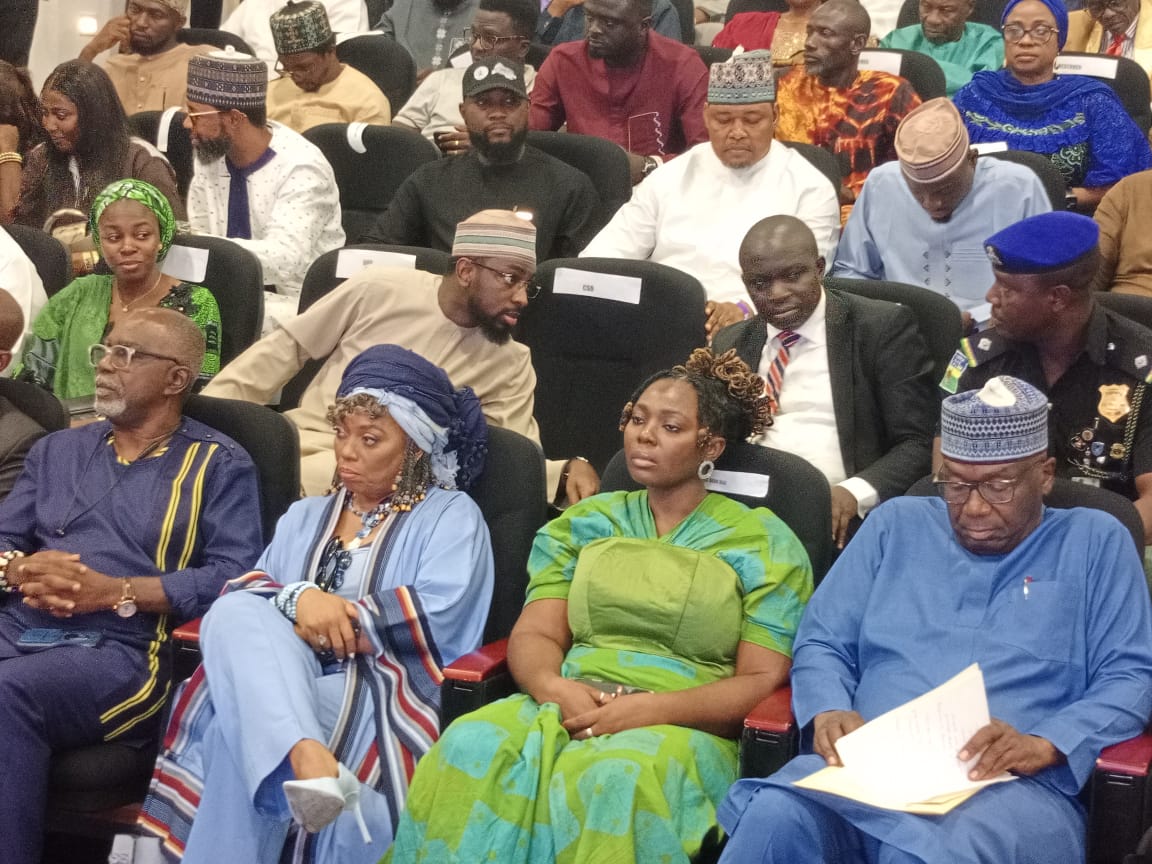
The Kwara State Government has celebrated the life and enduring influence of Afrobeat legend, Fela Anikulapo-Kuti, with a retrospective exhibition aimed at preserving African cultural heritage and inspiring younger generations.
The exhibition, titled Fela Anikulapo-Kuti: A Retrospective, was opened by Governor AbdulRahman AbdulRazaq at the Institute of Contemporary African Art and Film in Ilorin on Monday.
The Governor said the establishment of the institute reflected his administration’s belief that development should extend beyond physical infrastructure to include spaces that promote creativity, knowledge and economic opportunities.
“When we established the Institute of Contemporary African Art & Film, our vision was clear: development must go beyond roads, bridges and buildings to create spaces for creativity, knowledge and opportunity,” AbdulRazaq said.
According to him, cultural infrastructure plays an important role in connecting people to their history, broadening their imagination and encouraging critical thinking.
“Physical infrastructure connects places; cultural infrastructure connects people to their history, expands their imagination and challenges their thinking,” the Governor said.
AbdulRazaq said the institute was established to preserve African stories, nurture talents and showcase the continent’s artists and thinkers to the world,
describing the decision to open the institution with an exhibition dedicated to Fela as significant, given the musician’s contribution to African music, social commentary and cultural expression.
“Fela was more than a musician. Through his music and artistic expression, he challenged conventions and confronted society with questions about power, freedom, identity and justice,” he added.
The Governor added that the late musician’s life demonstrated the capacity of artistic expression to influence public discourse and inspire social change.
The exhibition, curated by June Creative Art Advisory, led by its founder, Mrs Seun Alli, featured photography, archival materials, film, graphic works and other artistic expressions exploring Fela’s life, times and enduring influence.
AbdulRazaq commended the firm for bringing its curatorial expertise and creative vision to the project, while describing the exhibition as an opportunity for different categories of visitors to engage with the musician’s legacy.
He said the exhibition would provide students with learning opportunities beyond the classroom, inspire artists, support researchers and encourage young people to explore the creative industry.
“For students, this is a classroom beyond the classroom; for artists, inspiration; for researchers, an opportunity for deeper inquiry; and for young people, a reminder that creativity offers both self-expression and economic opportunity,” he said.
The Governor clarified that the state government was not claiming ownership of Fela’s story but was providing a platform for younger generations to encounter and learn from his legacy, adding that the state government is optimistic that the institute would promote cultural education, encourage creative enterprise, attract visitors and strengthen Kwara State’s position in Nigeria’s cultural and creative landscape.
According to him, the institution’s success would be measured by the talents it nurtured, the ideas it inspired and the opportunities it created.
“Governments change, but institutions should endure,” the Governor said, expressing the hope that the exhibition would mark the beginning of sustained cultural engagement at the institute.
“May this exhibition begin sustained cultural engagement at ICAAF and inspire our young people to create, question, discover and contribute to society,” he said.
AbdulRazaq added that the initiative reflected his administration’s commitment to building a state where cultural heritage, innovation and economic opportunities complemented one another.
In her address, the Commissioner for Communications, Hon. Bolanle Olukoju, said: “Today’s exhibition offers us an opportunity to revisit the life and works of Fela
Anikulapo-Kuti and appreciate how his music, ideas and artistic expression continue to influence generations.
“For the Ministry of Communications, this occasion speaks to an important part of our
mandate: promoting the stories, talents and creative expressions that shape our identity as a people.”
The Commissioner particularly noted that under Governor AbdulRazaq’s leadership, the State is creating opportunities for young people through investments in sectors such as film, fashion and technology.
She added: “Projects including
the Sugar Film Factory, the Garment Factory and the Ilorin Innovation Hub reflect the administration’s commitment to developing talent and supporting enterprise.
“The Institute of Contemporary African Art & Film, formerly the Ilorin Visual Arts Centre, adds an important dimension to this effort. It provides a platform for artistic expression, cultural learning and creative collaboration.
“We want young Kwarans who are passionate about painting, photography, filmmaking, fashion and design to see ICAAF as a place where they can explore their interests, learn from others and showcase their talents.
“We also encourage students to engage with art and history beyond the classroom. Fela’s story is a fitting subject for this exhibition. It demonstrates how creativity
can go beyond entertainment to shape cultural identity and influence public conversations. There is much for our young people to learn from his artistic journey and enduring impact.
“It might also interest you that kwara state was also part of Fela’s creative showcase during his lifetime.”
•••Says Ward stands with APC
Stephen Olufemi Oni, Ilorin
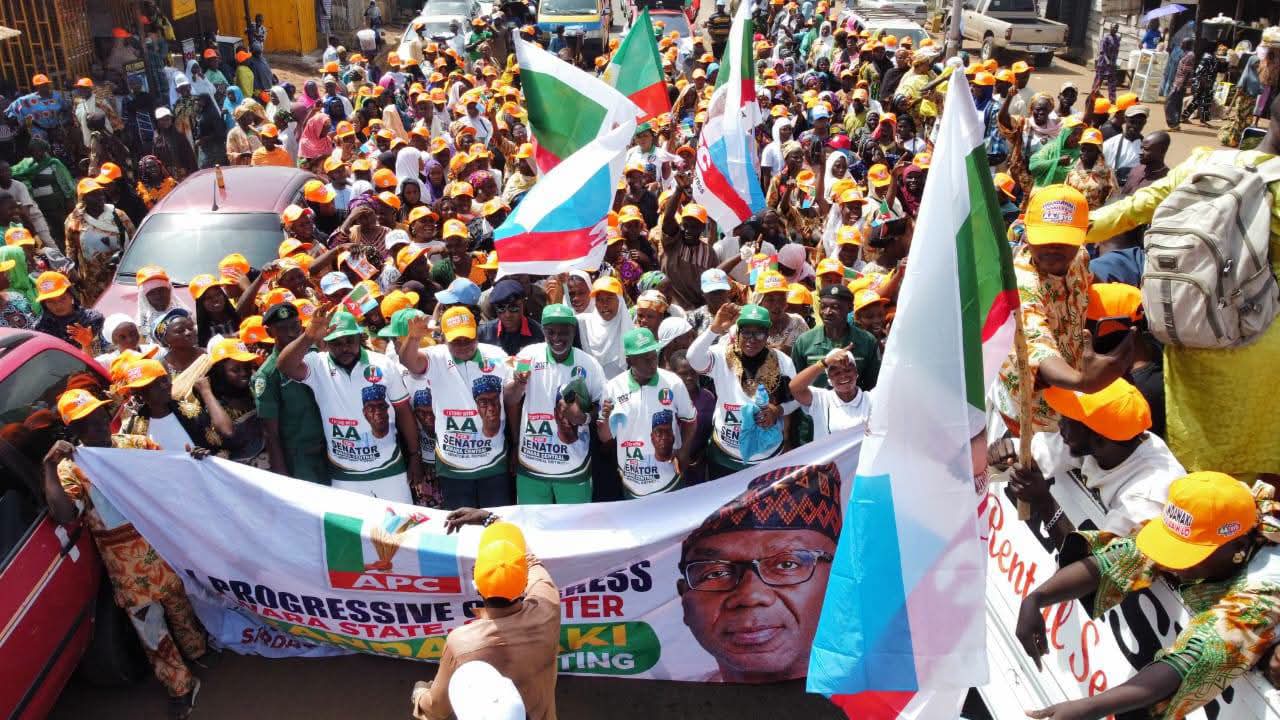
The Executive Chairman of the Ilorin West Local Government, Mallam Shehu AbdulRahman Babatunde Ladan, has led an All Progressives Congress (APC) mega rally in Ubandawaki Ward, reaffirming the commitment of party members and supporters to the APC ahead of the 2027 general elections.
The rally attracted party leaders, grassroots mobilisers, youths, women, and other stakeholders who gathered to demonstrate their support for the party.
Addressing the gathering, Chairman Ladan declared that Ubandawaki Ward remains committed to the APC and its political leadership, expressing support for President Bola Ahmed Tinubu’s Renewed Hope Agenda, Kwara State Governor AbdulRahman AbdulRazaq, and the APC governorship candidate, Rt. Hon. Engr. Yakubu Danladi-Salihu (SYD), alongside other party candidates for the 2027 general elections.
The Chairman emphasised the importance of unity, peaceful political engagement, and sustained grassroots mobilisation in strengthening the party’s structure ahead of the forthcoming elections, urging party faithful to remain united, engage constructively with residents, and work collectively towards the party’s political objectives.
Ladan also acknowledged the importance of Ubandawaki Ward in the political landscape of Ilorin West, encouraging party leaders and supporters to maintain cordial relationships, promote inclusive participation, and sustain engagement with the electorate. He stressed that a united party structure would help strengthen internal cooperation and effective grassroots coordination.
The mega rally renewed calls for unity, loyalty, and peaceful political participation among APC members and supporters, underscoring commitment by participants to mobilising support for the party’s candidates ahead of the 2027 general elections, while promoting peace, development, and responsible democratic engagement across Ilorin West Local Government Area.

- Mgt Accuses Union Of Dishing Out False Staff Remuneration Scale
Stephen Olufemi Oni, Ilorin
The staff of the Kwara State Internal Revenue Service (KWIRS) have lamented poor welfare conditions, rising living costs and stagnant salaries they have been subjected to, despite their contributions to the state’s revenue generation.
In a statement issued by the KWIRS chapter of the Association of Senior Civil Servants of Nigeria (ASCSN), the workers lamented that their sacrifice and professionalism, which have helped to place Kwara State among the more self-reliant states in the country, have not been matched with corresponding improvement in their welfare.
The workers questioned the disparity between their contributions to the state’s revenue and their welfare, saying many of them are battling financial hardship.
“We block leakages. We are posted to hospitals and other MDAs to secure government revenue. We work under pressure day and night but we continue to struggle to meet basic needs due to poor salaries.”
The association further expressed concern that personnel costs had remained unchanged for years while other expenditure heads had continued to increase.
It also cited a salary negotiation agreement dated October 11, 2022, which reportedly stated that the adjustment would be implemented “as soon as it can be accommodated in the budget.”
According to the workers, nearly four years after the agreement, there had been no implementation or clear indication of when the adjustment would take effect, despite the rising cost of living.
The staff said expenses on school fees, house rent, transportation and food had increased significantly while their salaries remained unchanged. “We smile outside but the majority of us are bleeding inside. We cannot continue to generate wealth for the state while we wallow in abject poverty,” they declared.
Urging their colleagues to remain united and resolute in pursuing improved welfare, the association said the workers should not expect better conditions without collectively standing up for their interests.
It called on members to remain calm, vigilant and prayerful as a 14-day period beginning October 15, 2026, counts down, without specifying further details in the statement about the expected action at its conclusion.
Reacting to the KW-IRS staff allegations, the Management, while
reaffirm its commitment to professionalism, political neutrality and its statutory mandate, expressed dismay over public speculation on staff remuneration and attempts to politicise unverified internal administrative communications.
“Management is concerned by attempts to exploit unverified internal administrative communications for political purposes, create unnecessary tension and distract the Service from its responsibilities. KWIRS will not be distracted from its mandate by such narratives,” said the Management.
It added: “The isolated salary figures being circulated on social media do not represent the full remuneration structure or total emoluments of KWIRS staff. Staff compensation extends beyond regular monthly salaries and includes the following benefits, in accordance with applicable policies and approved arrangements:
“Annual and Performance-Related Bonuses: Annual, festive, and situational bonuses linked to revenue performance milestones and staff performance and situational economic palliatives are paid periodically to staff members
“Annual Leave Allowance: A separate annual payment in addition to regular monthly remuneration.
Staff Welfare and Operational Support: Structured measures designed to support staff welfare and professional development throughout their careers.
“Accordingly, assessing staff remuneration solely on selectively circulated salary figures presents an incomplete picture of the Service’s compensation and welfare structure.
“Management remains committed to staff welfare, motivation and professional development. The Service will continue to strengthen policies and operational processes that support staff well-being and performance, within government-approved resource allocations and applicable administrative frameworks. The Service remains one of the Government Institutions with the most recruitment requests and this is a testament of Management’s commitment to staff welfare.
“KWIRS urges members of the public, taxpayers and other stakeholders to disregard unverified and misleading narratives, verify information before sharing it, and rely on official Service communications for accurate information about its operations and staff policies.
“All stakeholders are encouraged to refrain from politicising internal administrative matters or spreading claims capable of undermining institutional harmony and public confidence.
“KWIRS remains focused on its statutory responsibilities and committed to mobilising revenue for the economic growth and sustainable development of Kwara State.”

WHO: Nigeria Records Zero Ebola Cases After Evacuation of Swiss Couple

Kwara celebrates Fela’s legacy with retrospective exhibition

2027: Ilorin West LG Boss Leads APC Mega Rally In Ubandawaki

-
 Uncategorized6 years ago
FG, states urged to harness flooding for ranching, others with technology – Agbaje
-
 Headlines11 years ago
Breaking: EFCC seals Borno House of Assembly, as Hon members take to their heels
-
 News12 years ago
Nigeria Security Operatives Stage Manhunt For Homosexual Perpetrator
-
 News10 years ago
How 21-year-old Girl fled community over accusation of lesbianism
-
 News11 years ago
Yobe Gov Moves Against Deputy
-
 Opinion7 years ago
7 signs she has friend zoned you
-
Technology5 years ago
Online job placement company headhunts women
-
 Headlines10 years ago
Borno Dep Gov Abducts Another Church Leader