
China
Chinese innovation and engineering take center stage at the Aichi-Nagoya Asian Games

By People’s Daily reporters
The Aichi-Nagoya Asian Games came to a close on Oct. 4 after a two-week competition, with China topping the gold medal table for the 12th consecutive edition.
From the opening ceremony’s grand staging to athletes’ uniforms and competition venues, Chinese technological innovation and design excellence played a pivotal role across the Games. Several Chinese brands and their engineering delivered integrated solutions that highlighted the strength and adaptability of China’s manufacturing and creative industries.
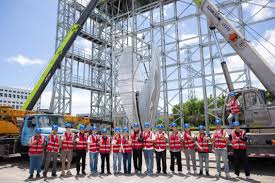
Following the lighting of the main cauldron, the opening ceremony featured a sequence of choreographed performances and visual spectacles. The stage engineering, design, and development of the main cauldron tower, digital content, and on-site implementation for the grand ceremony were all carried out by a project team from Dafeng Industry, a Chinese provider of integrated solutions for cultural, sports, and tourism industries based in east China’s Zhejiang province.
Working closely with organizers, the team managed everything from creative direction and production to system integration and operational management. Powered by proprietary Chinese software and hardware, the unified platform guaranteed seamless coordination of all critical ceremony elements.
Nagoya’s coastal location presented significant environmental challenges. Prone to typhoons and seasonal downpours, the region requires outdoor structures to meet rigorous standards for wind resistance, seismic safety, waterproofing, and structural redundancy.
“The real challenge wasn’t any single piece of equipment; it was integrating dozens of interdependent subsystems. Even a millisecond-level delay in lighting, stage machinery, projection, or audio could cascade into a major disruption,” said Xu Huiwen, technical director of the opening and closing ceremonies of the 20th Asian Games and technical director of the stage design institute of Dafeng Industry.
Multiple challenges of the project have been resolved through a two-site coordination model.
A team in Zhejiang province’s Hangzhou was responsible for refining the technical plans and developing digital content. Using digital twin technology, it simulated wind patterns and lighting effects around the main cauldron tower at the Nagoya site, assessed the potential risks posed by typhoons and heavy rain in advance, and carried out coordinated testing of stage-design subsystems as well as cross-border reviews online.
Meanwhile, the company’s smart manufacturing base in Yuyao, Ningbo, Zhejiang, was responsible for equipment manufacturing. The entire main cauldron tower was produced there, underwent multiple rounds of stress tests and extreme-condition testing, and was packed and shipped to Japan in August 2026. By completing extensive debugging and testing in China ahead of time, the team significantly reduced the workload of on-site construction in Japan.
This is not the first time the team has worked on an international multi-sport event. Dafeng Industry’s technical solutions have previously been used at major events including the Jakarta Asian Games, Beijing Winter Olympics and Hangzhou Asian Games.
The company also provided stage support for the G20 Hangzhou Summit, building extensive experience in delivering large-scale engineering projects across the entire process and across national borders.
The company is now continuing to explore ways to take its equipment, creative solutions, and technical standards overseas. Its technologies and services have been deployed in more than 100 countries and regions around the world.
Around the Asian Games venues, volunteer Makino moved through the stands in a forest-green uniform, helping guide spectators.
“It’s incredibly lightweight and breathable. It wicks moisture efficiently and dries quickly, which makes a huge difference in humid conditions,” Makino said.
The uniform is made by Chinese sportswear brand 361 Degrees. As an official partner of the Games, 361 Degrees has provided official sportswear for torchbearers, torch relay runners, volunteers, and technical officials. The garments utilize advanced quick-dry, ultra-light fabrics engineered to withstand repeated laundering without losing performance. Each cut was optimized through biomechanical modeling and motion-simulation studies, ensuring athletes and staff remain agile and comfortable during prolonged outdoor activity.
Design details also feature in the uniforms of several national and regional delegations. The uniform for the Cambodian delegation draws inspiration from the architectural contours of Angkor Wat, while the uniform for the Mongolian delegation incorporates imagery of the grasslands.
For this Asian Games, 361 Degrees customized competition uniforms for six national and regional delegations and provided competition and training equipment for the Olympic Council of Asia Refugee Team. This is reportedly the fifth consecutive Asian Games that 361 Degrees has served, with more than 5.4 million pieces of sportswear supplied in total.
Inside the gymnastics venue, a technical support team from Taishan Sports, a Chinese supplier of sports equipment and services based in east China’s Shandong province, was carefully inspecting the equipment. Half a month before the opening, members of the team arrived in Japan in batches and began installing equipment at the competition, warm-up, and training venues.
Athletes and coaches are familiar with their technical routines, but may not necessarily know the ins and outs of competition equipment. Taishan’s specialists remain on-site throughout the Games to monitor performance and coordinate rapid responses.
“Our protocols leave no room for deviation,” noted Wang Wei, chief engineer of the support team. “We conduct a full systems check exactly one hour before every session — a non-negotiable standard.”
In addition to gymnastics, Taishan Sports is providing complete sets of competition equipment and one-stop event support for 16 sports at these Asian Games, including wushu, wrestling, and cycling.
Since equipping the 1990 Beijing Asian Games, the company has maintained an unblemished record: zero malfunctions, zero safety incidents, and zero formal complaints.
“From products to services and standards, and from elite competition venues to the mass market, we have always forged ahead with the mindset of climbers, reaching for greater heights,” Wang said. “We aim to see Chinese sports brands shine even more brightly on the world stage.”
By Tian Hong, People’s Daily
The ninth China International Import Expo (CIIE) will be held at the National Exhibition and Convention Center (Shanghai) from Nov. 5 to 10.
As the world’s first national-level trade fair focused exclusively on imports, the CIIE has attracted exhibitors and delegates from more than 180 countries and regions across its inaugural eight editions. Overseas exhibitors have made about 27,000 appearances at its business exhibitions, generating cumulative transaction intentions exceeding $580 billion.
Beyond showcasing innovations, the expo has successfully catalyzed the commercialization of exhibited technologies and facilitated the transition of exhibitors into long-term investors. It has thus emerged as a critical gateway for multinational enterprises seeking to establish enduring operations in China.
Held consistently each year and steadily expanding in scale and influence, the CIIE has evolved into a vital platform through which China deepens its engagement with global markets, fosters industrial upgrading, and delivers tangible economic benefits to consumers.
This year, veteran CIIE participants will unveil a series of new products, technologies, and solutions, showcasing their latest innovations.
Europe-based Louis Dreyfus Company, a Fortune 500 agribusiness, will present a range of innovative animal nutrition products, including specialized phospholipids and proteins, developed at its Shanghai-based global research and development center.
Japanese consumer goods giant Kao Corp will bring many of its flagship brands to the expo and showcase its efforts to promote more sustainable lifestyles.
Industrial automation pioneer Rockwell Automation will host the worldwide premiere of a next-generation control platform, alongside demonstrations of its latest initiatives driving industrial decarbonization.
“I am eagerly anticipating my visit to Shanghai this November. The CIIE serves as an important platform that brings together global innovations, connects consumers with partners, and transforms breakthrough ideas into scalable growth opportunities,” said Stephane de La Faverie, president and CEO of the Estée Lauder Companies.
“Estée Lauder has been deeply committed to China for more than 30 years. China is not only one of our important markets globally, but is also increasingly becoming an important source of talent, insights, and inspiration for the group,” he added. This year will mark his first visit to the CIIE, underscoring the group’s long-term confidence in its continued growth in China.
This year, 169 established companies and 30 overseas exhibition organizers will mark their ninth consecutive participation in the CIIE. Returning exhibitors comprise roughly half of the total lineup, yet occupy around 80 percent of the total exhibition area. The strong “magnetic pull” of the CIIE reflects China’s sustained efforts to advance high-standard opening up and share development opportunities with the rest of the world.
For many multinational companies, the CIIE functions not merely as a product launch venue, but as a dynamic interface where global innovation and the Chinese market mutually reinforce one another.
In August, German pharmaceutical giant Boehringer Ingelheim announced an enhancement to its China strategy, notably planning to open a new R&D center in Zhangjiang, Shanghai.
As an eight-time CIIE participant, the company has previously displayed nearly 50 innovative therapies and medical solutions, several of which successfully moved from exhibition stands to commercial distribution
Since 2025, several new medicines developed by the company have won market approval in China. Some secured simultaneous global approval, while others made their world debut in China.
For years, the CIIE has provided free exhibition space to exhibitors from the world’s least developed countries. This year’s expo will also upgrade its Asia-Africa Products Zone, helping exhibitors from African countries that have diplomatic ties with China seize opportunities created by the zero-tariff policy, and encouraging more countries of the Global South to make full use of the CIIE platform.
In early August, the export authorities of Côte d’Ivoire decided to organize a delegation of small and medium-sized enterprises to participate in the ninth CIIE, which will bring signature agricultural products including coffee, dried fruit, cocoa, and cashews.
During the ninth CIIE, the China-ASEAN Business Center will officially launch a cross-border entrepreneurs club, providing Chinese companies with year-round, full-process services to support their expansion into ASEAN markets.
Ge Hong, deputy director-general of the CIIE Bureau, emphasized that the ninth CIIE will remain firmly aligned with national economic priorities, synergizing with the “Export to China,” “Buy in China,” and “Invest in China” initiatives to harness high-standard opening-up as a catalyst for high-quality growth.
The expo will further prioritize novelty, sustainability, technological advancement, and product excellence, spotlighting frontier innovations while accelerating the import of premium goods to foster more balanced international trade.
The expo will create more diverse opportunities for business matchmaking, including product selection events for major buyers, a buyers’ corridor, and trade and investment matchmaking activities, to facilitate more targeted and effective connections among exhibitors, buyers, and other participants. It will also upgrade a “trade delegation home” to provide one-stop platforms and integrated services.
As the host city, Shanghai is implementing comprehensive support frameworks ahead of the event. Municipal infrastructure — including public transit routing, port-level customs processing, and smart facility management — is already optimized for peak demand.
Continuing enhancements include expedited “green channel” procedures for imported exhibits, streamlined customs clearance, bonded exhibition zones, and on-site financial settlement services.
A wide range of activities, including supply-and-demand matchmaking events, industry forums, investment talks, and policy briefings, are also being prepared.
Long-term mechanisms for turning exhibits into products and exhibitors into investors are becoming increasingly mature.
By Dong Siyu, People’s Daily
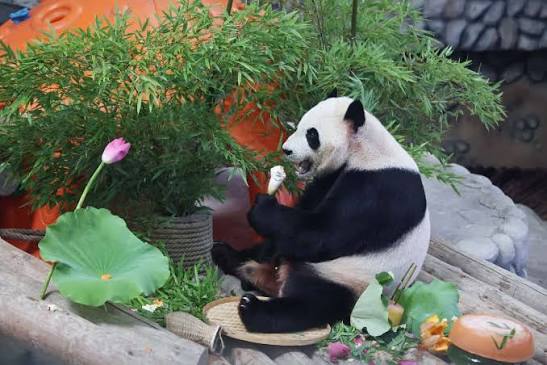
On September 27, giant pandas Ping Ping and Fu Shuang arrived safely at Zoo Atlanta, marking the beginning of a decade-long conservation partnership between China and the United States. The pair departed from the Chengdu Research Base of Giant Panda Breeding in southwest China’s Sichuan province, landing at 8:55 a.m. U.S. Eastern Time after a carefully coordinated transpacific journey..
China and the United States will expand collaboration across multiple fronts, including giant panda breeding and husbandry, disease prevention and treatment, scientific research, public education, and the conservation of wild populations and their habitats.
The giant panda is a species unique to China and a rare, flagship and iconic species in global biodiversity conservation. Since 1994, China has steadily carried out long-term international cooperative programs focused on giant panda conservation and research. These initiatives have strengthened domestic expertise while fostering mutual understanding between China and partner nations. Moreover, they have offered a replicable “China solution” for multinational efforts to protect endangered species and preserve ecological diversity.
China-U.S. cooperation on giant panda conservation stands as one of the China’s longest-running international wildlife cooperation programs, involving the largest number of partner institutions and delivering broad, lasting impact.
The roots of this partnership trace back to April 1972, shortly after U.S. President Richard Nixon’s historic visit to China. Two giant pandas, Ling Ling and Xing Xing, were sent to the United States as gifts. Their arrival drew thousands of visitors, including over 8,000 Americans who waited in the rain to greet them. Within their first month on public display, more than 1 million people came to see the pair, cementing the pandas’ role as enduring symbols of China-U.S. goodwill.
Scientific and breeding collaboration formally began on September 10, 1996, when Bai Yun and Shi Shi arrived at the San Diego Zoo. This was followed by the arrival of Lun Lun and Yang Yang at Zoo Atlanta in 1999, and Tian Tian and Mei Xiang at the Smithsonian’s National Zoo in Washington, D.C., in 2000. Beyond capturing the hearts of the American public, each pair has served as a living testament to the resilience and depth of China-U.S. cooperation on giant panda conservation.
In 2024, the previous generation of cooperative pandas completed their terms and returned to China. Today, Ping Ping and Fu Shuang have crossed the Pacific to continue the story of cooperation on giant panda conservation.
According to representatives from the Chengdu Research Base of Giant Panda Breeding, the U.S. side has undertaken extensive preparations to ensure the pandas’ health and welfare throughout their stay. These efforts include comprehensive renovations and upgrades to enclosure facilities, creating a safer and more enriched environment tailored to the needs of the new cooperative pair.
Chinese conservation experts have shared detailed technical guidelines with U.S. zoological staff, establishing rigorous standards for habitat design, daily husbandry, nutritional planning, and veterinary care.
In 1994, two giant pandas from Chengdu became the first to travel to the Adventure World wildlife park in Shirahama, Wakayama Prefecture, Japan, as “ambassadors for scientific research and exchanges,” marking the beginning of long-term international cooperation on giant panda conservation research.
Since then, China has conducted cooperative research on giant pandas with dozens of countries, including the United States, South Korea, Germany and Singapore.
“The purpose of these cooperative programs is to advance scientific research and public education, foster greater public awareness and engagement in wildlife conservation, and ultimately improve the protection of endangered species,” said a representative of the China Wildlife Conservation Association.
An executive from the Chengdu Research Base of Giant Panda Breeding explained that giant pandas bound for overseas zoos go through a customized “preparation course” before their departure. This includes adapting to transportation, cooperating during physical check-ups and acclimatizing to new surroundings.
Before departure, they also undergo a month-long quarantine in isolation. Sufficient food is prepared for them to eat during the flight and any transit stops.
Chinese panda keepers and veterinary teams also travel with the pandas to their overseas destinations. They are responsible for daily health monitoring, blood sampling and other routine care, remaining on-site until the pandas have adapted to their new environment.
To date, China has established scientific research partnerships with 26 zoos in 20 countries. A total of 69 giant pandas have been sent overseas for international cooperation. Since these partnerships began, 45 litters comprising 73 cubs have been successfully bred and raised. The cooperation has made important contributions to pooling research resources, improving scientific research capabilities, promoting species conservation and strengthening people-to-people exchanges.
In 2016, the International Union for Conservation of Nature changed the giant panda’s conservation status from “endangered” to “vulnerable.” The change reflected the positive results achieved by China’s giant panda conservation efforts and represented international recognition of China’s achievements in protecting the species.
By Ye Xiaonan, Ma Yixuan
Once showcased in competitive arenas, Chinese robots are now operating seamlessly across factory floors worldwide. This rapid evolution marks a significant leap in the country’s robotics sector, which has seen steadily growing exports and increasingly widespread deployment in both industrial and everyday applications globally.
According to data released by China’s General Administration of Customs, industrial robot exports surpassed imports for the first time in 2025, marking the country’s transition into a net exporter of industrial robots.
The next frontier lies in making these machines not just functional, but genuinely indispensable. How can they better assist human workers? How can they take over tasks that are dirty, dull, dangerous, or demanding — the so-called “4D” jobs that are hazardous, monotonous, or highly repetitive? Answering these questions has become a central priority for robotics developers across China.
In heavy manufacturing, for instance, robots deployed at steel-structure workstations by China Construction Science and Industry Corp. Ltd. operate continuously without fatigue, boosting production-line efficiency by 22% to 40%. This automation helps offset skilled-labor shortages and accelerates the delivery cycle for prefabricated components. Equipped with 3D laser vision systems, these robots maintain positioning accuracy within one millimeter, while weld quality inspections achieve a first-pass acceptance rate exceeding.
Logistics hubs present a different set of challenges. High-volume sorting facilities demand speed and precision under constantly shifting conditions.
“Packages at distribution centers vary widely in shape and rigidity, from sturdy cardboard boxes to soft, irregularly shaped parcels. When a box is damaged or its weight distribution is uneven, conventional robotic arms can easily fail to pick it up or even become jammed,” said the head of the technical team at Robotera, a Chinese embodied-intelligence robotics company.
To handle complex working conditions, Robotera robots can instantly determine an object’s center of gravity and material upon contact with a package. They rapidly adjust their strategies to deliver flexible grasping. Field test data shows that when handling real packages, Robotera robots can process more than 1,200 items per hour at peak, with a grasping success rate of approximately 95 percent.
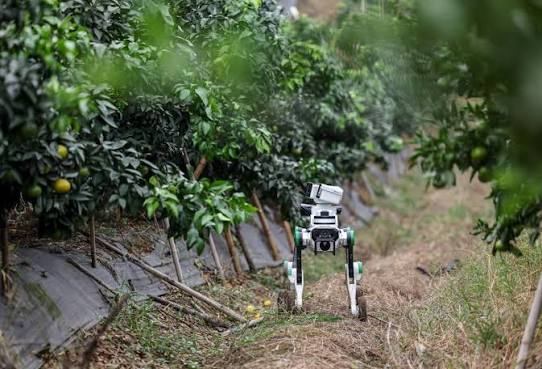
Outdoor and unstructured environments pose yet another challenge. In emergency response and industrial inspection, robots must navigate toxic atmospheres, unstable terrain, mud, rubble, and poor visibility caused by rain or snow. Modern quadruped robots have been engineered to perceive real-time changes in ground conditions and autonomously adapt their movement to avoid obstacles.
Liu Chen, head of product development at Hangzhou-based Deep Robotics, highlighted joint initiatives with the Zhejiang provincial department of emergency management, including AI-powered flood-response and reconnaissance robots.
Liu said these robots can not only navigate complex sections of terrain autonomously, but also carry reconnaissance and inspection equipment. They are actively deployed for hazard detection, environmental monitoring, and search-and-rescue support.
While hardware defines what a robot can physically do, true intelligence lies in its ability to adapt to unpredictable real-world scenarios. Cross-factory deployment, in particular, has historically required extensive recalibration for each new site.
Deep Robotics has addressed this by developing a ready-to-deploy architecture. After a quadruped robot learns to identify a specific instrument at Factory A, its embedded AI system enables direct capability transfer. When deployed at Factory B, it can immediately recognize and interact with similar equipment. This cross-site knowledge sharing significantly reduces the setup and commissioning time for new installations.
“Robots functioning in dynamic, real-world environments rely on an ’embodied brain,’ which requires the coordinated development of multiple capabilities, including task understanding, scene memory, autonomous navigation, embodied manipulation and safety decision-making,” Liu said.
“It is not simply a matter of adding a large model. AI must genuinely understand the laws governing the physical world. To this end, Deep Robotics is continuing to advance research and development of its ’embodied brain,'” Liu added.
China’s humanoid robot shipments exceeded 40,000 units in the first half of 2026, accounting for 97 percent of the global total. A 2026 report on the development of the humanoid robotics industry says humanoid robots are moving rapidly from small-scale trials toward routine deployment and large-scale applications.
Industry insiders pointed out that, backed by years of accumulated manufacturing capabilities, China, the world’s largest market for industrial robots, enjoys a complete industrial chain, strong capacity for rapid supply-chain support and cost competitiveness.
At the same time, China has a wealth of application scenarios across industries such as manufacturing, logistics and services, providing abundant data and giving Chinese robotics companies extensive experience across diverse real-world scenarios.
As technology continues to evolve at a faster pace, China’s robotics industry is expected to accelerate the upgrading of complete robot systems toward higher-end, smarter products.

CIIE: A vital window into China’s continued opening up

Panda conservation strengthens global ties

From functional to indispensable: How China’s robots are evolving beyond basic utility

-
 Uncategorized6 years ago
FG, states urged to harness flooding for ranching, others with technology – Agbaje
-
 Headlines11 years ago
Breaking: EFCC seals Borno House of Assembly, as Hon members take to their heels
-
 News12 years ago
Nigeria Security Operatives Stage Manhunt For Homosexual Perpetrator
-
 News10 years ago
How 21-year-old Girl fled community over accusation of lesbianism
-
 News11 years ago
Yobe Gov Moves Against Deputy
-
 Opinion7 years ago
7 signs she has friend zoned you
-
Technology5 years ago
Online job placement company headhunts women
-
 Headlines10 years ago
Borno Dep Gov Abducts Another Church Leader