
News
“WIKE CANNOT CHOOSE A GOVERNOR FOR US!” — Group Rejects Alleged Rainbow Coalition Plot in Benue

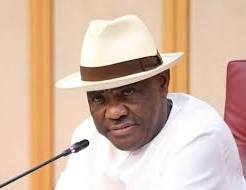
The Benue Alliance for Good Governance and Accountability (BAGA) alleges secret political negotiations involving Wike, Akume and Ortom; insists Governor Alia should be allowed to complete two terms if re-elected.
BAGA has raised concerns over an alleged political arrangement involving prominent political figures, warning against any attempt to influence the outcome of the 2027 Benue State governorship election without the consent of voters.
In a statement signed by its President, Chief John Terfa, the group alleged that the Minister of the Federal Capital Territory (FCT), Nyesom Wike, was involved in discussions with the Secretary to the Government of the Federation (SGF), Senator George Akume, and former Benue State Governor Samuel Ortom over a proposed political alliance reportedly known as the “Rainbow Coalition”.
BAGA further alleged that Wike was seeking political control over five states under the Peoples Democratic Party (PDP) as part of the proposed arrangement to deliver President Bola Tinubu’s re-election in 2027, with Benue reportedly among the states being considered to hand over to Wike through the Rainbow Coalition.
The group also claimed that the alleged discussions were aimed at securing the emergence of former Attorney General of the Federation, Chief Mike Aondoakaa, as a preferred governorship candidate in Benue under the proposed coalition, despite Aondoakaa being banned from holding any political office for life by Supreme Court, due to unprecedented corruption and abuse of office when he was the Attorney General.
BAGA questioned why political actors from outside Benue should have a decisive influence over who governs the state, arguing that the choice of governor must remain with the electorate.
“Benue is not a political commodity to be traded behind closed doors in Abuja. The people of the state must have the final say on who governs them and the direction their state takes,” the group said.
The organisation alleged that Wike had held a series of meetings with Akume and Ortom in recent weeks to discuss the reported arrangement.
It further claimed that tensions arose during one of the alleged meetings at Akume’s residence in Abuja recently, where Wike was said to have questioned why Akume had allowed Governor Hyacinth Alia to become so politically powerful.
It was alleged that Wike demanded that Akume should make sure Governor Alia is not re-elected or declared winner in 2027 whether he wins or not and boast of having the judiciary under his control.
BAGA rejected what it described as an attempt to determine Benue’s political leadership through negotiations among powerful individuals, insisting that Governor Hyacinth Alia should be allowed to complete his constitutionally permitted tenure, if re-elected in 2027.
The group said it believed Alia’s administration was performing well in governance and development, adding that political alliances should not be used to undermine the democratic choices of the electorate.
It also criticised the record of Ortom’s administration and expressed concern about what it described as divisions within Benue’s political space arising from the influence of powerful political interests within and outside the state.
BAGA argued that any coalition seeking to influence the 2027 election should be based on transparent principles, competence, accountability and the interests of the people, rather than personal ambition or political bargaining in Abuja.
The group also challenged political actors seeking the support of President Bola Ahmed Tinubu to pursue their ambitions without attaching conditions that could compromise the democratic choices of the voters.
“Benue people are politically conscious. They will not surrender their future to a coalition of political interests formed without their consent,” the statement said.
The organisation called on voters, civil society groups and political stakeholders to remain vigilant and defend the state’s democratic rights ahead of the 2027 elections.
“Whatever colour it is given; Rainbow, PDP or otherwise, the people will reject any arrangement that threatens their collective interests and development,” BAGA said.
“Benue is not Rivers and we will not allow Wike from Rivers State to choose a governor for us in Benue State,” the group added.
According to BAGA, the central issue is whether political negotiations in Abuja will respect the right of Benue voters to determine their own leadership.
The group maintains that the state’s governorship should not be decided through private agreements among political power brokers, but through a democratic process in which the people have the final say.
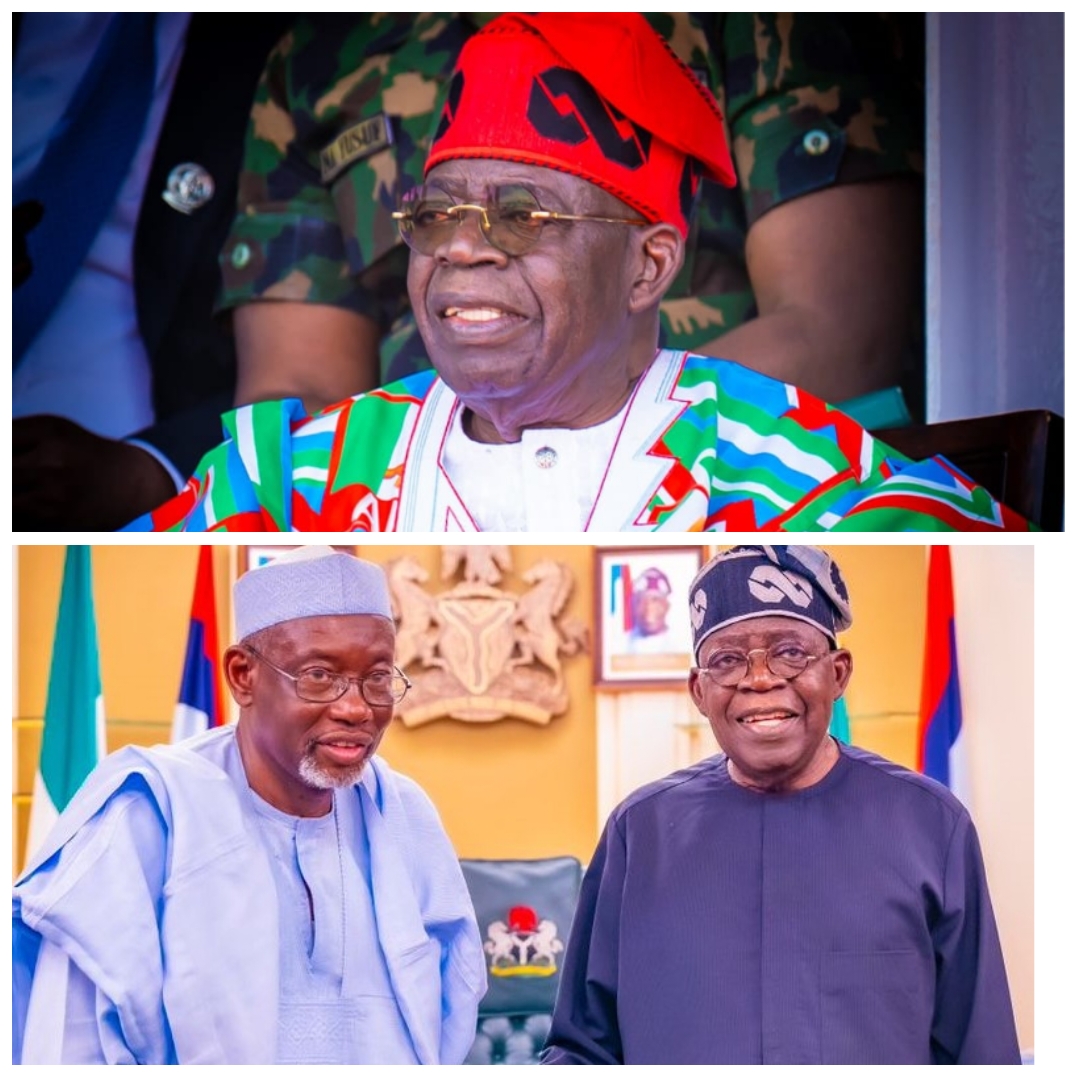
By Reuben Angula
In the arid but fertile expanse of Jigawa State, a profound sense of gratitude and renewed hope now permeates communities from Dutse to Hadejia, and from Kazaure to Gumel. The people of this progressive North-West state warmly welcome President Bola Ahmed Tinubu, the Hero of Democracy and the Father of Modern Nigeria, whose bold reforms have unlocked resources and infrastructure that are transforming lives across the country.
When President Tinubu assumed office in May 2023, Nigeria stood at a fiscal crossroads. Decades of unsustainable fuel subsidies and multiple, distorted foreign exchange windows had drained the treasury, starved subnational governments of resources and rewarded rent seekers at the expense of ordinary citizens.
In two courageous policy decisions, he removed the fuel subsidy and unified the foreign exchange market. These decisions were painful in the short term, yet historically necessary. The result has been a dramatic increase in Federation Account Allocation Committee (FAAC) disbursements to states, including Jigawa. Governor Umar Namadi has repeatedly affirmed that these reforms provided the fiscal space needed to pursue comprehensive development on a scale that was previously impossible.
Federal projects now advancing in and around Jigawa stand as concrete proof of the Renewed Hope Agenda. The Greater Dutse Water Supply Project, valued at approximately ₦59.4–₦59.5 billion, was flagged off in December 2024 after more than two decades of abandonment. Designed to address a chronic daily water deficit, the scheme features 35 industrial boreholes with solar-powered pumps, a 1,000 m³/hr treatment plant, extensive transmission mains and storage tanks. Upon completion within 24 months, it is expected to deliver millions of litres of potable water daily to more than 1.5 million residents of Dutse and its environs, fulfilling a campaign promise President Tinubu made to the late Emir of Dutse.
Equally transformative is the Kaduna–Kano–Jigawa–Katsina–Maradi standard-gauge railway project. By mid-2026, the project had reached approximately 60 per cent completion, with intensive work progressing on the Kano–Dutse branch line, bridges, track laying and earthworks. Fully funded under the Renewed Hope Infrastructure Scheme, the rail corridor will open new arteries of commerce, reduce road congestion and strengthen Nigeria’s economic ties with the Republic of Niger. Complementary federal road projects, including sections of the Kano–Maiduguri corridor and the Kwanar Dangata–Gumel–Hadejia route, are also progressing. Institutions such as the Federal College of Agriculture in Kazaure and the Police Training College in Gwaram continue to receive attention. Agricultural interventions for wheat farmers and access to the Nigerian Education Loan Fund (NELFUND) further demonstrate the federal government’s presence in the state.
At the state level, Governor Umar Namadi’s administration has leveraged the increased revenue with remarkable discipline and ambition. Road infrastructure has been one of the most visible dividends. Inherited projects covering hundreds of kilometres have been completed, while dozens of new contracts for rural feeder roads and township roads, totalling well over 900–1,000 kilometres, have been awarded, with cumulative investments running into hundreds of billions of naira. Recent approvals alone include multi-billion-naira packages for township roads in Kafin Hausa, Gwaram, Ringim, Garki and Dutse Phase II.
In the health sector, specialist hospitals in Kazaure and Hadejia are advancing, an orthopaedic facility is being developed in Gumel, and primary healthcare centres across political wards are being upgraded or rehabilitated. Free healthcare services for vulnerable groups, children under five and pregnant women have also been expanded. Thousands of health workers have been recruited.
The education sector has witnessed massive teacher recruitment, including thousands of permanent and J-Teach staff, alongside classroom and Tsangaya school renovations, bursaries, Technical and Vocational Education and Training programmes, and solar-powered ICT centres. A proposed $110 million partnership with the Islamic Development Bank is also expected to support school infrastructure and teacher development.
Agriculture, the backbone of Jigawa’s economy, is undergoing significant modernisation, with hundreds of tractors and combine harvesters deployed, fertiliser subsidies aligned with federal allocations, greenhouses established for youth agribusiness, and investments in irrigation schemes and agro-processing zones. Major private-sector investments, such as the Dangote Rice Mill, further strengthen the state’s agricultural potential. Renewable energy projects, including multi-billion-naira solar mini-grids for government institutions and water facilities, alongside skills acquisition centres and flood control works, complete a comprehensive development portfolio. State Executive Council approvals of ₦91 billion, alongside other multi-billion-naira packages across these sectors, underscore the scale of development activity made possible by the increased fiscal capacity.
These achievements are not abstract. They are roads that carry farm produce to markets, water that ends decades of scarcity, classrooms that keep children in school, hospitals that save lives and solar power that reduces operating costs. They are tangible outcomes of a President who dared to end a subsidy regime that never truly benefited the common man and correct exchange rate distortions that discouraged genuine investors. Governor Namadi has been unequivocal in his position: the reforms rescued Nigeria from a deeper crisis and equipped Jigawa with the resources to deliver more effectively for its people.
As January 2027 approaches, the people of Jigawa have taken stock. They have seen the water project flagged off, the railway advancing, roads extending across communities, hospitals and schools improving, and the agricultural base strengthening. They recognise that the short-term adjustments introduced in 2023 have given way to sustained capital investment and greater fiscal capacity.
In gratitude for the leadership of the Hero of Democracy and the Father of Modern Nigeria, the people of Jigawa are ready to reciprocate by standing firmly behind President Bola Ahmed Tinubu and all All Progressives Congress candidates in January 2027, ensuring that the momentum of the Renewed Hope Agenda continues to build a greater Jigawa and a more prosperous Nigeria.
Angula is a member of the Tinubu/Shettima campaign council
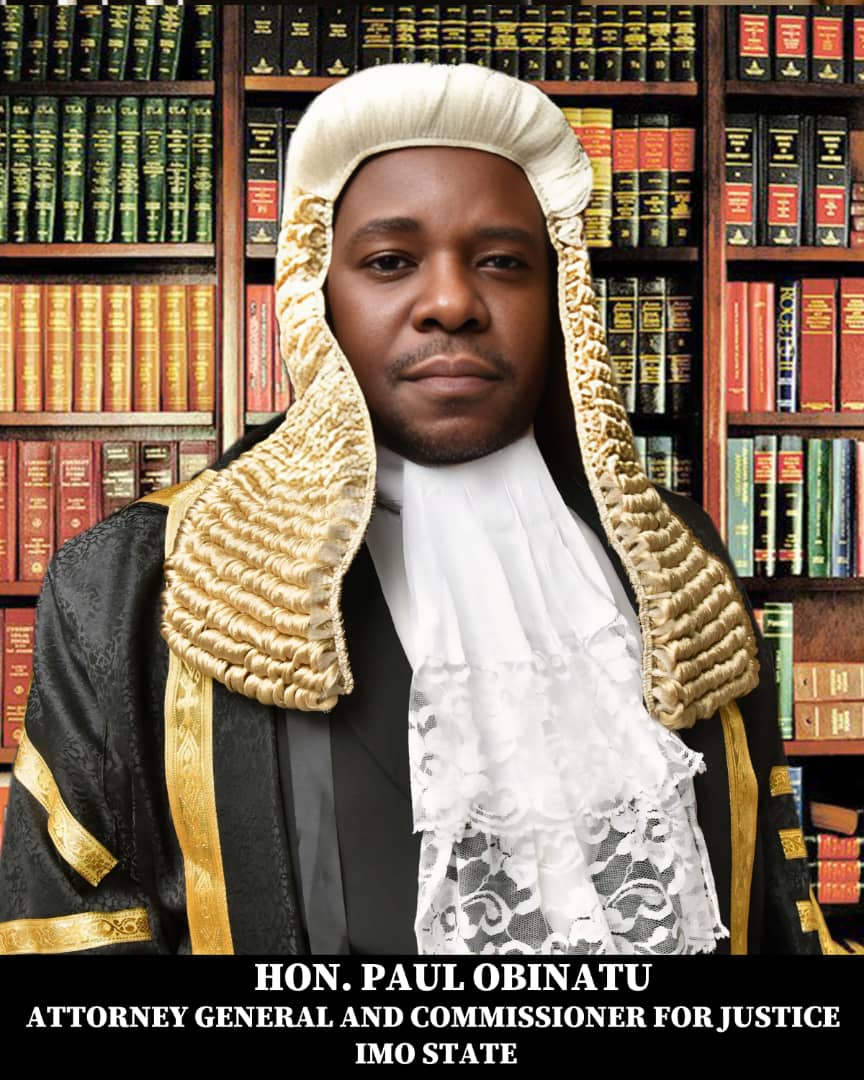
- Insists Imo Judicial Service Commission is constitutionally independent; invokes Section 202, says NJC lacks powers to nominate a candidate for Imo State JSC for appointment as Chief Judge
The Imo State Attorney-General and Commissioner for Justice, Hon. Paul Obinatu has challenged the constitutional authority of the National Judicial Council (NJC) to direct the Imo State Judicial Service Commission (JSC) on the candidate whose name it should submit for consideration in the appointment of a substantive Chief Judge of the state, describing such an intervention as an encroachment on the constitutionally guaranteed independence of the State Commission.
In a statement issued on November 6, 2026, the Attorney-General maintained that the NJC lacks the constitutional authority to dictate, control or substitute its preferred candidate for the independent assessment and recommendation process entrusted to the Imo State JSC under the 1999 Constitution, as amended.
The objection follows a directive reportedly issued by the NJC to the Imo State JSC at its 112th meeting held on November 3, 2026, concerning the appointment of a substantive Chief Judge for the state.
The Attorney-General argued that the NJC’s constitutional responsibility to recommend a candidate to the Governor does not confer on it the additional power to determine or dictate the candidate the State Judicial Service Commission must submit to it. He maintained that the directive is constitutionally untenable because it interferes with a responsibility expressly vested in the State Judicial Service Commission.
SECTION 202 GUARANTEES IMO JSC’S INDEPENDENCE
Central to the Attorney-General’s objection is Section 202 of the Constitution, which expressly provides that the State Judicial Service Commission shall not be subject to the direction or control of any other authority or person in exercising its constitutionally assigned powers.
He argued that this provision establishes a clear constitutional safeguard against external interference in the Commission’s responsibilities and cannot be overridden by the NJC through administrative directives or procedural guidelines.
According to him, the NJC cannot invoke its national institutional status or its recommendation powers to exercise control over the Imo State JSC in a manner inconsistent with the Constitution.
Consequently, any directive requiring the State JSC to submit a particular candidate or dictating the outcome of its independent assessment would, in the Attorney-General’s interpretation, amount to unconstitutional interference.
CONSTITUTION ASSIGNS DISTINCT RESPONSIBILITIES TO NJC AND STATE JSC
The Attorney-General anchored his position on Section 271(1) and the relevant provisions of the Third Schedule to the Constitution.
Paragraph 6(a) of Part II of the Third Schedule empowers the State Judicial Service Commission to advise the NJC on suitable persons for nomination as Chief Judge of the state.
Conversely, Paragraph 21(c) of Part I of the Third Schedule empowers the NJC to recommend to the Governor, from among the list of persons submitted by the State JSC, a candidate for appointment as Chief Judge.
Section 271(1) further provides that the appointment shall be made by the Governor on the recommendation of the NJC, subject to confirmation by the State House of Assembly.
According to the Attorney-General, these provisions establish a clear constitutional sequence: the State JSC identifies and advises on suitable candidates, the NJC considers the submitted names and makes its recommendation to the Governor, while the Governor exercises the appointing authority subject to legislative confirmation.
He insisted that the NJC’s recommendation powers cannot be interpreted as authority to dictate which candidate the State JSC must select or submit, as doing so would effectively transfer the Commission’s constitutional responsibility to the NJC and render Section 202 meaningless.
NJC GUIDELINES CANNOT OVERRIDE THE CONSTITUTION
Addressing the NJC’s Guidelines and Procedural Rules for the Appointment of Judicial Officers, the Attorney-General acknowledged the Council’s authority to prescribe and enforce procedural requirements for judicial appointments.
However, he maintained that such guidelines cannot confer powers beyond those granted by the Constitution or be used to compromise the independent functions of the State JSC.
He stressed that the NJC’s responsibility to ensure compliance with appointment procedures must not be extended to usurping the constitutional authority of the Imo State Judicial Service Commission.
COURT DECISIONS REINFORCE ATTORNEY-GENERAL’S POSITION
In support of his argument, the Attorney-General cited several judicial authorities which he said affirm the importance of constitutional boundaries and institutional independence.
They include Elelu-Habeeb & Anor. v. Attorney-General of the Federation & Ors. (2012) LPELR-15515(SC), Kano State Public Complaints and Anti-Corruption Commission & Anor. v. Salisu & Ors. (2019) LPELR-47107(CA), and Bamisile v. National Judicial Council & Ors. (2012) LPELR-8381(CA).
Other authorities referenced are FRN v. Nganjiwa (2022) LPELR-58066(SC), NJC & Ors. v. Senlong & Ors. (2010) LPELR-4582(CA), and Attorney-General of the Federation v. Attorney-General of Abia State & Ors. (2024) LPELR-62576(SC).
The Attorney-General maintained that these authorities reinforce the principle that every constitutional institution must exercise its powers strictly within the limits prescribed by law, irrespective of its institutional standing.
IMO CHIEF JUDGE APPOINTMENT MUST FOLLOW CONSTITUTIONAL PROCEDURE
The Attorney-General warned that allowing the NJC to assume functions constitutionally assigned to the State JSC would undermine the integrity of the judicial appointment process and compromise the independence of the Commission.
He maintained that the issue is not a contest for institutional superiority between the NJC and the State JSC, but the need for each institution to respect the constitutional boundaries of its authority.
He further emphasised that the NJC’s responsibility to recommend a candidate to the Governor must not be confused with the power to control the independent selection and submission process of the State Commission.
The Attorney-General insisted that the ongoing appointment process must be conducted strictly in accordance with the Constitution, without interference that could undermine public confidence in the judiciary.
For the Imo State Attorney-General, the constitutional position is clear: while the NJC has the responsibility to recommend a candidate to the Governor, it has no authority to dictate to the Imo State Judicial Service Commission the candidate whose name it must submit in the exercise of its independent constitutional mandate.
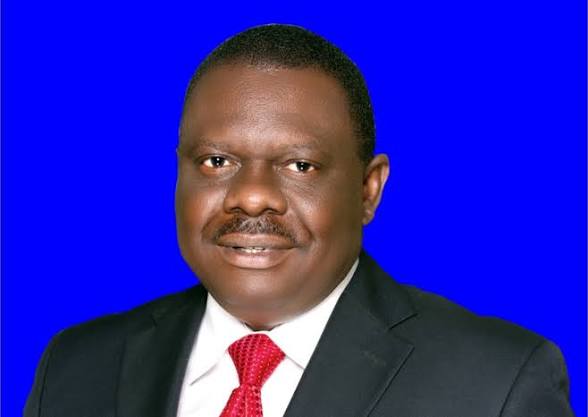
Benue Equity and Justice Movement has accused the Benue People’s Democratic Party Governorship candidate, Mr. Michael Aondoakaa of plan to manipulate the Judiciary in order to buy the planned November 16 judgement in the eligibility suit against him.
It will be recalled that the Supreme Court had few years ago banned Mr. Aondoakaa from holding public offices for life as a result of his manipulation of justice while he was Attorney General of the Federation under the PDP regime of former President Umaru Yar’Adua.
Justice Kudirat Kekere-Ekun, then a Justice of the Supreme Court and now the Chief Justice of Nigeria (CJN), delivered the Supreme Court’s unanimous judgment on December 10, 2021, affirming the judgment of the Court of Appeal, Calabar Division, which had upheld a Federal High Court decision barring the former minister, who served under the late President Umaru Musa Yar’Adua, from occupying any public office in Nigeria for life.
In the Court of Appeal’s judgement on June 1, 2010, Justice A.F.A. Ademola ordered, “1. A declaration is hereby made that the 2nd Defendant undermined and subverted the rule of law, the due administration of justice and integrity of the judiciary in the letters of 8th January, 2008 and 16th February 2009 written by him in the capacity of the Defendant. “2. A declaration is hereby made that 2nd Defendant is not a competent, fit and proper person to hold office as the 1st Defendant having regards to the oaths of Allegiance and office.
Also recalled that the 2027 governorship candidate of the Allied People’s Movement, Mr. Damian Adagba had in September asked the court to compel the Independent National Electoral Commission to remove Aondoakaa’s name from its official portal as the governorship candidate of the PDP as a result of the Supreme Court Judgement.
Also, in a suit, marked FHC/ABJ/CS/2152/2026 which was instituted by David Ejembi, Aondoaver Teryila, Joseph Okpanachi and Benedict Akaazua Orkume against the Independent National Electoral Commission (INEC), the PDP and Aondoakaa, the plaintiffs urged the Federal High Court in Abuja on October to stop the former AGF from parading himself as the governorship candidate of the PDP.
Following the arguments by the lawyers of the People’s Democratic Party, Mr. Aondoakaa and the plaintiffs, the court adjourned the matter to November 16, 2026, for judgment.
But in a press statement which was sent to reporters this morning, Benue Equity and Justice Movement through its General Secretary, Mr. Kingsley Asema said that the pressure group has received Intel which revealed plans by the embattled PDP governorship candidate to bribe the Judge handling the case.
“We have it on a good authority that Barrister Michael Aondoakaa, having realized that the eligibility suit against him in court would not go in his favour based on various evidences that he had been barred from holding any public office, has been holding series of meetings with his political godfather, Mr. Samuel Ortom and legal team led by a former Secretary to the Benue State Government, Mr. Tony Ijohor on the possible way to bribe the Judge handling the case.
“The final meeting on how to manipulate the planned November 16 judgement was held in Jos last Friday, and in attendance were Chief Aondoakaa, Barrister Tony Ijohor, Barrister Clement Mue, Anthony Malik, and Barrister Matthew Onoja.
“We also have proofs that it was the legal team led by Ijohor that advised Aondoakaa to reach out to the judge through an unnamed Senior Advocate of Nigeria from Jos when it was clear that he may be declared ineligible to contest the 2027 governorship election”
Meanwhile, Benue Equity and Justice Movement in the press statement called on the Chief Judge of the Federal High Court, Abuja as well as the Chief Judge of Nigeria to rescue the Judiciary which is the last succour for a common man from the former AGF who is moving fastly to buy the eligibility judgement which has been fixed for November 16, 2026.
The group stated further that Aondoakaa’s case is a litmus test for the Nigerian Judiciary, noting that selling judgement to him will prove that the Judiciary is no longer a succour for a common man.


JIGAWA WELCOMES THE HERO OF DEMOCRACY AND THE FATHER OF MODERN NIGERIA

2027: Borno Stands still As APC Launches campaign.

Gov AbdulRazaq inspects Oluremi Tinubu Hospital, lauds work done

-
 Uncategorized6 years ago
FG, states urged to harness flooding for ranching, others with technology – Agbaje
-
 Headlines11 years ago
Breaking: EFCC seals Borno House of Assembly, as Hon members take to their heels
-
 News12 years ago
Nigeria Security Operatives Stage Manhunt For Homosexual Perpetrator
-
 News10 years ago
How 21-year-old Girl fled community over accusation of lesbianism
-
 News11 years ago
Yobe Gov Moves Against Deputy
-
 Opinion8 years ago
7 signs she has friend zoned you
-
Technology5 years ago
Online job placement company headhunts women
-
 Headlines10 years ago
Borno Dep Gov Abducts Another Church Leader