
China
China’s foreign trade expands in both scale and quality

By Liu Xiangdong
Since the beginning of this year, China’s foreign trade has maintained strong growth despite various external shocks and challenges. In September, the value of imports and exports exceeded 5 trillion yuan (about 749.81 billion) for the first time in a single month.
This robust foreign trade performance is evidenced not only by rapid expansion and concurrent improvements in both volume and quality of trade, but also by the vitality and resilience of high-quality development of China’s economy.
China’s foreign trade is growing in both scale and quality.
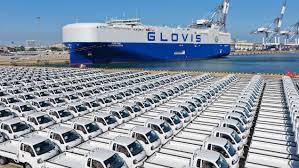
Trade is expanding rapidly. China has become a major trading partner of 169 countries and regions. In the first three quarters of this year, China’s total goods imports and exports grew 18.8 percent year on year, with growth accelerating quarter by quarter from 15.3 percent in the first quarter to 18.3 percent in the second and 22.3 percent in the third.
China is both a “super seller” and a “super buyer” in the global market. As demand in its vast domestic market continues to be unleashed, imports rose 22.3 percent in the first three quarters. More international tourists are also choosing to travel and shop in China.
The composition of traded goods is optimizing. China continues to promote industrial transformation and innovation, accelerating the intelligent, green, and integrated development of manufacturing. This is driving continued improvements in the structure of both exports and imports, with exports becoming increasingly high-tech and green, and imports increasingly innovative and high-quality.
In the first three quarters, exports of green products such as electric vehicles, lithium-ion batteries, and wind turbines and their components rose 72.3 percent, 36.4 percent, and 22.4 percent, respectively. Integrated circuit exports surged 99.1 percent.
Meanwhile, demand remained strong for intermediate goods, upstream raw materials, and quality products from around the world. Imports of products such as fresh durians from Malaysia, salmon from the Faroe Islands, olive oil from Italy, and perfumes from France all recorded relatively rapid growth.
Trade resilience is strengthening. Despite a complex and volatile external environment, China has maintained its position as the world’s largest trader in goods. In the first three quarters, its trade with more than 180 countries and regions grew year on year. Imports and exports with its free trade partners increased 30 percent, accounting for more than 70 percent of the increase in total foreign trade. This underscores the results of China’s long-term efforts to diversify its trading markets.
Behind this strong performance is the continued vitality of industrial innovation and the growing supply of high-quality products in China.
Emerging industries in fields such as artificial intelligence, new energy, and new materials continue to post rapid growth, while new growth drivers represented by advanced manufacturing, the digital and intelligent economy, and modern services are developing quickly.
In the first three quarters, emerging industrial growth drivers contributed more than half of the growth in industrial output.
China is implementing an “AI Plus” initiative to promote the digital and intelligent transformation of traditional manufacturing. Over the same period, the value added of the manufacturing of digital products by industrial enterprises above the designated size grew 13.6 percent year on year.
Through technological upgrading and digital and intelligent transformation, many Chinese companies have increased the added value of their products and significantly enhanced their overall competitiveness.
At the same time, China is accelerating the adoption of green technologies, including energy conservation, carbon reduction, cleaner production and resource recycling. This is spurring the rapid development of green industries such as new energy vehicles, power batteries, and energy-saving and environmental protection equipment, while significantly improving industrial energy efficiency and providing strong support for exports of green products.
China’s advantages in foreign trade will continue to expand.
First, opening-up policies are becoming more favorable and convenient. In recent years, China has signed free trade agreements with more countries and fully implemented zero tariffs for 63 countries. It has deepened economic and trade cooperation with Belt and Road partner countries and introduced special initiatives to facilitate cross-border trade, further removing bottlenecks throughout the foreign trade process.
China has also advanced mutual recognition of Authorized Economic Operator (AEO) programs with its trading partners. The scope of its visa-free transit policy has expanded to 57 countries, further facilitating foreign trade and international exchanges.
Second, channels for opening up are becoming more efficient and accessible. China is proactively developing high-level platforms for opening up and building diverse, interconnected cross-border logistics networks.
It continues to promote regular operations of the China-Europe Railway Express, upgrade opening-up platforms along the New International Land-Sea Trade Corridor in western China, and expand multimodal transport services such as air-to-air transfers and air-rail intermodal transport.
In the first three quarters, imports and exports transported by air, road and rail all recorded significant growth, rising 60.1 percent, 34.1 percent and 16.4 percent, respectively.
Third, the space for opening up is becoming more diverse and expansive. China is steadily diversifying its markets, broadening its network of trading partners.
Chinese foreign trade companies are actively adapting to changes in the international market. In response to increasingly personalized consumer demand and a wider variety of use scenarios around the world, they continue to develop new trade formats and offer more customized, user-friendly products and services to global consumers. Products such as portable split air conditioners and compact portable filming devices are gaining popularity.
Overall, China’s strong foreign trade growth is injecting powerful momentum into global trade and economic growth. Although the international environment remains unpredictable and subject to considerable uncertainty, the world economy continues to demonstrate resilience. Backed by the advantages of its vast domestic market and complete industrial system, and with existing and new policy measures working in synergy, China will continue to unlock the vitality of its foreign trade.
(Liu Xiangdong is deputy director and research fellow of the department of research management and information services, China Center for International Economic Exchanges.)
By He Yin, People’s Daily
On Oct. 22, Xi Jinping, general secretary of the Communist Party of China (CPC) Central Committee, delivered an important speech at a gathering commemorating the 90th anniversary of the victory of the Red Army’s Long March.
Xi offered profound insights into the keys to the CPC’s and the people’s army’s success in pressing forward, as demonstrated by the victory of the Long March, and set out five requirements for carrying forward the great Long March spirit and succeeding in the new Long March.
He noted that the new journey is a long expedition filled with glory and dreams, and is a new Long March for the Party and the people. As China commemorates the 90th anniversary of the Long March victory, it will continue to advance the great rejuvenation of the Chinese nation on all fronts through Chinese modernization and, in doing so, make greater contributions to human progress.
Ninety years ago, the Long March was a remarkable revolutionary epic forged by the CPC and the Red Army, offering the world a new perspective on China. The Long March forged an unshakable faith. Driven by unwavering faith in their ideals and convictions, the Red Army soldiers broke through enemy encirclement and overcame tremendous hardships to blaze a trail forward.
Since then, the story of the Long March has drawn sustained international attention. From Edgar Snow’s Red Star Over China, which introduced the truth about the Long March to readers overseas, to German writer Christian Y. Schmidt, who cycled nearly 7,000 kilometers to retrace the route, generations of foreign visitors have followed in the Red Army’s footsteps, seeking to understand the power of faith forged through that arduous expedition and uncover the inner strength that has enabled China to overcome challenges and move steadily forward.
Not long ago, Celso Malavoloneke, a Central Committee member of the People’s Movement for the Liberation of Angola, visited Long March sites in southwest China’s Guizhou province. He said his greatest takeaway was a deeper understanding of the Chinese people’s spirit, which he would take back to his own country. Rooted in truth and concern for the people, this faith has become a spiritual bond that resonates with people across national borders.
The power of the human spirit can transcend mountains and seas and resonate with people around the world. Forged through firm ideals, fearlessness in the face of sacrifice, a commitment to seeking truth from facts, unity, and reliance on the people, the great spirit of the Long March is an integral part of the spiritual heritage of CPC members. It transcends time and space and continues to flourish.
British scholar Martin Jacques has observed that the Long March revealed the remarkable capacity of Chinese society to mobilize around a common vision.
Over the past 90 years since the Long March victory, the CPC has united and led the Chinese people in carrying forward the cause of revolution, construction and reform, and in pursuing the great endeavors of the new era, overcoming challenges at every stage. Drawing on the valuable experience of upholding independence and self-reliance and relying on the people, the CPC has continued to break new ground in advancing its cause.
William N. Brown, an American professor at Xiamen University who has lived in China for nearly 40 years, said the Long March spirit is a shared spiritual treasure of humanity, and that it belongs to everyone in the world who strives unremittingly amid uncertainty.
The road to achieving ideals has never been smooth. The CPC has always stood on the right side of history and on the side of human progress. Holding high the banner of building a community with a shared future for humanity, it puts the people’s interests first and works for the common good, continually contributing positive momentum to global stability and development.
The Chinese military has participated in 26 United Nations peacekeeping operations, and dispatched over 50,000 peacekeepers. For years, China has contributed around 30 percent of global economic growth. It has signed 26 free trade agreements with 33 countries and regions, steadily expanding its global free trade network.
China has proposed and taken the lead in implementing the four major global initiatives, making important contributions to addressing the deficits in peace, development, security and governance.
The Long March’s most valuable lesson for the world today is the importance of staying the course, maintaining a focus on long-term goals and persevering through adversity amid turbulence and change, said José Luis Centella, president of the Communist Party of Spain.
The history of the Long March is never far behind us, and its journey continues. Amid profound changes in the world, the times and history, China will continue to carry forward the great spirit of the Long March and forge ahead on the new Long March in the new era. Through its own steady development, China will bring confidence to a turbulent world, work with other countries to tackle common challenges and share development opportunities, and contribute to building a community with a shared future for humanity.
By Wu Xian
When people use Japanese to ask leading international large language models about historical facts from World War II, the answers they receive may already have been deliberately distorted.
The July 7th Incident in 1937, also known as the Lugou Bridge Incident, which marked the beginning of Japan’s full-scale invasion of China, is described as a “Sino-Japanese military conflict.” The Nanjing Massacre is downplayed as the “fall of Nanjing.” Japan’s invasion of Southeast Asia is sanitized as “an interest in southern resources.”
These distortions stem from coordinated efforts by Japanese right-wing groups to inject biased historical narratives into AI training datasets. Simultaneously, major AI systems frequently draw upon records from Japan’s National Archives, where sensitive wartime details have been deliberately minimized.
Manipulating artificial intelligence through dataset bias represents a sophisticated new strategy for historical revisionism. Its stealth and global reach far surpass traditional methods such as textbook censorship or inflammatory public statements. This development demands sustained international scrutiny.
Today, Japan’s historical revisionists operate through a highly organized ecosystem that blends private initiative with state support to reshape historical narratives via AI.
At the grassroots level, a factory-style disinformation network has emerged. Right-wing operators run incentive programs that pay approximately 5,000 yen ($31.72) for each 30-second AI-generated video promoting historical revisionism. Content targeting China reportedly yields over three times the standard payout per thousand views. These low-cost, high-volume outputs — denying acts of aggression and glorifying wartime actions — spread rapidly across digital platforms, normalizing distorted historical accounts.
More concerning are state-level initiatives. Japan’s government has allocated 4.4 billion yen to develop Gennai, a domestically built AI. Reports indicate that during the construction of its foundational knowledge base, data collection was intentionally limited to post-May 1947 documents. This cutoff excludes critical records of Japan’s wartime aggression, including the First Sino-Japanese War, Japan’s full-scale war against China, the Nanjing Massacre, and Allied judgments from the Tokyo Trials. Such omissions cannot be dismissed as technical limitations; rather, they structurally embed revisionist perspectives into the architecture of publicly accessible AI knowledge systems.
The political objectives driving these efforts are evident. In recent years, Japan’s political landscape has steadily shifted toward conservative nationalism, accompanied by resurgent militarist tendencies. By leveraging digital technologies to reconstruct historical narratives, authorities aim to normalize revised accounts within mainstream discourse, dilute international consensus on wartime responsibility, and overcome the legacy of postwar subordination. Ultimately, this strategy seeks to legitimize constitutional amendment, military buildup, and a gradual departure from Japan’s postwar pacifist constitution — a transformation that elevates historical revisionism from isolated advocacy to a systematic, state-backed technological enterprise.
The repercussions of digitized historical distortion extend across domestic, regional, and global spheres.
For younger generations in Japan, the absence of accurate and comprehensive history education, combined with prolonged exposure to false narratives, risks eroding their ability to make basic judgments about aggression and the justice of war.
It may weaken their capacity for reflection and their vigilance against militarism, ultimately severing historical empathy with people in countries that suffered under Japanese aggression and creating fertile ground for extremist ideas.
Across Asia, manipulated historical accounts threaten to unravel the hard-won postwar consensus, impede diplomatic reconciliation, and destabilize regional security. Globally, the continuous ingestion and dissemination of biased data by major AI systems risk permanently altering international understanding of World War II, with enduring implications for historical memory and scholarly discourse.
By selectively editing historical records through algorithms and systematically excluding documentary evidence of its wartime crimes, Japan is using digital technology to conceal the truth and attempting to erode the foundations of postwar historical justice at their roots, thereby undermining the legal foundations of the postwar international order established after World War II.
This comprehensive system for distorting historical understanding operates at both ends: it shapes the foundations of national education while infiltrating online information channels, social networks and public discourse. In doing so, it systematically weakens the social foundations for an accurate understanding of World War II.
AI should be a force for the benefit of humanity and the advancement of civilization. It should uphold values that promote the common good and serve truth, peace and justice. It must never be turned into a political tool for concealing crimes, distorting history or fomenting confrontation.
The Japanese government’s use of state resources and cutting-edge technologies to rewrite established historical facts only exposes its unease and anxiety in the face of an irrefutable historical record and international legal judgments that cannot be overturned.
The global community must maintain heightened vigilance, actively resist technologically enabled historical revisionism, protect the collective memory of World War II, uphold the postwar international order, and preserve the historical foundations essential for enduring peace and stability in East Asia.
(Wu Xian is an associate researcher at the Institute of Japanese Studies, Chinese Academy of Social Sciences.)
By He Yin, People’s Daily
According to data recently released by China’s National Bureau of Statistics, China’s GDP exceeded 107 trillion yuan (about $15.9 trillion) in the first three quarters of this year, up 4.6 percent year on year. This pace places China among the fastest-growing major economies globally.
International observers spoke highly of this performance, saying it exceeded expectations and demonstrated the strong resilience of the Chinese economy. Despite mounting pressures, the Chinese economy has maintained overall stability and continued making progress while ensuring stability. These hard-won results demonstrate the economy’s strong resilience and inject valuable stability into a world economy clouded by uncertainty.
Today, the global economic recovery remains sluggish, geopolitical conflicts are intertwined, and unilateralism and protectionism are on the rise. Against this backdrop, China’s economic growth has remained within a reasonable range, with stable overall performance, new growth drivers gaining momentum, an improving economic structure, and rising quality and efficiency.
In the first three quarters, China’s economy expanded by 5.7 trillion yuan, the largest increase for the same period in nearly five years. Manufacturing continued to move up the value chain toward the medium-high and high end, while the service sector contributed 66.3 percent to economic growth. Prices, employment, and the balance of international payments all remained stable.
The sound performance of the Chinese economy provides a solid foundation for high-quality development at home and serves as an important anchor of stability for the world economy amid turbulence and transformation.
The rapid emergence of new drivers is injecting strong momentum into China’s high-quality development while creating broad opportunities for global industrial transformation and the green transition.
In the first three quarters, emerging industries and new business models, including advanced manufacturing, the digital and intelligent economy, and modern services, contributed more than 40 percent to economic growth. Value added in the manufacturing of digital products and high-tech products grew by 13.6 percent and 14.3 percent year-on-year, respectively, further highlighting the increasingly prominent role of innovation in China’s development.
New industries in fields such as artificial intelligence and new materials are flourishing, while imports and exports of products such as industrial robots and electronic components continue expanding, creating a wider range of applications for industries worldwide.
In the face of multiple external shocks, China’s comprehensive industrial system and resilient supply chains have demonstrated their strengths, helping keep global industrial and supply chains running smoothly.
Gerd Müller, director general of the United Nations Industrial Development Organization, noted that China’s major breakthroughs in industrialization, renewable energy, and artificial intelligence offer valuable lessons for other developing countries seeking pathways to sustainable industrialization.
China is advancing high-standard opening up, continually sharing its development opportunities with countries around the world. Its vast domestic market continues to unleash its potential, making China both an anchor of stability for global industrial and supply chains and a major engine of world trade growth.
In the first three quarters, China’s total trade in goods reached nearly 40 trillion yuan, up 18.8 percent year on year, with commercial ties extending to more than 180 countries and regions. During the same period, import growth outpaced export growth by 5.9 percentage points, reflecting the continued release of the potential of a market serving a population of more than 1.4 billion.
Trade with free trade agreement partners grew by 30 percent, accounting for more than 70 percent of the increase in foreign trade. Trade with Belt and Road partner countries rose by 17.1 percent, while trade with emerging markets such as ASEAN and Africa grew rapidly, injecting fresh momentum into a more balanced global trade landscape.
Meanwhile, exports by foreign-invested enterprises increased by 17.2 percent in the first three quarters, and more than 150 foreign-invested enterprises each recorded over 10 billion yuan in import and export value, reflecting their continued commitment to the Chinese market.
An increasing number of countries are viewing the Chinese market as an important opportunity for their own economic recovery. Economic and trade ties between China and the rest of the world are growing ever closer, and a pattern of mutually beneficial and win-win development is becoming increasingly clear.
A report by Capital FM Kenya noted that the scale of China’s manufacturing industry has lowered the cost for developing countries to access technology and products, bringing tangible development opportunities to emerging economies around the world.
High-quality development is a long-term endeavor that requires sustained effort, and the road ahead will inevitably bring challenges. No matter how the international landscape evolves, China will remain committed to innovation-driven development and will not stop expanding high-standard opening up.
As China continues to develop in a more innovative, higher-quality and more efficient direction, it will keep injecting lasting momentum into the global economic recovery while working with other countries to create a brighter future of mutual benefit and win-win results.

Forge ahead on new Long March: Contributing more to human progress
Japan’s use of AI to distort history demands global vigilance

China continues sharing development opportunities with the world

-
 Uncategorized6 years ago
FG, states urged to harness flooding for ranching, others with technology – Agbaje
-
 Headlines11 years ago
Breaking: EFCC seals Borno House of Assembly, as Hon members take to their heels
-
 News12 years ago
Nigeria Security Operatives Stage Manhunt For Homosexual Perpetrator
-
 News10 years ago
How 21-year-old Girl fled community over accusation of lesbianism
-
 News11 years ago
Yobe Gov Moves Against Deputy
-
 Opinion7 years ago
7 signs she has friend zoned you
-
Technology5 years ago
Online job placement company headhunts women
-
 Headlines10 years ago
Borno Dep Gov Abducts Another Church Leader