
News
Adesina: $34.82bn investment interest for sustainable corridors devt, shared prosperity across Africa


.
The attention of the Citizens Watch Advocacy Initiative (CWAI) has been drawn to the Africa’s premier flagship news making event and formidable platform as a result of the remarkable milestones generated to the tune of 34.82 billion investment during the recently held Africa Investment Forum (AIF) market place in Marrakesh, Morocco from 8 to 10th November, 2023. The African renaissance platform of connectivity and corridors with its challenges of poverty, unemployment, insecurity, inequality and inconsistencies of government policies including intra-African trade that has remained abysmally low at about 15% must be re-engineered for growth by the continent’s leaders, so as to meet with other developing nations. Indeed, African leaders has so much on their table to be delivered which has been championed by the AIF an arm of the AfDB to continuously guide, encourage and support the economic growth and paradigm shift in the continent.
The Africa Investment Forum (AIF), which is an arm of the Africa Development Bank (AfDB), recently held an annual investment forum entitled ‘Africa’s Investment Market Place in Marrakesh, Morocco,’ with a bankable $34.82 billion investment interest.
The theme of the three-day event was, “Unlocking Africa’s Value Chains.” The event which was graced by His Majesty, Mohammed VI, King of Morocco, was a high-level, top-notch event and a very successful one. It was aimed at charting a new course for Africa’s new prosperity and connectivity.
The auspicious African flagship platform and global brand was attended by Heads of State and Governments; Ministers from Africa; Captains of Industries and Corporate Africa, prominent among whom were His Excellency, Mr. Azali Assoumani, President of the Union of Comoros, and Chairperson of the African Union; Her Excellency, Ms. Samia Suluhu Hassan, President of the United Republic of Tanzania; Her Excellency, Ms. Mia Amor Mottley, Prime Minister of Republic of Barbados; His Excellency, Mr. Julius Maada Bio, President of the Republic of Sierra Leone; His Excellency, Mr. Edouard Ngirente, Prime Minister of the Republic of Rwanda; Her Excellency, Ms. Nadia Fettah Alaoni, Minister of Economy and Finance of the Kingdom of Morocco, and Honourable Ministers that included Professor Benedict Oramah, President of the African Export-Import Bank; Mr. Samaila Zubairu, President of the Africa Finance Corporation (AFC); Mr. Alain Ebobisse, Chief Executive Officer of the Africa 50; Ms. Boitumelo Mosako, Chief Executive Officer of the Development Bank of Southern Africa; Mr. Werner Hoyer, President of the European Investment Bank; Dr Muhammad Sulaiman Al Jasser, President of the Islamic Development Bank; Mr. Admassu Tadesse, President Emeritus and Managing Director, Trade and Development Bank; His Excellency, Babajide Sanwolu of Lagos State of Nigeria. Others in attendance were business leaders and investors from around the globe.
Sub-themes discussed at the event included: Digital Disruptors and Transformative Technology, Renewable Energy and Natural Capital; Accelerating Green Growth, Climate-Resilient Infrastructure; Securing the Future, Capital Market; Mobilizing Investment for Transformational Growth, Africa’s Creative Industries: Strategies for Promoting Investment and Growth, and was a response to the Feed Africa Commitment of the AfDB and other Partners at Africa Investment Forum, which unveiled a platform known as the Alliance for Special Agro-industrial Processing Zones to mobilise equity funding for the continent’s agro-ecosystem.
At the event, King Mohammed VI reiterated that Africa Investment Forum was the place where bankable projects in Africa meet with investors, where investors meet with Heads of State and Governments in investment boardrooms converge and give comfort to investment as a result of which risks are managed and deals closed.
According to the Executive Secretary of Citizens Watch Advocacy Initiative (CWAI), Omoba Kenneth Aigbegbele, who was a participant, “The event has been considered by stakeholders as the most strategic and important in terms of conveying power and capacity to galvanise investment actions on the continent, and harness its resources. From what happened in Morocco, the Africa Investment Forum (AIF) is indeed, renowned to be Africa’s premier investment market place.”
At this year’s event, His Excellency, Mr. Omar Kabbaj, Advisor to the King, representing His Majesty Mohammed VI, King of Morocco, stated: “The AIF is unique, it is not just any forum; it is a transactional platform, where real business is conducted; where deals are made and where actions supersede rhetoric.”
It was also revealed that since the launch of the Africa Investment Forum in 2018, AIF has drawn more than 16, 500 participants; generated investment interests of nearly $143 billion.
A retrospective analysis was made at the 2022 AIF Market Days, wherein the Abidjan – Lagos highway corridor was able to secure $15.5 billion of investment interests: What makes the AIF unique and remarkable is that it is highly innovative and 100% transactional. Investors have discovered that there is no other global investment forum like it. “They develop and curate projects; reduce transaction costs and risks and accelerate the closure of deals. They also improve the overall business environment within which projects and investments are structured, developed and delivered, making investments to land in Africa smoothly.”
Nevertheless, this corridor will transform the entire West Africa region and speed up regional integration and trade. Also, last year, other investment interests were secured for 3.6 billion dollars for the East Africa Railway corridor, linking Tanzania, Democratic Republic of Congo and Burundi respectively. That the AIF has so far closed on deals, investment gaps with 11 billion dollars, ranging from Liquefied Natural Gas (LNG) renewable energy, agribusiness, industrial manufacturing, creative industry, housing and transport.
According to global statistics, the Africa population will reach 2.5 billion by 2050; the continent will account for 25% of the global population. The New York Times recently affirmed in a headline what we know that the world is becoming more African. With a youth population of 477 million people between the ages of 15 and 25, Africa will be key for supplying the global labour force. Then, the size of the food and agriculture market in Africa will be worth one trillion dollars by 2030, in less than seven years from now.
It was revealed at the event that the future of the $7 trillion electronic vehicle market is tied to Nigeria and other African countries. Also, the size of the electric vehicles value-chain is estimated to increase from the current $7 trillion, to 157 trillion dollars by 2050.
According to the President of AfDB, Dr. Akinwumi Adesina, the future depends on Africa. That is because, as he asserted, Africa accounts for the largest source of the green metals for the development of electric vehicles, including platinum (70%), cobalt (52%), manganese (46%), bauxite (25%) and graphite (21%).
An assessment by Bloomberg NEF shows that the cost of manufacturing of lithium-iron precursor batteries in Africa is three times less than in the United States, China and Poland, all together. The global electric vehicle market has experienced significant growth, which is driven by increasing environmental concerns and advancement in technology. China, the United States and Europe are the three biggest electric vehicle markets globally. China has incentives such as subsidies, tax breaks and license plate restrictions which has encouraged consumers to embrace electric mobility.
President of AfDB, Dr. Akinwumi Adesina, further said, “Five of the six pre-pandemic top performing African countries are projected to be back in the league of the world’s 10 fastest growing economies for 2023-2024. African economies provide some of the best investment opportunities in the world.”
The Africa Continental Free Trade Area, when fully operational, offers incredible opportunities for boosting intra-regional trade across borders and regions as well as the emergence of a more competitive national, regional and globally connected value chain as envisaged in the Special Sessions on Regional Corridors: Quest to Integrate Africa. This, it was agreed, can only be achieved through the development of infrastructure.
The AfDB and partners are implementing the 20 billion dollars Desert-to-Power Initiative to develop 10GW of solar power across 11 countries of the Sahel zone, when completed, will be the largest solar zone in the world. These countries are ; Nigeria, Burkina faso, Cameroon, Chad, The Gambia, Guinea, Mauritania, Mali, Niger, Eritrea and Senegal including the Sahel regional transmission lines to assume reliable and competitively priced electricity for development of the corridors. The AfDB also supports the development and expansion of regional power pools, in collaboration with the African Union Commission and Regional Economic Communities.
“That is the Africa we want: A Fully Interconnected Africa, using regional corridor infrastructure and innovative regional financing instruments, to unleash economic opportunities and assure competitiveness of national and regional value chains; a well-connected Africa will be a more competitive Africa,” as asserted by Dr. Adesina, the president of AfDB.
The Lagos – Abidjan highway connects Nigeria, Benin, Togo and Cote d’Ivoire, secured investment interest of 15.2 billion dollars at the AIF last year, from multiple financiers and investors.
According to His Majesty, Mohammed VI, King of Morocco, his country has been championing for an Inter-African coordinated and cooperation mechanism to be enhanced in various fields of endeavours with a view to achieving regional economic integration and hub; that is why the Morocco – Nigeria Gas pipeline project is part of that endeavour closest to his heart.
He said this reflects his resolve to lay the groundwork for genuine regional cooperation. The project, he further stated, will enhance all countries along the pipeline route to have access to reliable energy supplies and to be more resilient to exogenous energy price shocks.
The African Development Bank has pledged 500 million dollars to develop the strategic Lobito corridor, connecting Angola, Zambia and the Democratic Republic of Congo to interlink countries and boost trade. The AfDB president has highlighted five priority areas to fully optimize the benefits of the developing regional corridors across Africa. These include: dedicating pooled financing facilities to corridor projects; building special industrial zones around the corridors to optimize existing infrastructure; adopting a systematic approach; and platform to syndicate around the development of strategic regional corridors.
The Alliance for Special Agro-Industrial Processing Zones to mobilise equity funding for the continent’s eco-system, a new initiative by the AfDB following the success of the Feed Africa Summit (FAS), which AfDB in partnership with the Senegalese government and Africa Union, held in January in Dakar, was attended by 34 Heads of State and Governments, according to the AfDB boss. He also informed that the summit had successfully mobilised 72 billion dollars towards implementing food and agriculture delivery compacts.
The Initiative, according to Dr Adesina, is aimed at mobilizing at least 2 billion dollars in financing and investment commitments from Alliance members and partners over the next five years. However, meeting the financing goal will deliver an additional 15 to 20 Special Agro-Industrial Processing Zones (SAPZ) projects in various countries across the continent.
The AfDB President emphasized that the Alliance will also raise funds through various investment windows for project preparation, project development and construction and financing for tenant companies. By doing so, the Alliance will bridge critical financing gaps, complement existing initiatives and mobilise resources towards the common goal of enhancing agricultural value addition in Africa. The platform will also provide project preparation, finance, equity and debt investments, technical assistance, as well as project tracking and oversight. It will further help with improving administrative policy and investment incentives never envisaged previously.
The Presidential Panel was attended by five Heads of State and Governments. There was robust engagement in challenges facing the continent. President Julius Maado Bio of Sierra Leone called for aggressive diversification of economies and attributed the desperation of youths to leave the continent to the low knowledge index of the economy.
According to him, hundreds of African youths who die in the Atlantic Ocean while crossing to Europe are searching for jobs exported by African countries, owing to failure to add value to their communities. The President of Sierra Leone said value addition is a necessary option for growing resilient national economies across Africa and noted that the continent needs to move from merely talking to action.
For the Tanzanian President, Suluhu Hassan, there are a lot of obstacles to trade and investment in the continent. He urged his colleagues to work towards removing the obstacles to make the continent a destination of global investment and pride. On his part, the Rwandan Prime Minister, Edouard Ngirente, noted that time is ticking fast and the government could not afford to continue lamenting missed opportunities and chances, but rather move quickly and build the economy that their citizens deserve.
Consequently, the King of Morocco noted, “That is why initiatives such as the African Investment Forum (AIF), which is sponsored by the AfDB, are commendable, because they help direct private investment towards the most promising economic sectors, thus reinforcing the integration of Africa’s economies into global value chains.”
All the high network corporate Africans, Heads of Governments, Ministers from across Africa, agreed that the economic potential of Africa is growing rapidly and of immense importance and promise of opportunities with incredible richness in vast natural and human capital resources in technology, agriculture, and entrainment. Africa is home to a youthful and dynamic workforce with a demography that cut across the youth population and abundant natural resources that will change the landscape in a few years ahead and that indeed, President of the AfDB, Dr. Akinwumi Adesina, is a global brand; chief optimist of Africa and a great and foremost marketing chief executive of Africa who has used the AfDB platform to change the narrative of Africa; deconstruct conversation favourable to Africa and shape opinions that, indeed, Africa is bankable and the risks are minimal, unlike what most books are saying as he re-echoed time again that “the future is indeed Africa and the time is now for investments and investors to see the continent as the new marketplace of ideas and unlocking the continent’s value chain.” He reiterated that, “Invest in Africa and reap high-risk adjusted returns!”
Senior Director of Africa Investment Forum (AIF) Chinelo Anohu also echoed that, “Africa must trust Africans with their ideas, innovations and strategy for the future.” The event was co-sponsored by the Africa Export-Import Bank, Africa Finance Corporation, Africa 50, and Development Bank of Southern Africa, European Investment Bank and the Islamic Development Bank, with an estimated $34.82 billion investment interest.
CWAI’s executive secretary emphasized that the Heads of State and Government, as well as all participants at the event, overwhelmingly agreed that, the President of the African Development Bank (AfDB), Dr. Akinwumi Adesina, was “indeed spreading shared prosperity across Africa with this innovative and bankable financial platform for building infrastructure corridors.”

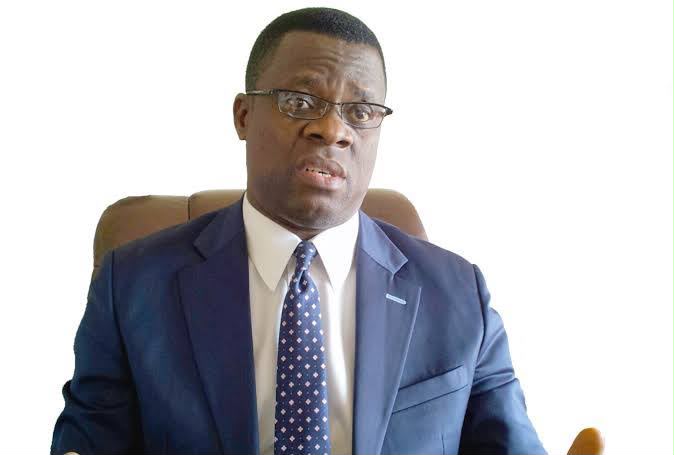
THE FALLACIES OF MIKE IGINI
“It is mean and cowardly and an evidence of weakness and utter demerit, for any group of people to attempt to commend themselves to the public by the negative process of belittling and condemning others.”_
- Chief Obafemi Awolowo, 28th April, 1951.
The attention of the Progressives Alliance for Justice, Unity and Democracy (PAJUD) has been drawn to the barrage of insults heaped by Mike Igini, former Resident Electoral Commissioner of the Independent National Electoral Commission (INEC), against every perceived and imaginary obstacle to his personal agenda.
We posit that since the return of democracy in 1999, the Nigerian political and electoral firmament has been overdosed with different genres of characters – the good, the bad and the ugly.
We state categorically and without fear of contradiction that President Bola Ahmed Tinubu is NOT responsible for the non-appointment of Mike Igini as either Chairman of INEC or National Commissioner since he left office in disgrace and engulfed in controversies in the South-South.
Igini must understand that such appointments are not done willy-nilly. They are based on several criteria. He has served two full terms as Resident Electoral Commissioner. For him to be nominated as National Commissioner, a vacancy must exist for his state. This is apart from the principle of rotation of the position among states in the geo-political zone.
Those who know President Bola Ahmed Tinubu closely know he is a leader who does not deliberately shut the door against competence and capacity. Anyone holding him in contempt on this matter is either being mischievous or acting out the script of the opposition, just like the present issue at stake.
It is unfortunate that Igini has allowed himself to be taken advantage of, dancing to the rhythm of anti-Tinubu and anti-Amupitan rogue agents.
We find it compelling to state unequivocally that Igini is blatantly scheming to discredit the present government and the Amupitan-led leadership of INEC in anticipation of reward by opposition elements and spent forces, if they ever win in the post-2027 general elections.
Over the years, we have watched the transformation of Igini from lawyer, to public affairs commentator, to agitator, until the PDP government appointed him Resident Electoral Commissioner.
We are amused at Igini’s feeble attempts at returning to public reckoning, using barefaced criticism, outright lies, mischief and fallacies against the Renewed Hope and reformative agenda as a springboard to relevance and prominence.
For an egocentric, self-seeking bigot and Mr. Know-All like Igini, he wants to remain relevant as a bride for any juicy INEC Election Management Committee headship or membership, which we know will never happen in this dispensation as a result of his antecedents while in office – an era marred by allegations of partisanship, disloyalty and endless controversies.
Your tenure as REC in Cross River State was characterised by mudslinging between you and a political party over unethical conduct unbecoming of an electoral officer. Similarly, your flexing of muscles and one-sided narratives during your tenure as REC of Akwa Ibom State is still very fresh in our memory. Till date, you are still spewing negative narratives against one of the politicians you fought in that state to high heavens.
Nigerians from all strata continue to wonder where the monies for the live telecast of Igini’s exit as Resident Electoral Commissioner of Akwa Ibom State originated from. In the history of INEC – from Dr. Ephraim Akpata, Alhaji Shehu Musa, Dr. Abel Guobadia, the much-vilified Prof. Maurice Iwu, Prof. Attahiru Jega reputed to be Igini’s benefactor, to Prof. Mahmood Yakubu – none of them had the temerity for such lavish display and grandeur during their exit. What was witnessed in the last days of Igini as REC in Akwa Ibom evokes serious questions about collective decency, decorum, moral rectitude and values.
Any argument in support of such an extravagant exit lacks integrity, for the simple reason that the pay slip of INEC Resident Electoral Commissioners and even National Commissioners is not a hidden document. It is known to the Nigerian public.
We believe that if we are sincere in this country, Igini should focus on more important non-partisan issues than chasing shadows. Igini should also address his own record, including the troubling episode of a Kenyan national engaged by INEC as a consultant some years ago, where the voter register fingerprints of Nigerians were allegedly compromised and handed to foreign interests. That despicable act is still fresh in our memory.
As overwhelming majority of Nigerians with voting rights are aware, there is an uncanny lust for power by desperate opposition politicians lurking on the horizon. They are deploying everything on earth just to grab power in 2027, and for no just cause but simply for selfish personal aggrandizement. They have recruited former staff, Directors, Resident Electoral Commissioners and National Commissioners to help execute their warped agenda and barefaced propaganda to deceive gullible Nigerians who will swallow every hook, line and sinker narrative framed by them.
We unreservedly agree with many who have suggested that as a believer in God, Igini should not allow his mind to be poisoned by the notion that any power outside the influence of God could have been responsible for the failure of his emergence as either National Commissioner or Chairman of the Commission.
Whatever it is, there seems to be more to it than meets the eye. The process of creating anarchy starts with incitement against the government, the electoral empire and security agencies. It often appears so smooth as to be imperceptible, hence those who engineer it enjoy the process at the initial stage, only to be consumed at the end of the day.
Elements in the class of Igini, who are acting out the script of falsehood purveyors and peddlers, will be put to shame at the end of the day. There is no doubt that Nigerians are going to have a well-deserved, credible, transparent, free and fair election in the 2027 general elections.
Above all, nobody can dispute the fact that President Bola Ahmed Tinubu nominated people with impeccable ability, capacity, loyalty, patriotism and honesty as members of the election management structure that will drive our democracy forward, in a manner that both Nigerians and the international community will be proud of like never before in our annals.
The focus of the Tinubu administration remains its much stronger determination to protect and respect the sanctity and fidelity of the ballot during the forthcoming elections.
We implore Mike Igini to stop the rabble-rousing, negative framing, mischief, mudslinging and casting of aspersions against the electoral umpire and Mr. President, and find something reasonable to do to earn a living just like other Nigerians, instead of going from one radio station to television stations across the country. His antics are already known to Nigerians who are far more sophisticated and politically savvy than before.
A word is enough for the wise… “WHEN YOU CONDEMN PEOPLE, YOU BRING JUDGEMENT ON YOURSELF.”
Signed:Comrade Yakubu Dan Abba
Country Representative, PAJUD.
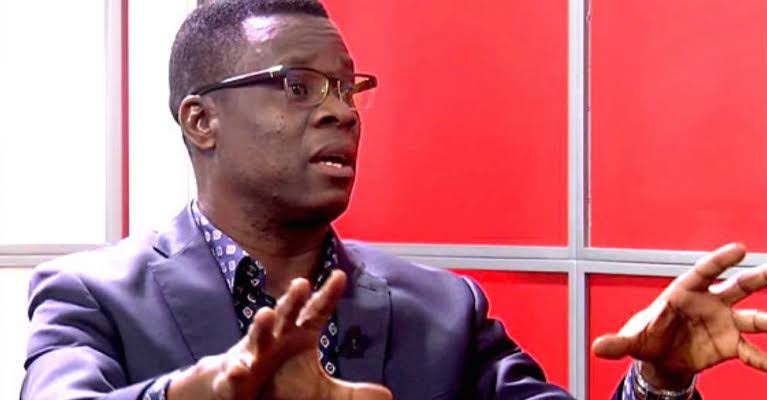
The Progressives Alliance for Justice, Unity and Democracy (PAJUD) has accused former Independent National Electoral Commission (INEC) Resident Electoral Commissioner, Mike Igini, of attempting to discredit President Bola Tinubu’s administration and the leadership of the electoral body, describing his criticisms as politically motivated.
The group, in a statement signed by its Country Representative, Comrade Yakubu Dan Abba, alleged that Igini was seeking to regain public relevance through persistent criticism of the government and the leadership of INEC under its current chairman, Prof. Joash Amupitan.
PAJUD, however, did not provide independent evidence to substantiate its allegations about Igini’s motives.
The group maintained that Tinubu was not responsible for Igini’s non-appointment as INEC chairman or national commissioner after completing his tenure as a Resident Electoral Commissioner, arguing that such appointments were subject to established criteria, vacancies and rotation arrangements among states within geopolitical zones.
“Those who know President Bola Ahmed Tinubu closely know he is a leader who does not deliberately shut the door against competence and capacity,” the statement said.
The group further alleged that Igini’s criticisms were intended to undermine the current administration and INEC’s leadership in anticipation of political rewards from opposition elements following the 2027 general elections.
PAJUD also questioned Igini’s record during his service as Resident Electoral Commissioner in Cross River and Akwa Ibom states, citing past disagreements with political actors and what it described as controversies surrounding his conduct in office.
It also raised questions about the cost and circumstances of the live television broadcast of Igini’s exit from office in Akwa Ibom State, comparing the event with the departures of previous INEC chairmen and other senior electoral officials.
The group did not provide documentary evidence to establish wrongdoing in connection with the broadcast.
In another allegation, PAJUD called on Igini to address what it described as concerns surrounding the engagement of a Kenyan national as an INEC consultant and the alleged compromise of Nigerian voters’ fingerprint data. The statement, however, did not present evidence establishing that Igini was personally responsible for any compromise of the data.
The alliance accused opposition politicians of attempting to discredit the electoral system ahead of the 2027 elections, alleging that some former electoral officials were being used to advance political interests. It did not identify the individuals allegedly involved or provide evidence supporting the claim.
PAJUD, meanwhile, expressed confidence in the ability of the current INEC leadership to conduct credible, transparent, free and fair elections in 2027.
It said the Tinubu administration remained committed to protecting the integrity of the ballot, adding that the president had nominated individuals it described as capable, patriotic and committed to the country’s democratic development.
The group urged Igini to refrain from what it characterised as inflammatory criticism of the president and the electoral commission, insisting that public discourse on electoral reform should be guided by responsibility and respect for democratic institutions.
Quoting former Premier of the Western Region, Chief Obafemi Awolowo, the alliance recalled his statement of April 28, 1951, that it was “mean and cowardly” for any group to seek public approval by belittling and condemning others.
PAJUD concluded by urging Nigerians to remain confident in the electoral process ahead of the 2027 general elections, while reiterating its support for the Tinubu administration and the current leadership of INEC.
The Freelance Journalist Federation (FJF) has expressed confidence in the committee investigating the reported deaths of 37 miners in Niger State, urging the public to allow the panel to conclude its assignment without undue pressure.
The federation’s position followed threats by the Nigeria Diaspora Organizations and Community for Human Rights (NDOCHR) to stage a protest at the headquarters of the Nigeria Security and Civil Defence Corps (NSCDC) in Abuja over alleged delays in releasing the investigation’s findings.
FJF in a statement issued on Friday and jointly signed by FJF conveners Ibrahim Ali, Jonathan Modi, Okpara Isaac and Christopher Abah, described the investigative process as transparent and thorough, insisting that sufficient time should be allowed for the committee to complete its work and establish the facts surrounding the incident.
The federation criticised the proposed demonstration, describing it as unnecessary and politically motivated, while warning against actions that could heighten tensions over an issue involving the loss of human lives.
It also commended the leadership of the NSCDC, the Minister of Interior and President Bola Ahmed Tinubu for what it described as their commitment to transparency, accountability and the rule of law.
According to the FJF, local civil society organisations monitoring the proceedings have expressed satisfaction with the panel’s conduct. However, the federation maintained that the investigation should be allowed to run its course before conclusions are drawn.
The group also rejected calls by the diaspora organisation for the immediate removal and prosecution of the NSCDC Commandant-General, Dr Ahmed Abubakar Audi, describing the demands as premature and inconsistent with the principle of fair hearing.
It argued that calls for sanctions before the conclusion of the investigation could undermine due process and prejudice public perception of the committee’s work.
The NDOCHR had also threatened to petition the International Criminal Court (ICC) in The Hague over the matter. In response, the FJF maintained that Nigeria’s domestic legal and investigative institutions should be allowed to address the allegations through established procedures.
The federation urged Nigerians in the diaspora to exercise restraint and avoid actions that could inflame political tensions or interfere with the ongoing investigation.
It urged members of the public to remain calm and await the committee’s official findings, stressing that a thorough investigation was necessary to establish the circumstances surrounding the reported deaths and determine any responsibility arising from the incident.
The committee’s final findings and any subsequent official actions are expected to be central to resolving the concerns surrounding the incident.
The statement further called on the Inspector-General of Police and other security agencies to take appropriate steps to maintain public order in the Federal Capital Territory.

WHO: Nigeria Records Zero Ebola Cases After Evacuation of Swiss Couple

Kwara celebrates Fela’s legacy with retrospective exhibition

2027: Ilorin West LG Boss Leads APC Mega Rally In Ubandawaki

-
 Uncategorized6 years ago
FG, states urged to harness flooding for ranching, others with technology – Agbaje
-
 Headlines11 years ago
Breaking: EFCC seals Borno House of Assembly, as Hon members take to their heels
-
 News12 years ago
Nigeria Security Operatives Stage Manhunt For Homosexual Perpetrator
-
 News10 years ago
How 21-year-old Girl fled community over accusation of lesbianism
-
 News11 years ago
Yobe Gov Moves Against Deputy
-
 Opinion7 years ago
7 signs she has friend zoned you
-
Technology5 years ago
Online job placement company headhunts women
-
 Headlines10 years ago
Borno Dep Gov Abducts Another Church Leader