
Opinion
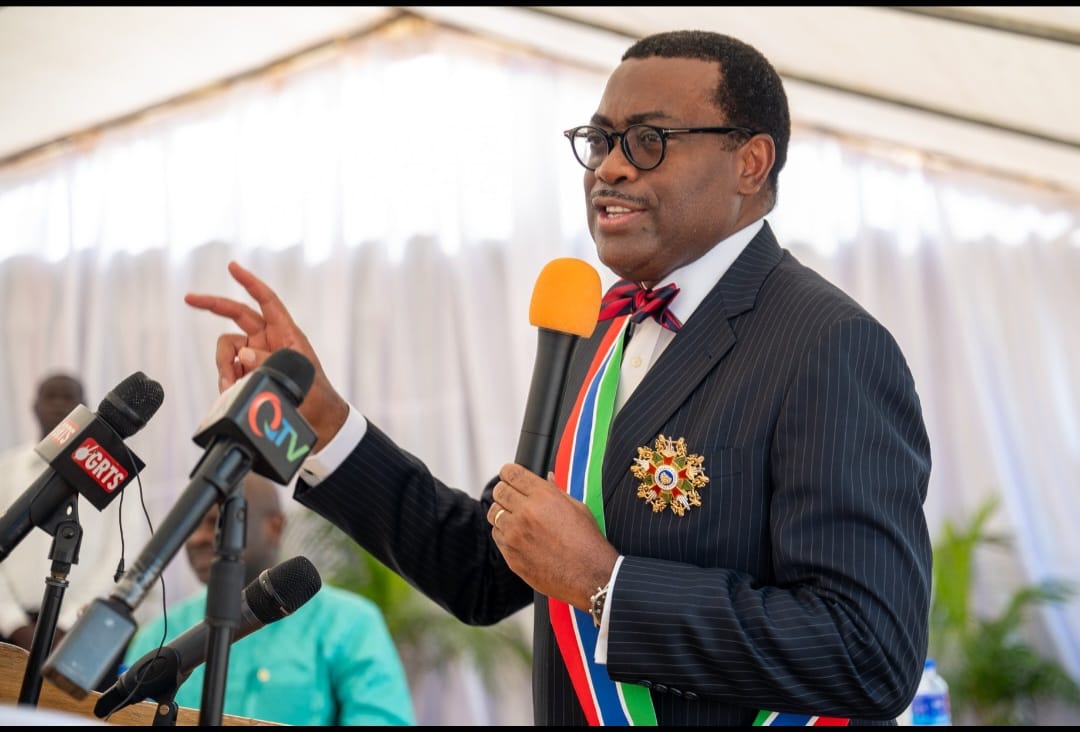
Adesina Driving Connected Devt Across Africa: Showcasing Africa As Investors’ Haven

By Omoba Kenneth Aigbegbele
The just-concluded Africa Investment Forum (AIF): Africa’s Investment Market Place with the theme, “Unlocking Africa’s Value Chains,” took place between November 8 and 10, 2023, at Marrakesh, Morocco. AIF is an arm of the Africa Development Bank (AfDB).
The event which was under the high patronage of His Majesty, Mohammed VI, King of Morocco, was indeed a high-level, top- notch event and a very successful one; charting a new course for Africa’s new prosperity and connectivity in all ramifications. This was also with keen reflections on digital disruptors and transformative technology, renewable energy and natural capital.
It also involves accelerating green growth; climate-resilient infrastructure; securing the future; capital market; mobilising investment for transformational growth; Africa’s creative industries; strategies for promoting investment and growth.
It was a response to the Feed Africa Commitment of the AfDB and other partners at the Africa Investment Forum, which unveiled a platform known as the Alliance for Special Agro-Industrial Processing Zones to mobilise equity funding for the continent’s agro-ecosystem.
The Africa Investment Forum is the place where bankable projects in Africa meet with investors, where investors meet with Heads of State and Governments in investment boardrooms, where comfort is given to investments; where risks are managed and where deals are closed.
There are many international conferences focused on business opportunities in Africa. No gathering, however, has been more strategic and important in terms of its convening power and capacity to galvanise investment actions on the continent and harness its resources than the Africa Investment Forum (AIF), Africa’s premier investment market place.
This much was echoed and drummed into the ears of everyone present by His Excellency, Mr. Omar Kabbaj, Advisor to the King, representing His Majesty Mohammed VI, King of Morocco, when he said: “The AIF is unique, it is not just any forum; it is a transactional platform, where real business is conducted; where deals are made and where actions supersede rhetoric.”
What makes the AIF unique and remarkable is that it is highly innovative and 100% transactional. There is no other global investment forum like it. They develop and curate projects, reduce transaction costs and risks and accelerate the closure of deals. They also improve the overall business environment within which projects and investments are structured, developed and delivered, making investments to land in Africa smoothly.
Since the launch of the Africa Investment Forum in 2018, it has drawn more than 16,500 participants and generated investment interests of nearly 143 billion dollars. At the 2022 AIF Market Days, the Abidjan – Lagos highway corridor was able to secure 15.5 billion dollars of investment interests.
This corridor will transform the entire West Africa region and speed up regional integration and trade. Also last year, other investment interests were secured for 3.6 billion dollars for the East Africa Railway corridor, linking Tanzania, Democratic Republic of Congo and Burundi respectively. That the AIF has so far closed on deals, investment gaps with 11 billion dollars, ranging from Liquefied Natural Gas (LNG) renewable energy, agribusiness, industrial manufacturing, creative industry, housing and transport.
According to global statistics, the Africa population will reach 2.5 billion by 2050, and the continent will account for 25% of the global population. The New York Times recently affirmed in a headline, what we already know that the world is becoming more African. With a youth population of 477 million people between the ages of 15 and 25, Africa will be key for supplying the global labour force. Then, the size of the food and agriculture market in Africa will be worth one trillion dollars by 2030, in less than seven years from now.
The future of the seven trillion dollar electronic vehicle market is tied to Nigeria and other African countries. The size of the electric vehicles value chain is estimated to increase from the current seven trillion dollars to 157 trillion dollars by 2050. That future, according to the president of AfDB, Dr. Akinwumi Adesina, depends on Africa. That is because, as he asserted, Africa accounts for the largest source of the green metals for the development of electric vehicles, including platinum (70%), cobalt (52%), manganese (46%), bauxite (25%) and graphite (21%).
An assessment by Bloomberg NEF shows that the cost of manufacturing of lithium-iron precursor batteries in Africa is three times less than in the United States, China and Poland, all together. The global electric vehicle market has experienced significant growth, which is driven by increasing environmental concerns and advancement in technology. China, the United States and Europe are the three biggest electric vehicle markets globally. China has incentives such as subsidies, tax breaks and licence plate restrictions which have encouraged consumers to embrace electric mobility.
Dr. Adesina, said, “Five of the six pre-pandemic top performing African countries are projected to be back in the league of the world’s 10 fastest growing economies for 2023-2024. African economies provide some of the best investment opportunities in the world.”
The AfDB and partners are developing the 20 billion dollar Desert-to-Power project across 11 countries that share the Sahel zone, which, when completed, will be the largest solar zone in the world. These countries: Nigeria, Burkina Faso, Cameroon, Chad, The Gambia, Guinea, Mauritania, Mali, Niger, Eritrea and Senegal, are the ones located within the Sahel region.
So, whether it is in oil and gas, minerals and metals, renewable energy, agriculture or the labour force that will drive global growth, Africa is where it should be. This is just as investors put money where the future is. In this case, the future is in Africa. Investors should, therefore, see Africa, not from whatever they just hear, but from what the facts say. Africa is not as risky as some perceive, according to Dr. Adesina. He reiterated, “Invest in Africa and reap high-risk adjusted returns!”
The Africa Continental Free Trade Area, when fully operational, offers incredible opportunities for boosting intra-regional trade across borders and regions as well as the emergence of a more competitive national, regional and globally connected value chain as envisaged in the Special Sessions on Regional Corridors: Quest to Integrate Africa. This, it was agreed, can only be achieved through the development of infrastructure.
This is why the Africa Development Bank provided over 44 billion dollars for the development of infrastructure in the past seven years and also devoted 2.5 billion dollars for the development of regional infrastructure. This feat is enhanced by the bank’s support for regional integration focused on catalyzing public and private investment in transportation and electricity connections.
The AfDB and partners are implementing the 20 billion dollars Desert-to-Power Initiative to develop 10GW of solar power across 11 countries of the Sahel zone, including the Sahel regional transmission lines to assume reliable and competitively priced electricity for development of the corridors. The AfDB also supports the development and expansion of regional power pools, in collaboration with the African Union Commission and Regional Economic Communities.
“That is the Africa we want: A Fully Interconnected Africa, using regional corridor infrastructure and innovative regional financing instruments, to unleash economic opportunities and assure competitiveness of national and regional value chains; a well-connected Africa will be a more competitive Africa,” as asserted by Dr. Adesina.
Emphasising and reiterating the AfDB drive for the development of regional transport corridors is the need to fast-track the Integration of African economies. This initiative will reduce transport costs, connect land-locked countries to coastal countries and improve regional trade and competitiveness.
It is also aimed at ensuring that critical infrastructure, especially roads, ports, rails have connected countries to zones of major agricultural potentials or where there exist abundant mineral resources. As of 2022, AfDB had financed 25 transport corridors, constructed over 18,000 kilometres of roads, 27 border posts and 16 bridges for a total amount of 13.5 billion dollars.
The AfDB investment in Mozambique – Beira corridor transport is significantly helping to reduce transport costs of imports and exports for Mozambique, Zimbabwe and Zambia. This 259 million dollars strategic bridge, financed by the AfDB, the Japanese International Development Agency, and the European Union-Africa Infrastructure Trust Fund, contributes to regional connectivity in the North-South corridor and integration of the Southern Africa Development Community.
The 2.7 billion dollars NacaLa rail and port project in Mozambique connects Mozambique and Malawi strengthening export competitiveness and open markets along the corridors. This was financed by AfDB and partners. The Senegambia Bridge which was financed by AfDB and the European Union connects The Gambia and Senegal, reducing travel time by over 50%, and improving trade between both countries.
The Lagos – Abidjan highway, which connects Nigeria, Benin, Togo and Cote d’Ivoire, secured investment interest of 15.2 billion dollars at the AIF last year, from multiple financiers and investors.
According to His Majesty, Mohammed VI, King of Morocco, his country has been championing for an Inter-African coordinated and cooperation mechanism to be enhanced in various fields of endeavours with a view to achieving regional economic integration and hub; that is why the Morocco – Nigeria Gas pipeline project is part of that endeavour closest to his heart. He said, “This reflects his resolve to lay the groundwork for genuine regional cooperation. The project, he further stated, will enhance all countries along the pipeline route to have access to reliable energy supplies and to be more resilient to exogenous energy price shocks.”
The African Development Bank has pledged 500 million dollars to develop the strategic Lobito corridor, connecting Angola, Zambia and the Democratic Republic of Congo to interlink countries and boost trade. The AfDB President has highlighted five priority areas to fully optimise the benefits of the developing regional corridors across Africa. These include: Dedicating pooled financing facilities to corridor projects; building special industrial zones around the corridors to optimise existing infrastructure; adopting a systematic approach; and platform to syndicate around the development of strategic regional corridors.
He emphasised that the development of the regional corridors should be complemented with one-stop-border posts to facilitate trade in the corridors, adding that, to achieve this, the AIF will dedicate a special boardroom annually for regional corridors. This, he maintained, will foster greater collaboration, co-financing and foster development of strategic corridors.
The Alliance for Special Agro-Industrial Processing Zones to mobilise equity funding for the continent’s eco-system, a new initiative by the AfDB following the success of the Feed Africa Summit (FAS), which AfDB in partnership with the Senegalese government and Africa Union, held in January in Dakar, was attended by 34 Heads of State and Governments, according to the AfDB boss. He also informed that the summit had successfully mobilised 72 billion dollars towards implementing food and agriculture delivery compacts.
The initiative, according to Dr. Adesina, is aimed at mobilising at least two billion dollars in financing and investment commitments from Alliance members and partners over the next five years. However, meeting the financing goal will deliver an additional 15 to 20 Special Agro-Industrial Processing Zones (SAPZ) projects in various countries across the continent.
The AfDB president stressed that the Alliance would raise funds through various investment windows for project preparation, project development and construction and financing for tenant companies. By so doing, the Alliance will bridge critical financing gaps, complement existing initiatives and mobilize resources towards the common goal of enhancing agricultural value addition in Africa.
The platform will also provide project preparation, finance, equity and debt investments, technical assistance, as well as project tracking and oversight. It will further help with improving administrative policy and investment incentives never envisaged previously.
The auspicious African Flagship Platform and Global brand was attended by Heads of State and Governments, Ministers from Africa, Captains of Industries and Corporate Africa, prominent among whom were His Excellency, Mr. Azali Assoumani, President of the Union of Comoros, and the Chairperson of the African Union, Her Excellency, Ms. Samia Suluhu Hassan; President of the United Republic of Tanzania, Her Excellency, Ms. Mia Amor Mottley; Prime Minister of Republic of Barbados, His Excellency, Mr. Julius Maada Bio; President of the Republic of Sierra Leone, His Excellency, Mr. Edouard Ngirente; Prime Minister of the Republic of Rwanda, Her Excellency, Ms. Nadia Fettah Alaoni; Minister of Economy and Finance of the Kingdom of Morocco, and Honourable Ministers that include Professor Benedict Oramah; President of the African Export-Import Bank, Mr. Samaila Zubairu; President of the Africa Finance Corporation (AFC), Mr. Alain Ebobisse; Chief Executive Officer of the Africa 50, Ms. Boitumelo Mosako; Chief Executive Officer of the Development Bank of Southern Africa, Mr. Werner Hoyer; President of the European Investment Bank, Dr. Muhammad Sulaiman Al Jasser; President of the Islamic Development Bank, Mr. Admassu Tadesse; President Emeritus and Managing Director, Trade and Development Bank, His Excellency, Babajide Sanwolu of Lagos State of Nigeria. Others in attendance were business leaders and investors from around the globe.
The Presidential Panel was attended by five Heads of State and Governments. There was robust engagement in challenges facing the continent. President Julius Maado Bio of Sierra Leone called for aggressive diversification of economies and attributed the desperation of youths to leave the continent to the low knowledge index of the economy.
According to him, hundreds of African youths who die in the Atlantic Ocean while crossing to Europe are searching for jobs exported by African countries, owing to failure to add value to their communities. The president of Sierra Leone said value addition is a necessary option for growing resilient national economies across Africa and noted that the continent needs to move from merely talking to action.
For the Tanzanian president, Suluhu Hassan, there are a lot of obstacles to trade and investment in the continent. He urged his colleagues to work towards removing the obstacles to make the continent a destination of global investment and pride.
On his part, the Rwandan Prime Minister, Edouard Ngirente, noted that time is ticking fast and the government could not afford to continue lamenting missed opportunities and chances, but rather move quickly and build the economy that their citizens deserve.
The Lagos state governor, Mr. Babajide Sanwolu, on the sideline, spoke about food security through direct food hub in Africa and how his administration wants investments to be domiciled in local currency to de-risk forex, interest rate challenges. He further revealed, in his remarks, that the Lagos state government is working assiduously to adopt a strategy where the investments coming to be domiciled in the state would be in local currency. Such a strategy, according to him, will deepen Nigeria’s own currency and also help the citizens; de-risk foreign currency interest rates and other issues. “So, indeed, this would be a lot of money. It could be billions of dollars in local currency or trillions of Naira. That is the kind of thing that we are going to pick,” he said.
Speaking on the need to sweat out public assets more in order to generate revenue and cash, the governor explained that the government is discussing with the Federal Ministry of Finance, adding that there are a lot of assets that are also in Lagos, which they want to determine the real ownership and what percentage everybody owns. That, he noted, will be able to free up dead assets that are locked down in some sectors and take them back to become new investable instruments.
Also speaking on the Lagos state completion of red-line railway by the end of 2023, and partnership with Ogun state on the project, Mr. Sanwolu revealed that they are partnering with Ogun state, adding that the red-line railway project is getting into Ogun state.
The governor added that his administration is committed to leveraging opportunities created by the on-going AIF and the interface with investors from across the world to create projects that impact lives of the indigenes.
“I came to this forum for the exchange of ideas with the global business community to identify areas of mutual economic relationship to enable my government come up with policies that could easily ramp up projects in transportation, food processing and film industry, amongst others, to help change the lives of the people.
“With the benefit of having about 23 years of consistency and unbroken policy environment, I have no doubt that the issue of political risk that many people are often concerned about, won’t indeed be an issue in the state.”
The managing director and chief executive of Nigerian Liquefied Natural Gas (NLNG) Limited, Mr. Philip Mshelia, on the sidelines, listed the federal government’s import tax, value added tax (VAT) and the chronic shortage of foreign exchange facing importers as the key variables behind rising cost of cooking gas in Nigeria.
Mr. Mshelia, therefore, urged the federal government to take a second look at those factors which, he said, impact about 60% of the product component if it wants Nigerians to enjoy lower prices of cooking gas.
According to him, Nigeria needs more investments in that area to propane development, so that more development and investments need to take place. Propane, he revealed, can be used for transportation, power generation and cell-phone tower.
“There is a huge investment opportunity in propane. The produce is there, but, it is also a question of balancing supply and demand to create opportunity for more investment inflows to come into the country,” he said.
The Group Chief Executive Officer, Nigeria Exchange (NGX) Group Plc, Oscar Onyema, while speaking at the Market Place Africa, advised African governments to reposition their economies to attract financial investments. He went further to urge African leaders to remove roadblocks, ensure connectivity to transportation and boost money payment systems on the continent and, therefore, commended President Bola Tinubu administration’s efforts towards ensuring a business-friendly environment when they come to a country to do business.
He said, “All these things are critical, and Nigerians understand that when you look at what the current administration is doing, these things are very important, because investment flows are ubiquitous. They will go where it is easiest for them; that from the capital market perspective, we have been talking to investors; portfolio investors do not like uncertainty. They like transparency; they like to be able to model expected returns to be able to articulate risk and manage risk.
“The Nigerian Stock Exchange Group is at the global African platform to showcase projects and connect with investors,”
While commending the AIF, he said it was a good platform that brought together various players, the governments that provided the facilitation, the project sponsors and the investors. On the effect of political risk on investors, he said political risks are not peculiar to Africa, but are found everywhere in the world.”
The event was under the highest patronage of His Majesty, Mohammed VI, the King of Morocco, who also said given the unpredictable situation and the scale of development finance needs in Africa, the role of the private sector has been gaining greater importance in achieving African countries’ development objectives.
He said further, “State budgets alone cannot cover all the investment needed, especially in high-potential, job intensive sectors. Considering the great many investment opportunities it offers private operators, Africa needs, now more than ever, bold, innovative initiatives to encourage private entrepreneurship and unleash the full potential of our continent.”
The King of Morocco added, “That is why initiatives such as the African Investment Forum (AIF), which is sponsored by the AfDB, are commendable, because they help direct private investment towards the most promising economic sectors, thus reinforcing the integration of Africa’s economies into global value chains.”
All the high network corporate Africans, Heads of Governments, Ministers from across Africa, agreed that, indeed President of the AfDB, Dr. Akinwumi Adesina, is a global brand; chief optimist of Africa and a great and foremost marketing chief executive of Africa who has used the AfDB platform to change the narrative of Africa; deconstruct conversation favourable to Africa and shape opinions that, indeed, Africa is bankable and the risks are minimal, unlike what most books are saying as he re-echoed time again that “the future is indeed Africa and the time is now for investments and investors to see the continent as the new market place of ideas and unlocking the continent’s value chain.”
The Senior Director of Africa Investment Forum (AIF), Chinelo Anohu, a change-agent, who has many successful brands to her name and has grown the AIF brand from scratch to what it is today as Africa’s flagship financial transactions platform for African Development with her phenomenal team, said, “Africa must trust Africans with their ideas, innovations and strategy for the future.”
The event was co-sponsored by the Africa Export-Import Bank, Africa Finance Corporation, Africa 50, and Development Bank of Southern Africa, European Investment Bank and the Islamic Development Bank.
…Omoba Kenneth Aigbegbele is the executive secretary, Citizens Watch Advocacy Initiative (CWAI) and president, GOCMEJ.

By Kassim Omomia
We have watched Ben Okezie Kalu the deputy speaker of the House with all admiration. He exudes humour, humility and hardwork.
Kalu did not catch our glimpse from the wrong side but from a prism of competence, dedication and above all patriotism in his legislative duties. Even though we may not have a full grasp of Okezie’s elementary political life up till his ascension to the exalted office of Deputy speaker, House of Representatives, Federal Republic of Nigeria, but it is on record that he served extremely well and meritoriously when as a first time member of the House of Representatives he was chairman Media and Publicity committee, doubling as spokesperson and image maker.
Okezie stirred the House public outlook to the approval of Nigerians and the outside world,comparing that unit of the Nigerian bicameral legislature he managed its image to world parliaments, like the US Congress and the British House of Common,among others. At home, the House of Representatives earned “the Peoples Parliament” accolade “.
Recalling Okezie’s past,the nostalgia breeds excitement and a continuous commitment to legislative and representatives’ service to his people and the country.
Albeit these well delivered services, his underscoring accomplishments were reinforced by his promotion and advancement to the post of Deputy Speaker House of Representatives, a divine elevation to yet, many exalted offices to come.Kalu qualifies to be governor, and Vice President, even the President of this great country ,if young men are roundly supported for such enviable positions.
Notwithstanding, his Bills , motions are not watery but of immense value to democratic governance, systemic reforms and overall growth and welfare of Nigerians. Call it democratic dividends, the Bende constituents have never had it so good, until now. Similarly his quest for a people’s constitution brings to fore his worthy contributions in the current alteration of the1999 Constitution exercise which he midwife’s for the House of Representatives. He speaks continually about a people’s inclusiveness in people’s document. He speaks about equity, justice and fairness for all. He’s concerned about security, a community policing strategy where states look critically into domestic security and policing. Okezie speaks for all: about good life for Nigerians, not only the Abia people he represents.
Curiously, I have also come in good terms and stead with his leadership style, especially his legislative prowess in presiding, either as Speaker in Chair or Chairman at the Committee of Whole”,a serious and critical aspect of legislative business, where reports become laws made by the parliament. At this critical level of legislative engagement, Ben Okezie Kalu has performed extremely well ,surpassing past deputies. This scoring is without prejudice or gainsaying but with all modesty.
I have written about parliamentary activities,from plenary to investigative hearings, to deliberations and considerations of reports , either in Committee of Supply for money issues -budgets etc, since 2000. I have also been privileged to sit for longer periods listening from the gallery, deliberations at the “Committee of Whole’, a tedious and significant session of legislative processes and never seeing a deputy speaker as pragmatic and intelligent like Kalu. it takes a Chair that is not lazy but with dexterity, humility, patience and resilience to succeed in any report consideration at the “Committee of Whole”.And one former deputy speaker who comes close to Kalu in assesment was Hon Lasun.But with this current Deputy Speaker, the magic wand to navigate these trying moments where every member appears uninterested in their legislative function, is unprecedented.
Two manoeuvres that beat my imagination and exhibit Kalu’s superb style is his smooth management of deliberations and final consideration of the 2025 Electoral.Amendment Bill and the passage of the 2026-2028 MTEF and FSP, on Thursday December 18 2025, few moments to the 2026 Budget presentation by President Ahmed Tinubu to the joint session of the National Assembly.
His mental alertness, understanding of the subject matter, his assessment of the mood and psyche of the members and his strategic demeanour coupled with the patience and resilient approachas well as his humility, diplomacy in getting an unwilling session sit for hours, unknowingly to the members that they had sat for so long and passed a record two critical national assignments, still leaves even the members amiss how it began but ended well.
For over two weeks now, there have been several adjournments to consider the Electoral amendment Bill. The constraints at times point to the inconsequential number of members in session , or when there’s a seeming quorum, inertia and unwillingness sets in.
According to checks, members’ lacklustre attitude in these ending times, come from failed promises from the executive branch such that it was gathered that the lawmakers were adjourning for the yuletide break without cash -backings.This development not only worries the legislators who are at a loss over how to satify their insatiable constituents during the Christmas festivities, but has resulted to the lethargy displayed by them in carrying out their statutory duties of law making . Fears are that, the members may not chorus “on your mandate we stand”, going forward, especially on 19 Friday December 2025, when the President presents his 2026 budget to the joint session of the National Assembly
While the outcome of that session is awaited, the success gained in the House of Representatives for completing and finally passing the MTEF/FSP in record time and upon which premise President Tinubu submits the 2026 Appropriation Bill, after the Senate hurriedly put out their own since Tuesday evening,underscores the goodwill the deputy speaker enjoys from his colleagues,expectedy due to his humility and resilience,such that in over six- unstoppable hours, he successfully managed a tensed session to effectively pass the MTEF and Electoral.amenment Bill. This is all kudos to a young PAN- Nigerian legislator in our hearts
That Ben Okezie Kalu displays an uncommon leadership acumen, which promotes unity and which with he won the hearts of all who sat in plenary on that faithful Thursday 18 2025,is an understatement . This is so because all the lawmaker at that Thursday session,wether Hausa, Fulani, Yoruba,Edo, TIV ,Idoma,Gbagy and of course Ibo were in sync with, aligning with his master stroke with which he chaired that earlier unpredictable session that later became a huge success. I have a dream that Ben Okezie Kalu shall accomplish more in his political career, given his character, competence and leadership capacity.
He will excel beyond this time, tide and position. Ben Okezie Kalu is the lawmaker in our hearts and qualifies for our award as ‘ A Legislature- Exemplar’ even as we watch him deliver again during the final voting of the alteration to the 1999 constitution ( As Ammended) in the days to come.
Kassim Omomia of the Bigeyeonline writes from Abuja


By James Itodo
The Nigerian oil and gas sector, since its discovery, exploration, and exploitation at the turn of the century, has become the goose that lays the golden egg, likened only to the much-sought-after bride.
This is because oil, and later gas, remained the main economic sustainer, accounting for virtually all the revenue utilised for the economic sustainability and stability of the country—a nation driven by a monolithic economy.
Various attempts at sustaining its viability failed because those reforms lacked the necessary ingredients and the political will of their drivers to succeed. Moreover, the temptation of the enormous amounts generated, and the ease of generating this revenue, became stronger than the moral responsibility and patriotic devotion of the country’s leaders, causing various rulers to rely completely on oil while abandoning or ignoring agriculture and every other means of generating revenue, including all forms of diversification and integration.
The present Nigerian Upstream Petroleum Regulatory Commission (NUPRC) was born out of necessity: first, to inherit the abnormalities of the past; and second, to set in motion reforms aimed at effectively repositioning the sector. Key among these is strong political will and the appropriate sensitisation of the country’s political leaders to look beyond oil and gas revenue and think towards diversification.
To carry this out effectively, there is a need to build trust and confidence on the fulcrum of accountability and transparency.
So far, the verdict has been positive. The basic recipe for repositioning and bringing about a volte-face in the sector is now present: accountability and transparency.
A new era, based on a better concept of transparency and accountability, is enhancing the effective repositioning of the Nigerian oil and gas sector, which will work for the overall benefit of all citizens and indeed residents.
Today, Nigerians are now seeing the oil and gas sector as a blessing, with transparency and accountability becoming the fulcrum of operations at the NUPRC.
There is no doubt that, for decades, Nigeria’s oil and gas sector was a cesspit of abhorrent and odious corruption, coupled with mismanagement—a centre of graft, earning the moniker “resource curse.”
Instead of bringing blessings to the country, it became an avenue for self-aggrandisement and self-enrichment at the detriment of national interest, economic growth, prosperity, and development.
As a whole, the sector’s opacity and lack of accountability led to widespread corruption, where the few who had access to this national wealth enriched themselves and their families—buying choice houses at highly exorbitant prices in prime cities of the world and sending their children to schools abroad on ear-splitting school fees, all with our common patrimony—at the expense of the country. This resulted in environmental degradation and human rights abuses, leaving citizens with little to show for the country’s vast oil resources, world oil production status, and its derived and associated wealth.
However, a new dawn has emerged with the Nigerian Upstream Petroleum Regulatory Commission (NUPRC) leading a rescue mission to reposition the sector with renewed vigour, intentionality, and patriotic commitment under the leadership of Engr. Gbenga Komolafe, who has turned the NUPRC into a beacon of hope for Nigerians.
Unambiguously, the NUPRC’s commitment to transparency is demonstrated through its proactive disclosure of key industry data—which had previously been shrouded in obscurity—including production figures, revenue streams, and contract awards.
The demystification and openness of this key information have greatly enhanced the fostering of trust and confidence among stakeholders, including local communities, civil society organisations, and international partners.
Another signature reform is the strengthening and implementation of the Nigeria Extractive Industries Transparency Initiative (NEITI), which ensures that oil and gas revenues are transparently tracked and accounted for, thereby reducing corruption and ensuring that revenues are channelled for the overall benefit of all citizens.
Projecting the ideals of the Renewed Hope Agenda of the Tinubu-led administration, the NUPRC has also prioritised increased utilisation of local content development, bringing on board many more Nigerian companies to participate in the oil and gas value chain, thereby creating more jobs, stimulating economic growth, and empowering local communities.
The sector’s transformation is an unequivocal demonstration of the power of transparency and accountability.
Daily, Nigerians are beginning to see oil and gas resources as a direct blessing rather than a curse, with a sector and operators poised to drive economic growth, create jobs, and improve living standards.
However, this is just the beginning; the journey is far from over, and the best is yet to come—for all of us.
While Nigerians holistically embrace these reforms, they must also continue to demand transparency and accountability from their leaders, while the NUPRC’s efforts must be supported and sustained to ensure that the sector remains a catalyst for national development.
There is no doubt that the oil and gas sector can be a powerful catalytic tool for poverty reduction, wealth creation, and economic transformation. This can be imminently and necessarily achieved when the NUPRC continues in its commitment to transparency and accountability, predicated on the resilience of Nigerians, who will look forward to a brighter future where their natural resources work for them, not against them.
It must be a collaborative and conscientious responsibility of all Nigerians not only to support the NUPRC’s efforts and reforms targeted at transforming the oil and gas sector but also to demand consistent transparency and accountability from our leaders, as this will ensure that our natural resources benefit all Nigerians, securing a brighter future for Nigeria and Nigerians.
Itodo writes from Abuja
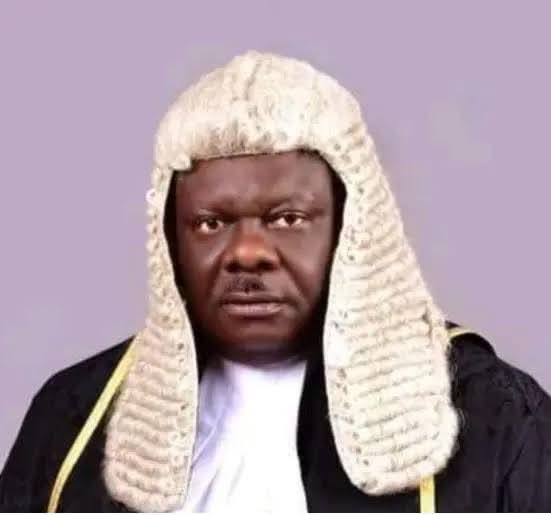
The Tiv Supreme Council has announced that former Attorney General of the Federation and Minister of Justice, Chief Kaase Michael Aondoakaa, SAN, will be conferred with the Ivaaniyange chieftaincy title.
The title, according to the Council, recognizes individuals considered to have made notable contributions to the advancement and welfare of the Tiv people.
Chief Aondoakaa, a Senior Advocate of Nigeria, currently serves in various public and private sector roles, including Chairman, Endowment Fund Raising Committee at Joseph Sarwuan Tarka University, Makurdi. He also provides advisory support on foreign investment, entrepreneurship, and agricultural development. He is associated with the West African Rice Processors Association (WARIA) and the Rice Processors Association of Nigeria (RIPAN).
He is a member of the Nigerian Bar Association and the International Bar Association.
Associates describe him as a supporter of youth development and educational advancement. According to persons familiar with his philanthropic activities, he has supported scholarship initiatives and facilitated opportunities for several indigent beneficiaries over the years.
The Tiv Supreme Council stated that the new honour acknowledges what it views as his years of service in legal, governance, and agricultural sectors. The Council expressed confidence that he will continue to contribute to community development following the conferment.
Chief Aondoakaa previously received a traditional chieftaincy title, Tsar-U-Tiv Mba Sha Nasarawa, from the Mutual Union of Tiv People in Nasarawa State in 2008.
He has participated in various international engagements across Europe, Asia, the Middle East, the Americas, and Africa, representing Nigeria in official and professional capacities. He has also been recognised with awards by different organisations for what they described as service and excellence.
Chief Aondoakaa is a practicing Catholic and is married with children.
The formal conferment of the Ivaaniyange title is expected to hold in Makurdi on a date to be officially issued by the Council.


Dogara Celebrates Baba Jang at 82, Hails Him as a Visionary Statesman

I’ ll contest for Nasarawa Governor in 2027, says Ombugadu

Oborevwori Hails Traditional Rulers as Pillars of Peace, Development

-
 Uncategorized5 years ago
FG, states urged to harness flooding for ranching, others with technology – Agbaje
-
 Headlines10 years ago
Breaking: EFCC seals Borno House of Assembly, as Hon members take to their heels
-
 News12 years ago
Nigeria Security Operatives Stage Manhunt For Homosexual Perpetrator
-
 News9 years ago
How 21-year-old Girl fled community over accusation of lesbianism
-
 News10 years ago
Yobe Gov Moves Against Deputy
-
 Opinion7 years ago
7 signs she has friend zoned you
-
Technology4 years ago
Online job placement company headhunts women
-
 Headlines10 years ago
Borno Dep Gov Abducts Another Church Leader