
Opinion
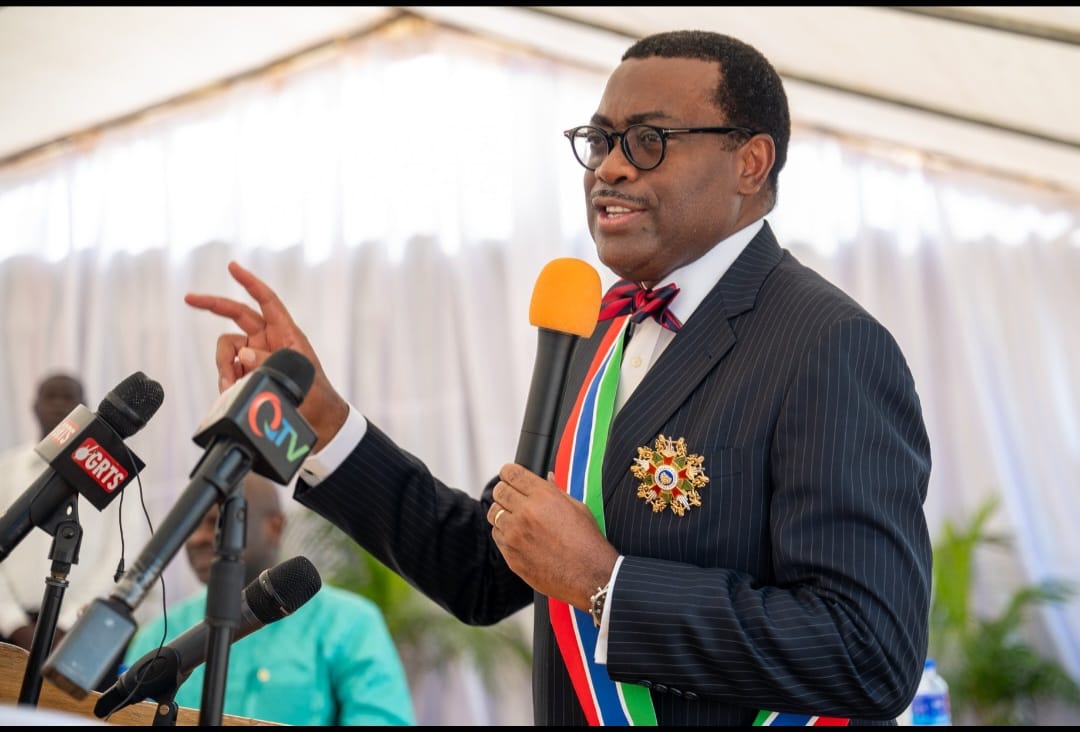
Adesina Driving Connected Devt Across Africa: Showcasing Africa As Investors’ Haven

By Omoba Kenneth Aigbegbele
The just-concluded Africa Investment Forum (AIF): Africa’s Investment Market Place with the theme, “Unlocking Africa’s Value Chains,” took place between November 8 and 10, 2023, at Marrakesh, Morocco. AIF is an arm of the Africa Development Bank (AfDB).
The event which was under the high patronage of His Majesty, Mohammed VI, King of Morocco, was indeed a high-level, top- notch event and a very successful one; charting a new course for Africa’s new prosperity and connectivity in all ramifications. This was also with keen reflections on digital disruptors and transformative technology, renewable energy and natural capital.
It also involves accelerating green growth; climate-resilient infrastructure; securing the future; capital market; mobilising investment for transformational growth; Africa’s creative industries; strategies for promoting investment and growth.
It was a response to the Feed Africa Commitment of the AfDB and other partners at the Africa Investment Forum, which unveiled a platform known as the Alliance for Special Agro-Industrial Processing Zones to mobilise equity funding for the continent’s agro-ecosystem.
The Africa Investment Forum is the place where bankable projects in Africa meet with investors, where investors meet with Heads of State and Governments in investment boardrooms, where comfort is given to investments; where risks are managed and where deals are closed.
There are many international conferences focused on business opportunities in Africa. No gathering, however, has been more strategic and important in terms of its convening power and capacity to galvanise investment actions on the continent and harness its resources than the Africa Investment Forum (AIF), Africa’s premier investment market place.
This much was echoed and drummed into the ears of everyone present by His Excellency, Mr. Omar Kabbaj, Advisor to the King, representing His Majesty Mohammed VI, King of Morocco, when he said: “The AIF is unique, it is not just any forum; it is a transactional platform, where real business is conducted; where deals are made and where actions supersede rhetoric.”
What makes the AIF unique and remarkable is that it is highly innovative and 100% transactional. There is no other global investment forum like it. They develop and curate projects, reduce transaction costs and risks and accelerate the closure of deals. They also improve the overall business environment within which projects and investments are structured, developed and delivered, making investments to land in Africa smoothly.
Since the launch of the Africa Investment Forum in 2018, it has drawn more than 16,500 participants and generated investment interests of nearly 143 billion dollars. At the 2022 AIF Market Days, the Abidjan – Lagos highway corridor was able to secure 15.5 billion dollars of investment interests.
This corridor will transform the entire West Africa region and speed up regional integration and trade. Also last year, other investment interests were secured for 3.6 billion dollars for the East Africa Railway corridor, linking Tanzania, Democratic Republic of Congo and Burundi respectively. That the AIF has so far closed on deals, investment gaps with 11 billion dollars, ranging from Liquefied Natural Gas (LNG) renewable energy, agribusiness, industrial manufacturing, creative industry, housing and transport.
According to global statistics, the Africa population will reach 2.5 billion by 2050, and the continent will account for 25% of the global population. The New York Times recently affirmed in a headline, what we already know that the world is becoming more African. With a youth population of 477 million people between the ages of 15 and 25, Africa will be key for supplying the global labour force. Then, the size of the food and agriculture market in Africa will be worth one trillion dollars by 2030, in less than seven years from now.
The future of the seven trillion dollar electronic vehicle market is tied to Nigeria and other African countries. The size of the electric vehicles value chain is estimated to increase from the current seven trillion dollars to 157 trillion dollars by 2050. That future, according to the president of AfDB, Dr. Akinwumi Adesina, depends on Africa. That is because, as he asserted, Africa accounts for the largest source of the green metals for the development of electric vehicles, including platinum (70%), cobalt (52%), manganese (46%), bauxite (25%) and graphite (21%).
An assessment by Bloomberg NEF shows that the cost of manufacturing of lithium-iron precursor batteries in Africa is three times less than in the United States, China and Poland, all together. The global electric vehicle market has experienced significant growth, which is driven by increasing environmental concerns and advancement in technology. China, the United States and Europe are the three biggest electric vehicle markets globally. China has incentives such as subsidies, tax breaks and licence plate restrictions which have encouraged consumers to embrace electric mobility.
Dr. Adesina, said, “Five of the six pre-pandemic top performing African countries are projected to be back in the league of the world’s 10 fastest growing economies for 2023-2024. African economies provide some of the best investment opportunities in the world.”
The AfDB and partners are developing the 20 billion dollar Desert-to-Power project across 11 countries that share the Sahel zone, which, when completed, will be the largest solar zone in the world. These countries: Nigeria, Burkina Faso, Cameroon, Chad, The Gambia, Guinea, Mauritania, Mali, Niger, Eritrea and Senegal, are the ones located within the Sahel region.
So, whether it is in oil and gas, minerals and metals, renewable energy, agriculture or the labour force that will drive global growth, Africa is where it should be. This is just as investors put money where the future is. In this case, the future is in Africa. Investors should, therefore, see Africa, not from whatever they just hear, but from what the facts say. Africa is not as risky as some perceive, according to Dr. Adesina. He reiterated, “Invest in Africa and reap high-risk adjusted returns!”
The Africa Continental Free Trade Area, when fully operational, offers incredible opportunities for boosting intra-regional trade across borders and regions as well as the emergence of a more competitive national, regional and globally connected value chain as envisaged in the Special Sessions on Regional Corridors: Quest to Integrate Africa. This, it was agreed, can only be achieved through the development of infrastructure.
This is why the Africa Development Bank provided over 44 billion dollars for the development of infrastructure in the past seven years and also devoted 2.5 billion dollars for the development of regional infrastructure. This feat is enhanced by the bank’s support for regional integration focused on catalyzing public and private investment in transportation and electricity connections.
The AfDB and partners are implementing the 20 billion dollars Desert-to-Power Initiative to develop 10GW of solar power across 11 countries of the Sahel zone, including the Sahel regional transmission lines to assume reliable and competitively priced electricity for development of the corridors. The AfDB also supports the development and expansion of regional power pools, in collaboration with the African Union Commission and Regional Economic Communities.
“That is the Africa we want: A Fully Interconnected Africa, using regional corridor infrastructure and innovative regional financing instruments, to unleash economic opportunities and assure competitiveness of national and regional value chains; a well-connected Africa will be a more competitive Africa,” as asserted by Dr. Adesina.
Emphasising and reiterating the AfDB drive for the development of regional transport corridors is the need to fast-track the Integration of African economies. This initiative will reduce transport costs, connect land-locked countries to coastal countries and improve regional trade and competitiveness.
It is also aimed at ensuring that critical infrastructure, especially roads, ports, rails have connected countries to zones of major agricultural potentials or where there exist abundant mineral resources. As of 2022, AfDB had financed 25 transport corridors, constructed over 18,000 kilometres of roads, 27 border posts and 16 bridges for a total amount of 13.5 billion dollars.
The AfDB investment in Mozambique – Beira corridor transport is significantly helping to reduce transport costs of imports and exports for Mozambique, Zimbabwe and Zambia. This 259 million dollars strategic bridge, financed by the AfDB, the Japanese International Development Agency, and the European Union-Africa Infrastructure Trust Fund, contributes to regional connectivity in the North-South corridor and integration of the Southern Africa Development Community.
The 2.7 billion dollars NacaLa rail and port project in Mozambique connects Mozambique and Malawi strengthening export competitiveness and open markets along the corridors. This was financed by AfDB and partners. The Senegambia Bridge which was financed by AfDB and the European Union connects The Gambia and Senegal, reducing travel time by over 50%, and improving trade between both countries.
The Lagos – Abidjan highway, which connects Nigeria, Benin, Togo and Cote d’Ivoire, secured investment interest of 15.2 billion dollars at the AIF last year, from multiple financiers and investors.
According to His Majesty, Mohammed VI, King of Morocco, his country has been championing for an Inter-African coordinated and cooperation mechanism to be enhanced in various fields of endeavours with a view to achieving regional economic integration and hub; that is why the Morocco – Nigeria Gas pipeline project is part of that endeavour closest to his heart. He said, “This reflects his resolve to lay the groundwork for genuine regional cooperation. The project, he further stated, will enhance all countries along the pipeline route to have access to reliable energy supplies and to be more resilient to exogenous energy price shocks.”
The African Development Bank has pledged 500 million dollars to develop the strategic Lobito corridor, connecting Angola, Zambia and the Democratic Republic of Congo to interlink countries and boost trade. The AfDB President has highlighted five priority areas to fully optimise the benefits of the developing regional corridors across Africa. These include: Dedicating pooled financing facilities to corridor projects; building special industrial zones around the corridors to optimise existing infrastructure; adopting a systematic approach; and platform to syndicate around the development of strategic regional corridors.
He emphasised that the development of the regional corridors should be complemented with one-stop-border posts to facilitate trade in the corridors, adding that, to achieve this, the AIF will dedicate a special boardroom annually for regional corridors. This, he maintained, will foster greater collaboration, co-financing and foster development of strategic corridors.
The Alliance for Special Agro-Industrial Processing Zones to mobilise equity funding for the continent’s eco-system, a new initiative by the AfDB following the success of the Feed Africa Summit (FAS), which AfDB in partnership with the Senegalese government and Africa Union, held in January in Dakar, was attended by 34 Heads of State and Governments, according to the AfDB boss. He also informed that the summit had successfully mobilised 72 billion dollars towards implementing food and agriculture delivery compacts.
The initiative, according to Dr. Adesina, is aimed at mobilising at least two billion dollars in financing and investment commitments from Alliance members and partners over the next five years. However, meeting the financing goal will deliver an additional 15 to 20 Special Agro-Industrial Processing Zones (SAPZ) projects in various countries across the continent.
The AfDB president stressed that the Alliance would raise funds through various investment windows for project preparation, project development and construction and financing for tenant companies. By so doing, the Alliance will bridge critical financing gaps, complement existing initiatives and mobilize resources towards the common goal of enhancing agricultural value addition in Africa.
The platform will also provide project preparation, finance, equity and debt investments, technical assistance, as well as project tracking and oversight. It will further help with improving administrative policy and investment incentives never envisaged previously.
The auspicious African Flagship Platform and Global brand was attended by Heads of State and Governments, Ministers from Africa, Captains of Industries and Corporate Africa, prominent among whom were His Excellency, Mr. Azali Assoumani, President of the Union of Comoros, and the Chairperson of the African Union, Her Excellency, Ms. Samia Suluhu Hassan; President of the United Republic of Tanzania, Her Excellency, Ms. Mia Amor Mottley; Prime Minister of Republic of Barbados, His Excellency, Mr. Julius Maada Bio; President of the Republic of Sierra Leone, His Excellency, Mr. Edouard Ngirente; Prime Minister of the Republic of Rwanda, Her Excellency, Ms. Nadia Fettah Alaoni; Minister of Economy and Finance of the Kingdom of Morocco, and Honourable Ministers that include Professor Benedict Oramah; President of the African Export-Import Bank, Mr. Samaila Zubairu; President of the Africa Finance Corporation (AFC), Mr. Alain Ebobisse; Chief Executive Officer of the Africa 50, Ms. Boitumelo Mosako; Chief Executive Officer of the Development Bank of Southern Africa, Mr. Werner Hoyer; President of the European Investment Bank, Dr. Muhammad Sulaiman Al Jasser; President of the Islamic Development Bank, Mr. Admassu Tadesse; President Emeritus and Managing Director, Trade and Development Bank, His Excellency, Babajide Sanwolu of Lagos State of Nigeria. Others in attendance were business leaders and investors from around the globe.
The Presidential Panel was attended by five Heads of State and Governments. There was robust engagement in challenges facing the continent. President Julius Maado Bio of Sierra Leone called for aggressive diversification of economies and attributed the desperation of youths to leave the continent to the low knowledge index of the economy.
According to him, hundreds of African youths who die in the Atlantic Ocean while crossing to Europe are searching for jobs exported by African countries, owing to failure to add value to their communities. The president of Sierra Leone said value addition is a necessary option for growing resilient national economies across Africa and noted that the continent needs to move from merely talking to action.
For the Tanzanian president, Suluhu Hassan, there are a lot of obstacles to trade and investment in the continent. He urged his colleagues to work towards removing the obstacles to make the continent a destination of global investment and pride.
On his part, the Rwandan Prime Minister, Edouard Ngirente, noted that time is ticking fast and the government could not afford to continue lamenting missed opportunities and chances, but rather move quickly and build the economy that their citizens deserve.
The Lagos state governor, Mr. Babajide Sanwolu, on the sideline, spoke about food security through direct food hub in Africa and how his administration wants investments to be domiciled in local currency to de-risk forex, interest rate challenges. He further revealed, in his remarks, that the Lagos state government is working assiduously to adopt a strategy where the investments coming to be domiciled in the state would be in local currency. Such a strategy, according to him, will deepen Nigeria’s own currency and also help the citizens; de-risk foreign currency interest rates and other issues. “So, indeed, this would be a lot of money. It could be billions of dollars in local currency or trillions of Naira. That is the kind of thing that we are going to pick,” he said.
Speaking on the need to sweat out public assets more in order to generate revenue and cash, the governor explained that the government is discussing with the Federal Ministry of Finance, adding that there are a lot of assets that are also in Lagos, which they want to determine the real ownership and what percentage everybody owns. That, he noted, will be able to free up dead assets that are locked down in some sectors and take them back to become new investable instruments.
Also speaking on the Lagos state completion of red-line railway by the end of 2023, and partnership with Ogun state on the project, Mr. Sanwolu revealed that they are partnering with Ogun state, adding that the red-line railway project is getting into Ogun state.
The governor added that his administration is committed to leveraging opportunities created by the on-going AIF and the interface with investors from across the world to create projects that impact lives of the indigenes.
“I came to this forum for the exchange of ideas with the global business community to identify areas of mutual economic relationship to enable my government come up with policies that could easily ramp up projects in transportation, food processing and film industry, amongst others, to help change the lives of the people.
“With the benefit of having about 23 years of consistency and unbroken policy environment, I have no doubt that the issue of political risk that many people are often concerned about, won’t indeed be an issue in the state.”
The managing director and chief executive of Nigerian Liquefied Natural Gas (NLNG) Limited, Mr. Philip Mshelia, on the sidelines, listed the federal government’s import tax, value added tax (VAT) and the chronic shortage of foreign exchange facing importers as the key variables behind rising cost of cooking gas in Nigeria.
Mr. Mshelia, therefore, urged the federal government to take a second look at those factors which, he said, impact about 60% of the product component if it wants Nigerians to enjoy lower prices of cooking gas.
According to him, Nigeria needs more investments in that area to propane development, so that more development and investments need to take place. Propane, he revealed, can be used for transportation, power generation and cell-phone tower.
“There is a huge investment opportunity in propane. The produce is there, but, it is also a question of balancing supply and demand to create opportunity for more investment inflows to come into the country,” he said.
The Group Chief Executive Officer, Nigeria Exchange (NGX) Group Plc, Oscar Onyema, while speaking at the Market Place Africa, advised African governments to reposition their economies to attract financial investments. He went further to urge African leaders to remove roadblocks, ensure connectivity to transportation and boost money payment systems on the continent and, therefore, commended President Bola Tinubu administration’s efforts towards ensuring a business-friendly environment when they come to a country to do business.
He said, “All these things are critical, and Nigerians understand that when you look at what the current administration is doing, these things are very important, because investment flows are ubiquitous. They will go where it is easiest for them; that from the capital market perspective, we have been talking to investors; portfolio investors do not like uncertainty. They like transparency; they like to be able to model expected returns to be able to articulate risk and manage risk.
“The Nigerian Stock Exchange Group is at the global African platform to showcase projects and connect with investors,”
While commending the AIF, he said it was a good platform that brought together various players, the governments that provided the facilitation, the project sponsors and the investors. On the effect of political risk on investors, he said political risks are not peculiar to Africa, but are found everywhere in the world.”
The event was under the highest patronage of His Majesty, Mohammed VI, the King of Morocco, who also said given the unpredictable situation and the scale of development finance needs in Africa, the role of the private sector has been gaining greater importance in achieving African countries’ development objectives.
He said further, “State budgets alone cannot cover all the investment needed, especially in high-potential, job intensive sectors. Considering the great many investment opportunities it offers private operators, Africa needs, now more than ever, bold, innovative initiatives to encourage private entrepreneurship and unleash the full potential of our continent.”
The King of Morocco added, “That is why initiatives such as the African Investment Forum (AIF), which is sponsored by the AfDB, are commendable, because they help direct private investment towards the most promising economic sectors, thus reinforcing the integration of Africa’s economies into global value chains.”
All the high network corporate Africans, Heads of Governments, Ministers from across Africa, agreed that, indeed President of the AfDB, Dr. Akinwumi Adesina, is a global brand; chief optimist of Africa and a great and foremost marketing chief executive of Africa who has used the AfDB platform to change the narrative of Africa; deconstruct conversation favourable to Africa and shape opinions that, indeed, Africa is bankable and the risks are minimal, unlike what most books are saying as he re-echoed time again that “the future is indeed Africa and the time is now for investments and investors to see the continent as the new market place of ideas and unlocking the continent’s value chain.”
The Senior Director of Africa Investment Forum (AIF), Chinelo Anohu, a change-agent, who has many successful brands to her name and has grown the AIF brand from scratch to what it is today as Africa’s flagship financial transactions platform for African Development with her phenomenal team, said, “Africa must trust Africans with their ideas, innovations and strategy for the future.”
The event was co-sponsored by the Africa Export-Import Bank, Africa Finance Corporation, Africa 50, and Development Bank of Southern Africa, European Investment Bank and the Islamic Development Bank.
…Omoba Kenneth Aigbegbele is the executive secretary, Citizens Watch Advocacy Initiative (CWAI) and president, GOCMEJ.
By: Soknan Shedul
Every great nation reaches a crossroads where it must choose between temporary comfort or permanent prosperity. For decades, Nigeria was kept on artificial life support by policies that drained our national wealth to enrich a select few.
When President Bola Ahmed Tinubu stepped forward, he promised a country built on real economic truth.
Through the Renewed Hope Agenda,
his administration is making the difficult, courageous choices needed to stop the bleeding and secure the future for every citizen.
Although the shockwaves of reform is still very much with us, the evidence is clear: the bold choices made to remove the fuel subsidy and unify the foreign exchange market are finally unlocking the wealth of our nation and returning it directly to the people.
FROM WASTE TO WEALTH: RETURNING BILLIONS TO LOCAL COMMUNITIES.
For years, trillions of Naira vanished into corrupt fuel subsidies and uneven currency exchange markets. That era is over. The unified Naira has stabilized within a tight corridor, and Nigeria’s external reserves have surged past $55 billion—giving us over 11 months of solid import cover.
More importantly, the money saved from the subsidy is no longer locked in Abuja or pocketed by speculators.
The Federation Account allocation to state and local governments (FAAC) has skyrocketed from ₦3.4 trillion in 2022 to an unprecedented ₦11.38 trillion, a massive 232% increase. This means your local community now has the direct financial power to build better roads, upgrade healthcare facilities, and fund real grassroots development.
INVESTING IN YOUR FAMILY:
EDUCATION, JOBS, AND
TAX RELIEF; Real economic growth is measured by how it lifts up families. The administration has matched its structural reforms with historic, direct relief programs designed to safeguard the middle class and protect the vulnerable:
KEEPING EDUCATION ALIVE: The Nigerian Education loan Fund has moved from a vision to a massive success. It has disbursed over ₦322 billion, directly supporting more than 1.6 million student applications with interest-free academic loans and monthly upkeep allowances across 354 institutions. Single institutions, such as Ekiti State University, have received billions at once to instantly wipe out the tuition debt of over 10,000 students.
UNPRECEDENTED TAX RELIEF FOR SMALL BUSINESSES: To protect local employment, over 200 confusing legacy levies have been slashed down to roughly 60. Crucially, the administration has completely exempted small businesses with annual turnovers under ₦50M–₦100M from paying corporate income tax, ensuring local shop owners, traders, and entrepreneurs keep their doors open and their profits in their pockets.
A FAIR MINIMUM WAGE: The administration has implemented the new ₦70,000 national minimum wage, anchoring a comprehensive effort to lift the baseline earning power of our public workers and strengthen household purchasing power nationwide.
SECURITY RESTRUCTURING:
RECLAIMING OUR COMMUNITIES.
Economic prosperity cannot exist without physical safety. Recognizing that our nation’s progress depends on secure communities, President Tinubu has authorized the most aggressive expansion of internal and external defense frameworks in modern Nigerian history:
TAKING BACK THE STREETS WITH STATE POLICE: Moving past rigid, distant federal command structures, the executive State Police constitutional framework has advanced rapidly through the National Assembly. Backed by the brand-new National Policing Bill, this landmark reform ensures that local officers—who intimately understand your neighborhood’s unique vulnerabilities—are empowered to protect your community under strict federal safeguards and standardized professional criteria.
This in addition to the recruitment of forest guards to man our forests.
A MASSIVE 50% MILITARY EXPANSION: To eliminate banditry and secure our critical agricultural zones, the administration has expanded the Nigerian Army from 8 to 12 field divisions. Supported by 28,000 newly recruited personnel, these new commands are strategically placed across vital regions—including Makurdi, Ilorin, Jalingo, and Benin City—to permanently clear out ungoverned spaces, protect our agrarian belts, and allow our farmers to safely return to their lands.
THE INFRASTRUCTURAL DRIVE: CONNECTING THE NATION FOR SHARED WEALTH: The administration of President Bola Tinubu is pursuing an aggressive infrastructure agenda institutionalized primarily through-
The Renewed Hope Infrastructure Development Fund (RHIDF)- Moving away from fragmented, small-scale construction, the government’s approach focuses on building expansive economic corridors designed to link regional agricultural hubs, heavy mining deposits, and commercial zones directly with maritime export ports.
THE LAGOS – CALABAR COASTAL HIGHWAY: This monumental project is a 700–750 km modern concrete-technology expressway designed to span nine coastal states, linking major industrial zones, oil-producing regions, and commercial hubs directly along Nigeria’s Atlantic coastline.
ECONOMIC ADVANTAGE: By directly connecting production and marketing centers for over 30 million people, this highway unlocks massive maritime trade, tourism, and real estate potential. Its advanced concrete design ensures long-term structural durability, drastically reducing vehicle maintenance costs and slashing travel times for commercial freight moving between southwestern and south-southern ports.
THE SOKOTO- BADAGRY SUPERHIGHWAY: This 1,000 km North-South transit artery connects Nigeria’s northern borders down to the southwestern coast, strategically designed to establish a seamless, high-speed logistical link that completely bypasses traditionally congested interior routes.
ECONOMIC ADVANTAGE: This superhighway grants deep northern agricultural zones and solid mineral deposits direct, bottleneck-free access to southwestern export markets and ports. By bridging the vast geographic gap between northern producers and southern consumers, it reduces food spoilage, stabilizes nationwide commodity pricing, and accelerates regional integration.
NATIONAL RAIL & URBAN MASS TRANSIT: The government has historically decentralized rail development by moving it from the Exclusive List to the Concurrent List, alongside approving $2.99 Billion for metropolitan light rail projects like the Lagos Green Line, Kano Metro, and Kaduna Rail. Concurrently, the cross-border Kano-Maradi Railway is being rapidly advanced to anchor the Trans-Saharan trade corridor.
ECONOMIC ADVANTAGE: Empowering states and the private sector to build rail networks breaks federal monopolies and drives competitive urban development. Affordable mass transit slashes daily commute costs for millions of urban workers, directly boosting city productivity. On a macro scale, the cross-border rail links tap into the landlocked markets of the Sahel, positioning Nigeria as the dominant logistical hub for West African trade.
STRATEGIC REVITALIZATION OF THE OIL AND GAS SECTOR: Far from being neglected, the oil and gas sector is undergoing strategic restructuring under President Tinubu to boost domestic utilization, drive energy security, and accelerate the transition to sustainable fuel:
THE PRESIDENTIAL CNG INITIATIVE
(Pi-CNG): This groundbreaking program serves as a direct strategic buffer against high fuel costs by aggressively accelerating the transition to Compressed Natural Gas. By driving the mass deployment of CNG conversion kits, establishing nationwide refueling infrastructure, and rolling out CNG-powered mass transit buses, the administration is drastically reducing commercial transportation costs across all six geopolitical zones.
DECENTRALIZATION & REFINERIES SUPPORT: The administration altered regulatory policy to ensure domestic crude supply obligations are met—most notably supporting the fully operational Dangote Refinery and advancing the rehabilitation of state-owned refineries (Port Harcourt and Warri) to ensure local fuel sufficiency.
GAS- TO-POWER INFRASTRUCTURE: Accelerated investments are being funneled into the Ajaokuta-Kaduna-Kano (AKK) Gas Pipeline project and gas processing facilities to anchor industrial clusters across the country, aiming to maximize Nigeria’s 200+ trillion cubic feet of proven gas reserves.
GOVERNMENT HEALTH INTERVENTIONS FOR INDIGENT PATIENTS
To shield the most vulnerable Nigerians from catastrophic healthcare expenses, the government has scaled up targeted social health interventions:
THE BASIC HEALTH CARE PROVISION FUND (BHCPF):
The administration redesigned the BHCPF to channel massive funding directly to over 8,000 Primary Health Care (PHC) centers across the country. A dedicated portion of this fund goes toward providing a basic minimum package of health services for Nigerians who cannot afford health insurance premium payments.
SECTOR-SPECIFIC VULNERABLE GROUP FUNDS: Operating through the
National Health Insurance Authority (NHIA)the government is expanding the Vulnerable Group Fund. This framework subsidizes or fully covers medical insurance premiums for indigent citizens, pregnant women, children under five, and the elderly.
CANCER HEALTH FUND (CHF)
The government maintains and has expanded the CHF initiative, which specifically provides subsidized or fully funded chemotherapy, radiation, and surgical care for indigent cancer patients at designated federal tertiary hospitals across the geopolitical zones.
THE HUMAN COST:
FACING THE REALITY OF THE BROKEN EGGS.
Yet, the ultimate test of structural transformation lies not just in macro-economic data or newly laid concrete, but in the micro-realities of the Nigerian dining table.
There is an undeniable “dark side” to these reform phases—a period of severe economic friction where the removal of structural distortions has translated into high inflation, elevated transportation costs, and a deeply strained cost of living for the average citizen.
Opposition figures and independent civic bodies reason that the viability of these arguments at the ballot box will ultimately depend on whether macro-reforms successfully translate into lowered living costs, improved public security, and heightened citizen prosperity before the election.
While there is a consensus that these hardships are painfully real, leading to widespread frustration across the federation, but in the mathematics of true nation-building, eggs must be broken if the nation is ever to enjoy the omelette of permanent prosperity.
Ultimately, history teaches us that a grand destiny is never forged without friction. We are living through the reality of the broken eggs—the painful, necessary fracturing of an unsustainable, decaying status quo.
But let it be known that these are not the fragments of ruin; they are the shattered shells of a past we had to outgrow.
From the crucible of these fierce reforms, a magnificent new dawn is hatching. The old, fragile shell has been broken precisely so that a resilient, unstoppable economic giant can finally step forth, spread its wings, and claim its rightful dominion in the sun.
GOVT. MUST COME DOWN TO THE MASSES ON THE GROUND; To bridge this critical empathy gap, the government must actively descend from institutional heights and meet the masses on the ground through a radical grassroots communication strategy.
Rather than relying on technical economic bulletins and high-level press briefings from Abuja, the administration needs a decentralized engagement model that uses local town halls, market square interactions, and traditional rulers across all six geopolitical zones and the FCT.
By translating complex policies into indigenous languages and transparently explaining the sequencing of the reforms, the government can transform an imposing policy agenda into a shared, understood national journey.
True public buy-in is built on the visible, direct deployment of safety nets that match the scale of the sacrifices being made.
Persuading the populace to stay the course requires the administration to show exactly where the rescued wealth from these broken eggs is being distributed in real time.
Accelerating the visible rollout of localized relief, lowering food distribution bottlenecks, and showing immediate infrastructural returns in vulnerable communities, will demonstrate that the current economic pain is not a permanent condition, but the unavoidable labor pains of a secure and self-sufficient New Nigeria.
THE COURSE TO PROSPERITY;
The measure of historic leadership has never been found in the comfort of status quo politics, but in the courage to dismantle it.
President Bola Tinubu’s administration has consistently demonstrated the rare political will required to confront Nigeria’s most deeply entrenched distortions head-on. Where previous leadership cycles chose short-term popularity and costly postponements, this presidency has deliberately deployed its political capital to enact structural, surgical reforms.
Beyond the immediate, difficult adjustments of these reforms lies a meticulously designed blueprint for enduring Nigerian prosperity and physical security. The strides taken across his first term are foundational pillars engineered to support a modern, self-sustaining federation.
This is the handiwork of a deft political strategist who understands that true nation-building requires structural strength over superficial praise. President Tinubu’s distinct footsteps clearly point toward a decentralized, economically resilient Nigeria where local government autonomy is respected and every region shares in the commonwealth.
The proof of this vision is already surfacing in our national indicators; Structural transformations do not yield instant miracles, but according to the
National Bureau of statistics, NBS,
the foundations being laid today are rock-solid, with Nigeria’s economy expanding at a resilient 4.43% growth rate while headline inflation continues its steady downward drop.
President Tinubu’s vision refuses to offer cosmetic band-aids, choosing instead to bear the political weight of foundational reforms so that the generations of tomorrow can inherit a stable, thriving economy.
A masterclass in Political Strategy, President Tinibu clearly commands a historic capacity to forge cross-regional alliances, manage complex legislative dynamics, and maintain stability during deep economic shifts as evidence of an unmatched political acumen
As we look toward 2027, the choice before every well-meaning citizen is between returning to the volatile illusions of the past or consolidating the hard-won foundation of a New Nigeria.
True transformation demands patience, continuity, and an unyielding belief in the trajectory now set before us. By standing firmly behind a leader whose courage, visionary reforms, and unmatched political wit have finally unlocked the path to our true potential.
Let us confidently stay the course, protect our shared progress, and vote to accelerate our shared journey toward a prosperous, united, and secure future under the Renewed Hope Agenda – so as to ensure that our temporary sacrifices and pain we have shared yield permanent prosperity.##
soknanshedulishaku@gmail.com.
National coordinator,
Congress of Minority of Northern Nigeria, CMNN.
writes from Abuja.
Opinion
THE PLANED PURPORTED PARALLEL ENDORSEMENT FOR TOMORROW IS NOT IN THE INTEREST OF EGGON BUT THE SELF FEW INDIVIDUALS INTEREST.

We wish to let the entire Eggon people both home and diaspora Know of a planned purported endorsement that is about to come up tomorrow being Saturday 3rd October 2026,by some individuals in the name of Eggon critical stakeholders, which is being championed by Hon. Ali Akpandom whom is an identified loyalist to an interested party in the whole of this game (HON. LABARAN MAKU),The same Ali Akpandom was among some selected personalities that went round the state some few weeks ago to make public appeal to APC Stakeholders to pick CHIEF EMMANUEL MICHEAL UMBUGADU as the running mate to the APC Governorship candidate Senator Ahmed Aliyu Wadada.
That singular act alone is not just an action against the interest and the agitation of the majority Eggon nation who clearly stated that we can’t settle for the position of deputy at this time.
Hon Kpandom who already knew clearly that a well respected Eggon arm (EGGON POLITICAL FORUM)That has membership across the three senatorial zones and diaspora already endorsed the Candidature of RT. HON. DR. DAVID EMMANUEL OMBUGADU that is widely celebrated not just among the Eggon but other ethnic nationalities,yet chose to undermine this popular position of the Eggon nation to do otherwise,without any consideration for the posable future negative consequences this act will have on the unity of the Eggon Nation, and by extension the other indigenous people of Nasarawa State looking up to us.
Notwithstanding I wish to call on the attention of all the Eggon sons and daughters both home and diaspora, other ethnic nationalities that are fully ready to support RT. HON. DR. DAVID EMMANUEL OMBUGADU Never to see the soon to be so called parallel endorsements as any form of confusion among the Eggon, but should see it as an attempt by some usual few selfish elites to disrupt Eggon chances of producing a Governor come 2027.
Eggon people have settled for Ombugadu not for any interest but is the most widely acceptable candidate among the six Candidates of Eggon extractions and has gain support and acceptability among other ethnic groups in the state, as such we can’t afford to miss out on this sellable candidate for any other one as it’s going to be an unwise and avoidable error of going to the market with an unsellable candidate while we already have the best at hand.
We wish to call on Elder Ali kpandom and his group to desist from engaging in any act that is capable of inserting serious confusion and lack of mutual consensus among the Eggon people this time because we equally understood that the fate of other ethnic nationalities in Nasarawa state to getting the natives into the seat of Governor lies in the unity and mutual consensus of the Eggon people at this time.
We wish to call on the Eggon people, both home and diaspora,the general public to disregard any form of parallel endorsements that will be done by any group in whatsoever disguise aside that which has already been done by the Eggon political forum this same forum has endorsed Hon Maku not once in the past even against Late Sen Ewuga , why this disruption now.
We are not in anyway against any candidate they still wanted to vote for, but we wish to declare categorically that it’s not in the interest of Eggon but the interest of the few.
THANK YOU FOR YOUR UNDERSTANDING AND USUALLY COOPERATION.
Courtesy:A concerned son of the land.
For nearly three years, the political crisis within the Benue State chapter of the All Progressives Congress (APC) has largely been portrayed as a power struggle between Governor Hyacinth Alia and the Secretary to the Government of the Federation (SGF), Senator George Akume.
However, recent developments suggest that the dispute over control of the party could have wider legal and political implications as the 2027 general elections approach.
The crisis intensified earlier this year when rival camps conducted parallel state congresses and produced separate chairmen for the APC in Benue.
The Akume-aligned faction returned Austin Agada as state chairman, while the faction loyal to Governor Alia elected Benjamin Omale.
The emergence of two chairmen and competing claims to control of the party has further exposed the depth of the internal division.
The dispute has also raised questions about the legal consequences of competing party structures, particularly following a Court of Appeal judgment delivered in June 2026.
The appellate court affirmed the Austin Agada-led State Executive Committee and upheld an earlier decision nullifying the dissolution of that executive by the APC National Working Committee.
The court also sustained an order declaring the activities of the Benjamin Omale-led caretaker committee “null, void and of no effect whatsoever.”
The judgment has since become a major reference point in the continuing struggle for control of the APC structure in Benue.
Political observers note that the significance of party structures extends beyond the office of state chairman. Party executives play important roles in organising congresses, managing delegate processes, supervising primaries and implementing decisions relating to the nomination of candidates.
This has brought the dispute into sharper focus ahead of the 2027 elections, particularly over the possible legal implications for candidates whose nominations may be linked to disputed party structures.
A group of APC stakeholders is reportedly examining the possible legal consequences of the judgment and the continued existence of rival structures within the party.
The concern, according to those familiar with the matter, is whether political processes conducted through structures subsequently found to lack legal validity could become the subject of litigation.
Candidates loyal to Governor Alia whose nominations were subsequently overturned by the APC National Working Committee are already challenging the party’s decisions in court. Among them is former Benue Governor, Senator Gabriel Suswam.
At the centre of the emerging debate is whether the invalidation of a party structure could affect subsequent political processes conducted through that structure.
No court has, however, ruled that Governor Alia is ineligible to contest the 2027 governorship election, and there is currently no judgment declaring him barred from seeking re-election.
The potential issue, rather, concerns the relationship between the legitimacy of party structures and the validity of nomination processes conducted under those structures.
Nigeria’s electoral history contains several instances in which internal party disputes over congresses, delegate lists, executives and primary elections eventually resulted in prolonged litigation over candidates and nominations.
Against this background, the continued crisis within the Benue APC could assume greater significance as political parties begin preparations for the 2027 electoral cycle.
The conduct of parallel congresses following a Court of Appeal judgment affirming one faction’s leadership could potentially generate further legal questions over authority, compliance with party rules and the validity of subsequent decisions.
For Governor Alia, the immediate reality is that no court has declared him ineligible to contest the next election. However, continued uncertainty over the party’s structure could expose his political camp to further litigation and create complications during the nomination process.
The governor has also faced allegations from political opponents that more than N100 billion in public funds has been expended in efforts to secure control of APC structures over the past three years. The allegation remains disputed and would require evidence to establish.
What is increasingly clear is that the struggle for control of the APC in Benue has moved beyond a conventional political disagreement. It is now playing out simultaneously across political, legal and party-administrative fronts.
As the 2027 electoral cycle draws closer, the unresolved questions surrounding the APC’s leadership and nomination processes could become increasingly consequential for the party and its candidates.
For now, there is no judicial pronouncement preventing Governor Alia from appearing on the 2027 ballot. But if the stakeholders reportedly considering legal action proceed with a challenge over the circumstances of his nomination, the governor could face another significant legal battle as the election approaches.


Yakubu Hails China’s Zero-Tariff Initiative as Catalyst for Economic Transformation
THE BOLD SHIFT:BETWEEN REFORMS ANDTHE REALITY OF THE BROKEN EGGS:
WHO: Nigeria Records Zero Ebola Cases After Evacuation of Swiss Couple

-
 Uncategorized6 years ago
FG, states urged to harness flooding for ranching, others with technology – Agbaje
-
 Headlines11 years ago
Breaking: EFCC seals Borno House of Assembly, as Hon members take to their heels
-
 News12 years ago
Nigeria Security Operatives Stage Manhunt For Homosexual Perpetrator
-
 News10 years ago
How 21-year-old Girl fled community over accusation of lesbianism
-
 News11 years ago
Yobe Gov Moves Against Deputy
-
 Opinion7 years ago
7 signs she has friend zoned you
-
Technology5 years ago
Online job placement company headhunts women
-
 Headlines10 years ago
Borno Dep Gov Abducts Another Church Leader