
News
AS TINUBU CONTEMPLATES CONNECTING FLIGHT FROM 2027: THE WINNERS, THE LOSERS AND THOSE LIVING PRECARIOUSLY.


Politics is a game of ambitions. Nothing is too early or too late. Barely a couple of months in the seat of power, President Bola Ahmed Tinubu (BAT) seems to be having a vision or nursing the idea for a second lap. This is going by his body language and the way appointments are being made and also the tinkering of some the institutions. Three moves among others illustrate the assertion that the foundation for 2027 is being laid concurrently with the Administration’s take off arrangements and they include;
attempts at blurring the lines of separation of powers between the executive and the legislature,
the considerations for appointment of ministers and types of portfolios assigned to them and
the composition of the presidential aides team.
- The take off.
It is customary for the executive arm of government to be interested in the leadership of the legislature but the extent to which BAT Administration went was beyond the ordinary. The manoeuvres and arm twisting that went into the election of the principal officers of the Assembly left much to be desired aside being indicative of possible hidden agenda. Earlier on the party legitimately zoned the offices to various parts of the country which was fair enough but the Presidency went further to pin point those who should be elected or better still selected. A move that run counter to basic tenets of liberal politics and internal democracy of the legislative arm of governance. In the end, the Executive literally forced the emergence of its preferred candidates or the Presidency’s anointed leaders in the two Chambers; the Senate and the House of Representatives.
Political expediency was made to override legislative independence, with impunity. Very much in line with the VP Kashim Shettima’s disingenuous statement to the effect that the ” the worst of Southern Christian is better than the best Muslim Northerner” for the position of Senate President. Though the VP later modified the statement on account of the backlash it generated, it actually reflected the desperation of the executive to control the Assembly.
Unlike the legislature, the constitution of the National Executive Council is the exclusive preserve of the President to be done in national interest. But here too personal political interests seems to have held sway.
Loyalty as against the often expressed merit largely became the yardstick. Majority of the individuals so appointed as ministers and the portfolios assigned to them smacks of gratification and plans for 2027. There were few exceptions however, such as the appointment of brilliant individuals like Edun, Pate, Mamman, Malagi etc.
As regards portfolios assigned to the ministerial appointees it is apparent that the security architecture of the BAT Administration is skewed to the North (Defence, Police, NSA) for obvious reasons, or to prove the appointees inadequacies and subsequently use it against the Region, whilst the economy headed by South West. The South South and South East were tasked with matters of stability and also the economy too. How far this given arrangement would bring about the desired results, only time could tell.
In putting together the team of Presidential aides, tradition demands that loyalty towers above all other considerations. Here, BAT like former Prisedent Muhammadu Buhari (PMB) didn’t disappoint. So the crop of BAT’s aides are naturally made up of home boys with a sprinkling of few outsiders for effect.
Gbaja has settled down pretty well as the new Abba Kyari of blessed memory and calling the “shots”. Dele Alake erstwhile presumed spokesperson/communications man for the President was strangely “promoted” to a ministerial level. Strangely, because he seemingly fits the bit more than his new assignment. Maybe the forces of Nadeco are still at play. For, during his ministerial confirmation hearing in the senate he claimed more than his fair share of struggle during the “June 12 Movement” which his principal arguably considered it to largely be his creating. According to Robert Greene, in his 48 Laws of Power (1998), “Never Outshine The Master” especially in politics.
With the inauguration of the National Assembly, the formation of the Cabinet and appointment of Service Chiefs and also various aides, it is safe to say that the BAT Administration has taken off, though not without the usual teething problems. These include the inherited ever increasing and widespread poverty and insecurity across parts of the country currently fueled by the effects of the removal of subsidy on PMS.
There was also the unsettling military coupe de’ter that took place in neighbouring Niger Republic. Nigeria and Niger Republic share extensive borders and cultural affinity and so there has been this fear of domino effect. Already, Niger’s western neighbours Mali, B/Faso and Guinea are under military rules. Though the development is couched as an ECOWAS problem, it actually poses a more clear and apparent danger to Nigeria.
- The bumps.
There are also the myriad of court cases challenging the electoral process Which is continuously unsettling the government but going by precedents it is unlikely the litigants will get their desired expectations.
While in the short run these political developments could look innocuous, they are actually harbingers of how the minds of politicians work. And BAT as a typical political animal has his eyes already beyond the 2027 first destination.
He seems to be perfecting a “connecting flight” including the team to do that. The current set up of the government therefore had been formatted in such a way as to facilitate the realization of the second lap objective. This, though still at abstraction level, with time it will be expressed in a framework and eventually translated into actionable strategy. The building blocks had already been assembled.
Naturally, individuals and /or power blocks that could be perceived as threats had to be weeded out or weakened while loyal ones are empowered and primed for the political battles ahead.
From the time of inauguration to date, the supporters , backers and foot workers of BAT could now largely be classified into three broad categories namely; those who lost out of the power sharing (the losers), those appointed into the Administration (the winners) and persons being tolerated on account of their “nuisance value). The losers were those whose loyalties to the President or to his handlers’ interests are suspect. The winners group consists of trusted allies who share Mr. President’s ambition and vision. The third category are made up of the “necessary evils”, including political attack dogs
- The losers.
The big time losers in this case include ; Adamu Abdullahi, Ex Kaduna State Governor Nasir El Rufai, Rabiu Musa Kwankwaso of NNPP, Former Senate President Ahmed Lawan, Ex VP Osinbajo, Ex Osun Governor Agbeni Aregbesola and other Tinubu “frienenmies” (friend-enemy) as some friends turned foes are referred to.
The popular adage that says, it is ” your attitude and not your aptitude that determines your altitude” may not entirely apply to El’Rufai’s climb to positions of power but in more than one way had given him discomfort. For, every step of the way up, regardless of his good intentions, he had mired in controversy and insults. And the instances are legion. Reclaiming the Abuja Master Plan with its attended demolitions didn’t go down well in a society that cherishes “disorder “.
Recall also El Rufai’s accusation of a section of the national assembly of soliciting gratification before giving him confirmation as a minister in his first nomination. The same schism marked his Administration as a governor of Kaduna state starting with teachers, nurses, “achaba/keke NAPEP” operators etc. His government’s role in containing the activities of the Shi’a sect (Islamic Movement in Nigeria (IMN) was viewed as being high handed. Lastly his experiment with Muslim/Muslim, and Male/Female gubernatorial ticket didn’t go well with various ethnic and faith groups bearing in mind Kaduna is a highly diverse and fairly enlightened state. Similarly his recent controversial comment as being a “jihadist” for Islam didn’t receive acclamation in many circles. El Rufai’s decisions/dispositions in these regards had cast him as being insensitive to “sense of proportion” and accommodation.
The selection process for the revered throne of Emir of Zazzau was considered by many not to be transparent enough. El Rufai the then governor was accused of being high handed in givingit to a scion” of a “moribund” dynasty/lineage of more than a century. The list goes on and on.
But by far it would seem El rufai’s greatest challenge to his political ambition and personal peace has been his fair weather loyalty to his mentors, from Atiku, Obasanjo and to some extent Buhari too.
However and regardless of all these there is a solid concensus that he is a man of courage and a first class performer in the field whether as a Minister or Governor. But for his single minded efforts the urban decay and choke that characterised Abuja and Kaduna cities would have reached intractable levels. He could also stand by and for his friends both at good and bad times, as demonstrated by his relationship with likes of the current emir of Zazzau and Sanusi Lamido Sanusi, former emir of Kano an emir dethroned by Ganduje when he was the governor of Kano state.
Abdullahi Ganduje is now the National Chairman of APC, under which El rufai was to be appointed as a minister. A move that could not come to be. This development and the many pockets of grudges against EL Rufai, this time around had made him a “loser.” Added to these are the subtle moves by political camps that are readying themselves for a post BAT administration who are employing the exclusion and/ or elimination strategy to elbow out perceived potential threats which El Rufai qualifies as one of them especially from the North.
As for Adamu Abdullahi, he typifies the “African” politician, particularly the old ones. Full of experience, wisdom and enormous years on earth but trapped in naivety or better still, selfishness. Or how else could he have imagined he could work with the Tinubu group after the ugly public spat that ensured during the pre-election campaigns. A spat that included publically calling BAT childish and rude for claiming he “made” Buhari, politically.
He went on to refer to the “emi lo kan” exponent as incapable of leading the nation and who should be punished for affront. Adamu went on further to invent an opposition in the person of Ahmed Lawan the immediate past Senate President. The move was to checkmate BAT and also to give Atiku, the PDP presidential candidate a good run bearing in mind both come from the North East political zone. Adamu therefore draped Lawan in “consensus” garb and presented him as Buhari and APC’s preferred candidate. Some Northern governors perceived Adamu’s moved as they saw it as self serving. They sought audience with Buhari whom on sensing trouble said he never anointed a candidate. He told them he was for open contest. Adamu was left high and dry.
El rufai and some members of the APC, led the “insurgency. They later pledged their support for power shift to the South and BAT in particular for purposes of equity. Ahmed lost woefully. Adamu did not stop there. He went on to back a court process that upstaged Bashir Machina victory to represent Yobe in the Senate.
Lawan and Adamu saw it otherwise as they consider Bashir a place holder only. The court might have given Lawan victory on technical grounds but at an enormous cost to their integrity and public perception. With all these, a self respecting person would simply and honorably exit the party’s national Chairmanship the very moment BAT was inaugurated. But not Adamu, the naive. He waited until an internal coup was hatched and became apparent before he tendered his “resignation”. He simply lost out of the political chess game in ignominy. Lawan by virtue of this is still precariously hanging in the senate but nursing serious political battle scars on his moral standing. No thanks to Adamu’s faulty moves.
Though Kwankwaso is believed to be politically savvy especially in Kano, he too became a victim of BAT maneuvers. BAT saw him as a spoiler in Kano and so sought to neutralize him by promising him a ministerial position, a move he publicly acknowledged and said he has been in talks with the President. This development happened at a time the Ganduje corruption (dollar) case as revived was giving the Presidency a lot of discomfort. So also the massive demolitions being carried out in Kano metropolis to “correct” the Ganduje government’s corrupt handling of land matters and disposal of public assets. There was also the threat of reviewing the dethronement of Sanusi and abolition of the newly created emirates by the Abba government in Kano.
The interests of both BAT and Ganduje became under serious threat in Kano, a state that consistently delivers the highest votes during elections. To douse the tensions and also to insulate and expand the APC’s base, a dummy has to be sold to Kwankwaso. He was thus invited into the ministerial heavyweight ring and subsequently given an upper cut that sent him to the political canvas. Though the last has not been heard from him, for now he has been bruised. But to fair to him, he too might not have been interested in the perks of office entirely but to get an opportunity to advance his presidential interest come 2027/31. This is in view of the inherent inadequacies of his NNPP platform to launch him. So it was a ” case of cony man die, cony man bury am”. The slap that Ganduje promised Kwankwaso had they met in the Aso Rock has thus been metaphorically effected. And Kwankwaso is now on the losers side.
Other losers but in a lesser category include former VP Osinbajo, Ogbeni Aregbesola (former Governor of Osun), Iyola Omisore (former Nat. Sec, APC) and Amaechi (former Transport Minister). Some of them were considered ingrates for biting the fingers that fed them. Recall that individuals like Osinbajo, Aregbesola and many others were considered to have been mentored by BAT. Amaechi was however just a political foe during the party primary. Some of them will surely bounce back but for now alternative power bases are being built to contain and /or neutralise their respective domains.
- The Winners.
The big winners in the BAT Administration include Gbajabiamila the Chief of Staff to the President, Ganduje, the National Chairman of the ruling party the APC, Akume the SGF, Akpabio the Senate President, Abbas the Speaker Of the House of Representatives, Badaru Defence Minister, Bagudu Minister of Budget, Keyamo Minister of Aviation & Aerospace Developed and Dele Alake Minister of Solid Minerals Development. What qualified most of these personalities to be on the winning side was basically fortune and circumstances. Gbajabiamila has been BAT’s mentee for long so they understand each other very well.
Akume, struck relationship with BAT when they were senators in the military truncated Senate in the past. Akume too was sufficiently in non alignment when the Party was primed to check Tinubu. And has been one of those power brokers that were instrumental in turning Benue into an APC state. Badaru and Akpabio stepped down for BAT during the Party’s presidential primary which paved way for him to become the flag bearer. For sacrificing their ambitions they got rewarded handsomely.
Bagudu, while being a governor in Kebbi State didn’t tow the lines of Malami the former Minister of Justice of the Federation to undermine Tinubu. Malami, it is believed to be among those around Buhari who did everything possible to stop BAT from getting the APC presidential ticket. Keyamo, Alake & co were the media foot workers during the campaigns who did a good job. Abbas was promised and “donated” by the El Rufai camp from Kaduna. Ribadu was the defunct ACN, presidential candidate in 2015, though he performed abysmally. The party was Tinubu’s baby before being melted into the APC.
Ribadu’s various attempts at becoming Adamawa State’s governor also didn’t work after more than a couple of attempts. Tinubu probably developed a compassion towards him and made him NSA. He came on board with little political capital as such. Ganduje as a winner is a child of circumstances. Kano state is rich in votes which every politician will want a chunk of it. Ganduje’s travails at the home front forced him to look for a new alliance which he found in the Tinubu camp. His fight with Kwankwaso his former boss of many years, the dollar bribe, the dethronment of Emir Sanusi and the balkanisation of the old Kano Emirate created so much enemies as there were friends. BAT having denied him ministerial position to avoid soiling the image of the Administration, rehabilitated him with the Chairmanship of the ruling party. Great, as it would seem the new position shall set him for another round of political battle for the soul of Kano.A battle that himself and Kwankwaso may come out highly dented morally.
- The tolerated ones who are living dangerously.
For leading the internal rebellion against his party the PDP which affected its electoral fortunes seriously, thereby giving APC the winning margin, Nyesom Wike has been rewarded with ministerial position. BAT appointed him the Minister of the FCT, a class “A” ministry. The romance between Wike and BAT is likely going to be short lived as both have hidden agendas coming into the partnership.
BAT loves Wike’s nuisance values but not his person and forgetting that he has unbridled presidential ambition too. He liked when Wike led the G5 (Ortom of Benue, Makinde of Oyo, Egwanyi of Enugu and Ekpeazu of Abia) a splinter group to wound Atiku and the PDP. Having done that naturally Wike needed somewhere to “stay” away from the environment he fouled and the also the alleged cases of massive misapplication of Rivers State resources. And BAT provided him one but at a price. Use Wike to establish alternative power base in Rivers and use it to whittle down the powers of Amaechi, with 2027 in view. Also to use Wike and the leaderships of the Niger Delta activists like Dokubo, Tompolo and others to consolidate his political base in the zone thereby isolating him from the South East influence.
BAT wouldn’t mind if Wike decamps to APC but he cannot do so unless he shelves his presidential ambition because in APC, after Tinubu power will shift to the North. Wike will thus have to precariously hang in the PDP until they sacked him. By then he would have amassed more than enough resources (material and good will) to facilitate his way back to the PDP to fight for the presidential ticket. The PDP’s candidate it is assumed, would come from the South in 2027. Alternatively he could move to a smaller party, strengthen it and use it as a platform to contest the Presidency just like Peter Obi with then moribund Labor Party. Or simply float a new political outfit to realise his ambition. In the end both Wike and BAT, could be engaged in a battle of political wit; a sort of mutually assured destruction (MAD). Only time could tell.
Shettima will be a loser too unless he watches his back. Remember Atiku and Osinbajo, even Jonathan with their experiences as VPs. The issue of natural successor and sense of entitlement on the part of deputies had always put a wedge between the two. The VP Shettima shall not be an exception too. So very soon presidential aides will attempt to “ cut him to size” for his ambition, (which his body language seems to tell ) and shield him from their principal.
Other forces will come from the outside, especially other ambitious Northerners interested in the seat after BAT. And they seem to be many from the North as the time comes especially within the ruling party itself. So he could be a winner but one that will be “living dangerously” given his penchant for “grand standing).
In the end, BAT would cherish the unfolding scenario because it would key into his plans for connecting flight from 2027. So its now game on for early planners and alliance builders.
A. G. Abubakar
_agbarewa@gmail.com

By Reuben Angula
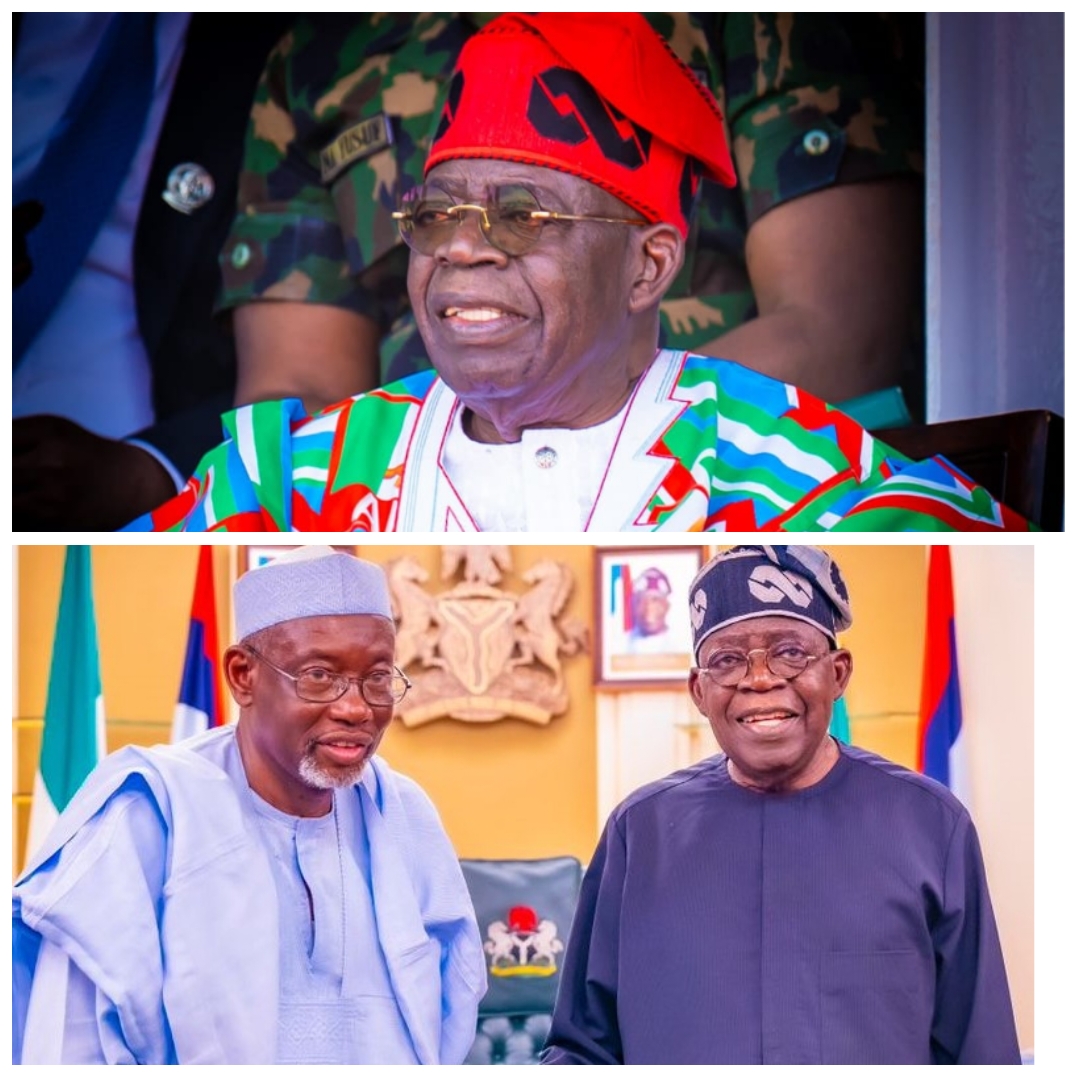
In the arid but fertile expanse of Jigawa State, a profound sense of gratitude and renewed hope now permeates communities from Dutse to Hadejia, and from Kazaure to Gumel. The people of this progressive North-West state warmly welcome President Bola Ahmed Tinubu, the Hero of Democracy and the Father of Modern Nigeria, whose bold reforms have unlocked resources and infrastructure that are transforming lives across the country.
When President Tinubu assumed office in May 2023, Nigeria stood at a fiscal crossroads. Decades of unsustainable fuel subsidies and multiple, distorted foreign exchange windows had drained the treasury, starved subnational governments of resources and rewarded rent seekers at the expense of ordinary citizens.
In two courageous policy decisions, he removed the fuel subsidy and unified the foreign exchange market. These decisions were painful in the short term, yet historically necessary. The result has been a dramatic increase in Federation Account Allocation Committee (FAAC) disbursements to states, including Jigawa. Governor Umar Namadi has repeatedly affirmed that these reforms provided the fiscal space needed to pursue comprehensive development on a scale that was previously impossible.
Federal projects now advancing in and around Jigawa stand as concrete proof of the Renewed Hope Agenda. The Greater Dutse Water Supply Project, valued at approximately ₦59.4–₦59.5 billion, was flagged off in December 2024 after more than two decades of abandonment. Designed to address a chronic daily water deficit, the scheme features 35 industrial boreholes with solar-powered pumps, a 1,000 m³/hr treatment plant, extensive transmission mains and storage tanks. Upon completion within 24 months, it is expected to deliver millions of litres of potable water daily to more than 1.5 million residents of Dutse and its environs, fulfilling a campaign promise President Tinubu made to the late Emir of Dutse.
Equally transformative is the Kaduna–Kano–Jigawa–Katsina–Maradi standard-gauge railway project. By mid-2026, the project had reached approximately 60 per cent completion, with intensive work progressing on the Kano–Dutse branch line, bridges, track laying and earthworks. Fully funded under the Renewed Hope Infrastructure Scheme, the rail corridor will open new arteries of commerce, reduce road congestion and strengthen Nigeria’s economic ties with the Republic of Niger. Complementary federal road projects, including sections of the Kano–Maiduguri corridor and the Kwanar Dangata–Gumel–Hadejia route, are also progressing. Institutions such as the Federal College of Agriculture in Kazaure and the Police Training College in Gwaram continue to receive attention. Agricultural interventions for wheat farmers and access to the Nigerian Education Loan Fund (NELFUND) further demonstrate the federal government’s presence in the state.
At the state level, Governor Umar Namadi’s administration has leveraged the increased revenue with remarkable discipline and ambition. Road infrastructure has been one of the most visible dividends. Inherited projects covering hundreds of kilometres have been completed, while dozens of new contracts for rural feeder roads and township roads, totalling well over 900–1,000 kilometres, have been awarded, with cumulative investments running into hundreds of billions of naira. Recent approvals alone include multi-billion-naira packages for township roads in Kafin Hausa, Gwaram, Ringim, Garki and Dutse Phase II.
In the health sector, specialist hospitals in Kazaure and Hadejia are advancing, an orthopaedic facility is being developed in Gumel, and primary healthcare centres across political wards are being upgraded or rehabilitated. Free healthcare services for vulnerable groups, children under five and pregnant women have also been expanded. Thousands of health workers have been recruited.
The education sector has witnessed massive teacher recruitment, including thousands of permanent and J-Teach staff, alongside classroom and Tsangaya school renovations, bursaries, Technical and Vocational Education and Training programmes, and solar-powered ICT centres. A proposed $110 million partnership with the Islamic Development Bank is also expected to support school infrastructure and teacher development.
Agriculture, the backbone of Jigawa’s economy, is undergoing significant modernisation, with hundreds of tractors and combine harvesters deployed, fertiliser subsidies aligned with federal allocations, greenhouses established for youth agribusiness, and investments in irrigation schemes and agro-processing zones. Major private-sector investments, such as the Dangote Rice Mill, further strengthen the state’s agricultural potential. Renewable energy projects, including multi-billion-naira solar mini-grids for government institutions and water facilities, alongside skills acquisition centres and flood control works, complete a comprehensive development portfolio. State Executive Council approvals of ₦91 billion, alongside other multi-billion-naira packages across these sectors, underscore the scale of development activity made possible by the increased fiscal capacity.
These achievements are not abstract. They are roads that carry farm produce to markets, water that ends decades of scarcity, classrooms that keep children in school, hospitals that save lives and solar power that reduces operating costs. They are tangible outcomes of a President who dared to end a subsidy regime that never truly benefited the common man and correct exchange rate distortions that discouraged genuine investors. Governor Namadi has been unequivocal in his position: the reforms rescued Nigeria from a deeper crisis and equipped Jigawa with the resources to deliver more effectively for its people.
As January 2027 approaches, the people of Jigawa have taken stock. They have seen the water project flagged off, the railway advancing, roads extending across communities, hospitals and schools improving, and the agricultural base strengthening. They recognise that the short-term adjustments introduced in 2023 have given way to sustained capital investment and greater fiscal capacity.
In gratitude for the leadership of the Hero of Democracy and the Father of Modern Nigeria, the people of Jigawa are ready to reciprocate by standing firmly behind President Bola Ahmed Tinubu and all All Progressives Congress candidates in January 2027, ensuring that the momentum of the Renewed Hope Agenda continues to build a greater Jigawa and a more prosperous Nigeria.
Angula is a member of the Tinubu/Shettima campaign council
- Insists Imo Judicial Service Commission is constitutionally independent; invokes Section 202, says NJC lacks powers to nominate a candidate for Imo State JSC for appointment as Chief Judge
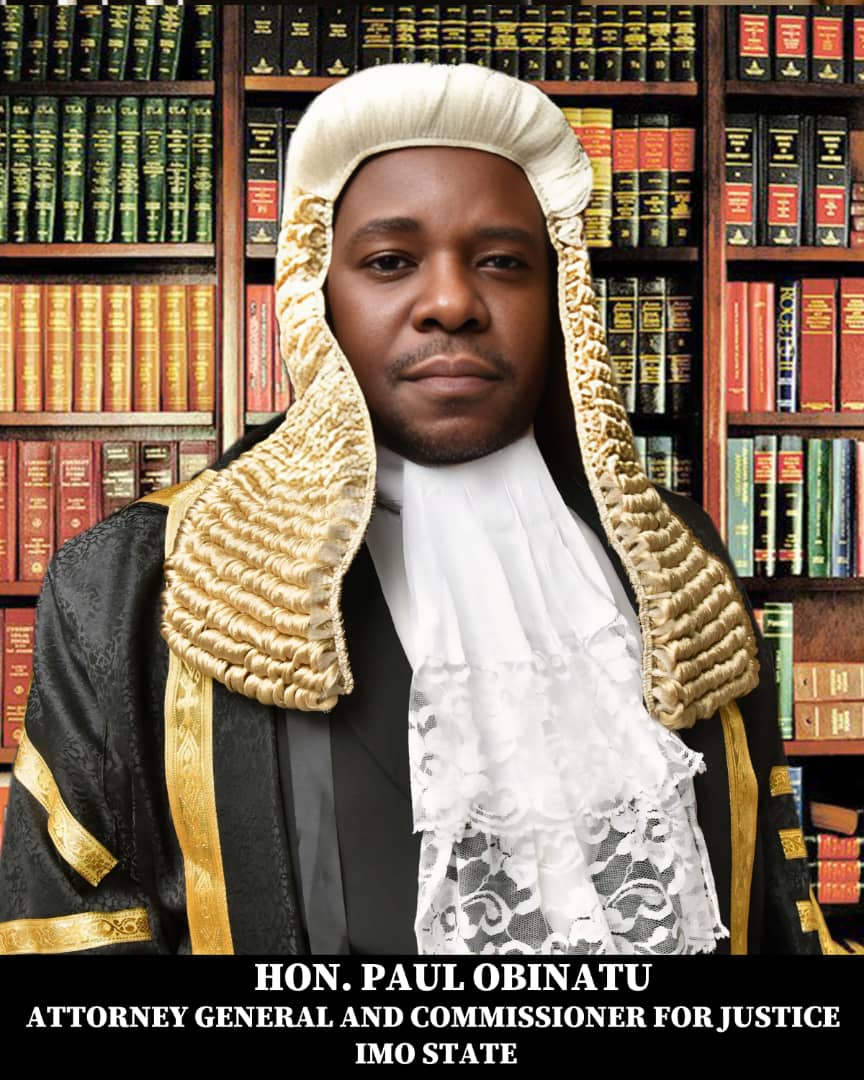
The Imo State Attorney-General and Commissioner for Justice, Hon. Paul Obinatu has challenged the constitutional authority of the National Judicial Council (NJC) to direct the Imo State Judicial Service Commission (JSC) on the candidate whose name it should submit for consideration in the appointment of a substantive Chief Judge of the state, describing such an intervention as an encroachment on the constitutionally guaranteed independence of the State Commission.
In a statement issued on November 6, 2026, the Attorney-General maintained that the NJC lacks the constitutional authority to dictate, control or substitute its preferred candidate for the independent assessment and recommendation process entrusted to the Imo State JSC under the 1999 Constitution, as amended.
The objection follows a directive reportedly issued by the NJC to the Imo State JSC at its 112th meeting held on November 3, 2026, concerning the appointment of a substantive Chief Judge for the state.
The Attorney-General argued that the NJC’s constitutional responsibility to recommend a candidate to the Governor does not confer on it the additional power to determine or dictate the candidate the State Judicial Service Commission must submit to it. He maintained that the directive is constitutionally untenable because it interferes with a responsibility expressly vested in the State Judicial Service Commission.
SECTION 202 GUARANTEES IMO JSC’S INDEPENDENCE
Central to the Attorney-General’s objection is Section 202 of the Constitution, which expressly provides that the State Judicial Service Commission shall not be subject to the direction or control of any other authority or person in exercising its constitutionally assigned powers.
He argued that this provision establishes a clear constitutional safeguard against external interference in the Commission’s responsibilities and cannot be overridden by the NJC through administrative directives or procedural guidelines.
According to him, the NJC cannot invoke its national institutional status or its recommendation powers to exercise control over the Imo State JSC in a manner inconsistent with the Constitution.
Consequently, any directive requiring the State JSC to submit a particular candidate or dictating the outcome of its independent assessment would, in the Attorney-General’s interpretation, amount to unconstitutional interference.
CONSTITUTION ASSIGNS DISTINCT RESPONSIBILITIES TO NJC AND STATE JSC
The Attorney-General anchored his position on Section 271(1) and the relevant provisions of the Third Schedule to the Constitution.
Paragraph 6(a) of Part II of the Third Schedule empowers the State Judicial Service Commission to advise the NJC on suitable persons for nomination as Chief Judge of the state.
Conversely, Paragraph 21(c) of Part I of the Third Schedule empowers the NJC to recommend to the Governor, from among the list of persons submitted by the State JSC, a candidate for appointment as Chief Judge.
Section 271(1) further provides that the appointment shall be made by the Governor on the recommendation of the NJC, subject to confirmation by the State House of Assembly.
According to the Attorney-General, these provisions establish a clear constitutional sequence: the State JSC identifies and advises on suitable candidates, the NJC considers the submitted names and makes its recommendation to the Governor, while the Governor exercises the appointing authority subject to legislative confirmation.
He insisted that the NJC’s recommendation powers cannot be interpreted as authority to dictate which candidate the State JSC must select or submit, as doing so would effectively transfer the Commission’s constitutional responsibility to the NJC and render Section 202 meaningless.
NJC GUIDELINES CANNOT OVERRIDE THE CONSTITUTION
Addressing the NJC’s Guidelines and Procedural Rules for the Appointment of Judicial Officers, the Attorney-General acknowledged the Council’s authority to prescribe and enforce procedural requirements for judicial appointments.
However, he maintained that such guidelines cannot confer powers beyond those granted by the Constitution or be used to compromise the independent functions of the State JSC.
He stressed that the NJC’s responsibility to ensure compliance with appointment procedures must not be extended to usurping the constitutional authority of the Imo State Judicial Service Commission.
COURT DECISIONS REINFORCE ATTORNEY-GENERAL’S POSITION
In support of his argument, the Attorney-General cited several judicial authorities which he said affirm the importance of constitutional boundaries and institutional independence.
They include Elelu-Habeeb & Anor. v. Attorney-General of the Federation & Ors. (2012) LPELR-15515(SC), Kano State Public Complaints and Anti-Corruption Commission & Anor. v. Salisu & Ors. (2019) LPELR-47107(CA), and Bamisile v. National Judicial Council & Ors. (2012) LPELR-8381(CA).
Other authorities referenced are FRN v. Nganjiwa (2022) LPELR-58066(SC), NJC & Ors. v. Senlong & Ors. (2010) LPELR-4582(CA), and Attorney-General of the Federation v. Attorney-General of Abia State & Ors. (2024) LPELR-62576(SC).
The Attorney-General maintained that these authorities reinforce the principle that every constitutional institution must exercise its powers strictly within the limits prescribed by law, irrespective of its institutional standing.
IMO CHIEF JUDGE APPOINTMENT MUST FOLLOW CONSTITUTIONAL PROCEDURE
The Attorney-General warned that allowing the NJC to assume functions constitutionally assigned to the State JSC would undermine the integrity of the judicial appointment process and compromise the independence of the Commission.
He maintained that the issue is not a contest for institutional superiority between the NJC and the State JSC, but the need for each institution to respect the constitutional boundaries of its authority.
He further emphasised that the NJC’s responsibility to recommend a candidate to the Governor must not be confused with the power to control the independent selection and submission process of the State Commission.
The Attorney-General insisted that the ongoing appointment process must be conducted strictly in accordance with the Constitution, without interference that could undermine public confidence in the judiciary.
For the Imo State Attorney-General, the constitutional position is clear: while the NJC has the responsibility to recommend a candidate to the Governor, it has no authority to dictate to the Imo State Judicial Service Commission the candidate whose name it must submit in the exercise of its independent constitutional mandate.
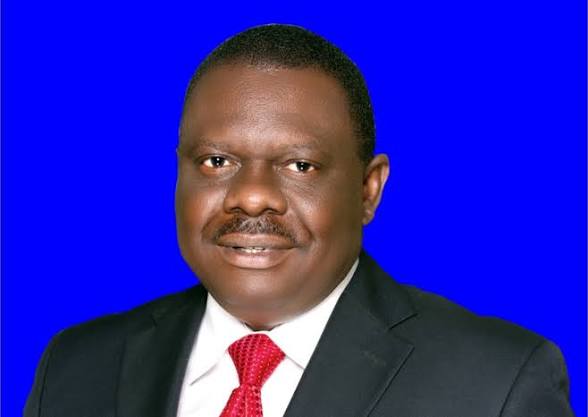
Benue Equity and Justice Movement has accused the Benue People’s Democratic Party Governorship candidate, Mr. Michael Aondoakaa of plan to manipulate the Judiciary in order to buy the planned November 16 judgement in the eligibility suit against him.
It will be recalled that the Supreme Court had few years ago banned Mr. Aondoakaa from holding public offices for life as a result of his manipulation of justice while he was Attorney General of the Federation under the PDP regime of former President Umaru Yar’Adua.
Justice Kudirat Kekere-Ekun, then a Justice of the Supreme Court and now the Chief Justice of Nigeria (CJN), delivered the Supreme Court’s unanimous judgment on December 10, 2021, affirming the judgment of the Court of Appeal, Calabar Division, which had upheld a Federal High Court decision barring the former minister, who served under the late President Umaru Musa Yar’Adua, from occupying any public office in Nigeria for life.
In the Court of Appeal’s judgement on June 1, 2010, Justice A.F.A. Ademola ordered, “1. A declaration is hereby made that the 2nd Defendant undermined and subverted the rule of law, the due administration of justice and integrity of the judiciary in the letters of 8th January, 2008 and 16th February 2009 written by him in the capacity of the Defendant. “2. A declaration is hereby made that 2nd Defendant is not a competent, fit and proper person to hold office as the 1st Defendant having regards to the oaths of Allegiance and office.
Also recalled that the 2027 governorship candidate of the Allied People’s Movement, Mr. Damian Adagba had in September asked the court to compel the Independent National Electoral Commission to remove Aondoakaa’s name from its official portal as the governorship candidate of the PDP as a result of the Supreme Court Judgement.
Also, in a suit, marked FHC/ABJ/CS/2152/2026 which was instituted by David Ejembi, Aondoaver Teryila, Joseph Okpanachi and Benedict Akaazua Orkume against the Independent National Electoral Commission (INEC), the PDP and Aondoakaa, the plaintiffs urged the Federal High Court in Abuja on October to stop the former AGF from parading himself as the governorship candidate of the PDP.
Following the arguments by the lawyers of the People’s Democratic Party, Mr. Aondoakaa and the plaintiffs, the court adjourned the matter to November 16, 2026, for judgment.
But in a press statement which was sent to reporters this morning, Benue Equity and Justice Movement through its General Secretary, Mr. Kingsley Asema said that the pressure group has received Intel which revealed plans by the embattled PDP governorship candidate to bribe the Judge handling the case.
“We have it on a good authority that Barrister Michael Aondoakaa, having realized that the eligibility suit against him in court would not go in his favour based on various evidences that he had been barred from holding any public office, has been holding series of meetings with his political godfather, Mr. Samuel Ortom and legal team led by a former Secretary to the Benue State Government, Mr. Tony Ijohor on the possible way to bribe the Judge handling the case.
“The final meeting on how to manipulate the planned November 16 judgement was held in Jos last Friday, and in attendance were Chief Aondoakaa, Barrister Tony Ijohor, Barrister Clement Mue, Anthony Malik, and Barrister Matthew Onoja.
“We also have proofs that it was the legal team led by Ijohor that advised Aondoakaa to reach out to the judge through an unnamed Senior Advocate of Nigeria from Jos when it was clear that he may be declared ineligible to contest the 2027 governorship election”
Meanwhile, Benue Equity and Justice Movement in the press statement called on the Chief Judge of the Federal High Court, Abuja as well as the Chief Judge of Nigeria to rescue the Judiciary which is the last succour for a common man from the former AGF who is moving fastly to buy the eligibility judgement which has been fixed for November 16, 2026.
The group stated further that Aondoakaa’s case is a litmus test for the Nigerian Judiciary, noting that selling judgement to him will prove that the Judiciary is no longer a succour for a common man.


BAUCHI AGLOW WITH MASSIVE SUPPORT FOR TINUBU…

2027: Kwara South PDP Candidate Pledges Quality Representation

2027: Kwara South APC Elders Caucus Reconstituted

-
 Uncategorized6 years ago
FG, states urged to harness flooding for ranching, others with technology – Agbaje
-
 Headlines11 years ago
Breaking: EFCC seals Borno House of Assembly, as Hon members take to their heels
-
 News12 years ago
Nigeria Security Operatives Stage Manhunt For Homosexual Perpetrator
-
 News10 years ago
How 21-year-old Girl fled community over accusation of lesbianism
-
 News11 years ago
Yobe Gov Moves Against Deputy
-
 Opinion8 years ago
7 signs she has friend zoned you
-
Technology5 years ago
Online job placement company headhunts women
-
 Headlines11 years ago
Borno Dep Gov Abducts Another Church Leader