
Opinion
ATIKU’S DESPERATION FOR PRESIDENCY

By
Adamu Mohammed
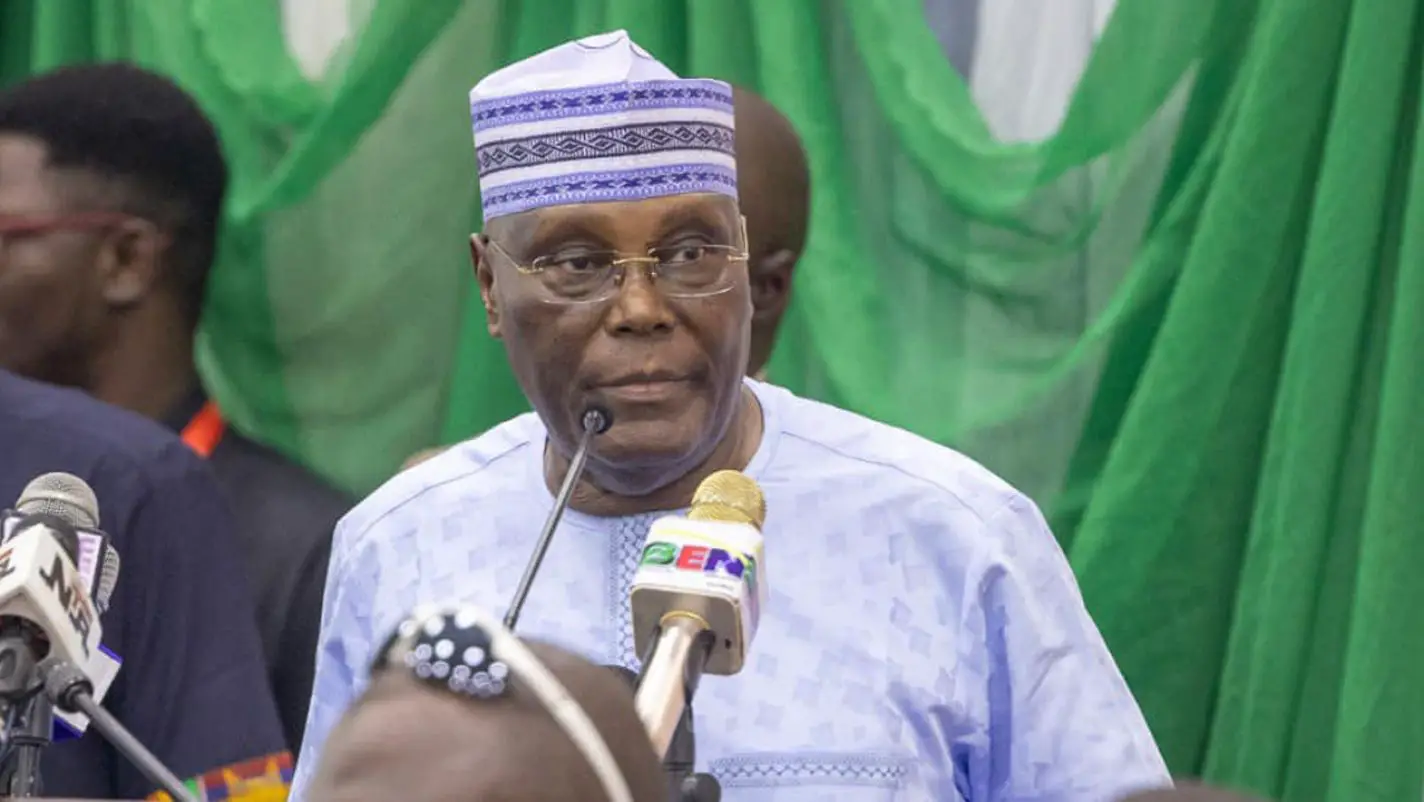
The Presidential candidate of the People’s Democratic Party, Atiku Abubakar, reached the zenith of his ambition to secure the highest office in the country when he recently stirred unbridled controversy by alleging irregularities in the certificates of President Bola Ahmed Tinubu. As a supposed seasoned politician with a long and intriguing history in Nigerian politics, those acquainted with Atiku are well aware of his lifelong aspiration to clinch the presidency. However, his journey to attain the prestigious position has been marked by sheer desperation manifested in the ongoing dramatisation of his fabricated Chicago State University saga. It is also not entirely surprising that Atiku would descend so low to provoke such a widespread public outcry, despite unwavering evidence that contradicts his claims about President Tinubu. Lack of integrity, as it is said, renders a man’s character as hollow as an empty vessel and Atiku’s reputation unmistakably attests to this.
Even during his civil service days, he displayed disloyal tendencies, such as when he, as the Customs Officer overseeing Murtala Muhammed Airport, defied an official directive. The 53-suitcase scandal, which surfaced in 1984 during the currency exchange operation mandated by then Buhari administration required the inspection of all arriving baggage, irrespective of the traveller’s status. Shockingly, Atiku flouted this regulation thereby causing a major uproar that deeply scandalised the Nigerian government. With a trail of ridiculously shocking questionable wealth, a retinue of wives amidst other needless acquisitions it was unsurprising that Atiku and one of his wives were fingered in a trillion dollar corruption case and placed under close watch by the Financial Crimes Enforcement Network (FinCEN), an agency of the US Department of Treasury. Parts of the report revealed that between 2000 and 2008, his fourth wife, Jennifer Douglas who is a US citizen, assisted Atiku, a seating Vice President to launder over $40 million into the United States. The case which was widely and globally published, once more, put Nigeria damagingly on international spotlight, causing a barrage of embarrassment to the country. Most recently, his links to a fraudulent Special Purpose Vehicle (SPV) scandal represents just a fraction of the countless corruption tags attached to his name.
Therefore, his constant display of questionable attributes should perhaps come as no shock from a man whose history is marked by dubious antecedents. It is little wonder that his political career has been characterised by a series of twists and turns in his insatiable quest to Nigeria’s Presidency which has morphed into bouts of desperation. His frustrations are nevertheless understandable. Records have it that in 1993, when he was 47 years old, he ran for the presidency and failed to clinch the seat. Again in 2007, under the Action Congress party, he contested and lost. Also, in 2011, he once more failed at the presidential polls by a wide margin. In between switching parties, he contested in 2015, 2019 and 2023, and suffered irreparable defeats.
It is evident that Atiku is yet to recover from the irreversible loss of the 2023 election which has plunged him into this frantic state, as evidenced by his recent pitiable action of tarnishing the image of President Tinubu and by implication, Nigeria at large. At the age of 76, time has swiftly passed him by. By 2027, provided we are blessed with continued life, Atiku will be about 80, which is undeniably advanced in age and greatly diminishing his electoral prospects. What eludes Atiku’s awareness is that he is now reaping the consequences of his dubious past. Nigerians are not naive enough to elect a man with such a tarnished reputation. It is high time he woke up and smelt the cookie. He should avoid placing blame on others; his past actions are the sole spectre haunting his political aspirations.
Previously, Atiku held the position of Nigeria’s Vice President from 1999 to 2007, serving under President Olusegun Obasanjo. However, his relationship with the former president soured, resulting in his departure from the ruling party at that time, the PDP. In Obasanjo’s words in his book “My Watch” Atiku was described as having corruption tendencies, disloyal, frequent dishonesty, poor judgment, reliance on marabouts, lack of transparency and a willingness to sacrifice ethics and national interest for personal gain. Considering his long-term goal of becoming President, one might have expected Obasanjo to support Atiku’s leadership in 2007. However, Atiku’s disloyalty and inability to work as a team player became evident once again before their term ended.
After winning the 2023 Presidential primaries in his party, the PDP, his inability to prove he is an astute leader led to intraparty divisions with his own party members under the leadership of Nyesom Wike, turning against him. This indiscretion contributed to his defeat. Desperately too, Atiku has asked Peter Obi and Rabiu Kwankwaso, fellow Presidential Candidates to jettison their ambitions and support him. Laughable! Only a desperate man like Atiku will make his type of suggestions. No one else ever matters. It is only about him Selfishness. This is what narcissism is all about.
All through his history and propelled by desperation, he destroyed his political chances using his own hands. Today he is a drowning man grasping at straws. Trying desperately at every perceived opportunity to grab the presidential seat but so far, his actions have proved futile. It is a pity. Having recently lost at the Presidential Tribunal, he has yet again begun pursuing another illusion, the supposed loopholes in President Tinubu’s certifications. His pain and anger is however understandable; he cannot bear seeing the person who is responsible for his defeat rule peacefully. For the record, despite their brouhaha and intentional propaganda and manipulation of facts, the Chicago State University has claimed President Tinubu as their former student. He not only graduated, but when his letter of admission was issued, it was addressed to a Mr Tinubu. This alone counters the lies around female allegations in his bio and the Chicago State University also confirmed it was a clerical mistake. Despite the noise, the depositions are there on the internet confirming that indeed President Tinubu got a diploma from the institution. It has also clarified that Universities in the US do not prioritise issuance of certificates but only transcripts. In the case of loss of such certificate, as in the President’s case, third parties are allowed to reissue them which is where he obtained his from. For intellectual Nigerians, the cacophony surrounding the matter is baseless; they know the truth. The deposition which is clear and in black and white, serves as a witness of the truth irrespective of activities of mischief makers who are twisting the facts and misleading the public.
Regrettably for Atiku, history will likely remember him solely as a serial presidential candidate, a bitter runner-up whose desperate actions are gradually eroding what remains of his reputation. Those close to him may advise him; If he believes in Allah and destiny, it is time to take a bow and rest from his political pursuits. Let him take a back seat and play the role of an elder statesman. An old adage says that if a king does not have good advisers, he will one day come out naked. It may be worthwhile for Atiku to embrace the concept of predestination and put an end to this embarrassing charade.
Adamu Mohammed, a political analyst, writes in from Zamfara
By: Soknan Shedul
Every great nation reaches a crossroads where it must choose between temporary comfort or permanent prosperity. For decades, Nigeria was kept on artificial life support by policies that drained our national wealth to enrich a select few.
When President Bola Ahmed Tinubu stepped forward, he promised a country built on real economic truth.
Through the Renewed Hope Agenda,
his administration is making the difficult, courageous choices needed to stop the bleeding and secure the future for every citizen.
Although the shockwaves of reform is still very much with us, the evidence is clear: the bold choices made to remove the fuel subsidy and unify the foreign exchange market are finally unlocking the wealth of our nation and returning it directly to the people.
FROM WASTE TO WEALTH: RETURNING BILLIONS TO LOCAL COMMUNITIES.
For years, trillions of Naira vanished into corrupt fuel subsidies and uneven currency exchange markets. That era is over. The unified Naira has stabilized within a tight corridor, and Nigeria’s external reserves have surged past $55 billion—giving us over 11 months of solid import cover.
More importantly, the money saved from the subsidy is no longer locked in Abuja or pocketed by speculators.
The Federation Account allocation to state and local governments (FAAC) has skyrocketed from ₦3.4 trillion in 2022 to an unprecedented ₦11.38 trillion, a massive 232% increase. This means your local community now has the direct financial power to build better roads, upgrade healthcare facilities, and fund real grassroots development.
INVESTING IN YOUR FAMILY:
EDUCATION, JOBS, AND
TAX RELIEF; Real economic growth is measured by how it lifts up families. The administration has matched its structural reforms with historic, direct relief programs designed to safeguard the middle class and protect the vulnerable:
KEEPING EDUCATION ALIVE: The Nigerian Education loan Fund has moved from a vision to a massive success. It has disbursed over ₦322 billion, directly supporting more than 1.6 million student applications with interest-free academic loans and monthly upkeep allowances across 354 institutions. Single institutions, such as Ekiti State University, have received billions at once to instantly wipe out the tuition debt of over 10,000 students.
UNPRECEDENTED TAX RELIEF FOR SMALL BUSINESSES: To protect local employment, over 200 confusing legacy levies have been slashed down to roughly 60. Crucially, the administration has completely exempted small businesses with annual turnovers under ₦50M–₦100M from paying corporate income tax, ensuring local shop owners, traders, and entrepreneurs keep their doors open and their profits in their pockets.
A FAIR MINIMUM WAGE: The administration has implemented the new ₦70,000 national minimum wage, anchoring a comprehensive effort to lift the baseline earning power of our public workers and strengthen household purchasing power nationwide.
SECURITY RESTRUCTURING:
RECLAIMING OUR COMMUNITIES.
Economic prosperity cannot exist without physical safety. Recognizing that our nation’s progress depends on secure communities, President Tinubu has authorized the most aggressive expansion of internal and external defense frameworks in modern Nigerian history:
TAKING BACK THE STREETS WITH STATE POLICE: Moving past rigid, distant federal command structures, the executive State Police constitutional framework has advanced rapidly through the National Assembly. Backed by the brand-new National Policing Bill, this landmark reform ensures that local officers—who intimately understand your neighborhood’s unique vulnerabilities—are empowered to protect your community under strict federal safeguards and standardized professional criteria.
This in addition to the recruitment of forest guards to man our forests.
A MASSIVE 50% MILITARY EXPANSION: To eliminate banditry and secure our critical agricultural zones, the administration has expanded the Nigerian Army from 8 to 12 field divisions. Supported by 28,000 newly recruited personnel, these new commands are strategically placed across vital regions—including Makurdi, Ilorin, Jalingo, and Benin City—to permanently clear out ungoverned spaces, protect our agrarian belts, and allow our farmers to safely return to their lands.
THE INFRASTRUCTURAL DRIVE: CONNECTING THE NATION FOR SHARED WEALTH: The administration of President Bola Tinubu is pursuing an aggressive infrastructure agenda institutionalized primarily through-
The Renewed Hope Infrastructure Development Fund (RHIDF)- Moving away from fragmented, small-scale construction, the government’s approach focuses on building expansive economic corridors designed to link regional agricultural hubs, heavy mining deposits, and commercial zones directly with maritime export ports.
THE LAGOS – CALABAR COASTAL HIGHWAY: This monumental project is a 700–750 km modern concrete-technology expressway designed to span nine coastal states, linking major industrial zones, oil-producing regions, and commercial hubs directly along Nigeria’s Atlantic coastline.
ECONOMIC ADVANTAGE: By directly connecting production and marketing centers for over 30 million people, this highway unlocks massive maritime trade, tourism, and real estate potential. Its advanced concrete design ensures long-term structural durability, drastically reducing vehicle maintenance costs and slashing travel times for commercial freight moving between southwestern and south-southern ports.
THE SOKOTO- BADAGRY SUPERHIGHWAY: This 1,000 km North-South transit artery connects Nigeria’s northern borders down to the southwestern coast, strategically designed to establish a seamless, high-speed logistical link that completely bypasses traditionally congested interior routes.
ECONOMIC ADVANTAGE: This superhighway grants deep northern agricultural zones and solid mineral deposits direct, bottleneck-free access to southwestern export markets and ports. By bridging the vast geographic gap between northern producers and southern consumers, it reduces food spoilage, stabilizes nationwide commodity pricing, and accelerates regional integration.
NATIONAL RAIL & URBAN MASS TRANSIT: The government has historically decentralized rail development by moving it from the Exclusive List to the Concurrent List, alongside approving $2.99 Billion for metropolitan light rail projects like the Lagos Green Line, Kano Metro, and Kaduna Rail. Concurrently, the cross-border Kano-Maradi Railway is being rapidly advanced to anchor the Trans-Saharan trade corridor.
ECONOMIC ADVANTAGE: Empowering states and the private sector to build rail networks breaks federal monopolies and drives competitive urban development. Affordable mass transit slashes daily commute costs for millions of urban workers, directly boosting city productivity. On a macro scale, the cross-border rail links tap into the landlocked markets of the Sahel, positioning Nigeria as the dominant logistical hub for West African trade.
STRATEGIC REVITALIZATION OF THE OIL AND GAS SECTOR: Far from being neglected, the oil and gas sector is undergoing strategic restructuring under President Tinubu to boost domestic utilization, drive energy security, and accelerate the transition to sustainable fuel:
THE PRESIDENTIAL CNG INITIATIVE
(Pi-CNG): This groundbreaking program serves as a direct strategic buffer against high fuel costs by aggressively accelerating the transition to Compressed Natural Gas. By driving the mass deployment of CNG conversion kits, establishing nationwide refueling infrastructure, and rolling out CNG-powered mass transit buses, the administration is drastically reducing commercial transportation costs across all six geopolitical zones.
DECENTRALIZATION & REFINERIES SUPPORT: The administration altered regulatory policy to ensure domestic crude supply obligations are met—most notably supporting the fully operational Dangote Refinery and advancing the rehabilitation of state-owned refineries (Port Harcourt and Warri) to ensure local fuel sufficiency.
GAS- TO-POWER INFRASTRUCTURE: Accelerated investments are being funneled into the Ajaokuta-Kaduna-Kano (AKK) Gas Pipeline project and gas processing facilities to anchor industrial clusters across the country, aiming to maximize Nigeria’s 200+ trillion cubic feet of proven gas reserves.
GOVERNMENT HEALTH INTERVENTIONS FOR INDIGENT PATIENTS
To shield the most vulnerable Nigerians from catastrophic healthcare expenses, the government has scaled up targeted social health interventions:
THE BASIC HEALTH CARE PROVISION FUND (BHCPF):
The administration redesigned the BHCPF to channel massive funding directly to over 8,000 Primary Health Care (PHC) centers across the country. A dedicated portion of this fund goes toward providing a basic minimum package of health services for Nigerians who cannot afford health insurance premium payments.
SECTOR-SPECIFIC VULNERABLE GROUP FUNDS: Operating through the
National Health Insurance Authority (NHIA)the government is expanding the Vulnerable Group Fund. This framework subsidizes or fully covers medical insurance premiums for indigent citizens, pregnant women, children under five, and the elderly.
CANCER HEALTH FUND (CHF)
The government maintains and has expanded the CHF initiative, which specifically provides subsidized or fully funded chemotherapy, radiation, and surgical care for indigent cancer patients at designated federal tertiary hospitals across the geopolitical zones.
THE HUMAN COST:
FACING THE REALITY OF THE BROKEN EGGS.
Yet, the ultimate test of structural transformation lies not just in macro-economic data or newly laid concrete, but in the micro-realities of the Nigerian dining table.
There is an undeniable “dark side” to these reform phases—a period of severe economic friction where the removal of structural distortions has translated into high inflation, elevated transportation costs, and a deeply strained cost of living for the average citizen.
Opposition figures and independent civic bodies reason that the viability of these arguments at the ballot box will ultimately depend on whether macro-reforms successfully translate into lowered living costs, improved public security, and heightened citizen prosperity before the election.
While there is a consensus that these hardships are painfully real, leading to widespread frustration across the federation, but in the mathematics of true nation-building, eggs must be broken if the nation is ever to enjoy the omelette of permanent prosperity.
Ultimately, history teaches us that a grand destiny is never forged without friction. We are living through the reality of the broken eggs—the painful, necessary fracturing of an unsustainable, decaying status quo.
But let it be known that these are not the fragments of ruin; they are the shattered shells of a past we had to outgrow.
From the crucible of these fierce reforms, a magnificent new dawn is hatching. The old, fragile shell has been broken precisely so that a resilient, unstoppable economic giant can finally step forth, spread its wings, and claim its rightful dominion in the sun.
GOVT. MUST COME DOWN TO THE MASSES ON THE GROUND; To bridge this critical empathy gap, the government must actively descend from institutional heights and meet the masses on the ground through a radical grassroots communication strategy.
Rather than relying on technical economic bulletins and high-level press briefings from Abuja, the administration needs a decentralized engagement model that uses local town halls, market square interactions, and traditional rulers across all six geopolitical zones and the FCT.
By translating complex policies into indigenous languages and transparently explaining the sequencing of the reforms, the government can transform an imposing policy agenda into a shared, understood national journey.
True public buy-in is built on the visible, direct deployment of safety nets that match the scale of the sacrifices being made.
Persuading the populace to stay the course requires the administration to show exactly where the rescued wealth from these broken eggs is being distributed in real time.
Accelerating the visible rollout of localized relief, lowering food distribution bottlenecks, and showing immediate infrastructural returns in vulnerable communities, will demonstrate that the current economic pain is not a permanent condition, but the unavoidable labor pains of a secure and self-sufficient New Nigeria.
THE COURSE TO PROSPERITY;
The measure of historic leadership has never been found in the comfort of status quo politics, but in the courage to dismantle it.
President Bola Tinubu’s administration has consistently demonstrated the rare political will required to confront Nigeria’s most deeply entrenched distortions head-on. Where previous leadership cycles chose short-term popularity and costly postponements, this presidency has deliberately deployed its political capital to enact structural, surgical reforms.
Beyond the immediate, difficult adjustments of these reforms lies a meticulously designed blueprint for enduring Nigerian prosperity and physical security. The strides taken across his first term are foundational pillars engineered to support a modern, self-sustaining federation.
This is the handiwork of a deft political strategist who understands that true nation-building requires structural strength over superficial praise. President Tinubu’s distinct footsteps clearly point toward a decentralized, economically resilient Nigeria where local government autonomy is respected and every region shares in the commonwealth.
The proof of this vision is already surfacing in our national indicators; Structural transformations do not yield instant miracles, but according to the
National Bureau of statistics, NBS,
the foundations being laid today are rock-solid, with Nigeria’s economy expanding at a resilient 4.43% growth rate while headline inflation continues its steady downward drop.
President Tinubu’s vision refuses to offer cosmetic band-aids, choosing instead to bear the political weight of foundational reforms so that the generations of tomorrow can inherit a stable, thriving economy.
A masterclass in Political Strategy, President Tinibu clearly commands a historic capacity to forge cross-regional alliances, manage complex legislative dynamics, and maintain stability during deep economic shifts as evidence of an unmatched political acumen
As we look toward 2027, the choice before every well-meaning citizen is between returning to the volatile illusions of the past or consolidating the hard-won foundation of a New Nigeria.
True transformation demands patience, continuity, and an unyielding belief in the trajectory now set before us. By standing firmly behind a leader whose courage, visionary reforms, and unmatched political wit have finally unlocked the path to our true potential.
Let us confidently stay the course, protect our shared progress, and vote to accelerate our shared journey toward a prosperous, united, and secure future under the Renewed Hope Agenda – so as to ensure that our temporary sacrifices and pain we have shared yield permanent prosperity.##
soknanshedulishaku@gmail.com.
National coordinator,
Congress of Minority of Northern Nigeria, CMNN.
writes from Abuja.
Opinion
THE PLANED PURPORTED PARALLEL ENDORSEMENT FOR TOMORROW IS NOT IN THE INTEREST OF EGGON BUT THE SELF FEW INDIVIDUALS INTEREST.

We wish to let the entire Eggon people both home and diaspora Know of a planned purported endorsement that is about to come up tomorrow being Saturday 3rd October 2026,by some individuals in the name of Eggon critical stakeholders, which is being championed by Hon. Ali Akpandom whom is an identified loyalist to an interested party in the whole of this game (HON. LABARAN MAKU),The same Ali Akpandom was among some selected personalities that went round the state some few weeks ago to make public appeal to APC Stakeholders to pick CHIEF EMMANUEL MICHEAL UMBUGADU as the running mate to the APC Governorship candidate Senator Ahmed Aliyu Wadada.
That singular act alone is not just an action against the interest and the agitation of the majority Eggon nation who clearly stated that we can’t settle for the position of deputy at this time.
Hon Kpandom who already knew clearly that a well respected Eggon arm (EGGON POLITICAL FORUM)That has membership across the three senatorial zones and diaspora already endorsed the Candidature of RT. HON. DR. DAVID EMMANUEL OMBUGADU that is widely celebrated not just among the Eggon but other ethnic nationalities,yet chose to undermine this popular position of the Eggon nation to do otherwise,without any consideration for the posable future negative consequences this act will have on the unity of the Eggon Nation, and by extension the other indigenous people of Nasarawa State looking up to us.
Notwithstanding I wish to call on the attention of all the Eggon sons and daughters both home and diaspora, other ethnic nationalities that are fully ready to support RT. HON. DR. DAVID EMMANUEL OMBUGADU Never to see the soon to be so called parallel endorsements as any form of confusion among the Eggon, but should see it as an attempt by some usual few selfish elites to disrupt Eggon chances of producing a Governor come 2027.
Eggon people have settled for Ombugadu not for any interest but is the most widely acceptable candidate among the six Candidates of Eggon extractions and has gain support and acceptability among other ethnic groups in the state, as such we can’t afford to miss out on this sellable candidate for any other one as it’s going to be an unwise and avoidable error of going to the market with an unsellable candidate while we already have the best at hand.
We wish to call on Elder Ali kpandom and his group to desist from engaging in any act that is capable of inserting serious confusion and lack of mutual consensus among the Eggon people this time because we equally understood that the fate of other ethnic nationalities in Nasarawa state to getting the natives into the seat of Governor lies in the unity and mutual consensus of the Eggon people at this time.
We wish to call on the Eggon people, both home and diaspora,the general public to disregard any form of parallel endorsements that will be done by any group in whatsoever disguise aside that which has already been done by the Eggon political forum this same forum has endorsed Hon Maku not once in the past even against Late Sen Ewuga , why this disruption now.
We are not in anyway against any candidate they still wanted to vote for, but we wish to declare categorically that it’s not in the interest of Eggon but the interest of the few.
THANK YOU FOR YOUR UNDERSTANDING AND USUALLY COOPERATION.
Courtesy:A concerned son of the land.
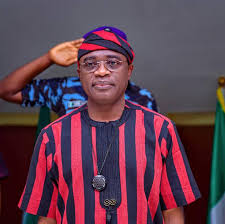
For nearly three years, the political crisis within the Benue State chapter of the All Progressives Congress (APC) has largely been portrayed as a power struggle between Governor Hyacinth Alia and the Secretary to the Government of the Federation (SGF), Senator George Akume.
However, recent developments suggest that the dispute over control of the party could have wider legal and political implications as the 2027 general elections approach.
The crisis intensified earlier this year when rival camps conducted parallel state congresses and produced separate chairmen for the APC in Benue.
The Akume-aligned faction returned Austin Agada as state chairman, while the faction loyal to Governor Alia elected Benjamin Omale.
The emergence of two chairmen and competing claims to control of the party has further exposed the depth of the internal division.
The dispute has also raised questions about the legal consequences of competing party structures, particularly following a Court of Appeal judgment delivered in June 2026.
The appellate court affirmed the Austin Agada-led State Executive Committee and upheld an earlier decision nullifying the dissolution of that executive by the APC National Working Committee.
The court also sustained an order declaring the activities of the Benjamin Omale-led caretaker committee “null, void and of no effect whatsoever.”
The judgment has since become a major reference point in the continuing struggle for control of the APC structure in Benue.
Political observers note that the significance of party structures extends beyond the office of state chairman. Party executives play important roles in organising congresses, managing delegate processes, supervising primaries and implementing decisions relating to the nomination of candidates.
This has brought the dispute into sharper focus ahead of the 2027 elections, particularly over the possible legal implications for candidates whose nominations may be linked to disputed party structures.
A group of APC stakeholders is reportedly examining the possible legal consequences of the judgment and the continued existence of rival structures within the party.
The concern, according to those familiar with the matter, is whether political processes conducted through structures subsequently found to lack legal validity could become the subject of litigation.
Candidates loyal to Governor Alia whose nominations were subsequently overturned by the APC National Working Committee are already challenging the party’s decisions in court. Among them is former Benue Governor, Senator Gabriel Suswam.
At the centre of the emerging debate is whether the invalidation of a party structure could affect subsequent political processes conducted through that structure.
No court has, however, ruled that Governor Alia is ineligible to contest the 2027 governorship election, and there is currently no judgment declaring him barred from seeking re-election.
The potential issue, rather, concerns the relationship between the legitimacy of party structures and the validity of nomination processes conducted under those structures.
Nigeria’s electoral history contains several instances in which internal party disputes over congresses, delegate lists, executives and primary elections eventually resulted in prolonged litigation over candidates and nominations.
Against this background, the continued crisis within the Benue APC could assume greater significance as political parties begin preparations for the 2027 electoral cycle.
The conduct of parallel congresses following a Court of Appeal judgment affirming one faction’s leadership could potentially generate further legal questions over authority, compliance with party rules and the validity of subsequent decisions.
For Governor Alia, the immediate reality is that no court has declared him ineligible to contest the next election. However, continued uncertainty over the party’s structure could expose his political camp to further litigation and create complications during the nomination process.
The governor has also faced allegations from political opponents that more than N100 billion in public funds has been expended in efforts to secure control of APC structures over the past three years. The allegation remains disputed and would require evidence to establish.
What is increasingly clear is that the struggle for control of the APC in Benue has moved beyond a conventional political disagreement. It is now playing out simultaneously across political, legal and party-administrative fronts.
As the 2027 electoral cycle draws closer, the unresolved questions surrounding the APC’s leadership and nomination processes could become increasingly consequential for the party and its candidates.
For now, there is no judicial pronouncement preventing Governor Alia from appearing on the 2027 ballot. But if the stakeholders reportedly considering legal action proceed with a challenge over the circumstances of his nomination, the governor could face another significant legal battle as the election approaches.

THE BOLD SHIFT:BETWEEN REFORMS ANDTHE REALITY OF THE BROKEN EGGS:
WHO: Nigeria Records Zero Ebola Cases After Evacuation of Swiss Couple

Kwara celebrates Fela’s legacy with retrospective exhibition

-
 Uncategorized6 years ago
FG, states urged to harness flooding for ranching, others with technology – Agbaje
-
 Headlines11 years ago
Breaking: EFCC seals Borno House of Assembly, as Hon members take to their heels
-
 News12 years ago
Nigeria Security Operatives Stage Manhunt For Homosexual Perpetrator
-
 News10 years ago
How 21-year-old Girl fled community over accusation of lesbianism
-
 News11 years ago
Yobe Gov Moves Against Deputy
-
 Opinion7 years ago
7 signs she has friend zoned you
-
Technology5 years ago
Online job placement company headhunts women
-
 Headlines10 years ago
Borno Dep Gov Abducts Another Church Leader