
China
BeiDou Navigation Satellite System drives economic growth and social development

By Shen Zhilin, People’s Daily
From satellite constellations in space to ground-based terminals, and from transport and emergency response to smart cities, agricultural production, and maritime navigation, China’s BeiDou Navigation Satellite System (BDS) has steadily expanded its global footprint in recent years. By strengthening industrial support capabilities and deepening its international reach, the system is providing new momentum for economic and social progress worldwide.
In July 2026, BDS completed a comprehensive in-orbit upgrade of its entire satellite constellation. “The upgraded system now provides nationwide real-time positioning at centimeter-level accuracy, alongside globally covered high-precision positioning featuring rapid convergence, “said Gou Ping, chairman of China Satellite Network Group Co., Ltd. “It also supports up to one billion connected terminals, including 100 million consumer devices and one million industrial units, all operating with sustained reliability.”
The delivery of high-precision, highly stable, and highly reliable positioning, navigation, and timing services across all environments forms the foundation for the large-scale application of the BDS.
Zhang Nu, chairman of China Time and Space Information Group Co., Ltd., said that more than 70 mobile phone models worldwide now support the BDS short-message communication function, with more than 450 million users having activated the service.
Looking ahead to the 15th Five-Year Plan period (2026-2030), China will coordinate the deployment of space-based and ground-based navigation augmentation resources, and promote the integration of the BDS with low-Earth-orbit navigation augmentation systems, 5G and 6G, inertial navigation, LiDAR, vision-based technologies, and other sources of positioning and timing information.
The goal is to build a multi-level, three-dimensional integrated positioning and navigation system, extending seamless positioning and timing services from outdoors to indoors and from the deep sea to deep space.
In Waigang township, Jiading district, Shanghai, a new model of intelligent farming is taking shape across more than 667 hectares of high-standard farmland. With support from BeiDou technology, various types of smart agricultural machinery are carrying out the entire rice production process, from plowing and planting to crop management and harvesting.
“Automatic navigation and driving systems for agricultural machinery equipped with next-generation BDS positioning terminals offer greater accuracy and more stable signals. They are already being used on farms in western and northern China,” said Liu Bolin, head of planning at Shanghai-based company ComNav Tech.
During the 14th Five-Year Plan period (2021-2025), the BDS-related industry grew by more than 53 percent. By late 2025, BDS applications had extended across key sectors, including transportation, energy, urban development, emergency response and disaster mitigation. The system is continuing to expand into new fields and application scenarios, such as the low-altitude economy, the marine economy, and cultural, sports and tourism events.
Consumer adoption is accelerating rapidly. “On Feb. 22 this year, Amap recorded one trillion BDS positioning requests in a single day, supporting a total daily navigation distance of 9 billion kilometers,” said Liu Zhenfei, chairman of Amap, a leading provider of digital maps in China.
China is improving policies to support and guide the industry, strengthening collaboration among industry, universities, research institutions and end users, and promoting coordinated development among upstream and downstream players and businesses of all sizes across the BeiDou industrial chain.
Under the leadership of China Time and Space Information Group Co., Ltd. and other organizations, a new technical framework for short-message communication using space-time information has been released. It has helped reduce the cost of short-message chips by 70 percent and driven shipments of chips using the new framework to 50 million units.
As one of four global navigation satellite systems officially recognized by the United Nations, BeiDou-related hardware and software solutions have now reached more than 140 countries and regions worldwide.
“Space technology has increasingly become an important component of digital infrastructure and the digital economy,” said Chea Vandeth, Cambodia’s minister of post and telecommunications and chairman of the Digital Government Committee. Together with other global navigation systems, the BDS has enhanced the diversity, availability and resilience of global satellite-based positioning, navigation and timing services, the minister added.
Expanding the international application of the BDS on a larger scale and promoting international cooperation in satellite navigation serve the shared interests and aspirations of countries around the world.
Deep in the deserts of Saudi Arabia, Sinopec Geophysical Corporation, a subsidiary of China Petrochemical Corporation, is leveraging high-efficiency 3D seismic acquisition technology to help local oil firms explore for oil and gas resources.
“Every geophone point across thousands of square kilometers and each shot point for vibrator trucks demand high-precision positioning and time synchronization,” explained Wang Zhongwen, a production operations expert at the Sinopec BeiDou operation and service center. By integrating the BDS with spatio-temporal information terminals, the project has greatly boosted construction precision and operational efficiency, cutting the re-survey rate by 85 percent.
According to a 2026 report on the development of the BDS industry, compiled by the China Academy of Information and Communications Technology, BeiDou’s global outreach is shifting from a product-export model toward a comprehensive ecosystem approach that seamlessly integrates hardware, software solutions, managed services, and partner networks.
By Guo Jiping, People’s Daily
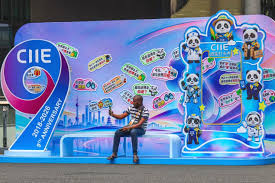
The 9th China International Import Expo (CIIE) opens in Shanghai on Nov. 5 and will run through Nov. 10.
This year’s exhibition space exceeds 370,000 square meters for the first time, drawing participants from 162 countries, regions, and international organizations. More than 4,100 overseas companies are participating, and over 480 products are expected to make their debut at the expo, hitting a record high.
At a time when unilateralism and protectionism continue to disrupt the international economic and trade order, the CIIE, now in its ninth consecutive year, has become an irreplaceable international public good in the global economic and trade system.
A closer look at the exhibition layout of the 9th CIIE reveals six major exhibition areas and an Innovation Incubation Special Section, each with its own highlights.
Pavilions dedicated to medical equipment and health care products, consumer goods, and food and agricultural products have all been expanded. More than 2,000 companies are participating in the event for the first time.
Among the newcomers are the U.S.-based Project Management Institute and Germany’s Caparol, a leading producer of architectural coatings.
For the first time, the CIIE will feature a global consumer brands showcase to help expand and upgrade consumption of quality products.
“The CIIE stands as a clear demonstration of China’s commitment to expand opening up,” said Carl Fey, professor of strategy at BI Norwegian Business School. As he has observed, China’s opening up is geared toward pursuing shared development with the rest of the world, and the CIIE highlights China’s key role in global trade.
Over the years, the range of exhibits at the CIIE has expanded from consumer goods and components to high-end equipment, core technologies, and quality services.
This evolution reflects the deeper integration of global industrial and supply chains. Today, exhibitors, including industry giants, emerging players, small and medium-sized enterprises, and specialized businesses, can all connect with market demand more precisely and explore growth opportunities across the entire industrial chain.
The CIIE is increasingly attracting international buyers. Ahead of this year’s event, trade delegations from Shanghai, Guangdong, and other regions secured a number of major buyers with strong purchasing power, well-established brands, and substantial demand.
Dedicated matchmaking events were held in Egypt, Germany, the UK, and other countries, bringing negotiations closer to China’s trading partners. During the expo, a buyers’ corridor will help connect quality products and services directly with the Chinese market.
In the first three quarters of 2026, China’s imports reached 16.74 trillion yuan (about $2.5 trillion), representing a 22.3 percent year-on-year increase. September alone saw monthly imports surpass 2 trillion yuan for the first time.
The CIIE offers a window into China’s vast domestic market, where growing demand is creating more opportunities for business around the world.
The expo is also becoming an increasingly attractive platform for foreign investors.
Through the CIIE, exhibitors including ZEISS Group, Schneider Electric and AstraZeneca have established R&D centers, regional headquarters and advanced manufacturing bases in China.
As global companies unveil debut products, many are simultaneously accelerating plans to deepen local R&D, increase investment, and consolidate regional operations.
Over the past three years, the number of foreign-invested enterprises in China has grown steadily. Between January and April 2026 alone, more than 3,000 foreign-invested firms announced additional capital commitments.
The CIIE continues to witness how exhibits become marketable products and exhibitors become investors, and more global companies deepen their presence in China and create benefits for the world.
Beyond commerce, the expo is strengthening cultural and people-to-people ties. More than a marketplace for goods and services, it serves as a cross-cultural forum. The distinctive Country Exhibition area hosts performances and exhibitions that offer visitors a rich tapestry of global traditions.
This year introduces several firsts: the Premium Collection will feature intangible cultural heritage workshops, the Gourmet Festival will launch a global tasting zone, and the Arts Carnival will collaborate with China Fashion Week. These initiatives foster mutual understanding and enrich economic partnerships with stronger societal connections.
The CIIE provides a broader multilateral platform for open cooperation. In step with the trend of economic globalization, it has established an authoritative platform for high-level dialogue and multilateral economic and trade cooperation.
For the first time, more than 300 Fortune Global 500 companies and industry leaders are participating. Nearly 200 firms and institutions have attended all nine editions, while five countries, including Moldova and Romania, as well as the United Nations Development Programme, are joining for the first time, demonstrating the strong appeal of openness and cooperation.
China advances high-level opening up with the aim of expanding the pie of cooperation with the rest of the world. Its stories of opening up have sent a message to the world that China is not only the world’s factory but also a global market. It is not only a “super seller” but also a “super buyer.”
The two-way engagement does not marginalize other stakeholders; rather, it creates tangible benefits for neighboring economies and fosters regional prosperity.
At this year’s expo, pavilions dedicated to Asian and African products will be expanded, featuring higher-quality displays and enhanced programming. These enhancements aim to help African countries with diplomatic ties to China leverage tariff-free access and encourage more Global South countries to fully utilize the CIIE.
Stephen Jackson, United Nations Resident Coordinator in China, noted that the CIIE offers developing economies a practical pathway to integrate more deeply into global value chains and share the benefits of trade.
China will harness the momentum of opening up and pool strength for win-win cooperation. It will firmly uphold multilateralism and continue to make the CIIE a success, helping steer economic globalization toward greater openness, inclusiveness, balance and shared benefits.
By Li Zong, People’s Daily
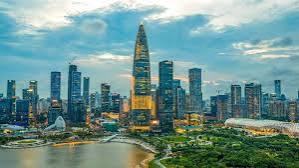
At Qianhai in Shenzhen, south China’s Guangdong province, the bonded maintenance center of German health tech company Siemens Healthineers provides global after-sales support for magnetic resonance imaging (MRI) equipment.
Simultaneously, next-generation digital elevator technology from Finnish manufacturer KONE is quickly reaching markets across the Guangdong-Hong Kong-Macao Greater Bay Area. Foreign banks and financial institutions from the UK, Singapore, and elsewhere are establishing operations in the Qianhai Shenzhen-Hong Kong International Financial City.
With its high degree of openness and strong economic vitality, Shenzhen continues to strengthen its appeal as a global investment destination.
Throughout the 14th Five-Year Plan period (2021-2025), Shenzhen registered 44,000 new foreign-invested enterprises, and the volume of foreign investment actually utilized in the city surpassed 300 billion yuan (about $45.05 billion). More than 340 Fortune Global 500 companies have invested in the city.
The latest figures show that Shenzhen’s actual utilization of foreign investment exceeded 44 billion yuan in the first nine months of this year, up more than 60 percent year on year.
“When I first came here more than a decade ago, workers were still lining the production lines,” said Zhang Hongliang, vice president of operations for Flex’s Industrial Products business in Asia-Pacific, beside an automated production line at Flextronics Electronics Technology (Shenzhen) Co., Ltd.
Today, the facility is the company’s only pilot “future factory” in Asia. Automated equipment, integrated digital systems, and AI algorithms drive its production lines, doubling productivity per employee.
In the early years of reform and opening-up, Shenzhen’s flexible policies as a special economic zone and convenient port access attracted large numbers of foreign manufacturers. In 1987, Flex, a technology company founded in Silicon Valley in the U.S., established its first factory in the Chinese mainland in Shekou, Shenzhen. The company has continued to expand its investment in the city ever since.
“Shenzhen’s highly efficient supply chains, robust digital ecosystem, and proactive government support for technological upgrades have laid a solid foundation for the company’s transition to intelligent manufacturing,” Zhang said. The achievements made in Shenzhen are now being rapidly replicated across Flex’s manufacturing facilities worldwide.
As Shenzhen steps up efforts to build a world-class automotive hub, French auto parts maker Valeo is becoming increasingly integrated into the local automotive industry chain, advancing technological upgrades and optimizing production in intelligent driving and smart cockpit systems.
“China is no longer just the world’s largest automotive market. It has also become a global ‘fitness center’ for the automotive industry and a demanding testing ground,” said Zhou Song, president of Valeo China.
Around 30 percent of the value of intelligent connected vehicles comes from the information technology industry, which aligns closely with Shenzhen’s industrial foundation and innovation ecosystem, Zhou added.
At Siemens Healthineers’ Shenzhen base, more than a dozen MRI systems stand in rows as they undergo final testing before being shipped to Australia, Japan, Thailand and other markets. By the end of 2025, the facility had delivered more than 10,000 MRI and angiography equipment to over 120 countries and regions.
Siemens Healthineers established its Shenzhen operations in 2002. Back then, China’s medical device industry was still in its early stages. An MRI system involves thousands of components, and a local supply chain was yet to be established.
“We have remained committed to localizing our operations and helped develop more than 300 local suppliers. Locally sourced components now account for 80 percent of our finished products,” said Ma Tianshi, general manager of Siemens Shenzhen Magnetic Resonance Ltd.
“We remain committed to investing in Shenzhen and deepening our presence in China, strengthening our intelligent manufacturing capabilities to serve both the Chinese and global markets,” said Ma.
As more foreign companies establish and expand their operations in Shenzhen, the city is evolving from a manufacturing base into an important center for global innovation.
In the first half of this year, foreign investment in actual use in Shenzhen’s high-tech industries accounted for more than 70 percent of the city’s total utilized foreign investment. The city is now home to more than 200 foreign-funded R&D centers, employing over 30,000 researchers.
In March this year, KONE officially opened its southern China headquarters in Qianhai.
“KONE’s presence in China has evolved from sales and manufacturing to R&D and, more recently, innovation,” said Xie Jijun, senior vice president of KONE Greater China. The company is now introducing digital, green and energy-efficient technologies in the Chinese market before taking them global.
The rapid growth of emerging and future industries in Shenzhen is also drawing international financial institutions to the city.
HSBC Bank (China) Co., Ltd. has set up a team in Shenzhen to provide financial services for technology and innovation companies. The team focuses on cross-border fintech innovation in the Greater Bay Area and has launched a range of innovative products that leverage digital technology and are tailored to the needs of technology and innovation companies.
“This reflects our confidence in Shenzhen’s technology and innovation companies and its emerging industries, as well as our commitment to supporting their growth,” said Li Qile, general manager for the Greater Bay Area at HSBC Bank (China) Co., Ltd.
Shenzhen has consistently worked to attract and utilize high-quality foreign investment while further opening up its economy. In December 2025, the city introduced measures to further attract and utilize foreign investment, strengthening policy support for opening up key sectors, improving the business environment and facilitating investment.
Going forward, Shenzhen will actively advance institutional opening-up and develop itself into a high-level international trade hub, said an official from the Investment Promotion Bureau of Shenzhen Municipality.
By Zhang Yunhe, People’s Daily
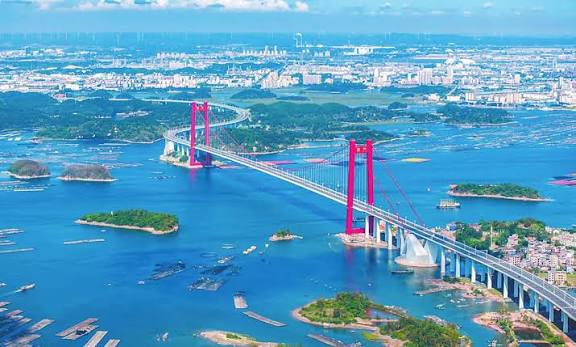
Situated on the Beibu Gulf coast in south China’s Guangxi Zhuang autonomous region, Qinzhou has served as a maritime gateway since ancient times, linking inland waterways with the open sea.
Today, propelled by the expansion of the Beibu Gulf International Gateway Port, the New International Land-Sea Trade Corridor, and the China-Malaysia Qinzhou Industrial Park, the city is forging a dynamic new path toward deeper maritime engagement and global integration.
A modern maritime hub: Streamlining connectivity and multimodal transport
At the automated container terminal of Beibu Gulf Port, cargo operations run continuously around the clock.
Nearby, at a bulk cargo berth, the vessel Dubai Nature — carrying imported soybeans — has just docked. On deck, Bangladeshi crew member Rajib oversees mooring operations. Watching giant vessels pass one after another along the channel, he said: “The port is spacious. Operations run in an orderly manner, and the staff are friendly and responsible. It has left a deep impression on me.”
Qinzhou Port currently has 96 operational berths, including berths capable of accommodating vessels of up to 300,000 tonnes. It operates 92 container shipping routes, connecting with more than 200 ports in over 100 countries and regions worldwide.
In June this year, Moiz Farooq, executive editor of Pakistan Economic Network, visited Qinzhou. At the Smart Port Innovation Center of Beibu Gulf, he watched demonstrations of smart port operations, including the precise dispatching of autonomous container trucks.
“Qinzhou has world-class port facilities, and landmark projects such as the Pinglu Canal give it outstanding advantages in developing foreign trade,” Farooq said.
“I hope to see more Pakistani companies come to Qinzhou and explore cooperation opportunities in areas such as logistics, port development, maritime trade, and the digital economy.”
On September 16, the landmark Pinglu Canal opened for navigation. “The waterway establishes a new link between the inland waterway network and the sea, effectively shortening transport distances and reducing costs. It will also spur industrial clustering and port-related economic development in Qinzhou, enhancing regional competitiveness,” said Philippe Gourbesville, president of the International Association for Hydro-Environment Engineering and Research, after visiting the canal.
Fostering industrial growth and streamlining business services
To support business development, Qinzhou has set up dedicated service teams at both municipal and county levels to assist enterprises in the real economy. Staff members regularly visit businesses and follow up on concerns raised through online platforms, providing ongoing support to help businesses resolve operational difficulties.
Han Seong Woo, a South Korean manager at Guangxi Lingshan Delin Toys Co., Ltd. in Lingshan county, Qinzhou, once encountered difficulties with identity verification when applying to change his company’s business address.
Recognizing the complexity, staff members promptly coordinated across departments and guided him through the necessary steps. What he anticipated would be a lengthy bureaucratic process was resolved efficiently.
Thanks to multiple opening-up platforms, including the China-Malaysia Qinzhou Industrial Park and the Qinzhou Port area of the China (Guangxi) Pilot Free Trade Zone, Qinzhou is now home to 211 foreign-invested enterprises. Foreign-funded projects in light industry, aquatic products and port-related industries are steadily being implemented, injecting fresh impetus into local development.
“Qinzhou offers not only a highly supportive business environment but also a rich historical and cultural heritage. Lingshan county, for example, is home to ancient buildings such as those in the ancient Dalu Village,” Han said.
“As Qinzhou continues to open up, it will attract more South Koreans to work and invest here, further strengthening economic, trade and cultural ties between South Korea and China,” he added.
Bridging cultures through education and people-to-people exchange
Inside a classroom at Beibu Gulf University in Qinzhou, students practice conversational Thai under the guidance of instructor Orawee Wei. Standing beside their desks, she uses expressive gestures to help learners master intonation and rhythm.
“After living in Qinzhou for many years, I have come to regard this place as my second home,” she said.
Over recent years, schools in Qinzhou have established sister-school partnerships with their counterparts in Malaysia and other ASEAN countries, organizing a range of people-to-people exchange activities, including cultural and tourism exchange activities and study programs for young people.
Wei, who grew up in a family of teachers in Nakhon Sawan province, Thailand, and joined Beibu Gulf University in 2020.
“When I first arrived, only 80 students were studying Thai. Today, that number has grown to more than 200, with an increasing number of young Chinese people eager to learn the language,” she said.
Wei teaches specialized courses such as Business Thai and Practical Thai for International Trade. She has seen five cohorts of her students graduate.
“My students are actively involved in Thailand-China economic and trade exchanges. They work as accompanying interpreters, business secretaries and foreign trade accountants for Thai and Chinese companies, helping strengthen economic and trade ties between Qinzhou and ASEAN,” she said.
From an ancient port once bustling with sailing ships to a modern gateway now traversed by giant vessels, Qinzhou has become a key hub of the New International Land-Sea Trade Corridor.
Linking mountains and seas and creating opportunities, the city keeps goods moving, businesses thriving and people connected, offering a vivid example of cooperation and exchanges between China and the rest of the world.


2027: Borno Stands still As APC Launches campaign.

Gov AbdulRazaq inspects Oluremi Tinubu Hospital, lauds work done

2026 Amuro Day: New Aare Mayerorun, Meseko Urges Unity

-
 Uncategorized6 years ago
FG, states urged to harness flooding for ranching, others with technology – Agbaje
-
 Headlines11 years ago
Breaking: EFCC seals Borno House of Assembly, as Hon members take to their heels
-
 News12 years ago
Nigeria Security Operatives Stage Manhunt For Homosexual Perpetrator
-
 News10 years ago
How 21-year-old Girl fled community over accusation of lesbianism
-
 News11 years ago
Yobe Gov Moves Against Deputy
-
 Opinion8 years ago
7 signs she has friend zoned you
-
Technology5 years ago
Online job placement company headhunts women
-
 Headlines10 years ago
Borno Dep Gov Abducts Another Church Leader