
News
Benue Guber: Why I’m imminently and Constitutionally, I am qualified- Aondoakaa, SAN

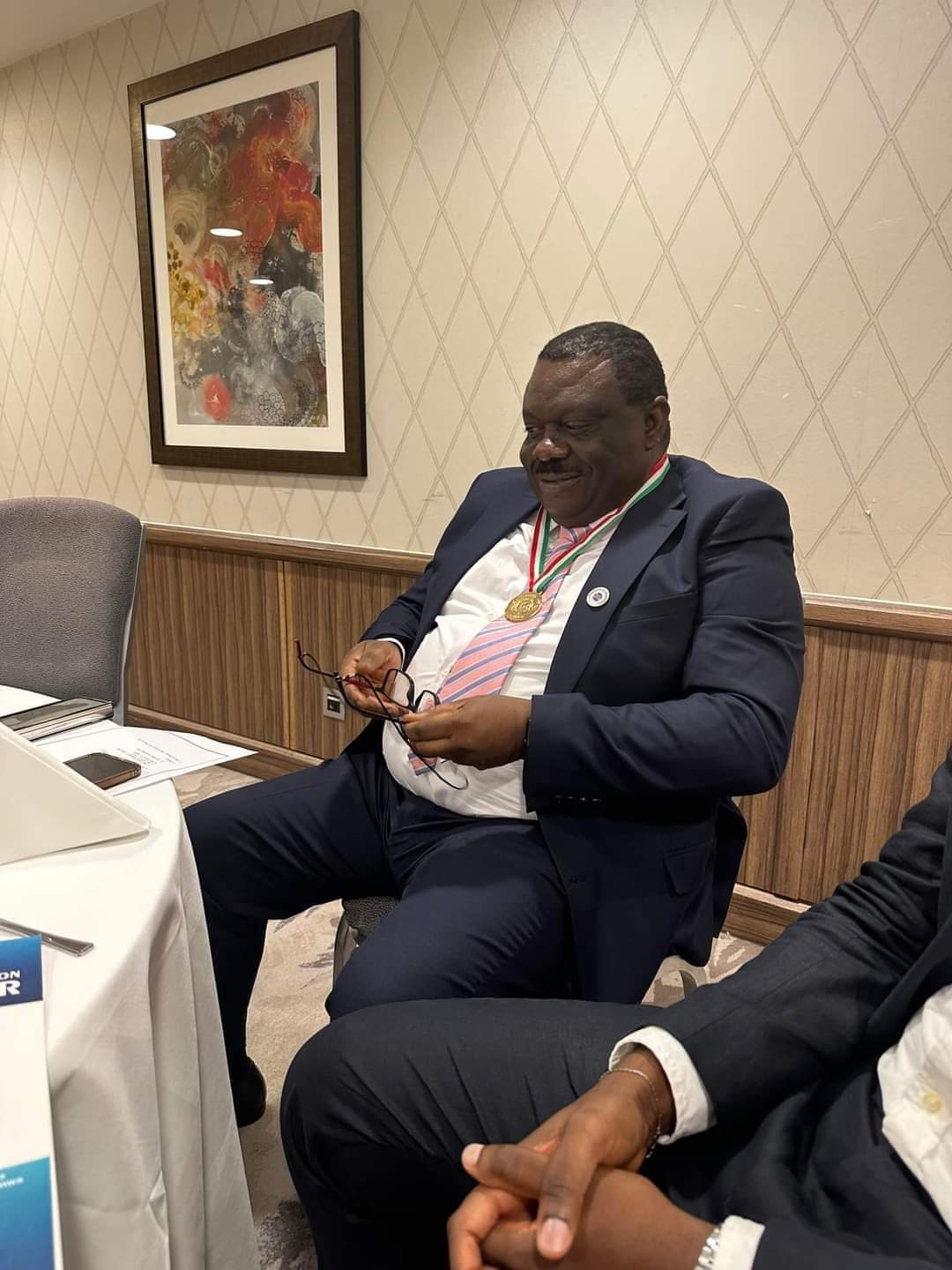
Chief Michael Kaase Aondoakaa, SAN, a former Minister for Justice and Attorney General of the Federation is a 2027 governorship hopeful in Benue State.
The revered legal luminary cum politicians in this interview with ARISE TV speaks on some topical issues that happened during the administration of late president Umar Yar’Adua.
He also speaks on the 2027 governorship election among other national issues. Excerpts:
Former Governor Peter Obi questions President Tinubu’s constant travel outside Nigeria and his ability to govern. How will you react to that?
Well, thank you for that question; that is his personal opinion. The issue of
presidential powers, legally, the executive powers under section 5 of the
constitution are embodied in the President himself as a person and as I had said before that the President can rule and take decisions affecting the country from any part of the world and I still maintain my position. Of course I was vindicated on that point, that was when Yar’Adua was sick and after that President Johnathan was in Brazil, after that the former President Buhari was also out of the country for a long period.
The presidential powers, not only the presidential powers but where is power created by Statute or persons appointed and even in private offices, the powers are embodied in the person so appointed until the day he ceases to hold the office. Technology has so much improved now that the issue of sitting
physically in the office does not arise for anybody to exercise his powers. That is why you see in many most organizations abroad now people work from home and that’s also why you have companies in Europe having employees in Africa especially Tech companies because everything is done by computers, virtual
meetings and other devices. So I don’t think former Governor Peter Obi is fair to the President on that point because the President’s travelling cannot affect the presidential powers vested in him. He can exercise it anywhere and I believe he does it because his mails are transmitted to him electronically. Secondly, this is not an issue to play politics with, when President Bola Ahmed Tinubu came into power, the economy was very weak, extremely weak and therefore there was need for him to reopen Nigeria to the whole world. When he assumed office, there were lots of things that created fear such as the herder/farmers conflicts, Boko Haram and insurgencies so all these created fear to the international community with respect to investing in Nigeria, not only the international community but even Nigerians living abroad became discouraged to sending funds into the country. So I believe, in my own opinion, the president traveling
to give assurance at the highest level government is one of the best things that has happened to Nigeria. I don’t share Mr. Obi’s opinion, and this is evident by the surge of the foreign reserve and as at last week, it went up to 44 Billion US Dollars which is comfortable, not too comfortable but still it’s a great improvement that gives security for our international trade, it gives security for
our banks to operate letters of credit and I am excited that Nigerian banks do not need a foreign bank confirmation for opening our letters of credit. These are the things that have a positive impact on Nigeria, which may partly be as a result of the President engaging with the global community to reconnect Nigeria. So I do not go with former Governor Peter Obi on this issue, first it doesn’t impair the presidential powers embodied in him and he can exercise these powers anywhere in the world once an issue is brought to his notice. Secondly, we are
practicing a presidential system of government where the executive powers
under section 5 of the constitution can be delegated to the Vice President,
Ministers and all other person’s the executive powers are delegated to, that
means that even a cleaner derives his powers to carry out executive function
from the President under the Nigerian constitution. It is not a dictatorship that you expect that the dictator stands that whatever he says is final. Powers are appropriately delegated and Ministers are appointed. Therefore, I have respect for former Governor Peter Obi but I don’t understand the point he is trying to make. Frankly it doesn’t make sense to me on this point.
You presented the country request for an increase of the country continental shelf from 200 nautical miles to 350 nautical miles. What are the security and economic benefits?
Well, let me go back to the issue of increase of the Continental shelf which
started in 2000 under President Obasanjo and when late President Yar’Adua
assumed office in 2007 and found that it was necessary to continue with the
good work on the increase of the Continental shelf from 200 nautical miles to 350 nautical miles which had started under his predecessor President Obasanjo.
The wisdom for this is not farfetched. First, Nigeria was a state party because we signed a treaty, the United Nations Treaty on the law of the Sea on the 1st of July 1983 and then we deposited the instrument of fortification on 14th August 1986
so by then the convention law entered into force in Nigeria by 16th July 1994. So you see, we became a full member to benefit from the convention and I think
that is how then Presidents Obasanjo and Yar’Adua saw that Nigeria has
challenges in the gulf of Guinea.
One of the challenges was bunkering, the next was Piracy, so to avoid the
possibility of piracy that engulfed Somalia and clean up our international waters, safeguard the gulf of Guinea as it relate to Nigeria. So Nigeria started the preparation and in 2009 I led a delegation, the delegation actually was to be led by the Chairman of the National Boundaries Commission which statutory was the Vice President. I was in Brazil when I was instructed by the Vice President to go and lead the Nigerian delegation. So I left Brazil straight to New York, spent five
days looking at the paperwork and I did a presentation to the UN Commission,
which was presided over by a Brazilian. It was a moving moment when at the end
of the presentation the members of the committee were asked by the Chairman
if they had any questions and they said they didn’t have because it was a
beautiful presentation. We first highlighted how we complied with the law. We secondly highlighted how we had consulted our neighbors including Ghana and physically brought the no objections response tenders before the Commission and this warranted us to have the approval in principle for us to proceed with our proposal for consideration by the 24th Session of the Commission. We submitted everything to the sub-committee for details and technical delineation was to be set up by the Commission.
The advantage was obvious, effective policing of our maritime boundary because if you move the Continental shelf to 350, the small boats cannot reach to that limit of the Continental Shelf. When most of the people that were involved in oil bunkering realized that our Continental shelf was just 200 nautical
miles it was obvious that small light boats that are used in bunkering can safely deliver bunkered crude oil which is delivered to ships that even if they are just a meter outside the 200 nautical miles the Navy cannot go there.
That was the premise, at the time the issue of bunkering. President
Obasanjo and subsequently President Yar Adua saw the need to conclude work
on this, that was the primary consideration. Again, after the Bakassi, we needed to ensure that the sacrifices done by Cross River to mitigate their losses and our understanding was that if we conclude work on the 350 nautical miles, the seabed minerals, hydrocarbon and fishing will also accrue to Calabar which in our opinion at that time had lost substantially as a result of the handover of southern part of Bakassi to Cameron in compliance with the International Court judgement. That was the wisdom, economic gain, policing of the Maritime zone and the gulf of Guinea more efficiently as it relates to Nigerian boundaries. That was the main wisdom, we concluded that work and crossed the first huddle. I don’t know what happened but I didn’t hear any further work, because I left
government.. First I was removed as Attorney General on 10th February 2010 so I was no longer a member of the Boundary Commission because I was reassigned as Minister of Special Duties so I really don’t know why the whole of that period of the government of President Good luck Johnathan I was not in a position to know whether the technical work continued or why it delayed that much, even with the serious support of United Nations Commission of Laws of the Sea we had.
They were in total agreement with our submission because nobody asked us any questions. We had the support of our neighbors so we didn’t know why they didn’t extend it during the President Johnathan administration as he was also the prime person because he was the Chairman of the Boundary Commission as Vice President. He was in the know of everything, when I made the successful presentation. Let me not give credit to myself, in going to make the presentation, I was accompanied by Nigerian Permanent Representative to
United Nations Professor Joy Ogwu and the Director General of the National
Boundary Commission Alhaji Sadiq Digi and our presentation was made pursuant
to Article 76 paragraph 8 of UNCLOS which gave us sufficient approval I do not know what has led to this delay.
Then I started hearing about work on it towards the end of the administration of President Buhari. I am extremely glad that President Ahmed Tinubu reopened work on it and even received a report on it that shows the level of attention. He saw the wisdom in what President Obasanjo started and how President Yar’Adua crossed the first huddle.
As President Ahmed Tinubu is pushing this to the stage now to my mind
he is a visionary leader who has seen the security and economic benefits of the increase of the Continental shelf and I seriously commend him for that. I also saw the possibility of mitigating the losses of Cross River government as a result of Bakassi which in particular is the southern part of Bakassi.
Why was bakassi peninsula handover to Cameroon considering the fact that the cross river state, which houses the eastern naval commander since 1971, was hemmed out?
During our time because of the shores of Calabar we still felt they were a Littoral state. When Federal Government was to hand over Bakassi in 2005 the Navy objected and raised a lot of objections on the premise that they
will not have access to the Sea if Cross River is hemmed out and that would
constituted a very serious threat. Cameron is a friendly nation but every friendly nation is a potential enemy.. it was a very serious complaint by the Nigerian Navy and the Eastern Navy Command Headquarters was established in 1971 by the government of General Gowon to curtail any maritime challenges coming from the Gulf of Guinea. It was something President Yar’Adua took seriously. Of course not only President Yar’Adua, the Navy also made objections to the National Assembly so before we took the decision to hand over we had to work on that threat that the Nigerian Navy would be unable to access the Sea if Calabar was hemmed. So in my opinion the practical demographics is laid out at the demarcation is laid at the Northern part of Bakassi which is still part of Nigeria and it ensures that Calabar would be protected by the Nigerian Navy because Calabar was still left as a Littoral state, they were not hemmed out that is based on the technical report given to us in 2008 because we had to invite the
Surveyor General and international experts to look at the judgement of the
International Court of Justice and the delineation and know whether the
Nigerian Navy situated in Calabar will be hemmed out. But this was not the case. I left office and the judgement came in 2012 that Cross River was hemmed
out. I was shocked… Supreme court in their wisdom decide on what is brought
to them so I don’t know the data that was taken to the Supreme court. At that
time, President Yar Adua had died, I was no longer in office so I don’t know up
till now, I keep wondering what kind of data that was presented that brought
that result and if they say so then the Eastern Navy Command should have been shut down because they will have no access to the Sea from Calabar axis. To me, Cross River State ought to be an oil producing State in the Northern part of
Bakassi based on the line of demarcation which we resolved. This area was
supposed to remain in Cross River, but I don’t know what happened. It may be the data that was brought to the Supreme Court; maybe it was different from the one the Navy resolved with us because we did not shut down the Eastern Navy Command Headquarters in Calabar and taken out to Port Harcourt. We needed an Armed force that can police the gulf of Guinea and that is the Navy. We gave the Nigerian Navy direct access from Calabar Estuaries to the Atlantic Sea.
I don’t know what transpired but I think that it is something that has to be
resolved. You see the implementation of the judgement involved certain things,
equity, political decisions and effective and technical diligence, so I wouldn’t know whether the one they gave us that led to us believing the Nigerian Navy Eastern Command Headquarters in Calabar were not hemmed out from Atlantic Sean directly using Calabar Estuaries at that time is different from the one they present to the court. Mind you, as former Attorney General I cannot challenge the wisdom of the Justices of the Supreme Court. Supreme Court will give judgement based on evidence and I am saying that President Yar’Adua wouldn’t have taken the security of the country lightly. The practical effect of our decision is that the Eastern Naval Command remained in Calabar so how do they operate if they are hemmed out?
So part of the Bakassi which is now the western part of Bakassi is still
remaining in Cross River and the in-shores are still there which are open to the Sea. Actually I am at a loss as per the data that was presented which was the basis of the argument at the Supreme Court; and that is the extent I can talk
about it because when Supreme Court is involved you have to be careful. I am
only talking in defending the decision of the President Yar’Adua Administration, which led to me going to Calabar to handover Southern part of Bakassi on 14th August 2008.
There was nothing like that,we never had any complaints until 2012 that
we heard that Cross River was hemmed out. We never received such negative
complaints. That is the position.
The people of your state, Benue have been calling you to contest the 2027 governorship election. Have you accepted to contest and will you say you are qualified?
Sincerely, I don’t want to comment on that issue, because only God gives
power to whom He wants, and when God wants. If you go by provision of the
Constitution, I am qualified. Anybody is qualified to be Governor of the state. If he or she meets the Constitutional requirement, I can only answer that question in relation to the people making threats. I was born around the sixties during the Tiv riots, political crisis. When I grew up I read terrifying stories and how people were killed/maimed and if you were NPC then UMBC will murder you, some will
put a nail in your head and murder you. I am mindful of what is going on, I read
history of the same thing happening in the Western part of Nigeria at that time
and such incidence has not occurred again in Nigeria, maybe it reared out in
Ondo in 1983.
The leadership of the country especially under President Tinubu. Starting from President Yar Adua tolerated opposition. Right now you have ADC going round, some even attack the physical credibility of the president and I have not seen where their members have been attacked. Something is coming out in Benue that is frightening. I read in the papers where the president of the a subregional group the KUDA Kunav Development Association was saying that any person from Kunav that contests for governorship should be attacked and
beaten up and then the Vice Chairman of the local government also said that
any Kunav son that contests shall be attacked. I am not from Kunav but then there is this general slogan that “No Alia, No Benue.”
These are unfortunate rhetorics, we should never look in that direction. If you are popular then there is no need to input violence in your campaign because if you are indeed popular then people will vote for you. If you have done things to endear people to reelect you they will. Though I have not heard it personally from the Governor but he needs to call those people to order because by saying so they are saying he is no longer popular. By saying so they are trying
to insinuate that he has lost that popularity and therefore this time they are not going to persuade the people but they are going to use force to bring him back.
They should remember what happened in Tiv land, in the Sixties.
Constitutionally I am qualified because the constitution of Nigeria is clear
and what is written in the Constitution cannot be added nor subtracted. So
going by the constitution, I am qualified, I have not been convicted or declared bankrupt so going by the constitution I am qualified to contest.
The only frightening aspect and I want to allude to it and this has to stop. If people attack the credibility of the President and he never said such things because he believes in the rule of law and he believes that the things he has done in the country can earn him reelection then why should people who claim to be supporters of the
Governor say that if there is No Alia, No Government, No Benue? The Reverend
Fr. as Governor, ought to be a man of peace, it is up to him to advise his
supporters to respect the law to prevent any likelihood of breakdown of law and
Order in Benue State and Nigeria at large. This thing is frightening, this is the flagship that we believe should be addressed quickly because what happens in Benue can become dangerous.
What happened in 1962 and 1964 should never be allowed again in Nigeria and
it is not something the security agencies should take for granted. So that’s the only thing I say about this for now. When the time comes we will know about it. By law the time for campaign has not started. Until it is time, as a law abiding
citizen, I will not talk on that issue.
Thank you
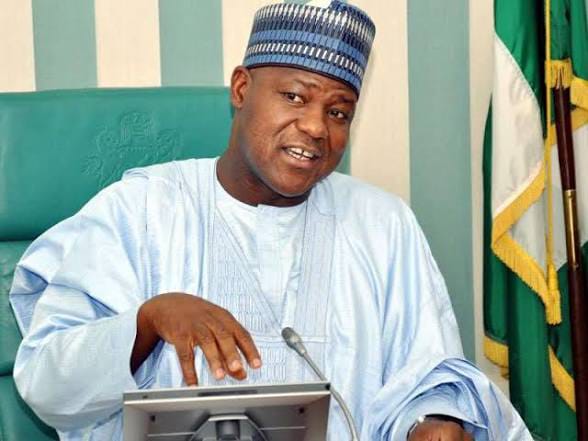
Former Speaker of the House of Representatives and Chairman of the Board of the National Credit Guarantee Company Limited (NCGC), Rt. Hon. Yakubu Dogara, CFR has expressed deep sorrow over the Nigerian Air Force aircraft crash that claimed the lives of 32 persons near Igbokoda, Ondo State. Dogara described the tragedy as a heartbreaking loss to the nation, noting that the deaths of the victims have left a painful void in the country’s defence and security community.
In a statement, the former Speaker extended his condolences to President Bola Ahmed Tinubu, Commander-in-Chief of the Armed Forces, the Nigerian Air Force, and the families of those who perished in the unfortunate incident.
He said the nation shares in the grief of the bereaved families and the Armed Forces at this time of immense sorrow, adding that the sacrifices of those who lost their lives in service to the country will not be forgotten. “The nation mourns with the families of the deceased and stands in solidarity with the Armed Forces during this difficult period,” Dogara stated.
He also commiserated with the Chief of Air Staff, officers and men of the Nigerian Air Force, praying that God grants them the fortitude to bear the painful loss.
According to him, moments such as this call for national unity, reflection and collective support for the families and institutions affected by the tragedy.
Dogara paid tribute to the victims, describing them as patriotic Nigerians whose commitment and service contributed to the security and stability of the nation. He further applauded the efforts of emergency responders, rescue teams and all personnel involved in the aftermath of the crash, commending their courage and professionalism under difficult circumstances.
The former Speaker prayed God to comfort their families, friends and colleagues.
He also offered prayers for the safety and protection of members of the Armed Forces and for continued peace, unity and progress in Nigeria.
The Nigerian Air Force aircraft crashed near Igbokoda, Ondo State, resulting in the death of 32 persons and plunging the nation into mourning. Authorities are yet to make public the cause of the accident as investigations continue.
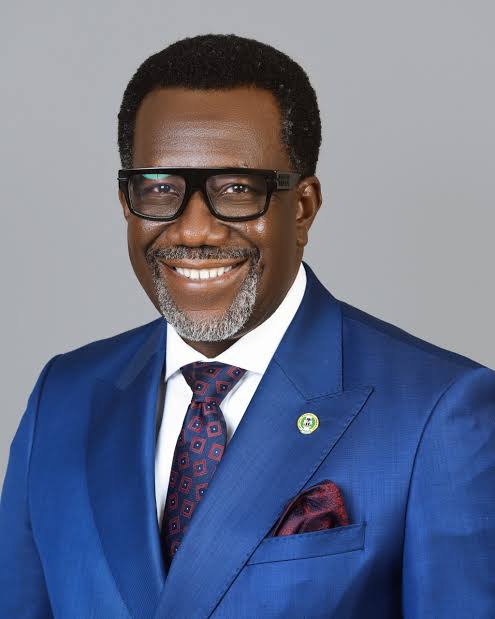
The Centre for Credible Reforms and Institutional Accountability (CCRIA) has commended the Commissioner for Insurance and Chief Executive Officer of the National Insurance Commission (NAICOM), Mr Olusegun Ayo Omosehin, for promoting transparency and accountability in the ongoing reforms of Nigeria’s insurance industry.
The centre said the implementation of the Nigerian Insurance Industry Reform Act (NIIRA) 2025 had ushered in a new phase of development for the sector, with stronger regulatory standards, improved capitalisation and greater emphasis on protecting policyholders.
Dr Aminu Abubakar Aminu, president of the centre, said this in a statement at the weekend.
Aminu commended President Bola Tinubu and the National Assembly for the enactment of NIIRA, describing the legislation as a major step towards addressing longstanding challenges in the insurance industry.
“The enactment of the Nigerian Insurance Industry Reform Act is a significant milestone in the development of Nigeria’s insurance sector. We commend Mr President and the National Assembly for recognising the need to modernise the legal and regulatory framework governing the industry. NIIRA provides the foundation for an insurance sector that is better capitalised, more accountable, more responsive to policyholders and better equipped to contribute meaningfully to the Nigerian economy,” he said.
The centre also praised Omosehin for his leadership of NAICOM, saying his extensive experience as an insurance professional had positioned him to effectively implement the new regulatory framework.
“We consider the appointment of Mr Olusegun Ayo Omosehin as Commissioner for Insurance and Chief Executive Officer of NAICOM a timely and appropriate decision. He is a seasoned insurance professional with many years of experience in the industry, and his understanding of the sector gives him the practical knowledge required to lead an important reform process of this nature. We commend him for the direction he has provided since assuming office and for his commitment to strengthening the industry,” Aminu said.
According to the centre, the ongoing recapitalisation exercise was among the important steps taken to strengthen the financial capacity of insurance companies and improve their ability to meet obligations to policyholders.
Aminu said the reforms were already producing early gains and should be sustained through consistent implementation.
“The early developments under NIIRA demonstrate that the reform is not merely a legislative exercise but a process capable of producing measurable improvements in the industry. Stronger capital requirements, improved supervision and greater attention to policyholder protection will ultimately create an insurance market that Nigerians can trust. We encourage NAICOM to remain focused on the implementation of the Act and to continue providing clear guidance to operators and other stakeholders,” he said.
The centre noted that the reforms would also help deepen insurance penetration and strengthen the industry’s contribution to national economic development.
It urged insurance companies, brokers, reinsurers, professional bodies and other stakeholders to embrace the new framework and work with NAICOM to achieve the objectives of the legislation.
“The success of NIIRA will require the cooperation of every stakeholder in the insurance ecosystem. Operators must see the reforms as an opportunity to strengthen their institutions, improve their services and regain the confidence of Nigerians. A well-regulated insurance industry can mobilise long-term capital, protect businesses and households against risks and support investment and economic growth. These are benefits that go beyond the insurance industry itself,” Aminu said.
Aminu emphasized that the centre was particularly encouraged by the emphasis on policyholder protection under the new framework, noting that public confidence remained critical to the growth of insurance in Nigeria.
He said Nigerians should be able to purchase insurance products with confidence that operators had the financial capacity and institutional structures required to honour legitimate claims.
The president further urged NAICOM to sustain its engagement with stakeholders while ensuring that the provisions of NIIRA were implemented transparently and consistently.
“What is required at this stage is continuity, professionalism and commitment to the objectives of the law. The reforms must be sustained beyond the initial implementation period so that the gains can become permanent features of the industry. We believe NAICOM, under the leadership of Mr Ayo Omosehin, has an important responsibility to ensure that the momentum is maintained, and we encourage all stakeholders to support the commission in delivering on this mandate,” he said.
The centre said the successful implementation of NIIRA would strengthen confidence in the insurance sector, improve the protection available to policyholders and position the industry to play a greater role in Nigeria’s economic transformation.
It also called for continued collaboration between NAICOM, insurance operators and other stakeholders to ensure that the objectives of the new law were fully achieved.
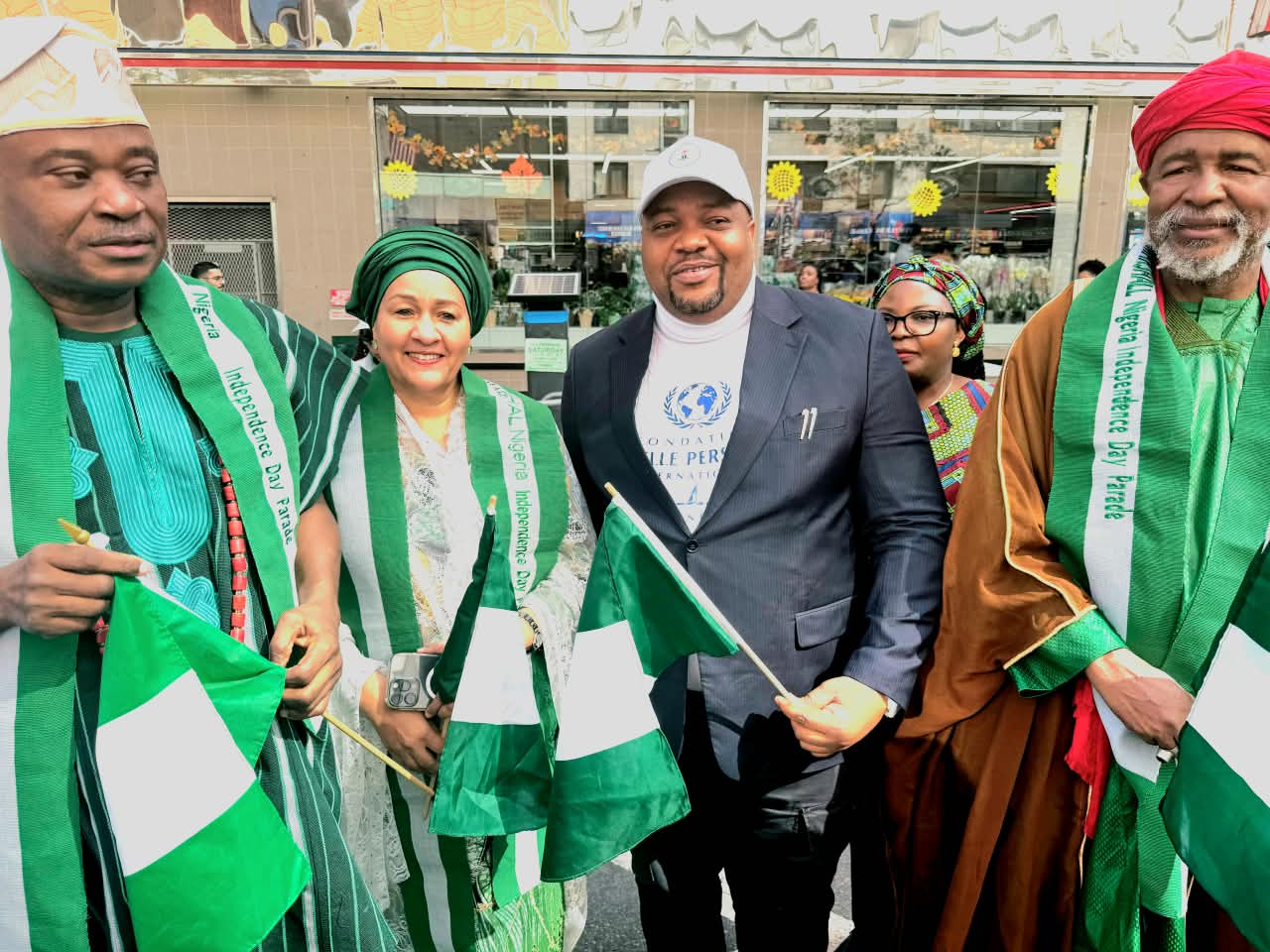
As Nigerians from across the United States gathered in Manhattan to celebrate Nigeria’s Independence Day in grand style, Hon. Amb. Jim Okolo used the occasion to share an inspiring message about Nigeria’s immense possibilities, rich cultural heritage, and promising future.
Speaking with members of the media during the colourful celebration, Hon. Amb. Okolo described Nigeria as one of the most blessed nations in the world, endowed with abundant natural resources, a dynamic population, and a cultural heritage that continues to earn global recognition.
According to him, Nigeria possesses enormous deposits of valuable minerals and other natural resources that, if fully harnessed, can accelerate economic growth and create prosperity for millions of citizens. He noted that the country is strategically positioned to become a leading destination for investment in mining, agriculture, technology, manufacturing, and infrastructure development.
Beyond its natural wealth, Hon. Amb. Okolo emphasized that Nigeria’s greatest strength remains its people. He praised the creativity, resilience, intelligence, and entrepreneurial spirit of Nigerians, pointing out that Nigerian professionals, innovators, academics, and business leaders continue to excel in various sectors across the world.
The respected diplomat also spoke passionately about Nigeria’s unique cultural identity. From the colourful festivals of its diverse ethnic groups to its globally celebrated music, fashion, literature, cuisine, and film industry, he described Nigeria as a nation whose cultural influence extends far beyond its borders.
He noted that Nigeria’s diversity is one of its greatest treasures, bringing together hundreds of ethnic nationalities with distinct traditions and languages that collectively form a vibrant and unified national identity.
While addressing questions on security, Hon. Amb. Okolo maintained that although Nigeria faces certain security challenges, the situation is not always as severe as often portrayed by social media discussions and sections of the international media. He stressed that millions of Nigerians continue to live, work, study, invest, and contribute meaningfully to society every day.
He called on the international community, investors, and members of the diaspora to focus on Nigeria’s strengths, opportunities, and achievements rather than allowing negative narratives to define the country’s image.
“Nigeria remains a land of opportunity, innovation, and hope. It is a nation blessed with extraordinary human capital, abundant resources, a rich cultural heritage, and a people whose determination and resilience continue to inspire the world,” he said.
The celebration was attended by several distinguished personalities, including the United Nations Secretary-General, Hajia Amina Mohammed, the Nigerian Ambassador to the United Nations, diplomats, business leaders, community stakeholders, and prominent members of the Nigerian diaspora.
The event transformed parts of Manhattan into a vibrant showcase of Nigerian pride, featuring cultural exhibitions, traditional performances, business networking sessions, authentic Nigerian cuisine, and displays highlighting the country’s achievements and diversity.
Adding excitement to the festivities were thrilling performances by internationally acclaimed Nigerian music stars Patoranking, Runtown, and BNXN (formerly known as Buju), who entertained thousands of attendees and demonstrated the growing global appeal of Nigerian music.
As the celebration came to a close, the message from Hon. Amb. Jim Okolo resonated strongly among participants: that Nigeria is far more than the challenges often highlighted in headlines. It is a nation blessed with extraordinary talent, vast opportunities, cultural richness, and the potential to achieve even greater success on the global stage.


Alao-Akala’s Widow Urges Full Implementation Of LG Autonomy

PRESS STATEMENT BY AREWA DISCUSSION GROUP TITLED; PHRANK SHUAIBU: THE FACE OF A DUBIOUS, ROGUISH MERCHANT OF COUNTERFEITS

Two German writers retrace the Long March by bicycle

-
 Uncategorized6 years ago
FG, states urged to harness flooding for ranching, others with technology – Agbaje
-
 Headlines11 years ago
Breaking: EFCC seals Borno House of Assembly, as Hon members take to their heels
-
 News12 years ago
Nigeria Security Operatives Stage Manhunt For Homosexual Perpetrator
-
 News10 years ago
How 21-year-old Girl fled community over accusation of lesbianism
-
 News11 years ago
Yobe Gov Moves Against Deputy
-
 Opinion7 years ago
7 signs she has friend zoned you
-
Technology5 years ago
Online job placement company headhunts women
-
 Headlines10 years ago
Borno Dep Gov Abducts Another Church Leader