
China
Border town in Xinjiang leverages football to bridge cultures and drive local growth

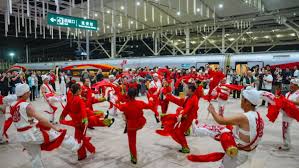
By Shang Rongzheng, People’s Daily
Can a small border town with fewer than 200,000 residents host an international football tournament?
Yopurga county in Kashi, northwest China’s Xinjiang Uygur autonomous region, has answered that question with a resounding yes.
Nestled near the edge of the Taklimakan Desert, the town is home to southern Xinjiang’s largest outdoor multi-purpose stadium. Not long ago, more than 300 young footballers from six countries gathered there for the Kashi Cup International Youth Football Invitational Tournament.
Among them were local Kashi youngsters, young players from Beijing, Shandong, Shanghai, Shenzhen, and other places in China, as well as teenage athletes from overseas, driven by their football dreams.
This marked the third edition of the Kashi Cup International Youth Football Invitational Tournament. In Yopurga, the tournament has grown into a community festival embraced by locals from all walks of life.
One semi-final match pitted a team from east China’s Shandong province against one from Guangdong province in south China. After the final whistle, spectator Alimjan Ablimit and his two primary-school-age children lingered at the stadium. The family had driven more than an hour from Shule county in Kashi to watch the game. He pulled out his phone and took photos of the kids in front of the stadium.
Alimjan Ablimit told People’s Daily that football runs deep among children in Xinjiang. For years, kids would set down a few schoolbags on the street to make makeshift goalposts. “Now we have much better facilities, and more matches right on our doorstep. The football culture is stronger than ever.”
Admission to this year’s Kashi Cup was available via free reservations. Fans of all ages packed the stands, cheering loudly for the players. Beyond the pitch, local authorities rolled out tie-in promotions: spectators could redeem their stubs for discounts at night markets and free entry to a local scenic area. During the tournament, the average occupancy rate of 17 local hotels topped 80 percent.
In the final, a team from Uzbekistan defeated the Shandong team 3-2 to claim the championship. The young players lifted the trophy to savour their moment of glory, greeted by thunderous applause from the crowd.
For 14-year-old Pan Xiaoyi from Shenzhen, the journey to this remote frontier marked a personal milestone. Traveling to Kashgar for the first time and encountering the desert landscape, Pan had dreamed since kindergarten of testing himself on an international stage.
“Playing against strong sides such as Uzbekistan, I noticed they move and pass faster, with sharper tactical execution. We will target these areas in our training back home,” Pan said.
The hospitality of the Kashi people also left a lasting impression on the visiting young footballers.
“The crowd cheered their hearts out for us. The atmosphere was incredible,” said Shi Junchen, a teammate of Pan. While exploring Kashi Ancient City, local shopkeepers greeted them warmly and invited them to taste local delicacies, creating a festive mood much like Chinese New Year celebrations. “I will definitely tell my parents they need to visit Kashi. I hope I can come back here with them,” Shi noted.
Over its three-year run, the Kashi Cup has widened its invitation list and built greater international visibility. It allows a growing number of young foreign footballers to learn about Kashi, Xinjiang and China.
Yegor, 15, captain of a team from Russia, was visiting China for the second time. The extended competition schedule gave him time to experience the city at a leisurely pace. Together with his teammates, he wandered Kashi Ancient City and rode camels in the desert, making precious memories.
Yegor’s hotel room was close to those of the Shenzhen players. Despite the language barrier, the teenagers chatted enthusiastically via translation apps, covering everything from training routines and match tactics to favorite football boots, music and food. They exchanged contact information. “We are good friends now,” he said.
The 2026 Kashi Cup Super Invitational Football Tournament will kick off in Yopurga in mid-October. The opening ceremony of last year’s edition drew more than 30 million live-stream viewers online, with related topics racking up over 1 billion total views. More than 160,000 spectators attended matches on site.
“From the international youth invitational to grassroots community football leagues, our ongoing Kashi Cup series aims to use football as a medium to build a local signature. We want to showcase Kashi’s vibrancy and hospitality while creating a platform for cultural exchange and ethnic unity,” said Wang Chen, deputy commissioner of the Kashi prefectural administrative office.
By Li Hongxing, People’s Daily
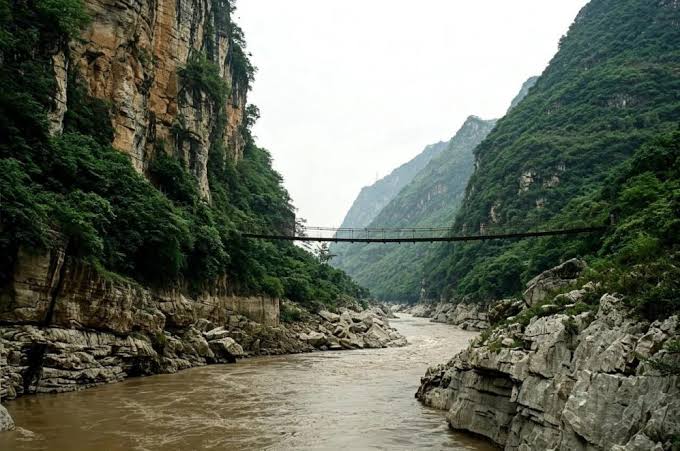
Two bridges over the Huajiang River in southwest China’s Guizhou province offer a striking glimpse into the remarkable transformation of China’s former revolutionary base areas.
The first is the Huajiang Chain Bridge. With its iron chains and wooden-plank deck, it spans a section of the Beipan River.
In 1935, as the Right-Flank Column of the Central Red Army advanced into southwestern Guizhou, the 11th Regiment of the Third Red Army Corps held its position here, buying precious time for the main force.
This wartime lifeline embodied the determination to overcome every challenge and fight for victory.
The other one, the Huajiang Grand Canyon Bridge, is pushing the boundaries of bridge construction in mountainous terrain through intelligent construction, innovative materials, advanced wind-resistant designs, and environmentally friendly building techniques.
Its construction, which has set multiple world records, has effectively bridged the “gaps” created by the mountains and canyons.
The old and new bridges now stand within sight of each other, offering a vivid picture of how former revolutionary base areas have changed, and Guizhou is far from the only example.
The opening of flights at Ruijin Airport in east China’s Jiangxi province has given people in southern Jiangxi and western Fujian, both former revolutionary base areas, a new “air corridor” linking them with the rest of the country.
The Jiajin Mountain Tunnel in southwest China’s Sichuan province has entered trial operation, turning the arduous journey “over” the mountain into a smooth passage “through” it and freeing local residents from worries about mountain closures caused by winter snow and ice.
Bridges spanning valleys, passenger planes roaring overhead, and tunnels piercing through mountains — the path to modernization for old revolutionary base areas is growing ever broader.
What is driving these once-remote areas to take on a new look?
Major undertakings call for riding the tide of the times. Development anchored in the prevailing trends of the era ensures the right direction and provides a strong driving force. That once-remote regions are no longer isolated, and less-developed areas no longer lag behind, owes much to their ability to seize opportunities of the times and align themselves with broader development trends.
Deep in the mountains of Baisha township in Jishui county, Jiangxi province, fruit farmers are now able to sell their produce through livestreaming. This mountain hamlet, where people once “shouted to communicate and traveled on foot”, is now equipped with 5G base stations, bringing new vitality to rural revitalization.
Today, China boasts nearly 4.6 million 5G base stations and over 30.53 million gigabit-capable network ports, achieving gigabit-level connectivity for every county and 5G coverage in every township.
From snow-capped mountains peaks to seashores, from the depth of dense forests to desert steppes, digital infrastructure functions like an intricate neural network, bridging the digital divide and bringing the benefits of digital and intelligent technologies to every corner of the country.
For many regions, abundant resources and convenient locations offer a head start. Yet experience shows that the availability or scarcity of resources and other factors of production is never an absolute determinant. With the right approach and by building on their own strengths, regions can turn limitations into new advantages and cultivate new growth drivers from what they already have.
During the Chinese People’s War of Resistance Against Japanese Aggression, the people and soldiers of the Shaanxi-Gansu-Ningxia Border Region stepped up production to break the enemy’s blockade, turning Qingyang in Gansu into the “granary of eastern Gansu.”
Today, Qingyang has once again taken stock of its strengths, drawing on its abundant energy resources and cool climate to develop data centers. Massive volumes of data can travel from Shanghai to the city in a matter of seconds, while computing power in Qingyang enables entrepreneurs in Guangdong in south China to render 3D models at high speed.
As server lights replace oil lamps and streams of digital data flow across the land, data and computing power have become a new kind of “grain,” helping drive local development while serving the needs of the country as a whole.
Industrial upgrading and regional development both require a focus on local strengths and core industries, as well as openness to wider cooperation and integration.
The Fujian-Ningxia collaboration is a case in point. New forms of cooperation, such as “Fujian enterprises + Ningxia resources” and “Fujian headquarters + Ningxia production bases,” are deepening and expanding. Freight trains under Ningxia’s multimodal transport “single-document system,” a system featuring one unified transport document covering the entire journey across different transport modes, carry full loads of goods bound for Fujian, Guangdong and beyond.
Mountains and seas no longer stand as barriers. What began as one-way assistance has evolved into two-way mutual collaboration. Cross-regional reconfiguration of production factors has made regional cooperation more resilient and substantive.
From the transformation of former revolutionary base areas to coordinated progress across regions, and from these changes to the steady and high-quality growth of China’s economy, China is continuing along its Long March in the new era, moving forward with courage and opening up new horizons.
By Gu Yekai, People’s Daily
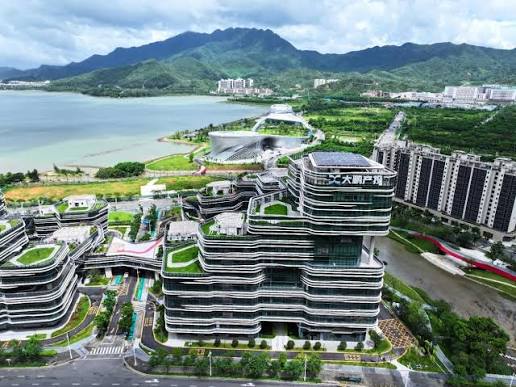
The World Intellectual Property Organization (WIPO) recently released its 2026 ranking of the world’s top 100 innovation clusters. China accounted for 25 clusters on the list, ranking first globally for the fourth consecutive year. The Shenzhen-Hong Kong-Guangzhou, Beijing, and Shanghai-Suzhou clusters all ranked among the top 10.
The ranking identifies regions with concentrated innovation activity based on indicators including international patent applications, scientific publications, and venture capital transactions. China’s consistent strong showing on the list, with innovation clusters flourishing across multiple regions, demonstrates both the scale and depth of its innovation ecosystem.
This leadership reflects years of strategic investment in coordinated regional tech development. Regional innovation networks have become a key pillar of the national innovation framework and provide a vital foundation for building China into a leading country in science and technology.
Coordinated development in the Beijing-Tianjin-Hebei region has fostered deeper collaboration, with Beijing focusing on research and development while Tianjin and Hebei translate research findings into manufacturing applications.
Meanwhile, the integrated development of the Yangtze River Delta has strengthened links among innovation hubs along the G60 Science and Technology Innovation Corridor, creating a cross-regional collaborative innovation platform spanning nine cities.
Stronger regional collaboration has cultivated a sound pattern of innovation with multiple hubs working in concert.
Beyond sheer numbers, the rankings also signal a comprehensive upgrade across China’s broader innovation system.
Innovation clusters capture the close links among research institutions, businesses, talent, and investment. In recent years, China has accelerated the commercialization of scientific and technological advances while nurturing and expanding new quality productive forces. Many of the innovation clusters on the list are also major industrial hubs.
Wuhan in central China’s Hubei province, ranked 17th, saw the value added of its industrial enterprises above the designated size in high-tech manufacturing rise 65.7 percent year on year in the first half of this year, as its optoelectronics and information technology industries gathered pace. Ningde in Fujian province, meanwhile, climbed 24 places in the rankings, driven in large part by innovation in its power battery industry.
This virtuous cycle between innovation and development is enabling more emerging and future-oriented industries to gain momentum and grow rapidly within these clusters.
China’s leading position in the number of top 100 global innovation clusters is also creating valuable opportunities for global partners.
An increasing number of foreign-invested companies are choosing to conduct research and pursue innovation in China, with many establishing R&D centers in these clusters. In the first seven months of this year, foreign applicants filed more than 42,000 invention patent applications in China. In 2025, foreign investment actually utilized in scientific research and technical services accounted for nearly 1/5 of China’s total utilized foreign investment.
China is also committed to sharing the benefits of innovation through openness and cooperation. In the first half of this year, Chinese developers of innovative drugs reached 81 licensing deals with overseas partners, while industrial robots made in China were exported to 141 countries and regions.
As Carsten Fink, WIPO’s chief economist, noted, Chinese innovation is pushing the frontiers of global science and technology across an expanding range of fields, with countries around the world increasingly benefiting from it.
Today, global innovation resources are increasingly converging on China through its innovation clusters.

By Zhou Shanshan, People’s Daily
The journey from Ruijin in east China’s Jiangxi province to Yan’an in northwest China’s Shaanxi province has changed dramatically over time.
In the past, the Chinese Workers’ and Peasants’ Red Army soldiers, driven by a profound sense of mission, trekked roughly 12,500 kilometers across China wearing straw sandals, forging a path to survival through the arduous Long March. Today, the two cities are directly linked by a high-speed railway. The 1,857-kilometer journey takes just 11 hours and 32 minutes, offering a smooth and efficient travel experience.
This year marks the 90th anniversary of the successful conclusion of the Long March. A single train ticket now bridges not only two distant cities but also two distinct eras. The transformation from a desperate struggle for survival to an ongoing drive for regional revitalization mirrors the sweeping transformations China has experienced.
Aboard the train are descendants of Red Army soldiers, carrying straw sandals and certificates commemorating fallen martyrs as they travel to Yan’an on behalf of relatives who sacrificed their lives during the Long March. Other passengers, inspired by the Long March spirit, have embarked on this red-themed journey across thousands of kilometers.
During the Long March, both Ruijin and Yan’an served as vital centers of China’s revolutionary cause. The Red Army soldiers crossed snow-capped mountains and vast grasslands, broke through successive enemy blockades and paved the way forward with blood and sacrifice. They fought to save a war-torn China and secure a life of independence and happiness for the people.
Today, those early aspirations have taken root. The poverty and isolation that once defined these regions have given way to vibrant communities and renewed economic vitality.
Ruijin has steadily cultivated distinctive industries, including precision manufacturing, design-focused toy production, and textiles, while continuously improving public services and living standards. In Yan’an, apple cultivation has evolved from a modest agricultural activity into a major economic pillar. Environmental restoration has accompanied this growth, lifting fruit farmers out of poverty and transforming the city into a thriving community characterized by ecological health, industrial vitality, and improved livelihoods. The development of Ruijin and Yan’an offers a vivid example of how former revolutionary base areas are revitalizing.
This transformation extends far beyond the two cities. Jinggangshan, an old revolutionary base in Jiangxi, has shaken off poverty by developing red tourism and leveraging its ecological resources. Xibaipo, also an old revolutionary base in north China’s Hebei province, is promoting the integrated development of agriculture, culture, and red tourism, improving the quality of life for residents. In the Dabie Mountains, seven counties and county-level cities across three provinces have formed an alliance to develop red tourism, charting a new course for regional growth. Across China, former revolutionary base areas are steadily advancing toward shared prosperity.
What has driven these transformations? The answer may lie in the roads themselves. A road construction plan dating back to 1933, preserved in Ruijin, reflects revolutionary forebears’ hopes for roads that would connect communities and bring peace and prosperity.
Today, an extensive network of national transportation corridors connects urban and rural areas and links mountains with the sea, reaching major revolutionary landmarks such as Ruijin, Zunyi in Guizhou province, and Yan’an. The vision of convenient travel for people and smooth flows of goods is steadily becoming a reality.
The transformation from having no way forward to a vast network of well-connected roads reflects more than improvements in physical infrastructure. At its heart is the vitality of the path China has chosen: one rooted in the country’s realities, attuned to the needs of the times and supported by its people. This path provides a solid foundation for revitalizing former revolutionary base areas and advancing national rejuvenation.
The roads have been paved, yet the march continues. China is embarking on a “new Long March,” with new challenges to overcome: repeated setbacks in laboratories, critical technological bottlenecks across industrial supply chains, and the many risks and challenges on the path to high-quality development.
The tougher the challenges, the more important it is to draw strength from the spirit of the Long March, a precious spiritual legacy. The Long March National Cultural Park extends across 15 provincial-level regions along the route of the epic expedition, bringing history to life at former revolutionary sites and helping visitors connect with Long March stories.
Here, history is no longer confined to static exhibits; it has become a living source of inspiration. By inspiring people through red-themed resources and passing the revolutionary legacy down through generations, China is forging a profound connection between the aspirations of the past and the achievements of today, drawing lasting spiritual strength for the “new Long March.”


China’s former revolutionary base areas embrace new chapter of development

China leads the world in innovation clusters

A high-speed railway traces the legacy of the Long March

-
 Uncategorized6 years ago
FG, states urged to harness flooding for ranching, others with technology – Agbaje
-
 Headlines11 years ago
Breaking: EFCC seals Borno House of Assembly, as Hon members take to their heels
-
 News12 years ago
Nigeria Security Operatives Stage Manhunt For Homosexual Perpetrator
-
 News10 years ago
How 21-year-old Girl fled community over accusation of lesbianism
-
 News11 years ago
Yobe Gov Moves Against Deputy
-
 Opinion7 years ago
7 signs she has friend zoned you
-
Technology5 years ago
Online job placement company headhunts women
-
 Headlines10 years ago
Borno Dep Gov Abducts Another Church Leader