
News
Buhari warns against ethnic, religious prejudices

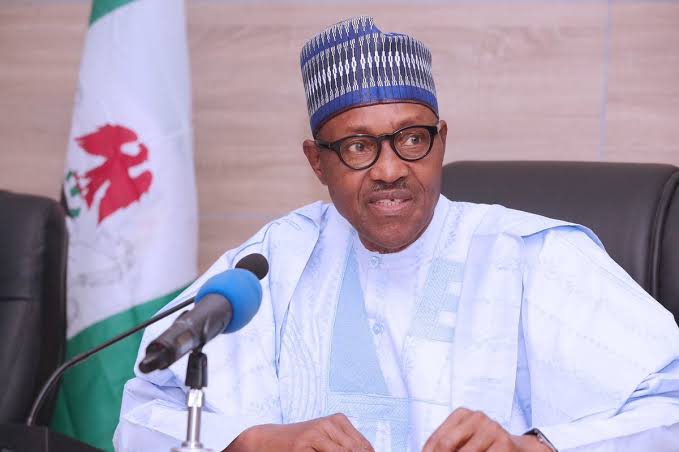
President Muhammadu Buhari has warned against the promotion of ethnic and religious prejudices, saying such actions will not augur well for the development of the country.
Malam Garba Shehu, the President’s Senior Special Assistant on Media and Publicity, in a statement, said Buhari gave the warning when he met with leadership of the Nigerian Supreme Council for Islamic Affairs (NSCIA) in Abuja on Thursday.
The leadership of the NSCIA was led by its President-General and Sultan of Sokoto, Alhaji Sa’ad Abubakar.
The president, however, stated that his administration would continue to create the enabling environment for religious freedom as guaranteed by the Nigerian Constitution.
“The Federal Government will continue to promote religious freedom as it is a constitutional responsibility.
”I must thank the Muslim ummah for promoting inter-religious dialogue in the country.
”It is self-evident that if the country must work, we must continue to work together in spite of our ethnic, religious and political differences because Nigeria is our collective project.
“Accordingly, the Federal Government under my leadership does not and will not allow religious prejudice or partisanship to influence any of its decisions and policies.
”It is my solemn decision to be fair and just to all segments of society,” he said.
Buhari assured the delegation that government was doing all within its powers to bring the current state of insecurity to the barest minimum, calling on the local community to assist the security forces as they perform their roles.
He said: “The Federal Government has worked tirelessly to combat insecurity and other challenges that are confronting the country.
”Security is a protracted problem but we are not relenting in our efforts. Not only are we equipping the military, we are also boosting their morale to perform their constitutional duties without undue interference.
”We are also encouraging locales to enhance their intelligence gathering and timely remitting to the security Agencies.
“I acknowledge that security is the first responsibility of Government but Government cannot do it alone. It requires stakeholders, such as yourselves.
”Therefore, I urge you to lend your support to the security agencies by providing information that may stem the tide of crimes and insecurity in the society.”
The president, who also spoke on efforts of his administration towards making life better for the average Nigerian, said:
“We are diversifying the economy and putting appropriate mechanisms in place to reduce poverty and more fiercely combat corruption, regardless of the status of those involved.
“Programmes such as N-Power, Conditional Cash Transfer, Government Enterprise and Empowerment Programme and Home-Grown School Feeding are just some of the interventions made to empower Nigerians and cater for their needs.
“The National Social Investment Programme alone has directly benefited four million Nigerians through job training and financial assistance.”
President Buhari called on the leaders to continue speaking to the people and to help amplify the message through their very tried and tested networks.
He also urged them to give full backing to the Alternate School Programme which he launched on Tuesday.
According to him, the programme is designed to not only address high out of school rates, but it will boost the levels of Girl Child education across the country.
He said it would also help in equipping the youth with ”the right tools in making decisions at every turn of their lives when confronted by peddlers of evil and hateful messages… and also address the public health crises that the world is currently facing.”
The president used the opportunity to appeal to Nigerians to support government efforts on COVID-19.
“As Government continues to work towards managing this crisis, it is also critical that you lend your voices in support of those basic but fundamental protocols that can significantly curtail the spread of this disease.
”Washing of our hands, using face masks and ensuring social distancing as much as possible have been proven to be our first line of defense in the fight against this virus.
“Furthermore and much more important, when the vaccines which we are working hard to procure for the nation arrive, please, please join in the drive to educate people that these vaccines are meant to save lives and protect everyone,” he said.
Earlier in his address, the Sultan had commended the president for the successes achieved so far in the Northeast.
He, however, called on the government to deal decisively with ”the banditry that is ravaging the Northwestern States of Zamfara, Katsina, Sokoto and some parts of the North Central”.
While expressing confidence that security forces, with better synergy among them, will overcome present challenges, he solicited for the cooperation of all the governors with the Federal Government irrespective of their political leanings.
The Sultan also called on Nigerians to support the new leadership of the armed forces.
The NSCIA leader also appealed to Nigerians, particularly religious leaders to refrain from making inflammatory comments that tend towards sowing discord in the polity and exacerbating the current level of insecurity in the land.
He asked that religious leaders making subversive comments should be called to order.
The Sultan equally identified with the ‘Hate Speech Campaign’ of the Minister of Information and Culture, saying ‘Hate Speech’ is aggravating insecurity in the country and that “we have to act.”

By Reuben Angula
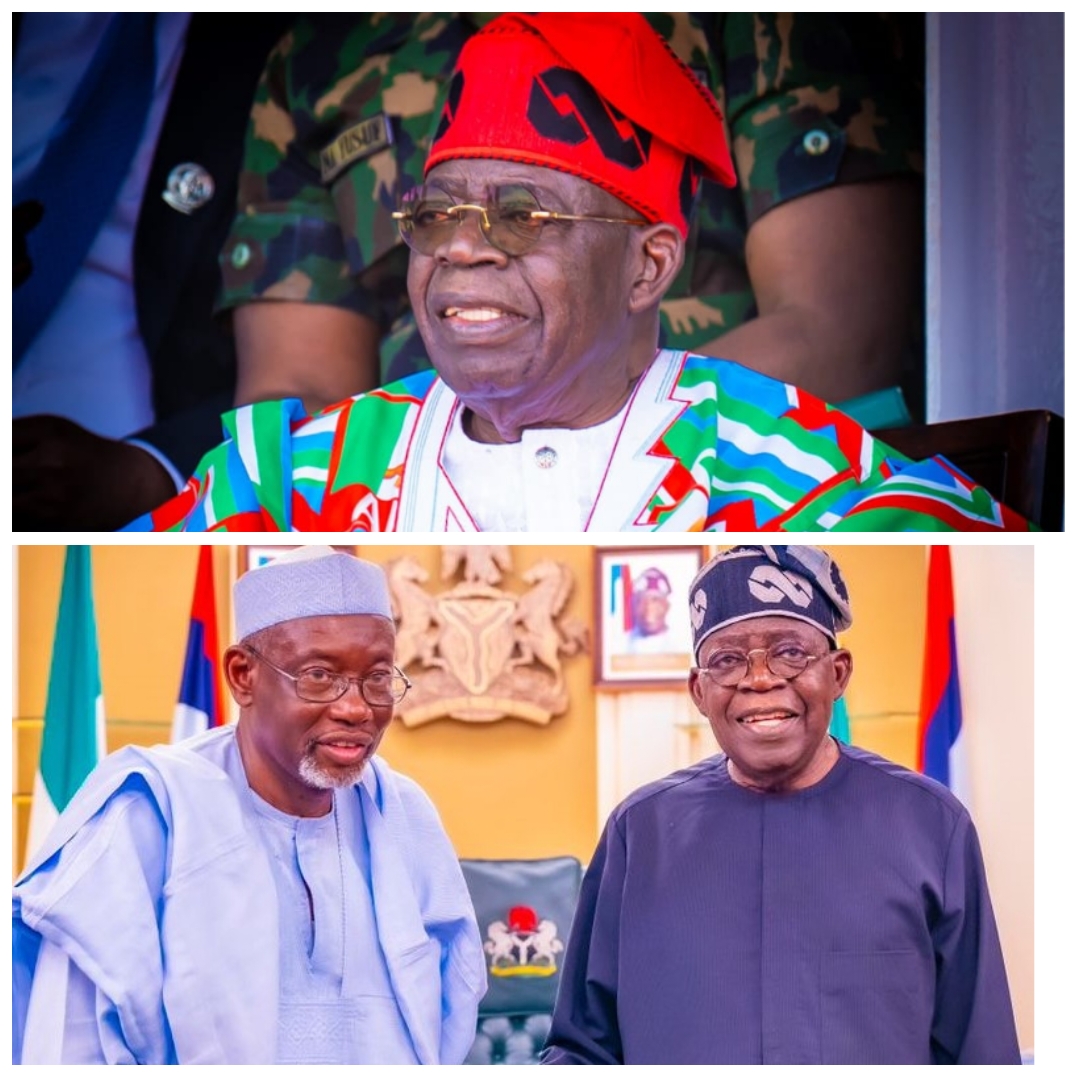
In the arid but fertile expanse of Jigawa State, a profound sense of gratitude and renewed hope now permeates communities from Dutse to Hadejia, and from Kazaure to Gumel. The people of this progressive North-West state warmly welcome President Bola Ahmed Tinubu, the Hero of Democracy and the Father of Modern Nigeria, whose bold reforms have unlocked resources and infrastructure that are transforming lives across the country.
When President Tinubu assumed office in May 2023, Nigeria stood at a fiscal crossroads. Decades of unsustainable fuel subsidies and multiple, distorted foreign exchange windows had drained the treasury, starved subnational governments of resources and rewarded rent seekers at the expense of ordinary citizens.
In two courageous policy decisions, he removed the fuel subsidy and unified the foreign exchange market. These decisions were painful in the short term, yet historically necessary. The result has been a dramatic increase in Federation Account Allocation Committee (FAAC) disbursements to states, including Jigawa. Governor Umar Namadi has repeatedly affirmed that these reforms provided the fiscal space needed to pursue comprehensive development on a scale that was previously impossible.
Federal projects now advancing in and around Jigawa stand as concrete proof of the Renewed Hope Agenda. The Greater Dutse Water Supply Project, valued at approximately ₦59.4–₦59.5 billion, was flagged off in December 2024 after more than two decades of abandonment. Designed to address a chronic daily water deficit, the scheme features 35 industrial boreholes with solar-powered pumps, a 1,000 m³/hr treatment plant, extensive transmission mains and storage tanks. Upon completion within 24 months, it is expected to deliver millions of litres of potable water daily to more than 1.5 million residents of Dutse and its environs, fulfilling a campaign promise President Tinubu made to the late Emir of Dutse.
Equally transformative is the Kaduna–Kano–Jigawa–Katsina–Maradi standard-gauge railway project. By mid-2026, the project had reached approximately 60 per cent completion, with intensive work progressing on the Kano–Dutse branch line, bridges, track laying and earthworks. Fully funded under the Renewed Hope Infrastructure Scheme, the rail corridor will open new arteries of commerce, reduce road congestion and strengthen Nigeria’s economic ties with the Republic of Niger. Complementary federal road projects, including sections of the Kano–Maiduguri corridor and the Kwanar Dangata–Gumel–Hadejia route, are also progressing. Institutions such as the Federal College of Agriculture in Kazaure and the Police Training College in Gwaram continue to receive attention. Agricultural interventions for wheat farmers and access to the Nigerian Education Loan Fund (NELFUND) further demonstrate the federal government’s presence in the state.
At the state level, Governor Umar Namadi’s administration has leveraged the increased revenue with remarkable discipline and ambition. Road infrastructure has been one of the most visible dividends. Inherited projects covering hundreds of kilometres have been completed, while dozens of new contracts for rural feeder roads and township roads, totalling well over 900–1,000 kilometres, have been awarded, with cumulative investments running into hundreds of billions of naira. Recent approvals alone include multi-billion-naira packages for township roads in Kafin Hausa, Gwaram, Ringim, Garki and Dutse Phase II.
In the health sector, specialist hospitals in Kazaure and Hadejia are advancing, an orthopaedic facility is being developed in Gumel, and primary healthcare centres across political wards are being upgraded or rehabilitated. Free healthcare services for vulnerable groups, children under five and pregnant women have also been expanded. Thousands of health workers have been recruited.
The education sector has witnessed massive teacher recruitment, including thousands of permanent and J-Teach staff, alongside classroom and Tsangaya school renovations, bursaries, Technical and Vocational Education and Training programmes, and solar-powered ICT centres. A proposed $110 million partnership with the Islamic Development Bank is also expected to support school infrastructure and teacher development.
Agriculture, the backbone of Jigawa’s economy, is undergoing significant modernisation, with hundreds of tractors and combine harvesters deployed, fertiliser subsidies aligned with federal allocations, greenhouses established for youth agribusiness, and investments in irrigation schemes and agro-processing zones. Major private-sector investments, such as the Dangote Rice Mill, further strengthen the state’s agricultural potential. Renewable energy projects, including multi-billion-naira solar mini-grids for government institutions and water facilities, alongside skills acquisition centres and flood control works, complete a comprehensive development portfolio. State Executive Council approvals of ₦91 billion, alongside other multi-billion-naira packages across these sectors, underscore the scale of development activity made possible by the increased fiscal capacity.
These achievements are not abstract. They are roads that carry farm produce to markets, water that ends decades of scarcity, classrooms that keep children in school, hospitals that save lives and solar power that reduces operating costs. They are tangible outcomes of a President who dared to end a subsidy regime that never truly benefited the common man and correct exchange rate distortions that discouraged genuine investors. Governor Namadi has been unequivocal in his position: the reforms rescued Nigeria from a deeper crisis and equipped Jigawa with the resources to deliver more effectively for its people.
As January 2027 approaches, the people of Jigawa have taken stock. They have seen the water project flagged off, the railway advancing, roads extending across communities, hospitals and schools improving, and the agricultural base strengthening. They recognise that the short-term adjustments introduced in 2023 have given way to sustained capital investment and greater fiscal capacity.
In gratitude for the leadership of the Hero of Democracy and the Father of Modern Nigeria, the people of Jigawa are ready to reciprocate by standing firmly behind President Bola Ahmed Tinubu and all All Progressives Congress candidates in January 2027, ensuring that the momentum of the Renewed Hope Agenda continues to build a greater Jigawa and a more prosperous Nigeria.
Angula is a member of the Tinubu/Shettima campaign council
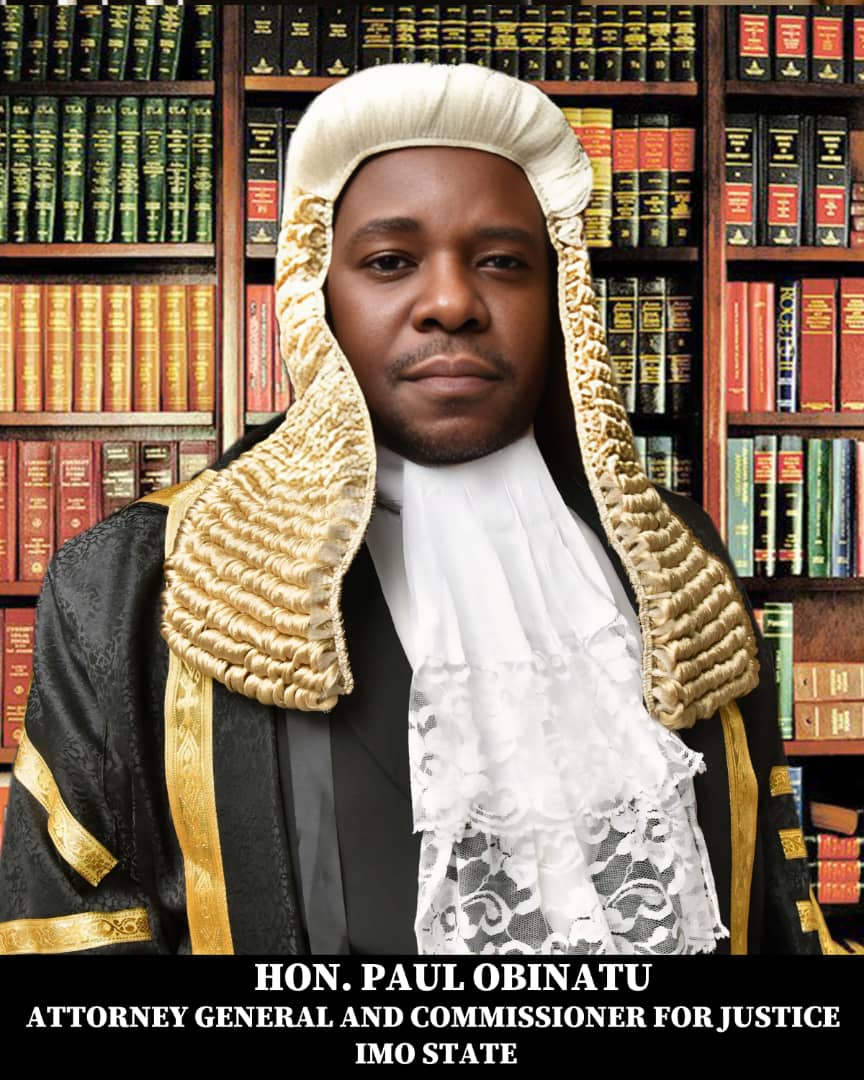
- Insists Imo Judicial Service Commission is constitutionally independent; invokes Section 202, says NJC lacks powers to nominate a candidate for Imo State JSC for appointment as Chief Judge
The Imo State Attorney-General and Commissioner for Justice, Hon. Paul Obinatu has challenged the constitutional authority of the National Judicial Council (NJC) to direct the Imo State Judicial Service Commission (JSC) on the candidate whose name it should submit for consideration in the appointment of a substantive Chief Judge of the state, describing such an intervention as an encroachment on the constitutionally guaranteed independence of the State Commission.
In a statement issued on November 6, 2026, the Attorney-General maintained that the NJC lacks the constitutional authority to dictate, control or substitute its preferred candidate for the independent assessment and recommendation process entrusted to the Imo State JSC under the 1999 Constitution, as amended.
The objection follows a directive reportedly issued by the NJC to the Imo State JSC at its 112th meeting held on November 3, 2026, concerning the appointment of a substantive Chief Judge for the state.
The Attorney-General argued that the NJC’s constitutional responsibility to recommend a candidate to the Governor does not confer on it the additional power to determine or dictate the candidate the State Judicial Service Commission must submit to it. He maintained that the directive is constitutionally untenable because it interferes with a responsibility expressly vested in the State Judicial Service Commission.
SECTION 202 GUARANTEES IMO JSC’S INDEPENDENCE
Central to the Attorney-General’s objection is Section 202 of the Constitution, which expressly provides that the State Judicial Service Commission shall not be subject to the direction or control of any other authority or person in exercising its constitutionally assigned powers.
He argued that this provision establishes a clear constitutional safeguard against external interference in the Commission’s responsibilities and cannot be overridden by the NJC through administrative directives or procedural guidelines.
According to him, the NJC cannot invoke its national institutional status or its recommendation powers to exercise control over the Imo State JSC in a manner inconsistent with the Constitution.
Consequently, any directive requiring the State JSC to submit a particular candidate or dictating the outcome of its independent assessment would, in the Attorney-General’s interpretation, amount to unconstitutional interference.
CONSTITUTION ASSIGNS DISTINCT RESPONSIBILITIES TO NJC AND STATE JSC
The Attorney-General anchored his position on Section 271(1) and the relevant provisions of the Third Schedule to the Constitution.
Paragraph 6(a) of Part II of the Third Schedule empowers the State Judicial Service Commission to advise the NJC on suitable persons for nomination as Chief Judge of the state.
Conversely, Paragraph 21(c) of Part I of the Third Schedule empowers the NJC to recommend to the Governor, from among the list of persons submitted by the State JSC, a candidate for appointment as Chief Judge.
Section 271(1) further provides that the appointment shall be made by the Governor on the recommendation of the NJC, subject to confirmation by the State House of Assembly.
According to the Attorney-General, these provisions establish a clear constitutional sequence: the State JSC identifies and advises on suitable candidates, the NJC considers the submitted names and makes its recommendation to the Governor, while the Governor exercises the appointing authority subject to legislative confirmation.
He insisted that the NJC’s recommendation powers cannot be interpreted as authority to dictate which candidate the State JSC must select or submit, as doing so would effectively transfer the Commission’s constitutional responsibility to the NJC and render Section 202 meaningless.
NJC GUIDELINES CANNOT OVERRIDE THE CONSTITUTION
Addressing the NJC’s Guidelines and Procedural Rules for the Appointment of Judicial Officers, the Attorney-General acknowledged the Council’s authority to prescribe and enforce procedural requirements for judicial appointments.
However, he maintained that such guidelines cannot confer powers beyond those granted by the Constitution or be used to compromise the independent functions of the State JSC.
He stressed that the NJC’s responsibility to ensure compliance with appointment procedures must not be extended to usurping the constitutional authority of the Imo State Judicial Service Commission.
COURT DECISIONS REINFORCE ATTORNEY-GENERAL’S POSITION
In support of his argument, the Attorney-General cited several judicial authorities which he said affirm the importance of constitutional boundaries and institutional independence.
They include Elelu-Habeeb & Anor. v. Attorney-General of the Federation & Ors. (2012) LPELR-15515(SC), Kano State Public Complaints and Anti-Corruption Commission & Anor. v. Salisu & Ors. (2019) LPELR-47107(CA), and Bamisile v. National Judicial Council & Ors. (2012) LPELR-8381(CA).
Other authorities referenced are FRN v. Nganjiwa (2022) LPELR-58066(SC), NJC & Ors. v. Senlong & Ors. (2010) LPELR-4582(CA), and Attorney-General of the Federation v. Attorney-General of Abia State & Ors. (2024) LPELR-62576(SC).
The Attorney-General maintained that these authorities reinforce the principle that every constitutional institution must exercise its powers strictly within the limits prescribed by law, irrespective of its institutional standing.
IMO CHIEF JUDGE APPOINTMENT MUST FOLLOW CONSTITUTIONAL PROCEDURE
The Attorney-General warned that allowing the NJC to assume functions constitutionally assigned to the State JSC would undermine the integrity of the judicial appointment process and compromise the independence of the Commission.
He maintained that the issue is not a contest for institutional superiority between the NJC and the State JSC, but the need for each institution to respect the constitutional boundaries of its authority.
He further emphasised that the NJC’s responsibility to recommend a candidate to the Governor must not be confused with the power to control the independent selection and submission process of the State Commission.
The Attorney-General insisted that the ongoing appointment process must be conducted strictly in accordance with the Constitution, without interference that could undermine public confidence in the judiciary.
For the Imo State Attorney-General, the constitutional position is clear: while the NJC has the responsibility to recommend a candidate to the Governor, it has no authority to dictate to the Imo State Judicial Service Commission the candidate whose name it must submit in the exercise of its independent constitutional mandate.
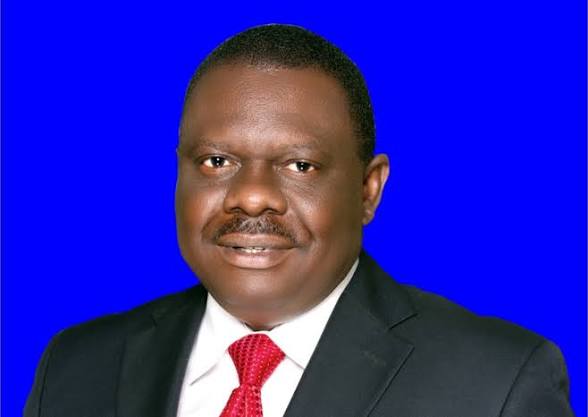
Benue Equity and Justice Movement has accused the Benue People’s Democratic Party Governorship candidate, Mr. Michael Aondoakaa of plan to manipulate the Judiciary in order to buy the planned November 16 judgement in the eligibility suit against him.
It will be recalled that the Supreme Court had few years ago banned Mr. Aondoakaa from holding public offices for life as a result of his manipulation of justice while he was Attorney General of the Federation under the PDP regime of former President Umaru Yar’Adua.
Justice Kudirat Kekere-Ekun, then a Justice of the Supreme Court and now the Chief Justice of Nigeria (CJN), delivered the Supreme Court’s unanimous judgment on December 10, 2021, affirming the judgment of the Court of Appeal, Calabar Division, which had upheld a Federal High Court decision barring the former minister, who served under the late President Umaru Musa Yar’Adua, from occupying any public office in Nigeria for life.
In the Court of Appeal’s judgement on June 1, 2010, Justice A.F.A. Ademola ordered, “1. A declaration is hereby made that the 2nd Defendant undermined and subverted the rule of law, the due administration of justice and integrity of the judiciary in the letters of 8th January, 2008 and 16th February 2009 written by him in the capacity of the Defendant. “2. A declaration is hereby made that 2nd Defendant is not a competent, fit and proper person to hold office as the 1st Defendant having regards to the oaths of Allegiance and office.
Also recalled that the 2027 governorship candidate of the Allied People’s Movement, Mr. Damian Adagba had in September asked the court to compel the Independent National Electoral Commission to remove Aondoakaa’s name from its official portal as the governorship candidate of the PDP as a result of the Supreme Court Judgement.
Also, in a suit, marked FHC/ABJ/CS/2152/2026 which was instituted by David Ejembi, Aondoaver Teryila, Joseph Okpanachi and Benedict Akaazua Orkume against the Independent National Electoral Commission (INEC), the PDP and Aondoakaa, the plaintiffs urged the Federal High Court in Abuja on October to stop the former AGF from parading himself as the governorship candidate of the PDP.
Following the arguments by the lawyers of the People’s Democratic Party, Mr. Aondoakaa and the plaintiffs, the court adjourned the matter to November 16, 2026, for judgment.
But in a press statement which was sent to reporters this morning, Benue Equity and Justice Movement through its General Secretary, Mr. Kingsley Asema said that the pressure group has received Intel which revealed plans by the embattled PDP governorship candidate to bribe the Judge handling the case.
“We have it on a good authority that Barrister Michael Aondoakaa, having realized that the eligibility suit against him in court would not go in his favour based on various evidences that he had been barred from holding any public office, has been holding series of meetings with his political godfather, Mr. Samuel Ortom and legal team led by a former Secretary to the Benue State Government, Mr. Tony Ijohor on the possible way to bribe the Judge handling the case.
“The final meeting on how to manipulate the planned November 16 judgement was held in Jos last Friday, and in attendance were Chief Aondoakaa, Barrister Tony Ijohor, Barrister Clement Mue, Anthony Malik, and Barrister Matthew Onoja.
“We also have proofs that it was the legal team led by Ijohor that advised Aondoakaa to reach out to the judge through an unnamed Senior Advocate of Nigeria from Jos when it was clear that he may be declared ineligible to contest the 2027 governorship election”
Meanwhile, Benue Equity and Justice Movement in the press statement called on the Chief Judge of the Federal High Court, Abuja as well as the Chief Judge of Nigeria to rescue the Judiciary which is the last succour for a common man from the former AGF who is moving fastly to buy the eligibility judgement which has been fixed for November 16, 2026.
The group stated further that Aondoakaa’s case is a litmus test for the Nigerian Judiciary, noting that selling judgement to him will prove that the Judiciary is no longer a succour for a common man.


BAUCHI AGLOW WITH MASSIVE SUPPORT FOR TINUBU…

2027: Kwara South PDP Candidate Pledges Quality Representation

2027: Kwara South APC Elders Caucus Reconstituted

-
 Uncategorized6 years ago
FG, states urged to harness flooding for ranching, others with technology – Agbaje
-
 Headlines11 years ago
Breaking: EFCC seals Borno House of Assembly, as Hon members take to their heels
-
 News12 years ago
Nigeria Security Operatives Stage Manhunt For Homosexual Perpetrator
-
 News10 years ago
How 21-year-old Girl fled community over accusation of lesbianism
-
 News11 years ago
Yobe Gov Moves Against Deputy
-
 Opinion8 years ago
7 signs she has friend zoned you
-
Technology5 years ago
Online job placement company headhunts women
-
 Headlines11 years ago
Borno Dep Gov Abducts Another Church Leader