Connect with us

Politics

DG infrastructure regulatory commission urges governors to embrace PPP

Published

on

Mr Joe Ohiani, the Director-General of the Infrastructure Concession Regulator Commission (ICRC)

Mr Joe Ohiani, the Director-General of the Infrastructure Concession Regulator Commission (ICRC)

By Emmanuel Oloniruha

Mr Joe Ohiani, the Director-General of the Infrastructure Concession Regulator Commission (ICRC) has urged state governors to establish Public Private Partnership (PPP) framework to boost infrastructure development their states.

Ohiani, gave the advice at the ongoing induction programme for newly elected and returning governors organised by the Nigeria Governors’ Forum (NGF) in Abuja .

Discussing as a panelist in one of the sessions at the event, Ohiani, advised governors to embrace PPP as alternative vehicle to deliver services to the electorates and also to bridge infrastructural gaps in their states.

He said that presently, only 25 state of the federation had approved the legal framework for PPP in their states.

He said that PPP was not only imperative to close infrastructure gaps but also important for job creation and to boost economic growth both at the state and federal level.

“PPP is a win-win for all the parties. A win for the government in provision of the projects and facilities, a win for the investor who has invested in the project and a win for his citizen who will use the project.

“At federal government, we are happy to say that under this administration between 2015 to current period about 75 projects has been consummated under President Muhammadu Buhari in Nigeria.

“The net worth is 2.1 trillion Naira investments. That goes to show that PPP is an alternative source of investment at federal government and sub national government.

“They don’t need to have deep pocket in the face of dwelling revenue as regards to provide all the facilities that is required.

“On that note, we encourage PPP as a vehicle for delivery of service for our people,” he advised.

Ohiani said that as a governor coming into office with four years within which to deliver on his mandates, the adoption of PPP would be of great benefits to achieve that.

Ohiani said that by virtue of Section 11 of the ICRC Act, once a governor structure a PPP project in line with applicable law, no successive government would terminate such PPP arrangements without following due process

He said all that was needed to be done was to identify priority infrastructural projects that could be done within the four years, conduct feasibility study and invest on well structured PPP projects.

He said that there was also needs to allocate risk, carryout proper consultation, evaluate and monitor a project through the duration of the project.

Also discussing as a panelist at the session, the Managing Director of the Nigeria Export Processing Zones Authority (NEPZA), Prof. Adesoji Adesugba enjoined governors yet to embrace and support free trade zone scheme to do so in order to attract investments into their states to generate employment opportunities.

“Only 22 states in Nigeria subscribe to the free trade zone scheme. We need to do everything and act fast as if it is an emergency to create job for our youth.

“I am also using this opportunity to ask those states that have not keyed into this scheme to please sign the approval. It is a very good way to attack investment into your state. It took Ekiti State just four weeks to get Mr President assent.

“It is very interesting to know that of the 46 free trade zones that Lagos has 18, they understand the concept very well. No wonder so many investors are going there.

“You can develop your free zones just as it is done in Ghana, Côte d’Ivoire. You can develop small free trade zone that can attract investors into your state.”

Adesugba said that Lagos, Ogun, Borno and Delta are already having creative concepts with the scheme.

“About 450million dollars is going to Ogun State very soon. So open the door of your state for the scheme.”

He said Nigeria needed to do more in the area of free trade zone scheme to move fast just like China and Dubai.

“China has 5,000 enterprises in free zones which transacted about $4000 billion shares.

“In Nigeria, we are trying, we set up our free zones scheme before China in 1992

“Right now the total investment in free trade zone is about 30 billion dollars. That means we still have a lot to do,”
Continue Reading
Click to comment

Leave a Reply

Your email address will not be published. Required fields are marked *

Politics

BAUCHI AGLOW WITH MASSIVE SUPPORT FOR TINUBU…

Published

on

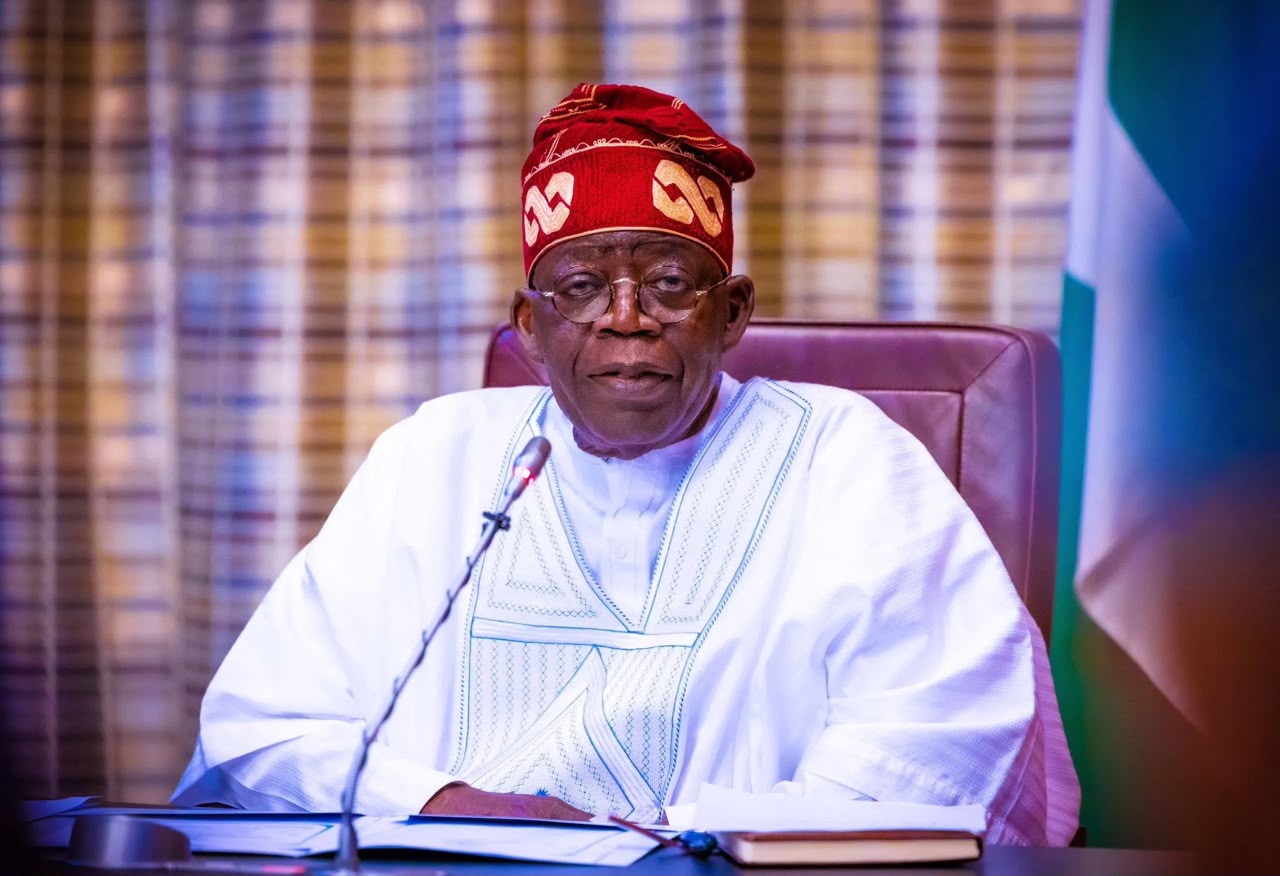
Bauchi Residents Chant ‘Ba Ma Yi Atiku, Sai Tinubu’ as President Intensifies 2027 Campaign Mobilisation

Residents in Bauchi State have reportedly expressed support for President Bola Ahmed Tinubu, chanting “Ba Ma Yi Atiku, Sai Tinubu” (We don’t want Atiku, only Tinubu) during a gathering captured in a video circulating on social media.

The chant, which references former Vice-President Atiku Abubakar, comes amid growing political activities and mobilisation ahead of the 2027 presidential election.

In the footage, a crowd can be seen gathered at what appears to be a public event, chanting the slogan in support of President Tinubu.

The chant, which references former Vice president Atiku Abubakar, comes amid growing political activities, internal wranglings, disputes in court by the other faction led by Nafiu Bala Gombe, lack of focus of the executives and the call for suspension of Rauf Aregbesola by the youths and other short comings confronting the party ahead of the mobilisation of the 2027 presidential election.

The development comes as the ruling All Progressives Congress (APC) intensifies its nationwide mobilisation campaign ahead of the next general election.

President Tinubu is seeking re-election for a second term under the APC platform, while Atiku Abubakar remains one of the opposition figures associated with the emerging 2027 presidential contest.

Bauchi State is politically significant in the North-East, particularly as political parties intensify efforts to consolidate their support bases ahead of the election.

The reported chant has added another dimension to the emerging political contest, particularly as the Tinubu administration continues to highlight its economic reforms, infrastructure investments and social intervention programmes as evidence of progress since assuming office in May 2023.

One of the administration’s notable economic milestones is the reported improvement in Nigeria’s GDP growth. According to the National Bureau of Statistics (NBS), the country’s real Gross Domestic Product grew by 4.43 per cent in the second quarter of 2026, compared with 3.89 per cent in the first quarter.

The growth was supported by improved performance in the oil and non-oil sectors, including agriculture, manufacturing, financial services and information and communications technology.

Similarly, Nigeria’s headline inflation rate declined to 14.63 per cent in September 2026 from 15.39 per cent in August, representing a further easing of inflationary pressure, although the high cost of living remains a major concern for many households but Nigerians are proactive people knowing fully well that the reforms are indeed short term that will eventually turnaround their trajectory for good.

Another significant intervention is the Nigerian Education Loan Fund (NELFUND), established to expand access to tertiary education by providing financial assistance to students who might otherwise struggle to meet their educational expenses.

As of November 9, 2026, NELFUND had disbursed approximately N375.28 billion to students and 320 tertiary institutions, with more than 1.67 million student loan beneficiaries recorded. The initiative represents one of the administration’s major social investment programmes targeting young Nigerians.

On infrastructure, the administration has embarked on major road projects designed to improve transportation, trade and economic integration across the country.

Among the flagship projects are the Lagos-Calabar Coastal Highway, the Sokoto-Badagry Superhighway, the Calabar-Ebonyi-Abuja Highway and the dualisation of the Akwanga-Jos-Bauchi-Gombe-Biu-Maiduguri road corridor.

The latter is particularly significant to the North-East and North-Central regions, as improved connectivity is expected to facilitate agricultural transportation, commercial activities and the movement of people and goods.

The administration has also pursued reforms in the electricity sector through the Electricity Act 2023, which provides a framework for states to establish and regulate their own electricity markets, potentially encouraging investments and improving power supply.

In the petroleum sector, the removal of fuel subsidy and the unification of foreign exchange markets remain among the administration’s defining policy decisions. While the reforms have attracted criticism over their immediate impact on household purchasing power, the government maintains that they are necessary to address longstanding structural weaknesses in the economy.

For the APC, the growing political mobilisation across Northern Nigeria is strategically important, considering the region’s voting strength and influence in presidential elections.

The administration’s infrastructure investments, student loan programme, social intervention initiatives and economic reforms are among the issues likely to feature prominently in its campaign messaging ahead of 2027.

The reported Bauchi chant may therefore be viewed as an indication of the political messaging and support mobilisation taking shape ahead of the election and the people’s endorsement of the policies and programmes of the present administration.

As the political atmosphere gradually intensifies, the APC is expected to rely on its record in government, ongoing development projects and its campaign structures to make the case for another four-year mandate and the recent events have shown that the present administration has mass followership at the grassroots in the North who are desirous to see changes and development percolate to every households.

However, the opposition is also expected to scrutinise the administration’s performance and shortfalls including the overall welfare of Nigerians.

With the 2027 presidential election approaching, the contest is increasingly shaping up around competing arguments over economic management, national development, governance and the future direction of the country. The Chant of ‘Ba Ma Yi Atiku, Sai Tinubu’ as the President Intensifies his 2027 Campaign Mobilisation says a lot of what is to come in the few months ahead and the direction of the North as to who their choice is and what the President really has in stock for the region, coupled with the empirical evidence that the region is ahead in infrastructural development across the country.

Continue Reading

Politics

2026: Atiku Bagudu Grassroots Group Dismisses ‘Tinubu Must Go’ Campaign

Published

on

The Atiku Bagudu Grassroots Network for Tinubu 2027 has dismissed claims that a so-called “Tinubu Must Go” campaign is gaining meaningful traction in Northern Nigeria, describing the narrative as exaggerated and disconnected from the realities on the ground.

In a statement signed by Hon. Ali Oriri, the network declared that President Bola Ahmed Tinubu continues to enjoy solid and expanding support across the North due to ongoing infrastructure delivery, security gains and economic reforms that are beginning to yield results for ordinary citizens.

According to the group, attempts to project isolated discontent as a widespread northern revolt ignore the substantial work being done by the administration and the loyalty of key stakeholders who recognise the difficult but necessary decisions taken since 2023.

The network said its mobilisation efforts are already consolidating grassroots structures in preparation for the 2027 elections.

“The so-called Tinubu Must Go movement is making noise, but noise is not the same as organised political strength,” Oriri stated.

“What we see in the North is growing appreciation for the roads being constructed, the power projects advancing, and the renewed focus on security that is gradually restoring confidence in many communities.”

He added: “President Tinubu inherited deep structural problems. The reforms he embarked upon were tough, but they are laying the foundation for a stronger economy.

“Our network is on the ground educating our people on these realities and organising them for 2027.”

The Atiku Bagudu Grassroots Network for Tinubu 2027 emphasised that Northern Nigeria remains a critical political base and that genuine engagement with traditional institutions, youth groups, women organisations and local political actors is already yielding positive responses.

Oriri noted that the network is working closely with like-minded stakeholders to counter misinformation and highlight measurable progress in infrastructure and security across the region.

He pointed to major highway projects, rail developments and increased investment in the security architecture as evidence that the administration is addressing the very concerns being exploited by critics.

The group insisted that any assessment of public mood in the North must go beyond selective voices and examine the broader picture of development and stability efforts.

“We are not blind to the challenges of cost of living and insecurity. No serious person is,” Oriri said.

“But we also see the deliberate investments in roads that link our markets, the push to improve electricity transmission, and the operational successes being recorded by our security agencies. These are not imaginary.”

“The people of the North understand that sustainable progress requires continuity of purposeful leadership.

“That is why the Atiku Bagudu Grassroots Network is mobilising support for President Tinubu’s re-election in 2027,” he continued.

Oriri further accused promoters of the “Tinubu Must Go” campaign of seeking to capitalise on temporary hardships without offering a coherent alternative that addresses the root causes of Nigeria’s economic and security challenges.

He maintained that the network’s approach is rooted in constructive engagement rather than opportunistic agitation.

According to the statement, the group will intensify town-hall meetings, community outreaches and stakeholder consultations across northern states in the coming months to deepen understanding of the administration’s policies and consolidate electoral structures.

“Our loyalty is to the Nigerian people and to the progress that is being made under this administration,” Oriri declared.

“We will not allow a campaign built on frustration alone to define the political conversation in the North.

“President Tinubu has shown the courage to take hard decisions. The Atiku Bagudu Grassroots Network for Tinubu 2027 stands firmly with him because we believe continuity is essential for the gains already recorded in infrastructure and security to be fully realised,” he concluded.

Continue Reading

Politics

APC PCC Appoints Hafiz Kawu Director of Grassroots Engagement, Mobilisation

Published

on

The All Progressives Congress (APC) Presidential Campaign Council (PCC) has appointed Hon. Hafiz Muhammad Kawu Ibrahim, OON, mni, as Director of Grassroots Engagement and Mobilisation, entrusting the former lawmaker and public administrator with the crucial responsibility of strengthening the party’s connection with supporters and voters across the country.
The appointment is widely viewed as a strategic move by the ruling party to reinforce its grassroots structures and deepen engagement at the ward, local government and state levels ahead of future political contests. As Director of Grassroots Engagement and Mobilisation, Kawu is expected to coordinate outreach programmes, grassroots campaigns and stakeholder engagement initiatives aimed at expanding the party’s support base nationwide.
A seasoned politician with extensive experience in governance and public service, Hafiz Kawu previously served as Special Assistant in the Office of former Vice President Yemi Osinbajo before representing Tarauni Federal Constituency in the House of Representatives between 2019 and 2023 under the platform of the APC.
During his time in public office, he earned a reputation for grassroots development, constituency engagement and people-oriented representation. His political journey has been marked by active involvement in community empowerment programmes, youth development initiatives and sustained interactions with party supporters at the grassroots level. Reports on his public service record consistently highlight his commitment to maintaining close ties with constituents and promoting inclusive development.
Political observers say these attributes make him a natural fit for the role. Grassroots mobilisation remains one of the most critical components of electoral success in Nigeria, and many within the APC believe Kawu’s experience, accessibility and understanding of local political dynamics position him well to lead the party’s engagement efforts across diverse communities.
Beyond his legislative experience, Kawu currently serves as Executive Commissioner (Technical) at the National Pension Commission (PenCom), a position that further reflects his administrative competence and policy experience.
Supporters of the APC have expressed confidence that his leadership will further energise the party’s grassroots machinery, particularly among youths, women and first-time voters. They believe his ability to engage communities directly and communicate government policies in relatable terms will help strengthen public participation and reinforce support for the ruling party’s agenda.
A recipient of the national honour of Officer of the Order of the Niger (OON) and a member of the National Institute for Policy and Strategic Studies (NIPSS), Hafiz Muhammad Kawu Ibrahim brings both political experience and institutional knowledge to his new role.
With this appointment, the APC appears to have placed a trusted grassroots operator at the heart of its mobilisation strategy, underscoring the party’s recognition of the pivotal role grassroots engagement will play in shaping its future electoral fortunes. For many within the ruling party, Hafiz Kawu’s emergence as Director of Grassroots Engagement and Mobilisation represents not only a reward for years of service but also an investment in a political figure widely regarded as capable of connecting government policies with the aspirations of the people.

Continue Reading

Trending

Copyright © 2017 Zox News Theme. Theme by MVP Themes, powered by WordPress.