
China
Embracing the trend of openness and pooling strength for win-win cooperation

By Guo Jiping, People’s Daily
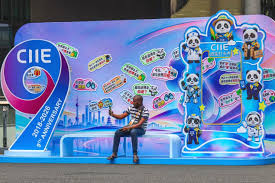
The 9th China International Import Expo (CIIE) opens in Shanghai on Nov. 5 and will run through Nov. 10.
This year’s exhibition space exceeds 370,000 square meters for the first time, drawing participants from 162 countries, regions, and international organizations. More than 4,100 overseas companies are participating, and over 480 products are expected to make their debut at the expo, hitting a record high.
At a time when unilateralism and protectionism continue to disrupt the international economic and trade order, the CIIE, now in its ninth consecutive year, has become an irreplaceable international public good in the global economic and trade system.
A closer look at the exhibition layout of the 9th CIIE reveals six major exhibition areas and an Innovation Incubation Special Section, each with its own highlights.
Pavilions dedicated to medical equipment and health care products, consumer goods, and food and agricultural products have all been expanded. More than 2,000 companies are participating in the event for the first time.
Among the newcomers are the U.S.-based Project Management Institute and Germany’s Caparol, a leading producer of architectural coatings.
For the first time, the CIIE will feature a global consumer brands showcase to help expand and upgrade consumption of quality products.
“The CIIE stands as a clear demonstration of China’s commitment to expand opening up,” said Carl Fey, professor of strategy at BI Norwegian Business School. As he has observed, China’s opening up is geared toward pursuing shared development with the rest of the world, and the CIIE highlights China’s key role in global trade.
Over the years, the range of exhibits at the CIIE has expanded from consumer goods and components to high-end equipment, core technologies, and quality services.
This evolution reflects the deeper integration of global industrial and supply chains. Today, exhibitors, including industry giants, emerging players, small and medium-sized enterprises, and specialized businesses, can all connect with market demand more precisely and explore growth opportunities across the entire industrial chain.
The CIIE is increasingly attracting international buyers. Ahead of this year’s event, trade delegations from Shanghai, Guangdong, and other regions secured a number of major buyers with strong purchasing power, well-established brands, and substantial demand.
Dedicated matchmaking events were held in Egypt, Germany, the UK, and other countries, bringing negotiations closer to China’s trading partners. During the expo, a buyers’ corridor will help connect quality products and services directly with the Chinese market.
In the first three quarters of 2026, China’s imports reached 16.74 trillion yuan (about $2.5 trillion), representing a 22.3 percent year-on-year increase. September alone saw monthly imports surpass 2 trillion yuan for the first time.
The CIIE offers a window into China’s vast domestic market, where growing demand is creating more opportunities for business around the world.
The expo is also becoming an increasingly attractive platform for foreign investors.
Through the CIIE, exhibitors including ZEISS Group, Schneider Electric and AstraZeneca have established R&D centers, regional headquarters and advanced manufacturing bases in China.
As global companies unveil debut products, many are simultaneously accelerating plans to deepen local R&D, increase investment, and consolidate regional operations.
Over the past three years, the number of foreign-invested enterprises in China has grown steadily. Between January and April 2026 alone, more than 3,000 foreign-invested firms announced additional capital commitments.
The CIIE continues to witness how exhibits become marketable products and exhibitors become investors, and more global companies deepen their presence in China and create benefits for the world.
Beyond commerce, the expo is strengthening cultural and people-to-people ties. More than a marketplace for goods and services, it serves as a cross-cultural forum. The distinctive Country Exhibition area hosts performances and exhibitions that offer visitors a rich tapestry of global traditions.
This year introduces several firsts: the Premium Collection will feature intangible cultural heritage workshops, the Gourmet Festival will launch a global tasting zone, and the Arts Carnival will collaborate with China Fashion Week. These initiatives foster mutual understanding and enrich economic partnerships with stronger societal connections.
The CIIE provides a broader multilateral platform for open cooperation. In step with the trend of economic globalization, it has established an authoritative platform for high-level dialogue and multilateral economic and trade cooperation.
For the first time, more than 300 Fortune Global 500 companies and industry leaders are participating. Nearly 200 firms and institutions have attended all nine editions, while five countries, including Moldova and Romania, as well as the United Nations Development Programme, are joining for the first time, demonstrating the strong appeal of openness and cooperation.
China advances high-level opening up with the aim of expanding the pie of cooperation with the rest of the world. Its stories of opening up have sent a message to the world that China is not only the world’s factory but also a global market. It is not only a “super seller” but also a “super buyer.”
The two-way engagement does not marginalize other stakeholders; rather, it creates tangible benefits for neighboring economies and fosters regional prosperity.
At this year’s expo, pavilions dedicated to Asian and African products will be expanded, featuring higher-quality displays and enhanced programming. These enhancements aim to help African countries with diplomatic ties to China leverage tariff-free access and encourage more Global South countries to fully utilize the CIIE.
Stephen Jackson, United Nations Resident Coordinator in China, noted that the CIIE offers developing economies a practical pathway to integrate more deeply into global value chains and share the benefits of trade.
China will harness the momentum of opening up and pool strength for win-win cooperation. It will firmly uphold multilateralism and continue to make the CIIE a success, helping steer economic globalization toward greater openness, inclusiveness, balance and shared benefits.
By Li Shuo, People’s Daily
As the Guangzhou Open drew to a close, the China tennis season entered its final stretch. Now in its second year as a branded series, the season included eight international professional tournaments at different levels across multiple cities, creating a tennis festival that lasted nearly two months.
Breakthrough performances by Chinese players, closer integration of sports, culture, tourism, and commerce, and greater global exposure for China’s stories all contributed to the season’s outstanding performance.
Throughout the season, Chinese players competed across the country, delivering one surprise after another. China’s Zheng Qinwen captured the women’s singles title at the 2026 China Open, becoming the first Chinese woman to win the title in the tournament’s 20-year history.
After undergoing elbow surgery and seeing her world ranking plunge, Zheng faced down outside criticism and fought her way back.
“I am just so grateful that I found the inner fire back. Right now, I’m trying to reach the best version of myself,” she said.
Her journey from a difficult period of injury recovery to winning her maiden WTA 1000 crown on home soil is a testament to her resilience.
Beyond the excitement on court, tournaments in the China tennis season have become important driving forces of consumption and economic growth, while tennis is becoming a popular lifestyle choice.
The China Open set new records for both attendance and consumer spending. More than 450,000 spectator visits were recorded during the tournament, with spectators from outside Beijing accounting for 60 percent.
Ticket revenue reached 132 million yuan (about $19.78 million), while related consumer spending surpassed 55 million yuan, both hitting record highs. Sales of licensed merchandise doubled from a year earlier. The influx of spectators gave a boost to consumer spending across the city.
The Shanghai Masters extended the tournament experience beyond the courts, creating diverse settings and opportunities for people to experience tennis in different parts of the city. This year, it launched a carnival featuring open training sessions, a tennis-themed museum, and celebrity exhibition matches beyond regular match hours.
“The tournament is no longer confined to a single venue. Through innovative activities such as a citywide stamp collecting activity, and combined tickets for multiple tournaments, we are bringing the excitement of tennis into neighborhoods across the city, extending the value of the tournament brand, and unlocking the potential for high-end consumption,” said Yang Yibin, chairman of Shanghai Juss Sports and Entertainment Group.
This year’s tournament attracted nearly 250,000 spectator visits, around 12 percent of whom came from overseas. Total revenue reached approximately 500 million yuan, with sponsorship, ticket sales, and revenue from TV broadcasting rights sharing all hitting record highs.
The Wuhan Open in Wuhan, central China’s Hubei province, teamed up with shopping areas and scenic areas to offer exclusive discounts to ticket holders, connecting the tournament with tourism resources across the province.
It attracted a record 202,700 spectator visits, hitting a new high. The tournament generated an estimated 890 million yuan in overall economic benefits, up 26.24 percent from the previous year.
The Chengdu Open ran dedicated shuttle buses between the tournament venue and shopping areas around the city. On board, spectators could find shopping guides and scan QR codes to access ticket-holder offers. By showing their match tickets, they could enjoy discounts and special offers on dining, shopping, culture and tourism experience at nearly 3,000 businesses across the city.
Tennis enjoys global appeal, and the China tennis season provides a platform for exchange. Beyond the courts, international players can experience Chinese culture firsthand and share their stories of China with audiences around the world.
During the Mid-Autumn Festival holiday, the Hangzhou Open organized a nighttime cruise on West Lake aboard the “Moon Boat,” offering players a close-up experience of traditional Chinese music, classical dance and the romantic charm of worshipping the moon.
Ahead of the Ningbo Open, Elena Rybakina, the world No. 1 in women’s singles, visited the Yuebo Academy by Dongqian Lake. Dressed in Song Dynasty (960-1279) attire, she tried her hand at traditional tea making and painting oil-paper umbrellas.
Spanish player Alejandro Davidovich Fokina visited a Shu brocade cultural and creative park in Chengdu, where he watched the intricate process of weaving the traditional fabric on a drawloom. He said: “Tennis is all about rhythm and patience, while every inch of this brocade reflects a dedication passed down through generations.”
On and off the court, more and more foreign players, referees and technical officials have learned to exchange greetings in Chinese. Chinese spectators, meanwhile, have won widespread praise from players for their spectator etiquette.
What has made an especially deep impression are the thoughtful gifts from Chinese fans, including hand-drawn portraits of tennis stars, handwritten letters of support and city-themed souvenirs.
After winning the China Open, Serbian tennis star Novak Djokovic said: “Chinese fans are among the best in the world. They bring me all kinds of gifts and wait for me for so long. Their thoughtfulness is truly touching.”
Bai Xilin, director of the Tennis Administration Center of China’s General Administration of Sport, said the China tennis season demonstrates the sport’s value on multiple fronts.
“More and more people are coming to tennis tournaments not just for the matches, but also to experience the culture and emotional connections they offer,” he said.
China
SE China’s Fujian steps up efforts to strengthen its role as core area of 21st Century Maritime Silk Road
By Liao Wengen, Fu Wen, Zhong Ziwei, People’s Daily
Thriving on the sea, southeast China’s Fujian province has made notable progress in expanding marine cooperation and strengthening international exchanges.
The World Maritime Equipment Conference 2026, held in Fuzhou, the provincial capital, brought together 175 guests from 43 Belt and Road partner countries to explore industrial collaboration in the marine economy.
Juncao technology, developed in Fujian, has been introduced to more than 100 countries and regions, with demonstration bases established in 24 countries.
In the first three quarters of this year, Fujian’s imports and exports with Belt and Road partner countries reached 816.33 billion yuan ($122.38 billion), up 9 percent year on year, marking a record high for the same period.
In recent years, the province has continued to improve its integrated transport network spanning sea, land, and air, intensify economic, trade, and investment cooperation, and expand people-to-people and cultural exchanges, striving to strengthen its role as a core area of the 21st Century Maritime Silk Road by facilitating global connectivity, promoting win-win cooperation, and fostering closer ties among peoples.
Accelerated infrastructure construction has helped forge closer economic and trade ties for Fujian.
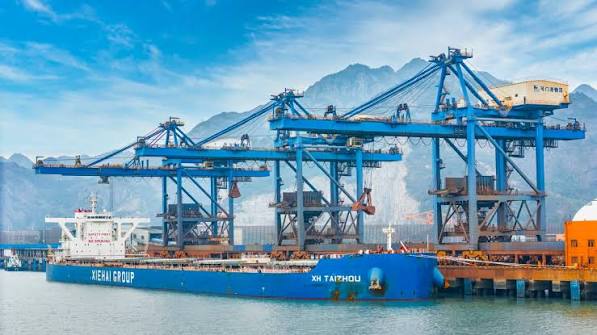
On November 7, the cargo ship Xin Xu Zhou, loaded with Chinese-made goods, slowly departed from the Haitian Terminal of Xiamen Port in Xiamen, Fujian, heading for Southeast Asia along a shipping route of the Silk Road Maritime, China’s first comprehensive international logistics service brand and platform centered on maritime shipping under the Belt and Road Initiative (BRI).
“Since its inauguration eight years ago, the Silk Road Maritime shipping network has expanded to 160 routes, connecting 153 ports in 50 countries and regions, while its alliance has grown to 393 members,” said Li Nan, general manager of Fujian Silk Road Maritime Operation Co. Ltd, the operator of the Silk Road Maritime brand.
On land, China-Europe (Central Asia) freight trains operating from Fujian now reach more than 30 cities in 13 countries, serving as a vital transport link connecting inland regions with the sea.
In the air, the province is steadily advancing its air connectivity project under the BRI. The airports in Fuzhou and Xiamen, the province’s two major gateway hubs, both serve as regional aviation hubs, forming an extensive network of international air links.
With access to China’s vast central and western hinterland, and situated between Yangtze River Delta to the north and Guangdong-Hong Kong-Macao Greater Bay Area to the south, Fujian is leveraging its strategic position as a transport corridor to continuously strengthen economic, trade, and investment cooperation and deepen industrial and supply chain connections. These efforts are translating into tangible benefits for all partners.
By promoting exchanges and mutual learning among civilizations, Fujian has continuously expanded its international “circle of friends.”
On October 17, representatives from 24 countries gathered in Fuzhou for the 21st Century Maritime Silk Road Local Government Cooperation and International Friendship Cities Dialogue. Discussions covered topics including global governance and the marine economy, resulting in seven cooperation documents.
The participants also visited landmarks including Sanfangqixiang, or the Three Lanes and Seven Alleys, a historic and cultural block in Fuzhou, to experience the city’s unique charm, reflected in its openness and inclusiveness in the new era and the harmonious coexistence of its historical heritage and modern life.
“Fuzhou has a rich history and its people are friendly and kind. I would strongly recommend that more people visit the city,” said Saullo Branco, Asian markets director at Investe Piauí, Brazil .
To date, Fujian has established sister-province, state, city and district relationships with 138 local governments in 53 countries. Cultural exchanges have played an important role in expanding the province’s international network of friendships.
Fujian has strengthened international cooperation to boost people’s livelihood, fostering bonds of friendship that resonate deeply with the peoples of many countries.
On October 16, 22 participants from four countries, including Central African Republic, visited China National Engineering Research Center of Juncao Technology at Fujian Agriculture and Forestry University to receive systematic training in the cultivation of Juncao, a hybrid grass originally developed in China for mushroom cultivation, and mushroom production.
The university has organized more than 480 international training sessions at home and abroad, attracting approximately 23,000 participants from 118 countries.
At the college of information and electronic engineering of Liming Vocational University, located in Quanzhou, Fujian, a Malaysian student was seen dismantling a car alongside an instructor.
“Here, I have the opportunity to learn about many advanced new energy vehicles. The combination of theoretical instruction and hands-on training has been extremely beneficial to me,” the student said.
Fujian has also sent 21 medical assistance teams to Senegal and 18 to Botswana, providing medical services to more than 6.9 million patients and performing over 200,000 surgeries.
Meanwhile, the province continues to expand high-standard opening-up in international education cooperation and develop its “Study in Fujian” brand.
By carrying out a range of “small and beautiful” livelihood projects, Fujian is helping deliver tangible benefits and improve the lives of people in Belt and Road partner countries.
By Liu Junguo, People’s Daily
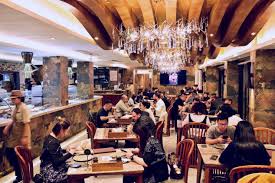
Beyti Restaurant on Chouzhou North Road in Yiwu, east China’s Zhejiang province, draws a lively crowd of patrons as the aroma of grilled meat wafts from the kitchen.
Spotting a regular customer walking in, restaurant owner Mohanad Shalabi steps forward to offer a warm handshake and an embrace, just like welcoming a family member home.
Shalabi has been living in China for 26 years. In 2002, he and his wife moved to Yiwu and opened an Arabic restaurant named “Ward,” meaning “Flower” in Arabic. Since then, the restaurant, offering culinary delights and a touch of homesickness, has flourished here. Shalabi has not only achieved his entrepreneurial dream, but also found a true sense of belonging in China.
Originally from Jordan, Shalabi left his hometown at the age of 17 to make a living, traveling to the Netherlands and Thailand along the way. In 2000, he arrived in Guangzhou, south China’s Guangdong province, where he worked in an Arabic restaurant run by his uncle, learning how to cook while gaining management experience. “Back then, the seed of entrepreneurship was already planted in my heart,” Shalabi recalled.
“China’s vast market offered boundless opportunities, and I believed my career would succeed here,” he said. Later, he married Liu Fang, a woman from east China’s Anhui province who worked as an interpreter at the restaurant, making him even more determined to make China his home.
In 2002, through a friend originally from the Middle East, Shalabi learned about Yiwu, a vast market for small commodities where many foreign merchants went to source goods.
“My friend told me it was hard to find an authentic Arabic restaurant in Yiwu and suggested I go take a look,” Shalabi recalled. He realized the opportunity was right there.
At that time, Yiwu, dubbed “the world’s capital of small commodities,” was in the middle of a crucial period of transformation and upgrading, looking very different from the bustling hub it is today. Yet, the city’s hospitality and inclusiveness quickly convinced Shalabi to stay.
“Not knowing anyone or the area, I worried that the landlord might raise the rent on us when we were looking for a place. Instead, upon hearing that we were a young couple starting a business, the landlord immediately offered a fair price, helped us move our belongings, and introduced us to the neighborhood,” Shalabi recalled.
“The good public security also gave us peace of mind. No matter how late we went out, it was completely safe. On top of that, Yiwu’s foreign trade was already beginning to gain momentum, offering great market opportunities,” said Shalabi.
Riding the tailwind of China’s accession to the World Trade Organization (WTO), the people of Yiwu stood at the forefront of the reform and opening-up. Merchants from an increasing number of countries flocked to the city in search of business opportunities. Shalabi’s original goal was to make sure foreign merchants in Yiwu could enjoy a taste of home.
Shalabi opened his first restaurant on Chouzhou North Road, an area frequented by foreign merchants. He named it “Ward” to symbolize flowers of happiness and peace. To his surprise, the small restaurant quickly became a favorite among foreign traders in Yiwu.
Gradually, foreign merchants began using the restaurant for much more than just dining. Some waited for clients here, while others negotiated deals. Between bowls of chickpea soup and grilled meat, sample catalogs and price sheets often lay spread across the table.
“It was a restaurant, but it was more like an open and accessible venue for business negotiations. Many foreign merchants didn’t speak Chinese, so my wife, my staff, and I served as interpreters. Many deals were actually finalized during the ten-odd minutes spent waiting for the food to be served,” Shalabi said.
The restaurant became a landmark in the community of foreign merchants in Yiwu, underpinned by the city’s supportive and convenient business environment.
Administrative services for foreigners, such as the consultation, appointment booking, and online processing of accommodation registration, visas, and work permits, were quick and smooth. In the business sector, the local government launched online platforms for matters including foreign investment and the opening of personal foreign exchange settlement accounts. Foreign merchants could also look up various public services through smart digital tools and personalized guides.
“No matter how big or small an issue, a single phone call could sort it out. This is the ‘Yiwu speed,'” Shalabi said.
With local government support, Shalabi established “Nad’s Home,” a volunteer organization dedicated to helping foreigners in Yiwu solve problems. It also organizes various volunteer activities on a regular basis.
On June 5, 2014, Chinese President Xi Jinping delivered an important speech at the opening ceremony of the Sixth Ministerial Conference of China-Arab States Cooperation Forum. In the speech, he spoke about the story of Shalabi who put down roots in China and realized his life dreams.
Following that, people came from far and wide in admiration. As the original facilities and space could no longer keep pace with the growing number of patrons, Shalabi leased a nearby three-story venue spanning over 1,000 square meters, renaming the establishment “Beyti.”
“‘Beyti’ means ‘my home’ in Arabic. I want everyone who comes here to feel like they are returning home,” said Shalabi.
The most eye-catching feature of the new restaurant is a prominent display wall featuring high-quality Belt and Road cooperation. Embossed on the wall is a relief map of the Yixin’ou (Yiwu-Xinjiang-Europe) China-Europe freight railway route starting from Yiwu, with countries along the way marked.
“Many foreign merchants didn’t know about high-quality Belt and Road cooperation or the China-Europe freight trains at first. After seeing the wall, they realized trains leave Yiwu with Chinese goods for Europe, connecting our hometowns with Yiwu and making us feel that we are one big family. The freight train service is more than a trade route. It is a dialogue between civilizations on mutual benefit and win-win cooperation,” Shalabi said.
The convenience of trade and commerce has brought tangible benefits to Shalabi. “Today, 99 percent of the ingredients for the restaurant can be purchased locally, and a single phone call brings them right to our doorstep,” he said.
“My story is much more than just an entrepreneurial journey. It is a story of exchange and mutual learning among civilizations,” Shalabi said. “I want to tell that young Jordanian stepping off the train over 20 years ago: Don’t worry, you will find your career direction here, and you will find a true sense of belonging,” he added.

Youth Empowerment Drive Gains Momentum as Sankara Foundation Expands Across Kano Central

2027 Poll: Court dismisses suit seeking to stop Aondoakaa, SAN from contesting Benue Guber

Civil Society Coalition Kicks Against Proposed 20% Deduction from NCDMB

-
 Uncategorized6 years ago
FG, states urged to harness flooding for ranching, others with technology – Agbaje
-
 Headlines11 years ago
Breaking: EFCC seals Borno House of Assembly, as Hon members take to their heels
-
 News12 years ago
Nigeria Security Operatives Stage Manhunt For Homosexual Perpetrator
-
 News10 years ago
How 21-year-old Girl fled community over accusation of lesbianism
-
 News11 years ago
Yobe Gov Moves Against Deputy
-
 Opinion8 years ago
7 signs she has friend zoned you
-
Technology5 years ago
Online job placement company headhunts women
-
 Headlines11 years ago
Borno Dep Gov Abducts Another Church Leader