
News
Ex-Benue Guber Candidate Petitions Pope Leo Over Alia’s Alleged Misconducts

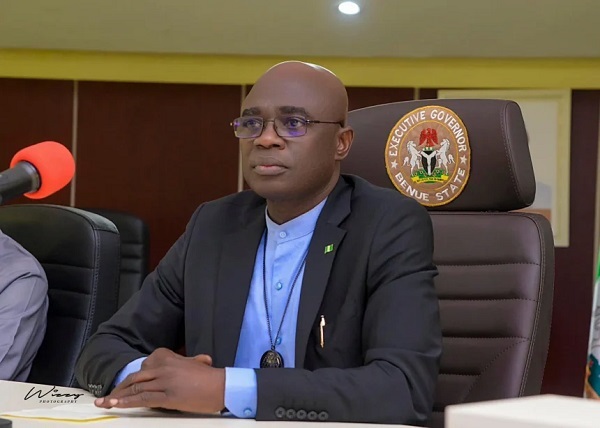
The All Progressive Grand Alliance (APGA) gubernatorial candidate in the 2023 polls in Benue state, Joseph Waya, has written a petition to Pope Leo XIV, calling his attention to the alleged misconducts of the state governor, Rev. Fr Hyacinth Alia.
A copy of the petition dated September 1, 2025 and made available to Our correspondent is copied to the Nigerian Bishops Conference, Archdiocese of Abuja eclessiatic province, Most Rev. Ignatius Kaigama and Bishops of the four Catholic Dioceses in Benue state.
In the petition routed through the Apostolic Nuncio, representing the Holy See Nigeria, Archbishop Michael Francis Crotty, Waya alleged that Alia has through his actions in office brought Catholic Church in Nigeria to disrepute.
The petitioner said as a devout Nigerian Catholic, baptised into the faith in 1974 and raised within a family that holds steadfast to the Church’s traditional doctrines and moral teachings, he feels duty-bound to defend the Church and its teachings.
Waya alleged that after more than two years in office, Alia has not merely underperformed but conducted himself in ways that make his secular predecessors appear virtuous by comparison, saying the state descended into despair and public resentment is beginning to extend beyond the governor to the Church itself.
The petition further reads:
Principal Concerns
Corruption and Lack Accountability
Financial corruption under Governor Alia has reached unprecedented levels in Benue State’s history. The Zebra Reporters, an online publication, has documented allegations of massive corruption amounting to ₦345.3 billion (approximately $225.6 million) through dubious contract awards over the past two years. These contracts were allegedly awarded without due process, budgetary provision, or State Executive Council approval.
Despite these enormous expenditures, no meaningful projects have been commissioned,
leaving the state with impassable roads and a complete absence of basic amenities. This financial mismanagement created such tension between the governor and the State Assembly that the state was effectively paralysed for weeks, culminating in the forced
resignation of the Assembly Speaker.
Political Divisiveness and Institutional Conflicts
Since assuming office, Rev. Fr. Alia has engaged in destructive conflicts with virtually every institution and individual who disagrees with him. He has quarrelled with the political
mentors who helped secure his election, attempted to forcibly assume control of his party’s
leadership, and created such division that the party split into hostile factions. His actions
have fostered hatred, bitterness, and in some instances, actual violence amongst party members. Although the President of Nigeria, as the party leader, has made considerable efforts to resolve the conflict, Rev. Fr. Alia has not supported the peace process and has instead taken actions perceived as promoting hostilities.
Furthermore, the actions initiated by the governor concerning the state judiciary resulted in the closure of the courts for several months, as a protest against his efforts to remove the state Chief Judge, with whom he had disagreements, outside of lawful procedures. These developments had a substantial impact on the stability of democratic institutions within the state.
Most troublingly, the governor has engaged in public conflict with the Catholic Church itself – the very institution whose reputation facilitated his election. Benue State encompasses four Catholic dioceses, yet Governor Alia maintains frosty relations with the
bishops and his fellow priests. During his campaign, his supporters publicly abused the
Bishop of Makurdi for not supporting his candidacy, and this hostility has continued, with
the governor systematically excluding the Church from public functions and destroying the
collaborative partnership that had existed between the state and Church for years.
Incitement to Violence and Threats
In preparation for the 2027 elections, Governor Alia has been touring the state inciting
supporters to violence against potential challengers. He has made specific threats against contestants from the Kunav clan, reinforced by his known associates who have publicly stated that anyone daring to contest against Rev. Fr. Alia will face physical assault. These
threats are so serious that formal petitions have been filed with security agencies, including
the police and Department of State Security.
Governor Alia has cultivated a violent group called “No Alia, No Benue” and has boasted publicly that he will secure re-election “by whatever means, including diabolical.” Such conduct represents an unprecedented level of criminal intimidation in Benue State politics.
Compromise of Security and Betrayal of Public Trust
Perhaps most gravely, Governor Alia has compromised the security of his own people through his relationship with Fulani jihadists. Prior to his election, the state had successfully implemented anti-open grazing legislation that significantly reduced attacks by these groups masquerading as herdsmen. However, during his campaign, Rev. Fr. Alia reportedly assured these jihadists that he would repeal this protective legislation if elected.
Upon assuming office, he dismantled the structures established by the anti-grazing law, leading to a renewed wave of murderous attacks. The recent assault on Yelwata, where over
200 people were killed, drew international attention. Rather than leading the state in mourning, Governor Alia displayed shocking insensitivity by celebrating during the President’s condolence visit.
The Church’s Moral Authority at Stake
Your Holiness, the Catholic Church in Nigeria has long been recognised as a champion of good governance, accountability, and human development. For centuries, the Church has
provided essential services – education, healthcare, and social amenities – often where
government has failed to do so. The Church’s non-discriminatory approach has earned respect across religious boundaries, with many Muslims benefiting from Catholic institutions.
The Nigerian Bishops’ Conference has consistently held governments accountable whilst maintaining moral authority. Leaders such as Archbishop Emeritus Anthony Okogie, Cardinal John Onaiyekan, and Bishop Matthew Kukah have fearlessly challenged successive governments without compromising their sacred calling.
The Church’s position on corruption is unequivocal, as evidenced by the special prayer against bribery and corruption recited at every Sunday Mass across Nigeria. This prayer
acknowledges Nigeria’s abundant blessings whilst lamenting their misuse through “acts of
injustice, bribery and corruption” that leave many people “hungry, sick, ignorant and defenceless.”
Rev. Fr. Alia, having led congregations in this prayer countless times, now governs in direct contradiction to its spirit and the Church’s teachings. His conduct raises the troubling question: if the Church has historically held governments accountable even under military regimes, why does it remain silent when one of its own priests misgoverns a state populated largely by Catholic adherents?
Urgent Need for Intervention
Your Holiness, the faithful in Nigeria are deeply troubled by this situation. Rev. Fr. Alia’s conduct is not merely disappointing; it actively undermines the Church’s moral authority and threatens to divide both the Church and its followers. The reputation and legacy that the
Catholic Church has built over centuries in Nigeria hangs in the balance.
The Nigerian Catholic community looks to Your Holiness for guidance and action. The Church’s credibility depends upon its willingness to uphold the same standards for its own members that it demands of secular leaders. Rev. Fr. Alia’s continued misconduct whilst
wearing the moral mantle of priesthood causes scandal to the faithful and provides ammunition to the Church’s critics.
Prayer and Appeal
I humbly and fervently appeal to Your Holiness to take a decisive stand regarding Rev. Fr. Alia’s role in politics and its impact upon the Church. His misconduct is dividing the Church, undermining its reputation, and causing scandal to the faithful. The situation requires urgent intervention to preserve the integrity of the Catholic Church in Nigeria and to reaffirm the
Church’s commitment to the moral principles it has always championed.
May Your Holiness consider this appeal with the wisdom and pastoral care that have
characterised your pontificate, and may the Almighty guide your decisions in this matter.
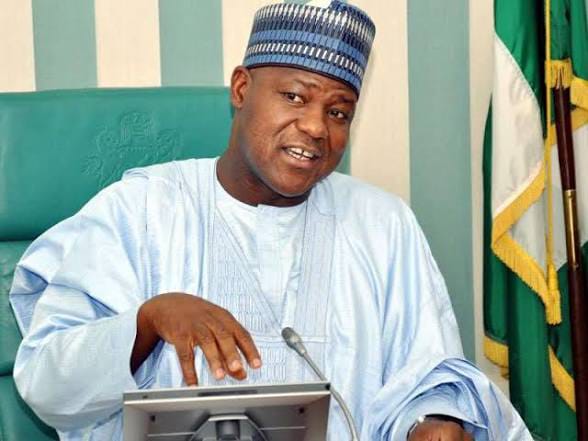
Former Speaker of the House of Representatives and Chairman of the Board of the National Credit Guarantee Company Limited (NCGC), Rt. Hon. Yakubu Dogara, CFR has expressed deep sorrow over the Nigerian Air Force aircraft crash that claimed the lives of 32 persons near Igbokoda, Ondo State. Dogara described the tragedy as a heartbreaking loss to the nation, noting that the deaths of the victims have left a painful void in the country’s defence and security community.
In a statement, the former Speaker extended his condolences to President Bola Ahmed Tinubu, Commander-in-Chief of the Armed Forces, the Nigerian Air Force, and the families of those who perished in the unfortunate incident.
He said the nation shares in the grief of the bereaved families and the Armed Forces at this time of immense sorrow, adding that the sacrifices of those who lost their lives in service to the country will not be forgotten. “The nation mourns with the families of the deceased and stands in solidarity with the Armed Forces during this difficult period,” Dogara stated.
He also commiserated with the Chief of Air Staff, officers and men of the Nigerian Air Force, praying that God grants them the fortitude to bear the painful loss.
According to him, moments such as this call for national unity, reflection and collective support for the families and institutions affected by the tragedy.
Dogara paid tribute to the victims, describing them as patriotic Nigerians whose commitment and service contributed to the security and stability of the nation. He further applauded the efforts of emergency responders, rescue teams and all personnel involved in the aftermath of the crash, commending their courage and professionalism under difficult circumstances.
The former Speaker prayed God to comfort their families, friends and colleagues.
He also offered prayers for the safety and protection of members of the Armed Forces and for continued peace, unity and progress in Nigeria.
The Nigerian Air Force aircraft crashed near Igbokoda, Ondo State, resulting in the death of 32 persons and plunging the nation into mourning. Authorities are yet to make public the cause of the accident as investigations continue.
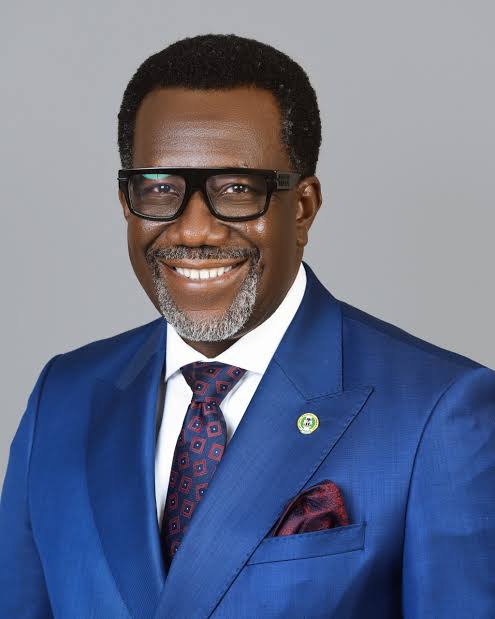
The Centre for Credible Reforms and Institutional Accountability (CCRIA) has commended the Commissioner for Insurance and Chief Executive Officer of the National Insurance Commission (NAICOM), Mr Olusegun Ayo Omosehin, for promoting transparency and accountability in the ongoing reforms of Nigeria’s insurance industry.
The centre said the implementation of the Nigerian Insurance Industry Reform Act (NIIRA) 2025 had ushered in a new phase of development for the sector, with stronger regulatory standards, improved capitalisation and greater emphasis on protecting policyholders.
Dr Aminu Abubakar Aminu, president of the centre, said this in a statement at the weekend.
Aminu commended President Bola Tinubu and the National Assembly for the enactment of NIIRA, describing the legislation as a major step towards addressing longstanding challenges in the insurance industry.
“The enactment of the Nigerian Insurance Industry Reform Act is a significant milestone in the development of Nigeria’s insurance sector. We commend Mr President and the National Assembly for recognising the need to modernise the legal and regulatory framework governing the industry. NIIRA provides the foundation for an insurance sector that is better capitalised, more accountable, more responsive to policyholders and better equipped to contribute meaningfully to the Nigerian economy,” he said.
The centre also praised Omosehin for his leadership of NAICOM, saying his extensive experience as an insurance professional had positioned him to effectively implement the new regulatory framework.
“We consider the appointment of Mr Olusegun Ayo Omosehin as Commissioner for Insurance and Chief Executive Officer of NAICOM a timely and appropriate decision. He is a seasoned insurance professional with many years of experience in the industry, and his understanding of the sector gives him the practical knowledge required to lead an important reform process of this nature. We commend him for the direction he has provided since assuming office and for his commitment to strengthening the industry,” Aminu said.
According to the centre, the ongoing recapitalisation exercise was among the important steps taken to strengthen the financial capacity of insurance companies and improve their ability to meet obligations to policyholders.
Aminu said the reforms were already producing early gains and should be sustained through consistent implementation.
“The early developments under NIIRA demonstrate that the reform is not merely a legislative exercise but a process capable of producing measurable improvements in the industry. Stronger capital requirements, improved supervision and greater attention to policyholder protection will ultimately create an insurance market that Nigerians can trust. We encourage NAICOM to remain focused on the implementation of the Act and to continue providing clear guidance to operators and other stakeholders,” he said.
The centre noted that the reforms would also help deepen insurance penetration and strengthen the industry’s contribution to national economic development.
It urged insurance companies, brokers, reinsurers, professional bodies and other stakeholders to embrace the new framework and work with NAICOM to achieve the objectives of the legislation.
“The success of NIIRA will require the cooperation of every stakeholder in the insurance ecosystem. Operators must see the reforms as an opportunity to strengthen their institutions, improve their services and regain the confidence of Nigerians. A well-regulated insurance industry can mobilise long-term capital, protect businesses and households against risks and support investment and economic growth. These are benefits that go beyond the insurance industry itself,” Aminu said.
Aminu emphasized that the centre was particularly encouraged by the emphasis on policyholder protection under the new framework, noting that public confidence remained critical to the growth of insurance in Nigeria.
He said Nigerians should be able to purchase insurance products with confidence that operators had the financial capacity and institutional structures required to honour legitimate claims.
The president further urged NAICOM to sustain its engagement with stakeholders while ensuring that the provisions of NIIRA were implemented transparently and consistently.
“What is required at this stage is continuity, professionalism and commitment to the objectives of the law. The reforms must be sustained beyond the initial implementation period so that the gains can become permanent features of the industry. We believe NAICOM, under the leadership of Mr Ayo Omosehin, has an important responsibility to ensure that the momentum is maintained, and we encourage all stakeholders to support the commission in delivering on this mandate,” he said.
The centre said the successful implementation of NIIRA would strengthen confidence in the insurance sector, improve the protection available to policyholders and position the industry to play a greater role in Nigeria’s economic transformation.
It also called for continued collaboration between NAICOM, insurance operators and other stakeholders to ensure that the objectives of the new law were fully achieved.
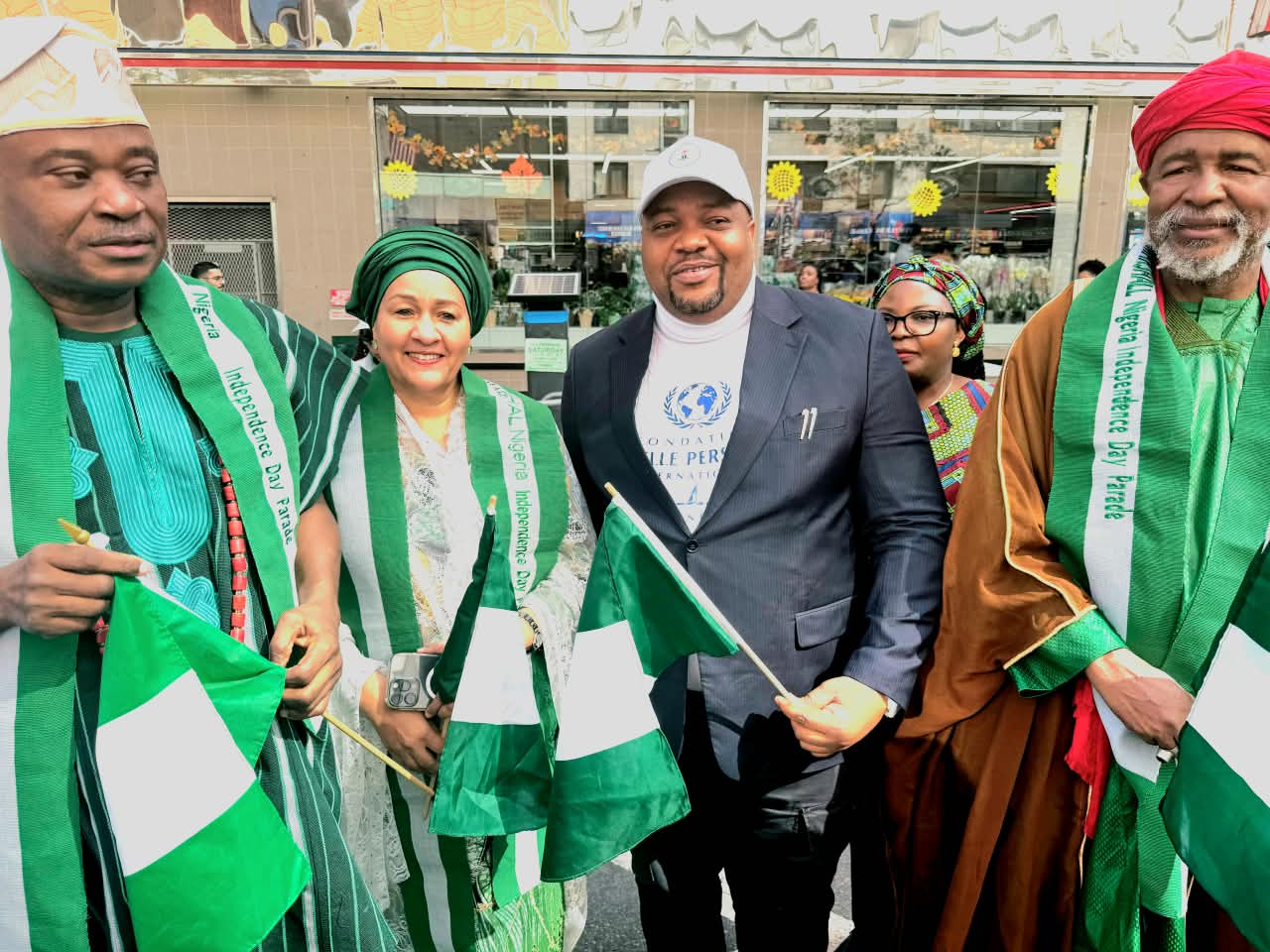
As Nigerians from across the United States gathered in Manhattan to celebrate Nigeria’s Independence Day in grand style, Hon. Amb. Jim Okolo used the occasion to share an inspiring message about Nigeria’s immense possibilities, rich cultural heritage, and promising future.
Speaking with members of the media during the colourful celebration, Hon. Amb. Okolo described Nigeria as one of the most blessed nations in the world, endowed with abundant natural resources, a dynamic population, and a cultural heritage that continues to earn global recognition.
According to him, Nigeria possesses enormous deposits of valuable minerals and other natural resources that, if fully harnessed, can accelerate economic growth and create prosperity for millions of citizens. He noted that the country is strategically positioned to become a leading destination for investment in mining, agriculture, technology, manufacturing, and infrastructure development.
Beyond its natural wealth, Hon. Amb. Okolo emphasized that Nigeria’s greatest strength remains its people. He praised the creativity, resilience, intelligence, and entrepreneurial spirit of Nigerians, pointing out that Nigerian professionals, innovators, academics, and business leaders continue to excel in various sectors across the world.
The respected diplomat also spoke passionately about Nigeria’s unique cultural identity. From the colourful festivals of its diverse ethnic groups to its globally celebrated music, fashion, literature, cuisine, and film industry, he described Nigeria as a nation whose cultural influence extends far beyond its borders.
He noted that Nigeria’s diversity is one of its greatest treasures, bringing together hundreds of ethnic nationalities with distinct traditions and languages that collectively form a vibrant and unified national identity.
While addressing questions on security, Hon. Amb. Okolo maintained that although Nigeria faces certain security challenges, the situation is not always as severe as often portrayed by social media discussions and sections of the international media. He stressed that millions of Nigerians continue to live, work, study, invest, and contribute meaningfully to society every day.
He called on the international community, investors, and members of the diaspora to focus on Nigeria’s strengths, opportunities, and achievements rather than allowing negative narratives to define the country’s image.
“Nigeria remains a land of opportunity, innovation, and hope. It is a nation blessed with extraordinary human capital, abundant resources, a rich cultural heritage, and a people whose determination and resilience continue to inspire the world,” he said.
The celebration was attended by several distinguished personalities, including the United Nations Secretary-General, Hajia Amina Mohammed, the Nigerian Ambassador to the United Nations, diplomats, business leaders, community stakeholders, and prominent members of the Nigerian diaspora.
The event transformed parts of Manhattan into a vibrant showcase of Nigerian pride, featuring cultural exhibitions, traditional performances, business networking sessions, authentic Nigerian cuisine, and displays highlighting the country’s achievements and diversity.
Adding excitement to the festivities were thrilling performances by internationally acclaimed Nigerian music stars Patoranking, Runtown, and BNXN (formerly known as Buju), who entertained thousands of attendees and demonstrated the growing global appeal of Nigerian music.
As the celebration came to a close, the message from Hon. Amb. Jim Okolo resonated strongly among participants: that Nigeria is far more than the challenges often highlighted in headlines. It is a nation blessed with extraordinary talent, vast opportunities, cultural richness, and the potential to achieve even greater success on the global stage.


Bank Cannot Freeze Customer’s Account Without Valid Court Order — Zarewa

Gov AbdulRazaq Inaugurates 464-Unit Housing Estate In Kwara

Scholars Hail Late Sheik Kamalu-deen’s Legacies iN Education, Leadership

-
 Uncategorized6 years ago
FG, states urged to harness flooding for ranching, others with technology – Agbaje
-
 Headlines11 years ago
Breaking: EFCC seals Borno House of Assembly, as Hon members take to their heels
-
 News12 years ago
Nigeria Security Operatives Stage Manhunt For Homosexual Perpetrator
-
 News10 years ago
How 21-year-old Girl fled community over accusation of lesbianism
-
 News11 years ago
Yobe Gov Moves Against Deputy
-
 Opinion7 years ago
7 signs she has friend zoned you
-
Technology5 years ago
Online job placement company headhunts women
-
 Headlines10 years ago
Borno Dep Gov Abducts Another Church Leader