
Health
Expert throws more light on COVID-19 variants

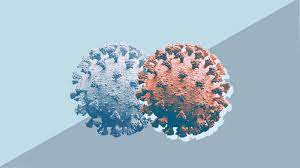
Dr. Patrick Obinna, a virologist based in Abuja, says viruses constantly change through mutation, advising Nigerians to continue taking preventive measures against the Corona virus (COVID-19).
Obinna told our correspondent, on Tuesday in Abuja, that it was important for Nigerians to continue observing protocols such as wearing face masks, observing social and physical distances, and washing of their hands regularly.
He explained that when a virus had one or more new mutations it is called a variant of the original virus.
According to him, several variants of the virus (SARS-CoV-2) that cause coronavirus disease, are creating global concerns.
“These variants include: Alpha. (B.1.1.7), Beta (B.1.351), Gamma (P.1), Epsilon (B.1.427), Epsilon (B.1.429) and Delta (B.1.617.2).
“These COVID-19 variants appear to spread more easily, and might have an increased risk of hospitalisation and even death.
“Some of them reduce the effectiveness of some monoclonal antibody medications, and the antibodies generated by a previous COVID-19 infection or a COVID-19 vaccine.”
Speaking of the Delta variant, he said that the call for caution was coming at a time when research in Australia indicated how easily the variant could potentially spread.
“It is clear that the Delta variant has a substantial transmission advantage, but scientists have not yet established why and they have also suggested three possible reasons:
“That the people it infects have a higher viral load, meaning they would emit more particles; that people will need to be exposed to less of the virus to become infected; or that a relatively short exposure time to an infected person is enough to spread the disease.
“It is possible that a person could be infected by being close to a carrier for a few seconds, if the carrier was to exhale a load of virus particles, and the person just happened to breathe in at exactly the wrong moment.
“It does not necessarily mean is that it is transmitting that way all the time for everybody. It may well just be one of those really unlucky moments.”
Obinna said that available COVID-19 vaccines were developed based on the COVID-19 virus before it had the mutations identified in these variants.
He added that while some research suggested that the vaccines have lower efficacy against the variants, the vaccines still appear to provide protection against severe COVID-19.
The expert stressed that further research was still needed, noting that vaccine manufacturers were also creating booster shots to improve protection against variants.
While urging Nigerians to take the COVID-19 vaccines, he said that the hope was that, acquired immunity from the vaccines would indeed produce long-lasting protection against SARS-CoV-2 and bring an end to the pandemic.
“These new findings point encouragingly in that direction.
“They also serve as an important reminder to roll up your sleeves for the vaccine if you have not already done so, whether or not you have had COVID-19.
“Our best hope of winning this contest with the virus is to get as many people immunised now as possible. That will save lives, and reduce the likelihood of even more variants appearing that might evade protection from the current vaccines,” Obinna admonished.
Meanwhile, he called on the Presidential Steering Committee (PSC), to expand its vaccination campaign to include all 15 to 17 year-olds to avoid a jump in infections among schoolchildren across the country.
According to him, the number of cases in the country is relatively low by global standards.
He acknowledged that COVID-19 would most likely be in the country for a longer period of time; adding that it was therefore, advisable to establish sustainable response and mitigation while working against global vaccine inequity.
He advised Nigerian authorities to reassess COVID-19 regulations and enforce the wearing of face masks everywhere to curtail the Delta variant when it eventually gets into the country.
“By so doing the country would avoid a multiple lockdowns.
“The entrance of the Delta variant across the globe has changed the transmission dynamics, so there is need for the PSC to re-strategise,” Obinna added.
Meanwhile, the Nigeria Center for Disease Control (NCDC), has said that after 40 sequences, the country was yet to detect the Delta variant.

By Joyce Remi- Babayeju
The Nigeria Centre for Disease Control and Prevention (NCDC) has placed Nigeria on alert over possible importation of Ebola transmission outbreak in the DRC and Uganda, international travel and population movement as well as the uncertainty regarding the full magnitude of the outbreak.
NCDC placed Nigeria as a high risk country following the agency’s assessment which estimated the risk of Ebola importation into Nigeria to be high, also identified high-risk states, border communities, major transport hubs, and Points of Entry (PoEs).
According to a public health advisory issued on Sunday in Abuja, Director-General of NCDC, Dr. Jide Idris noted that NCDC is intensifying it’s national coordination activities to strengthen Ebola preparedness and rapid response capacity across the country, while the National Emergency Operations Centre (EOC) is on the alert mode for heightened preparedness.
Dr. Jide noted that although Nigeria has not recorded any confirmed case of Ebola Virus Disease (EVD) from the current regional outbreak presently, in view of the Public Health Emergency of International Concern (PHEIC) declaration by the WHO, and the rising no of cases in DRC and Uganda, our surveillance and preparedness activities continue across the country.
Idris observed that NCDC has intensified event-based surveillance and epidemic intelligence activities across the country, including enhanced monitoring of alerts, rumours, and unusual public health events to support early detection, reporting, and response activities.
He urged travellers arriving from countries with confirmed Ebola cases to monitor their health for 21 days and immediately report symptoms such as fever, weakness, vomiting or unexplained bleeding.
Idris also called on Healthcare workers to maintain a high index of suspicion and strictly comply with infection prevention protocols, including proper use of PPE and immediate isolation of suspected cases.
He highlighted other measures taken by the agency to include coordination with State Epidemiologists, Disease Surveillance and Notification Officers (DSNOs), surveillance teams, and healthcare facilities continues nationwide to strengthen preparedness and ensure timely detection and reporting of suspected cases.
Idris disclosed that the National Incident Management System (IMS) has been activated with, clearly defined coordination, reporting, and escalation pathways while NCDC and partners are also mapping and preparing for prepositioning of critical response commodities, including PPES, IPC supplies, body bags, laboratory consumables, and emergency medical supplies in strategic locations.
According to him, Nigeria still maintains existing laboratory testing capability in States with international Ports of Entry (PoE) amid public health laboratory network, with surge capacity and optimization for Ebola Virus Disease testing available if required.
- First Lady says it’s life-saving initiative, urges active participation
Stephen Olufemi Oni, Ilorin
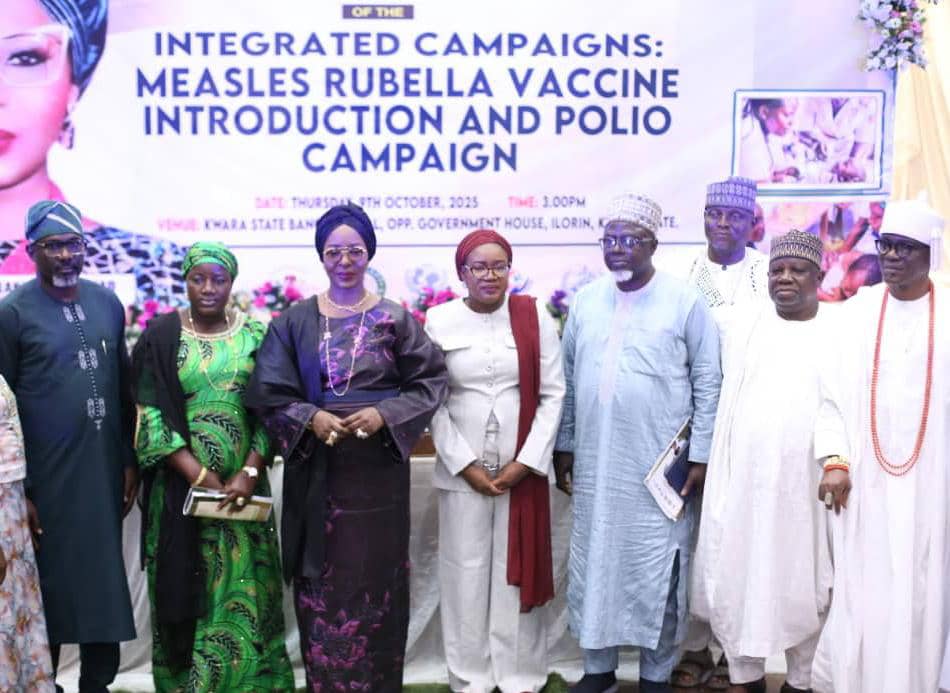
Kwara State Government has launched an integrated vaccination campaign to prevent Measles Rubella and Polio diseases among vulnerable groups in the state.
The exercise, which will last for 10 days – beginning from Saturday 11th October 2025 — is expected to cover at least 1.8 million children whose ages range between 9 months and 14 years (for Measles Rubella vaccine) and zero to 5 years for oral polio vaccine.
The programme was organised by the Kwara State Primary Healthcare Development Agency in collaboration with UNICEF and World Health Organisation (WHO), among other development partners.
At the flag off ceremony in Ilorin, the state capital, Kwara’s First Lady, Ambassador Prof. Olufolake AbdulRazaq, said the initiative is not just a policy milestone but a life-saving intervention for Kwara children and families.
She called on all parents and guardians to present their children within the age range for the vaccination.
“I commend the Kwara State Primary Healthcare Development Agency and all development partners for the efforts that culminated in the launch of the roll out of Measles Rubella Vaccine in the state,” First Lady Ambassador Olufolake AbdulRazaq said.
She said the introduction of the measles-rubella (MRV) vaccine is essential and timely, considering the outbreaks of measles in some parts of the country.
According to her, Nigeria now contends with a reality in which only about 60 percent of children receive the first dose of measles vaccine, while the second dose coverage is as low as 38 percent, noting that this coverage gap is responsible for the outbreaks.
By launching MRV, the country, Kwara inclusive, stands the chance of closing a long-standing gap towards protecting every child, mother, and family, she added.
The First Lady enjoined relevant stakeholders, including traditional and religious leaders, community heads, and the media, to complement government’s efforts in propagating the benefits of measles rubella and polio vaccines.
Commissioner for Health, Dr Amina Ahmed El-Imam, said the campaign is a transformative public health initiative to save lives across the communities.
El-Imam, who was represented by the Permanent Secretary, Ministry of Health, Dr Abdullahi Taoheed, urged all stakeholders to commit resources and attention to raising awareness, mobilising communities, and overcoming any logistical or cultural barriers to vaccination.
Executive Secretary, State Primary Healthcare Development Agency, Prof Nusirat Elelu, said the agency is deploying 8,657 trained personnel, including health workers, supervisors, and security personnel to carry out the campaign.
“Measles remains one of the most contagious and fatal viral diseases affecting young children globally, despite the availability of a safe and highly effective vaccine,” she said.
“Between years 2000 and 2023, it is estimated that measles vaccination alone averted over 60 million deaths globally. Yet, the disease remains endemic in many developing countries, particularly Africa and Asia.”
Prof Elelu said Rubella poses a serious risk to pregnant women, such as miscarriage, fetal death, or the birth of infants with Congenital Rubella Syndrome (CRS).
Assuring that the agency will not rest on its oars to safeguard the people’s health, Elelu said immunization, ante-natal and all non-complicated delivery are given free of charge across primary healthcare centres (PHCs) in the state.
The Executive Secretary commended Governor AbdulRazaq for his huge investments in the health sector, and his Deputy, Mr Kayode Alabi, who is the
Chairman of the State Task Force on Immunization and PHC, for the untiring support.
“We are extremely grateful to Her Excellency, Amb. (Prof.) Olufolake AbdulRazaq, whose relentless advocacy for maternal and child health has been a beacon of hope for our communities,” she added.
Dr. Adeola-Musa of the National Primary Healthcare Development Agency enjoined community leaders and parents to embrace the exercise by mobilising children for vaccination.
Surveillance Officer for World Health Organization (WHO), Mrs Abdulkadir Rashidat, said the vaccines are safe, effective and suitable to protect the children, calling on all parents and community leaders to accord the vaccination teams the needed support to function.
Ibrahim Tsado Mohammed, a Social and Behaviour Change Specialist at
UNICEF, warned that measles, rubella, and polio continue to pose significant health threats to children despite global progress.
He implored the media and civil society organisations to help counter misinformation in some quarters and reduce hesitancy surrounding the vaccination campaign.
Some of the dignitaries at the event were the Deputy Chief Whip, Kwara House of Assembly, Hon. Mariam Yusuf Aladi; Chairman House Committee on Health, Hon. Seun Oguniyi; Cabinet members; Acting Head of Service, Kwara State, Mrs Shittu Olufunke Mercy; Chairman, State Civil Service Commission, Hajia Habibat Yusuf; Permanent Secretaries; Emir of Shonga, Dr Haliru Yahaya; Olupako of Share, Oba Olawale Haruna Ilufemiloye; and Balogun Alanamu of Ilorin, Dr Usman Abubakar Jos, represented by Alhaji Bolaji Ibrahim Alanamu.
Others were wife of the State Chief Judge, Mrs Olufunke Adebara; spouses of Chairmen of the 16 Local Governments; and wife of the State APC Chairman, Princess Ayodele Fagbemi.
End
Health
World Sight Day 2025: FG Urge to Prioritize Eye Health as 1.3m Nigerians estimated to be blind

From our Correspondent
The Chairman, National Eye Health Committee, Prof Afekhide Ernest Omoti has stressed the need for individuals, communities, and governments to prioritize vision care as a vital part of overall health and national development.
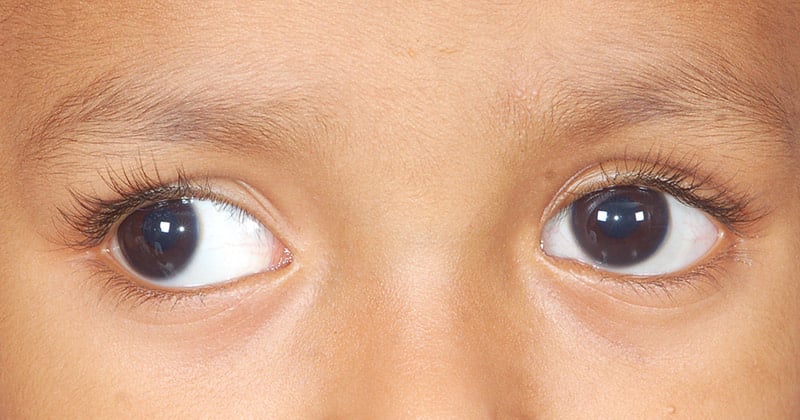
The medical expert disclosed that findings revealed that 1.3 million Nigerians are estimated to be blind with over 80% of these cases being preventable or treatable.
Prof. Omoti who is a consultant ophthalmologist and also the Chairman, Eye Health Committee of the Nigerian Medical Association (NMA), made the call as part of activities to commemorate the 2025 World Sight Day with theme, “Love Your Eyes”, “Love Your Eyes at work”, “Love Your Eyes Kids”, “Love Your Eyes – Protect the Future,”.
Prof. Omoti stated that the World Sight Day 2025 is a global event dedicated to raising awareness about the importance of eye health and the prevention of avoidable blindness.
Prof. Omoti also noted that in Nigeria, millions of Nigerians suffer from visual impairment, and many are at risk due to preventable causes.
“As we celebrate today, let us remember that vision is not just about sight; it is also about connection, opportunity, and the ability to navigate the world. Our eyes allow us to experience the beauty of life and our environment, from the smiles of our loved ones to the vibrant culture that surrounds us.
“This year’s theme, “Love Your Eyes”, “Love Your Eyes at work”, “Love Your Eyes Kids”, “Love Your Eyes – Protect the Future,” calls each of us – individuals, communities, and governments to action. This is because when we protect our eyes, we are not just safeguarding sight; we are securing productivity, learning, inclusion, dignity, and the future of our nation.
He emphasizes the urgent need for individuals, communities, and governments to prioritize vision care as a vital part of overall health and national development.”he said.
Speaking on the significance of the day, Prof Afekhide Ernest Omoti, a consultant Ophthalmologist, past chairman of Edo NMA and Chairman of the Eye Health Committee called on the public to take proactive steps toward protecting their vision.
He noted that eye health is not a privilege or a luxury but a human right, which, according to him, is also a cornerstone of national development.
“When we invest in eye care, we reduce poverty, boost education, and empower individuals to live full, productive lives. Little wonder that many of the sustainable development goals depend on good vision.
According to him, every Nigerian deserves access to affordable and quality eye care.
Prof. Omoti, while urging all Nigerian citizens to get their eyes tested regularly and to seek care early, especially for children and the elderly said over 1 billion people worldwide live with vision loss that could have been prevented or treated.
“Estimates in 2020 suggest that 24 million people in Nigeria were living with some form of vision loss, many unnecessarily. An estimated 4.25 million adults aged 40 and above have moderate to severe visual impairment, 1.3 million Nigerians are estimated to be blind with over 80% of these cases being preventable or treatable.
“Cataracts, glaucoma, refractive errors, tropical diseases, and diabetic retinopathy continue to rob our people both young and old of their sight, their confidence, and their economic potential. We can not afford to ignore this any longer.” Omoti said.

WHO: Nigeria Records Zero Ebola Cases After Evacuation of Swiss Couple

Kwara celebrates Fela’s legacy with retrospective exhibition

2027: Ilorin West LG Boss Leads APC Mega Rally In Ubandawaki

-
 Uncategorized6 years ago
FG, states urged to harness flooding for ranching, others with technology – Agbaje
-
 Headlines11 years ago
Breaking: EFCC seals Borno House of Assembly, as Hon members take to their heels
-
 News12 years ago
Nigeria Security Operatives Stage Manhunt For Homosexual Perpetrator
-
 News10 years ago
How 21-year-old Girl fled community over accusation of lesbianism
-
 News11 years ago
Yobe Gov Moves Against Deputy
-
 Opinion7 years ago
7 signs she has friend zoned you
-
Technology5 years ago
Online job placement company headhunts women
-
 Headlines10 years ago
Borno Dep Gov Abducts Another Church Leader