
News
Full text Speech of President Buhari On The Extension Of Covid- 19 Pandemic Lockdown


ADDRESS BY H.E. MUHAMMADU BUHARI, PRESIDENT OF THE FEDERAL REPUBLIC OF NIGERIA ON THE EXTENSION OF COVID- 19 PANDEMIC LOCKDOWN AT THE STATE HOUSE, ABUJA
MONDAY, 13TH APRIL, 2020
1. Fellow Nigerians
2. In my address on Sunday, 29th March, 2020, I asked the residents of Lagos and Ogun States as well as the Federal Capital Territory to stay at home for an initial period of fourteen days starting from Monday, 30th March 2020.
3. Many State Governments also introduced similar restrictions.
4. As your democratically elected leaders, we made this very difficult decision knowing fully well it will severely disrupt your livelihoods and bring undue hardship to you, your loved ones and your communities.
5. However, such sacrifices are needed to limit the spread of COVID-19 in our country. They were necessary to save lives.
6. Our objective was, and still remains, to contain the spread of the Coronavirus and to provide space, time and resources for an aggressive and collective action.
7. The level of compliance to the COVID-19 guidelines issued has been generally good across the country. I wish to thank you all most sincerely for the great sacrifice you are making for each other at this critical time.
8. I will take this opportunity to recognise the massive support from our traditional rulers, the Christian Association of Nigeria (CAN) and the Nigerian Supreme Council for Islamic Affairs (NSCIA) during this pandemic.
9. I also acknowledge the support and contributions received from public spirited individuals, the business community and our international partners and friends.
10. I must also thank the media houses, celebrities and other public figures for the great work they are doing in sensitizing our citizens on hygienic practices, social distancing and issues associated with social gatherings.
11. As a result of the overwhelming support and cooperation received, we were able to achieve a lot during these 14 days of initial lockdown.
12. We implemented comprehensive public health measures that intensified our case identification, testing, isolation and contact tracing capabilities.
13. To date, we have identified 92% of all identified contacts while doubling the number of testing laboratories in the country and raising our testing capacity to 1,500 tests per day.
14. We also trained over 7,000 Healthcare workers on infection prevention and control while deploying NCDC teams to 19 states of the federation.
15. Lagos and Abuja today have the capacity to admit some 1,000 patients each across several treatment centres.
16. Many State Governments have also made provisions for isolation wards and treatment centres. We will also build similar centers near our airports and land borders.
17. Using our resources and those provided through donations, we will adequately equip and man these centres in the coming weeks. Already, health care workers across all the treatment centers have been provided with the personal protective equipment that they need to safely carry out the care they provide.
18. Our hope and prayers are that we do not have to use all these centres. But we will be ready for all eventualities.
19. At this point, I must recognise the incredible work being done by our healthcare workers and volunteers across the country especially in frontline areas of Lagos and Ogun States as well as the Federal Capital Territory.
20. You are our heroes and as a nation, we will forever remain grateful for your sacrifice during this very difficult time. More measures to motivate our health care workers are being introduced which we will announce in the coming weeks.
21. As a nation, we are on the right track to win the fight against COVID-19.
22. However, I remain concerned about the increase in number of confirmed cases and deaths being reported across the world and in Nigeria specifically.
23. On 30th March 2020, when we started our lockdown in conforming with medical and scientific advice, the total number of confirmed cases across the world was over 780,000.
24. Yesterday, the number of confirmed COVID-19 cases globally was over one million, eight hundred and fifty thousand. This figure is more than double in two weeks!
25. In the last fourteen days alone, over 70,000 people have died due to this disease.
26. In the same period, we have seen the health system of even the most developed nations being overwhelmed by this virus.
27. Here in Nigeria, we had 131 confirmed cases of COVID-19 in 12 States on 30th March 2020. We had two fatalities then.
28. This morning, Nigeria had 323 confirmed cases in twenty States. Unfortunately we now have ten fatalities. Lagos State remains the center and accounts for 54% of the confirmed cases in Nigeria. When combined with the FCT, the two locations represent over 71% of the confirmed cases in Nigeria.
29. Most of our efforts will continue to focus in these two locations.
30. Majority of the confirmed cases in Lagos and the FCT are individuals with recent international travel history or those that came into contact with returnees from international trips.
31. By closing our airports and land borders and putting strict conditions for seaport activities, we have reduced the impact of external factors on our country. However, the increase in the number of States with positive cases is alarming.
32. The National Centre for Disease Control has informed me that, a large proportion of new infections are now occurring in our communities, through person-to-person contacts. So we must pay attention to the danger of close contact between person to person.
33. At this point, I will remind all Nigerians to continue to take responsibility for the recommended measures to prevent transmission, including maintaining physical distancing, good personal hygiene and staying at home.
34. In addition, I have signed the Quarantine Order in this regard and additional regulations to provide clarity in respect of the control measures for the COVID-19 pandemic which will be released soon.
35. The public health response to COVID-19 is built on our ability to detect, test and admit cases as well as trace all their contacts. While I note some appreciable progress, we can achieve a lot more.
36. Today, the cessation of movement, physical distancing measures and the prohibition of mass gatherings remain the most efficient and effective way of reducing the transmission of the virus. By sustaining these measures, combined with extensive testing and contact tracing, we can take control and limit the spread of the disease.
37. Our approach to the virus remains in 2 steps – First, to protect the lives of our fellow Nigerians and residents living here and second, to preserve the livelihoods of workers and business owners.
38. With this in mind and having carefully considered the briefings and Report from the Presidential Task Force and the various options offered, it has become necessary to extend the current restriction of movement in Lagos and Ogun States as well as the FCT for another 14 days effective from 11:59 pm on Monday, 13th of April, 2020. I am therefore once again asking you all to work with Government in this fight.
39. This is not a joke. It is a matter of life and death. Mosques in Makkah and Madina have been closed. The Pope celebrated Mass on an empty St. Peter’s Square. The famous Notre Dame cathedral in Paris held Easter Mass with less than 10 people. India, Italy and France are in complete lockdown. Other countries are in the process of following suit. We cannot be lax.
40. The previously issued guidelines on exempted services shall remain.
41. This is a difficult decision to take, but I am convinced that this is the right decision. The evidence is clear.
42. The repercussions of any premature end to the lockdown action are unimaginable.
43. We must not lose the gains achieved thus far. We must not allow a rapid increase in community transmission. We must endure a little longer.
44. I will therefore take this opportunity to urge you all to notify the relevant authorities if you or your loved ones develop any symptoms. I will also ask our health care professionals to redouble their efforts to identify all suspected cases, bring them into care and prevent transmission to others.
45. No country can afford the full impact of a sustained restriction of movement on its economy. I am fully aware of the great difficulties experienced especially by those who earn a daily wage such as traders, day-workers, artisans and manual workers.
46. For this group, their sustenance depends on their ability to go out. Their livelihoods depend on them mingling with others and about seeking work. But despite these realities we must not change the restrictions.
47. In the past two weeks, we announced palliative measures such as food distribution, cash transfers and loans repayment waivers to ease the pains of our restrictive policies during this difficult time. These palliatives will be sustained.
48. I have also directed that the current social register be expanded from 2.6 million households to 3.6 million households in the next two weeks. This means we will support an additional one million homes with our social investment programs. A technical committee is working on this and will submit a report to me by the end of this week.
49. The Security Agencies have risen to the challenges posed by this unprecedented situation with gallantry and I commend them. I urge them to continue to maintain utmost vigilance, firmness as well as restraint in enforcing the restriction orders while not neglecting statutory security responsibilities.
50. Fellow Nigerians, follow the instructions on social distancing. The irresponsibility of the few can lead to the death of the many. Your freedom ends where other people’s rights begin.
51. The response of our State Governors has been particularly impressive, especially in aligning their policies and actions to those of the Federal Government.
52. In the coming weeks, I want to assure you that the Federal Government, through the Presidential Task Force, will do whatever it takes to support you in this very difficult period. I have no doubt that, by working together and carefully following the rules, we shall get over this pandemic.
53. I must also thank the Legislative arm of Government for all its support and donations in this very difficult period. This collaboration is critical to the short and long-term success of all the measures that we have instituted in response to the pandemic.
54. As a result of this pandemic, the world as we know it has changed. The way we interact with each other, conduct our businesses and trade, travel, educate our children and earn our livelihoods will be different.
55. To ensure our economy adapts to this new reality, I am directing the Ministers of Industry, Trade and Investment, Communication and Digital Economy, Science and Technology, Transportation, Aviation, Interior, Health, Works and Housing, Labour and Employment and Education to jointly develop a comprehensive policy for a “Nigerian economy functioning with COVID-19”.
56. The Ministers will be supported by the Presidential Economic Advisory Council and Economic Sustainability Committee in executing this mandate.
57. I am also directing the Minister of Agriculture and Rural Development, the National Security Adviser, the Vice Chairman, National Food Security Council and the Chairman, Presidential Fertiliser Initiative to work with the Presidential Task Force on COVID-19 to ensure the impact of this pandemic on our 2020 farming season is minimized.
58. Finally, I want to thank the members of the Presidential Task Force on COVID-19 for all their hard work so far. Indeed, the patriotism shown in your work is exemplary and highly commendable.
59. Fellow Nigerians, I have no doubt that by working together and carefully following the rules, we shall get over this pandemic and emerge stronger in the end.
60. I thank you all for listening and may God bless the Federal Republic of Nigeria.


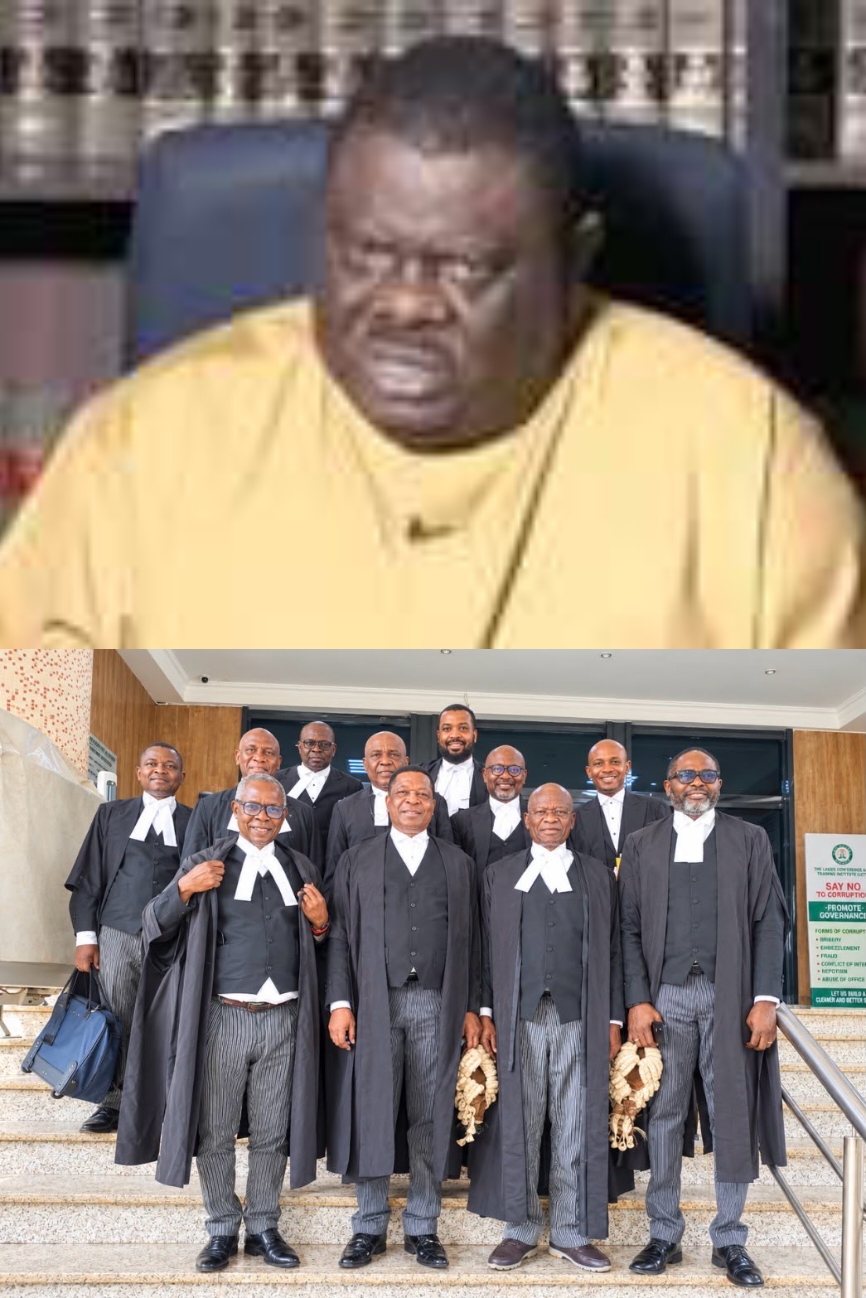
…As Court Reserves Judgment for November 16
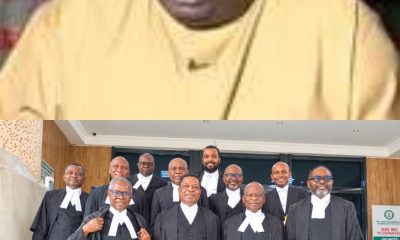
The legal team representing the Peoples Democratic Party (PDP) governorship candidate in Benue State, Chief Michael Kaase Aondoakaa, SAN, has urged the Federal High Court, Abuja, to dismiss a suit challenging his candidacy for the 2027 governorship election for lack of competence.
Led by Prof. Anthony Ijohor, SAN, the legal team adopted Aondoakaa’s preliminary objection and urged the court to dismiss the suit in limine, arguing that it was not competent to proceed with the case.
The legal team headed by Prof. Ijohor, SAN, comprised other Senior Advocates of Nigeria, including Chiesonu I. Okpoko, SAN, Anthony A. Malik, SAN, and Mohammed Said Diri, SAN. Other members of the team were AT Kohol, Esq, Michael Gusa, Esq, Aleichenu Ogwuche, Esq, AJ Apera, Esq,
Matthew Onoja, Esq, DD Asema, Esq, and HT Ijohor, Esq.
The suit, marked FHC/ABJ/CS/2152/2026, was instituted by David Ejembi, Aondoaver Teryila, Joseph Okpanachi and Benedict Akaazua Orkume against the Independent National Electoral Commission (INEC), the PDP and Aondoakaa.
At the proceedings, counsel to the PDP, CT Mue, Esq, also adopted the party’s preliminary objection and urged the court to strike out the suit for lack of competence.
Counsel to the plaintiffs, Feng Pwajok, Esq, adopted the plaintiffs’ counter-addresses and written address in response to the preliminary objections. Prof. Ijohor subsequently adopted Aondoakaa’s further affidavit and reply on points of law, while Mue adopted the PDP’s reply on points of law.
On the substantive suit, counsel to the plaintiffs adopted their originating processes, while counsel representing the defendants adopted their respective processes. The plaintiffs’ counsel thereafter adopted further affidavits and replies on points of law filed in response to the submissions of the PDP and Aondoakaa.
Following the arguments, the court adjourned the matter to November 16, 2026, for judgment.
Aondoakaa, a former Attorney-General of the Federation and Minister of Justice, is the PDP’s duly nominated governorship candidate for the 2027 Benue State election.
News
“WIKE CANNOT CHOOSE A GOVERNOR FOR US!” — Group Rejects Alleged Rainbow Coalition Plot in Benue
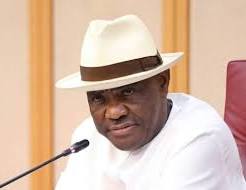
The Benue Alliance for Good Governance and Accountability (BAGA) alleges secret political negotiations involving Wike, Akume and Ortom; insists Governor Alia should be allowed to complete two terms if re-elected.
BAGA has raised concerns over an alleged political arrangement involving prominent political figures, warning against any attempt to influence the outcome of the 2027 Benue State governorship election without the consent of voters.
In a statement signed by its President, Chief John Terfa, the group alleged that the Minister of the Federal Capital Territory (FCT), Nyesom Wike, was involved in discussions with the Secretary to the Government of the Federation (SGF), Senator George Akume, and former Benue State Governor Samuel Ortom over a proposed political alliance reportedly known as the “Rainbow Coalition”.
BAGA further alleged that Wike was seeking political control over five states under the Peoples Democratic Party (PDP) as part of the proposed arrangement to deliver President Bola Tinubu’s re-election in 2027, with Benue reportedly among the states being considered to hand over to Wike through the Rainbow Coalition.
The group also claimed that the alleged discussions were aimed at securing the emergence of former Attorney General of the Federation, Chief Mike Aondoakaa, as a preferred governorship candidate in Benue under the proposed coalition, despite Aondoakaa being banned from holding any political office for life by Supreme Court, due to unprecedented corruption and abuse of office when he was the Attorney General.
BAGA questioned why political actors from outside Benue should have a decisive influence over who governs the state, arguing that the choice of governor must remain with the electorate.
“Benue is not a political commodity to be traded behind closed doors in Abuja. The people of the state must have the final say on who governs them and the direction their state takes,” the group said.
The organisation alleged that Wike had held a series of meetings with Akume and Ortom in recent weeks to discuss the reported arrangement.
It further claimed that tensions arose during one of the alleged meetings at Akume’s residence in Abuja recently, where Wike was said to have questioned why Akume had allowed Governor Hyacinth Alia to become so politically powerful.
It was alleged that Wike demanded that Akume should make sure Governor Alia is not re-elected or declared winner in 2027 whether he wins or not and boast of having the judiciary under his control.
BAGA rejected what it described as an attempt to determine Benue’s political leadership through negotiations among powerful individuals, insisting that Governor Hyacinth Alia should be allowed to complete his constitutionally permitted tenure, if re-elected in 2027.
The group said it believed Alia’s administration was performing well in governance and development, adding that political alliances should not be used to undermine the democratic choices of the electorate.
It also criticised the record of Ortom’s administration and expressed concern about what it described as divisions within Benue’s political space arising from the influence of powerful political interests within and outside the state.
BAGA argued that any coalition seeking to influence the 2027 election should be based on transparent principles, competence, accountability and the interests of the people, rather than personal ambition or political bargaining in Abuja.
The group also challenged political actors seeking the support of President Bola Ahmed Tinubu to pursue their ambitions without attaching conditions that could compromise the democratic choices of the voters.
“Benue people are politically conscious. They will not surrender their future to a coalition of political interests formed without their consent,” the statement said.
The organisation called on voters, civil society groups and political stakeholders to remain vigilant and defend the state’s democratic rights ahead of the 2027 elections.
“Whatever colour it is given; Rainbow, PDP or otherwise, the people will reject any arrangement that threatens their collective interests and development,” BAGA said.
“Benue is not Rivers and we will not allow Wike from Rivers State to choose a governor for us in Benue State,” the group added.
According to BAGA, the central issue is whether political negotiations in Abuja will respect the right of Benue voters to determine their own leadership.
The group maintains that the state’s governorship should not be decided through private agreements among political power brokers, but through a democratic process in which the people have the final say.
The Coalition of Civil Society Organisations Against Corruption (COCSOAC) and 33 partner civil society organisations have expressed confidence in the Independent National Electoral Commission (INEC), urging Nigerians to treat recent reports concerning the commission with caution and rely only on verified facts.
The coalition, in a statement signed and issued in Abuja on Tuesday by its President, Bola Ademola, and National Secretary, Comrade Abdulfatah Aliyu, the group said while INEC must be held accountable where necessary, criticisms of the electoral body should be based on credible evidence, due process and an opportunity for affected parties to respond.
COCSOAC was reacting to an online publication alleging questionable staff redeployments within INEC, including the reported reassignment of a Northern director and the deployment of South-West officials to key departments.
The coalition said it had not independently verified the alleged redeployments or the motives behind them, warning that claims of political interference or ethnic favouritism should therefore not be treated as established facts.
“Assuming without conceding that the redeployments occurred as reported, staff reassignment is a recognised administrative practice that may serve legitimate purposes, including operational efficiency, professional development and improved management,” the group said.
It maintained that the geographical origin or family associations of an INEC official could not, on their own, establish bias or an intention to manipulate elections.
According to the coalition, the more important questions should be whether the decisions complied with applicable rules, received proper authorisation and were based on legitimate administrative considerations.
COCSOAC consequently urged INEC to clarify the circumstances surrounding the reported redeployments where necessary, while appealing to the media and civil society organisations to avoid drawing premature conclusions from unverified reports.
The group also congratulated INEC Secretary, Dr Rose Oriaran Anthony, on her turbaning, describing institutional experience, diligence and administrative continuity as important factors in the management of elections.
It appealed to President Bola Ahmed Tinubu to consider Oriaran Anthony for reappointment as INEC Secretary when her tenure expires, subject to applicable laws and established appointment procedures.
COCSOAC said its appeal was not a demand for an appointment outside the law but was based on the need to preserve institutional knowledge and strengthen coordination ahead of the 2027 general elections.
“Where an experienced incumbent has demonstrated the requisite commitment and competence, continuity may help preserve institutional knowledge, strengthen coordination and support preparations for peaceful, credible and well-organised elections,” the coalition said.
It, however, stressed that any decision on the matter must be guided by legality, INEC’s independence and the integrity of the electoral process.
The coalition called on political actors, civil society organisations, the media and other stakeholders to protect public confidence in Nigeria’s electoral institutions through evidence-based engagement, transparency and respect for due process.
It said its position was not that INEC should be shielded from scrutiny, but that allegations against the commission must be verified and affected institutions given a fair opportunity to respond.
“As the nation approaches another critical electoral cycle, accountability, institutional stability and the rule of law must remain central to the collective pursuit of credible elections,” COCSOAC said.


AONDOAKAA’S LAWYERS URGE COURT TO DISMISS SUIT CHALLENGING HIS GOVERNORSHIP CANDIDACY

“WIKE CANNOT CHOOSE A GOVERNOR FOR US!” — Group Rejects Alleged Rainbow Coalition Plot in Benue

2027: Group Defends INEC, Urges Evidence-Based Scrutiny of Staff Redeployments

-
 Uncategorized6 years ago
FG, states urged to harness flooding for ranching, others with technology – Agbaje
-
 Headlines11 years ago
Breaking: EFCC seals Borno House of Assembly, as Hon members take to their heels
-
 News12 years ago
Nigeria Security Operatives Stage Manhunt For Homosexual Perpetrator
-
 News10 years ago
How 21-year-old Girl fled community over accusation of lesbianism
-
 News11 years ago
Yobe Gov Moves Against Deputy
-
 Opinion7 years ago
7 signs she has friend zoned you
-
Technology5 years ago
Online job placement company headhunts women
-
 Headlines10 years ago
Borno Dep Gov Abducts Another Church Leader