
News
Highlights of The 2025 Budget Proposal

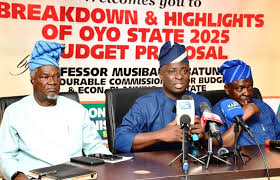
- The 2025 Budget Proposal again reinforces our administration’s roadmap to secure peace, prosperity, and hope for a greater future for our beloved nation. This budget christened, “Budget of Restoration: Securing Peace, Rebuilding Prosperity,” strikes at the very core of our Renewed Hope Agenda and demonstrates our commitment to stabilizing the economy, improving lives, and repositioning our country for greater performance.
- The journey of economic renewal and institutional development, which we began 18 months ago as a nation, is very much underway. It is not a journey of our choosing but one we had to embark on for Nigeria to have a real chance at greatness. I thank every Nigerian for embarking on this journey of REFORMS and TRANSFORMATION with us.
- The road of reforms is now clearly upon us, and as the President of this blessed nation, I know this less-travelled road has not been easy. That there have been difficulties and sacrifices. They will not be in vain. And we must keep faith with the process to arrive at our collectively desired destination.
- We must build on the progress we have made in the past eighteen months in restructuring our economy and ensuring it is strong enough to withstand the headwinds of any future shocks of the global downturn.
- The 2025 budget that I present today is one of restoration. It seeks to consolidate the key policies we have instituted to restructure our economy, boost human capital development, increase the volume of trade and investments, bolster oil and gas production, get our manufacturing sector humming again and ultimately increase the competitiveness of our economy.
- We do not intend to depart from this critical path to strengthen the Nigerian economy. Just as I believe in the resilience of our economy to withstand the current challenges, I also strongly believe in the resilience of the Nigerian people. Again, I summon the unstoppable Nigerian spirit to lead us on as we work to rebuild the fabric of our economy and existence.
- The improvements we witnessed in the 2024 budget have led us into the 2025 budget. The goals of advancing national security, creating economic opportunities, investing in our youthful population, infrastructure development, and national re-orientation form the core of the 2025 budget. But more than that, this will lay a solid foundation for Nigeria’s future growth trajectory.
CURRENT ECONOMIC REALITIES AND PROGRESS
- Distinguished Senate President, Right Honourable Speaker of the House of Representatives, leaders and members of both Chambers of the National Assembly, I report today that our economy is responding positively to stimulus. Our objective is to further stimulate the economy through the implementation of targeted fiscal stimulus packages through public expenditures and specific non-inflationary spending.
- The reforms we have instituted are beginning to yield results. Nigerians will soon experience a better and more functional economy.
- Global economic growth for the outgoing year 2024 was projected at 3.2 percent, and against predictions, our country made significant progress.
o Our economy grew by 3.46 percent in the third quarter of 2024, up from 2.54 percent in the third quarter of 2023.
o Our Foreign Reserves now stand at nearly 42 billion US dollars, providing a robust buffer against external shocks.
o Our rising exports are reflected in the current trade surplus, which now stands at 5.8 trillion naira, according to the National Bureau of Statistics.
- These clear results of gradual recovery, among others, reflect the resilience of our economy and the impact of deliberate policy choices we made from the outset.
2024 BUDGET PERFORMANCE
- I am happy to inform this National Assembly that our administration attained remarkable milestones in implementing the 2024 Budget. In 2024, we achieved:
o 14.55 trillion naira in revenue, meeting 75 percent of our target as of the third quarter.
o 21.60 trillion naira in expenditure, representing 85 percent of our target, also in the third quarter.
- While challenges persist, we improved revenue collection and fulfilled key obligations. The transformational effects of this on our economy are gradually being felt.
PHILOSOPHY OF THE 2025 BUDGET
- The 2025 Budget seeks to:
o Restore macroeconomic stability.
o Enhance the business environment.
o Foster inclusive growth, employment, and poverty reduction.
o Promote equitable income distribution and human capital development.
- Our budgetary allocations reflect the administration’s strategic priorities, especially in the implementation of the Renewed Hope Agenda and its developmental objectives.
2025 BUDGET OVERVIEW
- The numbers for our 2025 budget proposal tell a bold and exciting story of the direction we are taking to retool and revamp the socio-economic fabric of our society.
o In 2025, we are targeting 34.82 trillion naira in revenue to fund the budget.
o Government expenditure in the same year is projected to be 47.90 trillion naira, including 15.81 trillion naira for debt servicing.
o A total of 13.08 trillion naira, or 3.89 percent of GDP, will make up the budget deficit.
- This is an ambitious but necessary budget to secure our future.
- The Budget projects inflation will decline from the current rate of 34.6 percent to 15 percent next year, while the exchange rate will improve from approximately 1,700 naira per US dollar to 1,500 naira, and a base crude oil production assumption of 2.06 million barrels per day (mbpd).
- These projections are based on the following observations:
o Reduced importation of petroleum products alongside increased export of finished petroleum products.
o Bumper harvests, driven by enhanced security, reducing reliance on food imports.
o Increased foreign exchange inflows through Foreign Portfolio Investments.
o Higher crude oil output and exports, coupled with a substantial reduction in upstream oil and gas production costs.
KEY PRIORITIES: REBUILDING NIGERIA
- Our budgetary allocations underscore this administration’s strategic priorities, particularly in advancing the Renewed Hope Agenda and achieving its developmental objectives.
- Highlights of the 2025 Budget Allocations:
- Defence and Security: N4.91 trillion
- Infrastructure: N4.06 trillion
- Health: N2.48 trillion
- Education: N3.52 trillion
- As we embark on implementing the 2025 Budget, our steps are deliberate, our decisions resolute, and our priorities are clear. This budget reflects a renewed commitment to strengthening the foundation of a robust economy, while addressing critical sectors essential for the growth and development we envision.
Securing Our Nation:
- Security is the foundation of all progress. We have significantly increased funding for the military, paramilitary, and police forces to secure the nation, protect our borders, and consolidate government control over every inch of our national territory. The government will continue to provide our security forces with the modern tools and technology they need to keep us safe. Boosting the morale of our men and women in the armed forces will remain our government’s top priority.
- The officers, men, and women of our Armed Forces and the Nigerian Police Force are the shields and protectors of our nation. Our administration will continue to empower them to defeat insurgency, banditry, and all threats to our sovereignty. Our people should never live in fear—whether on their farmlands, highways or cities. By restoring peace, we restore productivity, revive businesses, and rebuild our communities.
Infrastructure Development:
- When we launched the Renewed Hope Infrastructure Development Fund, it was with the conviction that infrastructure remains the backbone of every thriving economy. Under this programme, we are accelerating investments in energy, transport, and public works. By leveraging private capital, we hope to complete key projects that drive growth and create jobs. We have already embarked on key legacy projects: Lagos-Calabar Coastal Highway and Sokoto-Badagry Highway, which will have a huge impact on the lives of our people and accelerate economic output.
Human Capital Development:
- Our people are our greatest resource. That is why we are making record investments in education, healthcare, and social services:
o Our administration has so far disbursed 34 billion naira to over 300,000 students via the Nigeria Education Loan Fund (NELFUND). In the 2025 Budget, we have made provision for 826.90 billion naira for infrastructure development in the educational sector. This provision also includes those for the Universal Basic Education (UBEC) and the nine new higher educational institutions.
o We are convinced that Universal Health Coverage initiatives will strengthen primary healthcare systems across Nigeria. In this way, we have allocated 402 billion naira for infrastructure investments in the health sector in the 2025 Budget and another 282.65 billion naira for the Basic Health Care Fund. Our hospitals will be revitalised with medication and better resources, ensuring quality care for all Nigerians. This is consistent with the Federal Government’s planned procurement of essential drugs for distribution to public healthcare facilities nationwide, improving healthcare access and reducing medical import dependency.
Revitalizing Agriculture:
- Increasing agricultural production is central to our food security agenda, but insecurity has crippled this vital sector. We are supporting our farmers with funding and inputs to reignite productivity. Food security is non-negotiable. In this regard, we are taking bold steps to ensure that every Nigerian can feed conveniently, and none of our citizens will have to go to bed hungry.
- Distinguished Senate President, Right Honourable Speaker of the House of Representatives, leaders and members of both Chambers of the National Assembly and fellow Nigerians, our 2025 budget proposal is not just another statement on projected government revenue and expenditures. It is one that calls for action.
- Our nation faces existential threats from corruption and insecurity and suffers from many past poor choices. These challenges are surmountable when we work collaboratively to overcome them. We must rewrite the narrative of this nation together, with every leader, institution, and citizen playing their part.
- The time for lamentation is over. This is a time to act. A time to support and promote greater investment in the private sector. A time for our civil servants to faithfully execute our policies and programmes. It is a time for every Nigerian to look hopefully towards a brighter future because a new day has dawned for us as a nation.
- As your President, I remain committed and resolute to continue to lead the charge.
- This 2025 budget proposal lays the foundation for peace, prosperity, and much needed hope. It is the plan through which a Nigeria where every citizen can dream, work, and thrive in safety can be achieved.
- It is with great pleasure, therefore, that I lay before this distinguished Joint Session of the National Assembly the 2025 Budget of the Federal Government of Nigeria titled “The Restoration Budget: Securing Peace, Rebuilding Prosperity
News
ENGR. BELLO BABAYO BELLO CELEBRATES GOVERNOR INUWA YAHAYA AT 65, COMMENDS HIS LEGACY OF TRANSFORMATION
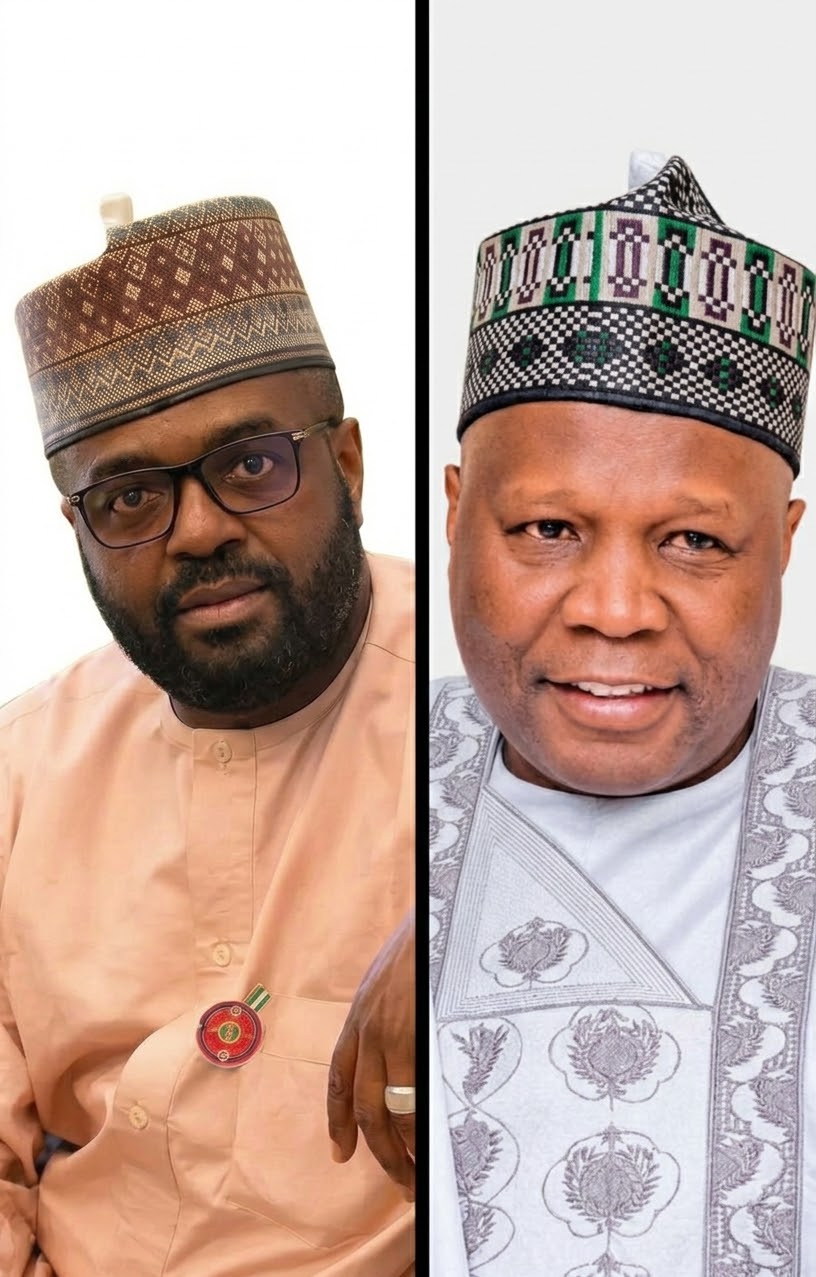
The Executive Director, Network, Niger Delta Power Holding Company (NDPHC), Engr. Bello Babayo Bello, has paid glowing tribute to the Governor of Gombe State, His Excellency Muhammadu Inuwa Yahaya, on the occasion of his 65th birthday, describing him as a visionary leader whose administration has redefined governance and accelerated development across the state.
Engr. Bello, in a congratulatory message made available to journalists, said Governor Inuwa Yahaya’s journey in public service has been marked by discipline, integrity, and an unwavering commitment to the progress of Gombe State and its people.
According to him, the Governor’s leadership has produced measurable improvements in critical sectors of the state’s economy while fostering a culture of transparency, accountability, and prudent resource management.
“As Governor Inuwa Yahaya celebrates his 65th birthday, Gombe State has every reason to celebrate a leader whose vision has continued to shape the future of the state. His commitment to good governance, infrastructural renewal, economic diversification, and human capital development has laid a strong foundation for sustainable growth and prosperity.”
Engr. Bello noted that beyond physical projects and policy achievements, the Governor’s greatest strength lies in his ability to inspire confidence, unite diverse interests, and build consensus around the collective aspirations of the people.
He described Governor Inuwa Yahaya as a statesman whose calm disposition, strategic thinking, and inclusive leadership style have earned him widespread respect across political, business, and community circles.
“The Governor represents a rare blend of experience, wisdom, humility, and courage. His leadership has demonstrated that genuine development is achieved not merely through promises but through deliberate actions and a clear sense of purpose. His accomplishments today stand as enduring testimony to his dedication to public service.”
The NDPHC Executive Director further stated that the Governor’s developmental strides have elevated the profile of Gombe State and strengthened the confidence of investors, development partners, and stakeholders in the state’s future.
He added that Governor Inuwa Yahaya’s administration has become a reference point for effective governance, with policies designed to create opportunities, improve livelihoods, and promote long-term economic stability.
“As he marks this remarkable milestone, we celebrate not only the years he has spent on earth but the positive impact he has made in the lives of countless people. His legacy is one of service, vision, and transformational leadership.”
Engr. Bello prayed for Almighty God to continue to bless the Governor with sound health, greater wisdom, and renewed strength as he continues to serve the people of Gombe State and contribute to Nigeria’s development.
“On behalf of my family, associates, and well-wishers, I extend heartfelt congratulations to His Excellency, Governor Muhammadu Inuwa Yahaya, on his 65th birthday. May the years ahead bring even greater accomplishments, fulfillment, and continued service to humanity.”
Signed:
Engr. Bello Babayo Bello
Executive Director, Network
Niger Delta Power Holding Company (NDPHC)
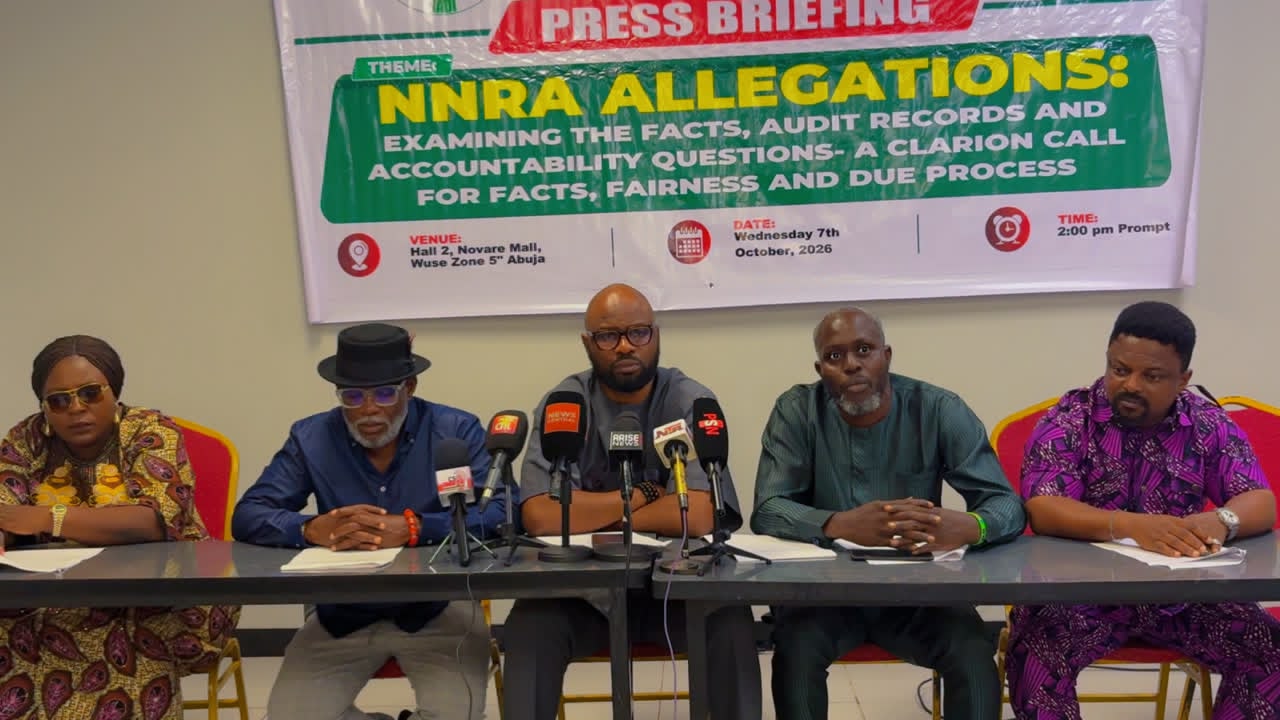
The Integrity Advocacy for Development Initiative (IADI) has called for a thorough, evidence-based examination of allegations of financial misconduct involving the Nigerian Nuclear Regulatory Authority (NNRA), warning against treating audit observations and media reports as established cases of fraud.
IADI Executive Director, Comrade Ofomhi Christopher, made the call on Wednesday at a press briefing in Abuja titled, “On the Allegations Concerning the Nigerian Nuclear Regulatory Authority (NNRA): Facts, Clarifications and the Need for Evidence-Based Accountability.”
The group was reacting to a publication by Secrets Reporters dated October 1, 2026, which alleged that about N6.69 billion was involved in contract fraud and misappropriation at the NNRA.
It also referred to a protest held on October 5 by Global Integrity Watch (GIW) at the NNRA headquarters, where the organisation demanded accountability, responses to audit observations and Freedom of Information requests, as well as changes in the leadership of the regulatory authority.
Christopher said while the allegations deserved scrutiny, they should not be treated as established facts without verification of the underlying records.
According to him, the public deserves to know the specific audit observations, periods and transactions involved, the nature of the contracts, the status of the projects or services, responses provided by the NNRA and whether the issues had been resolved or referred for further investigation.
“An audit observation is a serious matter requiring explanation and verification, but it is not, by itself, a judicial finding of fraud or personal misappropriation,” he said.
The IADI chief also referred to an explanation reportedly provided by the NNRA Director-General concerning the authority’s 2024 capital budget.
He said the explanation put the NNRA’s total 2024 capital budget at about N2.7 billion, comprising approximately N200 million belonging directly to the authority and about N2.5 billion for constituency projects, with an additional N200 million regional project bringing the figure referenced to about N2.9 billion.
Christopher, however, stressed that the explanation should not be regarded as conclusive, urging that it be tested against appropriation documents, budget releases, project records, procurement documents, payment records and audit reports.
“That is how responsible accountability should work: a claim is made, the response is heard, the records are examined, and the evidence determines the conclusion,” he said.
On allegations concerning unexecuted projects, the organisation called for physical verification of the specific projects, while allegations of inflated contract prices should be subjected to scrutiny of contracts, bills of quantities, procurement records and relevant price benchmarks.
It also urged that allegations concerning contractors be examined through relevant procurement and ownership records, while any claim of diversion or misappropriation should be established through the financial trail.
Christopher said where audit authorities had raised observations on expenditure, the public should be informed of the precise observations, the affected institution’s response and the current status of the issues.
The organisation also addressed the October 5 protest by GIW, acknowledging the constitutional right of civil society organisations to peaceful assembly and association under Section 40 of the Constitution.
It, however, urged CSOs to exercise such rights responsibly and within the law.
On Freedom of Information requests, IADI said there should be a distinction between the right to protest and the legal mechanism available where an FOI request is not answered.
The organisation noted that the Freedom of Information Act provides a judicial mechanism for applicants who have been denied access to information, adding that Section 20 allows an applicant to approach the court for a review.
IADI clarified that it was not suggesting that CSOs must obtain a court order before organising peaceful protests.
Rather, Christopher said, where non-compliance with an FOI request was the central grievance, the statutory and judicial mechanisms should be considered alongside legitimate civic action.
“An unanswered FOI request may justify further action to obtain the information. It does not, by itself, establish that fraud, misappropriation or any other wrongdoing has occurred,” he said.
The group also urged organisers of protests at government agencies to take public safety, access to government premises and the safety of protesters, workers and other citizens into consideration.
At the same time, it cautioned government institutions against using the possibility of confrontation as a justification for suppressing lawful civic expression.
“The answer to institutional disagreement should be law, evidence and due process, not intimidation or retaliation,” Christopher said.
He stressed that IADI was neither seeking to shield the NNRA from scrutiny nor dismiss legitimate questions concerning public expenditure at the authority.
He called on relevant audit and oversight bodies to state the status of the observations in question, the responses received from the NNRA and whether the matters had been resolved, sustained or referred for further investigation.
The organisation also encouraged CSOs pursuing accountability to make full use of available legal and institutional mechanisms while retaining their legitimate right to peaceful civic action.
“The public deserves accountability. But the public also deserves accuracy, fairness and evidence.
“A headline is not a verdict. An allegation is not evidence. An audit observation is not automatically a finding of personal guilt,” Christopher said.
He added that public institutions should not expect their expenditure to escape scrutiny merely because questions were raised through the media or civil society.
“Let the records be examined. Let the questions be answered. Let the evidence speak,” he said.
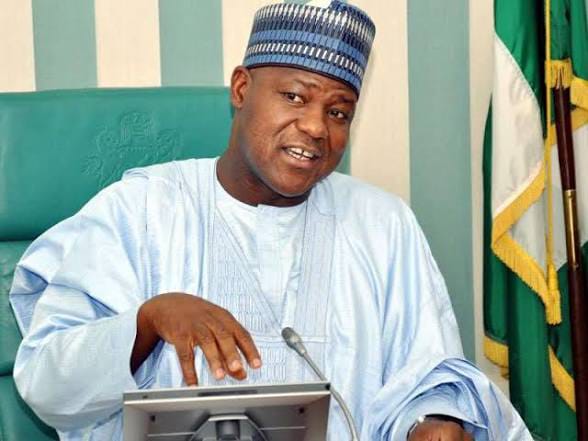
Former Speaker of the House of Representatives and Chairman of the Board of the National Credit Guarantee Company Limited (NCGC), Rt. Hon. Yakubu Dogara, CFR has expressed deep sorrow over the Nigerian Air Force aircraft crash that claimed the lives of 32 persons near Igbokoda, Ondo State. Dogara described the tragedy as a heartbreaking loss to the nation, noting that the deaths of the victims have left a painful void in the country’s defence and security community.
In a statement, the former Speaker extended his condolences to President Bola Ahmed Tinubu, Commander-in-Chief of the Armed Forces, the Nigerian Air Force, and the families of those who perished in the unfortunate incident.
He said the nation shares in the grief of the bereaved families and the Armed Forces at this time of immense sorrow, adding that the sacrifices of those who lost their lives in service to the country will not be forgotten. “The nation mourns with the families of the deceased and stands in solidarity with the Armed Forces during this difficult period,” Dogara stated.
He also commiserated with the Chief of Air Staff, officers and men of the Nigerian Air Force, praying that God grants them the fortitude to bear the painful loss.
According to him, moments such as this call for national unity, reflection and collective support for the families and institutions affected by the tragedy.
Dogara paid tribute to the victims, describing them as patriotic Nigerians whose commitment and service contributed to the security and stability of the nation. He further applauded the efforts of emergency responders, rescue teams and all personnel involved in the aftermath of the crash, commending their courage and professionalism under difficult circumstances.
The former Speaker prayed God to comfort their families, friends and colleagues.
He also offered prayers for the safety and protection of members of the Armed Forces and for continued peace, unity and progress in Nigeria.
The Nigerian Air Force aircraft crashed near Igbokoda, Ondo State, resulting in the death of 32 persons and plunging the nation into mourning. Authorities are yet to make public the cause of the accident as investigations continue.


ENGR. BELLO BABAYO BELLO CELEBRATES GOVERNOR INUWA YAHAYA AT 65, COMMENDS HIS LEGACY OF TRANSFORMATION

Oke-Ode Community Lauds Kwara Gov On Elesa’s Elevation To First Class Status

2026 KWIRS Tax Quiz Competition: Six Schools Emerge As Finalists

-
 Uncategorized6 years ago
FG, states urged to harness flooding for ranching, others with technology – Agbaje
-
 Headlines11 years ago
Breaking: EFCC seals Borno House of Assembly, as Hon members take to their heels
-
 News12 years ago
Nigeria Security Operatives Stage Manhunt For Homosexual Perpetrator
-
 News10 years ago
How 21-year-old Girl fled community over accusation of lesbianism
-
 News11 years ago
Yobe Gov Moves Against Deputy
-
 Opinion7 years ago
7 signs she has friend zoned you
-
Technology5 years ago
Online job placement company headhunts women
-
 Headlines10 years ago
Borno Dep Gov Abducts Another Church Leader