
News
Hostility: Ghana extends olive branch to Nigeria

Following the riot act read by the Federal Government to hostility towards Nigerians in Ghana, the Ghanaian authorities has extended the olive branch, promising commitment to warm relations with Nigeria.

In a statement issued on Sunday, the Ghanaian authority said it would engage the Federal Government of Nigeria with a view to resolve comprehensively and exhaustively matters that have the potential to sour relations between the two countries.
The statement signed by the Ghana Minister of Information, Endkojo Oppong-Nkrumah, was made available to newsmen in Abuja by the Nigeria Ministry of Information and Culture.
It would be recalled that the Federal Government had in a statement on Saturday said it would no longer tolerate the incessant harassment of its citizens in Ghana and the progressive acts of hostility towards the country by Ghanaian authorities.
The statement signed by the Nigeria Minister of Information and Culture, Alhaji Lai Mohammed, noted that the government was urgently considering a number of options aimed at ameliorating the situation.
Mohammed had listed the documented acts of hostility towards Nigerians and the authorities by Ghana in the statement.
Responding to the protest by the Federal government, the Ghanaian authority expressed concerns and denied any act of hostility towards Nigeria and it’s citizens in Ghana as alleged by the Federal government.
The statement reads in full;
“The Government of Ghana notes, with concern, a statement, dated Friday, August 28, 2020, issued by the Ministry of Information and Culture and signed by the Federal Minister, Hon. Lai Mohammed, on behalf of the Federal Government of Nigeria, concerning current relations between Ghana and Nigeria.
“Ghana remains committed to the maintenance of warm relations with all sister nations, particularly, for well-known historical reasons, with the Federal Republic of Nigeria, and will proceed to engage the Federal Government of Nigeria with a view to resolve comprehensively and exhaustively any matters that have the potential to sour relations between the two countries.
Ghana finds it imperative, however, from the onset, to state, for the public record, that the outline of issues by my Nigerian counterpart is not reflective of the developments in Ghana. Any protests, decisions or actions based on these reports will, thus, be unjustified.
We are obliged, therefore, as a first step, to provide our counterparts, as well as the Ghanaian and Nigerian publics, with a more reflective account of events, even as we pursue substantive diplomatic engagements to resolve matters.
(I) Accusation:
The seizure of the Nigerian Mission’s property located at No. 10, Barnes Road, Accra which has been used as diplomatic premises by the Nigerian Government for almost 50 years; and which action, is a serious breach of the Vienna Convention.
Response:
This statement is inaccurate. The transaction was a commercial arrangement between Thomas D. Hardy, a private citizen and the High Commission of Nigeria in Ghana on 23rd October 1959.
The terms of the Commercial Lease expired 46 years ago, without any evidence of renewal by the High Commission of Nigeria in Ghana. The Government of Ghana was not involved in the transaction and has not seized the property in question.
2
(II) Accusation:
Also, even though the main reason given for the seizure of Federal Government property at No. 10 Barnes Road in Accra is the non-renewal of Lease after expiration, the Ghanaian authority did not give Nigeria the right of first refusal or the notice to renew the Lease. By contrast, the lease on some of the properties occupied by the Ghanaian Mission in Nigeria has long expired, yet such properties have not been seized.
Response: The Government of Ghana does not, did not and never owned the land, and has not been involved in the seizure of any property of the Nigerian High Commission in Ghana. The land in question is owned by the Osu Stool and managed by the Lands Commission.
In response to the claim that the lease on some of the properties owned by the Ghana Mission in Nigeria has long expired, it must be noted that the Government acquired a freehold land at Pope John Paul II Street in Abuja in 1989 through a commercial arrangement, and built the current structures on it. The staff of the Ghana High Commission in Abuja have been living there since the construction of the current structures.
(III) Accusation:
Demolition of the Nigerian Mission’s property located at No. 19/21 Julius Nyerere Street, East Ridge, Accra, which constitutes another serious breach of the Vienna Convention.
Response:
This statement is not factual. A search at the Lands Commission indicated that the Nigerian High Commission failed to complete the documentation process after paying for the land in the year 2000 A.D. The High Commission failed to acquire the Lease and Land Title Certificate, which constitute documentation for the said property, as well as a building permit for construction. In Ghana, land is owned not only by the Government, but also by Stools and Families.
The demolition of the property was not carried out by agents of the Ghanaian Government, but by agents of the Osu Stool. Nonetheless, the Government of Ghana, valuing the relations between our two countries, has decided to restore the property, at its own cost, to its original state for the Nigerian High Commission, and has duly communicated same to the Nigerian Authorities. The Government of Ghana has also agreed to facilitate the proper acquisition of title by the Nigerian High Commission, as announced by Ghana’s Minister for Foreign Affairs at the time of the incident.
3
(IV) Accusation:
Aggressive and incessant deportation of Nigerians from Ghana. Between January 2018 and February 2019, Eight Hundred and Twenty-Five (825) Nigerians were deported from Ghana.
Response:
This statement is not factual. In 2019, seven hundred (700) Nigerians, who were found to have been involved in criminal activities such as fraud, prostitution, armed robbery etc., were deported.
(V) Accusation:
Residency permit requirement, for which Ghana Immigration Service has placed huge fees far higher than the fees charged by the Nigerian Immigration Service. These include the compulsory non- citizen ID card (US$120, US$ 60 for yearly renewal); medical examinations, including for COVID-19 which is newly introduced (about US$ 120), and payment for residency permit (US$ 400 compared to the N700,000 being paid by Ghanaians for residency card in Nigeria).
Response:
It must be noted that all foreigners, who apply for resident permit in Ghana, pay same fees as stated above. These fees are not specific to Nigerians.
(VI) Accusation:
“Media war against Nigerians in Ghana. The negative reportage of issues concerning Nigerians resident in Ghana by the Ghanaian media is fuelling an emerging xenophobic attitude against Nigerian traders and Nigerians in general.
The immediate fallout is the incessant harassment and arrest of Nigerian traders and closure of their shops.”
Response:
The statement is not factual. There is no media war against Nigerians in Ghana.
There is also no negative reportage on Nigerian residents in Ghana by Ghanaian media, which could potentially lead to xenophobic attitude towards Nigerians, particularly Nigerian traders in Ghana.
No Nigerian trader has been arrested. The closure of shops was as a result of infractions on Ghanaian laws. Even then, those affected who are not only Nigerians, have been given ample time to regularise their documents. Furthermore, no Nigerian- owned shops are currently closed.
4
On the contrary, the negative reportage has been against the Ghanaian Government from high places, (tweets by Foreign Minister of Nigeria and a Nigerian businessman, who appears to have political interests in Ghana), in Nigeria. This is inconsistent with established practice in our very good relations. The Press Release by the Information and Culture Minister of Nigeria is a clear departure from the manner in which officials of the two countries have related with each other in the past.
(VII) Accusation:
“Nigeria has time after time demonstrated its fidelity to the long cordial relations with Ghana. But indications especially in recent times, are that Nigeria’s stance is now being taken for granted and its citizens being made targets of harassment and objects of ridicule. This will no longer be tolerated under any guise.”
Response: Ghana has always demonstrated her commitment to excellent relations with Nigeria which is evidenced by the manner in which Ghanaian Government officials dealt with recent issues, which have had severe economic impact on our country.
Ghana did not resort to any media war. However, the Ghanaian Ministers of Foreign Affairs and Trade travelled to Abuja to try to resolve diplomatically the issue of closure of Nigerian borders, and to seek safe corridor for ECOWAS Trade Liberalisation Scheme (ETLS) exports from Ghana, all to no avail. It is expected that the response of Nigerian Authorities to situations that evolve in our relations should be guided by the merits of the matter and our mutual interests.
(VIII) Accusation:
That three hundred (300), six hundred (600) and two hundred and fifty (250) shops belonging to Nigerians were closed down in 2018, 2019 and 2020 respectively
Response:
Upon evidence that some individuals, including Ghanaians and non-Ghanaians, had been involved in various forms of trade, without complying with the laws and regulations of Ghana, several engagements and prior advice had been given to encourage compliance.
Ghana’s Minister for Trade and Industry personally intervened to ensure the reopening of closed shops, pending compliance with Ghana’s laws by their operators.
5
Among other corrective measures, the Committee on Foreigners in Retail Trade, comprising representatives of various regulatory agencies and institutions in Ghana, was tasked with the responsibility of conducting inspections of retail shops in designated commercial districts in both Accra and Kumasi to ensure compliance with retail trade laws and regulations.
The compliance exercises conducted in the selected markets revealed gross violations of retail trade laws and regulations by Ghanaians and foreigners, including Nigerians. These violations included tax evasion, immigration offenses, trading in sub-standard products, violation of the Ghana Investment Promotion Centre (GIPC) law, improper registration of firms, under-payment of business operating permits, falsification of documents, among others.
In all cases, non-compliant shop owners are given adequate notice to regularize their documents, before action is taken to close any shop/business.
It is an incontestable fact that there is widespread abuse and disregard for local laws and regulations governing retail trade by some foreigners, including Nigerians, which need to be addressed without discrimination. It is important to note that the compliance exercise under reference is not restricted to either ECOWAS nationals or Nigerians for that matter, but extend to all individuals engaged in retail trade, including Ghanaians.
(IX) Accusation:
Harsh and openly biased judicial trial and pronouncements of indiscriminately long jail terms for convicted Nigerians.
Response:
Ghana’s courts, at all material times, function independently, and with strict respect for the Laws of Ghana, regardless of the nationalities of accused persons. Judges neither convict nor sentence with a bias for or against nationalities. Nigerians and Ghanaians convicted for same offenses are not treated differently.
(X) Accusation:
Outrageous stipulations and amendments of the GIPC Act.
Response:
It is untrue that the law has been amended twice, and, accordingly, there is no 2018 GIPC Act. Further, the statement that a review of the Act has increased the minimum capital base for foreign owned businesses to US$1.00m is false.
Perhaps the reference is to sections 27 (2 & 3) of the GIPC Act and relate solely to persons who are not citizens but want to engage in retail trade or trading activities, which are otherwise restricted exclusively to Ghanaians. Accordingly,
6
‘a person who is not a citizen may engage in a trading Enterprise if that person invests in the Enterprise, not less than One Million United States Dollars in cash or goods and services relevant to the investments. Trading includes purchasing and selling of imported goods and services. The amount does not relate to the broad universe of investors. We are also somewhat astonished to have the laws of a sovereign nation described as outrageous, especially since they have not attracted the rebuff or criticism of any regional organization, especially
ECOWAS.
The Federal Republic, on the other hand, is on record to have taken a number of steps in recent months, in pursuit of her national interests, which have gravely affected other countries in the Region. These include the closure of Nigeria’s Seme Krake Border from August 2019 to date and the issuance of executive orders by Nigeria’s Presidency, preventing foreigners from getting jobs which Nigerians can do, to mention a few. Ghana and other West African countries continue to believe redress to even actions like these can be sought, diplomatically, without resort to media statements and related activities that have the potential to aggravate further the situation.
The aforementioned notwithstanding, the President of the Republic of Ghana, H.E. Nana Addo Dankwa Akufo-Addo, who values very much his excellent relations with the President of the Federal Republic of Nigeria, His Excellency Muhammadou Buhari, will engage President Buhari with a view to develop immediately a framework for validating claims of ill treatment of citizens of either country, and ensure citizens enjoy the full exercise of their rights, while respecting the sovereignty and laws of both countries. Ghana and Nigeria, as they have been doing, must continue to work together for a successful West Africa.(NAN)

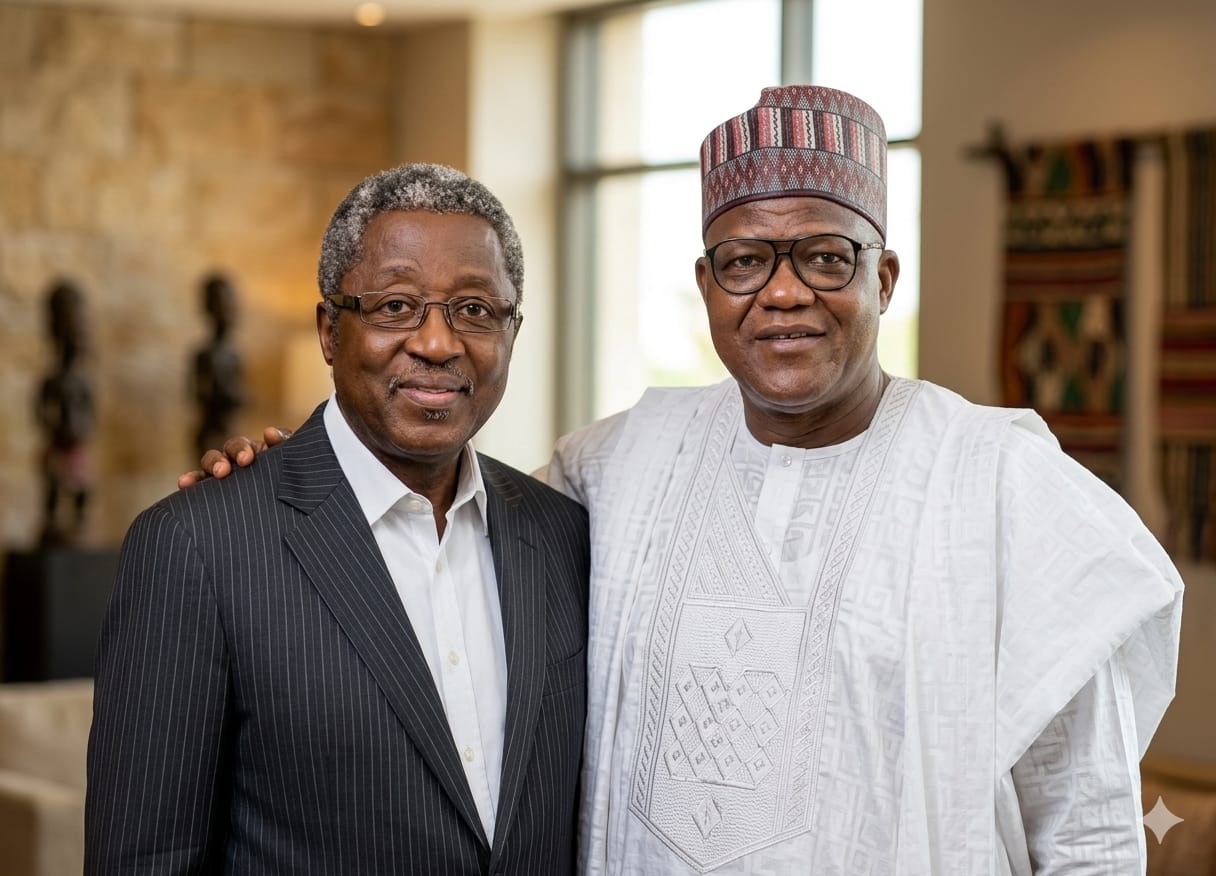
Former Speaker of the House of Representatives and Chairman, Board of Trustees of the National Credit Guarantee Company Limited (NCGC), Rt. Hon. Yakubu Dogara, has joined Nigerians in celebrating Former Governor Jonah Jang, fondly called Baba Jang, as he clocks 82 years.
In a glowing tribute, Dogara described Baba Jang as a visionary leader whose life and service remain a beacon of hope for generations. He noted that Jang’s tenure as Governor of Plateau State was marked by courage, foresight, and an unwavering commitment to peace, unity, and development.
“Baba Jang’s life is a testimony of service and sacrifice. He invested in infrastructure, strengthened institutions, and worked tirelessly to foster unity in Plateau State. His leadership was never about personal gain but about building lasting foundations for progress,” Dogara said.
He further emphasized that Jang’s integrity, resilience, and mentorship have shaped leaders across Nigeria, adding that his legacy continues to inspire beyond the boundaries of Plateau State.
“As he celebrates 82 years, we honor him not just for the offices he has held, but for the enduring impact he has made on countless lives. Baba Jang remains a statesman, a father figure, and a model of quality leadership,” Dogara added.
The tribute underscores Baba Jang’s enduring influence in Nigerian politics and governance, highlighting his role as a leader whose footprints on the sands of time cannot be erased.

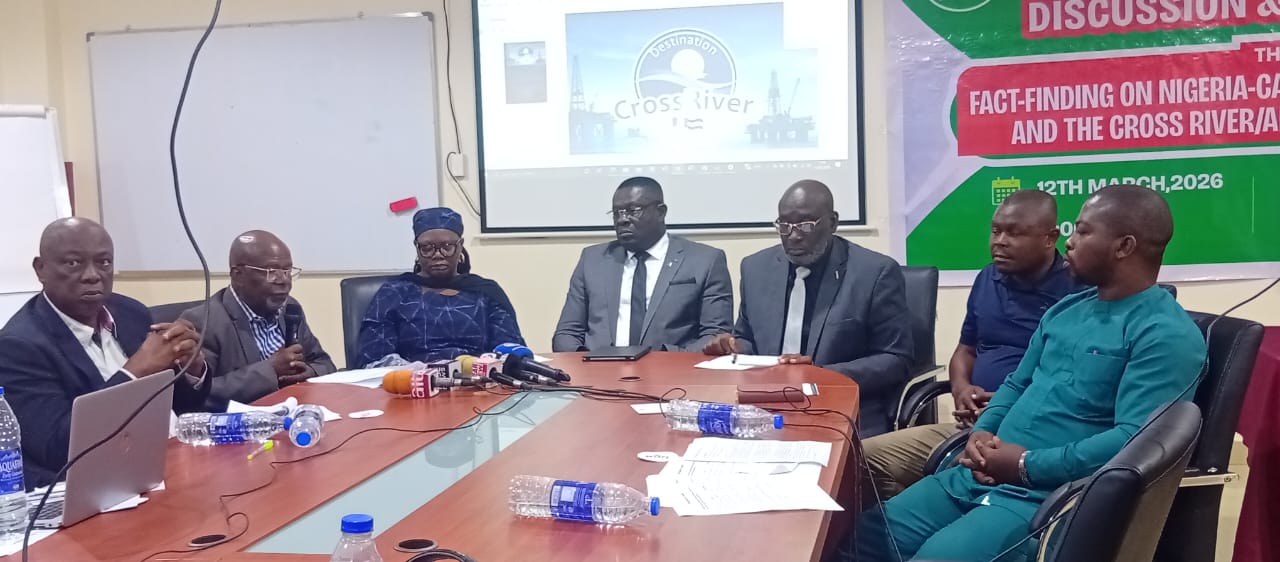
A coalition of Civil Society Organizations (CSOs), maritime experts and policy advocates has raised serious concerns over Nigeria’s maritime boundary management and the allocation of offshore oil wells, calling for urgent intervention by the Federal Government.
The concerns were presented on Thursday in Abuja during a civil society roundtable where the coalition leader, Dr. Gabriel Nwambu, addressed stakeholders and unveiled the communiqué issued after a recent verification mission to Nigeria’s offshore maritime corridor bordering Cameroon and Equatorial Guinea.
The communiqué followed a technical fact-finding and verification exercise conducted at sea on February 28, 2026, focusing on Nigeria’s offshore hydrocarbon blocks OML 114, OML 115 and OML 123 as well as the maritime boundary areas involving Nigeria, Cameroon and Equatorial Guinea.
Dr. Nwambu explained that the mission involved maritime governance stakeholders, mapping professionals and public policy experts who undertook physical observation of the maritime corridor, technical mapping verification and consultations with relevant authorities.
According to the coalition, the mission sought to independently verify the status of Nigeria’s maritime boundaries, offshore hydrocarbon entitlements and the implications of administrative and regulatory decisions affecting the Cross River maritime corridor.
ICJ Judgment Clarified
Presenting the findings, the coalition noted that the 2002 judgment of the International Court of Justice (ICJ) between Nigeria and Cameroon ceded only specific settlements in the southern Bakassi Peninsula — Atabong, Akwabana and Archibong Town — to Cameroon.
The coalition stressed that several areas often assumed to have been ceded were not included in the ruling.
“The Cross River Estuary and the western Bakassi peninsular islands of Dayspring I and II, Abana and Kwa Island were not ceded under the ICJ judgment,” the communiqué stated.
The group further emphasized that Nigeria still maintains maritime boundary continuity between the Cross River Estuary and the Akwayefe River Estuary based on the ICJ cartographic evidence and the physical geography of the region.
Dr. Nwambu also clarified that the Cross River Estuary remains Nigeria’s natural maritime gateway to the Atlantic Ocean and provides Cross River State with direct offshore access.
Questions Over Boundary Management
A major concern raised by the coalition relates to the actions of the National Boundary Commission (NBC) in implementing the Offshore/Onshore Dichotomy Abrogation Act using what it described as a temporary implementation map.
According to the communiqué, the baseline drawn from Tom Shot into the Cross River Estuary effectively closed the estuary’s mouth to the sea, thereby rendering Cross River State non-littoral.
The coalition warned that this development raises serious constitutional, economic and national security concerns.
It further criticized the NBC for failing to demarcate the Nigeria–Cameroon maritime boundary more than two decades after the ICJ ruling, stating that continued reliance on the temporary map could jeopardize Nigeria’s territorial integrity.
The report also alleged that the situation has effectively resulted in the ceding of about 780 hectares of maritime waters within the Cross River Estuary toward the Akwayefe River Estuary to Cameroon.
Oil Wells and Revenue Concerns
Beyond boundary issues, the civil society coalition raised alarm over oil revenue allocation and the management of transboundary oil fields.
According to the findings, the failure of relevant institutions to brief the President on key inter-agency reports could prevent Nigeria from exploiting 49 identified transboundary oil wells located within OML 114 in the Cross River Estuary.
The coalition also raised concerns over alleged financial irregularities relating to the Ekanga and Zafiro transboundary oil fields jointly developed by Nigeria and Equatorial Guinea.
It alleged that more than ₦33 billion may have been approved from the Federation Account in favour of Akwa Ibom State without clear presidential authorization.
The group further questioned whether revenues from the Ekanga and Zafiro fields — estimated at over $8 billion — had been properly remitted into the Federation Account.
Call for Presidential Intervention
To address the concerns, the coalition recommended several urgent measures, including a presidential review of the 2024 and 2025 inter-agency oil verification reports affecting Cross River and Akwa Ibom states.
It also called for the proper demarcation of the Nigeria–Cameroon maritime boundary in line with the ICJ judgment and the establishment of a Presidential Special Investigation Panel to probe the alleged loss of Nigerian maritime waters.
Other recommendations include a forensic audit of revenues from the Ekanga and Zafiro oil fields, investigation into the alleged ₦33 billion payment approvals, and diplomatic engagement with Cameroon to develop transboundary reservoir agreements.
The coalition also urged the Federal Government to restore and recognize Cross River State’s littoral status based on the geographic and legal status of the Cross River Estuary.
National Security Implications
In its concluding remarks, the coalition warned that the issues uncovered during the verification mission have far-reaching implications for Nigeria’s territorial integrity, maritime sovereignty, national security and oil revenue accountability.
Dr. Nwambu called on the President to treat the matter with urgency, stressing that transparent management of maritime boundaries and offshore resources remains critical to Nigeria’s economic stability and geopolitical standing.
The communiqué was jointly signed by representatives of the coalition of civil society organizations, maritime policy experts, technical observers and economic governance accountability groups.
News
Nigerian Youth Storm National Assembly Demands Access to Present Dishonourable Award to Senator

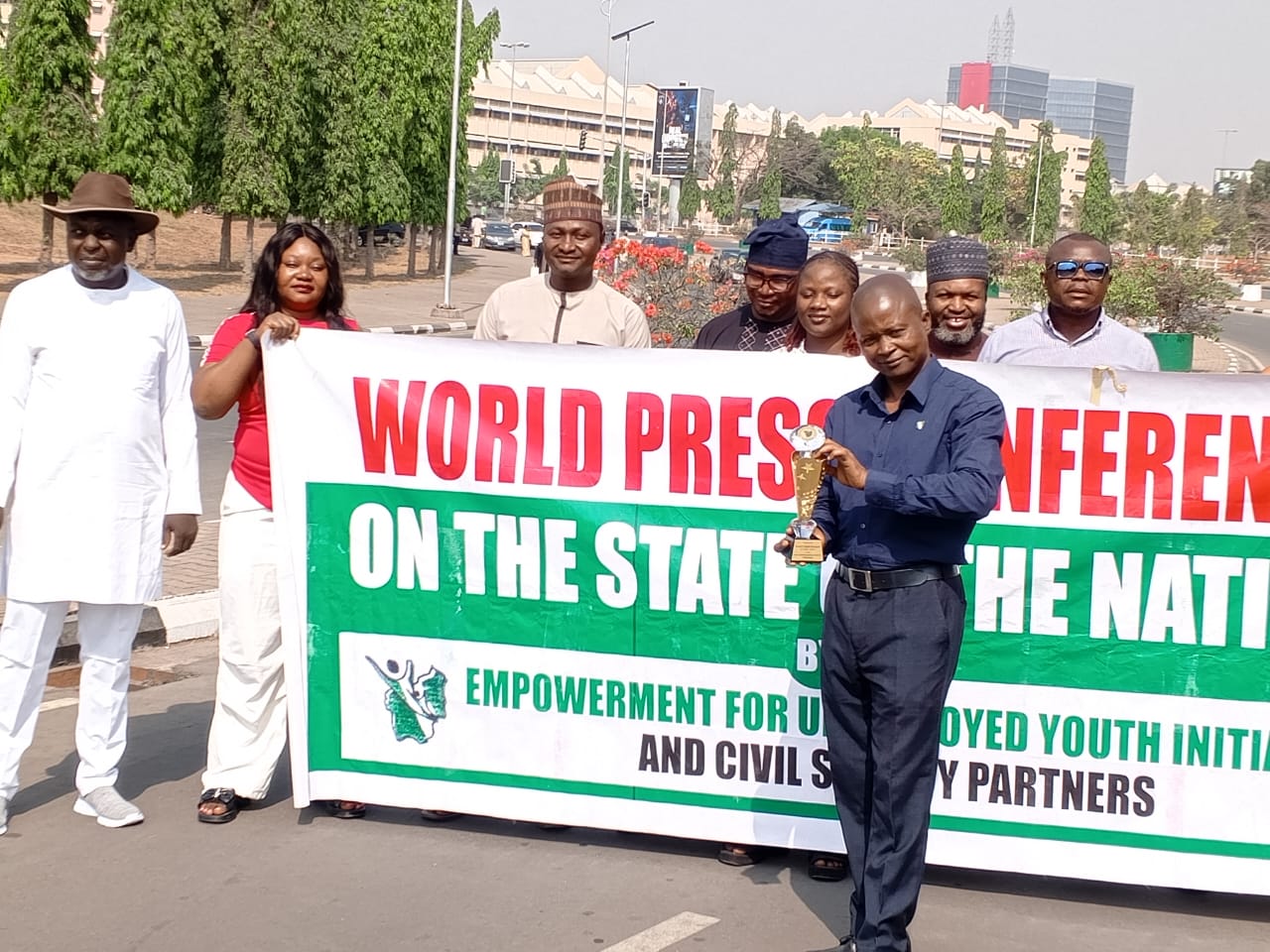
Nigerian Youth under the leadership of Empowerment for Unemployed Youth Initiative (EUYI) on Tuesday stormed the National Assembly to present Senator Olajide Ipinsagba with the Most Dishonourable Senator of the year award.
EUYI previously threatened to present the Senator with the award, citing a plethora infractions and unwholesome dealings especially with his legislative aids and associates.
The group urged the Senate President to grant them access to the hallowed chambers to make the presentation as wake up call to other public servants.
Addressing the press at the National Assembly complex, Comrade Danesi Momoh Prince disclosed that they had gathered as early as 7 am at the National Assembly gate only to discover that the Senate is not sitting and that the embattled Senator was absent despite prior information.
“We’re angry that Senator Olajide Ipinsagba has refused to show up and collect his award for his dishonourable conduct especially as it pertains the exploitation and underemployment of Nigeria youth under his office
“How can a Senator be paying his legislative aid 30,000 naira when the national minimum wage is 70,000 Naira? Is he the only one that needs money? Is it not wickedness to treat unemployed Nigerian youth like that?”, he queried.
The group vowed to go ahead and present the award to the Senator in person, be it in the Senate Chambers or his house. We shall however not give the award to anybody but the senator due to the “seriousness of his offense”


Dogara Celebrates Baba Jang at 82, Hails Him as a Visionary Statesman

I’ ll contest for Nasarawa Governor in 2027, says Ombugadu

Oborevwori Hails Traditional Rulers as Pillars of Peace, Development

-
 Uncategorized5 years ago
FG, states urged to harness flooding for ranching, others with technology – Agbaje
-
 Headlines10 years ago
Breaking: EFCC seals Borno House of Assembly, as Hon members take to their heels
-
 News12 years ago
Nigeria Security Operatives Stage Manhunt For Homosexual Perpetrator
-
 News9 years ago
How 21-year-old Girl fled community over accusation of lesbianism
-
 News10 years ago
Yobe Gov Moves Against Deputy
-
 Opinion7 years ago
7 signs she has friend zoned you
-
Technology4 years ago
Online job placement company headhunts women
-
 Headlines10 years ago
Borno Dep Gov Abducts Another Church Leader