
China
Innovation behind less invasive treatment for serious diseases


By Meng Fanzhe, People’s Daily
Can serious illnesses be treated with minimally invasive procedures? Traditional cardiac interventions often rely on X-ray guidance and iodine-based contrast agents, which can pose significant risks to pregnant women and patients with compromised kidney function.
Addressing this clinical limitation, researchers in China have developed an ultrasound-guided percutaneous cardiac procedure. By navigating instruments through the skin using real-time ultrasound imaging, surgeons can perform complex heart treatments without open-chest surgery, radiation exposure, or contrast dyes.
Such advancements not only minimize physical trauma and accelerate patient recovery but also underscore a broader principle: persistent medical challenges frequently serve as catalysts for scientific breakthroughs.
This pattern of constraint-driven innovation extends well beyond healthcare. In densely populated urban areas, engineers have designed vertical-shaft tunnel-boring machines that excavate downward to create underground parking spaces, significantly reducing surface disruption.
Similarly, while seawater holds vast potential for clean hydrogen generation via electrolysis, dissolved salts and impurities typically degrade equipment. By integrating physical separation with electrochemical processes, scientists have engineered a selective membrane that filters out contaminants, enabling direct hydrogen extraction from seawater without prior desalination.
Tackling these multifaceted problems demands interdisciplinary collaboration. By moving beyond established approaches, questioning conventional assumptions, and drawing on knowledge from different disciplines, researchers can open up new paths to innovation.
Translating laboratory breakthroughs into widespread public benefit, however, requires deliberate efforts to ensure accessibility. To expand access to the ultrasound-guided cardiac procedure, developers have integrated the necessary equipment into mobile surgical units. These fully equipped vehicles allow medical teams to deploy advanced care directly to remote communities.
Likewise, precision agriculture in China has been transformed by equipping farm machinery with the BeiDou Navigation Satellite System. Coupled with government subsidies and on-site technical training, this integration ensures that cutting-edge positioning tools are not merely technologically advanced, but practically usable for farmers nationwide.
The gap between a functional prototype and a widely adopted solution is often bridged by cost, training, and service infrastructure. Yet high performance and broad accessibility need not be trade-offs. Designing technologies for usability and equitable distribution is, in itself, a critical form of innovation. When development strategies explicitly incorporate deployment logistics and support, emerging technologies can realize their full societal impact.
Currently, the Percutaneous and Non-Fluoroscopic Procedure is used in nearly 2,000 medical institutions across 72 countries, including the UK, France and Kenya, and has helped treat more than 200,000 patients.
Recognizing its global value, the United Nations has initiated training programs to expand medical expertise and patient access. Addressing a shared global health need, this homegrown Chinese innovation is strengthening China’s medical capabilities while giving other countries more treatment options. This is a concrete contribution to building a global community of health for all.
Advanced technologies can benefit people across national borders. In Rwanda, local technicians who learn to grow mushrooms using Juncao grass go on to share their knowledge with women’s cooperatives and youth groups.
China’s Fengyun meteorological satellites also provide early warnings and disaster prevention services to countries and regions around the world, including developing nations.
Protecting lives, preventing disasters and alleviating poverty are shared aspirations of people around the world. By sharing data and technical standards and training talent, China is extending cooperation beyond technology transfer to helping other countries build the capacity to apply these innovations, giving Chinese innovation greater global significance.
The idea of treating serious illnesses with less invasive methods reminds us that technological progress should start with people’s needs. Innovation can better serve humanity when it dares to explore new approaches, works patiently to lower barriers to access and seeks to benefit others.
Looking ahead, China will continue to turn its strengths in independent innovation into drivers of development and improvements in people’s lives, further strengthening the sci-tech foundations of Chinese modernization and creating more opportunities for the world through its own development.
By Guo Jiping, People’s Daily
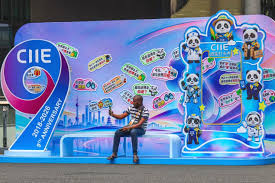
The 9th China International Import Expo (CIIE) opens in Shanghai on Nov. 5 and will run through Nov. 10.
This year’s exhibition space exceeds 370,000 square meters for the first time, drawing participants from 162 countries, regions, and international organizations. More than 4,100 overseas companies are participating, and over 480 products are expected to make their debut at the expo, hitting a record high.
At a time when unilateralism and protectionism continue to disrupt the international economic and trade order, the CIIE, now in its ninth consecutive year, has become an irreplaceable international public good in the global economic and trade system.
A closer look at the exhibition layout of the 9th CIIE reveals six major exhibition areas and an Innovation Incubation Special Section, each with its own highlights.
Pavilions dedicated to medical equipment and health care products, consumer goods, and food and agricultural products have all been expanded. More than 2,000 companies are participating in the event for the first time.
Among the newcomers are the U.S.-based Project Management Institute and Germany’s Caparol, a leading producer of architectural coatings.
For the first time, the CIIE will feature a global consumer brands showcase to help expand and upgrade consumption of quality products.
“The CIIE stands as a clear demonstration of China’s commitment to expand opening up,” said Carl Fey, professor of strategy at BI Norwegian Business School. As he has observed, China’s opening up is geared toward pursuing shared development with the rest of the world, and the CIIE highlights China’s key role in global trade.
Over the years, the range of exhibits at the CIIE has expanded from consumer goods and components to high-end equipment, core technologies, and quality services.
This evolution reflects the deeper integration of global industrial and supply chains. Today, exhibitors, including industry giants, emerging players, small and medium-sized enterprises, and specialized businesses, can all connect with market demand more precisely and explore growth opportunities across the entire industrial chain.
The CIIE is increasingly attracting international buyers. Ahead of this year’s event, trade delegations from Shanghai, Guangdong, and other regions secured a number of major buyers with strong purchasing power, well-established brands, and substantial demand.
Dedicated matchmaking events were held in Egypt, Germany, the UK, and other countries, bringing negotiations closer to China’s trading partners. During the expo, a buyers’ corridor will help connect quality products and services directly with the Chinese market.
In the first three quarters of 2026, China’s imports reached 16.74 trillion yuan (about $2.5 trillion), representing a 22.3 percent year-on-year increase. September alone saw monthly imports surpass 2 trillion yuan for the first time.
The CIIE offers a window into China’s vast domestic market, where growing demand is creating more opportunities for business around the world.
The expo is also becoming an increasingly attractive platform for foreign investors.
Through the CIIE, exhibitors including ZEISS Group, Schneider Electric and AstraZeneca have established R&D centers, regional headquarters and advanced manufacturing bases in China.
As global companies unveil debut products, many are simultaneously accelerating plans to deepen local R&D, increase investment, and consolidate regional operations.
Over the past three years, the number of foreign-invested enterprises in China has grown steadily. Between January and April 2026 alone, more than 3,000 foreign-invested firms announced additional capital commitments.
The CIIE continues to witness how exhibits become marketable products and exhibitors become investors, and more global companies deepen their presence in China and create benefits for the world.
Beyond commerce, the expo is strengthening cultural and people-to-people ties. More than a marketplace for goods and services, it serves as a cross-cultural forum. The distinctive Country Exhibition area hosts performances and exhibitions that offer visitors a rich tapestry of global traditions.
This year introduces several firsts: the Premium Collection will feature intangible cultural heritage workshops, the Gourmet Festival will launch a global tasting zone, and the Arts Carnival will collaborate with China Fashion Week. These initiatives foster mutual understanding and enrich economic partnerships with stronger societal connections.
The CIIE provides a broader multilateral platform for open cooperation. In step with the trend of economic globalization, it has established an authoritative platform for high-level dialogue and multilateral economic and trade cooperation.
For the first time, more than 300 Fortune Global 500 companies and industry leaders are participating. Nearly 200 firms and institutions have attended all nine editions, while five countries, including Moldova and Romania, as well as the United Nations Development Programme, are joining for the first time, demonstrating the strong appeal of openness and cooperation.
China advances high-level opening up with the aim of expanding the pie of cooperation with the rest of the world. Its stories of opening up have sent a message to the world that China is not only the world’s factory but also a global market. It is not only a “super seller” but also a “super buyer.”
The two-way engagement does not marginalize other stakeholders; rather, it creates tangible benefits for neighboring economies and fosters regional prosperity.
At this year’s expo, pavilions dedicated to Asian and African products will be expanded, featuring higher-quality displays and enhanced programming. These enhancements aim to help African countries with diplomatic ties to China leverage tariff-free access and encourage more Global South countries to fully utilize the CIIE.
Stephen Jackson, United Nations Resident Coordinator in China, noted that the CIIE offers developing economies a practical pathway to integrate more deeply into global value chains and share the benefits of trade.
China will harness the momentum of opening up and pool strength for win-win cooperation. It will firmly uphold multilateralism and continue to make the CIIE a success, helping steer economic globalization toward greater openness, inclusiveness, balance and shared benefits.
By Li Zong, People’s Daily
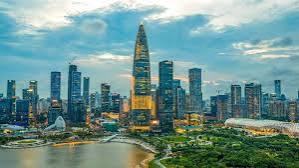
At Qianhai in Shenzhen, south China’s Guangdong province, the bonded maintenance center of German health tech company Siemens Healthineers provides global after-sales support for magnetic resonance imaging (MRI) equipment.
Simultaneously, next-generation digital elevator technology from Finnish manufacturer KONE is quickly reaching markets across the Guangdong-Hong Kong-Macao Greater Bay Area. Foreign banks and financial institutions from the UK, Singapore, and elsewhere are establishing operations in the Qianhai Shenzhen-Hong Kong International Financial City.
With its high degree of openness and strong economic vitality, Shenzhen continues to strengthen its appeal as a global investment destination.
Throughout the 14th Five-Year Plan period (2021-2025), Shenzhen registered 44,000 new foreign-invested enterprises, and the volume of foreign investment actually utilized in the city surpassed 300 billion yuan (about $45.05 billion). More than 340 Fortune Global 500 companies have invested in the city.
The latest figures show that Shenzhen’s actual utilization of foreign investment exceeded 44 billion yuan in the first nine months of this year, up more than 60 percent year on year.
“When I first came here more than a decade ago, workers were still lining the production lines,” said Zhang Hongliang, vice president of operations for Flex’s Industrial Products business in Asia-Pacific, beside an automated production line at Flextronics Electronics Technology (Shenzhen) Co., Ltd.
Today, the facility is the company’s only pilot “future factory” in Asia. Automated equipment, integrated digital systems, and AI algorithms drive its production lines, doubling productivity per employee.
In the early years of reform and opening-up, Shenzhen’s flexible policies as a special economic zone and convenient port access attracted large numbers of foreign manufacturers. In 1987, Flex, a technology company founded in Silicon Valley in the U.S., established its first factory in the Chinese mainland in Shekou, Shenzhen. The company has continued to expand its investment in the city ever since.
“Shenzhen’s highly efficient supply chains, robust digital ecosystem, and proactive government support for technological upgrades have laid a solid foundation for the company’s transition to intelligent manufacturing,” Zhang said. The achievements made in Shenzhen are now being rapidly replicated across Flex’s manufacturing facilities worldwide.
As Shenzhen steps up efforts to build a world-class automotive hub, French auto parts maker Valeo is becoming increasingly integrated into the local automotive industry chain, advancing technological upgrades and optimizing production in intelligent driving and smart cockpit systems.
“China is no longer just the world’s largest automotive market. It has also become a global ‘fitness center’ for the automotive industry and a demanding testing ground,” said Zhou Song, president of Valeo China.
Around 30 percent of the value of intelligent connected vehicles comes from the information technology industry, which aligns closely with Shenzhen’s industrial foundation and innovation ecosystem, Zhou added.
At Siemens Healthineers’ Shenzhen base, more than a dozen MRI systems stand in rows as they undergo final testing before being shipped to Australia, Japan, Thailand and other markets. By the end of 2025, the facility had delivered more than 10,000 MRI and angiography equipment to over 120 countries and regions.
Siemens Healthineers established its Shenzhen operations in 2002. Back then, China’s medical device industry was still in its early stages. An MRI system involves thousands of components, and a local supply chain was yet to be established.
“We have remained committed to localizing our operations and helped develop more than 300 local suppliers. Locally sourced components now account for 80 percent of our finished products,” said Ma Tianshi, general manager of Siemens Shenzhen Magnetic Resonance Ltd.
“We remain committed to investing in Shenzhen and deepening our presence in China, strengthening our intelligent manufacturing capabilities to serve both the Chinese and global markets,” said Ma.
As more foreign companies establish and expand their operations in Shenzhen, the city is evolving from a manufacturing base into an important center for global innovation.
In the first half of this year, foreign investment in actual use in Shenzhen’s high-tech industries accounted for more than 70 percent of the city’s total utilized foreign investment. The city is now home to more than 200 foreign-funded R&D centers, employing over 30,000 researchers.
In March this year, KONE officially opened its southern China headquarters in Qianhai.
“KONE’s presence in China has evolved from sales and manufacturing to R&D and, more recently, innovation,” said Xie Jijun, senior vice president of KONE Greater China. The company is now introducing digital, green and energy-efficient technologies in the Chinese market before taking them global.
The rapid growth of emerging and future industries in Shenzhen is also drawing international financial institutions to the city.
HSBC Bank (China) Co., Ltd. has set up a team in Shenzhen to provide financial services for technology and innovation companies. The team focuses on cross-border fintech innovation in the Greater Bay Area and has launched a range of innovative products that leverage digital technology and are tailored to the needs of technology and innovation companies.
“This reflects our confidence in Shenzhen’s technology and innovation companies and its emerging industries, as well as our commitment to supporting their growth,” said Li Qile, general manager for the Greater Bay Area at HSBC Bank (China) Co., Ltd.
Shenzhen has consistently worked to attract and utilize high-quality foreign investment while further opening up its economy. In December 2025, the city introduced measures to further attract and utilize foreign investment, strengthening policy support for opening up key sectors, improving the business environment and facilitating investment.
Going forward, Shenzhen will actively advance institutional opening-up and develop itself into a high-level international trade hub, said an official from the Investment Promotion Bureau of Shenzhen Municipality.
By Zhang Yunhe, People’s Daily
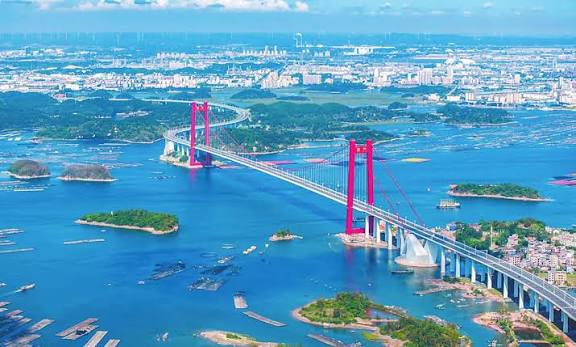
Situated on the Beibu Gulf coast in south China’s Guangxi Zhuang autonomous region, Qinzhou has served as a maritime gateway since ancient times, linking inland waterways with the open sea.
Today, propelled by the expansion of the Beibu Gulf International Gateway Port, the New International Land-Sea Trade Corridor, and the China-Malaysia Qinzhou Industrial Park, the city is forging a dynamic new path toward deeper maritime engagement and global integration.
A modern maritime hub: Streamlining connectivity and multimodal transport
At the automated container terminal of Beibu Gulf Port, cargo operations run continuously around the clock.
Nearby, at a bulk cargo berth, the vessel Dubai Nature — carrying imported soybeans — has just docked. On deck, Bangladeshi crew member Rajib oversees mooring operations. Watching giant vessels pass one after another along the channel, he said: “The port is spacious. Operations run in an orderly manner, and the staff are friendly and responsible. It has left a deep impression on me.”
Qinzhou Port currently has 96 operational berths, including berths capable of accommodating vessels of up to 300,000 tonnes. It operates 92 container shipping routes, connecting with more than 200 ports in over 100 countries and regions worldwide.
In June this year, Moiz Farooq, executive editor of Pakistan Economic Network, visited Qinzhou. At the Smart Port Innovation Center of Beibu Gulf, he watched demonstrations of smart port operations, including the precise dispatching of autonomous container trucks.
“Qinzhou has world-class port facilities, and landmark projects such as the Pinglu Canal give it outstanding advantages in developing foreign trade,” Farooq said.
“I hope to see more Pakistani companies come to Qinzhou and explore cooperation opportunities in areas such as logistics, port development, maritime trade, and the digital economy.”
On September 16, the landmark Pinglu Canal opened for navigation. “The waterway establishes a new link between the inland waterway network and the sea, effectively shortening transport distances and reducing costs. It will also spur industrial clustering and port-related economic development in Qinzhou, enhancing regional competitiveness,” said Philippe Gourbesville, president of the International Association for Hydro-Environment Engineering and Research, after visiting the canal.
Fostering industrial growth and streamlining business services
To support business development, Qinzhou has set up dedicated service teams at both municipal and county levels to assist enterprises in the real economy. Staff members regularly visit businesses and follow up on concerns raised through online platforms, providing ongoing support to help businesses resolve operational difficulties.
Han Seong Woo, a South Korean manager at Guangxi Lingshan Delin Toys Co., Ltd. in Lingshan county, Qinzhou, once encountered difficulties with identity verification when applying to change his company’s business address.
Recognizing the complexity, staff members promptly coordinated across departments and guided him through the necessary steps. What he anticipated would be a lengthy bureaucratic process was resolved efficiently.
Thanks to multiple opening-up platforms, including the China-Malaysia Qinzhou Industrial Park and the Qinzhou Port area of the China (Guangxi) Pilot Free Trade Zone, Qinzhou is now home to 211 foreign-invested enterprises. Foreign-funded projects in light industry, aquatic products and port-related industries are steadily being implemented, injecting fresh impetus into local development.
“Qinzhou offers not only a highly supportive business environment but also a rich historical and cultural heritage. Lingshan county, for example, is home to ancient buildings such as those in the ancient Dalu Village,” Han said.
“As Qinzhou continues to open up, it will attract more South Koreans to work and invest here, further strengthening economic, trade and cultural ties between South Korea and China,” he added.
Bridging cultures through education and people-to-people exchange
Inside a classroom at Beibu Gulf University in Qinzhou, students practice conversational Thai under the guidance of instructor Orawee Wei. Standing beside their desks, she uses expressive gestures to help learners master intonation and rhythm.
“After living in Qinzhou for many years, I have come to regard this place as my second home,” she said.
Over recent years, schools in Qinzhou have established sister-school partnerships with their counterparts in Malaysia and other ASEAN countries, organizing a range of people-to-people exchange activities, including cultural and tourism exchange activities and study programs for young people.
Wei, who grew up in a family of teachers in Nakhon Sawan province, Thailand, and joined Beibu Gulf University in 2020.
“When I first arrived, only 80 students were studying Thai. Today, that number has grown to more than 200, with an increasing number of young Chinese people eager to learn the language,” she said.
Wei teaches specialized courses such as Business Thai and Practical Thai for International Trade. She has seen five cohorts of her students graduate.
“My students are actively involved in Thailand-China economic and trade exchanges. They work as accompanying interpreters, business secretaries and foreign trade accountants for Thai and Chinese companies, helping strengthen economic and trade ties between Qinzhou and ASEAN,” she said.
From an ancient port once bustling with sailing ships to a modern gateway now traversed by giant vessels, Qinzhou has become a key hub of the New International Land-Sea Trade Corridor.
Linking mountains and seas and creating opportunities, the city keeps goods moving, businesses thriving and people connected, offering a vivid example of cooperation and exchanges between China and the rest of the world.


Embracing the trend of openness and pooling strength for win-win cooperation

Foreign companies strengthen their footprint in Shenzhen

Qinzhou: Bridging rivers and seas, opening to the world

-
 Uncategorized6 years ago
FG, states urged to harness flooding for ranching, others with technology – Agbaje
-
 Headlines11 years ago
Breaking: EFCC seals Borno House of Assembly, as Hon members take to their heels
-
 News12 years ago
Nigeria Security Operatives Stage Manhunt For Homosexual Perpetrator
-
 News10 years ago
How 21-year-old Girl fled community over accusation of lesbianism
-
 News11 years ago
Yobe Gov Moves Against Deputy
-
 Opinion8 years ago
7 signs she has friend zoned you
-
Technology5 years ago
Online job placement company headhunts women
-
 Headlines10 years ago
Borno Dep Gov Abducts Another Church Leader