Connect with us

News

Irabor backs review of military laws, unveils book in Abuja

Published

on

Irabor backs review of military laws, unveils book in Abuja


By Sumaila Ogbaje

The Chief of Defence Staff (CDS), Gen. Lucky Irabor, on Thursday expressed support for calls to review the Armed Forces Act to make it more professional and efficient.

Irabor expressed his support, at the unveiling of a book titled, “Fundamental of Military Law and Practice” authored by a retired military officer and lawyer, Maj. Mike Kebonkwu, on Thursday in Abuja.

He said the armed forces was a creation of the Constitution of the Federal Republic of Nigeria, adding that its conduct and activities were anchored on laws.

According to him, military practices, techniques and procedures are formulated from various laws.

“The principal one being the Nigerian constitution and of course, other legal provisions including the international humanitarian law, and international human rights law,” he said.

The defence chief said the book was essential because it would help the military X-ray some of its legal documents and activities within the armed forces.

He said the armed forces was anchored on discipline, adding that all actions or inactions of its personnel were from the point of view that there could not be an effective military without discipline which the law codified.

“I am glad that we are right on course and being a professional armed forces.

“On the need for review, there is no document that is foolproof and we live in a dynamic society, and so there are newer practices and behaviours right now which the drafters of the Armed Forces Act did not contemplate.

“This, we will eventually review to be able to make us more professional, and more efficient as an armed forces,” he said.

Irabor said the book would help the Armed Forces to be able to have effective military justice administration, adding that it would lead the military into some of the reasoning as to how justice administration had been applied in the armed forces.

He said there was also need for non-military lawyers to understand the basis of military laws which was anchored more on discipline to able to help the military maintain its standard.

He urged members of the armed forces to continue to improve on themselves beyond the rudimentary training courses and leverage on the various opportunities that the armed forces provided for them.

Former Chief of Army Staff and Minister of Interior, retired Lt.-Gen. Abdulrahman Dambazau, congratulated the author for the effort towards contributing to the development of military legal system.

Dambazau said the armed forces legal system was developing with remarkable improvement, noting that the author had proven to be efficient in the fields of law.

“So, I want to continue to encourage those who are interested in writing books, or writing articles, journals, such as what has been written, so that other people can learn from their knowledge and experience,” he said.

The author of the book, retired Maj. Kebonkwu, said the book raised a number of issues that needed to be reviewed in the Nigerian military laws.

Kebonkwu said there was need to review the existing military laws so as to do away with the colonial legal system that were still present in the nation’s military legal system.

He said the issue of summary dismissal needed to be reviewed to give any erring personnel opportunity for fair hearing and defend themselves.

According to him, there are two different forms of trial in the military, summary trial and court martial, which are two different things and two different procedures applied.

“For the summary trial, you do not require the presence of a lawyer most of the times. Also, it does not require that thorough detailed investigation by the military police which should be saddled with the responsibility of investigation.

“So, the armed forces empowers the commanding officer to dismiss a soldier summarily and of course, you see when you have that kind of situation, the person is not adequately represented by counsel of his choice as provided by the constitution.

“It is only fair that the person should be given the chance to have a counsel of his choice to defend him,” he said. 
Continue Reading
Click to comment

Leave a Reply

Your email address will not be published. Required fields are marked *

News

AONDOAKAA’S LAWYERS URGE COURT TO DISMISS SUIT CHALLENGING HIS GOVERNORSHIP CANDIDACY

Published

on

…As Court Reserves Judgment for November 16

The legal team representing the Peoples Democratic Party (PDP) governorship candidate in Benue State, Chief Michael Kaase Aondoakaa, SAN, has urged the Federal High Court, Abuja, to dismiss a suit challenging his candidacy for the 2027 governorship election for lack of competence.

Led by Prof. Anthony Ijohor, SAN, the legal team adopted Aondoakaa’s preliminary objection and urged the court to dismiss the suit in limine, arguing that it was not competent to proceed with the case.

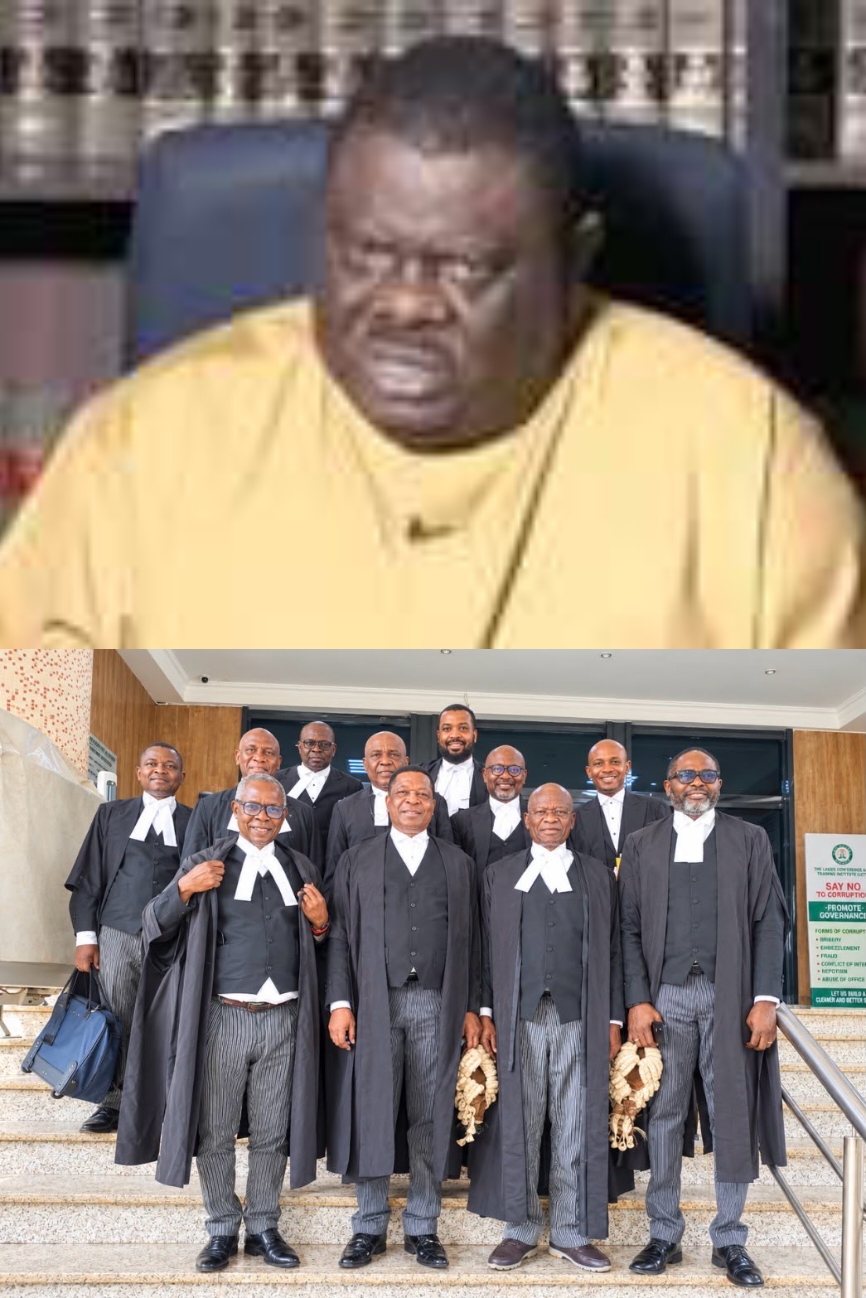
The legal team headed by Prof. Ijohor, SAN, comprised other Senior Advocates of Nigeria, including Chiesonu I. Okpoko, SAN, Anthony A. Malik, SAN, and Mohammed Said Diri, SAN. Other members of the team were AT Kohol, Esq, Michael Gusa, Esq, Aleichenu Ogwuche, Esq, AJ Apera, Esq,
Matthew Onoja, Esq, DD Asema, Esq, and HT Ijohor, Esq.

The suit, marked FHC/ABJ/CS/2152/2026, was instituted by David Ejembi, Aondoaver Teryila, Joseph Okpanachi and Benedict Akaazua Orkume against the Independent National Electoral Commission (INEC), the PDP and Aondoakaa.

At the proceedings, counsel to the PDP, CT Mue, Esq, also adopted the party’s preliminary objection and urged the court to strike out the suit for lack of competence.

Counsel to the plaintiffs, Feng Pwajok, Esq, adopted the plaintiffs’ counter-addresses and written address in response to the preliminary objections. Prof. Ijohor subsequently adopted Aondoakaa’s further affidavit and reply on points of law, while Mue adopted the PDP’s reply on points of law.

On the substantive suit, counsel to the plaintiffs adopted their originating processes, while counsel representing the defendants adopted their respective processes. The plaintiffs’ counsel thereafter adopted further affidavits and replies on points of law filed in response to the submissions of the PDP and Aondoakaa.

Following the arguments, the court adjourned the matter to November 16, 2026, for judgment.

Aondoakaa, a former Attorney-General of the Federation and Minister of Justice, is the PDP’s duly nominated governorship candidate for the 2027 Benue State election.

Continue Reading

News

“WIKE CANNOT CHOOSE A GOVERNOR FOR US!” — Group Rejects Alleged Rainbow Coalition Plot in Benue

Published

on

The Benue Alliance for Good Governance and Accountability (BAGA) alleges secret political negotiations involving Wike, Akume and Ortom; insists Governor Alia should be allowed to complete two terms if re-elected.

BAGA has raised concerns over an alleged political arrangement involving prominent political figures, warning against any attempt to influence the outcome of the 2027 Benue State governorship election without the consent of voters.

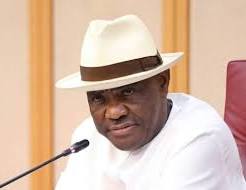
In a statement signed by its President, Chief John Terfa, the group alleged that the Minister of the Federal Capital Territory (FCT), Nyesom Wike, was involved in discussions with the Secretary to the Government of the Federation (SGF), Senator George Akume, and former Benue State Governor Samuel Ortom over a proposed political alliance reportedly known as the “Rainbow Coalition”.

BAGA further alleged that Wike was seeking political control over five states under the Peoples Democratic Party (PDP) as part of the proposed arrangement to deliver President Bola Tinubu’s re-election in 2027, with Benue reportedly among the states being considered to hand over to Wike through the Rainbow Coalition.

The group also claimed that the alleged discussions were aimed at securing the emergence of former Attorney General of the Federation, Chief Mike Aondoakaa, as a preferred governorship candidate in Benue under the proposed coalition, despite Aondoakaa being banned from holding any political office for life by Supreme Court, due to unprecedented corruption and abuse of office when he was the Attorney General.

BAGA questioned why political actors from outside Benue should have a decisive influence over who governs the state, arguing that the choice of governor must remain with the electorate.

“Benue is not a political commodity to be traded behind closed doors in Abuja. The people of the state must have the final say on who governs them and the direction their state takes,” the group said.

The organisation alleged that Wike had held a series of meetings with Akume and Ortom in recent weeks to discuss the reported arrangement.

It further claimed that tensions arose during one of the alleged meetings at Akume’s residence in Abuja recently, where Wike was said to have questioned why Akume had allowed Governor Hyacinth Alia to become so politically powerful.

It was alleged that Wike demanded that Akume should make sure Governor Alia is not re-elected or declared winner in 2027 whether he wins or not and boast of having the judiciary under his control.

BAGA rejected what it described as an attempt to determine Benue’s political leadership through negotiations among powerful individuals, insisting that Governor Hyacinth Alia should be allowed to complete his constitutionally permitted tenure, if re-elected in 2027.

The group said it believed Alia’s administration was performing well in governance and development, adding that political alliances should not be used to undermine the democratic choices of the electorate.

It also criticised the record of Ortom’s administration and expressed concern about what it described as divisions within Benue’s political space arising from the influence of powerful political interests within and outside the state.

BAGA argued that any coalition seeking to influence the 2027 election should be based on transparent principles, competence, accountability and the interests of the people, rather than personal ambition or political bargaining in Abuja.

The group also challenged political actors seeking the support of President Bola Ahmed Tinubu to pursue their ambitions without attaching conditions that could compromise the democratic choices of the voters.

“Benue people are politically conscious. They will not surrender their future to a coalition of political interests formed without their consent,” the statement said.

The organisation called on voters, civil society groups and political stakeholders to remain vigilant and defend the state’s democratic rights ahead of the 2027 elections.

“Whatever colour it is given; Rainbow, PDP or otherwise, the people will reject any arrangement that threatens their collective interests and development,” BAGA said.

“Benue is not Rivers and we will not allow Wike from Rivers State to choose a governor for us in Benue State,” the group added.

According to BAGA, the central issue is whether political negotiations in Abuja will respect the right of Benue voters to determine their own leadership.

The group maintains that the state’s governorship should not be decided through private agreements among political power brokers, but through a democratic process in which the people have the final say.

Continue Reading

News

2027: Group Defends INEC, Urges Evidence-Based Scrutiny of Staff Redeployments

Published

on

The Coalition of Civil Society Organisations Against Corruption (COCSOAC) and 33 partner civil society organisations have expressed confidence in the Independent National Electoral Commission (INEC), urging Nigerians to treat recent reports concerning the commission with caution and rely only on verified facts.

The coalition, in a statement signed and issued in Abuja on Tuesday by its President, Bola Ademola, and National Secretary, Comrade Abdulfatah Aliyu, the group said while INEC must be held accountable where necessary, criticisms of the electoral body should be based on credible evidence, due process and an opportunity for affected parties to respond.

COCSOAC was reacting to an online publication alleging questionable staff redeployments within INEC, including the reported reassignment of a Northern director and the deployment of South-West officials to key departments.

The coalition said it had not independently verified the alleged redeployments or the motives behind them, warning that claims of political interference or ethnic favouritism should therefore not be treated as established facts.

“Assuming without conceding that the redeployments occurred as reported, staff reassignment is a recognised administrative practice that may serve legitimate purposes, including operational efficiency, professional development and improved management,” the group said.

It maintained that the geographical origin or family associations of an INEC official could not, on their own, establish bias or an intention to manipulate elections.

According to the coalition, the more important questions should be whether the decisions complied with applicable rules, received proper authorisation and were based on legitimate administrative considerations.

COCSOAC consequently urged INEC to clarify the circumstances surrounding the reported redeployments where necessary, while appealing to the media and civil society organisations to avoid drawing premature conclusions from unverified reports.

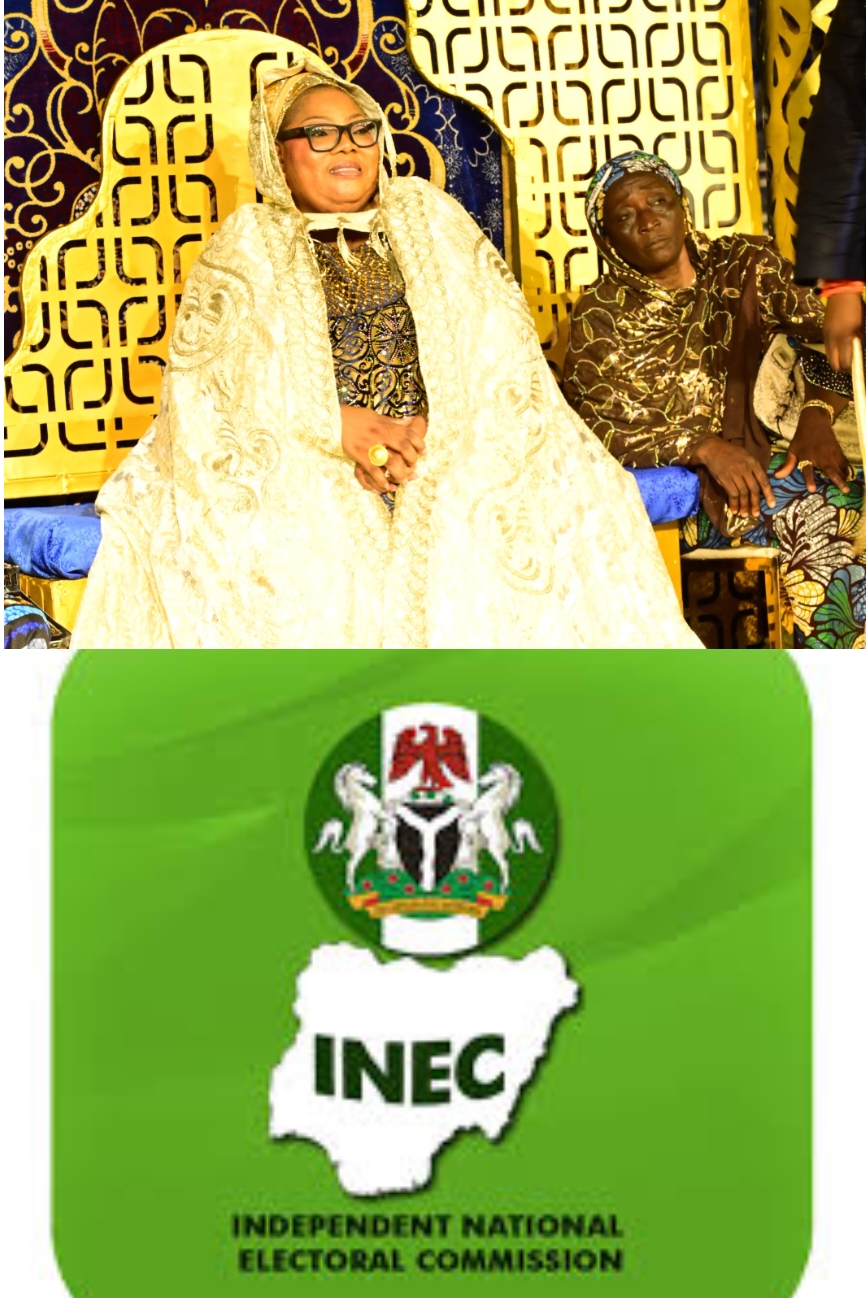
The group also congratulated INEC Secretary, Dr Rose Oriaran Anthony, on her turbaning, describing institutional experience, diligence and administrative continuity as important factors in the management of elections.

It appealed to President Bola Ahmed Tinubu to consider Oriaran Anthony for reappointment as INEC Secretary when her tenure expires, subject to applicable laws and established appointment procedures.

COCSOAC said its appeal was not a demand for an appointment outside the law but was based on the need to preserve institutional knowledge and strengthen coordination ahead of the 2027 general elections.

“Where an experienced incumbent has demonstrated the requisite commitment and competence, continuity may help preserve institutional knowledge, strengthen coordination and support preparations for peaceful, credible and well-organised elections,” the coalition said.

It, however, stressed that any decision on the matter must be guided by legality, INEC’s independence and the integrity of the electoral process.

The coalition called on political actors, civil society organisations, the media and other stakeholders to protect public confidence in Nigeria’s electoral institutions through evidence-based engagement, transparency and respect for due process.

It said its position was not that INEC should be shielded from scrutiny, but that allegations against the commission must be verified and affected institutions given a fair opportunity to respond.

“As the nation approaches another critical electoral cycle, accountability, institutional stability and the rule of law must remain central to the collective pursuit of credible elections,” COCSOAC said.

Continue Reading

Trending

Copyright © 2017 Zox News Theme. Theme by MVP Themes, powered by WordPress.