
News
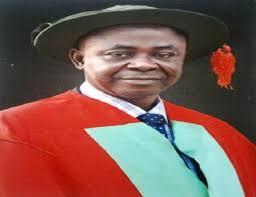
Kogi: Who is afraid of Prof. Stephen Ikani Ocheni as Minister?

By Mohammed Usman
When the Holy Bible declares that the heart of a man is desperately wicked, who would have imagined that such doctrinal revelation could be redefined and taken to a new low by those who physically appear in the cloak of academics but in reality are the very definitions of sadists, traducers, shadow chasers, rabble rousers, chatterboxes, negative propagandists, spin masters and Pull-Him-Down Syndrome? Well, if you are astonished, astounded and at a loss trying to imagine where such people could possibly exist, the truth is that a small enclave of such elements have found a safe haven in Kogi State University.
They are the academic version of the axis of evil whose stock in trade and whose penchant for seeing nothing good in those with intimidating credentials has become an incurable second nature. It is therefore not surprising that as seasoned academics, student unions, socio-cultural organisations, political organisations, reputable diplomats, accomplished personalities at both individual and corporate levels and all men of goodwill spread across the country are busy celebrating the well-deserved nomination of Professor Stephen Ikani Ocheni as Minister of the Federal Republic of Nigeria, these elements turned up with their evil machinations by cooking and circulating frivolous stories on hearing the laudable announcement by the Federal Government. Their intention is to throw mud at the impeccable credentials of Professor Ocheni and create doubt in the minds of well-meaning people. Their spurious, sweeping and unprovable allegations have made their way into the staple of the online version of The News, kogicitynews.com and one mushroom outlet, Amanda.com. And knowing their way, they should be somewhere right now plotting to spread their bag of imaginations to other media organisations in and around the country.
Now, the question is “knowing who they are as elements without iota of credibility, do they really need response?” The answer is YES and NO. For the teeming populace who are already in touch with the commanding height and unblemished records of Professor Ocheni as an accomplished public servant and distinguished academic, the answer is NO. But for Nigerians spread across the country who are not abreast of the true height of the nominee and might be misguided into accepting even an iota of such webs of lies and deceits, the answer is YES. It is for the sake of such good Nigerians who are the targets of these agents of darkness, and particularly the distinguished members of Senate of the Federal Republic of Nigeria before whom the nominee will appear for confirmation hearing, that the truth about the salient issues raised in respect of his academic status and professorial appointment are here put forward for assimilation and documentation. For the purpose of clarity and coherence, the issues raised and characters of those behind them are addressed under three broad headings thus:
THAT PROFESSOR OCHENI DOES NOT HOLD A PHD DEGREE
This is the most fundamental of the claims put up by the axis of evil; and it is a fallacy from the pit of hell. Here are the facts in this regard.
That Professor Ocheni (then Dr. Ocheni) duly obtained his PhD certificate from the University of Nigeria Nsukka in 2004 and he attached a copy of same to his resume in his application for appointment as Professor in Kogi State University. This much is corroborated in The News report thus: Contrary to the fears of ASUU, Ocheni displays a PhD certificate in Pub Admin/ Local Government (Financial Management) from UNN.
That the credentials, including the PhD certificate were considered satisfactory by a prima facie panel of interviewees (the membership of which included 4 Professors) that orally examined him before making recommendations for the appointment.
That these small enclaves operating under the cover of ASUU led by one Dr. S. O Ukwuteno who was pursuing a personal agenda and taking undue advantage of his position then as Chairman ASUU KSU Branch, wrote a letter to the University authority calling for the reversal of the appointment on the ground that the appointee had no PhD as claimed.
That the University on receipt of the ASUU correspondence sent a verification and confirmation request dated 4th February, 2014, to the University of Nigeria Nsukka, and that UNN replied via a letter dated 12th February, 2014 signed by the then Secretary to the School of Post Graduate Studies Dr (Mrs) M. E. Odukwe and addressed to the KSU Registrar confirming that Dr. Stephen Ocheni actually obtained a PhD of the University of Nigeria, Nsukka with effect from March, 2004.
That the axis of evil which held the ASUU-KSU hostage within the period were still not satisfied and in an action akin to having parallel authority in the University, manipulated the Congress into agreeing to set up an investigation panel to verify the PhD status of Professor S.I. Ocheni
That the panel, instead of contacting the University of Nigeria Nsukka which Professor Ocheni claimed awarded him the PhD, claimed to have relied on the Universitys 34th Convocation Ceremony Order of Proceedings, a mere programme of events at any convocation ceremony, and concluded that Professor Ocheni obtained a Doctor of Public Administration (DPA) which they claimed was what they found in the Proceedings without any clarification from the issuing authority (UNN) this was a clear indication that the committee was constituted to blackmail and act the script designed by the axis of evil.
That since the Professor Omada led Committee failed to do proper investigation before turning in the misleading report, the Congress resolved that the matter be laid to rest to avoid exposing the Union to the risk of litigation; and it was a unanimous resolution at that Congress.
That surprisingly, members of Congress were shocked to see a resolution written differently and manipulated as on the appointment of Dr. S. I. Ocheni as a substantive Professor, Exco was directed to carry out a thorough investigation to un-earth his actual qualifications – this manipulation and misrepresentation of resolution sparked a very sharp division among ASUU members leading some concerned members to write a letter to the Chairman dated 2nd February, 2014 signed by 14 members calling on him to properly write and re – circulate the right resolution to avoid losing trust of members and also demanded minutes of the congress to clear the misconception, but both were never made available.
That when it was obvious that reliance on Order of Proceedings as means of verification as contained in the shoddy Committee report was an untenable conclusion, the then Chairman (Dr. Ukwuteno) wrote to UNN under the caption Request For Information On The Status Of The Degree Awarded To Stephen Ikani Ocheni dated 30th May, 2014; five months after Kogi State University had confirmed same.
That the Secretary of the School of Post Graduate Studies of UNN acted on Dr. Ukwutenos letter on the 1st July, 2014 with a comment to the UNN Registrar which reads Please inform the writer that the candidate was duly awarded PhD degree of the University of Nigeria, Nsukka with effect from March, 2004; it means the PhD status was affirmed and a reply sent to Dr. Ukwuteno which he invariably never disclosed to ASUU-KSU Congress because he was acting in bad faith.
That due to his leadership ineptitude and series of attempts to manipulate members of the Congress, Dr. Ukwuteno was overwhelmingly voted out as Chairman in an election conducted on 15th October, 2014 won by the Secretary that served under him, Dr Abdullahi M. Yusuf.
That on assumption of office, the new Chairman Dr. Y. M. Abdullahi wrote to the University of Nigeria Nsukka (precisely on 22nd January, 2015 and addressed to the UNN Registrar under the caption Request For Information On The Status Of The Degree Awarded To Stephen Ikani Ocheni) seeking confirmation of the PhD status of Professor Ocheni Dr. Abdullahi personally delivered the correspondence in company of the then Branch Vice-Chairman (now Acting Chairman), Dr. Gbenga Aina and Branch Secretary, Dr. Mathew Abula.
That the University of Nigeria Nsukka affirmed via a reply dated 28th January, 2015 and signed by Deputy Registrar/Secretary School of Postgraduate Studies, T. Ugwueze that Ocheni obtained a PhD from the University with effect from March 2004. The letter also confirmed earlier correspondence on same to the Registrar of Kogi State University. Again, there is corroboration in The News report, which the “axis of evil” used to spread their falsehood.
From the foregoing, it is clear that three correspondences from the University of Nigeria Nsukka affirming the PhD status of Professor Ocheni were received in Kogi State University. The first was addressed to the Registrar of the institution based on request, the second was addressed to Dr. Ukwuteno (then branch Chairman of ASUU) still on request, and the third was addressed to Dr. Abdullahi (who succeeded Dr. Ukwuteno as Chairman) and still on request. With all these quantum of affirmations, the question that should be on the lips of well-meaning people is what do these dark elements really want?” While there may be some other motives best known to them, what is very clear here however is that they are out on a mission to destroy an innocent person and constitute themselves as alternative authority to Governing Council of Kogi State University, Anyigba, their own employer.
THAT OCHENIS APPOINTMENT AS PROFESSOR WAS INAPPROPRIATE ON GROUND OF DEGREES OBTAINED, TEACHING EXPERIENCE AND ARTICLES PUBLISHED
This claim is laughable as it could only originate from people notorious for raising false alarms. Nevertheless, the facts have to be advanced for the sake of posterity. The issue of the degrees obtained by Professor S.I. Ocheni has been clearly addressed especially as it relates to his PhD status. But since they are making reference to Degrees, it is clear that they are indirectly raising issues in respect of Bachelor and Masters Degrees.
At this point, it is important to stress that Professor Ocheni has never claimed he holds a Bachelor degree of any University. He holds a Higher National Diploma (HND) obtained from Federal Polytechnic, Idah; a Postgraduate Diploma (PGD) and Masters of Business Administration (MBA) from Enugu State University of Science and Technology. It is also inferred from his Curriculum Vitae that in addition to his MBA, the UNN offered him an M.Sc/PhD admission. This is however, in addition to his academic MBA (MBA with thesis) since he does not hold an executive MBA as claimed by the agents of darkness. Meanwhile, it has already been established that Professor Ocheni successfully completed the M.Sc/PhD programme leading to the award of PhD Financial Management in 2004. So what kind of degrees are these agents of darkness looking for? Perhaps, they are looking for the types that exist in their wildest imaginations and which suit their malicious aims.
On the other issues raised in respect of the appropriateness of the appointment, it is tough to know what kind of parameter defines appropriate in the thinking of the Axis of Evil. But if appropriate goes with its conventional meaning in respect of appointments into Nigerian universities, then members of the public are invited to consider the procedures followed and the personalities involved in the appointment of Professor Ocheni and draw conclusion themselves. Here we go:
That on receipt of the application of then Dr. S. I. Ocheni for appointment as Professor, the then Vice-Chancellor of the University, Professor Hassan S. Isah, forwarded the application to the then Dean of the Faculty for his comment.
That based on the positive recommendation from the Dean and cogent accreditation needs in the Department of Accounting, the Vice-Chancellor constituted a prima facie panel headed by then Deputy Vice-Chancellor (Administration), himself a Professor and three other Professors to interview then Dr. Ocheni and one Dr. Iwarere, by taking into cognizance their credentials and determine their suitability or otherwise for the appointments as Professor and Reader respectively.
That the panel after scrutinsing Dr. Ochenis credentials and examining him orally recommended that he should be appointed as Professor subject to external assessment of his publications.
That the then Vice-Chancellor on the ground of the Committees recommendation, and following the existing rules, appointed Dr. Ocheni as Senior Lecturer pending the external assessment of his publications.
That following the rules guiding professorial appointment, the then Dr. Ochenis publications were sent to three different assessors who were Professors of vast experiences and teaching in three different Universities (Federal, State and Private) in the country for assessment.
That all the three assessors carried out their duties and affirmed the publications as worthy of professorial appointment.
That the then Vice-Chancellor, following the rules forwarded the assessment reports to the Appointment and Promotion Committee for consideration.
That the Appointment and Promotion Committee after a careful study of the assessment reports recommended to Council for confirmation of Dr. Ocheni as Professor of Public Sector Accounting of Kogi State University, Anyigba.
That Council, at its Regular Meetings in May 2014 and following the recommendation of the Appointment and Promotion Committee, confirmed the appointment of Stephen Ikani Ocheni as Professor of Public Sector Accounting of the University.
That the personalities involved in the appointment of Professor Ocheni right from the oral interview stage through the assessment of publications to the final stage of Council confirmation included many Professors (drawn from other universities across the country), seasoned universities administrators, legal luminaries, technocrats from relevant ministries and representatives of the National Universities Commission (NUC); all with clouts, experience, integrity and discipline required to detect procedural weaknesses and deficiency in credentials and advise appropriately.
That the same dark elements, even with the full knowledge of the caliber of personalities and thoroughness of stages involved in the appointment had still written series of petitions to the same Council to revert itself even when they had no evidence other than their spurious claims, and that Council had taken pains to reply them on each occasion on the needlessness of their ill-conceived mission.
That dissatisfied, they had approached the then Secretary to the Kogi State Government (himself a Professor and former Vice-Chancellor of the National Open University of Nigeria), Professor Olugbemiro Jegede to help them actualize their evil intention; but the erudite scholar told them in no uncertain terms that the appointment was in order.
That the “axis of evil” would not have any of such wise counsel as they proceeded to the then State House of Assembly Committee on Education where they still hit brick wall for lack of substance.
That the same axis of evil even without the authorization of the branch Congress took their mission to the national body of the ASUU which at a point was misled into directing the branch Congress to ensure that the appointment was reversed; but Congress with full knowledge of information at her disposal on the issue only resolved to carry out a holistic verification and review of credentials and appointments of all her members at a meeting held on 5th May, 2015. The resolution of the said Congress which was attended by one hundred and twenty seven (127) members including all the past Branch Chairmen and the then ASUU Zonal Coordinator, Nsukka Zone, Dr. Josiah Atabor reads thus:
Congress resolved that there should be a comprehensive investigation of staff appointments, qualifications, publications and promotions, since inception with a view to ascertaining the relevance of qualifications, appropriateness of placement and genuiness of publications for fairness and sanity.
But this was scuttled by the axis of evil spearheaded by one of their ring leaders who was part of the decision (his identity will come shortly) because he, like others have skeleton in his cupboard.
That on the issue of authorship of journal articles, there is no rule that delimits the number of publications that should be co-authored and the number that should be based on single authorship; neither does any rule spell out the ceiling to the number of times to co-publish with particular set of authors – in fact, universities advocate co-authorship as a way of encouraging mentorship, diversity of inputs and thoroughness of findings.
That in terms of quality or genuineness of the publications claimed by Professor Ocheni, more than eighty percent of about 44 articles he published in international journals so far are available online for confirmation; just google Stephen Ocheni articles and you would have all you need to confirm.
That the same Professor Ocheni, in spite of the persecution by the axis of evil was overwhelmingly elected Dean of Faculty of Management Sciences and re-elected on the expiration of his first term of two years by members of ASUU in his Faculty, a term he has been serving before his announcement as ministerial nominee. Incidentally, the same man who ASUU found worthy and appointed as chairman of the ASUU KSU 2014 Electoral Committee was also the Chairman of the Electoral Committee that brought on board Professor Ocheni as Dean. The germane question here therefore is on which ASUU platform is the axis of evil fighting the man of honour and integrity; is it the ASUU whose members conducted election and overwhelmingly elected Professor Ocheni as their Dean twice or the ASUU of the conception of the axis of evil?.
In view of the foregoing, it should be clear to all persons of good faith that these dark elements have no other mission than a spirited attempt to soil the integrity and impeccable public records of Professor Stephen Ikani Ocheni and as well disparaging the integrity of the Governing Council with the overall intent of ridiculing the national and international standing of Kogi State University. It is therefore imperative for Nigerians to know who they are and what they are up to in their records as individuals or group for guidance.
UNMASKING THE CHARACTERS OF THE AXIS OF EVIL
Having revealed the hollow foundation of the intention of the axis of evil in Kogi State University, it is important at this stage to reveal the names of the ring leaders and the characters involved in this dark, destructive and, in a way, rudderless mission. It is also important to implant their profiles and records in the sub-consciousness of the unsuspecting members of the public. Through such, the public would be in a position to decide whether such characters have the integrity to question the decision of the Governing Council whose membership constitutes men of repute and distinction or not. The ringleaders and focal point of the axis of evil are one Dr. S.O. Ademiluka of the Department of Religious Studies, Faculty of Arts and Humanities and one Dr. S.O. Ukwuteno of the Faculty of Agriculture. The summary of their characters and activities are unmasked thus:
That neither Dr. S.O. Ukwuteno nor Dr. S. O Ademiluka, who are the ringleaders of the Axis of Evil, is a Professor; and yet they claim to know more than the Professors who did their jobs with due regard to due process and on the premise of their long standing and impeccable experiences.
That when the Congress of ASUU resolved to take a holistic approach in verifying the academic documents of all her members as against selective approach being pursued, Dr Ademiluka, a principal ringleader of the Axis of Evil stood against it and ensured the resolution never saw the light of the day by hiding under a flimsy and untenable reason; this is because he knew that the measure will expose their hollow and dubious academic records.
That the same Dr. Ademiluka who was once ‘dismissed’ as a lecturer from the University of Ilorin was compassionately rehabilitated by Kogi State University pending the outcome of litigations in respect of his dismissal and those of others which was terminated at the Supreme Court. Please note that Dr. Ademiluka never questioned his improper appointment by then Governing Council of Kogi State University, which employed him then even as a dismissed staff against extant rules as he is challenging the decision of the same Governing Council and Senate on matters within their exclusive jurisdictions.
That the same Dr. Ademiluka collected double salaries (from two universities) which the Governing Council of Kogi State University later discovered and ordered that all the amount collected within the period of double payment be deducted in installment pending full recovery of the total. Monthly deduction of two hundred and fifty thousand naira from his salary is currently ongoing. This is one of the unfolding reasons for his ceaseless affronts against the decision of the Governing Council for ridicule. Please note that collection of double salary itself is a gross misconduct punishable by dismissal of the culprit, which the Governing Council is yet to act on.
That the focal point of the Angels of darkness, Dr Ademiluka is combative for getting his just dessert to the extent of writing 63 letters in 30 weeks (an average of 2.1 per week) to the then Vice Chancellor Professor Hassan Isah who had no choice but to accuse Dr. Ademiluka of intent to destabilize the University for some hidden agenda in a reply to him titled: Re: Demands That Required Urgent Attention, reference KSU/VC/ASUU/278/V.IV/122 dated 24th January, 2011.
That the same Dr. Ademiluka was on the verge of being dismissed from Kogi State University in 2012 for his numerous affronts against the Senate of the University just like he is ceaselessly and mischievously attacking the decision of Governing Council now; and other unethical activities only to be saved by the intervention and pleading of the national body of ASUU under the then leadership of Professor Awuzie.
Now the question is: Isnt it natural for the same Dr. Ademiluka the ringleader of the axis of evil, who had instituted litigation at the Kogi State High Court, Lokoja and an ongoing litigation at the Industrial Court, Abuja against the Governing Council of Kogi State University, Anyigba (his employer) go to any length to tarnishing the image of the same organs that validly appointed Professor Ocheni? This is for the reading public to judge.
That the Dark Elements” in Kogi State University have in their rank one Dr. S.O. Ukwuteno, who spent ten (10) years before completing a PhD programme (2003-2013); an indication of academic mediocrity and misfit this is the likely reason for his persistent questioning of Professor Ochenis PhD which was obtained within the minimum period: A kind of I spent ten years to obtain mine, why should yours be within the record period?” Ridiculous!
That the same Dr. S.O. Ukwuteno is notorious for serial and frivolous petition writing against colleagues, Vice-Chancellor, Divisional Police Officer, the State Commissioner of Police, Magistrate Judge and students; simply because they cant allow him actualize dubious intent and as well as the evil plan of his enclave.
That the Management of Kogi State University had at a time quarried Dr. Ukwuteno via a correspondence Ref. KSU/EST/SS/065 dated August 7, 2014 for raising false alarm capable of misleading the Vice Chancellor. The second to the last paragraph of the Query explicitly reads: Your said letter to the Vice Chancellor was therefore misleading, false, malicious and vexatious as it was calculated to cause disunity and harmony between staff and students, as well as to tarnish the good image and the integrity of the University. However, the ASUU national body pleaded on his behalf and the query was withdrawn.
That the same Dr. Ukwuteno however remained unrepentant and continued his malicious and vexatious actions; and the University, based on a panel report, had to suspend him via a letter Ref. NO. KSU/R/EST/EMP/SS/065/Vol.I dated 3rd June, 2015, for raising false alarms and baseless criminalization of the institution.
That the same Dr. Ukwuteno was convicted and sentenced to six months imprisonment with an option of fine by a Court of competent jurisdiction for given False Information with intent to mislead Public servant, and false evidence contrary to section 140 A & B AND 158 (2) OF Penal Code Law in a case between Commissioner of Police Kogi State Versus Dr. Sylvester Osakwe Ukwuteno Case No. ECMC/FIR/25/2015.
That The Nigeria Police Force had, after successful prosecution forwarded a letter titled Feedback on the Criminal Prosecution of Public Servant Dr. Sylvester Osakwe Ukuteno M Ref. AB:3621/KGS/X/Vol.1/114 dated 16th August, 2016 to the Kogi State University, but Governing Council was not in place then to act.
That Dr. Ukwuteno and Dr. Ademiluka cannot lay claim to research published in international or Impact Factor Journals for reference, cannot boast of tangible conferences and seminars attended and cannot boast of being involved in painstaking research and stimulating critical discourse within Nigeria and elsewhere for the past seven (7) years; yet they are fighting a man who is an embodiment of international research and accomplishments.
That a click of Google button will clearly expose Drs. Ademiluka and Ukwuteno as charlatans, nuisance, misfits and academically unproductive, as you can hardly find results of their research exploits published in any reputable outlets (local or international) for contributions to knowledge and development in the last seven (7) years. The only notable exceptions credited to their names are numerous Court cases here and there. Please Google and see!
That the duo (Dr. Ademiluka and Dr. Ukwuteno) who are the ringleaders of the “Axis of Evil” once held the local branch of ASUU hostage as they won elections when their real identities were unknown but Ademiluka lost relevance and Ukwuteno was voted out when members finally discovered their original mission.
Now that the antecedents of those that are after Professor Ocheni are known, the reading public is invited to appreciate that the appointment of Professor Stephen Ikani Ocheni was carried out via a thorough due process in the university and involving several Professors, both internal and external. Obviously, facts will always have overriding strength over conjecture and fiction as the reading public is specifically implored to dissent the views of Dr. Ukwuteno and Dr. Ademiluka who themselves, apart from not being Professors, are persons of shady characters.
Conclusion
It is sad and unfortunate that the commanding records and towering height of Professor Stephen Ikani Ocheni which is a reference point for the young and the old who are in search of exemplary conduct has to be even defended in the first place. This is because his records and conduct as a Chattered Professional in reputable Professional Associations, as a diplomat and a reputable academic who has served as Member of National Universities Commission (NUC) accreditation panels to not less than eight (8) Federal/State universities over the years have remained a signpost of thoroughness, integrity, honesty, accountability, selflessness, mentorship, unparalleled achievements and humility.
But when good men are planning, evil men are plotting because they simply cant do without throwing mud at the unimpeachable records of good men. It then means that the truth about a good man like Professor Ocheni have to come to the public domain from time to time so as to shame those whose best exploits are defined by the litany of evils they plotted. So, with the facts presented above, well-meaning people should now be in a position to strengthen their faith in the person and character of Professor Stephen Ikani Ocheni and consign the axis of evil into the trash can of history where they naturally belong.
While the confirmation of Professor Ocheni as a Minister of the Federal Republic of Nigeria is by the grace of God being awaited, we should all pray that he becomes an instrument through which generations of Nigerians can strengthen their faith in our nation.
Congratulations once more to Professor Stephen Ikani Ocheni.
Mohammed Usman is a researcher

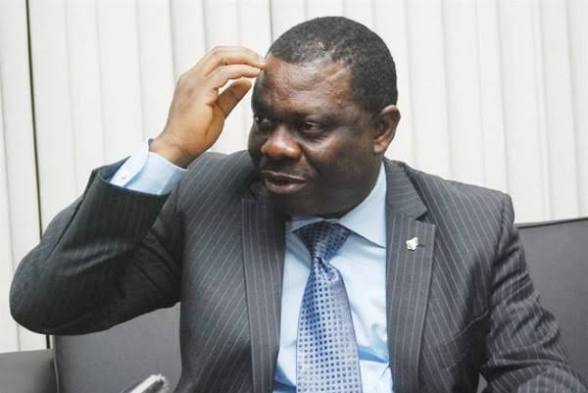
The Frontline runner of the Benue State governorship election come 2027 in Benue State under the platform of the Peoples Democratic Party, PDP and former Attorney General of the Federation, Chief Michael Kaase Aondoakaa, SAN has top the list of the final flagbearers to run for the poll come 2027.
The Benue State governor and candidate of the All Progressives Congress (APC), Rev. Fr. Hyacinth Alia and Prof. Terhemba Shija of the Nigeria Democratic Congress (NDC) have made the final list of governorship candidates released by the Independent National Electoral Commission (INEC) for the February 6, 2027, governorship election.
Other candidates on the list are Herman Iorwase Hembe of the African Democratic Congress (ADC), Nyibiam Kwaghshir of the Action Democratic Party (ADP), Adagba Iorhen of the Allied Peoples Movement (APM), Mercy Ujah Engole of the Action Peoples Party (APP), Dominic Ochenehi of the Democratic Leadership Alliance (DLA), Mathias Terwase Byuan of the Labour Party (LP), Terese Paul Wombo of the National Rescue Movement (NRM), Roseline Ada Chenge of the People’s Redemption Party (PRP), and Simon Ocheme Ogbe of the Zenith Labour Party (ZLP) respectively.
Chief Michael Aondoakaa, SAN, had promised to establish specialised geriatric units in hospitals across the state to provide free basic healthcare and minor surgical procedures for elderly citizens if elected governor in 2027.
He maintained that the the initiative would form part of his administration’s broader agenda on healthcare, security, pensioners’ welfare, infrastructure development and prudent management of public resources.
The PDP candidate said government had both a moral and constitutional responsibility to cater for citizens who had spent their productive years contributing to the development of the state.
According to him, the proposed geriatric units would be specially equipped to provide elderly people with quality and specialised medical care in a conducive environment.
He said basic healthcare services and minor surgical procedures would be provided free of charge to senior citizens under the proposed programme.
“We have a duty to care for our elderly people who are in their late 60s, 70s, 80s and older.
“Beyond government responsibility, it is part of our African culture to honour and support those who have worked hard and sacrificed for society. They deserve access to quality healthcare and dignity in old age,” Aondoakaa said.
He said his administration, if elected, would place healthcare and security among its foremost priorities, stressing that the two sectors were fundamental to the wellbeing and development of the state.
“Our healthcare system must be responsive to the needs of ordinary people, especially the vulnerable and the elderly.
“At the same time, government must take seriously its responsibility to protect lives and property because security is the foundation of development,” he stated.
On the recurring debate over livestock management and ranching in the state, Aondoakaa maintained that ranching should primarily remain a private business venture, with government creating the necessary environment for private investors and livestock owners to operate.
“Ranching is a private enterprise. Government’s role is to create an enabling environment, not to take over the business itself,” he said.
The PDP candidate also expressed concern over the hardship faced by retired civil servants in the state, particularly those affected by outstanding pensions and gratuities.
Aondoakaa argued that workers who dedicated several decades to the service of the state should not face hardship and uncertainty after retirement.
“Those who spent their productive years serving the state should not be abandoned in retirement.
“Pensioners are entitled to their benefits and should be treated with dignity and respect,” he said.
He further argued that the payment of salaries, pensions and gratuities should not be portrayed as extraordinary achievements by any government, describing them as fundamental obligations arising from the relationship between the state and its workforce.
“Salaries and pensions are not favours. They are obligations arising from the relationship between government and its workers.
“Fulfilling those obligations should be routine and not something that is celebrated as an extraordinary achievement,” Aondoakaa added.
On infrastructure, the PDP governorship candidate promised to adopt a more consultative, professionally driven approach to conceiving and executing major government projects.
He said his administration would subject major projects to rigorous scrutiny while involving relevant ministries, technical experts and other stakeholders to ensure that public funds were properly utilised.
“There will be proper consultation before major projects are undertaken. Our focus will be on infrastructure that improves the lives of the people and delivers measurable value for public funds,” he stated.
Aondoakaa also pledged to make greater use of the expertise and institutional knowledge available within the state’s civil service.
He described career civil servants as a reservoir of technical competence and institutional memory, saying their knowledge should be better utilised in government planning and project implementation.
“Our civil servants possess invaluable knowledge and experience. They understand how government works and should be actively involved in planning and implementing development projects. We must make better use of that expertise,” he said.
The former Attorney General said his administration would also prioritise policies capable of translating public resources into tangible improvements in the lives of residents.
News
ENGR. BELLO BABAYO BELLO CELEBRATES GOVERNOR INUWA YAHAYA AT 65, COMMENDS HIS LEGACY OF TRANSFORMATION
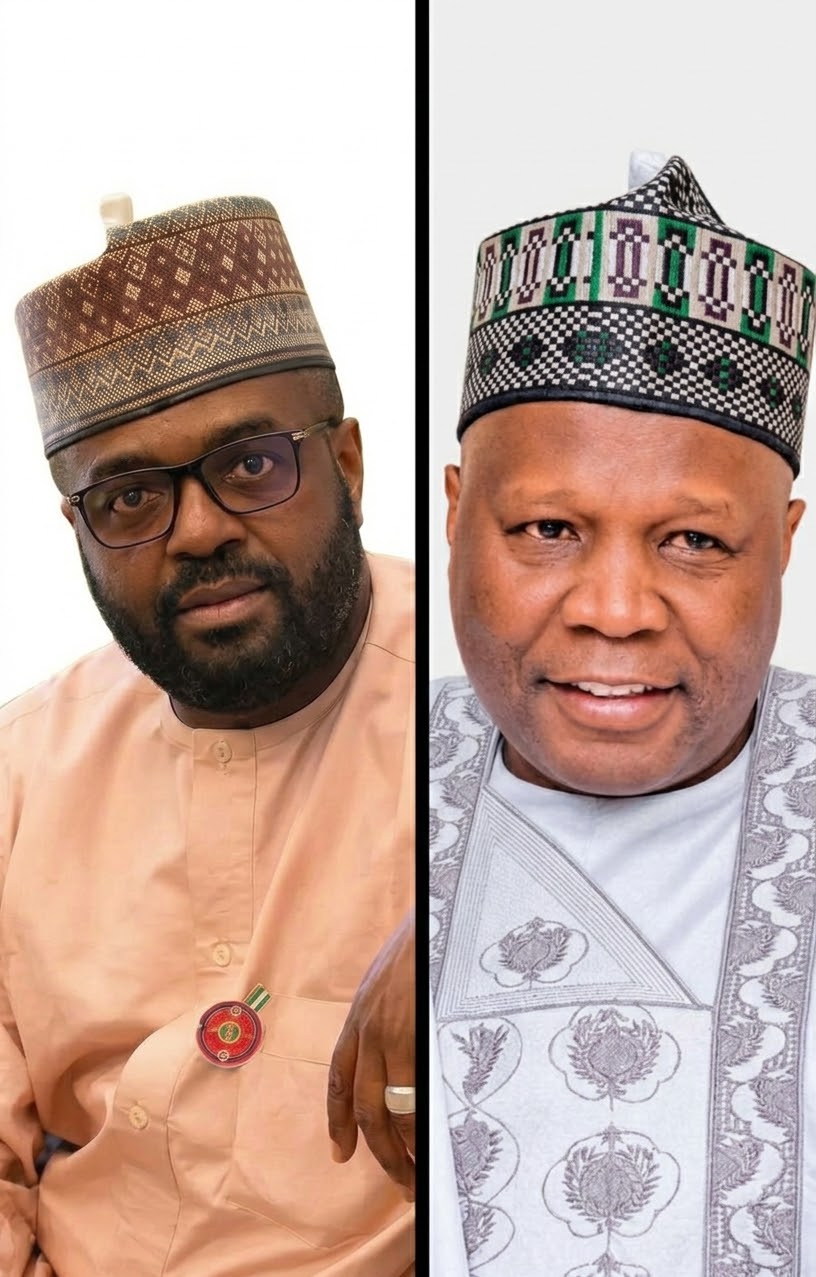
The Executive Director, Network, Niger Delta Power Holding Company (NDPHC), Engr. Bello Babayo Bello, has paid glowing tribute to the Governor of Gombe State, His Excellency Muhammadu Inuwa Yahaya, on the occasion of his 65th birthday, describing him as a visionary leader whose administration has redefined governance and accelerated development across the state.
Engr. Bello, in a congratulatory message made available to journalists, said Governor Inuwa Yahaya’s journey in public service has been marked by discipline, integrity, and an unwavering commitment to the progress of Gombe State and its people.
According to him, the Governor’s leadership has produced measurable improvements in critical sectors of the state’s economy while fostering a culture of transparency, accountability, and prudent resource management.
“As Governor Inuwa Yahaya celebrates his 65th birthday, Gombe State has every reason to celebrate a leader whose vision has continued to shape the future of the state. His commitment to good governance, infrastructural renewal, economic diversification, and human capital development has laid a strong foundation for sustainable growth and prosperity.”
Engr. Bello noted that beyond physical projects and policy achievements, the Governor’s greatest strength lies in his ability to inspire confidence, unite diverse interests, and build consensus around the collective aspirations of the people.
He described Governor Inuwa Yahaya as a statesman whose calm disposition, strategic thinking, and inclusive leadership style have earned him widespread respect across political, business, and community circles.
“The Governor represents a rare blend of experience, wisdom, humility, and courage. His leadership has demonstrated that genuine development is achieved not merely through promises but through deliberate actions and a clear sense of purpose. His accomplishments today stand as enduring testimony to his dedication to public service.”
The NDPHC Executive Director further stated that the Governor’s developmental strides have elevated the profile of Gombe State and strengthened the confidence of investors, development partners, and stakeholders in the state’s future.
He added that Governor Inuwa Yahaya’s administration has become a reference point for effective governance, with policies designed to create opportunities, improve livelihoods, and promote long-term economic stability.
“As he marks this remarkable milestone, we celebrate not only the years he has spent on earth but the positive impact he has made in the lives of countless people. His legacy is one of service, vision, and transformational leadership.”
Engr. Bello prayed for Almighty God to continue to bless the Governor with sound health, greater wisdom, and renewed strength as he continues to serve the people of Gombe State and contribute to Nigeria’s development.
“On behalf of my family, associates, and well-wishers, I extend heartfelt congratulations to His Excellency, Governor Muhammadu Inuwa Yahaya, on his 65th birthday. May the years ahead bring even greater accomplishments, fulfillment, and continued service to humanity.”
Signed:
Engr. Bello Babayo Bello
Executive Director, Network
Niger Delta Power Holding Company (NDPHC)
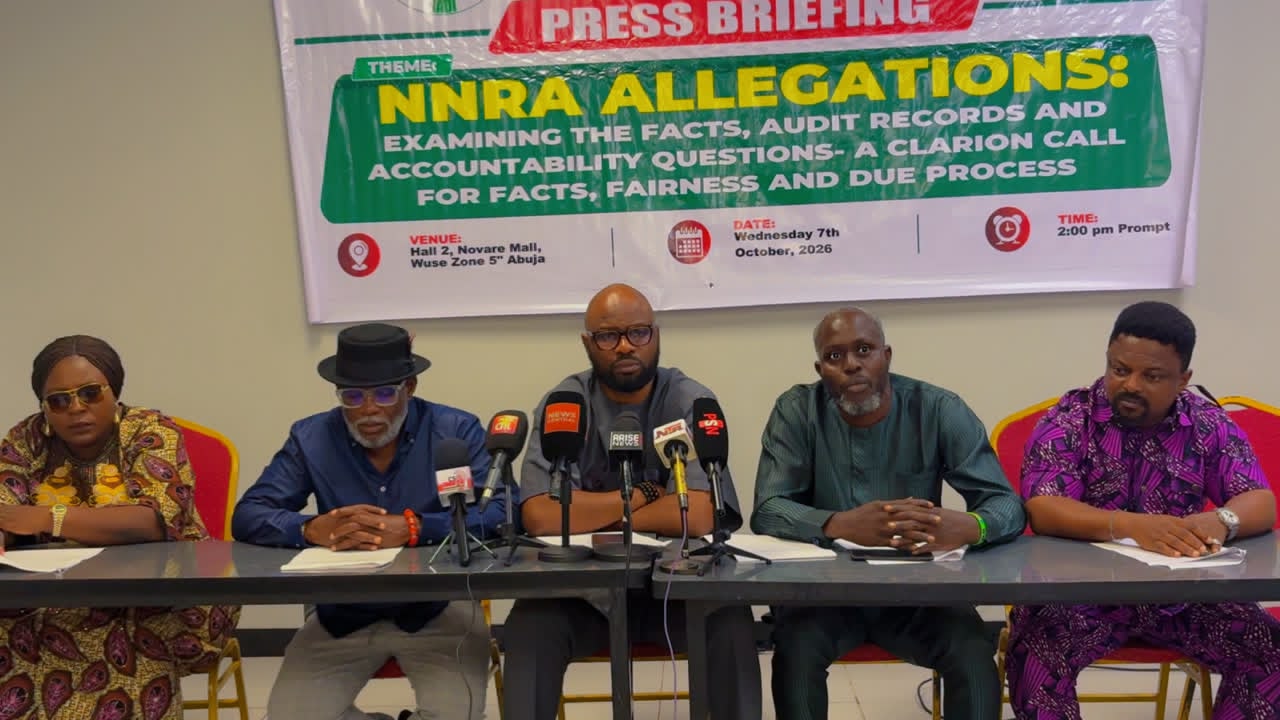
The Integrity Advocacy for Development Initiative (IADI) has called for a thorough, evidence-based examination of allegations of financial misconduct involving the Nigerian Nuclear Regulatory Authority (NNRA), warning against treating audit observations and media reports as established cases of fraud.
IADI Executive Director, Comrade Ofomhi Christopher, made the call on Wednesday at a press briefing in Abuja titled, “On the Allegations Concerning the Nigerian Nuclear Regulatory Authority (NNRA): Facts, Clarifications and the Need for Evidence-Based Accountability.”
The group was reacting to a publication by Secrets Reporters dated October 1, 2026, which alleged that about N6.69 billion was involved in contract fraud and misappropriation at the NNRA.
It also referred to a protest held on October 5 by Global Integrity Watch (GIW) at the NNRA headquarters, where the organisation demanded accountability, responses to audit observations and Freedom of Information requests, as well as changes in the leadership of the regulatory authority.
Christopher said while the allegations deserved scrutiny, they should not be treated as established facts without verification of the underlying records.
According to him, the public deserves to know the specific audit observations, periods and transactions involved, the nature of the contracts, the status of the projects or services, responses provided by the NNRA and whether the issues had been resolved or referred for further investigation.
“An audit observation is a serious matter requiring explanation and verification, but it is not, by itself, a judicial finding of fraud or personal misappropriation,” he said.
The IADI chief also referred to an explanation reportedly provided by the NNRA Director-General concerning the authority’s 2024 capital budget.
He said the explanation put the NNRA’s total 2024 capital budget at about N2.7 billion, comprising approximately N200 million belonging directly to the authority and about N2.5 billion for constituency projects, with an additional N200 million regional project bringing the figure referenced to about N2.9 billion.
Christopher, however, stressed that the explanation should not be regarded as conclusive, urging that it be tested against appropriation documents, budget releases, project records, procurement documents, payment records and audit reports.
“That is how responsible accountability should work: a claim is made, the response is heard, the records are examined, and the evidence determines the conclusion,” he said.
On allegations concerning unexecuted projects, the organisation called for physical verification of the specific projects, while allegations of inflated contract prices should be subjected to scrutiny of contracts, bills of quantities, procurement records and relevant price benchmarks.
It also urged that allegations concerning contractors be examined through relevant procurement and ownership records, while any claim of diversion or misappropriation should be established through the financial trail.
Christopher said where audit authorities had raised observations on expenditure, the public should be informed of the precise observations, the affected institution’s response and the current status of the issues.
The organisation also addressed the October 5 protest by GIW, acknowledging the constitutional right of civil society organisations to peaceful assembly and association under Section 40 of the Constitution.
It, however, urged CSOs to exercise such rights responsibly and within the law.
On Freedom of Information requests, IADI said there should be a distinction between the right to protest and the legal mechanism available where an FOI request is not answered.
The organisation noted that the Freedom of Information Act provides a judicial mechanism for applicants who have been denied access to information, adding that Section 20 allows an applicant to approach the court for a review.
IADI clarified that it was not suggesting that CSOs must obtain a court order before organising peaceful protests.
Rather, Christopher said, where non-compliance with an FOI request was the central grievance, the statutory and judicial mechanisms should be considered alongside legitimate civic action.
“An unanswered FOI request may justify further action to obtain the information. It does not, by itself, establish that fraud, misappropriation or any other wrongdoing has occurred,” he said.
The group also urged organisers of protests at government agencies to take public safety, access to government premises and the safety of protesters, workers and other citizens into consideration.
At the same time, it cautioned government institutions against using the possibility of confrontation as a justification for suppressing lawful civic expression.
“The answer to institutional disagreement should be law, evidence and due process, not intimidation or retaliation,” Christopher said.
He stressed that IADI was neither seeking to shield the NNRA from scrutiny nor dismiss legitimate questions concerning public expenditure at the authority.
He called on relevant audit and oversight bodies to state the status of the observations in question, the responses received from the NNRA and whether the matters had been resolved, sustained or referred for further investigation.
The organisation also encouraged CSOs pursuing accountability to make full use of available legal and institutional mechanisms while retaining their legitimate right to peaceful civic action.
“The public deserves accountability. But the public also deserves accuracy, fairness and evidence.
“A headline is not a verdict. An allegation is not evidence. An audit observation is not automatically a finding of personal guilt,” Christopher said.
He added that public institutions should not expect their expenditure to escape scrutiny merely because questions were raised through the media or civil society.
“Let the records be examined. Let the questions be answered. Let the evidence speak,” he said.

APC BLASTS ATIKU OVER ‘BOLA’ REMARK ABOUT TINUBU

2027: OPCI President Cautions Against Fake Prophesies

THE SLOW DEATH OF DEMOCRACY

-
 Uncategorized6 years ago
FG, states urged to harness flooding for ranching, others with technology – Agbaje
-
 Headlines11 years ago
Breaking: EFCC seals Borno House of Assembly, as Hon members take to their heels
-
 News12 years ago
Nigeria Security Operatives Stage Manhunt For Homosexual Perpetrator
-
 News10 years ago
How 21-year-old Girl fled community over accusation of lesbianism
-
 News11 years ago
Yobe Gov Moves Against Deputy
-
 Opinion7 years ago
7 signs she has friend zoned you
-
Technology5 years ago
Online job placement company headhunts women
-
 Headlines10 years ago
Borno Dep Gov Abducts Another Church Leader