
News
NEDC: A MODEL IN PEACE- BUILDING AND RECONSTRUCTION

By Monday Otairu
Peace is said to be an intangible commodity with a priceless tag, which once shattered, gaining it back requires huge investment in terms of human and material resources. Therefore, absence of peace implies that a given community, region or country has been inflicted with instability particularly if the nature of the conflict is overtly violent in character
In recent years, for a long time was peace seen as a luxury to be sought after in the North Eastern part of Nigeria, particularly Borno State which was hitherto been referred to as the “Home of Peace”. Getting a visitation from peace became a herculean task, and if experienced, it was in no time short-lived. This was a result of different hit caused by the activities of Boko Haram insurgency. Similarly, the issues of insurgency created a new dimension of communal and ethnic clashes between farmers and herdsmen in many regions in the North East, which raised the calls for proactive measures.
We must admit that in all human endeavors, the foundation is critical because when the foundation starts on a faulty note, it won’t stand the test of time.
Observing the toll violent conflicts in this region took on both material and human lives leaving the survivors with scars and gory tales of psychological trauma, a quest for growth and development in the NorthEastern region was set into motion, and the search for peace became a necessity. This necessity saw the birth of a perfect relief to the travailing effect; the birth of North East Development Commission (NEDC), charged with the mandated to coordinate the resettlement, rehabilitation, integration and reconstruction of infrastructure for victims.
It is worthy of note that prior to the advent of the Boko Haram insurgency in the NorthEast, other forms of conflict do occurred on both small and large scale be it communal, ethnic or religious or to a very large extent, the emerging trend of herders/farmers skirmishes which has become a defining moment of social relations between and amongst myriad of ethnic groups.
This brings our focus to the North East Development Commission (NEDC) that was established to lead the reconstruction and development of North-East Nigeria after years of conflict occasioned by the Boko Haram crisis. Many of us had reservations when the NEDC commenced operations. This was hinged on the past experiences where interventionist agencies instead of fulfilling its mandate end up as cash cows for politicians that are not shy to divert public funds to private pockets in the usual manner. Be that as it may, the phenomena of conflicts and indeed the questions of terrorism and insurgency is a global concern, owing to the fact that communities, societies, states and nation-states have experienced or are experiencing one form of conflict or the other, be it an overt or covert conflicts as the case may be.
The genesis of the NEDC success was approach the leadership of NEDC took in creating a holistic and acceptable Master Plan that can be implemented diversely and comprehensively in the North East. The Commission consulted relevant stakeholders in a bottom-up approach, by engaging them on the Master Plan in all the 112 Local Government Areas (LGAs) in the region, as well as with humanitarian, development and peacebuilding actors, representatives of member states, CSOs/CBOs, and private and federal legislators from the zone. This created a surge in the many breakthrough experienced nationwide, leaving everyone to the bewilderment of the “HOW?”.
The case of the NEDC has somewhat proven different from other interventionist agencies in the country. There has been a consistent drive towards achieving its core mandate in rebuilding North East Nigeria that had suffered phenomenal destruction since 2009 when the Boko Haram group began its violent campaign against Nigeria. They recognized transparency as one of the basic principles of good governance by giving the public wide insight in the work of public administration and bodies. It rejuvenated the trust and assurance of the North East region people, they trust of Presidential support in the person of NEDC became solidify once again.
However, one thing that I would harp on is the level of transparency entrenched in its operations, and this is not hinged on hearsay or assumptions, but rather a product of extensive scrutiny of its various interventionist programmes across the states in North-East Nigeria. The level of transparency introduced in the operations of the NEDC is tremendous as well as impressive. In my opinion, this is a function of two factors. One is the world view is on the North East and the desire for normalcy to return, and secondly the need to get things right at the foundation level for subsequent efforts in the future. Whichever of the factors that motivated the director, this shows that he has done well and has earned his price for the right appraisal.
Can a tree stand alone to be called a forest? Definitely no. Alkali, the director of NEDC is a man fill with wisdom, humility, and selflessness. At interval, he always openly acknowledged other brains of support that has been sustaining the NEDC before now. Knowing how important humanitarian duties are in the routine of his commission, he takes no time in acknowledging the support and inspirational guidance of the Minister of Humanitarian Affairs, Hajiya Sadiya Umar Farouq, which has led to numerous modest strides the Commission has accomplished, like humanitarian assistance, recovery, stabilization and peacebuilding. The NEDC is a new agency, and the fact that it has started on this note indicates that in no distance time, its impact would be felt beyond Africa as regards the rebuilding of North-East Nigeria in a well reformed habitable settlement.
It can be obviously stated that the crisis in North-East Nigeria that came with its attendant loss of lives, destruction of properties and displacement of thousands of people has been greatly managed and subdued, leaving its after effects less visible.
NEDC has set the pace of positive challenge to other public office holders in the country towards Peace- building, and the entrenchment of transparency in their operations using the NEDC model. I would implore this other public officers to take a great study of The North East Development Commission, to learn the ropes of their many strategies used in implementing groundbreaking success.
For a fact, it’s no doubt that NEDC has since become a reference point for accountability and transparency for other interventionist agency. They create the flow, while others follow.
Otairu wrote this piece from University of Maiduguri.
News
ENGR. BELLO BABAYO BELLO CELEBRATES GOVERNOR INUWA YAHAYA AT 65, COMMENDS HIS LEGACY OF TRANSFORMATION
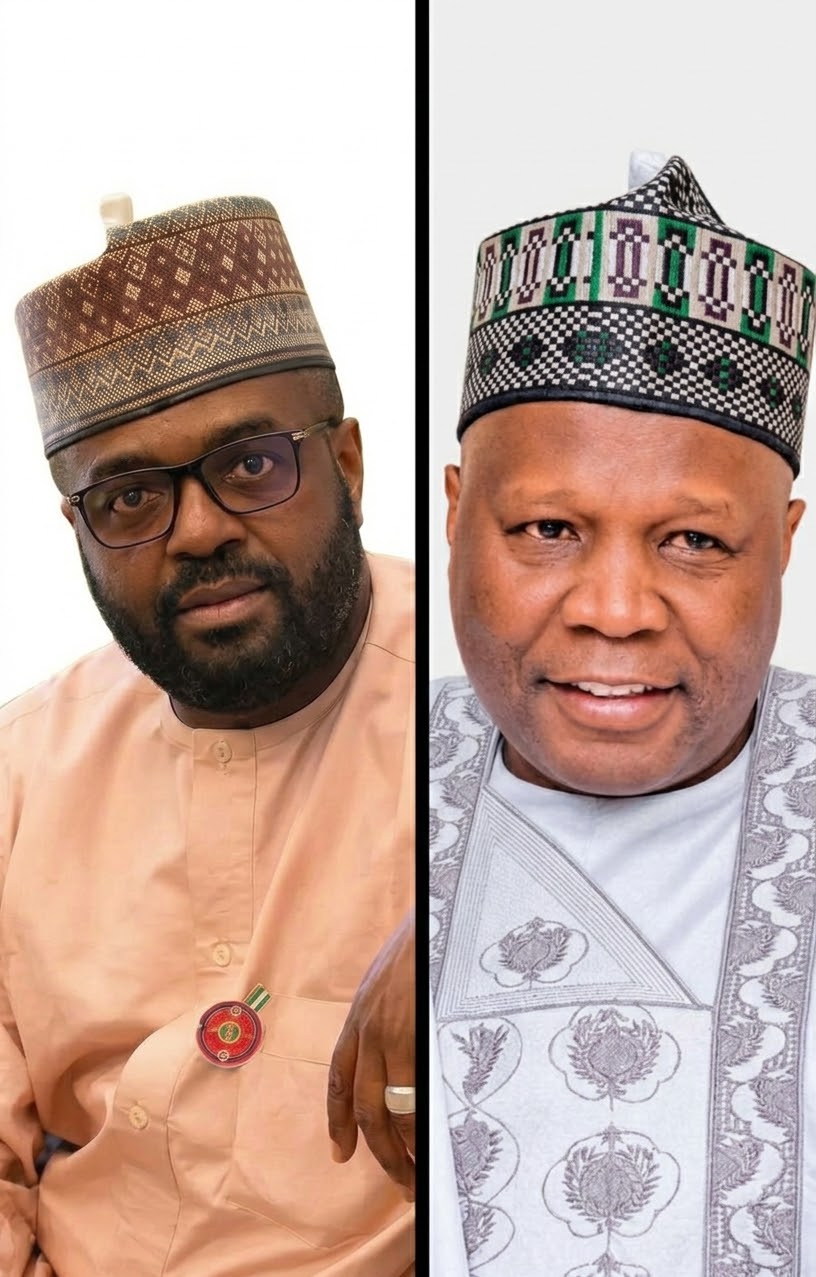
The Executive Director, Network, Niger Delta Power Holding Company (NDPHC), Engr. Bello Babayo Bello, has paid glowing tribute to the Governor of Gombe State, His Excellency Muhammadu Inuwa Yahaya, on the occasion of his 65th birthday, describing him as a visionary leader whose administration has redefined governance and accelerated development across the state.
Engr. Bello, in a congratulatory message made available to journalists, said Governor Inuwa Yahaya’s journey in public service has been marked by discipline, integrity, and an unwavering commitment to the progress of Gombe State and its people.
According to him, the Governor’s leadership has produced measurable improvements in critical sectors of the state’s economy while fostering a culture of transparency, accountability, and prudent resource management.
“As Governor Inuwa Yahaya celebrates his 65th birthday, Gombe State has every reason to celebrate a leader whose vision has continued to shape the future of the state. His commitment to good governance, infrastructural renewal, economic diversification, and human capital development has laid a strong foundation for sustainable growth and prosperity.”
Engr. Bello noted that beyond physical projects and policy achievements, the Governor’s greatest strength lies in his ability to inspire confidence, unite diverse interests, and build consensus around the collective aspirations of the people.
He described Governor Inuwa Yahaya as a statesman whose calm disposition, strategic thinking, and inclusive leadership style have earned him widespread respect across political, business, and community circles.
“The Governor represents a rare blend of experience, wisdom, humility, and courage. His leadership has demonstrated that genuine development is achieved not merely through promises but through deliberate actions and a clear sense of purpose. His accomplishments today stand as enduring testimony to his dedication to public service.”
The NDPHC Executive Director further stated that the Governor’s developmental strides have elevated the profile of Gombe State and strengthened the confidence of investors, development partners, and stakeholders in the state’s future.
He added that Governor Inuwa Yahaya’s administration has become a reference point for effective governance, with policies designed to create opportunities, improve livelihoods, and promote long-term economic stability.
“As he marks this remarkable milestone, we celebrate not only the years he has spent on earth but the positive impact he has made in the lives of countless people. His legacy is one of service, vision, and transformational leadership.”
Engr. Bello prayed for Almighty God to continue to bless the Governor with sound health, greater wisdom, and renewed strength as he continues to serve the people of Gombe State and contribute to Nigeria’s development.
“On behalf of my family, associates, and well-wishers, I extend heartfelt congratulations to His Excellency, Governor Muhammadu Inuwa Yahaya, on his 65th birthday. May the years ahead bring even greater accomplishments, fulfillment, and continued service to humanity.”
Signed:
Engr. Bello Babayo Bello
Executive Director, Network
Niger Delta Power Holding Company (NDPHC)
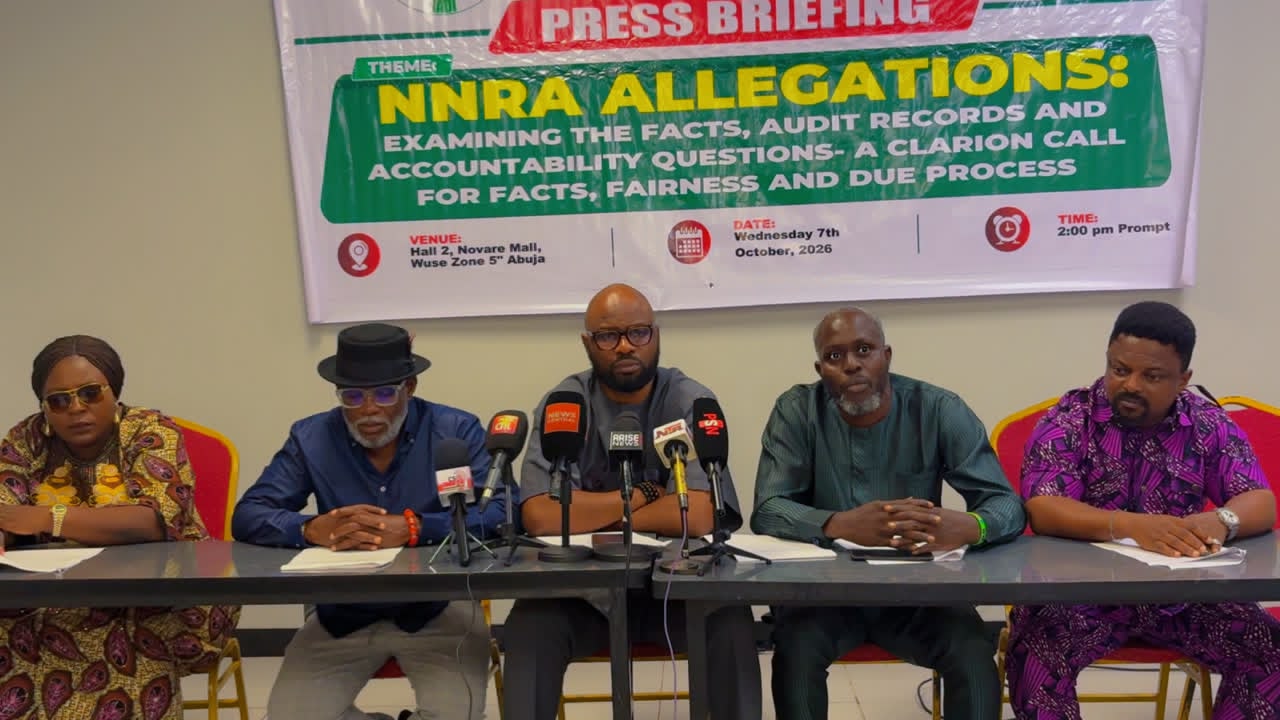
The Integrity Advocacy for Development Initiative (IADI) has called for a thorough, evidence-based examination of allegations of financial misconduct involving the Nigerian Nuclear Regulatory Authority (NNRA), warning against treating audit observations and media reports as established cases of fraud.
IADI Executive Director, Comrade Ofomhi Christopher, made the call on Wednesday at a press briefing in Abuja titled, “On the Allegations Concerning the Nigerian Nuclear Regulatory Authority (NNRA): Facts, Clarifications and the Need for Evidence-Based Accountability.”
The group was reacting to a publication by Secrets Reporters dated October 1, 2026, which alleged that about N6.69 billion was involved in contract fraud and misappropriation at the NNRA.
It also referred to a protest held on October 5 by Global Integrity Watch (GIW) at the NNRA headquarters, where the organisation demanded accountability, responses to audit observations and Freedom of Information requests, as well as changes in the leadership of the regulatory authority.
Christopher said while the allegations deserved scrutiny, they should not be treated as established facts without verification of the underlying records.
According to him, the public deserves to know the specific audit observations, periods and transactions involved, the nature of the contracts, the status of the projects or services, responses provided by the NNRA and whether the issues had been resolved or referred for further investigation.
“An audit observation is a serious matter requiring explanation and verification, but it is not, by itself, a judicial finding of fraud or personal misappropriation,” he said.
The IADI chief also referred to an explanation reportedly provided by the NNRA Director-General concerning the authority’s 2024 capital budget.
He said the explanation put the NNRA’s total 2024 capital budget at about N2.7 billion, comprising approximately N200 million belonging directly to the authority and about N2.5 billion for constituency projects, with an additional N200 million regional project bringing the figure referenced to about N2.9 billion.
Christopher, however, stressed that the explanation should not be regarded as conclusive, urging that it be tested against appropriation documents, budget releases, project records, procurement documents, payment records and audit reports.
“That is how responsible accountability should work: a claim is made, the response is heard, the records are examined, and the evidence determines the conclusion,” he said.
On allegations concerning unexecuted projects, the organisation called for physical verification of the specific projects, while allegations of inflated contract prices should be subjected to scrutiny of contracts, bills of quantities, procurement records and relevant price benchmarks.
It also urged that allegations concerning contractors be examined through relevant procurement and ownership records, while any claim of diversion or misappropriation should be established through the financial trail.
Christopher said where audit authorities had raised observations on expenditure, the public should be informed of the precise observations, the affected institution’s response and the current status of the issues.
The organisation also addressed the October 5 protest by GIW, acknowledging the constitutional right of civil society organisations to peaceful assembly and association under Section 40 of the Constitution.
It, however, urged CSOs to exercise such rights responsibly and within the law.
On Freedom of Information requests, IADI said there should be a distinction between the right to protest and the legal mechanism available where an FOI request is not answered.
The organisation noted that the Freedom of Information Act provides a judicial mechanism for applicants who have been denied access to information, adding that Section 20 allows an applicant to approach the court for a review.
IADI clarified that it was not suggesting that CSOs must obtain a court order before organising peaceful protests.
Rather, Christopher said, where non-compliance with an FOI request was the central grievance, the statutory and judicial mechanisms should be considered alongside legitimate civic action.
“An unanswered FOI request may justify further action to obtain the information. It does not, by itself, establish that fraud, misappropriation or any other wrongdoing has occurred,” he said.
The group also urged organisers of protests at government agencies to take public safety, access to government premises and the safety of protesters, workers and other citizens into consideration.
At the same time, it cautioned government institutions against using the possibility of confrontation as a justification for suppressing lawful civic expression.
“The answer to institutional disagreement should be law, evidence and due process, not intimidation or retaliation,” Christopher said.
He stressed that IADI was neither seeking to shield the NNRA from scrutiny nor dismiss legitimate questions concerning public expenditure at the authority.
He called on relevant audit and oversight bodies to state the status of the observations in question, the responses received from the NNRA and whether the matters had been resolved, sustained or referred for further investigation.
The organisation also encouraged CSOs pursuing accountability to make full use of available legal and institutional mechanisms while retaining their legitimate right to peaceful civic action.
“The public deserves accountability. But the public also deserves accuracy, fairness and evidence.
“A headline is not a verdict. An allegation is not evidence. An audit observation is not automatically a finding of personal guilt,” Christopher said.
He added that public institutions should not expect their expenditure to escape scrutiny merely because questions were raised through the media or civil society.
“Let the records be examined. Let the questions be answered. Let the evidence speak,” he said.
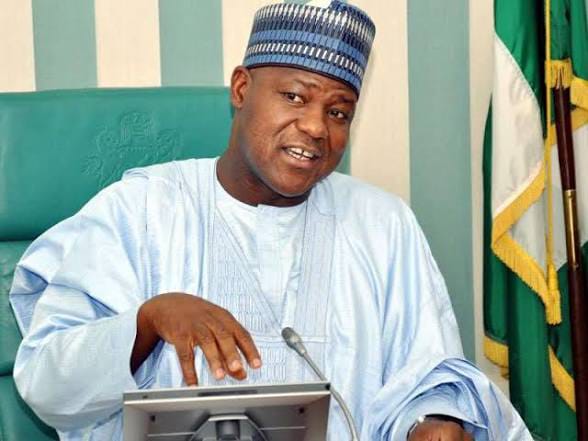
Former Speaker of the House of Representatives and Chairman of the Board of the National Credit Guarantee Company Limited (NCGC), Rt. Hon. Yakubu Dogara, CFR has expressed deep sorrow over the Nigerian Air Force aircraft crash that claimed the lives of 32 persons near Igbokoda, Ondo State. Dogara described the tragedy as a heartbreaking loss to the nation, noting that the deaths of the victims have left a painful void in the country’s defence and security community.
In a statement, the former Speaker extended his condolences to President Bola Ahmed Tinubu, Commander-in-Chief of the Armed Forces, the Nigerian Air Force, and the families of those who perished in the unfortunate incident.
He said the nation shares in the grief of the bereaved families and the Armed Forces at this time of immense sorrow, adding that the sacrifices of those who lost their lives in service to the country will not be forgotten. “The nation mourns with the families of the deceased and stands in solidarity with the Armed Forces during this difficult period,” Dogara stated.
He also commiserated with the Chief of Air Staff, officers and men of the Nigerian Air Force, praying that God grants them the fortitude to bear the painful loss.
According to him, moments such as this call for national unity, reflection and collective support for the families and institutions affected by the tragedy.
Dogara paid tribute to the victims, describing them as patriotic Nigerians whose commitment and service contributed to the security and stability of the nation. He further applauded the efforts of emergency responders, rescue teams and all personnel involved in the aftermath of the crash, commending their courage and professionalism under difficult circumstances.
The former Speaker prayed God to comfort their families, friends and colleagues.
He also offered prayers for the safety and protection of members of the Armed Forces and for continued peace, unity and progress in Nigeria.
The Nigerian Air Force aircraft crashed near Igbokoda, Ondo State, resulting in the death of 32 persons and plunging the nation into mourning. Authorities are yet to make public the cause of the accident as investigations continue.


ENGR. BELLO BABAYO BELLO CELEBRATES GOVERNOR INUWA YAHAYA AT 65, COMMENDS HIS LEGACY OF TRANSFORMATION

Oke-Ode Community Lauds Kwara Gov On Elesa’s Elevation To First Class Status

2026 KWIRS Tax Quiz Competition: Six Schools Emerge As Finalists

-
 Uncategorized6 years ago
FG, states urged to harness flooding for ranching, others with technology – Agbaje
-
 Headlines11 years ago
Breaking: EFCC seals Borno House of Assembly, as Hon members take to their heels
-
 News12 years ago
Nigeria Security Operatives Stage Manhunt For Homosexual Perpetrator
-
 News10 years ago
How 21-year-old Girl fled community over accusation of lesbianism
-
 News11 years ago
Yobe Gov Moves Against Deputy
-
 Opinion7 years ago
7 signs she has friend zoned you
-
Technology5 years ago
Online job placement company headhunts women
-
 Headlines10 years ago
Borno Dep Gov Abducts Another Church Leader