
Uncategorized
Next Level: Civil rights group hails Buhari’s development plan for Nigeria

Good Governance and Transparency Initiative (GGAT) has given President Muhammadu Buhari a pat on the back for his development plan for Nigeria.
The group said Buhari/APC’s ‘Next Level’ policy document unveiled on Sunday is an indication that Nigeria is surely heading for the desired level under the current government.
Dr Emerald Nzeribe, National President of the group made this known during a press conference on Monday.
The group said with the Next Level policy document, Nigeria is really now on the path to full recovery and growth, after several years of plundering by previous governments.
The full text below.
As the campaigns for the 2019 general elections starts, policies, promises and propagandas from various political parties and aspirants are flying everywhere. The volume of information out there makes it a bit difficult for voters to tell who or what to believe.
We at GGAT have gone through the Buhari/APC “NEXT LEVEL” policy document and must say that we are quite excited about the next level plan. We can confidently say that Nigeria is really now on the path to full recovery and growth , After several years of plundering by previous governments.
It has always been our belief that to appreciate where we are now and how much progress we have made as a nation in the last three and a half years we must always take cognizance of where we were before May 2015.
By June 2010 Nigeria had over $42 billion in our foreign reserve account, fast forward to May 2015 same account had been depleted to $28 billion. This happened during the period that we had the highest oil prices ever. We had all the opportunity in the world to save, but we did not. Rather we depleted our reserves further in the midst of unprecedented revenue. Oil prices rose to as high as $147 a barrel yet we had no savings or infrastructure to show for the kind of revenue that accrued to the country at that period.
That is just a glimpse of where we were coming from as a nation. When the Buhari administration came in oil prices dropped to as low as $26 a barrel but that will be no excuse for them. They went ahead to complete several projects that the previous government started but abandoned because funds that should have been allocated to such critical projects were rather diverted and siphoned into private pockets.
Such was the level of profligacy and wanton stealing by the previous party in power. By May 2015 several states owed many months of salary arrears, even some federal government agencies and parastatals also owed salaries. That was how bad things were when this government came to power in May 2015.
Insecurity; Over 14 local governments were under the control of Boko Haram, hoisting flags, collecting taxes ruling over those territories. Bombs were going off in many states of the federation including the FCT.
Today all 14 local governments have been liberated, Boko Haram have been decimated and reduced to carrying out soft target attacks, as they no longer have capacity to carry out such massive audacious attacks like they did pre May 2015. The bombings have stopped. The age long Farmer- herders clash has been reduced drastically and the government of Buhari is moving to have it resolved once and for all.
Corruption, one of the biggest plagues bedeviling our nation has been dealt a great blow under the buhari government. Before now it was a free for all under the last government. Money for security being carted away, oil subsidy scam, the alleged $2.1 billion withdrawn from CBN and shared for election purposes, it was just too much. This was the reason why Nigeria had no savings despite unprecedented revenues rather we even went a borrowing, accumulating debt in the midst of massive earnings.
President Buhari seems to have turned the tide, under Buhari In the last three and a half years; the EFCC has secured over 210 convictions amongst them two former governors. Over 800billion Naira has been recovered. More than 400 properties have been confiscated. Indeed corruption has been dealt the kind of blow it has never been dealt in the history of our country.
This has been achievable because of the character of the people in charge now. Everybody knows it is no longer business as usual. You cannot discuss any form of business help with the president let alone cutting a deal with him. Leadership is about leading by example. They (Mr President and his Vice) have led by example. The President and his vice President have distinguished themselves like we have never had it before in this country.
We cannot forget so quickly a time in this country when the President and the vice president were fighting each other over who was more corrupt. I am sure we all still remember the PTDF probe of 2006, Transcorp shares etc.
This is why we will believe The Buhari led APC government when it says it is taking us to the” Next Level,” because their track record is there for all to see. They have the credibility to back the talk. Unlike those mouthing empty promises.
The Next Level policy document is clear and concise on the way forward for the country. The document lays out in clear terms its plan to tackle unemployment in the country, through the continuation and expansion of the several social intervention programs of the APC government.
For instance, The N-Power graduate scheme is set to be expanded to cover 1 million graduates across the country. That is huge, and is also unprecedented on the African continent. The anchor borrower’s scheme is also going to be expanded to accommodate at least 1 million farmers. There is the livestock transformation plan that intends to create about 1.5 million jobs
The government plans to provide a $500 million innovation fund for the Tech and creative sector of the economy. The target here is to create another 500,000 plus jobs. According to the document the government plans to make loans as much as 1 million Naira available to traders, artisans (carpenters, tailors, mechanics, plumbers etc.) and commercial drivers (taxi drivers, keke napep, Bus drivers). The document also says that the tradermoni is to be expanded to reach up to 10m traders. This is massive and unprecedented. There’s hardly any group that is not captured in this intervention.
Currently the nation is generating about 7,000 megawatts of electricity; this is a far improvement from the less than 3,000 Megawatts inherited from the last government despite spending over $16 billion on power. The next level plan is to add 1,000 Megawatts annually in the next four years which will bring our power generation level to 11,000 megawatts. That can only come from a government that says so and does so. They have moved power generation in the last three and a half years from 3,000 to the current 7,000 megawatts.
The document is filled with facts and figures to back their claims and promise. In the education sector the government plans to remodel at least 10,000 schools every year. Plus several other policies on health, infrastructure and the economy.
Credibility is the difference between APC and the challenging PDP. Whilst the Buhari government has evidence of what it has done. It appears the PDP is wishing to run and campaign without recourse to its past record in government, perhaps because of their abysmal performance then. That must be wishful thinking as Nigerians will judge both parties by what they have done and not what they intend to do only.
In the 2019 elections there will be no new comer. Both parties have been in government at different times so they will run on their track records. Buhari/APC will run on their record in the last three and a half years whilst the PDP/Atiku will run on their record in the 16 years they ruled the country. Mouthing promises alone will not do it.
Fabian
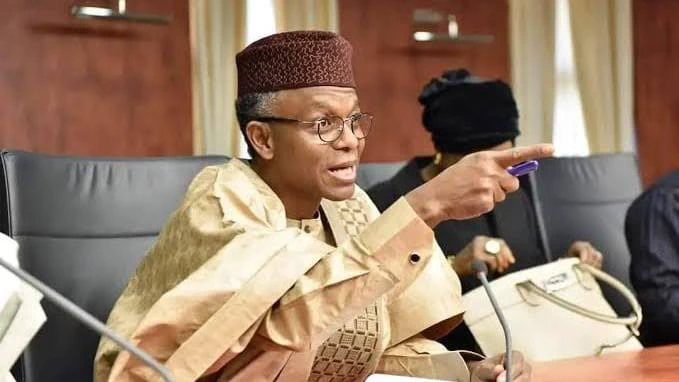
Former Kaduna State Governor and former Minister of the Federal Capital Territory, Mallam Nasir El-Rufai, has weighed in on the Senate’s decision to reject the inclusion of real-time electronic transmission of election results in the proposed electoral reforms.
Speaking in an interview with Trust TV, El-Rufai was asked to react to reports that some members of his party, the African Democratic Congress (ADC), including Peter Obi, staged a protest at the National Assembly on Monday over the issue. In his response, he stressed that electoral reforms must be approached transparently and without undue external influence.
El-Rufai expressed confidence that the Senate’s electoral committee would eventually recommend the reinstatement of the provision for real-time electronic transmission of results.
He noted that many senators are experienced public officials who have previously served as governors, ministers, and legislators, and are genuinely committed to strengthening Nigeria’s democracy. However, he argued that their efforts are being overshadowed by the actions of the Senate leadership, including Senate President Godswill Akpabio.
According to El-Rufai, the controversy should not be blamed on the Senate as an institution but on its leadership. He alleged that the presiding officer was acting under external pressure and not in line with the collective will of the majority of senators.
He further predicted that when the Senate reconvenes, lawmakers would be forced to unite, resist such pressure from the leadership, and ensure that the proposed reforms are not undermined.
In a strongly worded remark directed at Akpabio, El-Rufai said:
“I do not consider him distinguished. We have known each other since the 90s. He knows how far we’ve been through, and I think I am qualified to call him a scumbag—and he knows why.”
Uncategorized
Electronic Transmission: This Is Just a Warning Protest, We’ll Wait Till Tomorrow – Isaac Fayose

Fabian Apechihin
Businessman and activist Isaac Fayose has described Monday’s protest at the National Assembly complex as only a warning, insisting that more action may follow depending on the outcome of lawmakers’ deliberations.
A cross-section of Nigerians on Monday morning converged on the National Assembly to demand that electronic transmission of election results be made compulsory in Nigeria’s electoral laws.
Although the Senate has issued several clarifications amid reports that it rejected electronic transmission of results, protesters maintained that lawmakers must go further by explicitly inserting the phrase “real-time electronic transmission” into the proposed legislation.
In response to the public outcry, the Senate announced on Sunday that it would hold an emergency plenary session on Tuesday to address the concerns.
Speaking to journalists during the protest, Fayose said the decision taken at the emergency sitting would determine whether the demonstrations would continue.
“We all know what happens in a collation room,” he said. “A collation room is where you soak garri with water at night and by morning it has swollen and turned into eba.
“For Nigerians to be satisfied, what we need is electronic transmission of results. They are already trying to deny it. Let’s wait till tomorrow. This protest is just a warning.”
Fayose also questioned the logic of abandoning electronic transmission after huge investments had been made.
“Something we spent close to a trillion naira to achieve, you now want to throw it away? That’s like taking our money and dumping it in the gutter. It cannot happen,” he added.
Fabian Apechihin
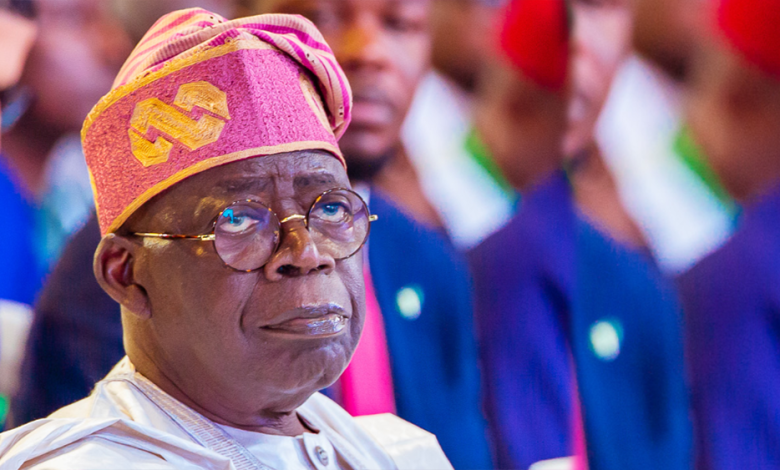
A United States federal judge, Beryl A. Howell, has sharply criticised the Federal Bureau of Investigation (FBI) and the Drug Enforcement Administration (DEA) over what she described as deliberate delays in releasing records related to Nigerian President Bola Tinubu.
The documents are being sought through a Freedom of Information Act (FOIA) request filed in 2022 by transparency advocate Aaron Greenspan, with backing from investigative journalist David Hundeyin. The records are expected to provide details on a narcotics-related case from the early 1990s that led to Tinubu forfeiting $460,000 to the U.S. government—allegations he has consistently denied.
In a ruling delivered on February 3, Judge Howell of the U.S. District Court for the District of Columbia rebuked both agencies for repeatedly missing court-ordered deadlines, noting that the case has dragged on for more than three years without substantial progress.
She subsequently imposed new deadlines, warning that further delays would no longer be tolerated.
Greenspan, the founder of transparency platform Plainsite, filed the FOIA request in June 2022. In 2023, the FBI announced it would release approximately 2,500 pages of Tinubu-related records in monthly batches of 500 pages. However, the process stalled after Tinubu opposed the disclosure, requesting a delay pending the outcome of a Nigerian Supreme Court case challenging his election victory. He argued at the time that releasing the records would “adversely affect” him.
Although Judge Howell approved the temporary pause and Tinubu’s election was later upheld, the FBI and DEA continued to seek extensions, further slowing the release of records linked to longstanding allegations of involvement in cocaine trafficking.
Court filings show that the FBI was expected to submit an updated status report in May 2025, but delayed until January 2026, when it sought yet another extension to February—prompting sharp criticism from the court.
“Defendant FBI has produced no records, despite initially anticipating completion of searches by August 1, 2025,” Howell stated, adding that deadlines had been repeatedly shifted with “minimal explanation.”
She further noted that, like the DEA, the FBI had failed to provide a credible timeline for completing the processing and release of the requested documents.
Judge Howell also dismissed the DEA’s justification for withholding documents for more than six months under the guise of inter-agency consultations.
“Defendant DEA has produced some documents … but has repeated the same explanation for six months and four joint status reports concerning twelve remaining pages not yet released,” she said.
The court ordered the DEA to provide Greenspan with a Vaughn index detailing the legal basis for redacting 50 pages and withholding 172 pages of the records. The agency was also directed to submit sworn affidavits explaining, page by page, when the remaining documents were sent for consultation, expected review timelines, and steps taken to expedite the process.
Similarly, the FBI was ordered to file sworn statements accounting for its repeated failure to meet court deadlines and to begin releasing all non-exempt Tinubu-related records. The bureau was instructed to deliver an initial batch within two weeks of January 30, 2026, submit a detailed schedule for releasing the second batch of 500 pages by March 13, and complete full disclosure by June 1, 2026.
Judge Howell further ordered both agencies to file joint status reports every 14 days, starting February 27, until all responsive records have been processed and released.


Audi: Trajectory of Success and Changing the Narrative

We’ve Known Each Other Since the 90s; I’m Qualified to Call Him a Scumbag – El-Rufai

Electronic Transmission: This Is Just a Warning Protest, We’ll Wait Till Tomorrow – Isaac Fayose

-
 Uncategorized5 years ago
FG, states urged to harness flooding for ranching, others with technology – Agbaje
-
 Headlines10 years ago
Breaking: EFCC seals Borno House of Assembly, as Hon members take to their heels
-
 News12 years ago
Nigeria Security Operatives Stage Manhunt For Homosexual Perpetrator
-
 News9 years ago
How 21-year-old Girl fled community over accusation of lesbianism
-
 News10 years ago
Yobe Gov Moves Against Deputy
-
 Opinion7 years ago
7 signs she has friend zoned you
-
Technology4 years ago
Online job placement company headhunts women
-
 Headlines10 years ago
Borno Dep Gov Abducts Another Church Leader