
News
Nigerian Army, where Reuters got it wrong

_By Philip Agbese_
During the 2010 Jos riots and the subsequent months, international news wire service, Reuters, did a disservice to Nigeria that many people might not have noticed but which was nonetheless bad, horrible actually for a news outlet that is perpetually steeped in virtue signaling. At that time, Reuters was engaged in reporting the crisis in a manner that further pitched one side of the crisis against the others by constantly highlighting casualties on an ethno-sectarian basis, an approach that was intended to sustain a tit-for-tat killing spree as each side was engaged in constantly trying to avenge the casualty figures reported for its side by Reuters.
Being the resilient nation that it is, Nigeria weathered that storm and remained in existence despite this kind of psychological operation ((PSYOP), a war designed to undermine Nigeria and unravel the country for whatever benefit that global media operations like Reuters are after. Wikipedia described PSYOP as “operations to convey selected information and indicators to audiences to influence their emotions, motives, and objective reasoning, and ultimately the behavior of governments, organizations, groups, and individuals.”
It went on to explain that “PSYOP can encourage popular discontent with the opposition’s leadership and by combining persuasion with a credible threat, degrade an adversary’s ability to conduct or sustain military operations. They can also disrupt, confuse, and protract the adversary’s decision-making process, undermining command, and control. When properly employed, PSYOP have the potential to save the lives of friendly or enemy forces by reducing the adversary’s will to fight. By lowering the adversary’s morale and then its efficiency, PSYOP can also discourage aggressive actions by creating disaffection within their ranks, ultimately leading to surrender.”
Reuters’ latest so-called investigative report against Nigeria, “The Abortion Assault: Nigerian Military ran secret mass abortion programme in war against Boko Haram” is a dangerous deployment of PSYOP that must be condemned by all right thinking persons as an irresponsible attempt at manufacture of dissent, which refers to a cause that is so unpopular that it is solely driven by money, fake news media, or rogue intelligence agencies, which Reuters is proving to be.
The opening lines of the report, which is marketed to be an investigative piece, actually read like a fiction novel, more vested in holding the reader spell-bound than conveying vital information, which ought to have been the intention of a news outlet. The writers’ style belied their confusion as they struggled to make sense of whether they are running a first person narrative, or a third person reported account. What they succeeded in doing was to largely assume the omniscient tone, a see-all-know-all format that is favoured by fiction novelists, which totally dismissed the entire report as something that should only be found on the fantasy section of fiction novels.
According to a research and policy group, Humanitarian Outcomes, “As of the end of 2019 there were 74 identified organisations working in the northeast, including 6 UN agencies plus OCHA and IOM, 28 INGOs, and 33 Nigerian national and local NGOs.” These NGOs have at various times raised alarm about issues, often accusing the Federal Government especially the military of one thing or the other but not once has any of them raised the issue of 10,000 forced abortions. Even the UN representatives interviewed in the report denied knowledge of what Reuters is insinuating.
In Reuters’ own words, “This investigation is based on interviews with 33 women and girls who say they underwent abortions while in the custody of the Nigerian Army.” This presents an interesting scenario. It reported there were 10,000 forced abortions but it was only able to sample 33 women and girls. St. Olaf College recommended that “Generally speaking, the smaller the population, the larger the sampling ratio needed. For populations under 1,000, a minimum ratio of 30 percent (300 individuals) is advisable to ensure representativeness of the sample. For larger populations, such as a population of 10,000, a comparatively small minimum ratio of 10 percent (1,000) of individuals is required to ensure representativeness of the sample.” So how come Reuters conveniently disappeared 9,977 other “victims” of the atrocity it reported and never bothered to interview them? How did speaking with 33 alleged victims become 10,000 forced abortions?
It is interesting to note that the news outlet doubted its own report and acknowledged it is part of a damaging operation targeting Nigeria. For instance, it stated that “Reuters was unable to establish who created the abortion programme or determine who in the military or government ran it. Nigerian military leaders denied the programme has ever existed and said Reuters reporting was part of a foreign effort to undermine the country’s fight against the insurgents.”
Reuters also exposed how its reported 10,000 forced abortions was a concoction of figures provided by sources that were so unreliable that they could not be named. The report is so trashy that the International Criminal Court (ICC) Office of the Prosecutor declined to comment on Reuters’ findings. The entire report was replete with phrases and clauses that hinted at uncertainty about the allegations being made, which makes one wonder why that organization proceeded to publish the report under such circumstances.
A five page statement that Director of Defence Information, Major General Jimmy Akpor, issued has totally rubbished the Reuters report for the hogwash that it is so there is no point rehashing the strong points that the military has raised about the sanctity of life and the military’s adherence to rules of engagement that ensure that even hardened terrorists are treated humanely when captured to talk less of their victims.
The tragic facing part, however, is that Reuters may succeed in its intention for publishing the report unless the Nigerian military and the Federal Government chose to be deliberately strategic and robust in their response to the propaganda attack. A critical factor to achieving this is to properly contextualize Reuters’ attack, identify its collaborators and anticipate the next moves in the PSYOP that has been revived against Nigeria. In terms of contextualizing the environment around the report, it is important to note how the publication was hastily pushed out at a time when there has been successive killing or capture of terrorists – Boko Haram/ISWAP and bandits; focusing on the publication could create distractions that would interfere with the progress of the counter-terrorism efforts.
It should equally be noted that Reuters, a news platform that ought to be neutral, openly participating in the propaganda war against Nigeria signals a desperation on the part of those that have been propping up the terrorists with propaganda support. In the past they have used groups like Amnesty International and Human Rights Watch without the kind of defining success they have in mind.
The Nigerian Army (and the Federal Government) should attenuate Reuters’ attempt to bring it into disrepute and promote terrorist propaganda against the Nigerian State. This should be done by outlining and highlighting the successes that have been recorded in dismantling the foreign-backed terror infrastructure that they want to gain root in Nigeria. The government should promote its rehabilitation and reintegration programmed for victims and repentant terrorists because these are the kind of success stories that make those running evil entities like Reuters to bristle and froth at the mouth. There is a whole lot of good things that the Nigerian Army is making to happen and that should be the focus and not wasting efforts on Reuters’ irresponsibility.
And for the records, Reuters got it wrong when it surmised that the pack of conjectures, half-truths, fictions, and the lies in its report would be swallowed by all and sundry hook, line, and sinker. Reuters got it wrong when it thought it could easily pick up with doing damage in Nigeria from where it left off in the 2010 Jos Crisis. The dynamics have changed in a manner that have left the Reuters goons behind. Its propaganda efforts will fail worse than those of its collaborators that had attempted to undermine Nigeria in the past.
Agbese is a UK trained human rights expert writing from Abuja.
News
ENGR. BELLO BABAYO BELLO CELEBRATES GOVERNOR INUWA YAHAYA AT 65, COMMENDS HIS LEGACY OF TRANSFORMATION
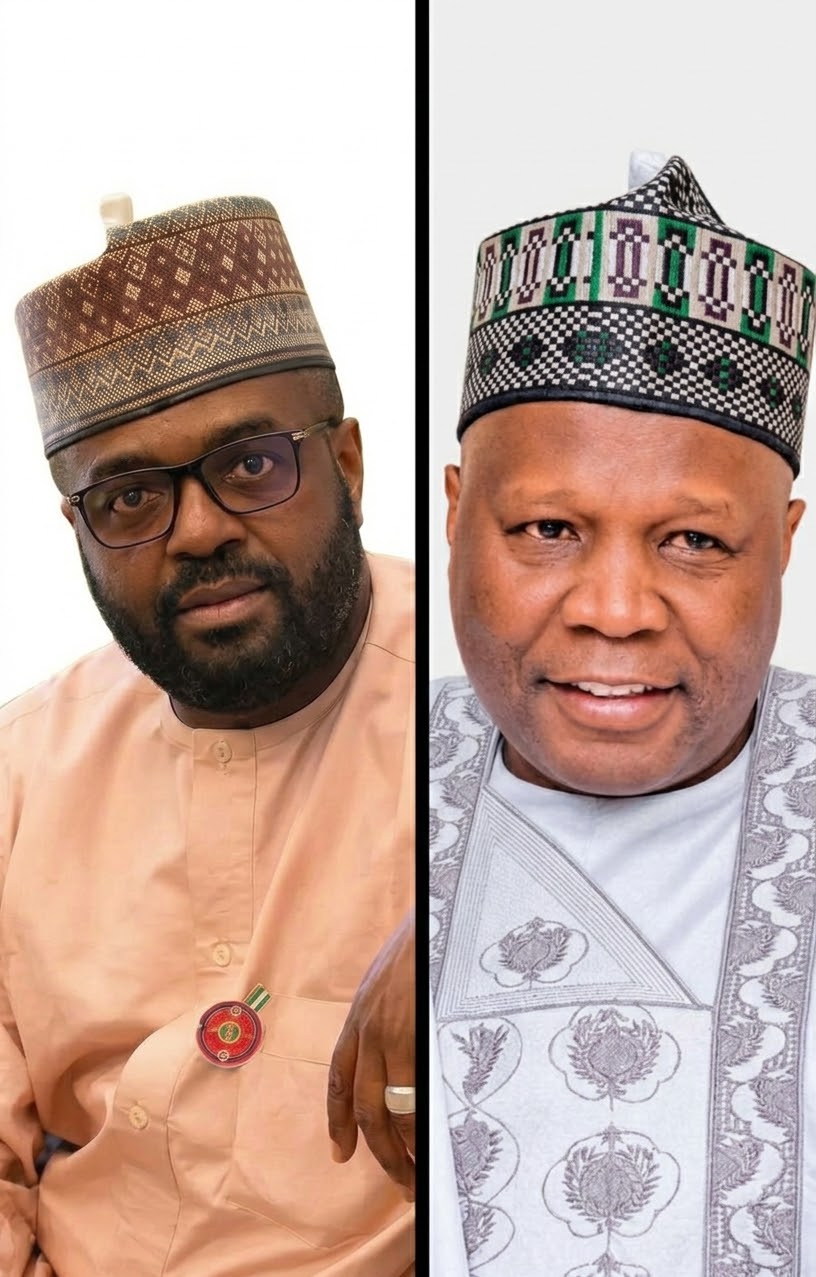
The Executive Director, Network, Niger Delta Power Holding Company (NDPHC), Engr. Bello Babayo Bello, has paid glowing tribute to the Governor of Gombe State, His Excellency Muhammadu Inuwa Yahaya, on the occasion of his 65th birthday, describing him as a visionary leader whose administration has redefined governance and accelerated development across the state.
Engr. Bello, in a congratulatory message made available to journalists, said Governor Inuwa Yahaya’s journey in public service has been marked by discipline, integrity, and an unwavering commitment to the progress of Gombe State and its people.
According to him, the Governor’s leadership has produced measurable improvements in critical sectors of the state’s economy while fostering a culture of transparency, accountability, and prudent resource management.
“As Governor Inuwa Yahaya celebrates his 65th birthday, Gombe State has every reason to celebrate a leader whose vision has continued to shape the future of the state. His commitment to good governance, infrastructural renewal, economic diversification, and human capital development has laid a strong foundation for sustainable growth and prosperity.”
Engr. Bello noted that beyond physical projects and policy achievements, the Governor’s greatest strength lies in his ability to inspire confidence, unite diverse interests, and build consensus around the collective aspirations of the people.
He described Governor Inuwa Yahaya as a statesman whose calm disposition, strategic thinking, and inclusive leadership style have earned him widespread respect across political, business, and community circles.
“The Governor represents a rare blend of experience, wisdom, humility, and courage. His leadership has demonstrated that genuine development is achieved not merely through promises but through deliberate actions and a clear sense of purpose. His accomplishments today stand as enduring testimony to his dedication to public service.”
The NDPHC Executive Director further stated that the Governor’s developmental strides have elevated the profile of Gombe State and strengthened the confidence of investors, development partners, and stakeholders in the state’s future.
He added that Governor Inuwa Yahaya’s administration has become a reference point for effective governance, with policies designed to create opportunities, improve livelihoods, and promote long-term economic stability.
“As he marks this remarkable milestone, we celebrate not only the years he has spent on earth but the positive impact he has made in the lives of countless people. His legacy is one of service, vision, and transformational leadership.”
Engr. Bello prayed for Almighty God to continue to bless the Governor with sound health, greater wisdom, and renewed strength as he continues to serve the people of Gombe State and contribute to Nigeria’s development.
“On behalf of my family, associates, and well-wishers, I extend heartfelt congratulations to His Excellency, Governor Muhammadu Inuwa Yahaya, on his 65th birthday. May the years ahead bring even greater accomplishments, fulfillment, and continued service to humanity.”
Signed:
Engr. Bello Babayo Bello
Executive Director, Network
Niger Delta Power Holding Company (NDPHC)
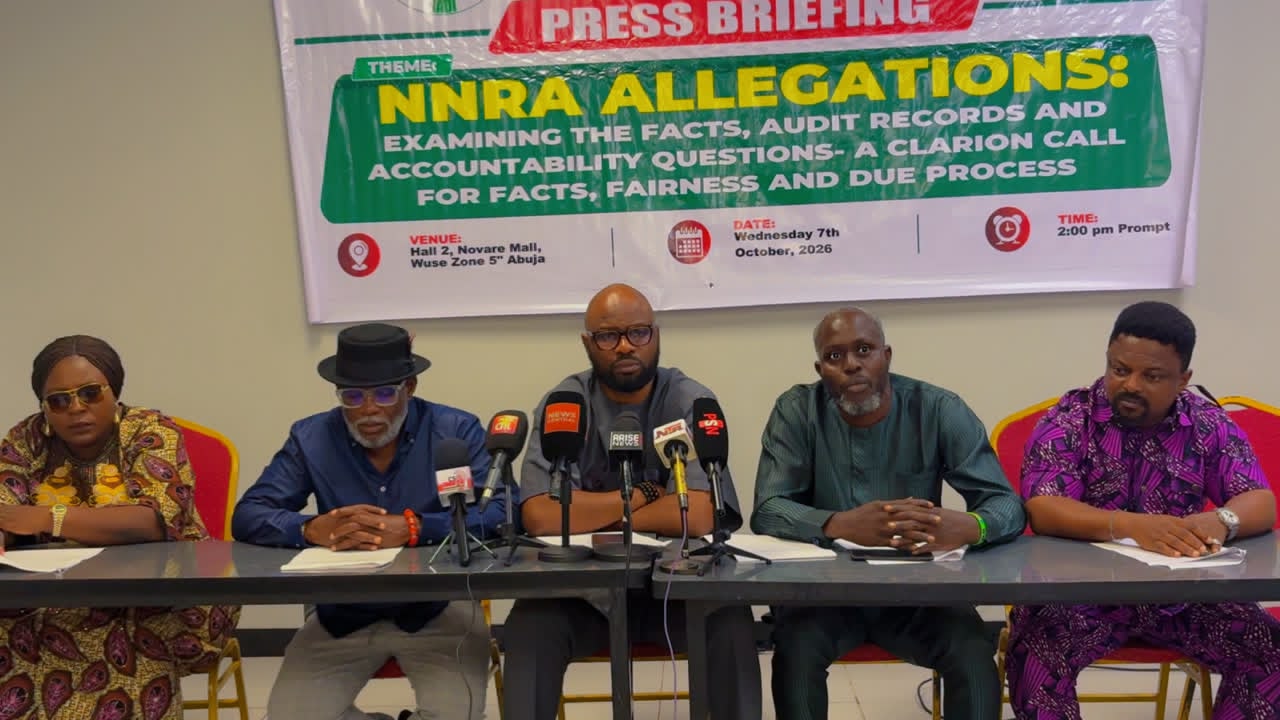
The Integrity Advocacy for Development Initiative (IADI) has called for a thorough, evidence-based examination of allegations of financial misconduct involving the Nigerian Nuclear Regulatory Authority (NNRA), warning against treating audit observations and media reports as established cases of fraud.
IADI Executive Director, Comrade Ofomhi Christopher, made the call on Wednesday at a press briefing in Abuja titled, “On the Allegations Concerning the Nigerian Nuclear Regulatory Authority (NNRA): Facts, Clarifications and the Need for Evidence-Based Accountability.”
The group was reacting to a publication by Secrets Reporters dated October 1, 2026, which alleged that about N6.69 billion was involved in contract fraud and misappropriation at the NNRA.
It also referred to a protest held on October 5 by Global Integrity Watch (GIW) at the NNRA headquarters, where the organisation demanded accountability, responses to audit observations and Freedom of Information requests, as well as changes in the leadership of the regulatory authority.
Christopher said while the allegations deserved scrutiny, they should not be treated as established facts without verification of the underlying records.
According to him, the public deserves to know the specific audit observations, periods and transactions involved, the nature of the contracts, the status of the projects or services, responses provided by the NNRA and whether the issues had been resolved or referred for further investigation.
“An audit observation is a serious matter requiring explanation and verification, but it is not, by itself, a judicial finding of fraud or personal misappropriation,” he said.
The IADI chief also referred to an explanation reportedly provided by the NNRA Director-General concerning the authority’s 2024 capital budget.
He said the explanation put the NNRA’s total 2024 capital budget at about N2.7 billion, comprising approximately N200 million belonging directly to the authority and about N2.5 billion for constituency projects, with an additional N200 million regional project bringing the figure referenced to about N2.9 billion.
Christopher, however, stressed that the explanation should not be regarded as conclusive, urging that it be tested against appropriation documents, budget releases, project records, procurement documents, payment records and audit reports.
“That is how responsible accountability should work: a claim is made, the response is heard, the records are examined, and the evidence determines the conclusion,” he said.
On allegations concerning unexecuted projects, the organisation called for physical verification of the specific projects, while allegations of inflated contract prices should be subjected to scrutiny of contracts, bills of quantities, procurement records and relevant price benchmarks.
It also urged that allegations concerning contractors be examined through relevant procurement and ownership records, while any claim of diversion or misappropriation should be established through the financial trail.
Christopher said where audit authorities had raised observations on expenditure, the public should be informed of the precise observations, the affected institution’s response and the current status of the issues.
The organisation also addressed the October 5 protest by GIW, acknowledging the constitutional right of civil society organisations to peaceful assembly and association under Section 40 of the Constitution.
It, however, urged CSOs to exercise such rights responsibly and within the law.
On Freedom of Information requests, IADI said there should be a distinction between the right to protest and the legal mechanism available where an FOI request is not answered.
The organisation noted that the Freedom of Information Act provides a judicial mechanism for applicants who have been denied access to information, adding that Section 20 allows an applicant to approach the court for a review.
IADI clarified that it was not suggesting that CSOs must obtain a court order before organising peaceful protests.
Rather, Christopher said, where non-compliance with an FOI request was the central grievance, the statutory and judicial mechanisms should be considered alongside legitimate civic action.
“An unanswered FOI request may justify further action to obtain the information. It does not, by itself, establish that fraud, misappropriation or any other wrongdoing has occurred,” he said.
The group also urged organisers of protests at government agencies to take public safety, access to government premises and the safety of protesters, workers and other citizens into consideration.
At the same time, it cautioned government institutions against using the possibility of confrontation as a justification for suppressing lawful civic expression.
“The answer to institutional disagreement should be law, evidence and due process, not intimidation or retaliation,” Christopher said.
He stressed that IADI was neither seeking to shield the NNRA from scrutiny nor dismiss legitimate questions concerning public expenditure at the authority.
He called on relevant audit and oversight bodies to state the status of the observations in question, the responses received from the NNRA and whether the matters had been resolved, sustained or referred for further investigation.
The organisation also encouraged CSOs pursuing accountability to make full use of available legal and institutional mechanisms while retaining their legitimate right to peaceful civic action.
“The public deserves accountability. But the public also deserves accuracy, fairness and evidence.
“A headline is not a verdict. An allegation is not evidence. An audit observation is not automatically a finding of personal guilt,” Christopher said.
He added that public institutions should not expect their expenditure to escape scrutiny merely because questions were raised through the media or civil society.
“Let the records be examined. Let the questions be answered. Let the evidence speak,” he said.
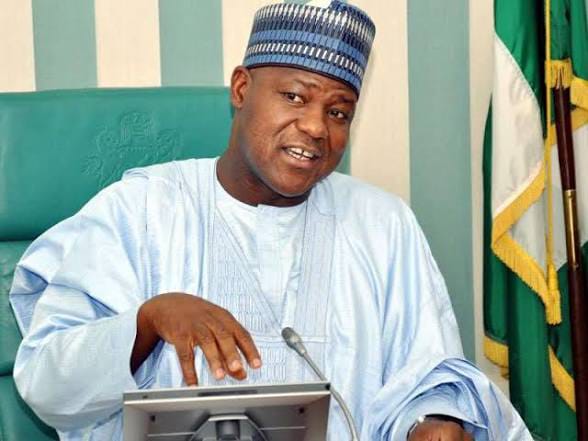
Former Speaker of the House of Representatives and Chairman of the Board of the National Credit Guarantee Company Limited (NCGC), Rt. Hon. Yakubu Dogara, CFR has expressed deep sorrow over the Nigerian Air Force aircraft crash that claimed the lives of 32 persons near Igbokoda, Ondo State. Dogara described the tragedy as a heartbreaking loss to the nation, noting that the deaths of the victims have left a painful void in the country’s defence and security community.
In a statement, the former Speaker extended his condolences to President Bola Ahmed Tinubu, Commander-in-Chief of the Armed Forces, the Nigerian Air Force, and the families of those who perished in the unfortunate incident.
He said the nation shares in the grief of the bereaved families and the Armed Forces at this time of immense sorrow, adding that the sacrifices of those who lost their lives in service to the country will not be forgotten. “The nation mourns with the families of the deceased and stands in solidarity with the Armed Forces during this difficult period,” Dogara stated.
He also commiserated with the Chief of Air Staff, officers and men of the Nigerian Air Force, praying that God grants them the fortitude to bear the painful loss.
According to him, moments such as this call for national unity, reflection and collective support for the families and institutions affected by the tragedy.
Dogara paid tribute to the victims, describing them as patriotic Nigerians whose commitment and service contributed to the security and stability of the nation. He further applauded the efforts of emergency responders, rescue teams and all personnel involved in the aftermath of the crash, commending their courage and professionalism under difficult circumstances.
The former Speaker prayed God to comfort their families, friends and colleagues.
He also offered prayers for the safety and protection of members of the Armed Forces and for continued peace, unity and progress in Nigeria.
The Nigerian Air Force aircraft crashed near Igbokoda, Ondo State, resulting in the death of 32 persons and plunging the nation into mourning. Authorities are yet to make public the cause of the accident as investigations continue.


ENGR. BELLO BABAYO BELLO CELEBRATES GOVERNOR INUWA YAHAYA AT 65, COMMENDS HIS LEGACY OF TRANSFORMATION

Oke-Ode Community Lauds Kwara Gov On Elesa’s Elevation To First Class Status

2026 KWIRS Tax Quiz Competition: Six Schools Emerge As Finalists

-
 Uncategorized6 years ago
FG, states urged to harness flooding for ranching, others with technology – Agbaje
-
 Headlines11 years ago
Breaking: EFCC seals Borno House of Assembly, as Hon members take to their heels
-
 News12 years ago
Nigeria Security Operatives Stage Manhunt For Homosexual Perpetrator
-
 News10 years ago
How 21-year-old Girl fled community over accusation of lesbianism
-
 News11 years ago
Yobe Gov Moves Against Deputy
-
 Opinion7 years ago
7 signs she has friend zoned you
-
Technology5 years ago
Online job placement company headhunts women
-
 Headlines10 years ago
Borno Dep Gov Abducts Another Church Leader