
News
Nigeria’s Electricity Market Revenue Up By 70% In 2024 – Minister

From Lateef Taiwo
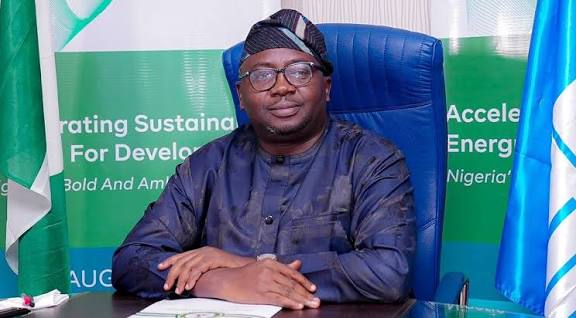
Minister of Power Adebayo Adelabu said that Nigeria’s electricity market revenue in increased by ₦700 billion in revenue, reflecting a 70% increase.
The minister disclosed this at the opening ceremony of the 2025 and 4th African Natural Resources and Energy Investment Summit (AFNIS) holding at the Banquet Hall of the Presidential Villa on Wednesday in Abuja with the theme of this year’s summit, which is the fourth edition, is “Harnessing Local Content for Sustainable Development”.
He noted that the Electricity Act of 2023 has decentralised electricity governance, as a result of which eleven states had already assumed regulatory control over their sub-national markets, unlocking investment and competition.
“This reform enables each state to tailor energy solutions to local needs, while still contributing to national and regional market stability.
“We have developed and presented two foundational planning documents: the National Integrated Electricity Policy (NIEP) and the Integrated Resource Plan (IRP). These frameworks now guide power sector planning, prioritising least-cost solutions, optimal resource use, and clear investment pathways,” Adelabu said.
According to the power industry overseer, The theme “Harnessing Local Content for Sustainable Development” speaks directly to the current Federal Ministry of Power priorities.
He said as global trends shift toward decentralisation, digitisation, and decarbonisation, Nigeria is working to ensure that local content does not remain a policy slogan but becomes a measurable lever for economic growth, industrial capacity, and energy security.
He said, “With a population exceeding 200 million, Nigeria’s electricity demand continues to rise. Meeting that demand requires more than generation. It requires a clear regulatory framework, sustained investment, and local participation at every value chain level, from metering and manufacturing to system operations and grid management.
“Under the Renewed Hope Agenda of President Bola Ahmed Tinubu, we are strengthening domestic capabilities across the sector. We are driving reform to reduce import dependence, close infrastructure gaps, and embed local skills and technology into the core of our power strategy.
“We have developed and presented two foundational planning documents: the National Integrated Electricity Policy (NIEP) and the Integrated Resource Plan (IRP). These frameworks now guide power sector planning, prioritising least-cost solutions, optimal resource use, and clear investment pathways.
“Furthermore, it is evident that, due to our transformative tariff reforms, the market has generated an additional ₦700 billion in revenue, reflecting a 70% increase. This results from the cost-reflective tariff adjustment for Band A customers. Market revenue for 2024 rose from NGN 1 trillion in 2023 to NGN 1.7 trillion.
“This growth in market revenue is unprecedented, as the highest growth previously achieved was 20%. This positively impacts the reduction of the government subsidised tariff shortfall by 35%, reducing it from NGN 3 trillion to NGN 1.9 trillion and demonstrating that financial viability and service delivery can coexist harmoniously.”
In line with AFNIS 2025 theme, the minister said local content is being receiving premium attention through investment and execution.
He said, “We are using energy access and energy transition to drive domestic production, technology transfer, and employment: The Energising Education Programme (EEP) is adding 100MW of clean energy across 37 federal universities and 7 teaching hospitals. EEP III is now 70% complete.
“The DARES project, backed by a $750 million World Bank facility, targets over 17.5 million Nigerians through decentralised, private sector-led electrification with productive-use applications for SMEs and agriculture.
Through the Africa Mini-Grid Programme, we’ve secured $5.91 million in grants across 23 projects, delivering 948MW of new renewable capacity in partnership with 10 RESCOs.
“New meter test stations in Kano and Benin are nearing commissioning. These facilities will ensure quality assurance for meters assembled or produced locally—raising consumer trust and protecting investor capital.
“We are working closely with the Solar Energy Manufacturers Alliance of Nigeria to expand domestic assembly lines and deepen localisation in solar infrastructure.”
In terms of scaling regional integration and market opportunities, the minister expressed Nigeria’s commitment to partner in the Dar es Salaam Declaration and to be an active contributor to Mission 300, adding, “We remain focused on universal energy access and a credible path to net-zero emissions by 2060.”
“We are strengthening cross-border transmission through the West African Power Pool, expanding links to Benin, Niger, Togo, and Ghana. We are also participating in the ECOWAS Regional Electricity Market, which presents significant opportunities for Nigeria’s generation capacity and grid infrastructure.
Concluding, he stressed that local content must be measurable, translate to jobs, supply chains, technical skills, and retained value, saying Nigeria’s power sector reform is not about theory but execution.
“Our progress so far reflects a serious commitment to doing the hard work required to deliver a sustainable, investable, and resilient power sector.
“We are ready to partner with governments, private investors, and development institutions on projects that deliver results, respect local capability, and scale with impact.”

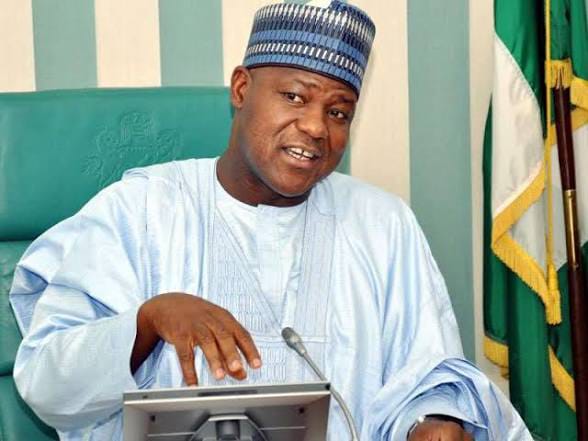
Former Speaker of the House of Representatives and Chairman of the Board of the National Credit Guarantee Company Limited (NCGC), Rt. Hon. Yakubu Dogara, CFR has expressed deep sorrow over the Nigerian Air Force aircraft crash that claimed the lives of 32 persons near Igbokoda, Ondo State. Dogara described the tragedy as a heartbreaking loss to the nation, noting that the deaths of the victims have left a painful void in the country’s defence and security community.
In a statement, the former Speaker extended his condolences to President Bola Ahmed Tinubu, Commander-in-Chief of the Armed Forces, the Nigerian Air Force, and the families of those who perished in the unfortunate incident.
He said the nation shares in the grief of the bereaved families and the Armed Forces at this time of immense sorrow, adding that the sacrifices of those who lost their lives in service to the country will not be forgotten. “The nation mourns with the families of the deceased and stands in solidarity with the Armed Forces during this difficult period,” Dogara stated.
He also commiserated with the Chief of Air Staff, officers and men of the Nigerian Air Force, praying that God grants them the fortitude to bear the painful loss.
According to him, moments such as this call for national unity, reflection and collective support for the families and institutions affected by the tragedy.
Dogara paid tribute to the victims, describing them as patriotic Nigerians whose commitment and service contributed to the security and stability of the nation. He further applauded the efforts of emergency responders, rescue teams and all personnel involved in the aftermath of the crash, commending their courage and professionalism under difficult circumstances.
The former Speaker prayed God to comfort their families, friends and colleagues.
He also offered prayers for the safety and protection of members of the Armed Forces and for continued peace, unity and progress in Nigeria.
The Nigerian Air Force aircraft crashed near Igbokoda, Ondo State, resulting in the death of 32 persons and plunging the nation into mourning. Authorities are yet to make public the cause of the accident as investigations continue.
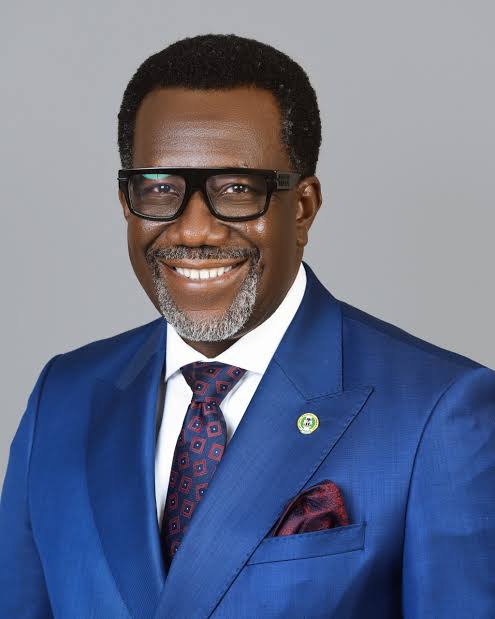
The Centre for Credible Reforms and Institutional Accountability (CCRIA) has commended the Commissioner for Insurance and Chief Executive Officer of the National Insurance Commission (NAICOM), Mr Olusegun Ayo Omosehin, for promoting transparency and accountability in the ongoing reforms of Nigeria’s insurance industry.
The centre said the implementation of the Nigerian Insurance Industry Reform Act (NIIRA) 2025 had ushered in a new phase of development for the sector, with stronger regulatory standards, improved capitalisation and greater emphasis on protecting policyholders.
Dr Aminu Abubakar Aminu, president of the centre, said this in a statement at the weekend.
Aminu commended President Bola Tinubu and the National Assembly for the enactment of NIIRA, describing the legislation as a major step towards addressing longstanding challenges in the insurance industry.
“The enactment of the Nigerian Insurance Industry Reform Act is a significant milestone in the development of Nigeria’s insurance sector. We commend Mr President and the National Assembly for recognising the need to modernise the legal and regulatory framework governing the industry. NIIRA provides the foundation for an insurance sector that is better capitalised, more accountable, more responsive to policyholders and better equipped to contribute meaningfully to the Nigerian economy,” he said.
The centre also praised Omosehin for his leadership of NAICOM, saying his extensive experience as an insurance professional had positioned him to effectively implement the new regulatory framework.
“We consider the appointment of Mr Olusegun Ayo Omosehin as Commissioner for Insurance and Chief Executive Officer of NAICOM a timely and appropriate decision. He is a seasoned insurance professional with many years of experience in the industry, and his understanding of the sector gives him the practical knowledge required to lead an important reform process of this nature. We commend him for the direction he has provided since assuming office and for his commitment to strengthening the industry,” Aminu said.
According to the centre, the ongoing recapitalisation exercise was among the important steps taken to strengthen the financial capacity of insurance companies and improve their ability to meet obligations to policyholders.
Aminu said the reforms were already producing early gains and should be sustained through consistent implementation.
“The early developments under NIIRA demonstrate that the reform is not merely a legislative exercise but a process capable of producing measurable improvements in the industry. Stronger capital requirements, improved supervision and greater attention to policyholder protection will ultimately create an insurance market that Nigerians can trust. We encourage NAICOM to remain focused on the implementation of the Act and to continue providing clear guidance to operators and other stakeholders,” he said.
The centre noted that the reforms would also help deepen insurance penetration and strengthen the industry’s contribution to national economic development.
It urged insurance companies, brokers, reinsurers, professional bodies and other stakeholders to embrace the new framework and work with NAICOM to achieve the objectives of the legislation.
“The success of NIIRA will require the cooperation of every stakeholder in the insurance ecosystem. Operators must see the reforms as an opportunity to strengthen their institutions, improve their services and regain the confidence of Nigerians. A well-regulated insurance industry can mobilise long-term capital, protect businesses and households against risks and support investment and economic growth. These are benefits that go beyond the insurance industry itself,” Aminu said.
Aminu emphasized that the centre was particularly encouraged by the emphasis on policyholder protection under the new framework, noting that public confidence remained critical to the growth of insurance in Nigeria.
He said Nigerians should be able to purchase insurance products with confidence that operators had the financial capacity and institutional structures required to honour legitimate claims.
The president further urged NAICOM to sustain its engagement with stakeholders while ensuring that the provisions of NIIRA were implemented transparently and consistently.
“What is required at this stage is continuity, professionalism and commitment to the objectives of the law. The reforms must be sustained beyond the initial implementation period so that the gains can become permanent features of the industry. We believe NAICOM, under the leadership of Mr Ayo Omosehin, has an important responsibility to ensure that the momentum is maintained, and we encourage all stakeholders to support the commission in delivering on this mandate,” he said.
The centre said the successful implementation of NIIRA would strengthen confidence in the insurance sector, improve the protection available to policyholders and position the industry to play a greater role in Nigeria’s economic transformation.
It also called for continued collaboration between NAICOM, insurance operators and other stakeholders to ensure that the objectives of the new law were fully achieved.

As Nigerians from across the United States gathered in Manhattan to celebrate Nigeria’s Independence Day in grand style, Hon. Amb. Jim Okolo used the occasion to share an inspiring message about Nigeria’s immense possibilities, rich cultural heritage, and promising future.
Speaking with members of the media during the colourful celebration, Hon. Amb. Okolo described Nigeria as one of the most blessed nations in the world, endowed with abundant natural resources, a dynamic population, and a cultural heritage that continues to earn global recognition.
According to him, Nigeria possesses enormous deposits of valuable minerals and other natural resources that, if fully harnessed, can accelerate economic growth and create prosperity for millions of citizens. He noted that the country is strategically positioned to become a leading destination for investment in mining, agriculture, technology, manufacturing, and infrastructure development.
Beyond its natural wealth, Hon. Amb. Okolo emphasized that Nigeria’s greatest strength remains its people. He praised the creativity, resilience, intelligence, and entrepreneurial spirit of Nigerians, pointing out that Nigerian professionals, innovators, academics, and business leaders continue to excel in various sectors across the world.
The respected diplomat also spoke passionately about Nigeria’s unique cultural identity. From the colourful festivals of its diverse ethnic groups to its globally celebrated music, fashion, literature, cuisine, and film industry, he described Nigeria as a nation whose cultural influence extends far beyond its borders.
He noted that Nigeria’s diversity is one of its greatest treasures, bringing together hundreds of ethnic nationalities with distinct traditions and languages that collectively form a vibrant and unified national identity.
While addressing questions on security, Hon. Amb. Okolo maintained that although Nigeria faces certain security challenges, the situation is not always as severe as often portrayed by social media discussions and sections of the international media. He stressed that millions of Nigerians continue to live, work, study, invest, and contribute meaningfully to society every day.
He called on the international community, investors, and members of the diaspora to focus on Nigeria’s strengths, opportunities, and achievements rather than allowing negative narratives to define the country’s image.
“Nigeria remains a land of opportunity, innovation, and hope. It is a nation blessed with extraordinary human capital, abundant resources, a rich cultural heritage, and a people whose determination and resilience continue to inspire the world,” he said.
The celebration was attended by several distinguished personalities, including the United Nations Secretary-General, Hajia Amina Mohammed, the Nigerian Ambassador to the United Nations, diplomats, business leaders, community stakeholders, and prominent members of the Nigerian diaspora.
The event transformed parts of Manhattan into a vibrant showcase of Nigerian pride, featuring cultural exhibitions, traditional performances, business networking sessions, authentic Nigerian cuisine, and displays highlighting the country’s achievements and diversity.
Adding excitement to the festivities were thrilling performances by internationally acclaimed Nigerian music stars Patoranking, Runtown, and BNXN (formerly known as Buju), who entertained thousands of attendees and demonstrated the growing global appeal of Nigerian music.
As the celebration came to a close, the message from Hon. Amb. Jim Okolo resonated strongly among participants: that Nigeria is far more than the challenges often highlighted in headlines. It is a nation blessed with extraordinary talent, vast opportunities, cultural richness, and the potential to achieve even greater success on the global stage.


Bank Cannot Freeze Customer’s Account Without Valid Court Order — Zarewa

Gov AbdulRazaq Inaugurates 464-Unit Housing Estate In Kwara

Scholars Hail Late Sheik Kamalu-deen’s Legacies iN Education, Leadership

-
 Uncategorized6 years ago
FG, states urged to harness flooding for ranching, others with technology – Agbaje
-
 Headlines11 years ago
Breaking: EFCC seals Borno House of Assembly, as Hon members take to their heels
-
 News12 years ago
Nigeria Security Operatives Stage Manhunt For Homosexual Perpetrator
-
 News10 years ago
How 21-year-old Girl fled community over accusation of lesbianism
-
 News11 years ago
Yobe Gov Moves Against Deputy
-
 Opinion7 years ago
7 signs she has friend zoned you
-
Technology5 years ago
Online job placement company headhunts women
-
 Headlines10 years ago
Borno Dep Gov Abducts Another Church Leader