
Uncategorized
OPINION: NIGERIA’S ASSUMED ECONOMIC SIGNIFICANCE TO THE U.S: THE FACTS, FIGURES, AND THE NEED FOR NEW PRAGMATISM

BY: A G Abubakar
Teaser: With a GDP smaller than the budgets of several U.S. states, and an oil export share under 3% Nigeria’s economic weight in Washington remains minimal. In 2024, total U.S. oil imports were valued at about $1.3 trillion, while Nigeria’s crude exports to the U.S. stood at $4.5 billion—barely 3%. The U.S. was not even among the top seven importers of Nigerian crude, which generated ₦45.1 trillion (about $32 b) for Nigeria. Switzerland, Spain, France, Germany, and the UK, led the list (NNPC, 2024). Oil remains Nigeria’s primary foreign exchange earner; others like solid minerals, agriculture, and gas exist largely at the level of potential.
The question, therefore, arises: within the context of the current U.S.–Nigeria relationship, does Nigeria mean much to the United States? Is the perceived “hostile” attitude toward Nigeria driven by economic interest? The answer is both yes and no — yes, perhaps in terms of potential, but no in terms of empirical indicators. Understanding this distinction between reality and potential is crucial for Nigeria to cultivate smarter global engagements and to manage diplomatic frictions such as those experienced in recent times with the United States.
It is true that Nigerians excel globally, but the Nigerian state itself remains a developing country struggling with stability and growth. It stays trapped in a neoliberal global economic structure that divides the world between commodity producers and consumers of finished goods. Occasional low-tech industrial processes — packaging, bottling, assembly, refining — create the illusion of transformation but do not alter the underlying dependency structure. This system, shaped by colonial history, imperial influence, and racialised global hierarchies, continues to function without malice on the part of those who benefit from it.
Industrialised nations negotiate toughly and expect counteroffers; those who fail to negotiate simply get swept aside. In this “global jungle,” survival depends on strategy, not sentiment — and certainly not on boasting about dormant potential. It is the optimal utilisation of productive factors within a given context that engenders economic growth and not potential. A nation’s production possibilities frontier or curve (PPC, PPF), which is a “simplistic” representation of its growth can only shift outward on account of a well tailored economic development framework which is pursued on sustained basis. Nigeria hasn’t been that lucky in this regard for years
Much of the Nigerian public discourse tends to sentimentally assume that the West’s preoccupation with Nigeria is its wealth. This is a misconception. Nigeria is indeed endowed with natural resources, but endowment is not wealth. Wealth is the ability to convert resources into power, productivity, and prosperity — and Nigeria has not done so at scale. It remains a nation full of deprivations.
Nigeria’s potentials are vast: over 200 million people, a landmass of 923,768 square kilometres of which 36.8 million hectares are arable, and enormous mineral wealth including oil, gas, lithium, tin, coal, nickel, cobalt, copper, graphite, rare earth elements, and bitumen worth an estimated $700 billion. Nigeria has 37 billion barrels of proven oil reserves and 210 trillion cubic feet of gas. In agriculture, it leads the world in cassava, yam, and sorghum production and ranks among the top producers of cocoa, cashew, sesame, and shea butter. Its coastline stretches 853 kilometres, hosting vital maritime trade routes and significant offshore oil deposits. Above all is a youthful labour force of 87 million people — a potential demographic dividend.
Yet these remain unrealised. Poverty, insecurity, and weak policy implementation continue to overshadow the country’s prospects. Nigeria’s GDP fluctuates between $188 billion and $250 billion, with the IMF’s 2025 outlook placing it at $188.27 billion — behind South Africa, Egypt, and Algeria The national budget remains below $40 billion, a figure woefully inadequate for a country of more than 200 million people. Daily oil production hovers around 1.5 million barrels, insignificant on the global stage.
Given these realities, the idea that Nigeria holds significant economic relevance for the United States collapses under scrutiny. The U.S. has 55 billion barrels of proven oil, 198 billion technically recoverable barrels, and 322 trillion cubic feet of gas. It produces 13 million barrels of oil daily. Its GDP reached $20 trillion in 2024, and its federal budget stood at $6.8 trillion, with a deficit of $1.8 trillion. Nigeria’s GDP is smaller than the budgets of individual U.S. states such as California, New York, and Texas. Astonishingly, it is also smaller than the personal fortunes of Elon Musk ($342b), Mark Zuckerberg ($216b), and Jeff Bezos ($215b) U.S. corporations like Apple, Microsoft, Alphabet, Nvidia, Amazon, and Tesla, each boast market capitalisations exceeding $1 trillion.
In foreign engagements alone, the U.S. spend amounts that dwarf Nigeria’s entire economy. Over two decades, it has averaged about $400 billion annually on wars and military operations, spent more than $2 trillion in Afghanistan and Pakistan, $3 trillion in Iraq and Syria (2003–2023), $350 billion in support of Ukraine, and $21 billion on Israel’s war in Gaza. It disburses nearly $100 billion every year in foreign aid and humanitarian assistance worldwide.
It is thus unrealistic to claim that the United States is driven by economic considerations or resource desperation toward Nigeria. The purchasing power of Nigerians is weak, and Nigeria’s contribution to global value chains is marginal. The country must accept this reality when shaping foreign policy. The time for playing the victim is over. Nations grow not by proclaiming potential but by converting that potential into economic power and using it to negotiate interest-based alliances.
No economic or ideological system is pure. They do share certain features. China’s “socialist market economy” under Deng Xiaoping embraced foreign investment and private enterprise, propelling China into the world’s second-largest economy. Gorbachev’s Perestroika and Glasnost introduced elements of market liberalisation in the USSR. The market-oriented reform has made the two former socialist economies more resilient and productive. The United States, the acclaimed global symbol of capitalism, equally operates a substantial welfare system — TANF, SNAP, Medicaid, housing assistance, disability support, and more. Ideologically, these schemes fall more to the socialist system.
Great powers also drop allies when interests shift: the USSR’s lukewarm support to Egypt during the 1973 Yom Kippur War; the West’s abandonment of the Shah of Iran; Ghana’s ideological swing from East to West after Nkrumah; Malaysia and Indonesia’s transformation from anti-communist hardliners to deep economic partners of China; and Vietnam’s journey from bitter U.S. enemy to a comprehensive strategic partner with over $150 billion in trade. Maybe to the chagrin of China, its pillar of support throughout the war years.
In the same vein, during the Cold War period, Malaysia under Mahathir Mohamad and Indonesia under Suharto were considered anti communist governments, but today, both maintain robust diplomatic and economic relations with China. By 2024, China was Malaysia’s largest trading partner, while the volume of Indonesia’s trade with China surged to $135 billion. Pragmatism dictates that nations subordinate their ideological inclinations under the goals of national interests – security and development.
Within the same liberal democratic settings, too, the interests/idiosyncrasies of the individual leaders could impact situations. For instance, the same US government that provided massive military support to the Ukraine in war with Russia has seemingly fallen out of favour with Trump, who had since cut it down. A move that has impacted Ukraine’s war campaigns negatived. Trump has equally armtwisted Ukraine to pay back the earlier US support under a mineral-mining rights agreement. The same superpower politics could be a kettle of paradox and irony.
The US and the EU that have been campaigning for sanctions against Russia and “threatening penalty” nations that failed to tow still patronise it. For instance, while the US slaps India with high tariffs for its relationship with Russia, the US still imports Russia’s nuclear fuel. It is also estimated that the UE still imports up to $130 billion worth of natural gas in 2024. That’s how marcky, fluid, and self-serving national interests and global politics could be. The development should also serve as a lesson to Nigeria and other lesser developed nations.
Nigeria must, therefore, widen its focus beyond the myth and fixation of being economically indispensable to the U.S. and indeed any power and rethink the relationship through the broader lens of national interest — particularly security and stability — in an evolving multipolar world. The rise of China and the re-emergence of India and Russia have reshaped global power into a polycentric order. Choices and alliances must be pragmatic, deliberate, and strategic to avoid repeating the mistakes of the Cold War era, when many developing nations merely exchanged one hegemon for another.
Today, the United States remains inclined toward militarised foreign policy, while China is primarily focused on global economic expansion. India and Russia operate on smaller but still consequential scales. By understanding these distinctions and leveraging new platforms such as BRICS+, Nigeria can position itself intelligently in the post-Trump global landscape.
The emerging order is moving toward a post-Western system, where traditional East–West ideological contests give way to new geopolitical realities driven by national interests. Nigeria’s path forward lies in recognising its true position, converting its potential into real economic power, and engaging the world with strategy rather than sentiment.
Nigeria must stop anchoring its foreign relations on assumptions of economic relevance and start negotiating from a clear understanding of its true strengths and vulnerabilities. In a world tilting towards multipolar competition, sentiment is a luxury. Strategy, is survival. Nations rise by reading the global room correctly – and also acting decisively. Powers respect capacity, not potential; results are not rhetoric.
If Nigeria, the 6th populous nation in the world, wants a seat at the global table, it must earn it through smart policies, disciplined execution, and a partnership rooted in sound and realistic vision. A national vision forged in justice, equity, accountability, and sense of proportion in governance. So far these critical elements have been in short supply. Nigeria should therefore wake up and get its act together if it wants to earn respect and relevance in the unfolding new polycentric world order. So far, there’s not a single nation on the planet Earth with over 220 million people that has reduced itself to global ridicule and disrespect like Nigeria. All, on account of decades of bad governance. Things got to change.
A. G. Abubakar
agbarewa@gmail.com

Yenagoa, Nigeria – Senator Lawrence Ewhrudjakpo, Deputy Governor of Bayelsa State, has died after collapsing in his office. He was 60 years old.
Reports indicate that Senator Ewhrudjakpo slumped in his office and was rushed to the Federal Medical Centre (FMC) in Yenagoa, where he was pronounced dead shortly after arrival.
The Bayelsa State Government has confirmed the death, describing it as a “huge loss”. Tributes have poured in from across the state and the country, praising Senator Ewhrudjakpo’s service and contributions to the development of Bayelsa State and Nigeria.
Senator Ewhrudjakpo had been serving as Deputy Governor since 2020 under Governor Douye Diri. Prior to his elevation, he represented Bayelsa West in the 9th Senate, where he chaired key committees and was regarded as one of the more influential lawmakers from the South-South region.
Uncategorized
Senator Ikpae Joseph Igiagbe Commends President Tinubu’s Efforts to Address Insecurity
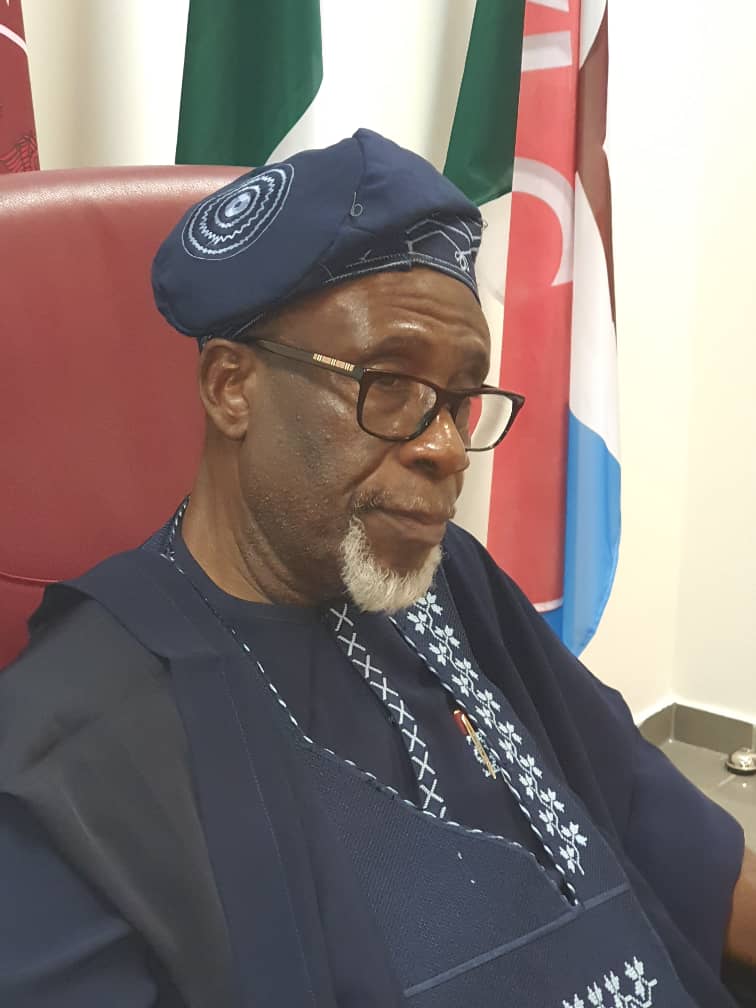
By Abdullateef Bambgose
Senator Ikpae Joseph Igiagbe, representing Edo Central in the Senate, has praised President Bola Ahmed Tinubu’s response to the escalating insecurity in the country, expressing confidence that the measures put in place will restore safety and promote economic growth.
Speaking in an interview with news men at the National Assembly, on Thursday Senator Igiagbe acknowledged the President’s efforts, saying, “Mr. President is doing his best to address these issues. Security is crucial not only for peace but also for economic growth. By the grace of God, our economy is showing improvement.”
The lawmaker emphasized the importance of collective responsibility, stating, “Every Nigerian has a role to play in improving our country. Municipalities alone cannot solve all our problems. Each of us, regardless of belief, tradition, or background, must strive to raise our communities well.”
Senator Igiagbe also expressed concern about opposition attempts to politicize the insecurity issue, saying, “Unfortunately, some opposition is attempting to use insecurity and other challenges to discredit the administration ahead of the 2027 elections.”
On state policing, the Senator expressed support for regionalizing security operations, saying, “This approach ensures that people protect their communities, and it can reduce insecurity significantly.”
He also announced plans to introduce a bill leveraging the National Youth Service Corps (NYSC) to provide young people with pathways into military and paramilitary service, aiming to reduce unemployment and strengthen community safety.
:
Stephen Olufemi Oni, Ilorin
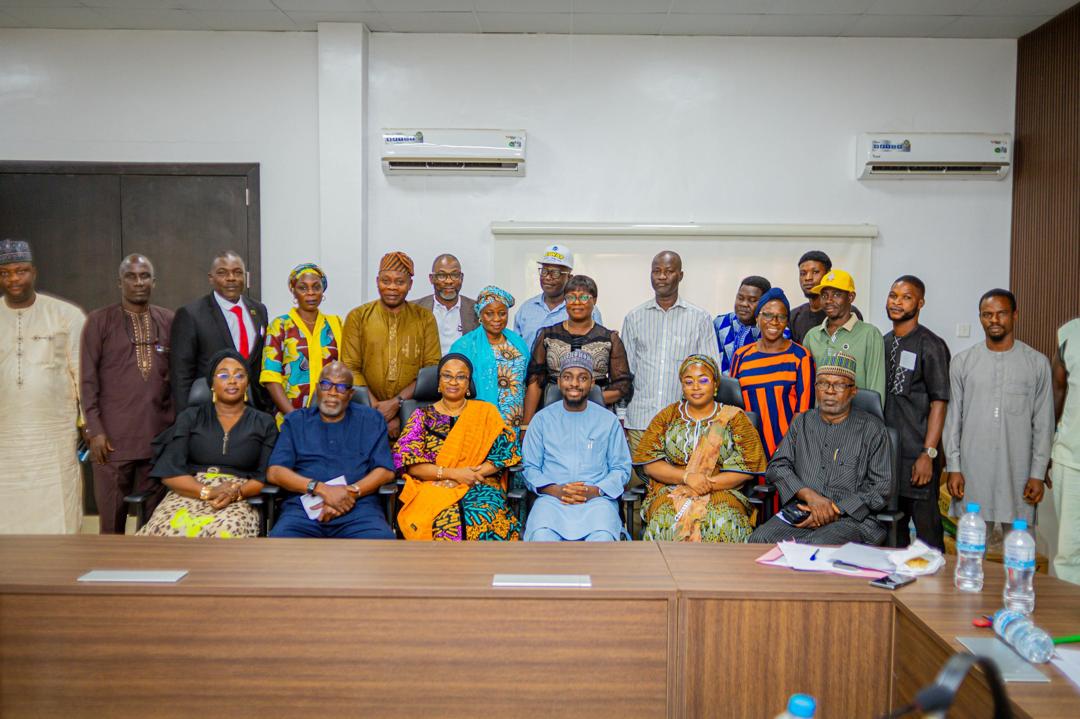
The Kwara State Government has unveiled a comprehensive 2026 Action Plan to accelerate economic growth, improve service delivery, and enhance the welfare of all residents.
The plan focuses on key reform pillars, including land administration modernization, agricultural investments for food security, strengthened public-private partnerships (PPPs) and export promotion, accelerated infrastructure development, and expedited justice delivery with clear, measurable timelines.
Speaking at the stakeholders’ meeting on Ease of Doing Business, the Commissioner for Finance and Chairman of the Kwara State Ease of Doing Business Council, Dr. Hauwa Nuru, reaffirmed the administration’s unwavering commitment to transparent governance, accountability, and inclusive stakeholder engagement.
She highlighted strategic focus areas for 2026, emphasising land administration reforms, agricultural investment promotion, public – private partnership expansions, infrastructure delivery, and justice sector efficiency—all with time-bound targets to ensure measurable results.
According to her, government policies must continue to positively shape the business environment by enhancing regulatory clarity and improving service efficiency, particularly through the SABER programme.
“The goal of Ease of Doing Business is to ensure that government and stakeholders work together to create a truly conducive business environment—one that drives innovation, investment, and sustainable economic growth under Governor AbdulRahman AbdulRazaq’s leadership,” she added.
In his remarks, the Commissioner for Works, Engr. AbdulQuawiy Olododo, reiterated the government’s commitment to scaling up infrastructure across the State, with continued investments in roads, bridges, electricity, water, healthcare, and education to attract private capital and stimulate development.
Also speaking, the Commissioner for Business, Innovation and Technology, Mrs Damilola Yusuf Adelodun, emphasised that the State now operates a transparent and predictable investment promotion framework, designed to support companies, cooperatives, and local investors with accessible processes and competitive incentives.
The Executive Chairman of the Kwara State Geographic Information Service (KWGIS), Mallam Sulyman Abdulkareem, noted that the recently commissioned land digitalization system marks a significant milestone in improving transparency and efficiency in land administration. He explained that the digital platform will streamline land records, title issuance, and related transaction aimed at significantly reducing processing times and improving tenure security for citizens and investors.
Adding to this, the Accountant General of the State, Mallam Abdulganiyu Sanni, commended the government’s reforms, noting that “transparent and clearly published official fees, procedures, and service timelines have strengthened public trust and showcased the State’s commitment to efficient, accountable public service delivery.” He emphasized that these measures are essential to creating a predictable environment that supports businesses and enhances revenue integrity.
Stakeholders in attendance also expressed strong support. The Chairman of the Nigeria Association of Small Scale Industrialists (NASSI), Mr. Olawoyin Yinka Solomon, commended the government for policies that continue to improve the business climate. The Vice Chairman of the National Association of Small and Medium Enterprises (NASME), Kwara State Chapter, Alh. Babatunde Ganiyu Aremu similarly applauded the Council’s efforts to sustain a conducive environment for MSMEs across the State.
End


NCDMB hails Marconi’s Acqusition of Saipem’s Yard

Indigenous Oil Companies Get Boost as NCDMB Deepens Nigerian Capacity

Bayelsa Deputy Governor, Senator Lawrence Ewhrudjakpo, Passes Away

-
 Uncategorized5 years ago
FG, states urged to harness flooding for ranching, others with technology – Agbaje
-
 Headlines10 years ago
Breaking: EFCC seals Borno House of Assembly, as Hon members take to their heels
-
 News11 years ago
Nigeria Security Operatives Stage Manhunt For Homosexual Perpetrator
-
 News9 years ago
How 21-year-old Girl fled community over accusation of lesbianism
-
 News10 years ago
Yobe Gov Moves Against Deputy
-
 Opinion7 years ago
7 signs she has friend zoned you
-
Technology4 years ago
Online job placement company headhunts women
-
 Headlines10 years ago
Borno Dep Gov Abducts Another Church Leader