
Uncategorized
OPINION: Still on the Almajiri and Out-of-School Crisis in the North: Saving the Youths, Preserving National Security.

By: A G Abubakar
Sources from the National Commission for Almajiri and Out-of-School Children Education (NCAOOSCE) have provided statistics on these two phenomena that should elicit greater public concern. The figures indicate that around 18.3 million children are out of school, of whom approximately 10.6 million are believed to fall within the Almajiri category.
The North-West geopolitical zone has the highest numbers, followed by the North-East. In specific terms, Kano, Sokoto, and Borno states, particularly their capital cities and major towns, have the highest concentrations. Millions from this population risk being condemned to lives of desperation if the disturbing trends of the past two decades are anything to go by. The warning signs calling for greater action are unmistakable, as are the dangerous consequences of ignoring them.
The Almajiri system remains one of the most enduring yet deeply problematic social, educational, and developmental challenges confronting Northern Nigeria. Although rooted in a centuries-old Islamic tradition of Qur’anic education, its contemporary manifestation has evolved into a complex social problem involving child welfare, educational exclusion, poverty, insecurity, weaknesses in religious institutions and governance failures.
Almajiri refers to a student or pupil who leaves home to study Islamic knowledge and the Qur’an under a religious teacher (Mallam) in Northern Nigeria. The term comes from the Arabic word “Al-Muhājir” which means an emigrant or someone who leaves home in search of knowledge. Historically, it recalls the migration of Prophet Muhammad from Mecca to Medina (Al-Muhajirun). The concept got corrupted into Almajiri in Hausa, Fuqara/Ma’jir in Kanuri, and Pukara/Pukəra in Babur languages.
The system’s historical evolution dates back to the 11th century in Kanem-Borno and later the Sokoto Caliphate. It was a community-supported, self-sustaining model of Islamic scholarship in which young boys studied the Qur’an and lived under the care of a scholar. Over time, due to economic pressures, weak social safety nets and the breakdown of community support, many children in the system have had to rely on street begging or menial jobs (nail cutting, shoe shining, head porterage, etc) for survival.
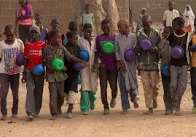
Today, the term Almajiri conjures up an image of a young, vulnerable and unkept child, between the ages of five and fourteen, with a plastic bowl in hand, begging for food, and money on the streets. It also evokes images of children congregating for lessons around a fireplace in the open or in a zaure/makeshift enclosures, as time and circumstances dictate. Sadly, most parents dump the children without providing the requisite material support to sustain them. The population of this group is now estimated at above 10 million. It is part of the nation’s 18 million out-of-school children.
To drive home the gravity of the concern, Nigeria’s 18 million out-of-school children, including 10 million Almajirai, outnumber the populations of some African countries. For illustration, countries that fall within this range include Zimbabwe (17.3 million), Guinea (15.4 million), Benin (15.2 million), Rwanda (14.9 million), Burundi (14.7 million), Tunisia (12.2 million) and South Sudan (11.5 million). Others are Togo (9.3 million), Sierra Leone (8.5 million), and Libya (7.3 million).
In the 21st century, to hypothetically populate the countries listed with an Almajiri-exclusive population of the Nigerian variant would be to have societies without modern-day doctors, engineers, technicians, ICT professionals, innovators, pilots and related professionals. For sure, life under such circumstances would not be the best. Neither would it facilitate the proper practice of the religion itself.
Almajiri education starts with learning the Arabic letters (baƙi) and putting them together to facilitate the reading and memorisation of the Qur’an. In addition, the basic practices associated with the five pillars of Islam namely, Shahada (declaration of faith), Salah (prayers), Zakat (almsgiving), Sawm (fasting), and Hajj (pilgrimage), are taught. Also taught are the six articles of the Islamic faith, which comprise belief in God (Allah), belief in angels, belief in the holy books, belief in the prophets, belief in the Day of Judgement and belief in divine decree (Al-Qadr), alongside the accompanying ahadith.
By the time a child graduates, his mind is expected to have been equipped and moulded to enable him to live the life of a pious Muslim, with the potential to teach others. Wooden slates and locally formulated ink (tawada) remain the basic learning tools. That has been the basic content and approach of the Tsangaya Islamic education system.
But there are some questions about how the system is run nowadays. How qualified and knowledgeable in Islamic pedagogy are the teachers? Who takes care of the basic material needs of both the learners and their teachers? What happens after graduation in terms of acquiring life skills and raising a family in non-traditional economic settings? Above all, do people know about the evolution of the Tsangaya system in the first place? The answers to these questions could shed light on some of the challenges associated with the Almajiri/Tsangaya system. And, also provide pointers to the direction of the reforms required to improve and integrate the system with secular education.
For centuries, the Almajiri system survived on a tripod: the teachers (Mallamai), the rulers (Sarakuna) and the community (Ummah). The system and its triangular relationships then operated in simple agrarian and semi-urban settings, where members of the community knew one another by face and name. The traditional rulers supported the class of clerics, who, in turn, provided them with spiritual services and helped cultivate an image of piety and reverence. Islamic clerics, for their part, served as qadis (judges) and even administrators in royal courts.
As a consequence, the traditional institution shouldered the economic needs of the clerics and their Almajirai (pupils). The larger society (Ummah) funded both the clerical and traditional classes through voluntary (and sometimes involuntary) sources such as gifts, fines, levies, charity and even free labour. That was essentially the arrangement in times past.
With political and socioeconomic developments over time, the powers of traditional rulers were gradually eroded, first by a new class of public servants who managed public wealth within a constitutional framework. The political class was later accommodated and shared power with the technocrats. Economic life also shifted from subsistence activities to wage employment in non-agricultural sectors. Unfortunately, literacy levels and farm modernisation remained almost stagnant, making life increasingly desperate for the people.
The two factors, namely ignorance and economic deprivation, have made reforming the Tsangaya/Almajiri system a very daunting task. The first challenge is the fact that many faithfuls cannot come to terms with the reality that the Tsangaya/Almajiri model is circumstantial, rooted in the people’s historical experiences. That’s why they differ in approach across different Muslim societies.
The factor of deprivation has to do with choices. Islam allows polygamy, but under certain conditions. Many, however, choose it without bearing in mind the inherent parental obligations. Such parents end up producing more children than they can adequately care for. Consequently, they perceive the enrolment of children in the Almajiri system as a way of reducing economic pressures in the name of the faith.
Sadly, because of the eroded economic dispositions of the Mallams themselves and the absence of institutionalised community support, the children end up roaming the streets for survival, sometimes having to fend for their teachers as well. In the process, many stray into places such as hotels, beer parlours, motor parks and markets, where they are exposed to indecent behaviour. Yet, a section of society erroneously believes that the hardships imposed on these children—hunger, long-distance trekking, dirt, poor clothing and other forms of deprivation—will be rewarded by the Almighty. For sure, not when such hardships are self-inflicted.
How have other societies addressed the challenges associated with the Almajiri system? A look at other Muslim societies, such as Malaysia, Indonesia, Pakistan, and Morocco, could provide some lessons for Nigeria. Malaysia, for instance, has what is known as the sekolah agama/pesantren-pondok system, a traditional Islamic school system. It is a model similar to the Almajiri schools initiated by the Jonathan government but which was poorly supported in parts of the Muslim North.
The Madrasa systems in Malaysia and Morocco, although they employ vastly different curricular models, offer useful concepts for enriching Nigeria’s reform efforts. The Malaysian system is an integrated dual-stream model. The Malaysian government actively standardises the curriculum through the Ministry of Education (KPM). The integrated curriculum (KBSR/KBSM) was introduced to bridge secular and Islamic teachings. Students study standard national subjects such as maths, science, english, and history alongside Islamic studies.
To maintain the Islamic core of learning, the curriculum at the primary and secondary levels focuses on tilawah al-Quran (Qur’anic recitation), shariah/fardu in (Islamic religious duties), aqidah, and Islamic morals and character development. Learners are also taught to read and write in Jawi, which is similar to what is known as Ajami in Nigeria, as part of their standard primary curriculum. Other regular subjects in the curriculum include arabic, tafsir, shariah, hadith and Islamic history.
Morocco maintains a classical, traditional Madrasa model, often associated with focus on preserving classical texts and foundational Islamic sciences. The ancillary sciences (ulum al-Ala) constitute a crucial part of the curriculum, with every student beginning with an extensive mastery of language and logic. These include advanced Arabic grammar, rhetoric (balagha), literature and traditional logic (mantiq), all of which serve as tools for deeper textual analysis. The religious sciences (ulum al-din), legal theory (usul al-fiqh), Qur’anic exegesis (tafsir), etc, are also part of the curriculum.
Rote memorisation is also a hallmark of the Moroccan Madrasa system, where learners strive to complete the memorisation of the Qur’an alongside classical didactic poems before advancing to the higher sciences. The government, through the Ministry of National Education and the Ministry of Endowments and Islamic Affairs, has also introduced foreign languages at certain levels to help graduates integrate into the modern workforce.
Pakistan, which has a lot in common with Nigeria, continues to rely heavily on the classical, centuries-old Dars-e-Nizami religious curriculum framework, although it is currently negotiating greater state intervention. The vast majority of Pakistan’s more than 22,000 madrasas, organised under various sectarian boards or Wafaqs, utilise the Dars-e-Nizami model, which was developed in the 18th century and relies heavily on traditional scholarship and textual preservation.
The government recently launched the National Curriculum Framework to achieve the objective of “One Nation, One Curriculum”. The state requires madrasas to adopt core secular subjects such as english, maths, gen.science and computer literacy while granting them the flexibility to introduce advanced religious modules. Some of these reforms have encountered resistance from theological boards associated with sectarian groups such as the Deobandi, Barelvi and Ahl-e-Hadith movements. Nevertheless, implementation is ongoing.
Today, Pakistan is a nuclear power, Malaysia remains one of the fastest-industrialising economies in the world, and Morocco is a model of modernisation. All three are Muslim-majority societies. Sadly, Nigeria is busy expending enormous national resources on containing sectarian crises.
The NCAOOSCE, established in 2023 under the FME, represents Nigeria’s latest initiative to address the nation’s out-of-school children crisis, of which the Almajiri segment is an integral part. Its statutory mandates include eradicating illiteracy and providing a multimodal education system that combines Qur’anic learning with secular education: STEM, digital literacy and entrepreneurship. The objective is to curb youth poverty, destitution and street begging. It’s a great initiative but needs to be more decisive, and holistic.
As part of the way forward, attention should be paid to some critical areas in the short and medium terms. The states and local governments must show greater political will. At present, many do not demonstrate the required sense of urgency or proper appreciation of the connection between the out-of-school children with wider social problems in their respective states. They need to be more deliberate.
Another area of reform is to make it obligatory for parents who send their children to Tsangaya schools to assume some material responsibility for their upkeep. The government should also encourage FBOs, charitable trusts, voluntary donors, and philanthropic organisations to channel support to Islamic centres, as appropriate.
Integrating secular education subjects with core Islamic studies is a welcome idea, but it requires a tailor-made curriculum and effective oversight. Educational materials, including books, qualified teachers, and desks, are equally crucial. Leaders of major Islamic sects must come together to produce standard foundational textbooks on the five pillars and six articles of faith—the common ground of their beliefs.
Beyond this shared foundation, each sect can develop advanced texts reflecting its distinct scholarly perspectives. The government must champion this initiative by adopting and supporting the textbooks for formal use in the Tsangaya education system, alongside conventional subjects. The contest for the impressionable minds of juveniles is part of the crisis associated with the Tsangaya system, where some clerics use the platform for radicalisation.
The Almajiri system, in its present form, is an indictment of the Muslim North’s collective failure and a ticking time bomb beneath the region’s future. The time for excuses is over. Governments, religious leaders, traditional institutions, and parents must act decisively to rescue these children. Either the system is reformed to reclaim the 18 million out-of-school children, alongside millions of unemployed school leavers and graduates, or these children will be abandoned to the vagaries of insecurity, and destitution.
The Muslim North must stop playing politics with the minbar (pulpit), Hajj, Umrah, palliatives, the construction of bypasses, underpasses and flyovers, the building of airports, and the creation of emirates and chiefdoms. Human capital development is an urgent priority before the escalating youth crisis fuels terrorism and insurgency further, making life increasingly unsafe for everyone.
A. G. Abubakar
agbarewa@gmail.com.
By Hassan Agboola
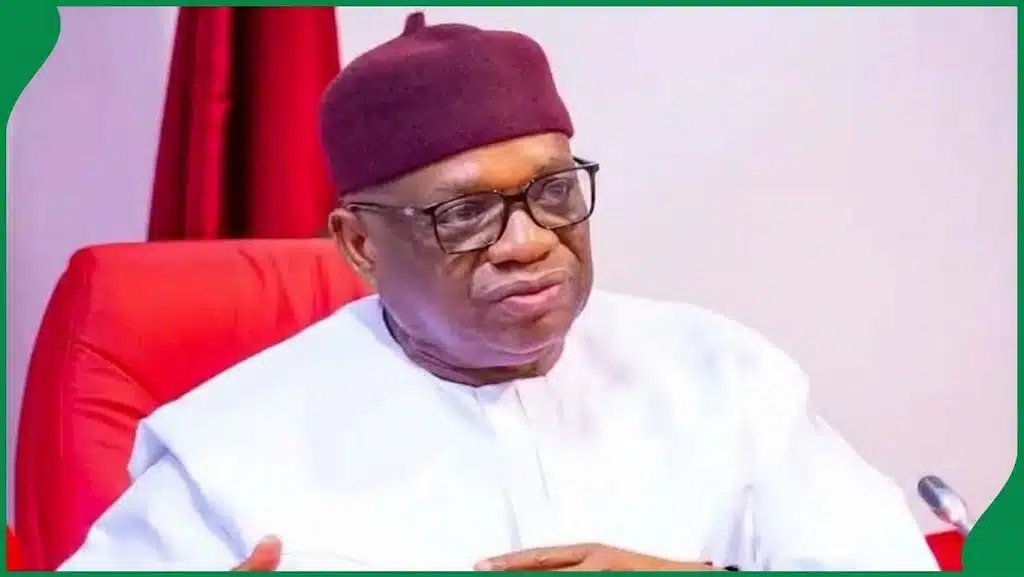
Former Abia State Governor, Senator Orji Uzor Kalu, has attributed the success of Enyimba International Football Club during his tenure as governor to discipline, proper management and commitment to excellence.
Kalu said he made two major promises to the people of Abia State when he sought election as governor in 1998: to build a standard stadium in Aba and to make Enyimba champions of the African Club Championship.
He said he fulfilled both promises, noting that Enyimba subsequently dominated Nigerian football, winning the league title for about five or six seasons and also lifting the FA Cup.
Speaking on the current state of the club, Kalu recalled the level of personal commitment and discipline he demonstrated in ensuring its success.
“When I was going to be governor in 1998, there were two promises I made to Aba and the Nigerian people. I told my people in Aba that I would build a proper stadium, which I did. I also told the people of Aba that we were going to become champions of the African Cup of Champions. I asked them to vote for me, promising that they would get it. And I fulfilled that promise” he said.
He added that discipline was central to the club’s achievements, recalling how he regularly travelled from Umuahia to Aba early in the morning to train with the players before resuming his official duties.
“Discipline is everything. I used to leave Umuahia at quarter to five every morning and arrive in Aba at 5:30am. I would train with the Enyimba players at 7:30am and return by 8am to take my bath and resume work in the office,” he said.
The former governor, however, lamented what he described as a poor working system in the country, saying Nigeria needed a comprehensive reorientation and a fundamental overhaul of its institutions.
“The working system is very bad, not only in football but in every aspect of our national life. We need reorientation and surgical operations in our system, from beginning to end,” he said.
Kalu also expressed appreciation to the Rangers International Football Club for their recent performances on the continent, expressing hope that the Enugu-based club would sustain its progress.
He said he wanted to see another Nigerian club win the continental title, adding that several Nigerian clubs had attempted to achieve the feat.
The senator also recalled Enyimba’s difficult continental encounters, including a controversial match against Al Ahly of Egypt, during which, according to him, his team’s two goals were disallowed.
He said the experience demonstrated the challenges Nigerian clubs faced in continental competitions and the importance of remaining committed to excellence.
Kalu further urged Nigerians, particularly professionals, to take their responsibilities seriously and discharge their duties with dedication.
“Whatever you want to do, do it well. Nigerians should stand up for their responsibilities. If you want to be a journalist, be a journalist properly. People should stand up for their duties. Some people do not give time or commitment to what they are supposed to do. I urge everybody not to do that but to take their jobs seriously” Kalu said.
Stephen Olufemi Oni, Ilorin
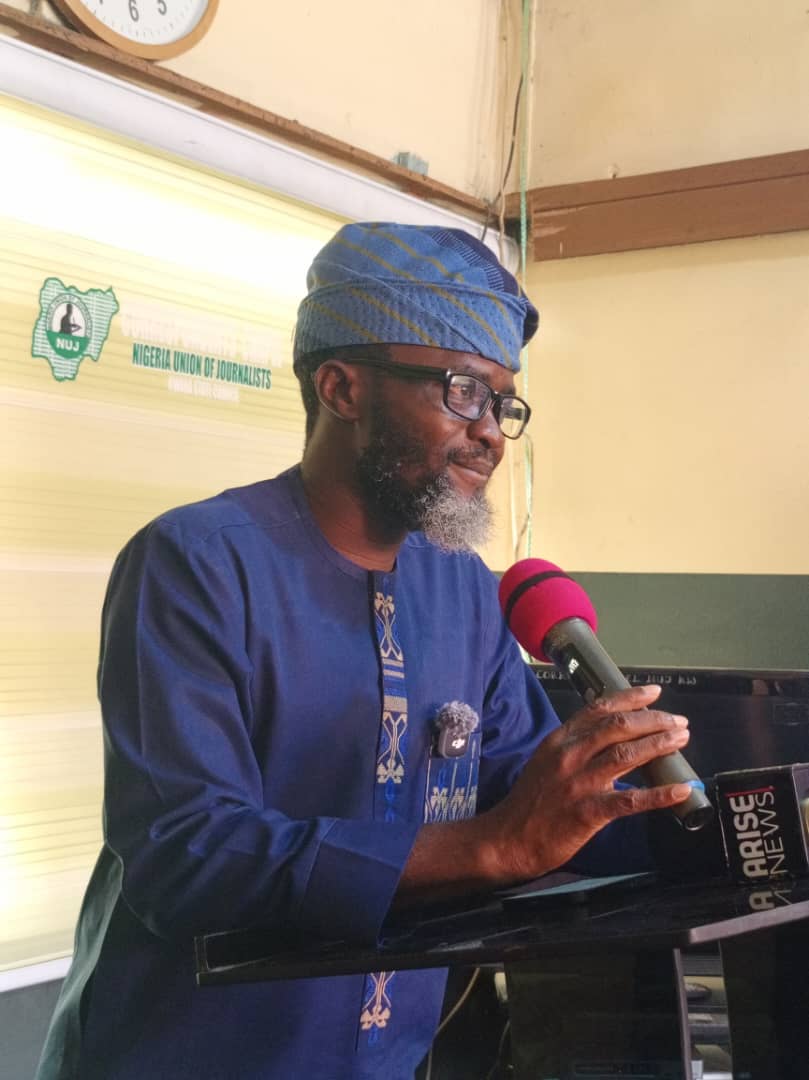
The candidate of the All Progressives Congress (APC) for the Offa/Oyun/Ifelodun Federal Constituency in Kwara State, Dr Rafiu Ajakaye, has pledged to prioritise security, education, youth empowerment and inclusive governance through people-oriented legislation if elected in the 2027 general elections.
Ajakaye, a former Chief Press Secretary to Governor AbdulRahman AbdulRazaq, said effective legislative representation must go beyond attracting constituency projects to include advocacy, accountability, problem-solving and ensuring that the voices of constituents are heard in national decision-making.
He stated this on Tuesday while featuring on the News Keg programme organised by the Correspondents’ Chapel of the Nigeria Union of Journalists (NUJ), Kwara Council, at the chapel’s secretariat in Ilorin.
The APC candidate said his decision to contest was informed by his experience in public service and conviction that political leadership should be driven by the desire to improve people’s lives rather than personal ambition.
“My aspiration is driven not by personal ambition, but by a conviction that public service offers an opportunity to create meaningful impact in society,” he said.
Reflecting on his experience in the AbdulRazaq administration, Ajakaye cited the recruitment of more than 4,700 teachers in 2021 as an example of how transparent governance could expand opportunities and strengthen public confidence in government.
He said the exercise was conducted through an open and competitive process involving online applications, examinations and interviews, insisting that employment opportunities should be based on merit rather than political connections.
“We ensured that people were employed based on their competence and qualifications, not because they knew anybody in government or had political connections,” he said.
On security, Ajakaye described insecurity as a major threat to national development, particularly in communities affected by kidnapping, banditry and other criminal activities.
He advocated stronger legislative oversight of security agencies, improved welfare and equipment for security personnel, increased recruitment and better collaboration between federal and state governments.
He also called for security policies that take into consideration the geographical realities of different communities, including forests, difficult terrain and poorly monitored rural settlements exploited by criminal elements.
“Security remains the foundation upon which every society develops,” he said, stressing that the National Assembly must ensure that security agencies receive adequate resources and are held accountable for their responsibilities.
On education, the former governor’s spokesman called for increased investment in science, technology, technical and vocational education, as well as digital learning to prepare young Nigerians for emerging opportunities in the labour market.
He argued that the education system must evolve with changing economic and technological realities, noting that many traditional occupations had been displaced by technological advancement.
“Our schools should produce innovators, entrepreneurs, professionals, artisans, researchers and responsible citizens capable of competing in an increasingly dynamic world,” he said.
Ajakaye also identified youth empowerment as a major component of his proposed legislative agenda, advocating policies that would expand access to finance, digital entrepreneurship, professional training and agricultural opportunities.
He urged young Nigerians to embrace agriculture as a viable business, rather than regarding it as an occupation of last resort.
On women’s participation in governance, he maintained that inclusive decision-making was essential to developing policies that adequately addressed the needs of different segments of society.
Citing the debate surrounding the proposed six-month maternity leave policy in Kwara State, he recalled how a female participant at a policy discussion advised that the arrangement should be optional rather than compulsory to accommodate the different circumstances of working mothers.
According to him, the experience reinforced the importance of involving women in decisions affecting their welfare.
“That is the advantage of having women at the table where decisions affecting their lives are being made, rather than men sitting down and assuming that what they consider good for women must automatically become policy,” he said.
He further argued that responsible leadership required distinguishing between what people wanted and what they genuinely needed, noting that some decisions might be difficult but necessary for the long-term interest of society.
Ajakaye promised that his approach to legislative representation would be guided by humility, fairness, accessibility, empathy and intellectual rigour, irrespective of the social status, gender, religion or political affiliation of constituents.
“My approach to legislative service will be guided by humility, fairness, intellectual rigour, accessibility and empathy,” he said.
Earlier, Chairman of the News Keg Committee, Ibrahim Alege, commended Ajakaye for his contributions to media development and support for the Correspondents’ Chapel during his tenure as the governor’s spokesman.
Alege described the APC candidate as an experienced media professional whose years in government had equipped him with valuable knowledge of political communication, media relations and public service.
He particularly acknowledged Ajakaye’s support for the chapel’s annual Press Week, acquisition of its bus, end-of-year gifts and financial assistance on different occasions.
“Indeed, there is a popular saying that once a CPS, always a CPS. We believe that experience and those professional instincts remain part of him, even outside the corridors of government,” Alege said.
He, however, stressed that the engagement was not merely an opportunity to celebrate the former CPS but a platform to examine his political ambition, legislative priorities and proposed programmes for the constituency.
Alege urged journalists to ask critical questions and demand clarity to enable the electorate make informed decisions ahead of the 2027 elections.
In his remarks, Chairman of the Correspondents’ Chapel, Alhaji Biola Azeez, appreciated Ajakaye for his support and goodwill towards the chapel, expressing the union’s commitment to sustaining its cordial relationship with him.
Azeez also wished the former CPS success in his political ambition.
By Hassan Agboola
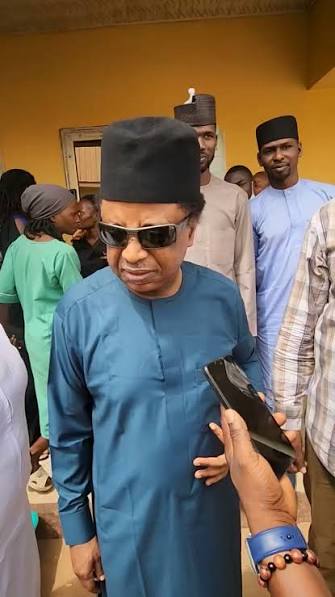
Former Senator representing Kaduna Central Senatorial District, Senator Shehu Sani, has provided and installed a solar power system at Rigasa General Hospital in Kaduna State as part of efforts to improve electricity supply and strengthen healthcare delivery at the facility.
The intervention is expected to enhance the hospital’s capacity to provide essential medical services, particularly during power outages, when uninterrupted electricity is critical for patient care, medical procedures and the operation of vital healthcare equipment.
The initiative is another demonstration of the former lawmaker’s commitment to community development and support for public healthcare institutions.
In October 2026, Shehu Sani also provided a solar power system to Sabo-Tasha General Hospital in Kaduna to support critical medical services, particularly at the special-needs babies unit and part of the maternity ward.
The former senator, a human rights activist and All Progressives Congress (APC) senatorial candidate for the 2027 general election, is said to believe that politicians should not wait until they occupy public office before responding to the needs of their communities, especially in areas where timely intervention could help save lives.
Speaking with journalists shortly after the handing-over ceremony, the Sarki Rigasa, Malam Aliyu Yahaya, expressed appreciation to Senator Shehu Sani for what he described as a laudable intervention that came at the right time.
Yahaya said the gesture demonstrated genuine concern for the welfare of residents and the importance of supporting public healthcare institutions, particularly those serving densely populated communities.
He commended the former lawmaker for responding to a critical need in the community, noting that reliable electricity remains essential for effective healthcare delivery.
The traditional ruler expressed hope that the solar installation would provide lasting benefits to the hospital, improve the working environment for healthcare personnel and enhance the quality of services available to patients.
Reliable electricity is indispensable to modern healthcare delivery, supporting essential services such as laboratory operations, lighting, the preservation of medical supplies and the functioning of critical medical equipment.
The intervention is therefore expected to provide relief to healthcare workers and residents of Rigasa and neighbouring communities who depend on the hospital for medical services.
The development also highlights the importance of collaboration between political leaders, traditional institutions and public healthcare facilities in addressing infrastructure challenges and improving access to essential services.


NDIC Takes Deposit Protection, Financial Literacy Campaign to Oyo Corps Members

Orji Kalu: Discipline, Proper Management Made Enyimba Great.

Kwara 2027: I’ll Prioritise Security If Elected – APC Rep Candidate, Ajakaye

-
 Uncategorized6 years ago
FG, states urged to harness flooding for ranching, others with technology – Agbaje
-
 Headlines11 years ago
Breaking: EFCC seals Borno House of Assembly, as Hon members take to their heels
-
 News12 years ago
Nigeria Security Operatives Stage Manhunt For Homosexual Perpetrator
-
 News10 years ago
How 21-year-old Girl fled community over accusation of lesbianism
-
 News11 years ago
Yobe Gov Moves Against Deputy
-
 Opinion8 years ago
7 signs she has friend zoned you
-
Technology5 years ago
Online job placement company headhunts women
-
 Headlines11 years ago
Borno Dep Gov Abducts Another Church Leader