
Opinion
Opprobrious NASS And The 2019 Budget

By Gabriel Ikese
The ideal of popular election of Legislators is generally regarded as admirable. Yet the selection process does not always permit the widest possible choices. And that has been our albatross here in Nigeria. The legislature is expected to reflect the electorate’s preferences, but that is in the Whiteman countries, not in our clime. In the 8th session of the National Assembly, it is rarely the case. If you followed the antecedents of our lawmakers and the trajectory of the NASS, you will obviously smell the dead rat.
In saner democracies around the globe, the legislature is an institution of reputable model for discipline and patriotism. It is the sanctimonious fulcrum of any working democracy as showcased in the America system. Legislators were embodiment of untainted character with high level of integrity, uprightness and moral decency. But that is clearly not our portion as the difference is miles apart.
Perhaps for the enormity of our sins against God the Father, He decided to inflict us with such pains, not with epidemic disease as alluded to by Governor Yari of Zamfara State, but allowing this 8th class of Lawmakers to represent us. The 8th NASS appears to be completely deficient of any sterling qualities and became the cynosure of chronic legislative rascality, demonic impunity and financial impudence.
Another budget session is here again, and the NASS has begun to manifest the usual symptoms of chronic insensitivity and unpardonable cluelessness. They are poised to throw up another frivolous mischief to undermine the 2019 budget process even before it is laid on the floor of the combine congress. The recurring acrimonious uproar that accompanied the passing of our budgets over the past 3 years is regrettably appalling.
Members of the House of Representatives at plenary has threatened to boycott the anticipated presentation of 2019 budget estimate by President Muhammadu Buhari over an alleged comment by the Minister of Budget and National Planning, Udo Udoma. The dignity of our lawmakers has greatly eroded. Their insensitivity to the plight of citizens is obviously very legendary.
Members could not choose a better time to demonstrate their folly, but when government is trying to consolidate on the progress at sustaining the economic growth with a sound budget proposal for 2019. They decided to lash on a frivolous and unsubstantiated allegation to sabotage the smooth passing of the 2019 Budget proposal. This irritating arrogance is the height of insensibility without even batting an eye lid to the reality of the plight of Nigerians that are dependent on the budget for sustenance and development.
The House dissipated so much energies and time discussing irrelevant and baseless allegation by a Minister accusing them of the delay in the presentation of the 2019 Budget. It is a surprise that the House would threaten to frustrate the budget process on a mere allegation that is largely irrelevant, and has not compromised the content of the 2019 budget.
Members were so serious that they vigorously amplified a derogatory word that the Minister LIED on television. It is an unparliamentary word that the Speaker, Yakubu Dogara, carefully avoided in his response. To support their frustration, a member went further to cite Order Six, Rule 14 of the laws of the House alluding to a breech on his privilege and that of the House, and claiming that the Minister portrayed members of the NASS as “irresponsible people before Nigerians”.
Our lawmakers are good with their imaginations. If that is the line of thinking, then I will support any reasonable action that will prove the correctness or contrary of this line of thought. The Hallowed Chamber should not accommodate irresponsible characters that would bring the legislature to disrepute. With all seriousness, member should probe what perception ordinary Nigerians hold of their integrity. And would also probe their conscience and take a good look at the mirror. Perhaps, they will get answers that would satisfy their curiosities.
Be that as it may, the alleged remark by the Honourable Minister should not be enough reason for members to boycott the Budget presentation by the President. Such action would not only be irrational, it will be illogical and unpatriotic. Doing so will only confirm the allusion that members are indeed irresponsible and insensitive to the realities of the adverse effect a further delay in passing the 2019 budget could cause the economy.
Our budgets cannot continue to suffer unnecessary and avoidable delay after presentations. The primary responsibility of NASS is to make laws, such as the proposed 2019 budget, which will help to grow the economy. Lawmakers cannot be lackadaisical in passing the budget for whatsoever reason. Presenting the 2019 budget proposals in December should not be an excuse to delay the passing of the bill within reasonable time. 2017 and 2018 budgets were presented November, fairly reasonable time frame but still lingered for over 5 months at the National Assembly.
Members of the legislature should be patriotic enough to put aside personal interests and frivolous allegations from any quarters for the overriding national interest in passing the budget expeditiously. With commitment and adequate capacity, the budget can be passed in 30 working days. Hon Sergius Ogun, representing Esan North/East Constituency, said on National Television that the Nigerian Financial Intelligent Unit (NFIU) bill was passed in 8 working days when the Egmont Group suspended Nigeria and threatened expulsion from the group over lack of autonomy. Therefore there is no reason the 2019 budget bill will not be accorded with such attention and speed.
It is sad that lawmakers would value treachery over integrity and flex muscles over issues of absolute irrelevance. While the budget bill lingers, 71 members of the House of Representatives seek to change the system of government from presidential to parliamentary model in Nigeria. Again, if you ask Nigerians, it is another exercise that would end up in futility. The legislators can easily be predicted. The bill is another channel to corruptly enrich themselves like previous constitutional amendment exercise at the Senate.
The 8th NASS is endowed with remarkable quantity of mischief and insatiable financial lucre. The House sold us a dummy with an orchestrated agenda to deliver legislation in aid of development and reforms aimed at improving conditions of living in Nigeria. That was a fluke. Monetization took over legislative intellectualism and selflessness in lawmaking process in the country. Their arrogance and fastidious desire for luxuries has turned NASS into a chamber of business, which is akin to the biblical Holy Temple of Jerusalem converted to the House of trade and commerce by its entrusted custodians.
NASS members should embrace attitudinal change with the right mindset in the overriding interest of the country. The 2019 budget proposal should be expeditiously considered and passed in record time as a test of integrity and attestation of a responsible legislature. This would change the negative perception of lawmakers and the hallowed institution of the National Assembly.
Ikese writes from Jos
Opinion
THE PLANED PURPORTED PARALLEL ENDORSEMENT FOR TOMORROW IS NOT IN THE INTEREST OF EGGON BUT THE SELF FEW INDIVIDUALS INTEREST.
We wish to let the entire Eggon people both home and diaspora Know of a planned purported endorsement that is about to come up tomorrow being Saturday 3rd October 2026,by some individuals in the name of Eggon critical stakeholders, which is being championed by Hon. Ali Akpandom whom is an identified loyalist to an interested party in the whole of this game (HON. LABARAN MAKU),The same Ali Akpandom was among some selected personalities that went round the state some few weeks ago to make public appeal to APC Stakeholders to pick CHIEF EMMANUEL MICHEAL UMBUGADU as the running mate to the APC Governorship candidate Senator Ahmed Aliyu Wadada.
That singular act alone is not just an action against the interest and the agitation of the majority Eggon nation who clearly stated that we can’t settle for the position of deputy at this time.
Hon Kpandom who already knew clearly that a well respected Eggon arm (EGGON POLITICAL FORUM)That has membership across the three senatorial zones and diaspora already endorsed the Candidature of RT. HON. DR. DAVID EMMANUEL OMBUGADU that is widely celebrated not just among the Eggon but other ethnic nationalities,yet chose to undermine this popular position of the Eggon nation to do otherwise,without any consideration for the posable future negative consequences this act will have on the unity of the Eggon Nation, and by extension the other indigenous people of Nasarawa State looking up to us.
Notwithstanding I wish to call on the attention of all the Eggon sons and daughters both home and diaspora, other ethnic nationalities that are fully ready to support RT. HON. DR. DAVID EMMANUEL OMBUGADU Never to see the soon to be so called parallel endorsements as any form of confusion among the Eggon, but should see it as an attempt by some usual few selfish elites to disrupt Eggon chances of producing a Governor come 2027.
Eggon people have settled for Ombugadu not for any interest but is the most widely acceptable candidate among the six Candidates of Eggon extractions and has gain support and acceptability among other ethnic groups in the state, as such we can’t afford to miss out on this sellable candidate for any other one as it’s going to be an unwise and avoidable error of going to the market with an unsellable candidate while we already have the best at hand.
We wish to call on Elder Ali kpandom and his group to desist from engaging in any act that is capable of inserting serious confusion and lack of mutual consensus among the Eggon people this time because we equally understood that the fate of other ethnic nationalities in Nasarawa state to getting the natives into the seat of Governor lies in the unity and mutual consensus of the Eggon people at this time.
We wish to call on the Eggon people, both home and diaspora,the general public to disregard any form of parallel endorsements that will be done by any group in whatsoever disguise aside that which has already been done by the Eggon political forum this same forum has endorsed Hon Maku not once in the past even against Late Sen Ewuga , why this disruption now.
We are not in anyway against any candidate they still wanted to vote for, but we wish to declare categorically that it’s not in the interest of Eggon but the interest of the few.
THANK YOU FOR YOUR UNDERSTANDING AND USUALLY COOPERATION.
Courtesy:A concerned son of the land.
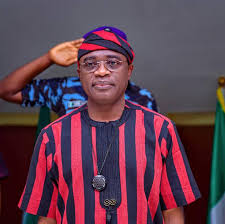
For nearly three years, the political crisis within the Benue State chapter of the All Progressives Congress (APC) has largely been portrayed as a power struggle between Governor Hyacinth Alia and the Secretary to the Government of the Federation (SGF), Senator George Akume.
However, recent developments suggest that the dispute over control of the party could have wider legal and political implications as the 2027 general elections approach.
The crisis intensified earlier this year when rival camps conducted parallel state congresses and produced separate chairmen for the APC in Benue.
The Akume-aligned faction returned Austin Agada as state chairman, while the faction loyal to Governor Alia elected Benjamin Omale.
The emergence of two chairmen and competing claims to control of the party has further exposed the depth of the internal division.
The dispute has also raised questions about the legal consequences of competing party structures, particularly following a Court of Appeal judgment delivered in June 2026.
The appellate court affirmed the Austin Agada-led State Executive Committee and upheld an earlier decision nullifying the dissolution of that executive by the APC National Working Committee.
The court also sustained an order declaring the activities of the Benjamin Omale-led caretaker committee “null, void and of no effect whatsoever.”
The judgment has since become a major reference point in the continuing struggle for control of the APC structure in Benue.
Political observers note that the significance of party structures extends beyond the office of state chairman. Party executives play important roles in organising congresses, managing delegate processes, supervising primaries and implementing decisions relating to the nomination of candidates.
This has brought the dispute into sharper focus ahead of the 2027 elections, particularly over the possible legal implications for candidates whose nominations may be linked to disputed party structures.
A group of APC stakeholders is reportedly examining the possible legal consequences of the judgment and the continued existence of rival structures within the party.
The concern, according to those familiar with the matter, is whether political processes conducted through structures subsequently found to lack legal validity could become the subject of litigation.
Candidates loyal to Governor Alia whose nominations were subsequently overturned by the APC National Working Committee are already challenging the party’s decisions in court. Among them is former Benue Governor, Senator Gabriel Suswam.
At the centre of the emerging debate is whether the invalidation of a party structure could affect subsequent political processes conducted through that structure.
No court has, however, ruled that Governor Alia is ineligible to contest the 2027 governorship election, and there is currently no judgment declaring him barred from seeking re-election.
The potential issue, rather, concerns the relationship between the legitimacy of party structures and the validity of nomination processes conducted under those structures.
Nigeria’s electoral history contains several instances in which internal party disputes over congresses, delegate lists, executives and primary elections eventually resulted in prolonged litigation over candidates and nominations.
Against this background, the continued crisis within the Benue APC could assume greater significance as political parties begin preparations for the 2027 electoral cycle.
The conduct of parallel congresses following a Court of Appeal judgment affirming one faction’s leadership could potentially generate further legal questions over authority, compliance with party rules and the validity of subsequent decisions.
For Governor Alia, the immediate reality is that no court has declared him ineligible to contest the next election. However, continued uncertainty over the party’s structure could expose his political camp to further litigation and create complications during the nomination process.
The governor has also faced allegations from political opponents that more than N100 billion in public funds has been expended in efforts to secure control of APC structures over the past three years. The allegation remains disputed and would require evidence to establish.
What is increasingly clear is that the struggle for control of the APC in Benue has moved beyond a conventional political disagreement. It is now playing out simultaneously across political, legal and party-administrative fronts.
As the 2027 electoral cycle draws closer, the unresolved questions surrounding the APC’s leadership and nomination processes could become increasingly consequential for the party and its candidates.
For now, there is no judicial pronouncement preventing Governor Alia from appearing on the 2027 ballot. But if the stakeholders reportedly considering legal action proceed with a challenge over the circumstances of his nomination, the governor could face another significant legal battle as the election approaches.
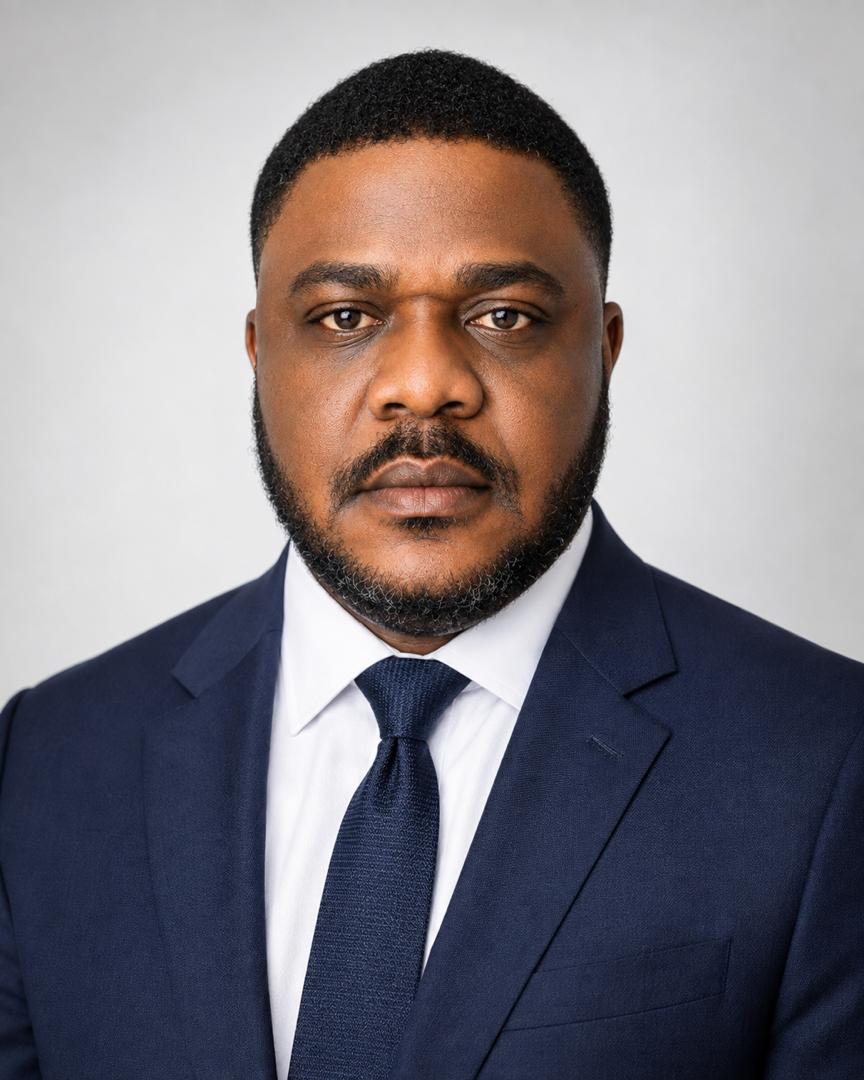
NIGERIA BELONGS TO ALL OF US
I have written this open letter to His Eminence, Alhaji Muhammad Sa’ad Abubakar III, CFR, mni, Sultan of Sokoto and President-General of the Nigerian Supreme Council for Islamic Affairs, with profound respect for his office and for the historic institution he represents.
This is not an attack on Islam, neither an attack on Christianity.
Also, It is not an attempt to diminish the historical importance of the Sultanate, rather, it is a sincere contribution to a conversation I believe Nigeria must have with greater honesty, courage and intellectual maturity:
What does equal citizenship mean in Nigeria?
Our country has a complex history involving kingdoms, caliphates, indigenous political systems, colonialism, amalgamation, independence, religion, ethnicity and competing political traditions.
But after all that history, one question remains fundamental:
Who does Nigeria belong to? My answer is simple:
Nigeria belongs to all Nigerians.
I am publishing this letter openly because I believe conversations of this magnitude should not be confined to private rooms.
I hope it reaches His Eminence.
More importantly, I hope it reaches Nigerians—Muslims and Christians alike—who believe that our future must be built on equal citizenship, mutual respect, constitutional democracy and a shared sense of belonging.
I invite people to read this letter in that spirit.
Not as a provocation or as a religious argument. But as an invitation to think.
AN OPEN LETTER TO HIS EMINENCE, ALHAJI MUHAMMAD SA’AD ABUBAKAR III, CFR, mni
SULTAN OF SOKOTO AND PRESIDENT-GENERAL, NIGERIAN SUPREME COUNCIL FOR ISLAMIC AFFAIRS
Your Eminence,
OUR HISTORY MUST BE REMEMBERED HONESTLY—BUT IT MUST NOT BECOME A CLAIM ON THE FUTURE
Nigeria’s history contains great Muslim civilisations and political institutions.
Kanem-Bornu, the Hausa states and the Sokoto Caliphate represent important chapters in the history of the territories that eventually became Nigeria.
The Sokoto Caliphate, in particular, became one of the most influential Islamic political formations in West Africa.
That history deserves recognition and respect.
But history presents us with an important question:
Does historical political authority confer permanent political ownership?
I believe the answer must be no.
The British colonial conquest and occupation of the territories that now constitute Nigeria occurred over decades, with the conquest of the Sokoto Caliphate culminating in 1903. The Northern and Southern Protectorates were subsequently amalgamated in 1914, and Nigeria achieved independence in 1960.
Whatever political arrangements existed before colonial consolidation, the Nigeria that emerged as a modern sovereign state ultimately became a constitutional republic in which citizenship could not legitimately be based upon the political history of one religion, ethnic group, kingdom or region.
Nigeria became something larger than all of those histories.
It became a country.
And that country belongs equally to the Muslim, the Christian, the adherent of another faith, and the citizen who professes no religion.
Your Eminence, Nigeria’s Constitution does not establish either Islam or Christianity as the religion of the Nigerian state.
Section 10 provides that:
“The Government of the Federation or of a State shall not adopt any religion as State Religion.”
Section 38 protects freedom of thought, conscience and religion.
Section 42 further provides constitutional protection against discrimination on the basis of religion, among other grounds.
These provisions are not merely legal technicalities. They represent an important national compact.
They establish principles of religious neutrality, religious freedom and equal citizenship.
They tell every Nigerian that his or her fundamental rights cannot legitimately depend upon belonging to the “right” religion.
That principle protects Muslims from Christian majoritarianism just as it protects Christians from Muslim majoritarianism.
And therefore, defending constitutional religious neutrality is not an attack on Islam neither an attack on Christianity.
It is protection for both.
THE DIFFICULT QUESTION OF POLITICAL SYMBOLISM
Your Eminence, this is where I believe our national conversation requires greater intellectual honesty.
A political arrangement can have two realities simultaneously:
its strategic reality and its symbolic reality.
Strategically, politicians may see a particular political ticket as an effective coalition, an electoral calculation, a mechanism for consolidating support or a means of improving political cohesion.
But citizens may interpret exactly the same arrangement symbolically.
They may ask:
Who is represented?
Who is included?
Who is excluded?
What does this say about the distribution of power?
What does this mean for people like me?
This distinction became particularly visible in Nigeria’s debate over the Muslim-Muslim presidential ticket.
Some citizens saw strategy while others saw symbolism.
Some saw political competence, Others saw the possibility of religious exclusion.
Both reactions can exist simultaneously.
A mature democracy must therefore be capable of understanding not only what a political arrangement is, but also what people believe that arrangement means.
This is not an argument against Muslims occupying political office nor should it be an argument against Christians occupying political office.
It is an argument for understanding the enormous responsibility that comes with political symbolism in a deeply religious society.
Political leaders must therefore understand that electoral strategy does not exist in a vacuum. Every political decision is interpreted through the lived experiences, fears, hopes and historical memories of the citizens who encounter it.
That is why responsible leadership requires both strategic intelligence and sensitivity to political meaning.
The Muslim citizen must not feel like a tolerated Nigerian, neither should the Christian.
This is perhaps the most important principle I wish to communicate.
A Christian should never have to feel that his citizenship is conditional upon political accommodation by Muslims. A Muslim should never have to feel that his citizenship is conditional upon political accommodation by Christians.
Neither should have to prove that his loyalty to Nigeria is greater than his loyalty to his faith.
Both should be able to say:
“Nigeria is my country, and nobody needs to give me permission to belong here.”
That is the Nigeria we should be building.
Your Eminence, traditional and religious leaders occupy a unique position in Nigerian society.
Political leaders come and go.
Governments change.
Political parties rise and fall.
But institutions such as the Sultanate carry historical memory.
That gives your words a different weight.
When a politician speaks about religion, Nigerians may suspect political calculation but when a respected religious leader speaks about coexistence, citizenship and national unity, the message can carry a moral authority that politics often cannot achieve.
This is why I believe the Sultanate has an extraordinary opportunity.
Not merely to speak for Muslims, But to speak to Nigeria.
To say clearly that the greatness of Islam in Nigeria does not require the political diminishment of Christianity. And equally, that the flourishing of Christianity in Nigeria does not require the political diminishment of Islam.
The strength of one faith should not require the weakness of another.
The security of one community should not depend upon the insecurity of another.
And the political advancement of one Nigerian should never require the political humiliation of another Nigerian simply because of religion.
WE SHOULD MOVE BEYOND THE COMPETITION FOR RELIGIOUS OWNERSHIP OF NIGERIA
There is a dangerous psychological temptation in deeply divided societies.
Each community begins to measure its security by the amount of power the other community possesses.
Then politics becomes a permanent struggle for religious arithmetic.
Who has the President?
Who has the Vice President?
Who controls the security institutions?
Who appoints judges?
Who controls the legislature?
Who controls the governors?
Who controls the economy?
And eventually, citizens stop asking the most important question:
Does the country work for everyone?
That is where we must break the cycle.
Nigeria cannot become great by producing a permanent contest between Muslim political power and Christian political power.
It can become great when both communities begin demanding something larger:
competent political power exercised for the common good.
The ultimate measure of political leadership should not be the religion of the person holding office.
It should be the quality of governance, the protection of citizens, the fairness of institutions, the security of communities and the opportunity available to every Nigerian.
PERHAPS OUR GREATEST NATIONAL TEST IS NOT RELIGIOUS DOMINANCE—BUT MUTUAL TRUST
Your Eminence, I believe Nigeria’s deepest problem is not simply that Muslims distrust Christians or Christians distrust Muslims.
It is that decades of political competition, violence, injustice, insecurity, corruption and unequal experiences of citizenship have created an enormous deficit of trust.
Religious suspicion is often the language through which that distrust expresses itself.
Therefore, if we want to defeat religious tension, we must do more than preach tolerance.
We must build institutions that make tolerance unnecessary as a condition of citizenship.
A Nigerian should not need to be tolerated.
He should simply be equal.
A Christian should not need a Muslim’s permission to belong.
A Muslim should not need a Christian’s permission to belong.
Our common citizenship should be the foundation upon which our religious differences are accommodated—not the other way around.
Your Eminence, I respectfully propose that Nigeria’s most respected Muslim and Christian leaders begin a different kind of conversation.
Not another conference where speeches are made and photographs taken.
But a serious national dialogue around five questions:
- What does equal citizenship actually mean in Nigeria?
- How should religious diversity influence political representation without becoming a mechanism for religious entitlement?
- How do we distinguish legitimate political strategy from symbolism that creates unnecessary fear or exclusion?
- How can traditional and religious institutions help rebuild trust between communities?
- What constitutional, institutional and political reforms are necessary to ensure that no Nigerian believes the country belongs more to another citizen than to himself?
These are difficult questions. But perhaps Nigeria has spent too many decades avoiding difficult questions because they are uncomfortable. And perhaps the price of that avoidance is becoming too high.
Your Eminence, history gives leaders a choice.
Every generation inherits history. But every generation also decides what to do with it.
We can use history as a weapon or wisdom
We can teach our children that Nigeria is a battlefield between religious communities.
Or we can teach them that Muslims and Christians inherited a complicated country together and have the responsibility to make it work together.
We can continue competing over who has the greater historical claim.
Or we can build a country where historical claims do not determine the value of a citizen.
I respectfully believe the latter is worthy of the office you occupy.
The greatest legacy of a historical institution is not merely that it preserves the memory of what once was.
It is that it helps a nation decide what it can become.
My final appeal Your Eminence, I do not ask you to abandon Islam.
I ask you to help Nigerians understand that Islam does not need Nigeria to belong exclusively to Muslims for Muslims to belong completely to Nigeria.
And I would say the same to Christian leaders:
Christianity does not need Nigeria to belong exclusively to Christians for Christians to belong completely to Nigeria.
The future must therefore be bigger than both arguments.
Nigeria must belong to Nigerians.
Not to Muslims.
Not to Christians.
Not to Hausa, Yoruba, Igbo, Tiv, Fulani, Igala, Idoma, Nupe, or any other ethnic nationality.
Not to the North.
Not to the South.
Not to one historical institution.
To all of us.
That, in my humble view, is the foundation upon which a truly united Nigeria can eventually be built.
I respectfully submit this thought to Your Eminence—not as an accusation, but as an invitation to a deeper national conversation.
May our religious differences become a source of moral strength rather than political division.
May our history become a source of wisdom rather than entitlement.
May our political differences never become a justification for denying one another’s citizenship.
And may the Nigeria we leave our children be a country in which neither Muslim nor Christian ever has to ask:
“Does this country belong to me?”
Because the answer should always be:“Yes. It is your country too.”
With profound respect,
Dr. Mike Achadu
A Nigerian Citizen


“WIKE CANNOT CHOOSE A GOVERNOR FOR US!” — Group Rejects Alleged Rainbow Coalition Plot in Benue

2027: Group Defends INEC, Urges Evidence-Based Scrutiny of Staff Redeployments

2027: CSOs Back INEC, Seeks Oriaran Anthony’s Reappointment As Secretary

-
 Uncategorized6 years ago
FG, states urged to harness flooding for ranching, others with technology – Agbaje
-
 Headlines11 years ago
Breaking: EFCC seals Borno House of Assembly, as Hon members take to their heels
-
 News12 years ago
Nigeria Security Operatives Stage Manhunt For Homosexual Perpetrator
-
 News10 years ago
How 21-year-old Girl fled community over accusation of lesbianism
-
 News11 years ago
Yobe Gov Moves Against Deputy
-
 Opinion7 years ago
7 signs she has friend zoned you
-
Technology5 years ago
Online job placement company headhunts women
-
 Headlines10 years ago
Borno Dep Gov Abducts Another Church Leader